
REPRODUCTIVE SYSTEM SECTION 34 1 OBJECTIVES Identify and
REPRODUCTIVE SYSTEM
SECTION 34. 1 OBJECTIVES Identify and describe the basic anatomy and physiology of the human female and male reproductive systems. �Female: ovaries, oviduct (fallopian tube), uterus, cervix, and vagina. �Male: seminal vesicle, prostate gland, vas deferens, urethra, epididymis, scrotum, penis, and testes.
REPRODUCTIVE SYSTEM Specialized organs, glands and hormones that produce offspring Develops during puberty
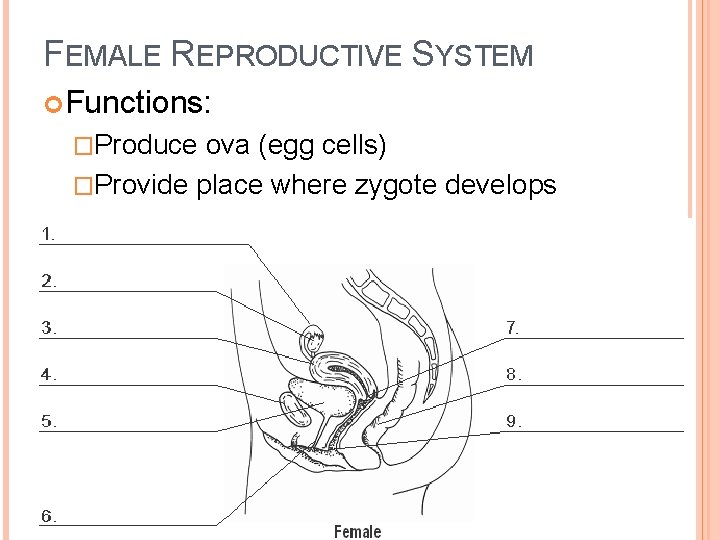
FEMALE REPRODUCTIVE SYSTEM Functions: �Produce ova (egg cells) �Provide place where zygote develops
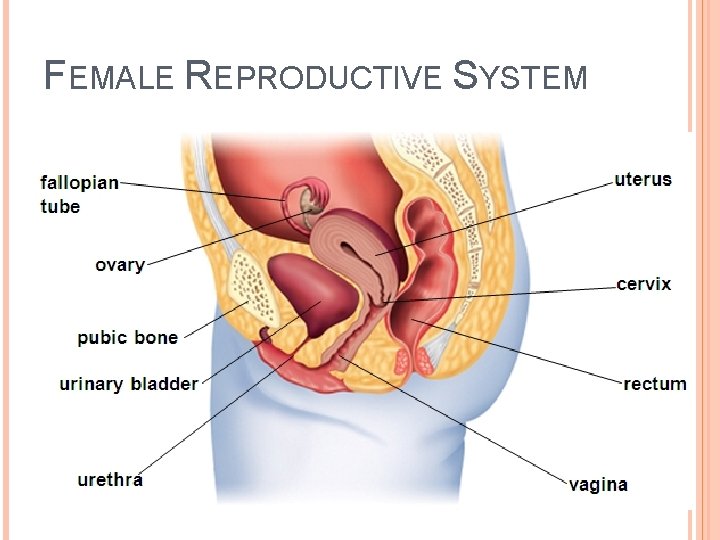
FEMALE REPRODUCTIVE SYSTEM
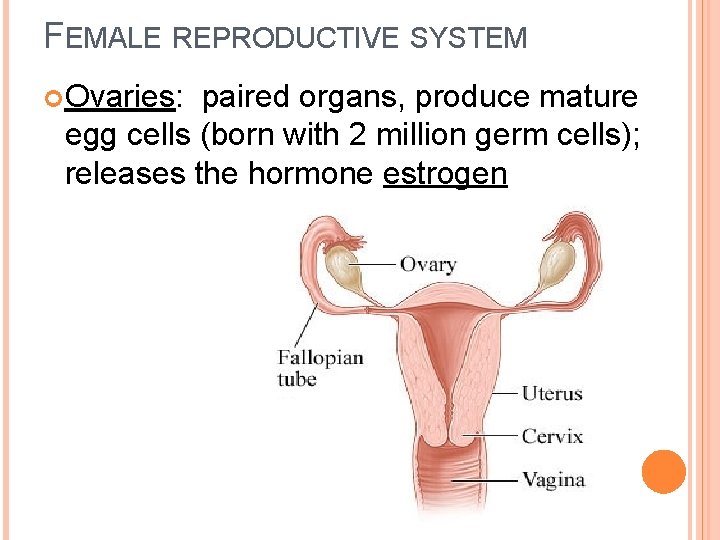
FEMALE REPRODUCTIVE SYSTEM Ovaries: paired organs, produce mature egg cells (born with 2 million germ cells); releases the hormone estrogen
ROLE OF HORMONES IN FEMALES Control development of sexual characteristics Develops eggs before they leave ovaries Prepare uterus for pregnancy every month and help maintain pregnancy
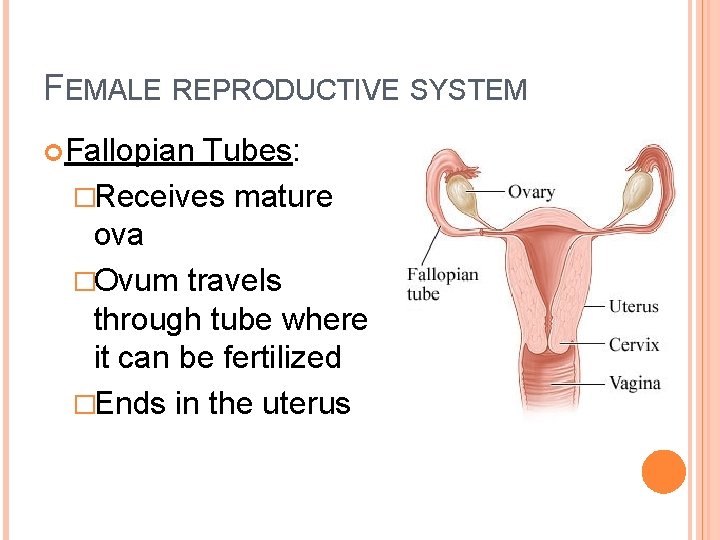
FEMALE REPRODUCTIVE SYSTEM Fallopian Tubes: �Receives mature ova �Ovum travels through tube where it can be fertilized �Ends in the uterus
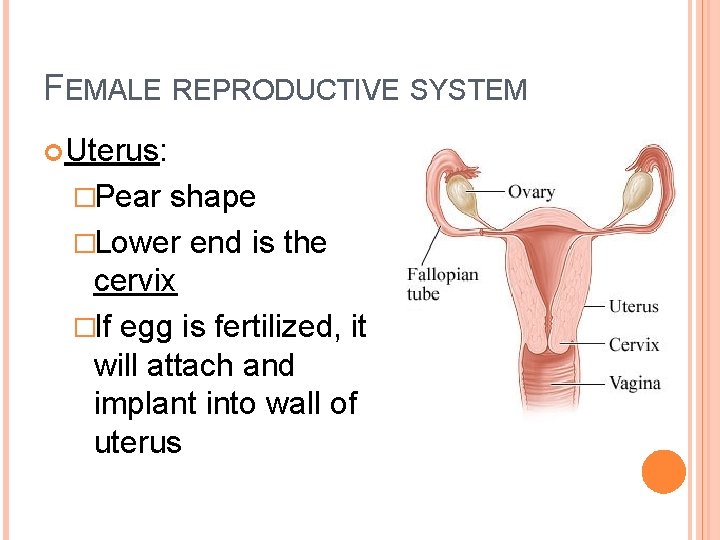
FEMALE REPRODUCTIVE SYSTEM Uterus: �Pear shape �Lower end is the cervix �If egg is fertilized, it will attach and implant into wall of uterus
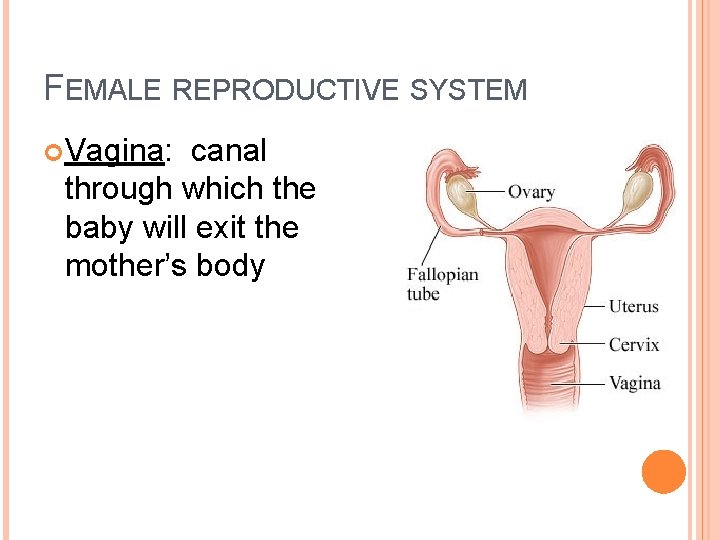
FEMALE REPRODUCTIVE SYSTEM Vagina: canal through which the baby will exit the mother’s body
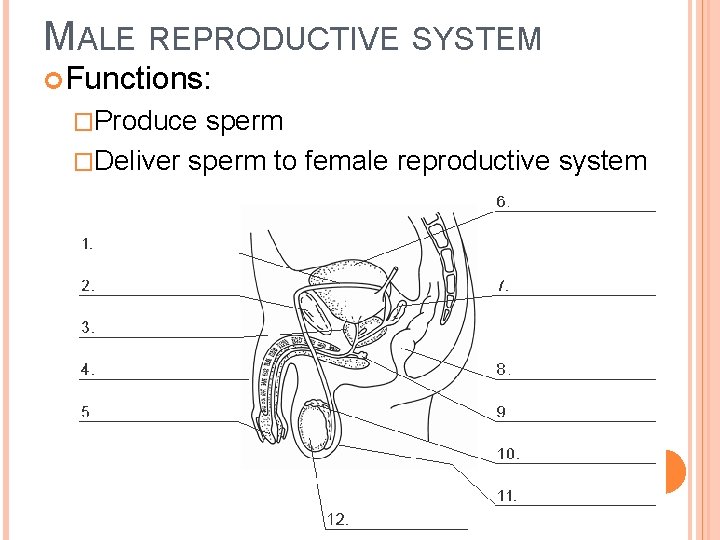
MALE REPRODUCTIVE SYSTEM Functions: �Produce sperm �Deliver sperm to female reproductive system
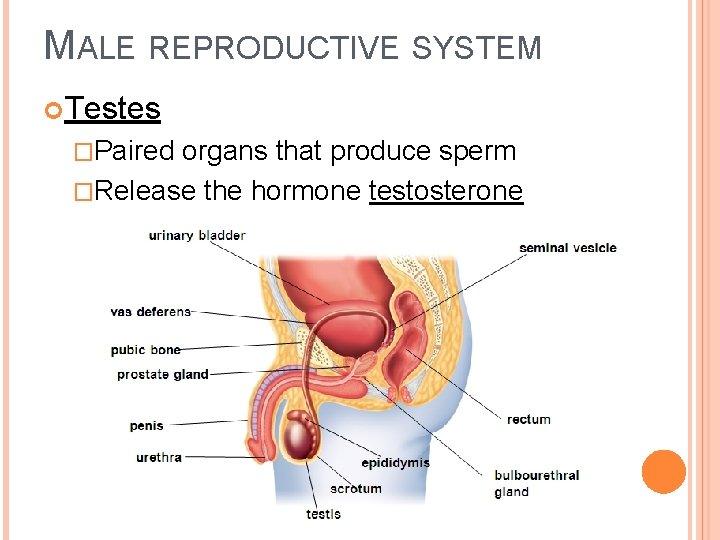
MALE REPRODUCTIVE SYSTEM Testes �Paired organs that produce sperm �Release the hormone testosterone
ROLE OF HORMONES IN MALES Stimulates the production of sperm cells Controls development of sex characteristics
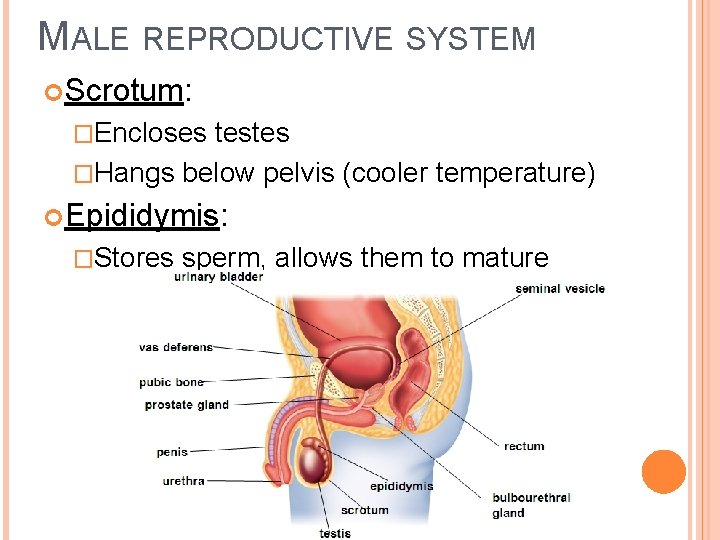
MALE REPRODUCTIVE SYSTEM Scrotum: �Encloses testes �Hangs below pelvis (cooler temperature) Epididymis: �Stores sperm, allows them to mature
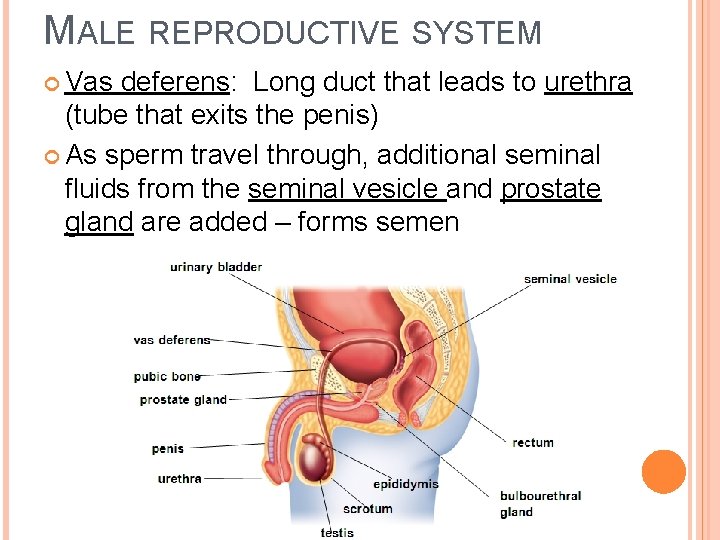
MALE REPRODUCTIVE SYSTEM Vas deferens: Long duct that leads to urethra (tube that exits the penis) As sperm travel through, additional seminal fluids from the seminal vesicle and prostate gland are added – forms semen
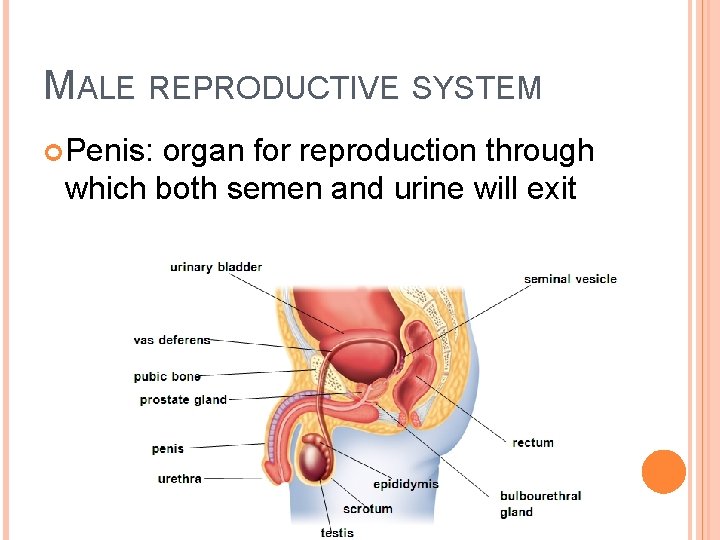
MALE REPRODUCTIVE SYSTEM Penis: organ for reproduction through which both semen and urine will exit
ON THE BACK OF NOTES: Construct a sequence diagram for an egg cell. Explain why a high fever might affect sperm production.
WARM UP Where in the body does meiosis occur? If a person develops cancer in their liver, can they pass that on their offspring? Explain why or why not.
SECTION 34. 3 OBJECTIVES Describe the process of human development from fertilization to birth. Identify and relate the function of the placenta, umbilical cord, amniotic sac and fluid to the development of the fetus.
BELLRINGER PLEASE WRITE ON TOP MARGIN OF PG Explain 95 INISN human development from fertilization until the fetus stage. Include each name of development stage and important info about it.
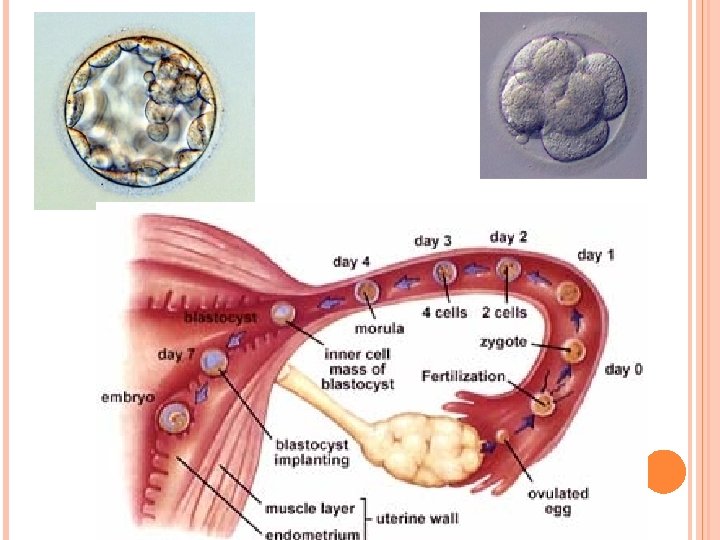
FETAL DEVELOPMENT Fertilization produces a zygote (fertilized egg) Zygote develops into the morula (solid ball of cells – 8 cells big) Morula develops into the blastocyst (hollow ball of cells) �Implants in the wall of the uterus
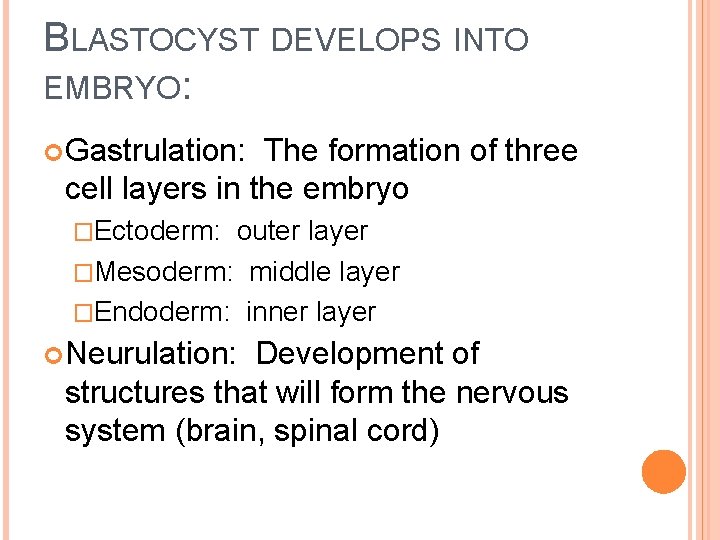
BLASTOCYST DEVELOPS INTO EMBRYO: Gastrulation: The formation of three cell layers in the embryo �Ectoderm: outer layer �Mesoderm: middle layer �Endoderm: inner layer Neurulation: Development of structures that will form the nervous system (brain, spinal cord)
EMBRYO IS NOURISHED AND PROTECTED BY SEVERAL MEMBRANES: Amniotic sac: fluid-filled, cushions embryo, regulates temps Placenta: organ that allows for exchange of oxygen, nutrients, and wastes Umbilical cord: connects embryo to placenta � Arteries allow for oxygen and nutrients from mother to diffuse into chorionic villi, which are then carried to embryo by umbilical cord � A vein carries wastes to chorionic villi, which then diffuse into mother’s blood and are secreted in her urine
ZYGOTE DEVELOPS INTO A FULLY FORMED FETUS IN ABOUT Pregnancies 38 WEEKS are divided into trimesters Activity: Stages of Development Poster Project
WARM UP Describe how an embryo gets nourishment.
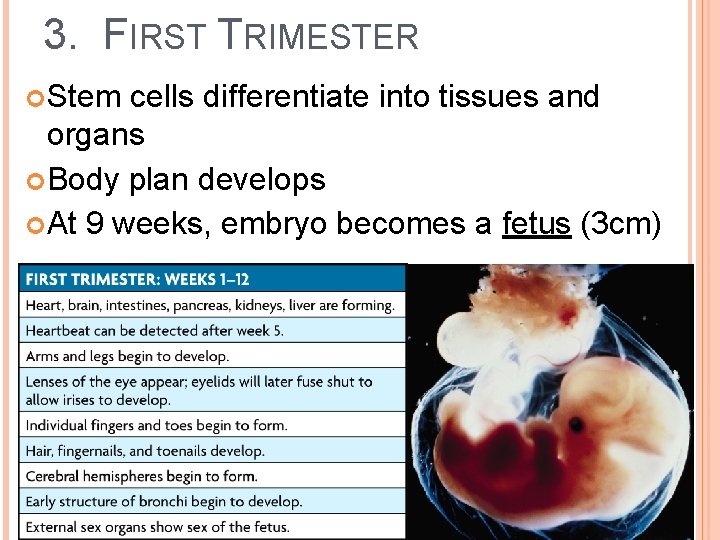
3. FIRST TRIMESTER Stem cells differentiate into tissues and organs Body plan develops At 9 weeks, embryo becomes a fetus (3 cm)
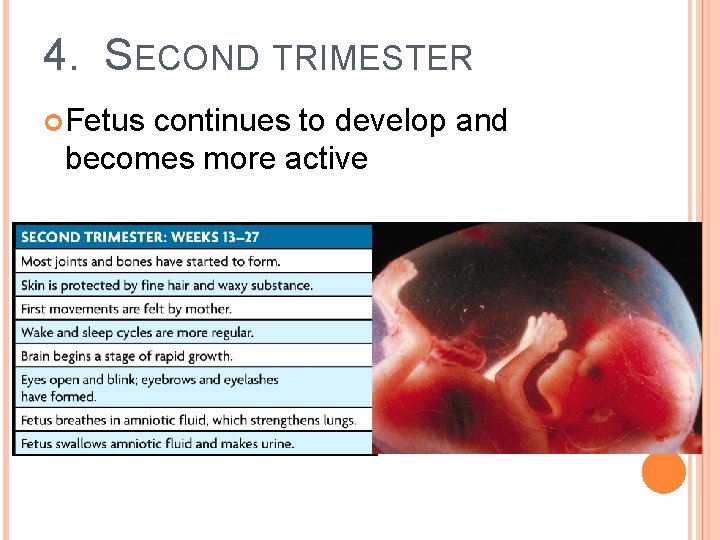
4. SECOND TRIMESTER Fetus continues to develop and becomes more active
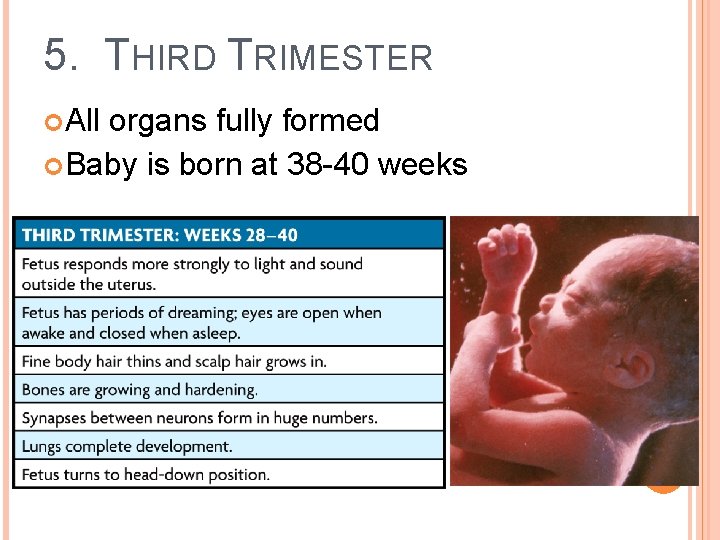
5. THIRD TRIMESTER All organs fully formed Baby is born at 38 -40 weeks
ON THE BACK OF NOTES: Why might a fetus be more easily damaged by genetic errors or toxic chemicals during the first trimester than during any other trimester?
- Slides: 31