
Reproductive System Male vs Female n n Your
- Slides: 30
Reproductive System Male vs. Female
n n Your body has all these opportunities to make a human being, but one egg and one sperm made you. YOU WERE THE WINNER!!!!
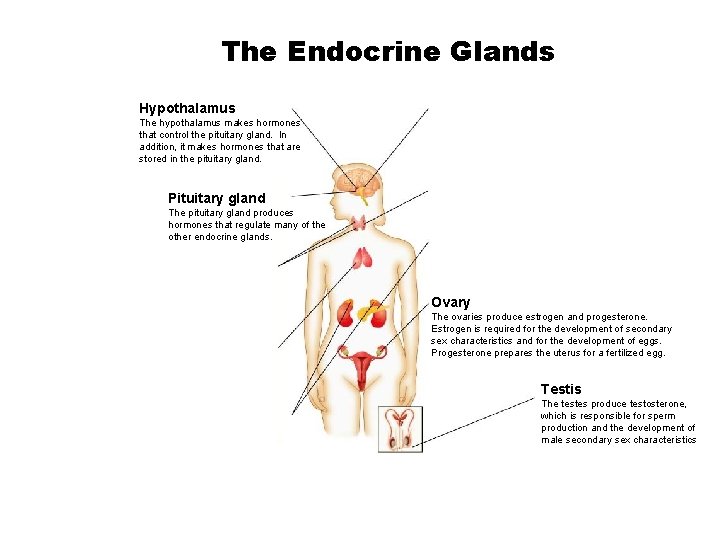
The Endocrine Glands Hypothalamus The hypothalamus makes hormones that control the pituitary gland. In addition, it makes hormones that are stored in the pituitary gland. Pituitary gland The pituitary gland produces hormones that regulate many of the other endocrine glands. Ovary The ovaries produce estrogen and progesterone. Estrogen is required for the development of secondary sex characteristics and for the development of eggs. Progesterone prepares the uterus for a fertilized egg. Testis The testes produce testosterone, which is responsible for sperm production and the development of male secondary sex characteristics
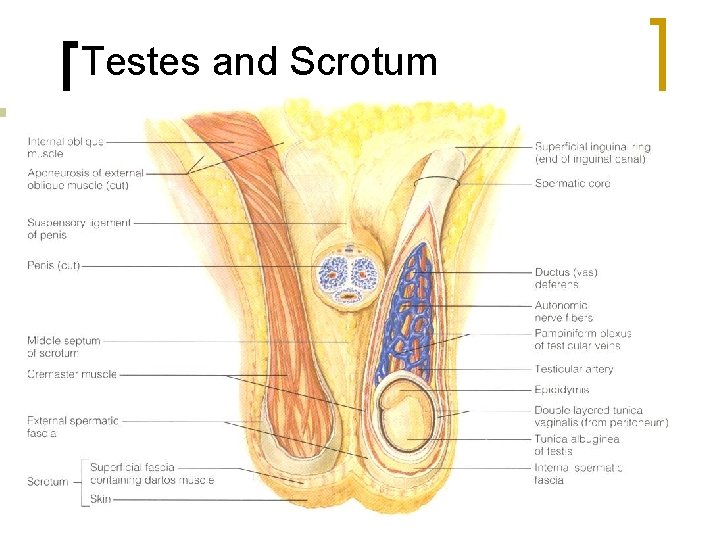
Testes and Scrotum
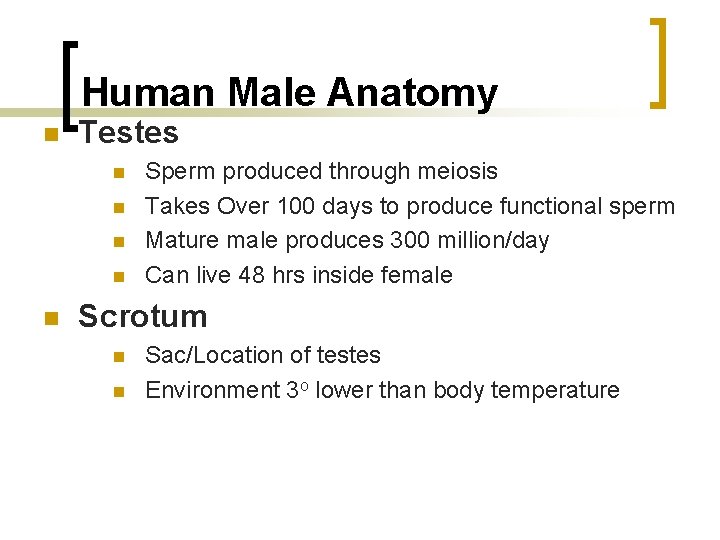
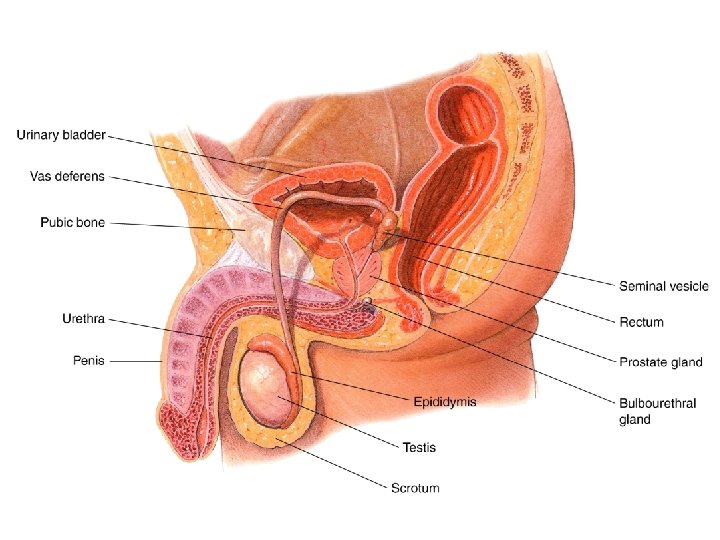
Human Male Anatomy n Testes n n n Sperm produced through meiosis Takes Over 100 days to produce functional sperm Mature male produces 300 million/day Can live 48 hrs inside female Scrotum n n Sac/Location of testes Environment 3 o lower than body temperature
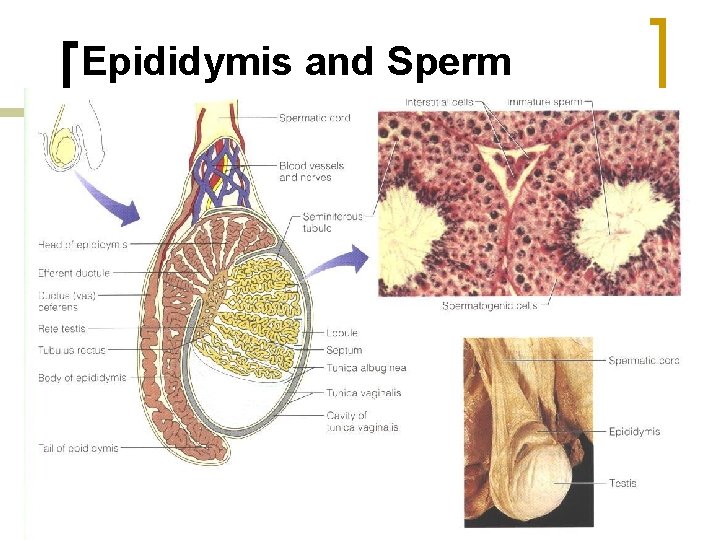
Epididymis and Sperm
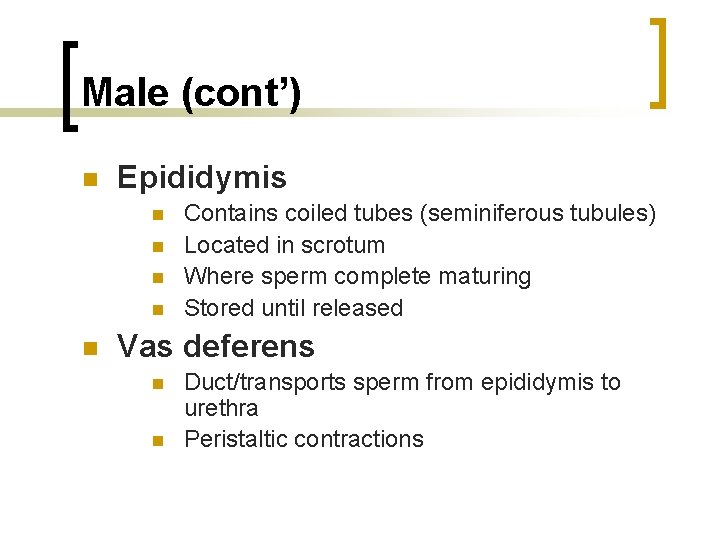
Male (cont’) n Epididymis n n n Contains coiled tubes (seminiferous tubules) Located in scrotum Where sperm complete maturing Stored until released Vas deferens n n Duct/transports sperm from epididymis to urethra Peristaltic contractions
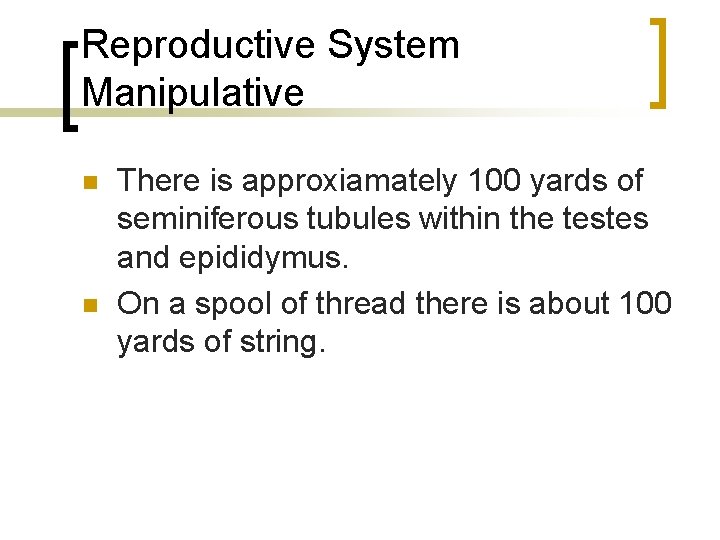
Reproductive System Manipulative n n There is approxiamately 100 yards of seminiferous tubules within the testes and epididymus. On a spool of thread there is about 100 yards of string.
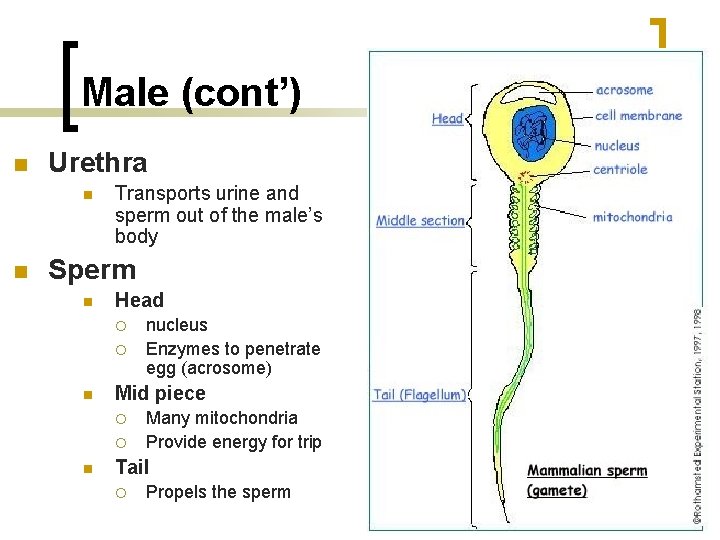
Male (cont’) n Urethra n n Transports urine and sperm out of the male’s body Sperm n Head ¡ ¡ n Mid piece ¡ ¡ n nucleus Enzymes to penetrate egg (acrosome) Many mitochondria Provide energy for trip Tail ¡ Propels the sperm
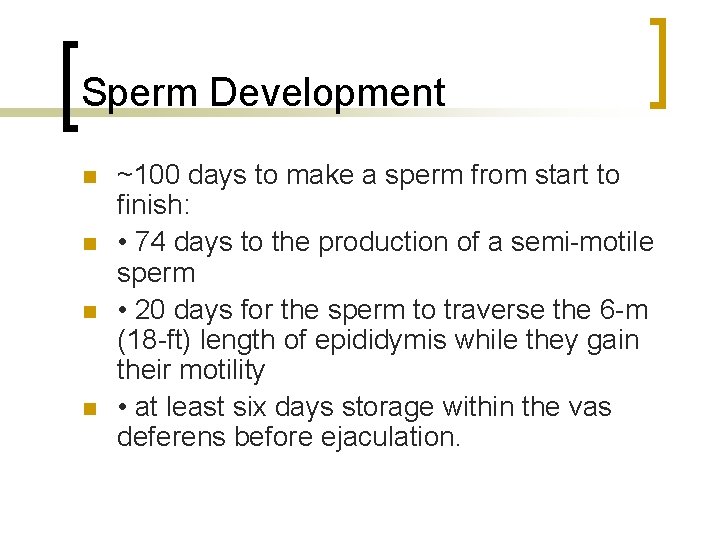
Sperm Development n n ~100 days to make a sperm from start to finish: • 74 days to the production of a semi-motile sperm • 20 days for the sperm to traverse the 6 -m (18 -ft) length of epididymis while they gain their motility • at least six days storage within the vas deferens before ejaculation.
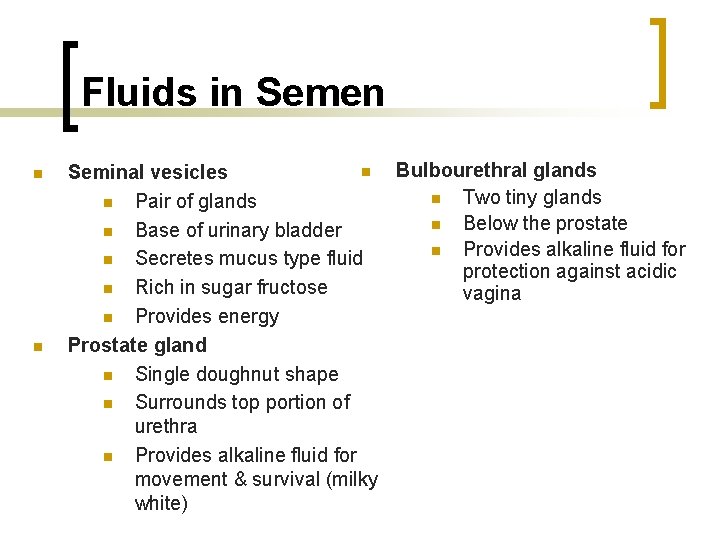
Fluids in Semen n Bulbourethral glands Seminal vesicles n Two tiny glands n Pair of glands n Below the prostate n Base of urinary bladder n Provides alkaline fluid for n Secretes mucus type fluid protection against acidic n Rich in sugar fructose vagina n Provides energy Prostate gland n Single doughnut shape n Surrounds top portion of urethra n Provides alkaline fluid for movement & survival (milky white)
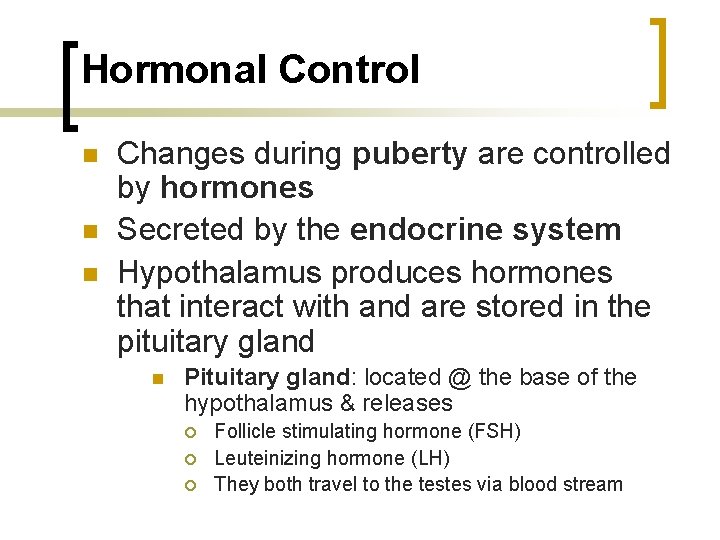
Hormonal Control n n n Changes during puberty are controlled by hormones Secreted by the endocrine system Hypothalamus produces hormones that interact with and are stored in the pituitary gland n Pituitary gland: located @ the base of the hypothalamus & releases ¡ ¡ ¡ Follicle stimulating hormone (FSH) Leuteinizing hormone (LH) They both travel to the testes via blood stream
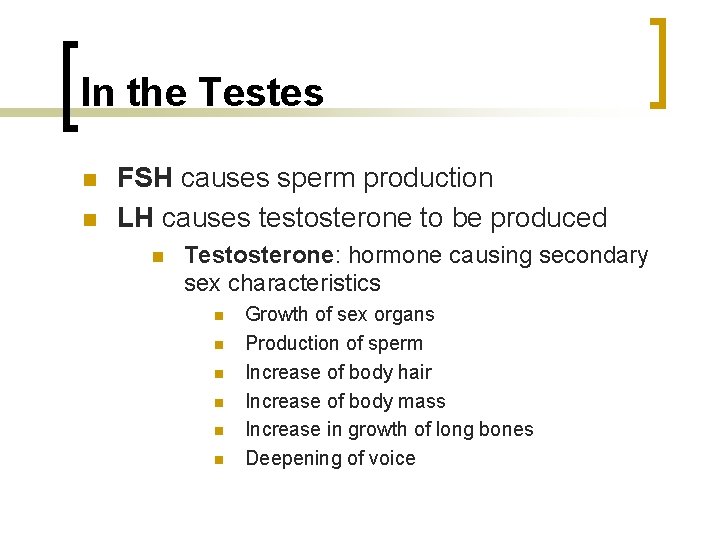
In the Testes n n FSH causes sperm production LH causes testosterone to be produced n Testosterone: hormone causing secondary sex characteristics n n n Growth of sex organs Production of sperm Increase of body hair Increase of body mass Increase in growth of long bones Deepening of voice
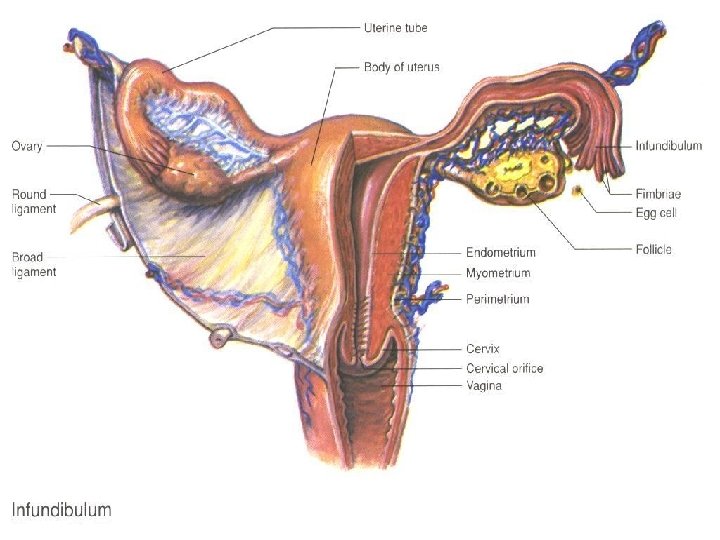
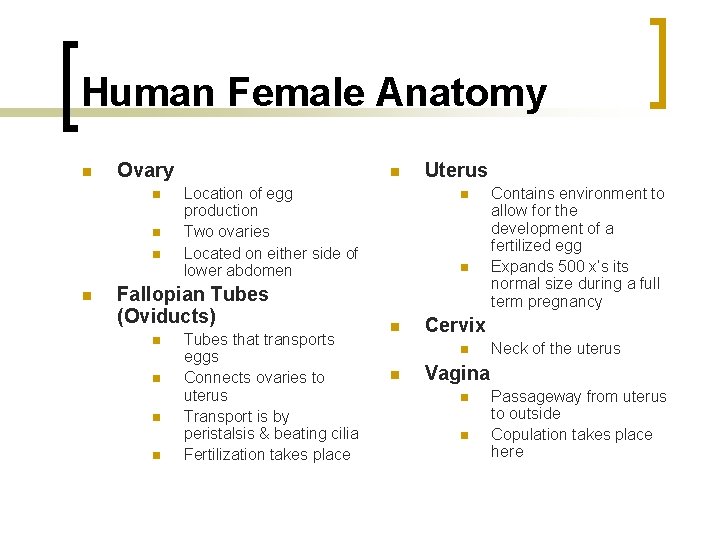
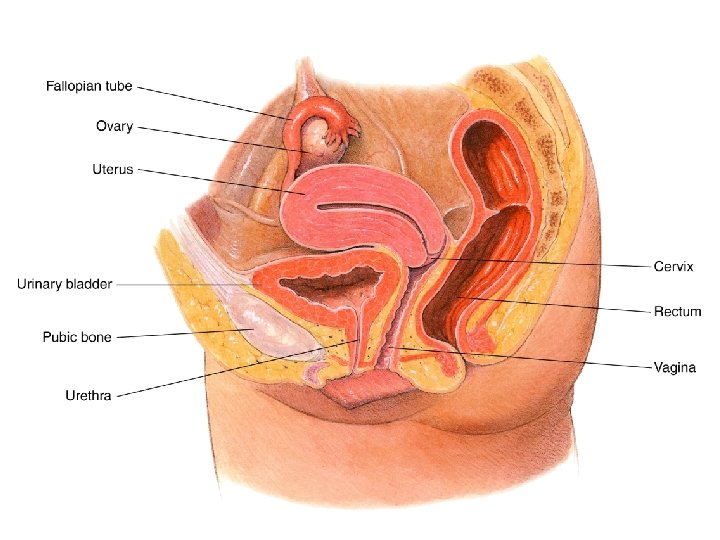
Human Female Anatomy n Ovary n n n Location of egg production Two ovaries Located on either side of lower abdomen Fallopian Tubes (Oviducts) n n Tubes that transports eggs Connects ovaries to uterus Transport is by peristalsis & beating cilia Fertilization takes place Uterus n n n Cervix n n Contains environment to allow for the development of a fertilized egg Expands 500 x’s its normal size during a full term pregnancy Neck of the uterus Vagina n n Passageway from uterus to outside Copulation takes place here
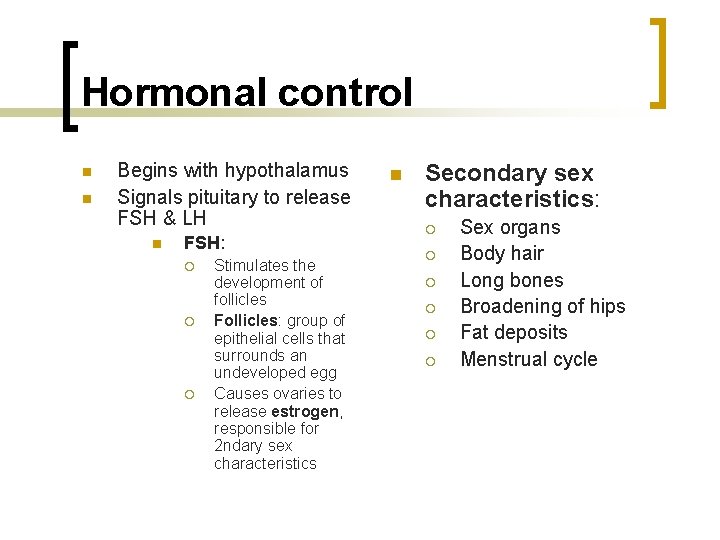
Hormonal control n n Begins with hypothalamus Signals pituitary to release FSH & LH n FSH: ¡ ¡ ¡ Stimulates the development of follicles Follicles: group of epithelial cells that surrounds an undeveloped egg Causes ovaries to release estrogen, responsible for 2 ndary sex characteristics n Secondary sex characteristics: ¡ ¡ ¡ Sex organs Body hair Long bones Broadening of hips Fat deposits Menstrual cycle
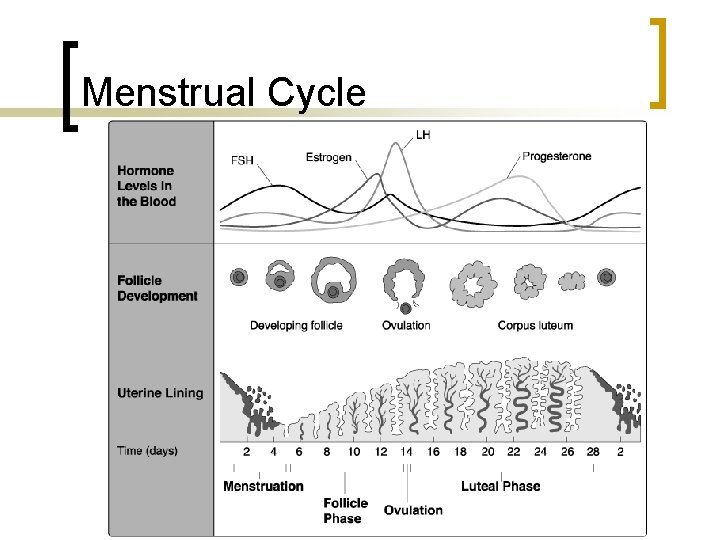
Menstrual Cycle
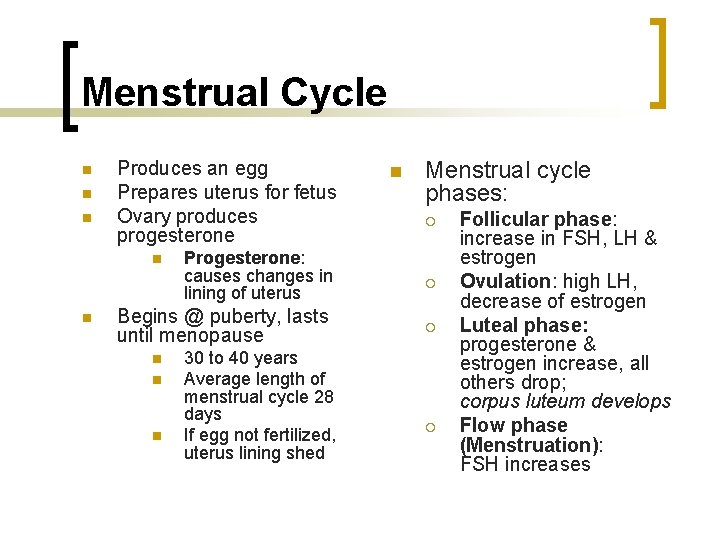
Menstrual Cycle n n n Produces an egg Prepares uterus for fetus Ovary produces progesterone n n Progesterone: causes changes in lining of uterus Begins @ puberty, lasts until menopause n n n 30 to 40 years Average length of menstrual cycle 28 days If egg not fertilized, uterus lining shed n Menstrual cycle phases: ¡ ¡ Follicular phase: increase in FSH, LH & estrogen Ovulation: high LH, decrease of estrogen Luteal phase: progesterone & estrogen increase, all others drop; corpus luteum develops Flow phase (Menstruation): FSH increases
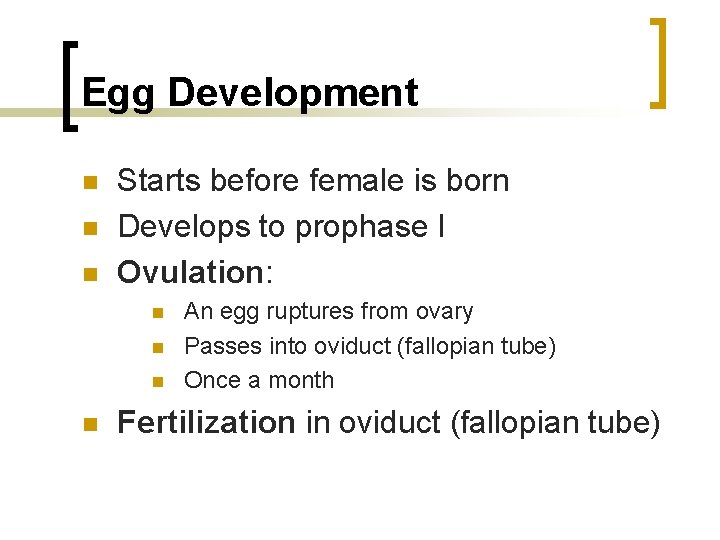
Egg Development n n n Starts before female is born Develops to prophase I Ovulation: n n An egg ruptures from ovary Passes into oviduct (fallopian tube) Once a month Fertilization in oviduct (fallopian tube)
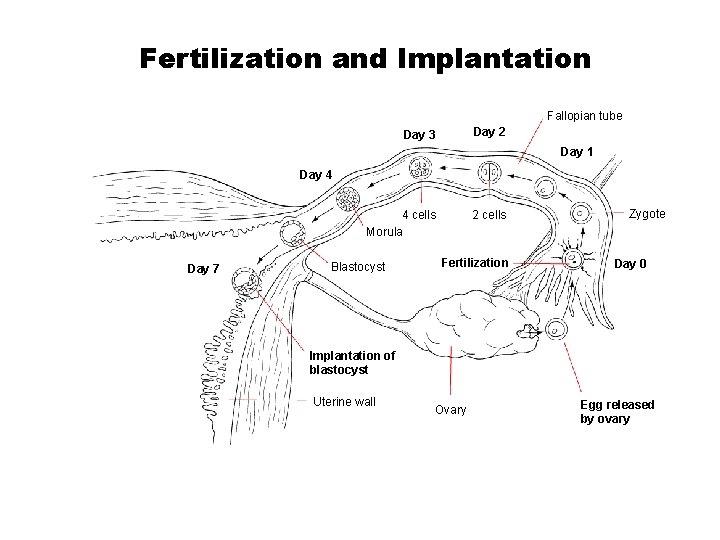
Fertilization and Implantation Section 39 -4 Fallopian tube Day 2 Day 3 Day 1 Day 4 4 cells Morula Day 7 Blastocyst 2 cells Fertilization Zygote Day 0 Implantation of blastocyst Uterine wall Ovary Egg released by ovary
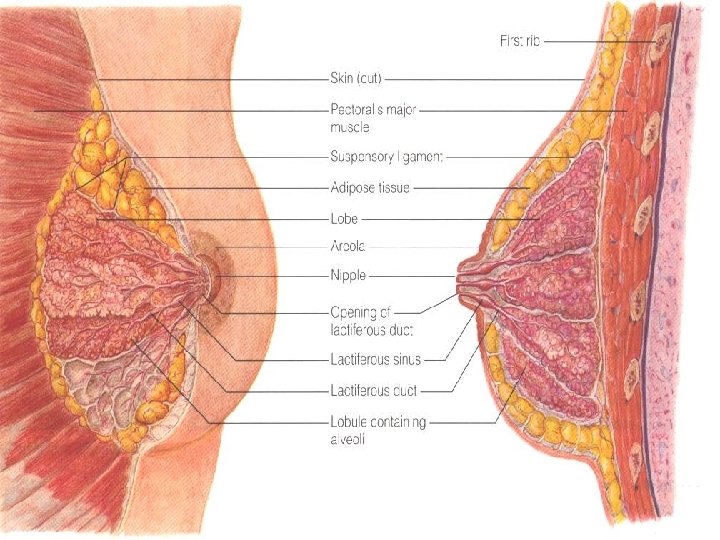
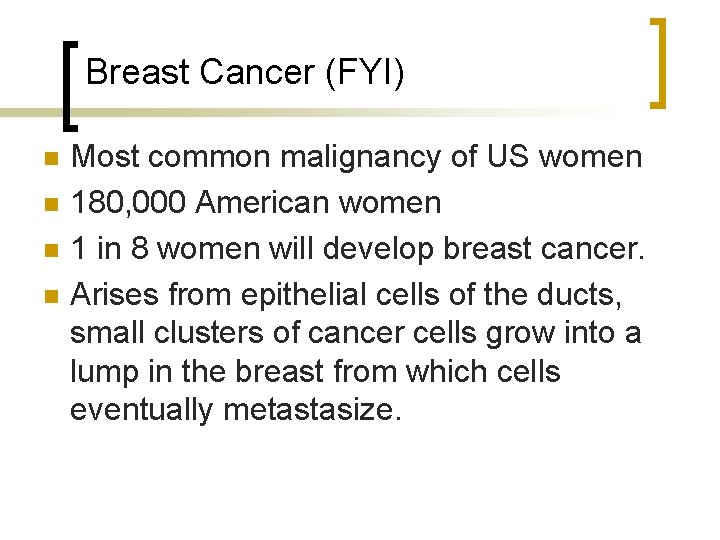
Breast Cancer (FYI) n n Most common malignancy of US women 180, 000 American women 1 in 8 women will develop breast cancer. Arises from epithelial cells of the ducts, small clusters of cancer cells grow into a lump in the breast from which cells eventually metastasize.
Risk Factors (FYI) n 1. 2. 3. 4. 5. 6. 7. 8. n Risk factors: early onset of menopause no pregnancies or first pregnancy late in life history of breast cancer silicone breast implants high estrogen concentrations cigarette smoking excessive alcohol intake hereditary defects 70% of women who develop breast cancer have no known risk factors for the disease.
Early Warning Signals (FYI) n n Changes in skin texture Puckering Leakage from nipple Lumps in breast
Early Detection (FYI) n n Monthly self breast exam Mammogram ¡ x-ray that can detect cancer smaller than 1 cm, recommended every 2 years from women between 40 -49 and then yearly from age 50.
Treatment (FYI) n n n Radiation Chemotherapy Surgery followed by radiation or chemo Lumpectomy- only cancerous lump removed. Simple masectomy- removal of breast tissue only. Radical mastectomy- removal of entire affected breast, muscles, fascia, and lymph nodes.
STD – Sexually Transmitted Disease n Bacterial ¡ ¡ ¡ n Chlamydia – 3 million cases every year Syphilis Gonorrhea Viral ¡ ¡ Hepatitis B Genital Herpes Genital Warts HIV (AIDS)
Elaborate n n Watch the live birth sequence at the end of Miracle of Life and discuss the hormones (Endocrine System) role in labor. Positive feedback mechanism.