
REPRODUCTIVE SYSTEM MAKING HORMONES GAMETES AND LITTLE BABIES
REPRODUCTIVE SYSTEM MAKING HORMONES, GAMETES AND LITTLE BABIES
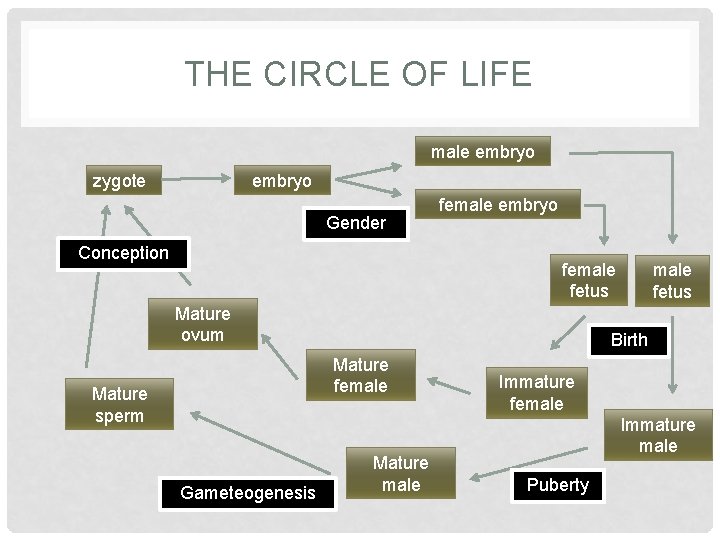
THE CIRCLE OF LIFE male embryo zygote embryo Gender Conception female embryo female fetus Mature ovum Birth Mature female Mature sperm Gameteogenesis male fetus Mature male Immature female Immature male Puberty
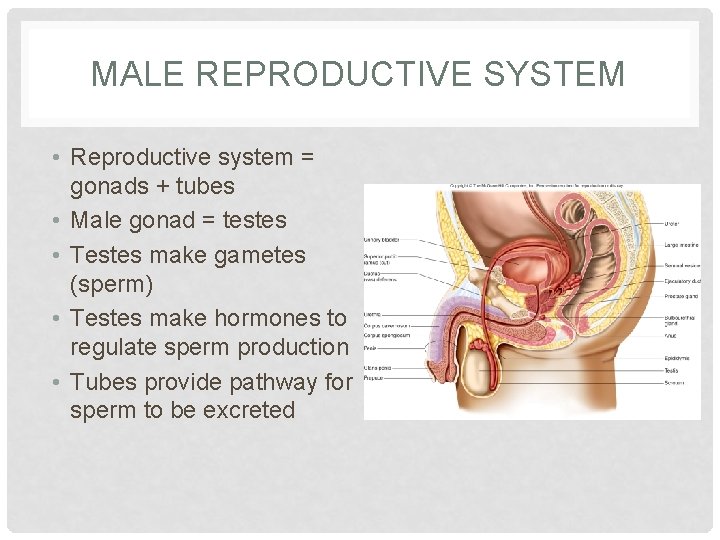
MALE REPRODUCTIVE SYSTEM • Reproductive system = gonads + tubes • Male gonad = testes • Testes make gametes (sperm) • Testes make hormones to regulate sperm production • Tubes provide pathway for sperm to be excreted
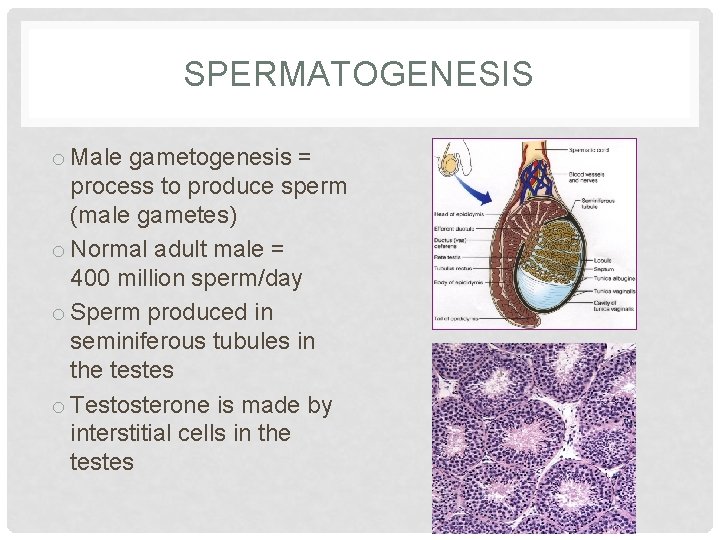
SPERMATOGENESIS o Male gametogenesis = process to produce sperm (male gametes) o Normal adult male = 400 million sperm/day o Sperm produced in seminiferous tubules in the testes o Testosterone is made by interstitial cells in the testes

SPERMATOGENESIS ØSpermatogenesis = meiosis ØProcess starts with spermatogonium in outside of tubule wall ØMitosis results in two spermatogonium, one remains in basement layer ØMeiotic divisions occur as developing sperm moves to tubule lumen ØFinal result is 4 haploid spermatozoa
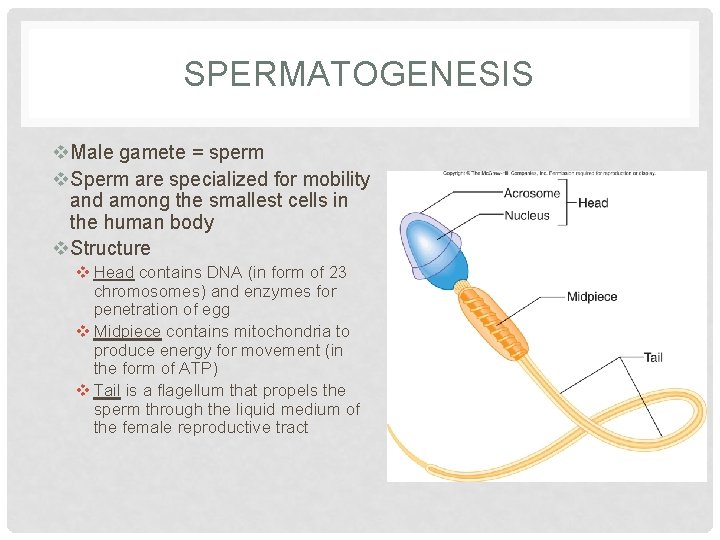
SPERMATOGENESIS v. Male gamete = sperm v. Sperm are specialized for mobility and among the smallest cells in the human body v. Structure v Head contains DNA (in form of 23 chromosomes) and enzymes for penetration of egg v Midpiece contains mitochondria to produce energy for movement (in the form of ATP) v Tail is a flagellum that propels the sperm through the liquid medium of the female reproductive tract
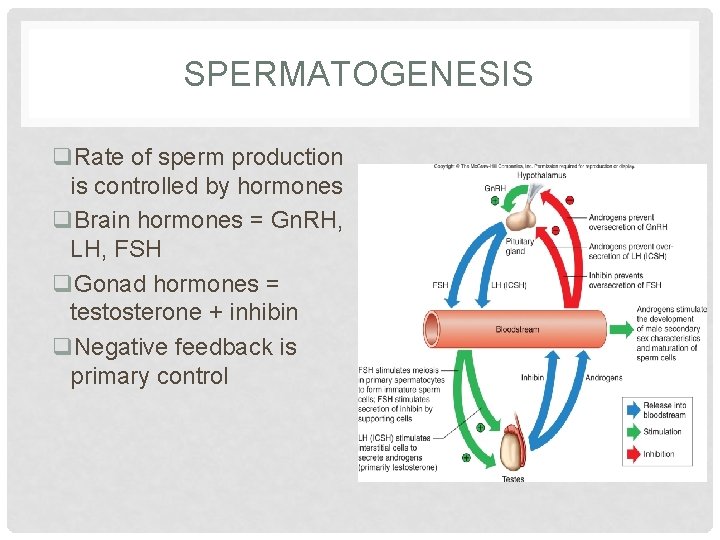
SPERMATOGENESIS q. Rate of sperm production is controlled by hormones q. Brain hormones = Gn. RH, LH, FSH q. Gonad hormones = testosterone + inhibin q. Negative feedback is primary control
SPERMATOGENESIS + NEGATIVE FEEDBACK üNegative Feedback in spermatogenesis üBrain hormones stimulate gonad hormones üGonad hormones inhibit brain hormones ü brain hormones stimulate gonad hormones ü gonad hormones cause brain hormones ü brain hormones cause gonad hormones ü gonad hormones cause brain hormones
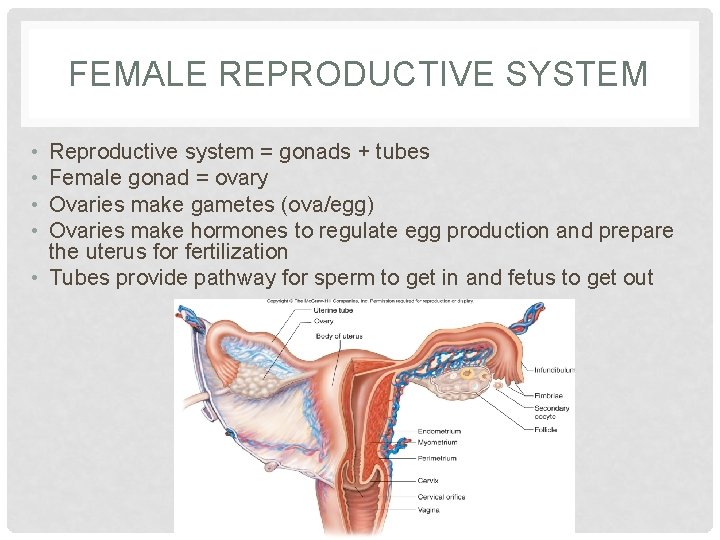
FEMALE REPRODUCTIVE SYSTEM • • Reproductive system = gonads + tubes Female gonad = ovary Ovaries make gametes (ova/egg) Ovaries make hormones to regulate egg production and prepare the uterus for fertilization • Tubes provide pathway for sperm to get in and fetus to get out
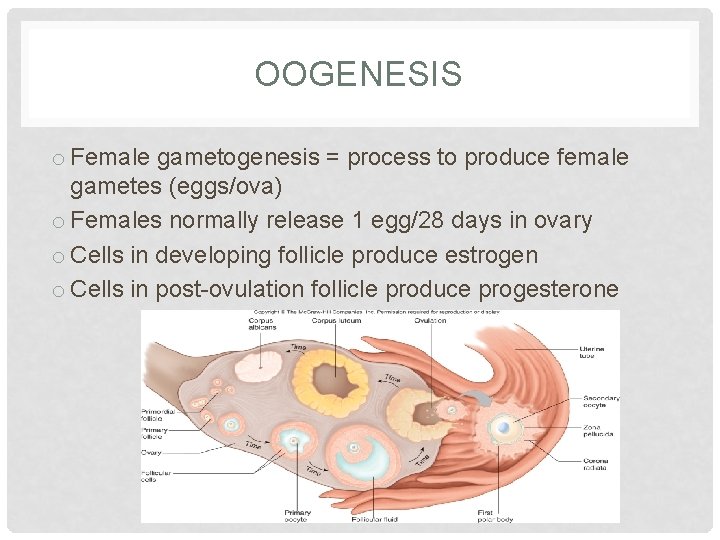
OOGENESIS o Female gametogenesis = process to produce female gametes (eggs/ova) o Females normally release 1 egg/28 days in ovary o Cells in developing follicle produce estrogen o Cells in post-ovulation follicle produce progesterone
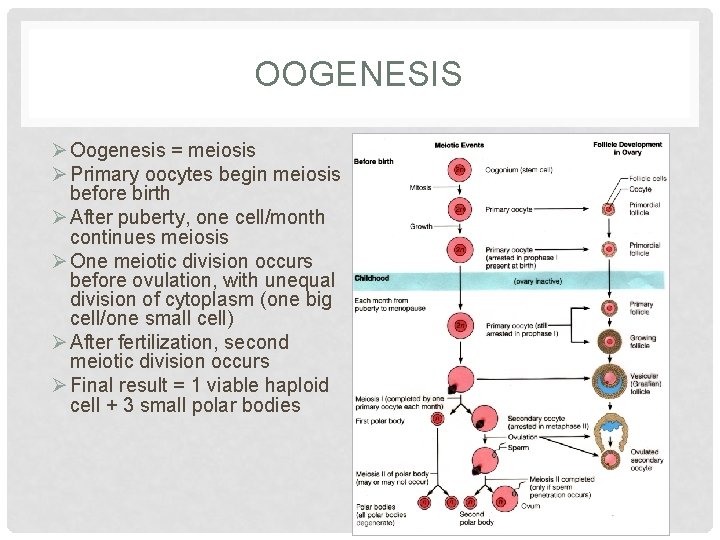
OOGENESIS Ø Oogenesis = meiosis Ø Primary oocytes begin meiosis before birth Ø After puberty, one cell/month continues meiosis Ø One meiotic division occurs before ovulation, with unequal division of cytoplasm (one big cell/one small cell) Ø After fertilization, second meiotic division occurs Ø Final result = 1 viable haploid cell + 3 small polar bodies
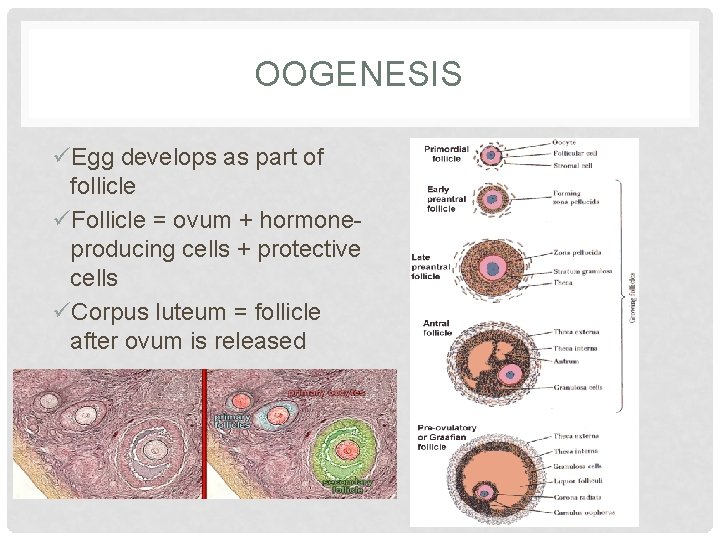
OOGENESIS üEgg develops as part of follicle üFollicle = ovum + hormoneproducing cells + protective cells üCorpus luteum = follicle after ovum is released
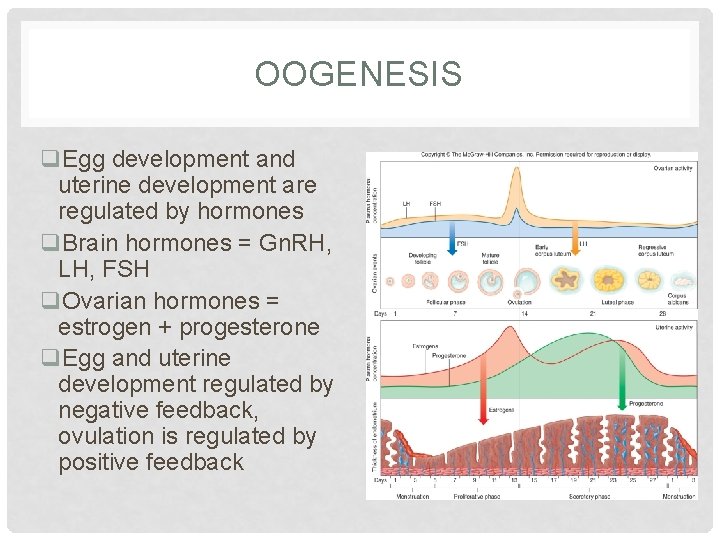
OOGENESIS q. Egg development and uterine development are regulated by hormones q. Brain hormones = Gn. RH, LH, FSH q. Ovarian hormones = estrogen + progesterone q. Egg and uterine development regulated by negative feedback, ovulation is regulated by positive feedback
OOGENESIS + NEGATIVE FEEDBACK üNegative Feedback in oogenesis ü FSH + LH stimulate estrogen + progesterone ü estrogen + progesterone inhibit FSH + LH üEstrogen – from follicle cells – stimulates egg development + development of uterine lining üProgesterone – from corpus luteum – maintains developed uterine lining üWhen progesterone decreases, uterine lining breaks down (menstruation) üWhen fertilization occurs, corpus luteum is maintained, progesterone produced and uterine lining maintained
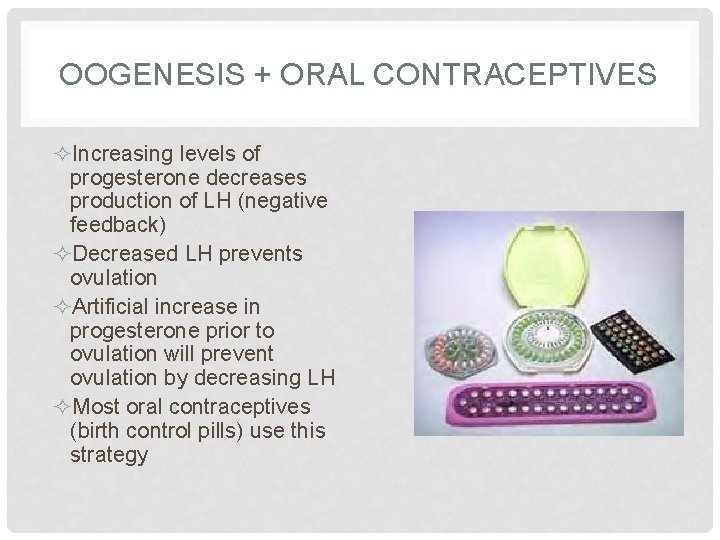
OOGENESIS + ORAL CONTRACEPTIVES ²Increasing levels of progesterone decreases production of LH (negative feedback) ²Decreased LH prevents ovulation ²Artificial increase in progesterone prior to ovulation will prevent ovulation by decreasing LH ²Most oral contraceptives (birth control pills) use this strategy
- Slides: 15