
Reproductive System Cells that are used to pass

- Slides: 58
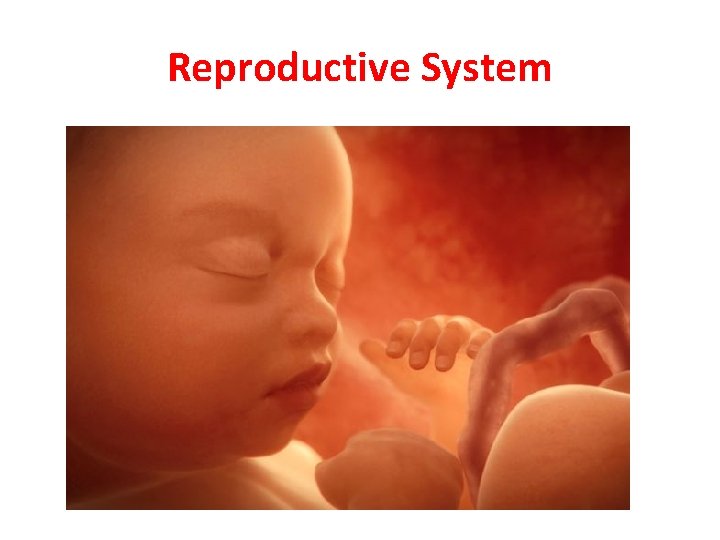
Reproductive System
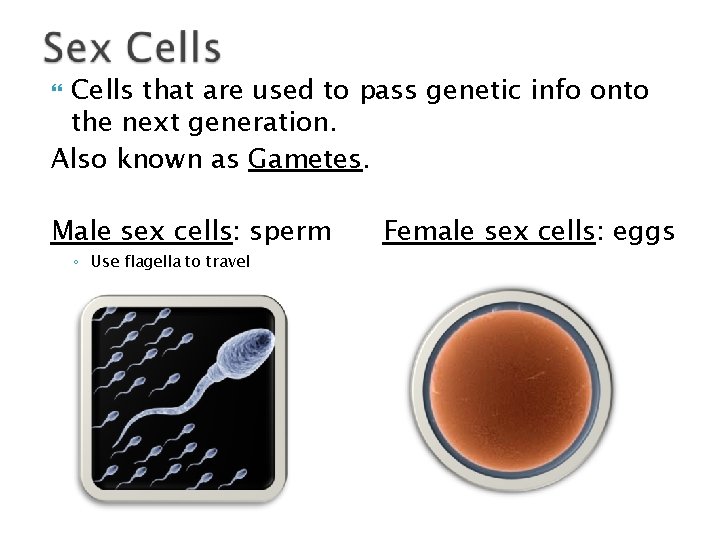
Cells that are used to pass genetic info onto the next generation. Also known as Gametes. Male sex cells: sperm ◦ Use flagella to travel Female sex cells: eggs
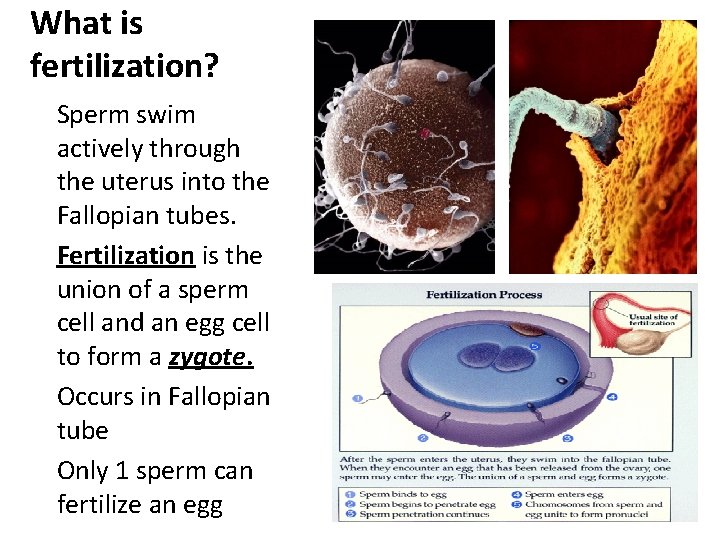
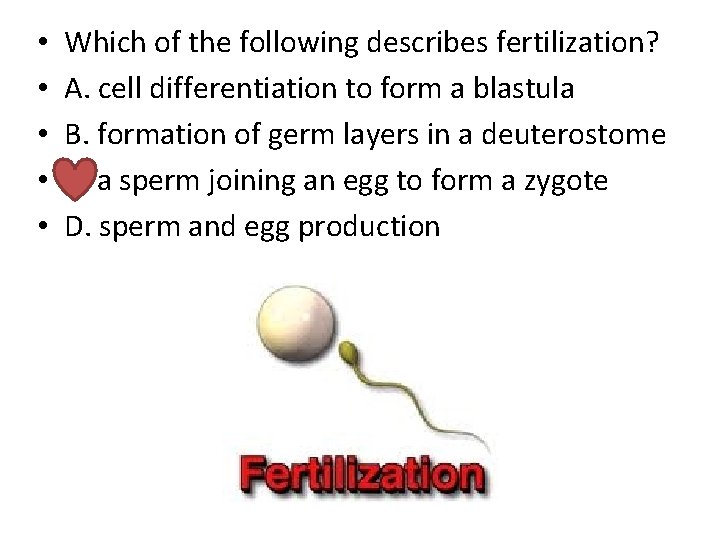
What is fertilization? ü Sperm swim actively through the uterus into the Fallopian tubes. ü Fertilization is the union of a sperm cell and an egg cell to form a zygote. ü Occurs in Fallopian tube ü Only 1 sperm can fertilize an egg
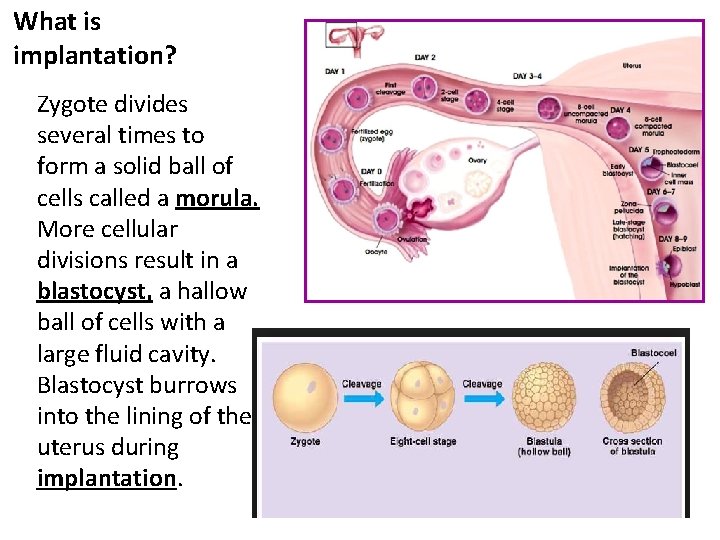
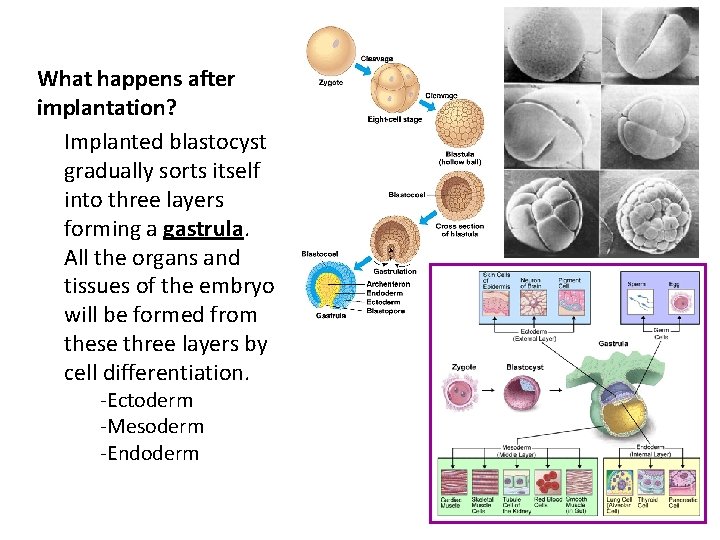
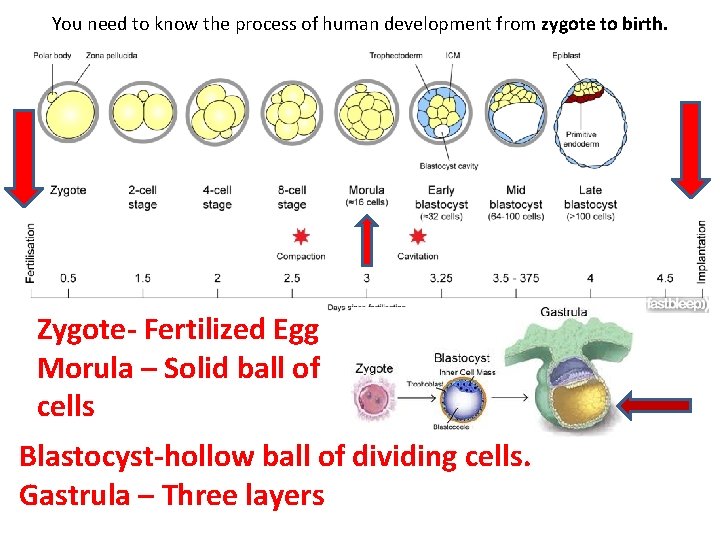
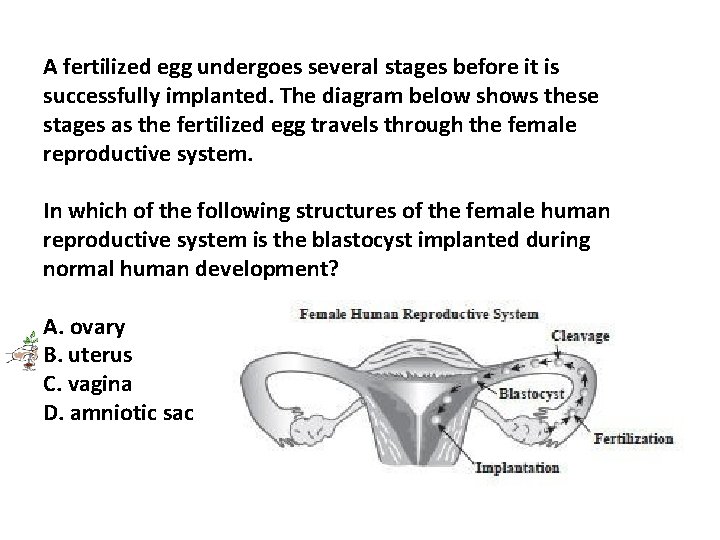
What is implantation? ü Zygote divides several times to form a solid ball of cells called a morula. ü More cellular divisions result in a blastocyst, a hallow ball of cells with a large fluid cavity. ü Blastocyst burrows into the lining of the uterus during implantation.
What happens after implantation? ü Implanted blastocyst gradually sorts itself into three layers forming a gastrula. ü All the organs and tissues of the embryo will be formed from these three layers by cell differentiation. ü -Ectoderm ü -Mesoderm ü -Endoderm
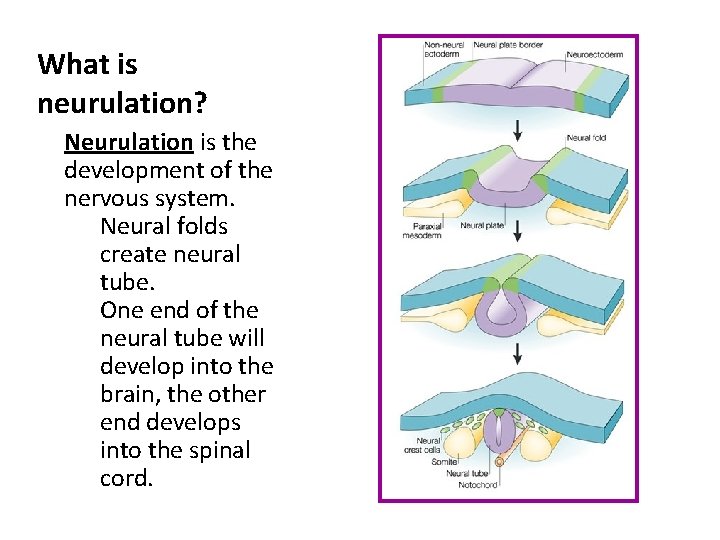
What is neurulation? ü Neurulation is the development of the nervous system. ü Neural folds create neural tube. ü One end of the neural tube will develop into the brain, the other end develops into the spinal cord.
You need to know the process of human development from zygote to birth. Zygote- Fertilized Egg Morula – Solid ball of cells Blastocyst-hollow ball of dividing cells. Gastrula – Three layers
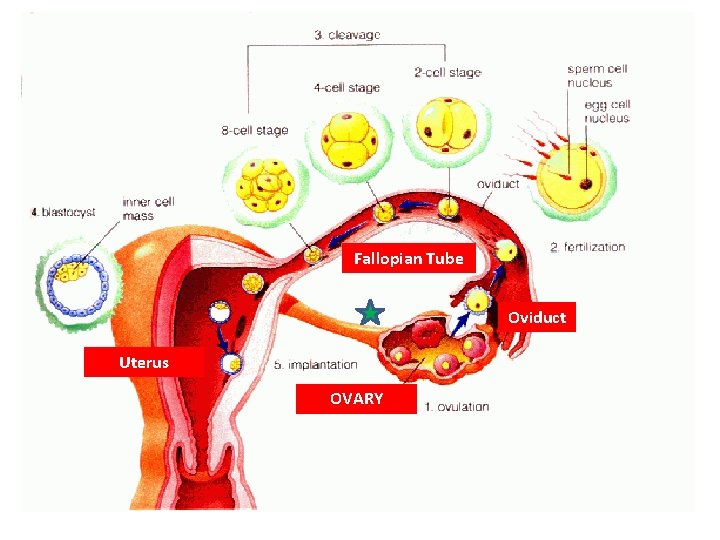
Fallopian Tube Oviduct Uterus OVARY
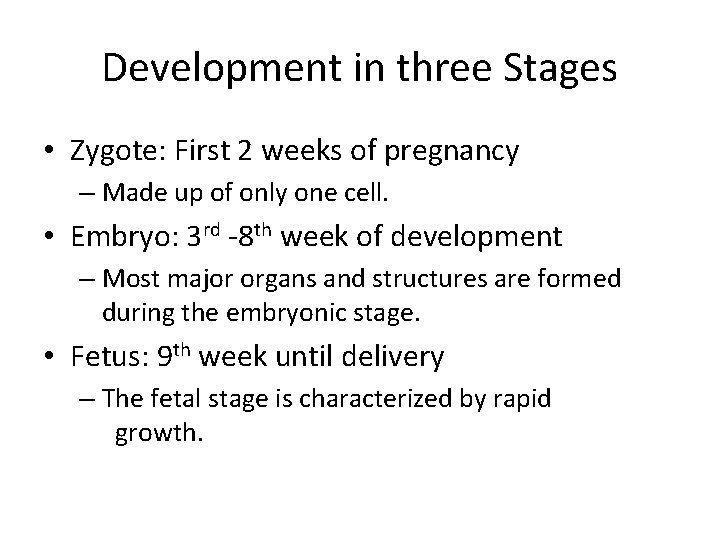
Development in three Stages • Zygote: First 2 weeks of pregnancy – Made up of only one cell. • Embryo: 3 rd -8 th week of development – Most major organs and structures are formed during the embryonic stage. • Fetus: 9 th week until delivery – The fetal stage is characterized by rapid growth.
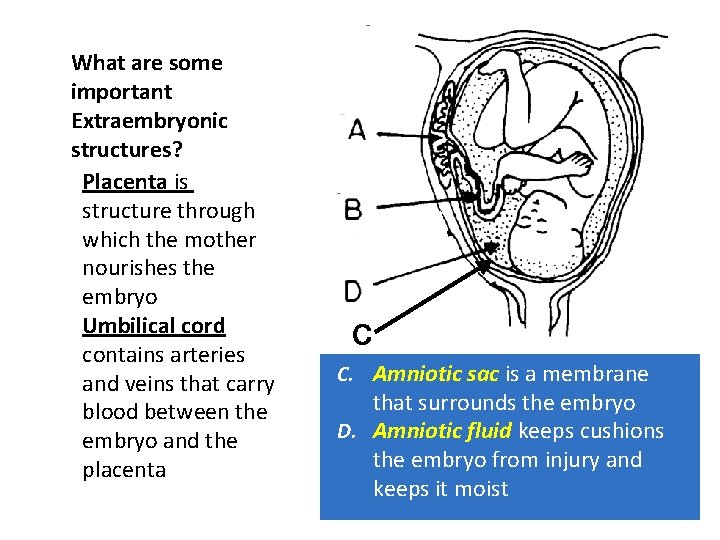
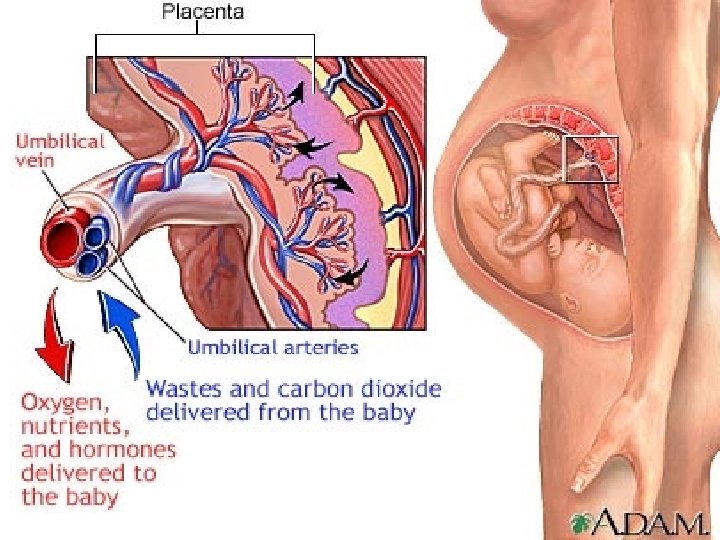
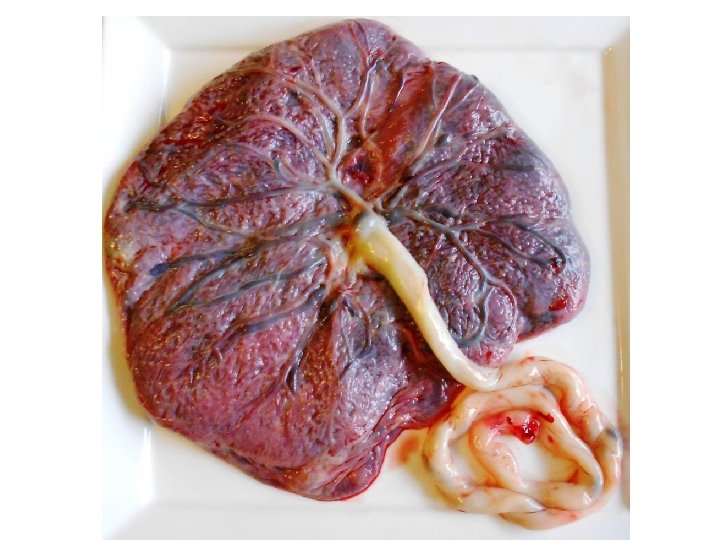
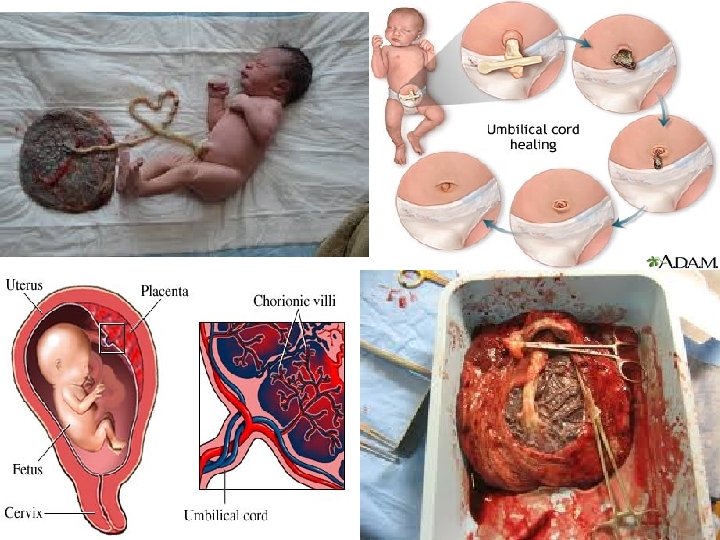
What are some important Extraembryonic structures? A. Placenta is the structure through which the mother nourishes the embryo B. Umbilical cord contains arteries and veins that carry blood between the embryo and the placenta C C. Amniotic sac is a membrane that surrounds the embryo D. Amniotic fluid keeps cushions the embryo from injury and keeps it moist
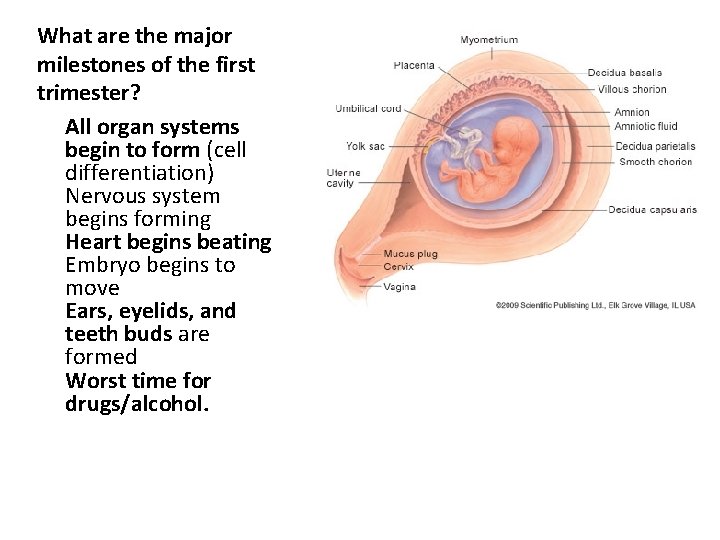
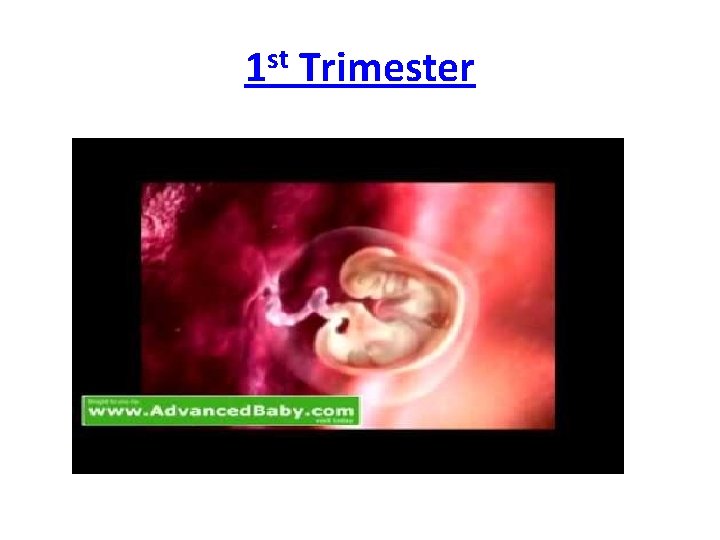
What are the major milestones of the first trimester? ü All organ systems begin to form (cell differentiation) ü Nervous system begins forming ü Heart begins beating ü Embryo begins to move ü Ears, eyelids, and teeth buds are formed ü Worst time for drugs/alcohol.
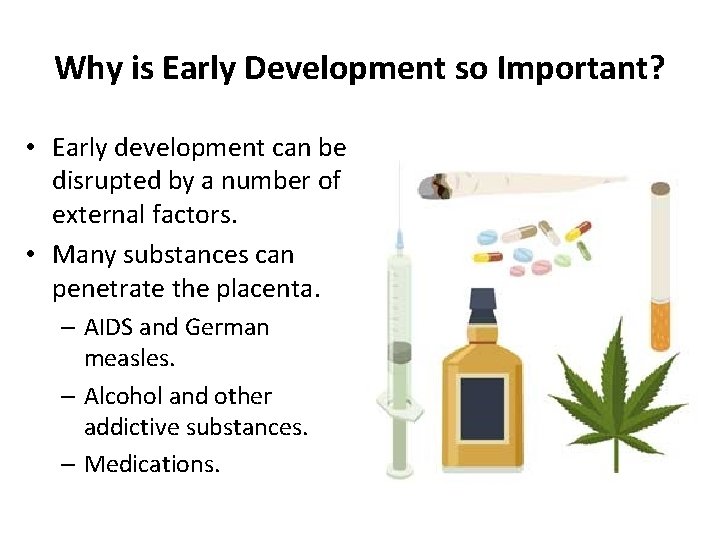
Why is Early Development so Important? • Early development can be disrupted by a number of external factors. • Many substances can penetrate the placenta. – AIDS and German measles. – Alcohol and other addictive substances. – Medications.
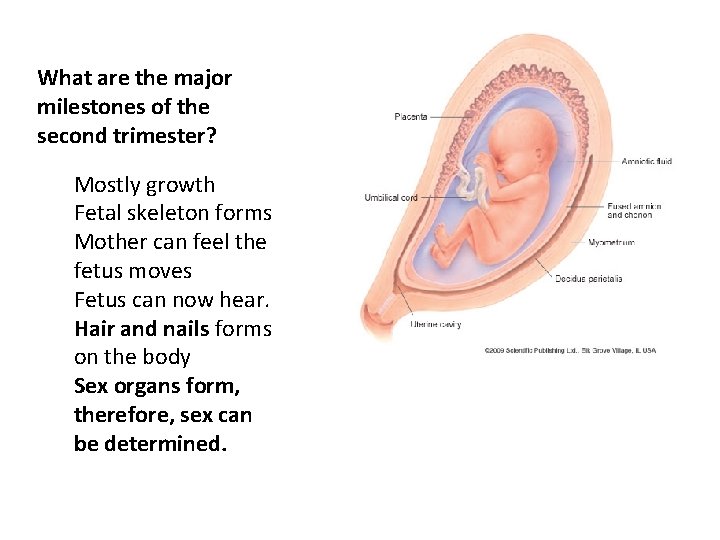
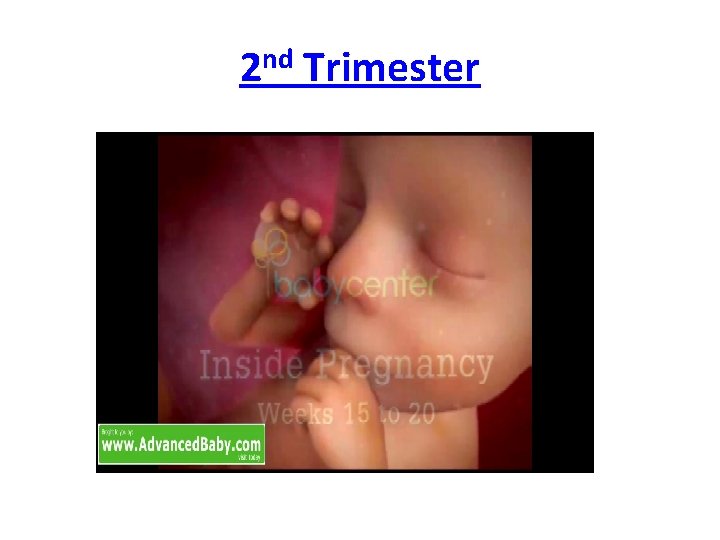
What are the major milestones of the second trimester? ü Mostly growth ü Fetal skeleton forms ü Mother can feel the fetus moves ü Fetus can now hear. ü Hair and nails forms on the body ü Sex organs form, therefore, sex can be determined.
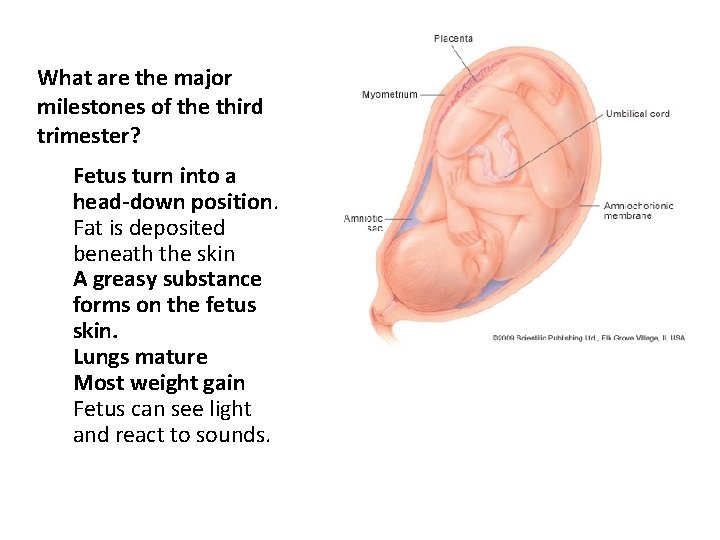
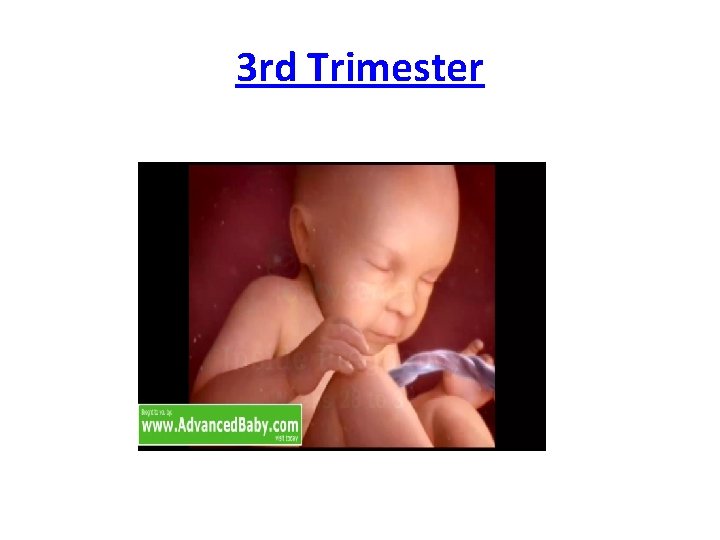
What are the major milestones of the third trimester? ü Fetus turn into a head-down position. ü Fat is deposited beneath the skin ü A greasy substance forms on the fetus skin. ü Lungs mature ü Most weight gain ü Fetus can see light and react to sounds.
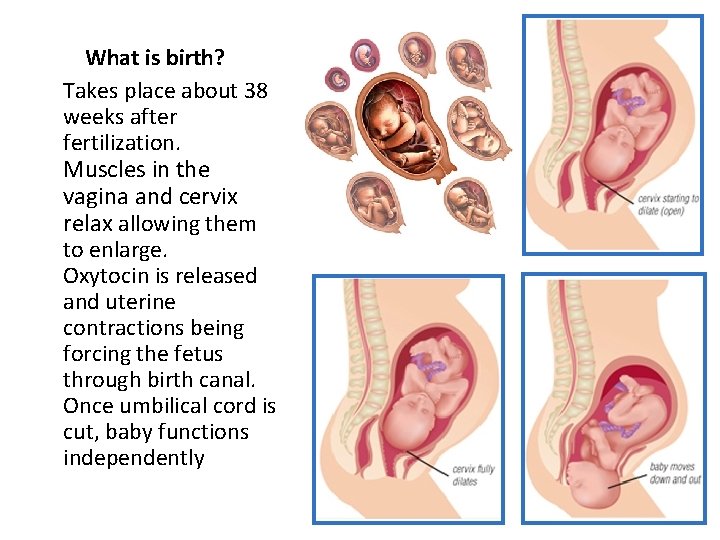
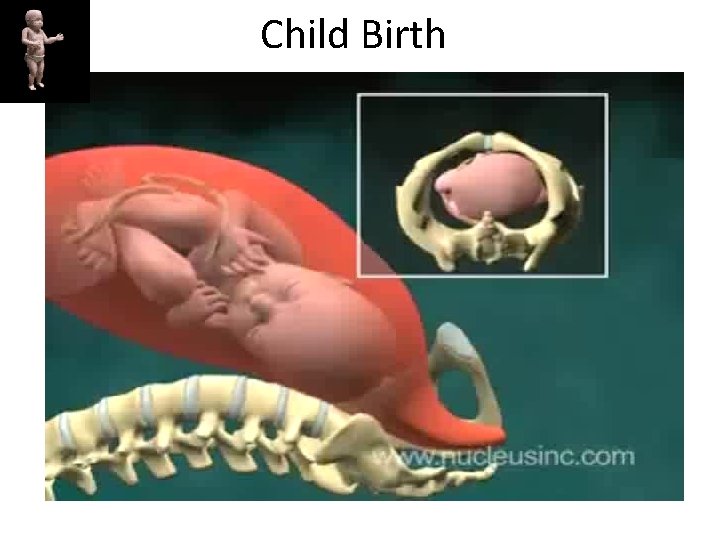
What is birth? ü Takes place about 38 weeks after fertilization. ü Muscles in the vagina and cervix relax allowing them to enlarge. ü Oxytocin is released and uterine contractions being forcing the fetus through birth canal. ü Once umbilical cord is cut, baby functions independently
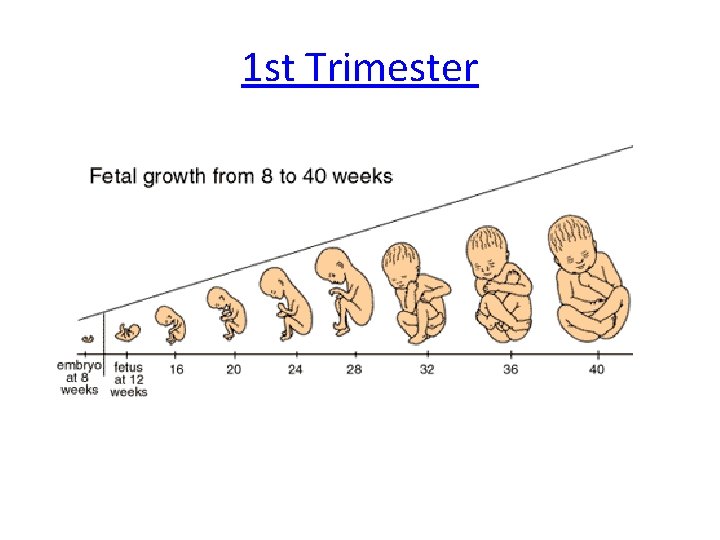
1 st Trimester
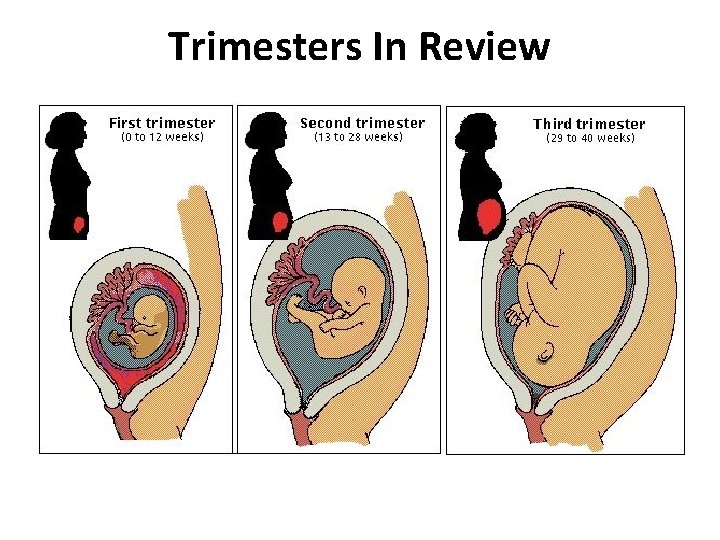
Trimesters In Review
1 st Trimester
2 nd Trimester
3 rd Trimester
Child Birth
• • • Which of the following is true of a zygote? A. It forms from a blastocyst B. It is an unfertilized egg C. It produces haploid male gametophytes D. It is made up of only one cell
• • • Which of the following describes fertilization? A. cell differentiation to form a blastula B. formation of germ layers in a deuterostome C. a sperm joining an egg to form a zygote D. sperm and egg production
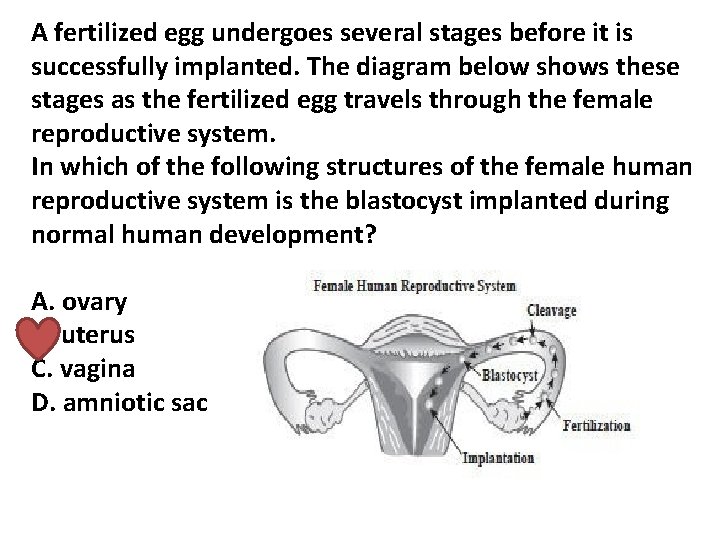
A fertilized egg undergoes several stages before it is successfully implanted. The diagram below shows these stages as the fertilized egg travels through the female reproductive system. In which of the following structures of the female human reproductive system is the blastocyst implanted during normal human development? A. ovary B. uterus C. vagina D. amniotic sac
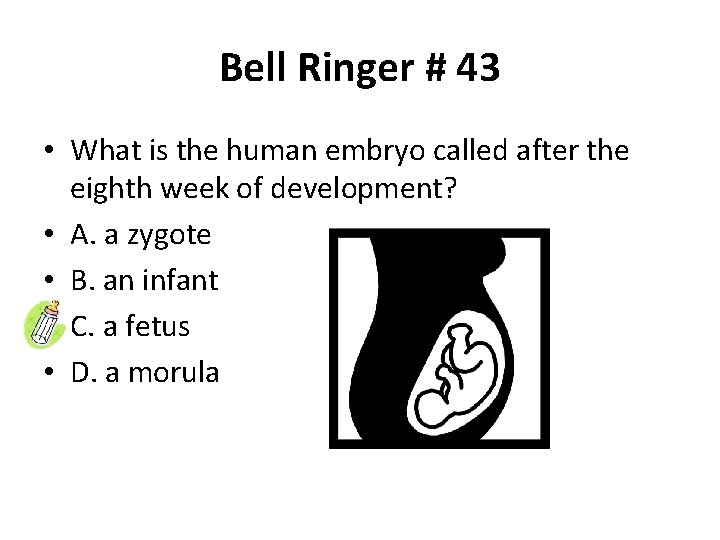
Bell Ringer # 43 • What is the human embryo called after the eighth week of development? • A. a zygote • B. an infant • C. a fetus • D. a morula
Abnormalities present in the cells that line the uterus may prevent the production of offspring by directly interfering with which process? A. the development of the embryo B. the differentiation of gametes into zygotes C. the secretion of estrogen by the ovary D. the production and release of egg cells
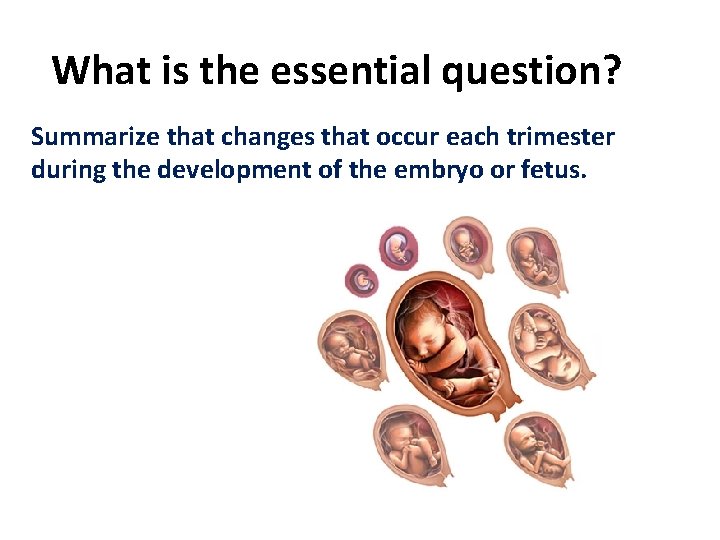
What is the essential question? Summarize that changes that occur each trimester during the development of the embryo or fetus.
Male Reproductive System
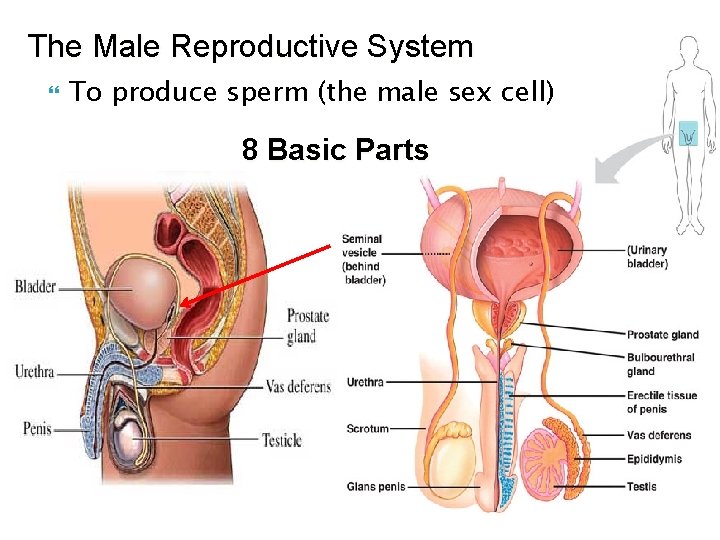
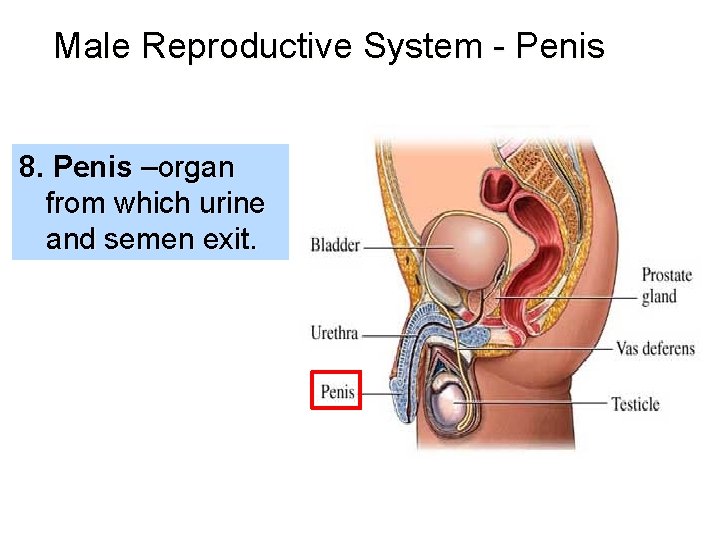
The Male Reproductive System To produce sperm (the male sex cell) 8 Basic Parts
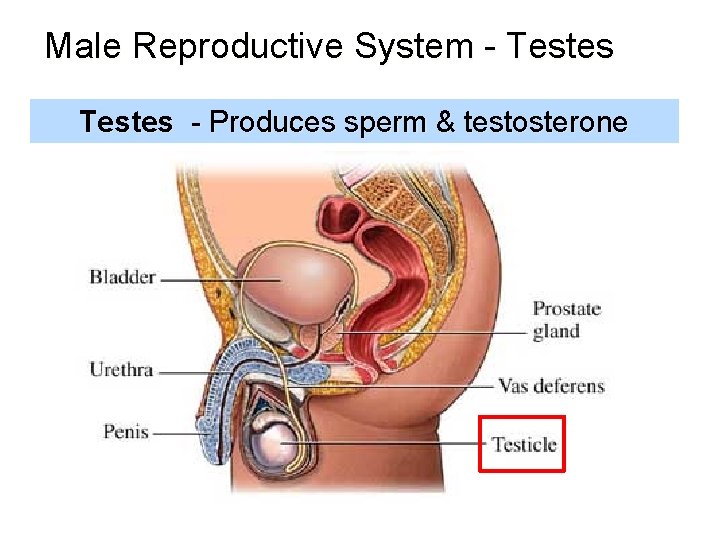
Male Reproductive System - Testes - Produces sperm & testosterone
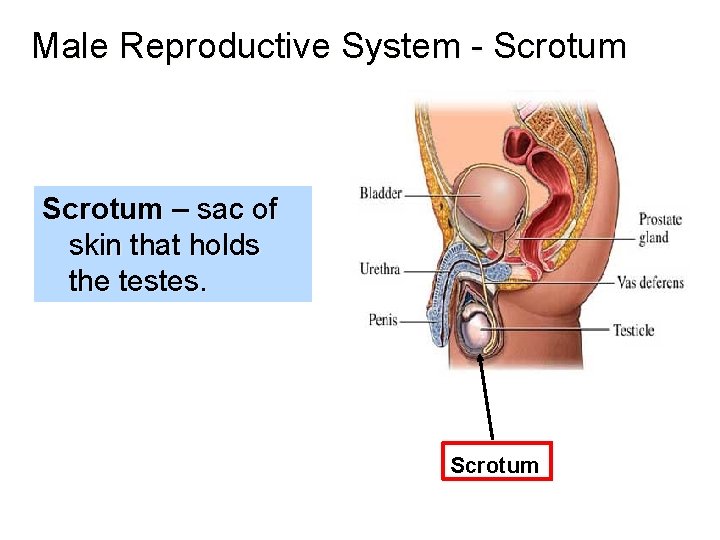
Male Reproductive System - Scrotum – sac of skin that holds the testes. Scrotum
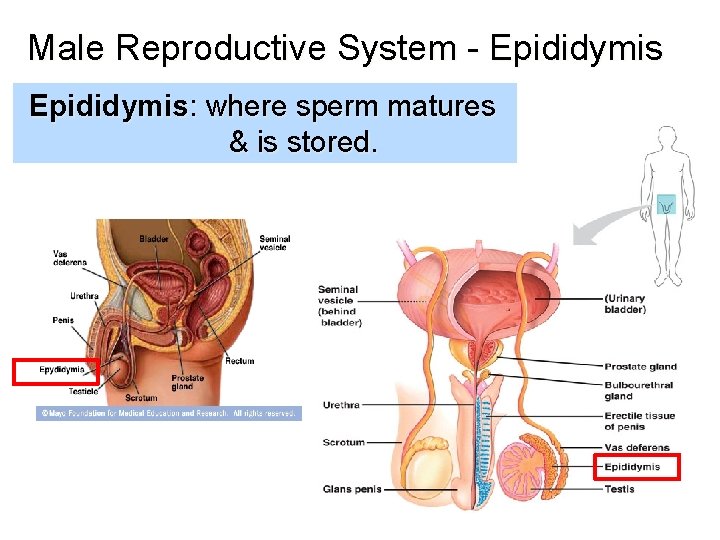
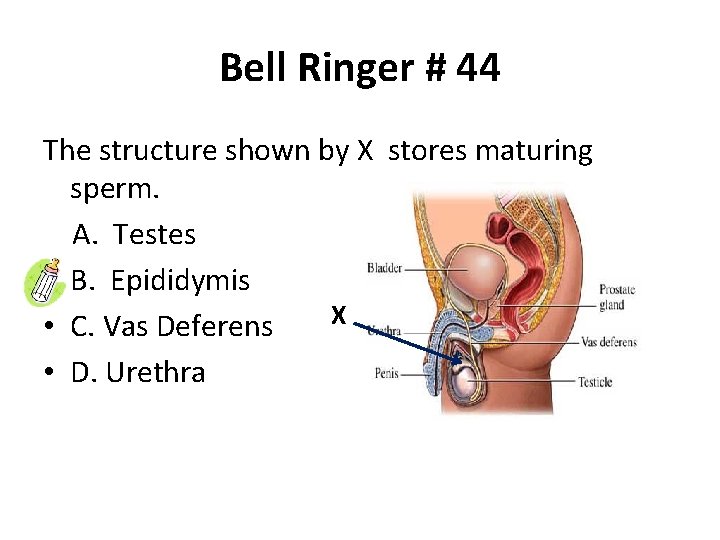
Male Reproductive System - Epididymis: where sperm matures & is stored.
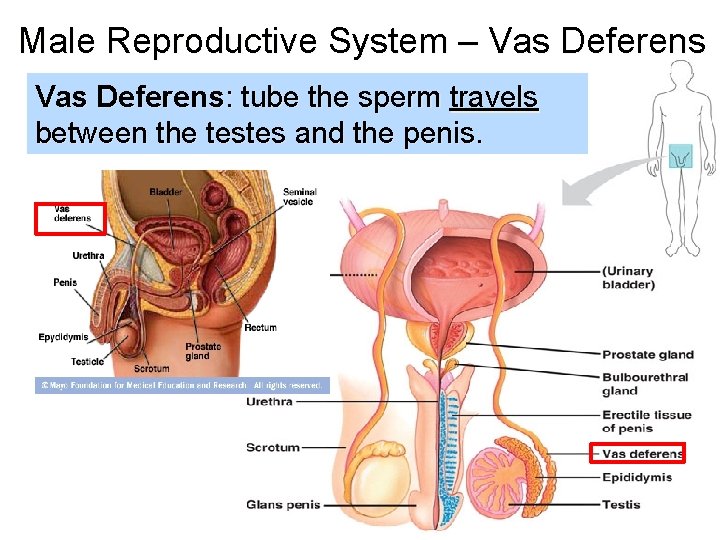
Male Reproductive System – Vas Deferens: tube the sperm travels between the testes and the penis.
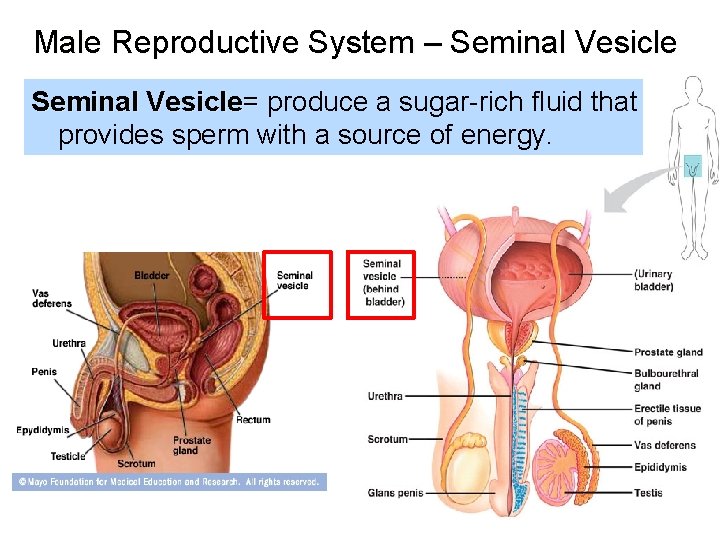
Male Reproductive System – Seminal Vesicle= produce a sugar-rich fluid that provides sperm with a source of energy.
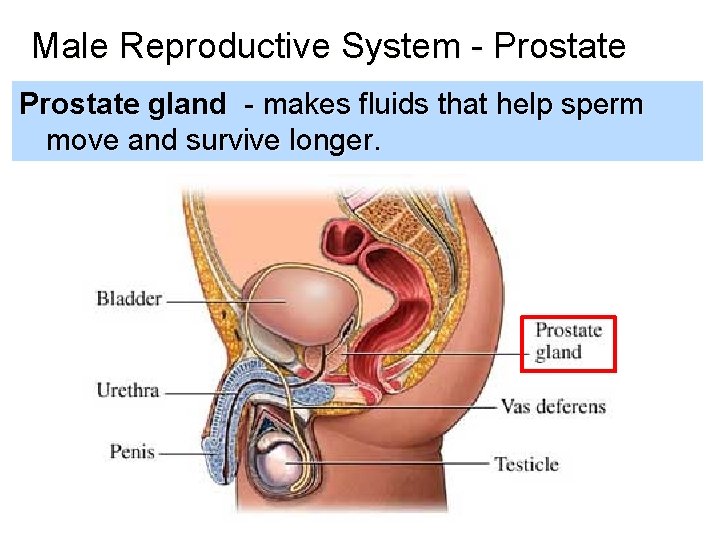
Male Reproductive System - Prostate gland - makes fluids that help sperm move and survive longer.
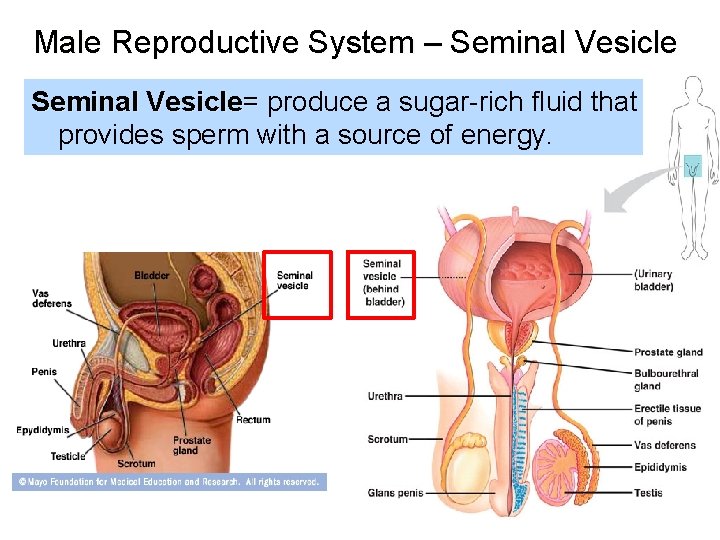
Male Reproductive System – Seminal Vesicle= produce a sugar-rich fluid that provides sperm with a source of energy.
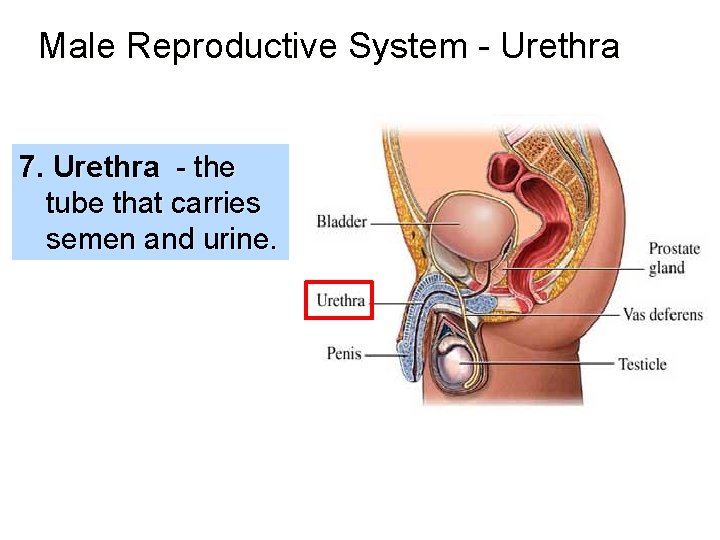
Male Reproductive System - Urethra 7. Urethra - the tube that carries semen and urine.
Male Reproductive System - Penis 8. Penis –organ from which urine and semen exit.
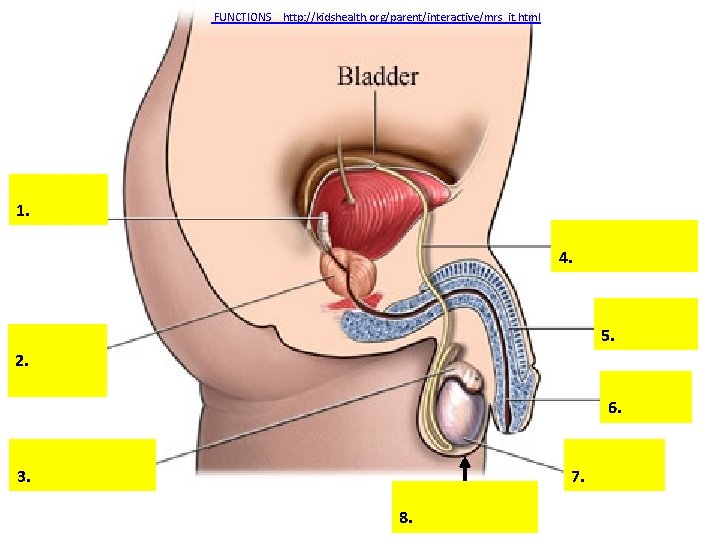
FUNCTIONS _ http: //kidshealth. org/parent/interactive/mrs_it. html 1. 4. 5. 2. 6. 3. 7. 8. Scrotum
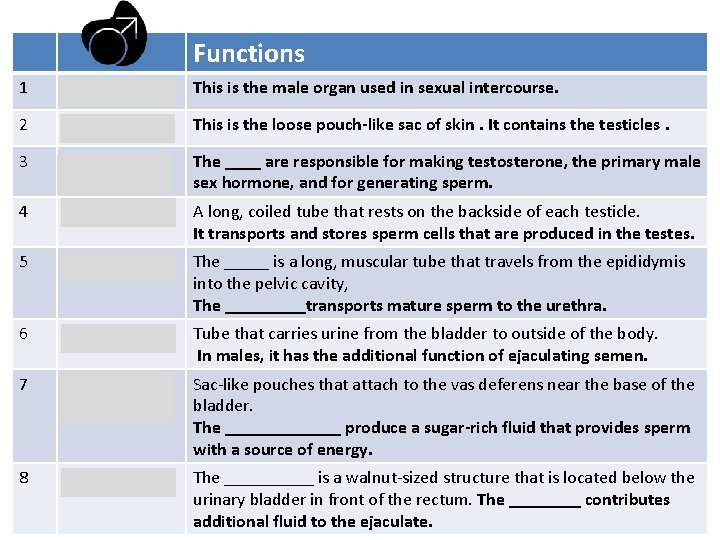
Functions 1 Penis This is the male organ used in sexual intercourse. 2 Scrotum: This is the loose pouch-like sac of skin. It contains the testicles. 3 Testicles (testes): The ____ are responsible for making testosterone, the primary male sex hormone, and for generating sperm. 4 Epididymis: A long, coiled tube that rests on the backside of each testicle. It transports and stores sperm cells that are produced in the testes. 5 Vas deferens: The _____ is a long, muscular tube that travels from the epididymis into the pelvic cavity, The _____transports mature sperm to the urethra. 6 Urethra: Tube that carries urine from the bladder to outside of the body. In males, it has the additional function of ejaculating semen. 7 Seminal vesicles: Sac-like pouches that attach to the vas deferens near the base of the bladder. The _______ produce a sugar-rich fluid that provides sperm with a source of energy. 8 Prostate gland: The _____ is a walnut-sized structure that is located below the urinary bladder in front of the rectum. The ____ contributes additional fluid to the ejaculate.
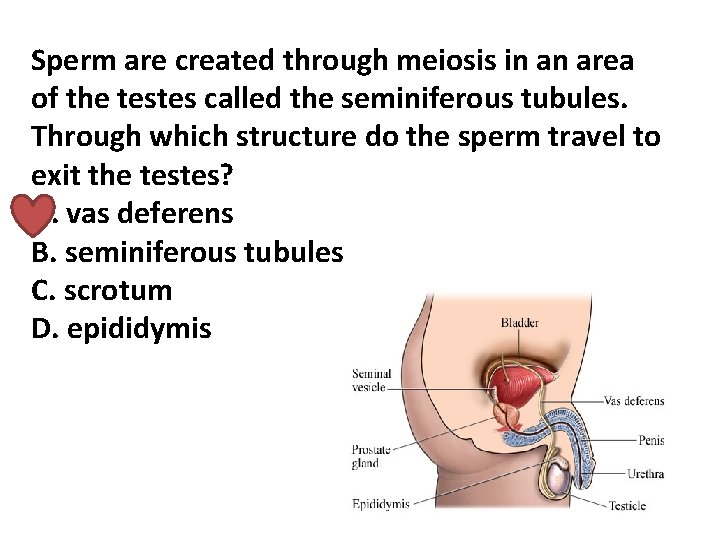
Sperm are created through meiosis in an area of the testes called the seminiferous tubules. Through which structure do the sperm travel to exit the testes? A. vas deferens B. seminiferous tubules C. scrotum D. epididymis
Bell Ringer # 44 The structure shown by X stores maturing sperm. A. Testes • B. Epididymis X • C. Vas Deferens • D. Urethra
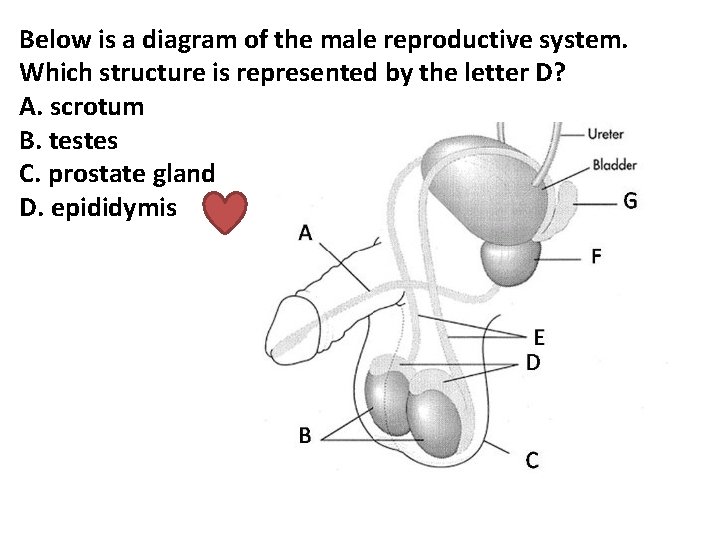
Below is a diagram of the male reproductive system. Which structure is represented by the letter D? A. scrotum B. testes C. prostate gland D. epididymis
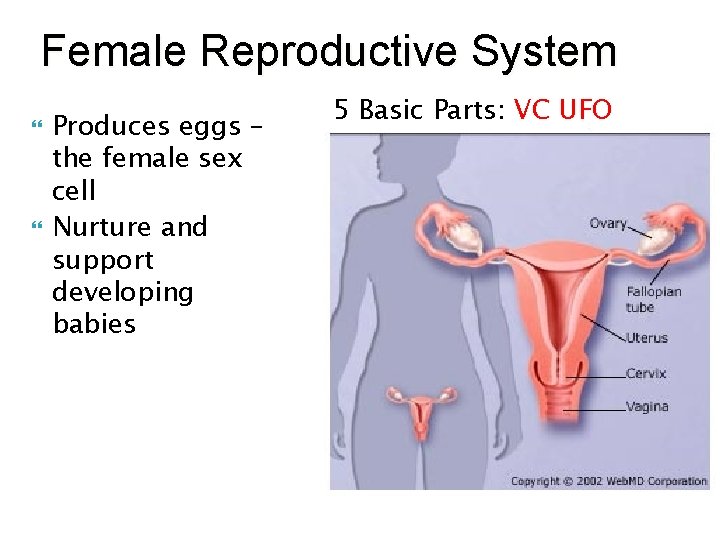
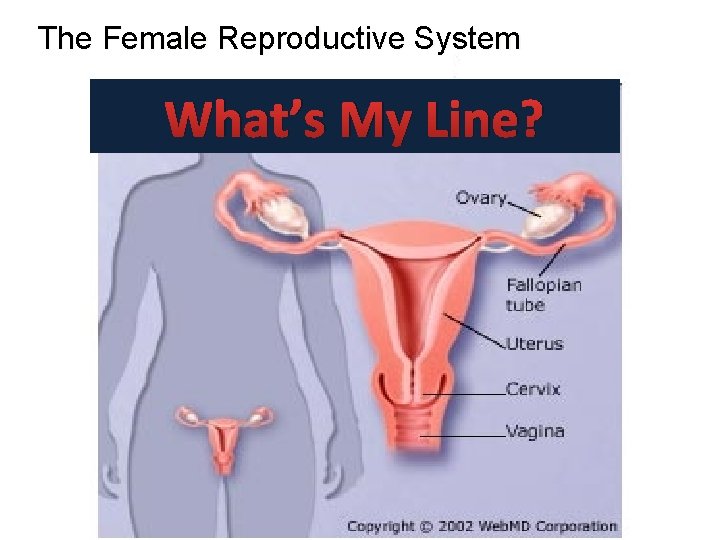
Female Reproductive System Produces eggs – the female sex cell Nurture and support developing babies 5 Basic Parts: VC UFO
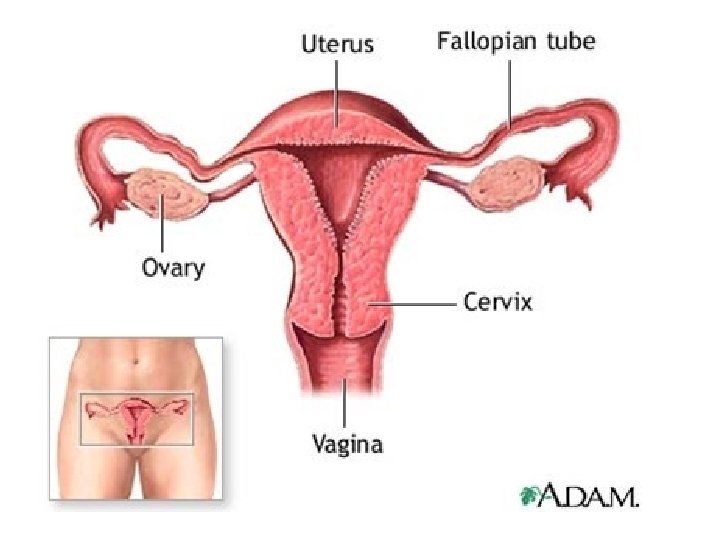
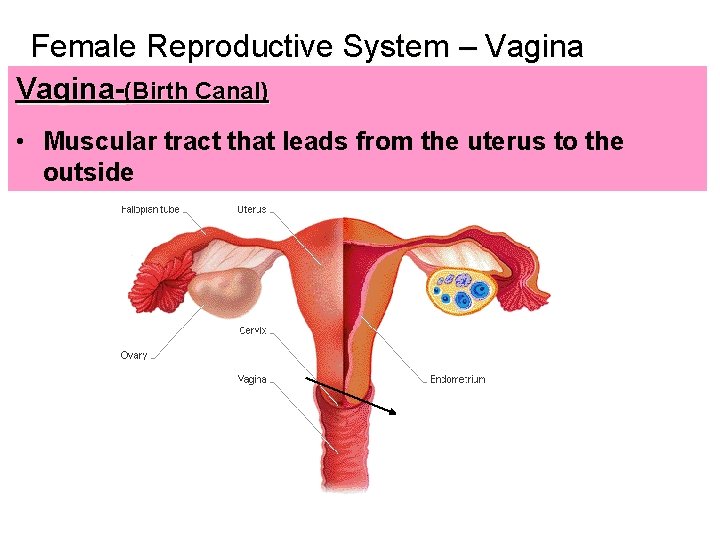
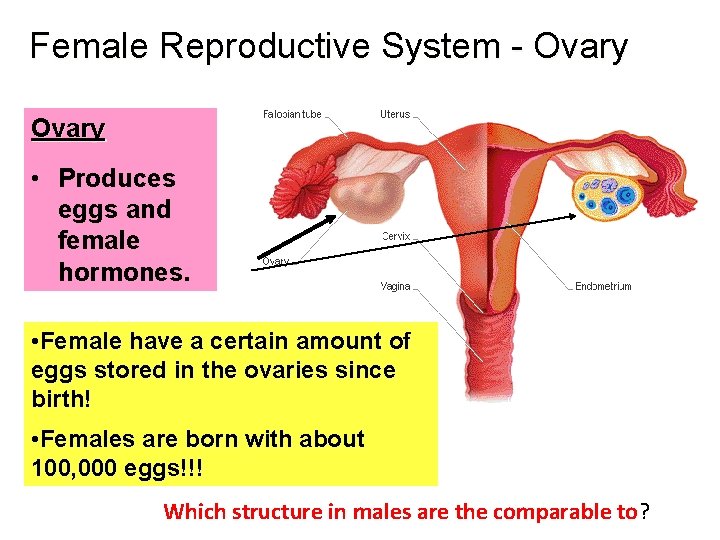
Female Reproductive System – Vagina-(Birth Canal) • Muscular tract that leads from the uterus to the outside
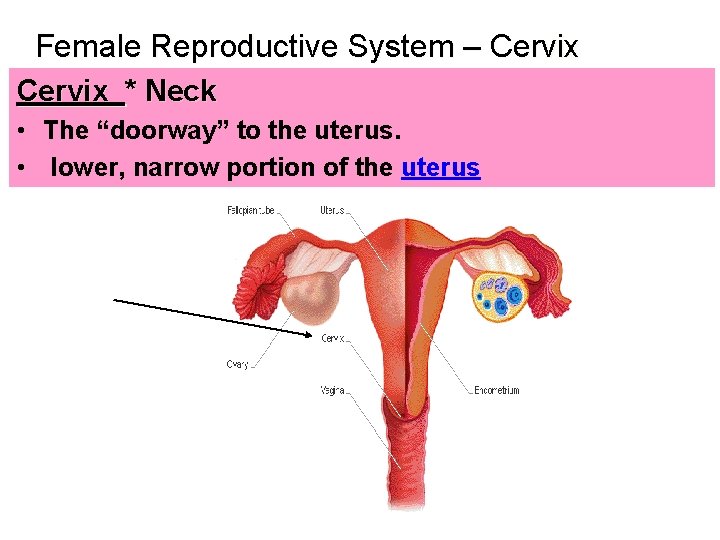
Female Reproductive System – Cervix * Neck • The “doorway” to the uterus. • lower, narrow portion of the uterus
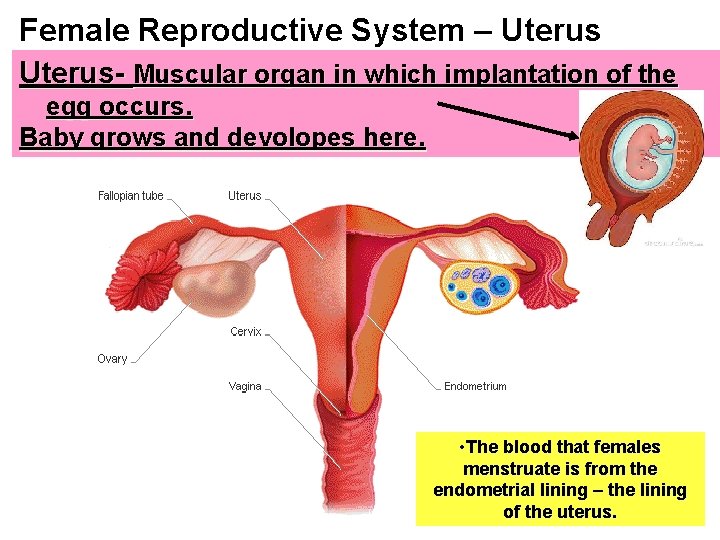
Female Reproductive System – Uterus- Muscular organ in which implantation of the egg occurs. Baby grows and devolopes here. • The blood that females menstruate is from the endometrial lining – the lining of the uterus.
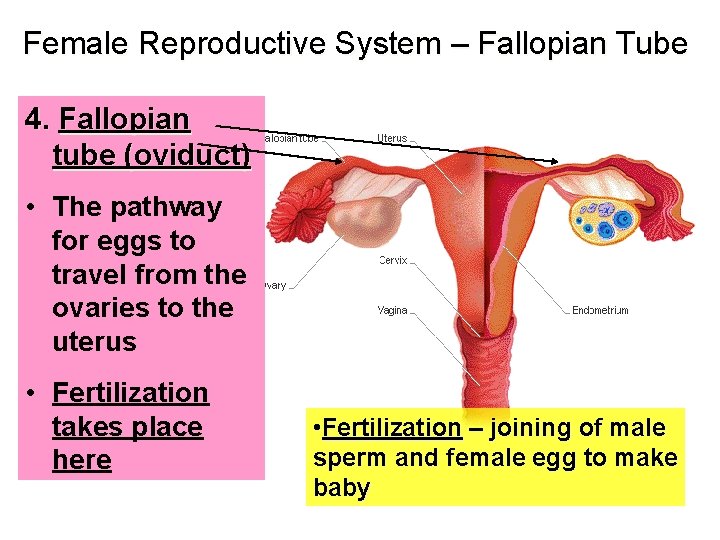
Female Reproductive System – Fallopian Tube 4. Fallopian tube (oviduct) • The pathway for eggs to travel from the ovaries to the uterus • Fertilization takes place here • Fertilization – joining of male sperm and female egg to make baby
Female Reproductive System - Ovary • Produces eggs and female hormones. • Female have a certain amount of eggs stored in the ovaries since birth! • Females are born with about 100, 000 eggs!!! Which structure in males are the comparable to?
The Female Reproductive System What’s My Line?
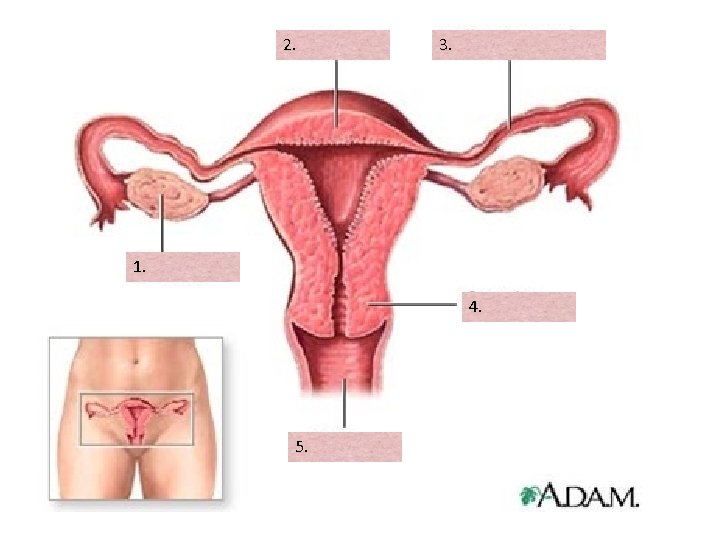
2. 3. 1. 4. 5.
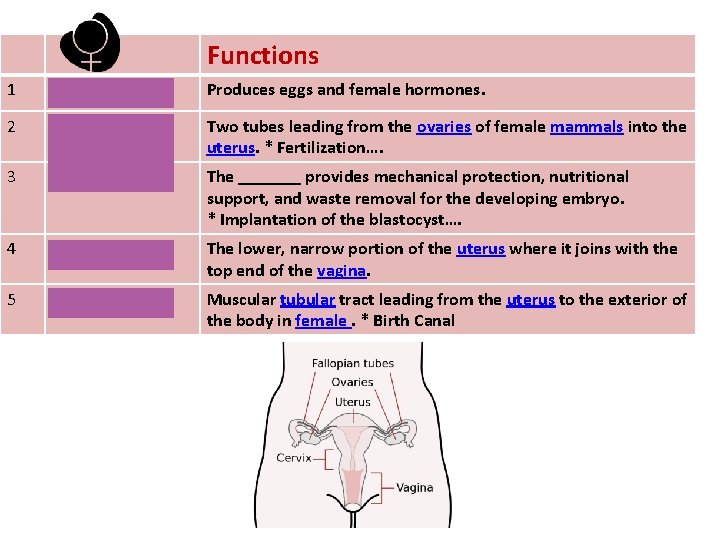
Functions 1 Ovary Produces eggs and female hormones. 2 Oviduct / Fallopian Tubes Two tubes leading from the ovaries of female mammals into the uterus. * Fertilization…. 3 Uterus (womb) The _______ provides mechanical protection, nutritional support, and waste removal for the developing embryo. * Implantation of the blastocyst…. 4 Cervix The lower, narrow portion of the uterus where it joins with the top end of the vagina. 5 Vagina Muscular tubular tract leading from the uterus to the exterior of the body in female. * Birth Canal
A fertilized egg undergoes several stages before it is successfully implanted. The diagram below shows these stages as the fertilized egg travels through the female reproductive system. In which of the following structures of the female human reproductive system is the blastocyst implanted during normal human development? A. ovary B. uterus C. vagina D. amniotic sac