
Reproductive success in male southen elephant seals of
- Slides: 20
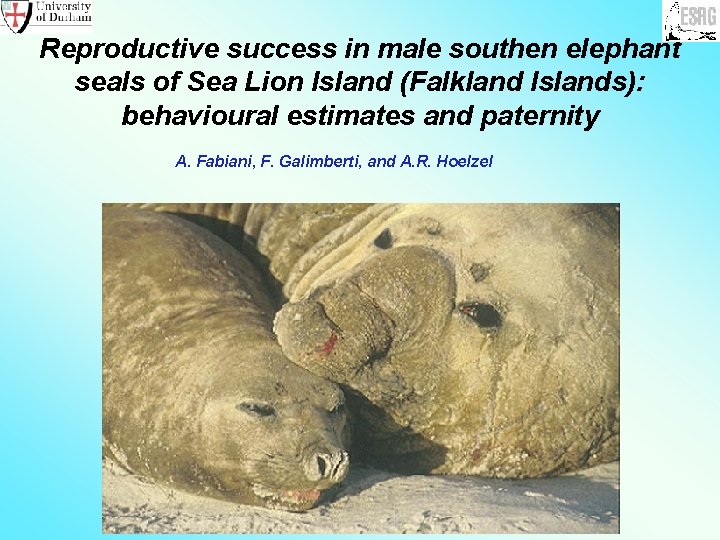
Reproductive success in male southen elephant seals of Sea Lion Island (Falkland Islands): behavioural estimates and paternity A. Fabiani, F. Galimberti, and A. R. Hoelzel
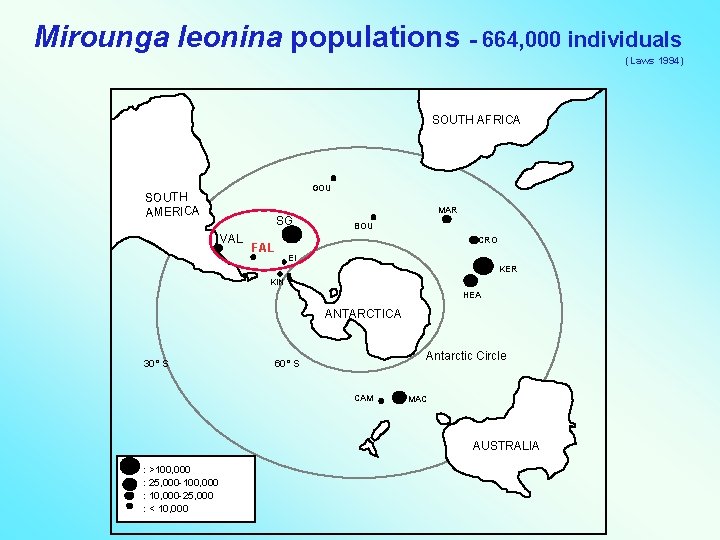
Mirounga leonina populations - 664, 000 individuals (Laws 1994) SOUTH AFRICA GOU SOUTH AMERICA SG VAL FAL MAR BOU CRO EI KER KIN HEA ANTARCTICA 30° S Antarctic Circle 60° S CAM MAC AUSTRALIA : >100, 000 : 25, 000 -100, 000 : 10, 000 -25, 000 : < 10, 000
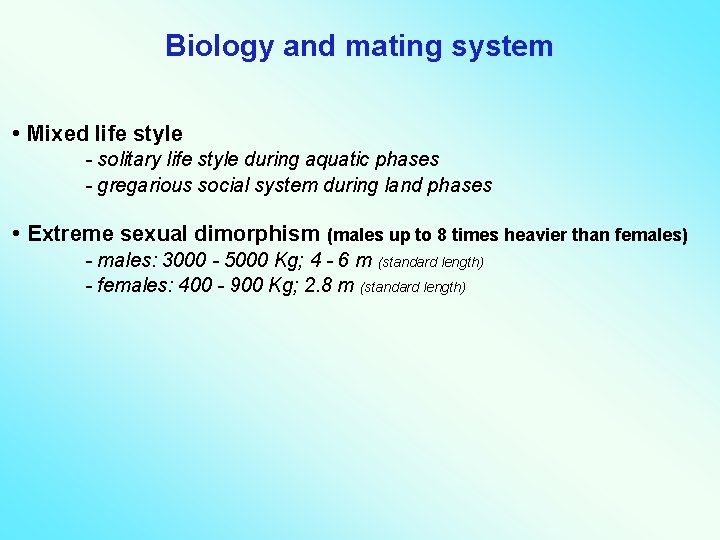
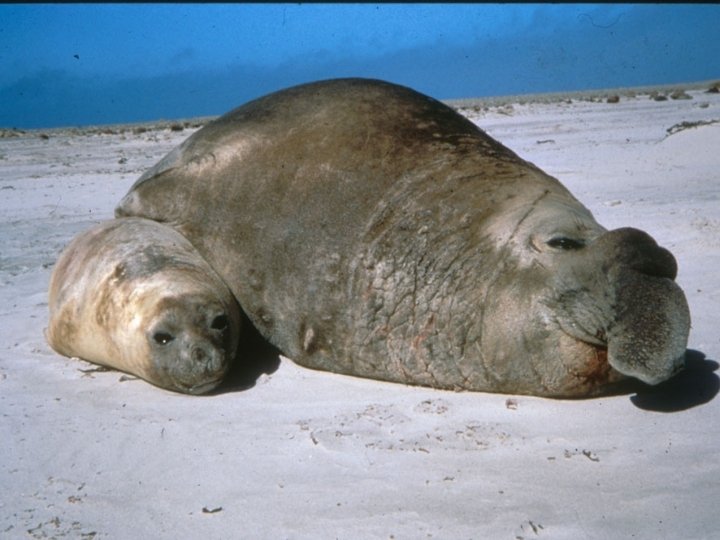
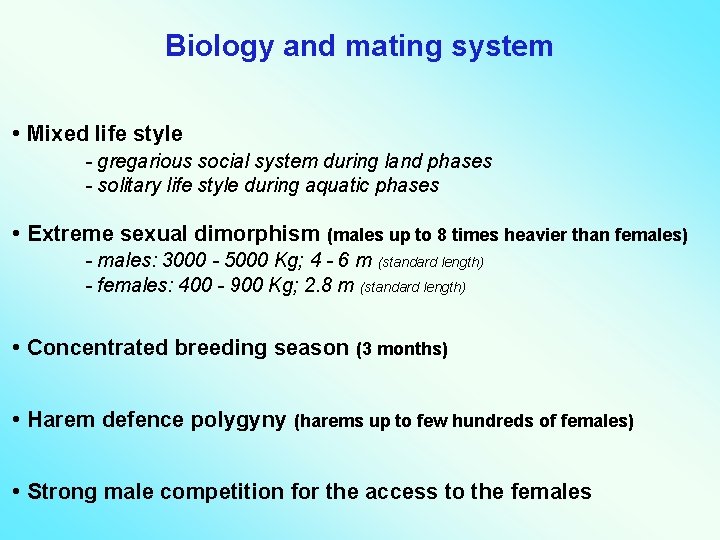
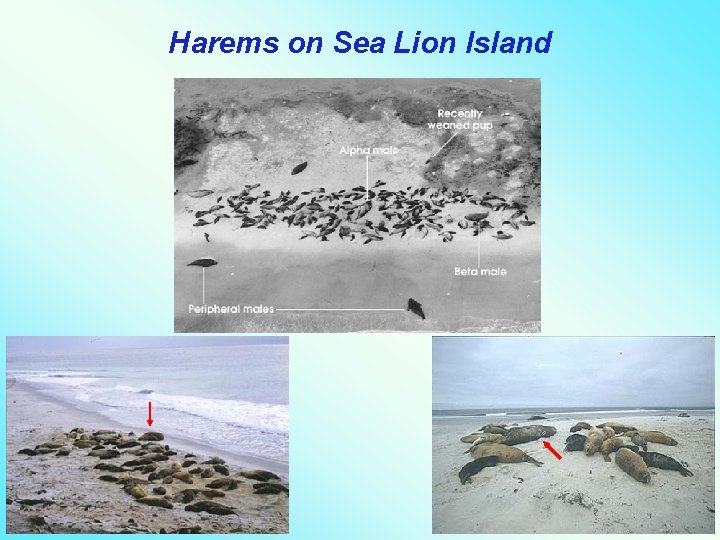
Biology and mating system • Mixed life style - solitary life style during aquatic phases - gregarious social system during land phases • Extreme sexual dimorphism (males up to 8 times heavier than females) - males: 3000 - 5000 Kg; 4 - 6 m (standard length) - females: 400 - 900 Kg; 2. 8 m (standard length)
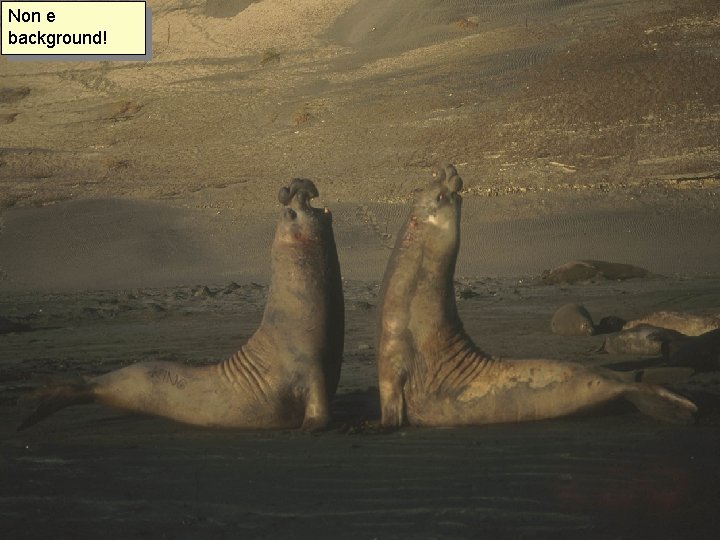
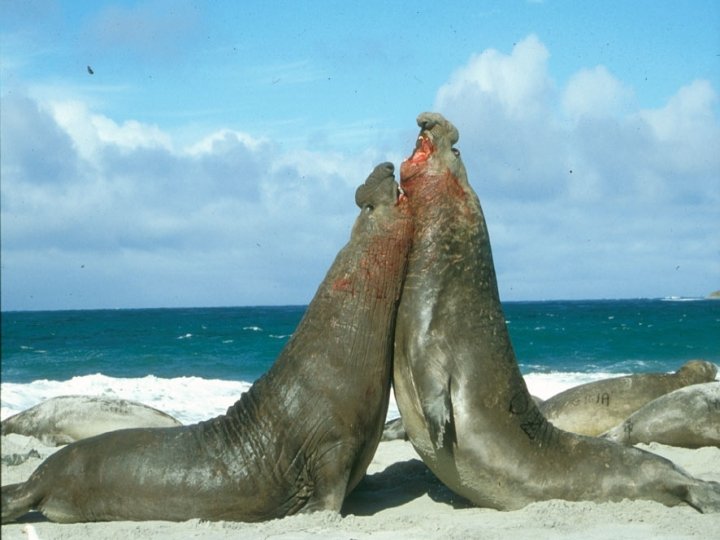
Biology and mating system • Mixed life style - gregarious social system during land phases - solitary life style during aquatic phases • Extreme sexual dimorphism (males up to 8 times heavier than females) - males: 3000 - 5000 Kg; 4 - 6 m (standard length) - females: 400 - 900 Kg; 2. 8 m (standard length) • Concentrated breeding season (3 months) • Harem defence polygyny (harems up to few hundreds of females) • Strong male competition for the access to the females
Non e background!
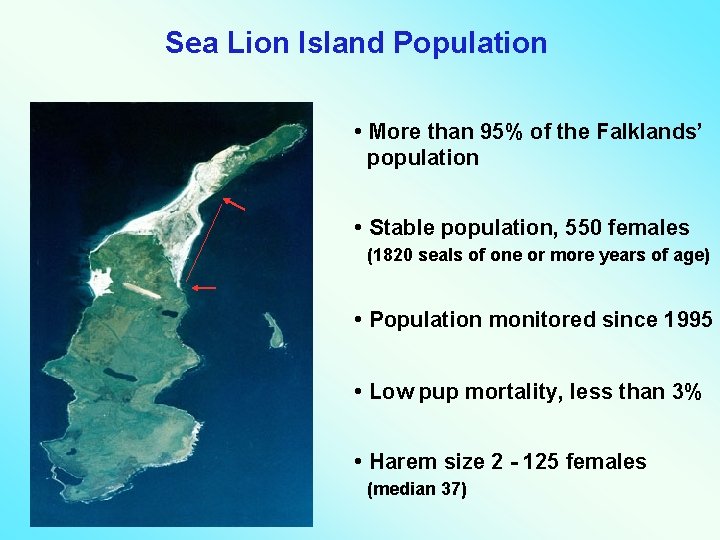
Sea Lion Island Population • More than 95% of the Falklands’ population • Stable population, 550 females (1820 seals of one or more years of age) • Population monitored since 1995 • Low pup mortality, less than 3% • Harem size 2 - 125 females (median 37)
Harems on Sea Lion Island
This study • The determination of the genetic paternity • The assessment of male reproductive strategy and variance in male reproductive success • The evaluation of the relationships between observational measure of male mating success and true reproductive success
Methods - Behaviour • Three breeding seasons, 1996 to 1998 (September - November) • All females, males and pups marked (tags and dye marks) • Seven harems, range 18 to 91 females - total of 1030 hrs of observations (mean 147 per harem) - 356 copulations (mean 51 per harem)
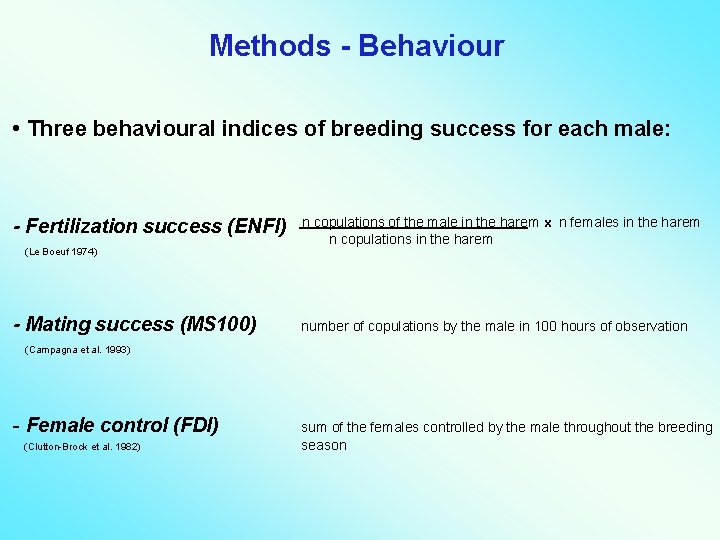
Methods - Behaviour • Three behavioural indices of breeding success for each male: - Fertilization success (ENFI) (Le Boeuf 1974) - Mating success (MS 100) n copulations of the male in the harem x n females in the harem n copulations in the harem number of copulations by the male in 100 hours of observation (Campagna et al. 1993) - Female control (FDI) (Clutton-Brock et al. 1982) sum of the females controlled by the male throughout the breeding season
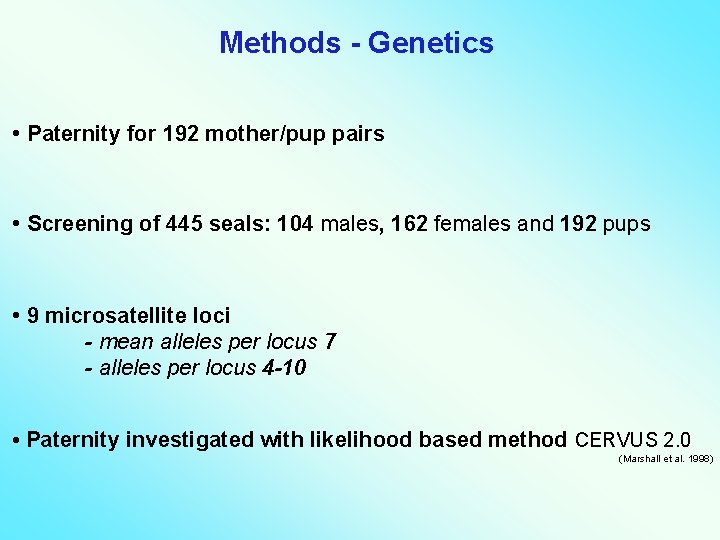
Methods - Genetics • Paternity for 192 mother/pup pairs • Screening of 445 seals: 104 males, 162 females and 192 pups • 9 microsatellite loci - mean alleles per locus 7 - alleles per locus 4 -10 • Paternity investigated with likelihood based method CERVUS 2. 0 (Marshall et al. 1998)
Results - Behaviour • Only 35 males out of 174 (20. 1%) achieved at least one copulation • Distribution of ENFI was very asymmetric - range 0 - 125 - mean 6. 1± 19. 1 (CV = 3. 1) for all males - mean 30. 3± 33. 4 (CV = 1. 1) for only males that copulated 1996 Number of males 1997 ENFI range
Results - Genetics • Father for 188 of 192 pups (2% no father found) • Distribution of paternities in the harems very asymmetric Number of males - 1996: mean 2. 4 ± 5. 5 , max 22 (CV = 2. 3) - 1997: mean 3. 3 ± 8. 1, max 32 (CV = 2. 5) Number of paternities
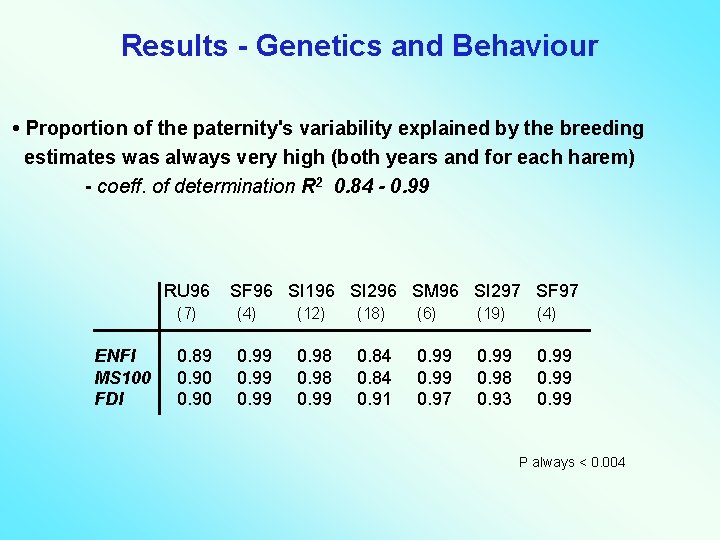
Results - Genetics and Behaviour • Proportion of the paternity's variability explained by the breeding estimates was always very high (both years and for each harem) - coeff. of determination R 2 0. 84 - 0. 99 RU 96 ENFI MS 100 FDI SF 96 SI 196 SI 296 SM 96 SI 297 SF 97 (7) (4) (12) (18) (6) (19) (4) 0. 89 0. 90 0. 99 0. 98 0. 99 0. 84 0. 91 0. 99 0. 97 0. 99 0. 98 0. 93 0. 99 P always < 0. 004
Results - Genetic and Behaviour • Largest proportion of paternities achieved by the harem holder - mean 75% ± 16, range 53%-92% % in the harem • No clear association between the size of the harem and the relative success of the harem holder
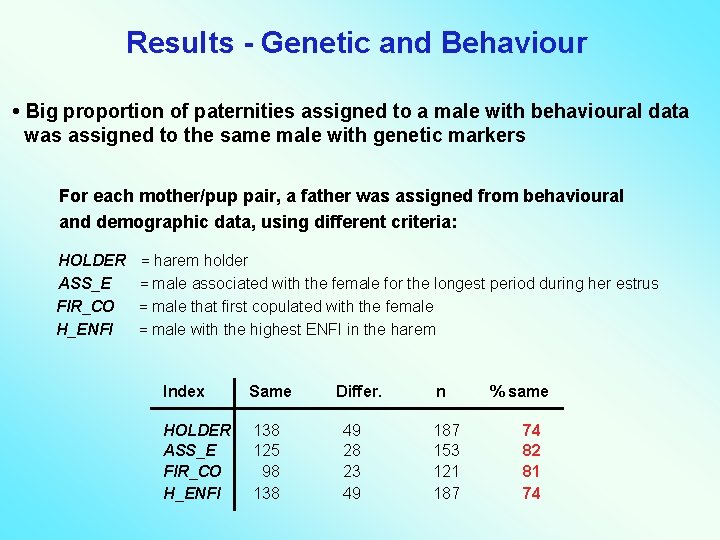
Results - Genetic and Behaviour • Big proportion of paternities assigned to a male with behavioural data was assigned to the same male with genetic markers For each mother/pup pair, a father was assigned from behavioural and demographic data, using different criteria: HOLDER ASS_E FIR_CO H_ENFI = harem holder = male associated with the female for the longest period during her estrus = male that first copulated with the female = male with the highest ENFI in the harem Index Same HOLDER ASS_E FIR_CO H_ENFI 138 125 98 138 Differ. 49 28 23 49 n 187 153 121 187 % same 74 82 81 74
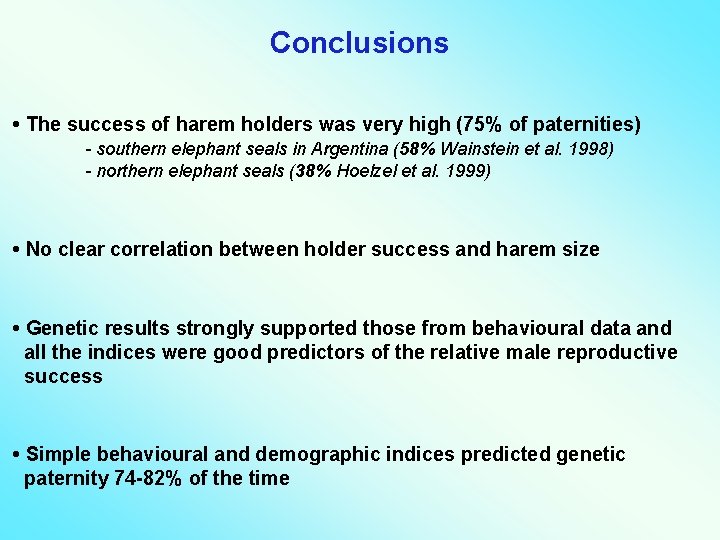
Conclusions • The success of harem holders was very high (75% of paternities) - southern elephant seals in Argentina (58% Wainstein et al. 1998) - northern elephant seals (38% Hoelzel et al. 1999) • No clear correlation between holder success and harem size • Genetic results strongly supported those from behavioural data and all the indices were good predictors of the relative male reproductive success • Simple behavioural and demographic indices predicted genetic paternity 74 -82% of the time
Very special thanks to all the people who helped in the field and in the laboratory Funding from the University of Rome ‘La Sapienza’ and the CNR of Italy