
Reproductive Physiology of the Mare Matt Mc Millan
- Slides: 29
Reproductive Physiology of the Mare Matt Mc. Millan, Ph. D.
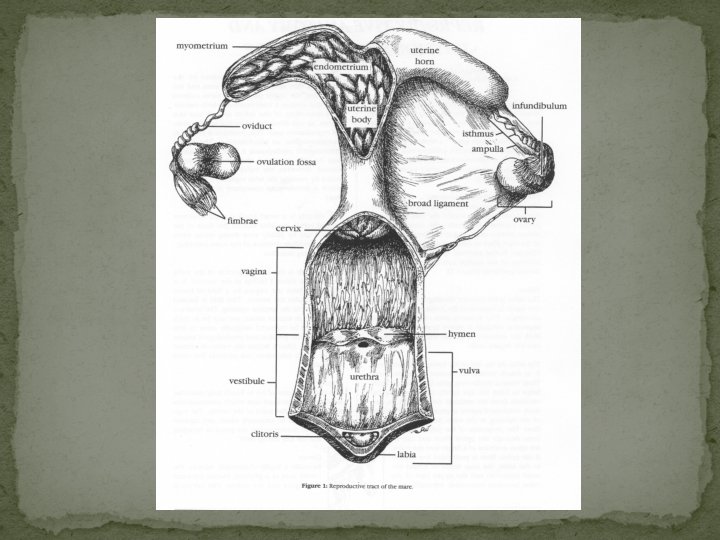
Female Reproductive Anatomy �Includes: �Vulva �Vagina �Cervix �Uterus �Oviducts �Ovaries
Vulva �Consists of: � Labia, Clitoris, Vestibule �Purpose? � Protect from entrance of air & other contaminants �What may poor conformation may lead to? � Pneumovagina or windsucking �Caslicks
Vulva �Labia � Vertical slits below anus � Purpose? �Helps to seal the vestibule from the external environment �Clitoris � Located? �Inside labia � Can be seen during winking
Vulva �Vestibule � Internal portion of the vulva � Hymen may be present in this area � Glands secrete mucus to lubricate vulva and vagina
Female Reproductive Anatomy � Vagina � 6 -8 inches long � Connects vestibule to cervix � Cervix � Acts as a physical barrier between vagina and uterus � Shape changes in response to body’s hormonal environment � Estrus (estrogen): very pink, vascular, relaxed � Diestrus (progesterone): very thick, sticky mucus, tightly closed
Female Reproductive Anatomy �Uterus � Hollow Y shaped organ including uterine body � Influenced by? �Hormones � Function is to: �Protect and Nourish �Provide a conducive atmosphere for development of embryo �Expel fetus during birth
Female Reproductive Anatomy �Oviducts (aka? ) � Fallopian tubes � Fertilization of ovum �Ovary � Vary in size and texture due to time of year � Hormone production � Follicle growth � Ovulation (Occurs When? ) �(~35 mm) � Corpus Luteum (What Hormone is Produced? ) �Progesterone
Physiology of Reproduction �Reproductive efficiency is very low (Why? ) �Live foal versus bred mares ~50% �Leading cause of infertility is � Human management �Live foal rates in feral horses ~80 -90%
Physiology of Reproduction �Why is reproductive efficiency so poor? �We tend to: �Select for other than reproductive characteristics �Frequently attempt to breed out of season
Seasonally Polyestrus �Horses are short day or long day breeders? �Gestation period? �During winter months mares are anestrus � Not respond to stallion � Ovaries will not develop follicles � Minimal ovarian hormone secretion �During season of reproduction: � Estrous cycles 21 -23 days
Reproductive Behavior �Estrus (heat period) � Responsive to stallion � 5 to 7 days � Signs include: �Urination stance, leaning into stallion, winking �Estrus behavior will cease 24 -48 hours after ovulation �Beginning of diestrus 14 -16 days
Endocrinology of Reproduction �Processes involved in reproduction in the mare driven by what? � Hormones �What are Hormones? � Chemical substances produced by various tissues that travel through the circulatory system to produce an effect on an organ (s) �Endocrinology � Study of hormones and their effects
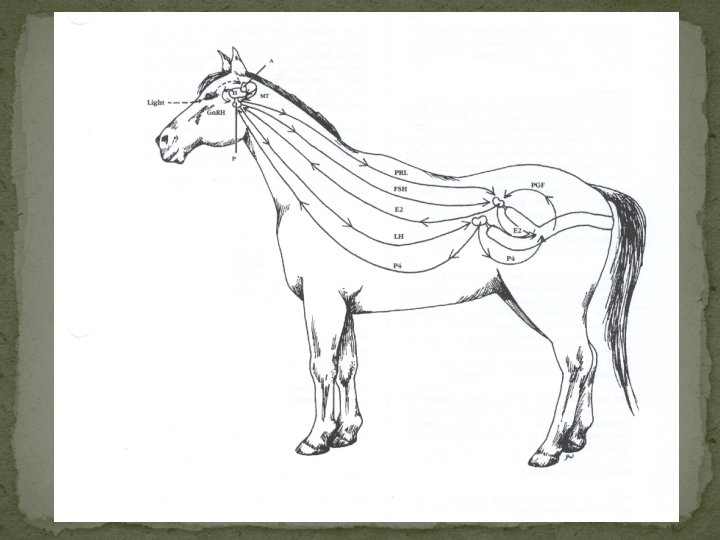
Endocrinology of Reproduction �Hypothalamus � Located where? �in mid-brain � Interprets environmental cues such as �Day length �Temperature � Signals start of season by producing �Gn. RH Stimulates anterior pituitary Anterior pituitary produces �FSH and LH �Stimulates ovaries
Endocrinology of Reproduction � Follicle Stimulating Hormone (FSH) � Stimulates the growth of follicles �Dominant follicle is selected �~20 -25 mm Estradiol-17β is secreted � Peak immediately prior to ovulation � Stimulates release of LH
Endocrinology of Reproduction �Luteinizing Hormone (LH) � Responsible for stimulating ovulation � Supporting initial stages of �Corpus luteum (CL) development � Secreted for a prolonged period in the mare �Beginning before the initiation of estrus �Reaches peak concentrations two days after ovulation
Endocrinology of Reproduction �The lutueal phase of the estrous cycle begins with: � The completion of ovulation � After ovulation occurs: � The ruptured follicle tissue begins to form the CL
Endocrinology of Reproduction �The empty follicular cavity accumulates coagulated blood and forms � The corpus hemorrhagicum (precursor to CL) �Luteal cells begin to replace blood: � CL is formed
Endocrinology of Reproduction �CL secretes what? � Progesterone �What is the purpose of progesterone? � Maintain pregnancy � Inhibits the release of LH � Changes behavior into a typical diestrus state �For the mare to return to estrus � Progesterone must be halted
Endocrinology of Reproduction �If mare is not pregnant: � PGF 2α is released from the uterus � 14 to 16 days following ovulation �PGF 2α causes? � Luteolysis marking the end of the luteal phase
Seasonality �Primary environmental cue used in reproductive activity is: � Day length �Length of photoperiod is interpreted through: � Neural signals to specific portions of the brain creating hormones to be produced or ceased
Seasonality �Melatonin is produced where? �Brain’s pineal gland �In response to absence of light �Melatonin has suppressive effect on? � Gn. RH
Seasonality �During Anestrous: � Melatonin levels are �High � Gn. RH levels are �Low � LH levels are �Low
Seasonality FSH levels do not appear to change with the seasons � Ovaries are: �Small and hard during anestrus with no significant follicular activity � Research: Spring vs. Fall � Spring has been researched more � to increase the production of early-season foals � Mares placed under lights � to stimulate estrus
Synthetic Hormones �Deslorelin (Ovuplant) �Desorelin Acetate(Sucromate) � Injectable Gn. RH agonist � Stops production of testosterone and estrogen � Induces ovulation within 48 hours of treatment in cyclic estrous mares with an ovarian follicle between 30 and 40 mm in diameter
Synthetic Hormones �h. CG �Human Chorionic Gonadatropin �Has LH properties �Causes ovulation
Synthetic Hormones �Altrenogest � Regumate �Synthetic Progesterone aka progestine �Given daily for 15 days Keeps mares from entering estrus �When discontinued Return to estrus within 4 to 5 days