
Reproductive Physiology A review of the Continuum Part
- Slides: 26
Reproductive Physiology: A review of the Continuum (Part I) Craig Turczynski, Ph. D. Reproductive Physiologist, Certified Teacher of the Billings Ovulation Method®, Director of Planning and Development BOMA-USA 1
Objectives • Reinforce your knowledge of reproductive physiology leading to a better understanding of why cycle variations can occur. • Review data published by Professor James B. Brown about the type of cycle variants that can occur during stages of a women’s reproductive life. • Gain a better understanding of when cycle variations are a normal part of the continuum. 2
Figures from Jones and Lopez. , (2014) Human Reproductive Biology. Academic Press Second slide deck 3
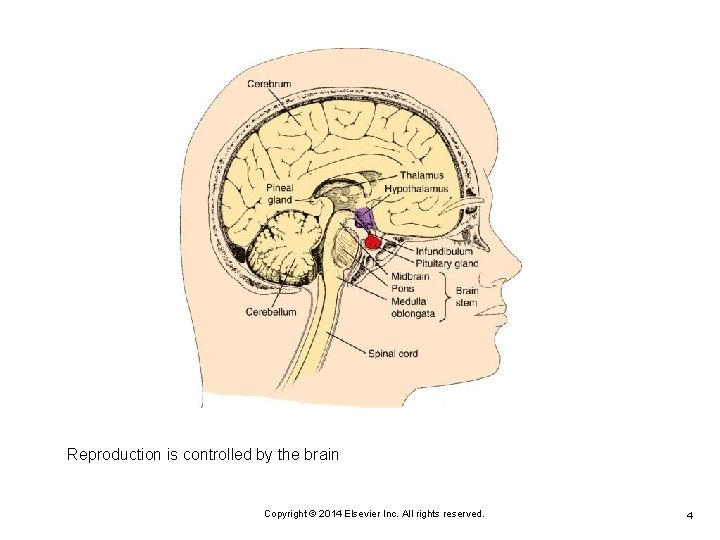
Reproduction is controlled by the brain Copyright © 2014 Elsevier Inc. All rights reserved. 4
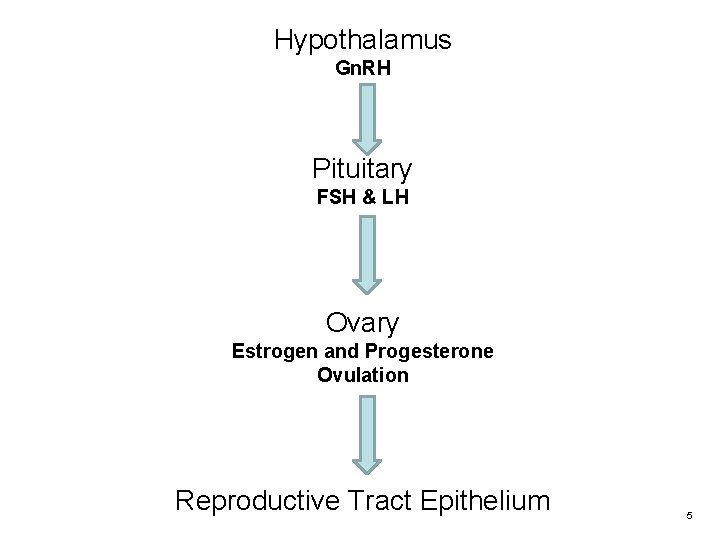
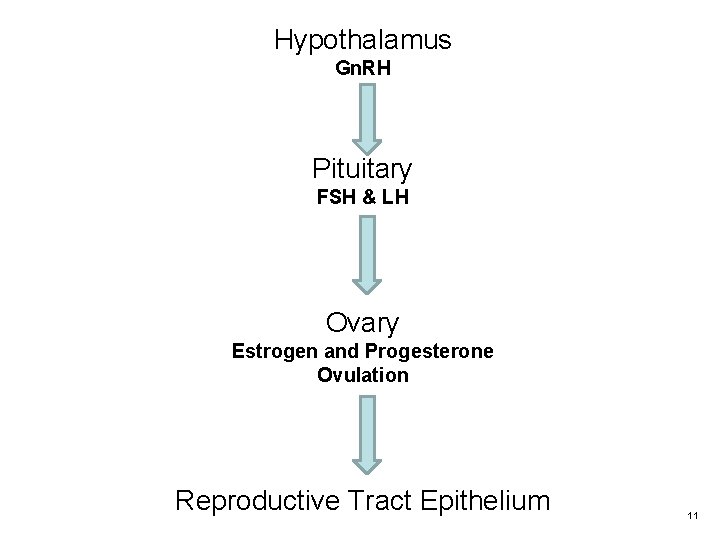
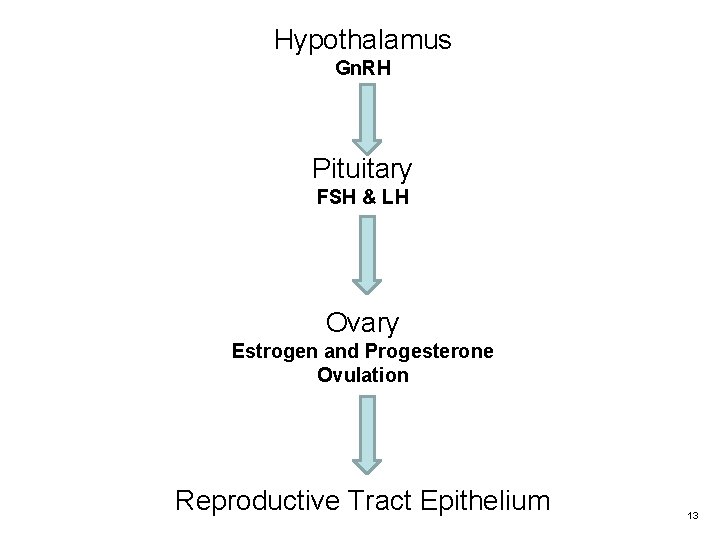
Hypothalamus Gn. RH Pituitary FSH & LH Ovary Estrogen and Progesterone Ovulation Reproductive Tract Epithelium 5
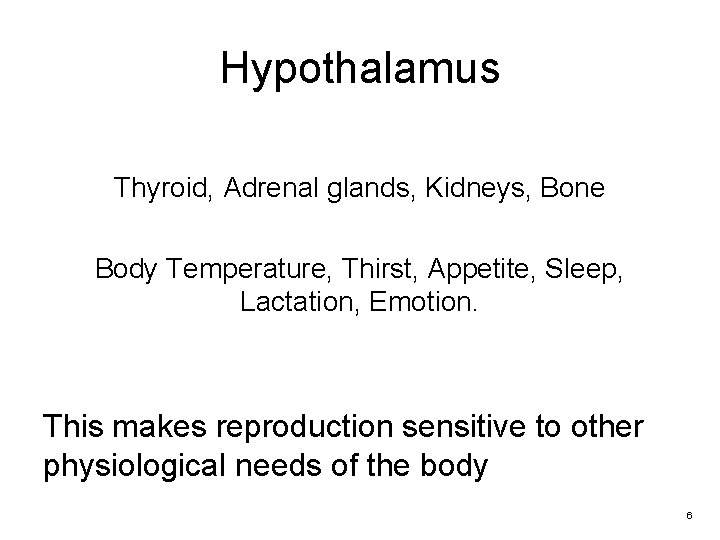
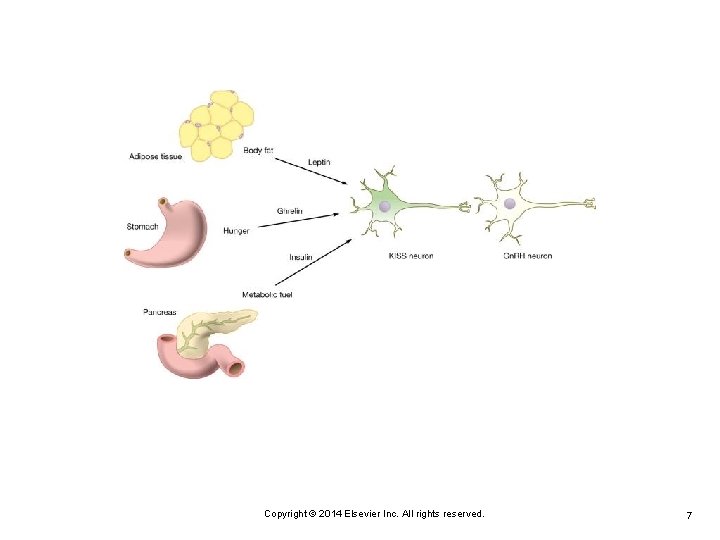
Hypothalamus Thyroid, Adrenal glands, Kidneys, Bone Body Temperature, Thirst, Appetite, Sleep, Lactation, Emotion. This makes reproduction sensitive to other physiological needs of the body 6
Copyright © 2014 Elsevier Inc. All rights reserved. 7
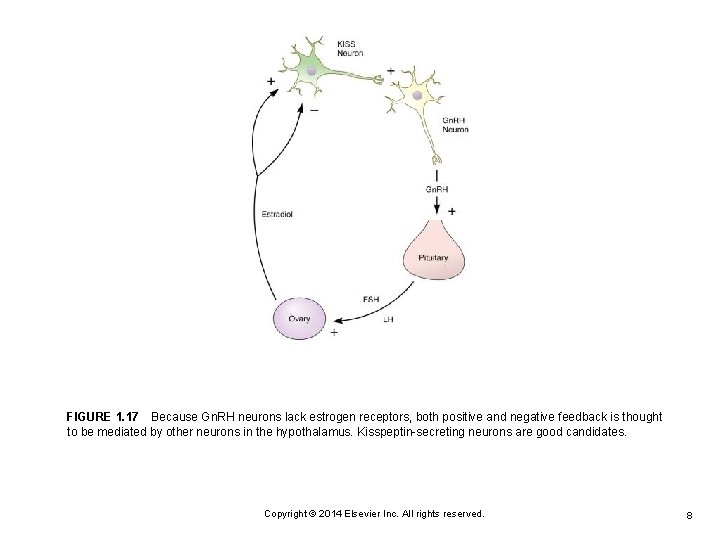
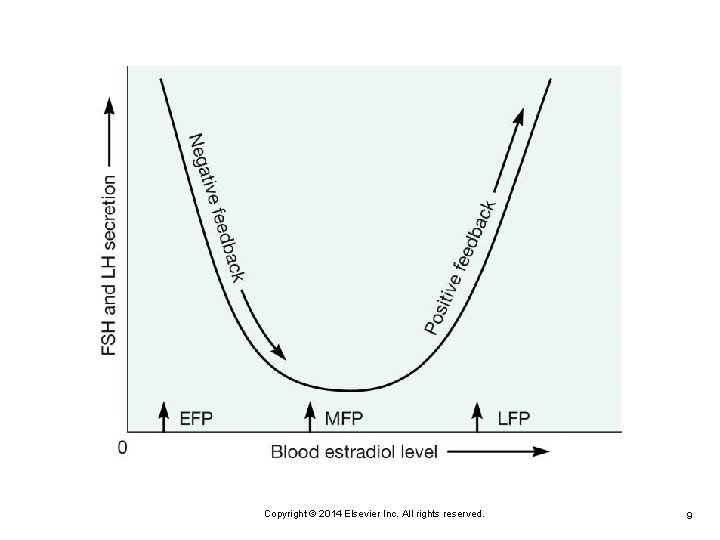
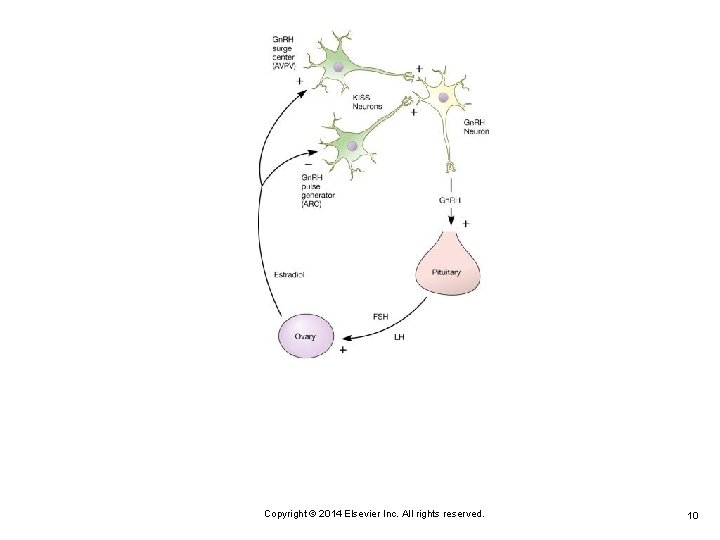
FIGURE 1. 17 Because Gn. RH neurons lack estrogen receptors, both positive and negative feedback is thought to be mediated by other neurons in the hypothalamus. Kisspeptin-secreting neurons are good candidates. Copyright © 2014 Elsevier Inc. All rights reserved. 8
Copyright © 2014 Elsevier Inc. All rights reserved. 9
Copyright © 2014 Elsevier Inc. All rights reserved. 10
Hypothalamus Gn. RH Pituitary FSH & LH Ovary Estrogen and Progesterone Ovulation Reproductive Tract Epithelium 11
Copyright © 2014 Elsevier Inc. All rights reserved. 12
Hypothalamus Gn. RH Pituitary FSH & LH Ovary Estrogen and Progesterone Ovulation Reproductive Tract Epithelium 13
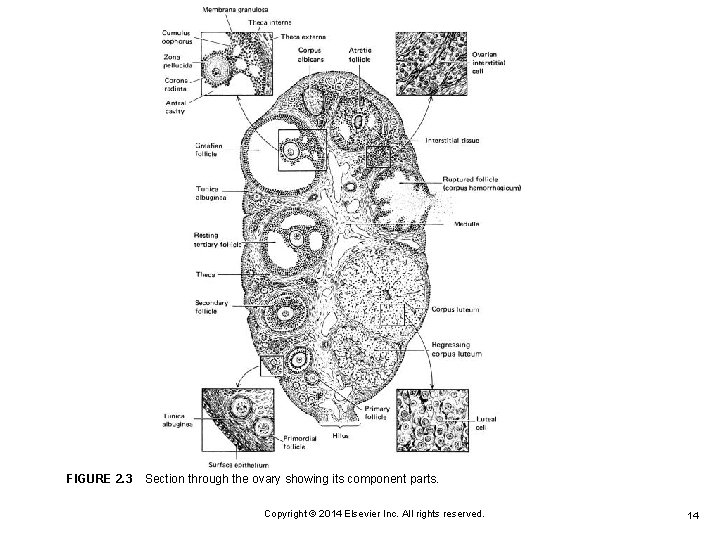
FIGURE 2. 3 Section through the ovary showing its component parts. Copyright © 2014 Elsevier Inc. All rights reserved. 14
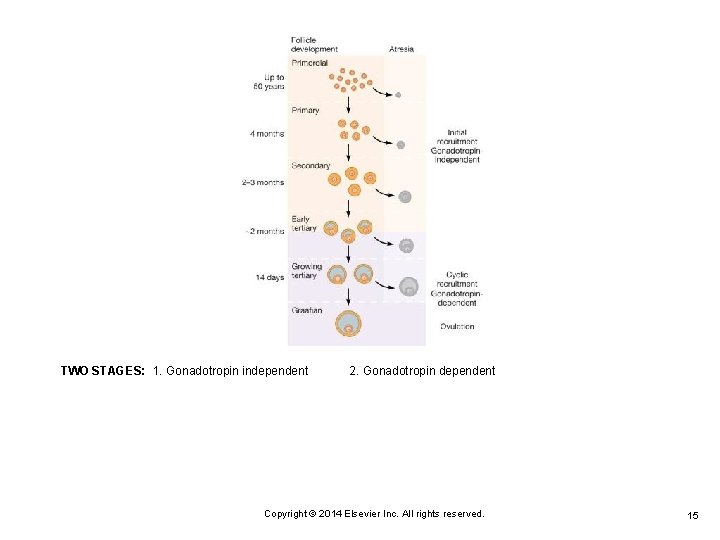
TWO STAGES: 1. Gonadotropin independent 2. Gonadotropin dependent Copyright © 2014 Elsevier Inc. All rights reserved. 15
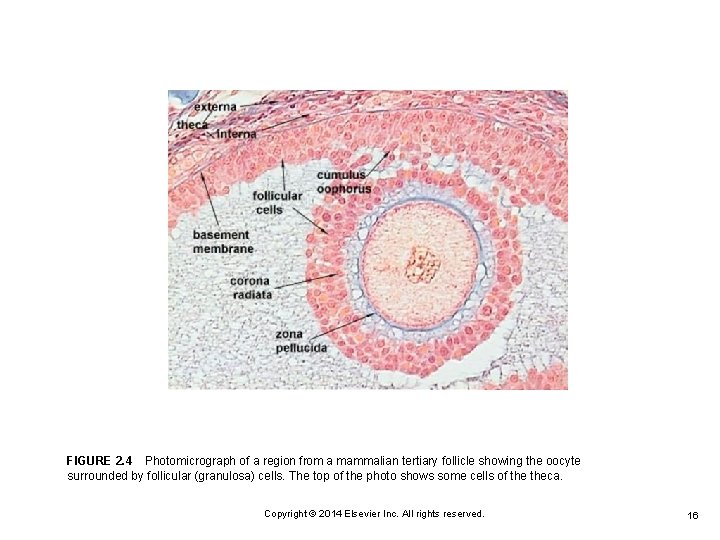
FIGURE 2. 4 Photomicrograph of a region from a mammalian tertiary follicle showing the oocyte surrounded by follicular (granulosa) cells. The top of the photo shows some cells of theca. Copyright © 2014 Elsevier Inc. All rights reserved. 16
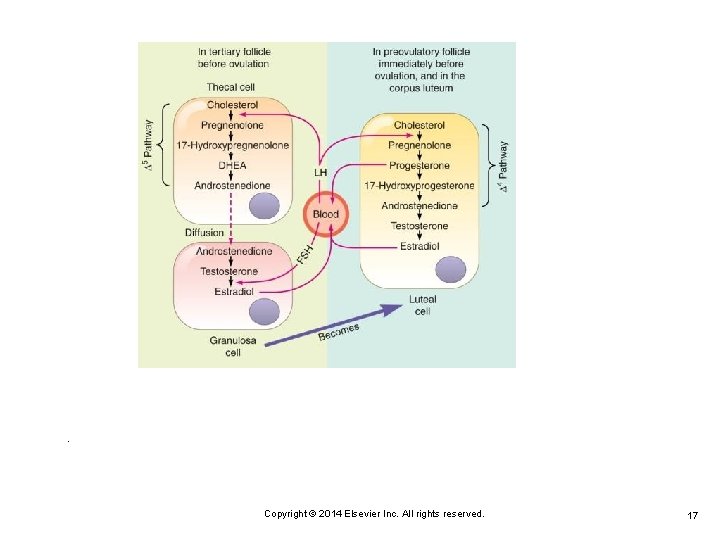
. Copyright © 2014 Elsevier Inc. All rights reserved. 17
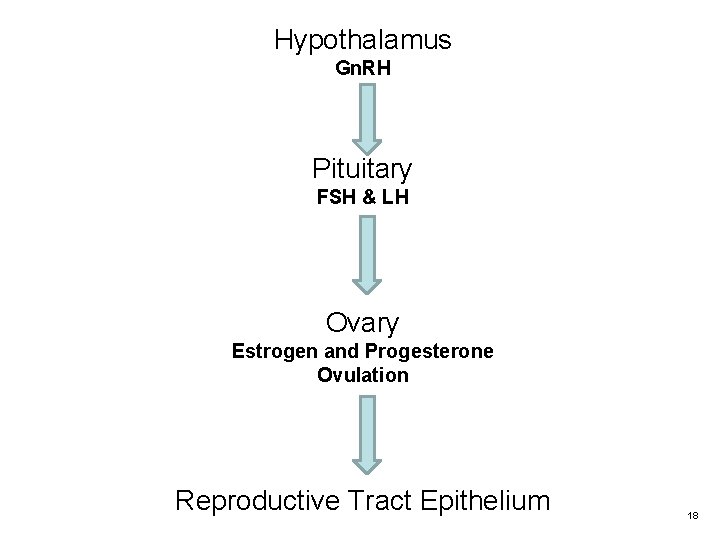
Hypothalamus Gn. RH Pituitary FSH & LH Ovary Estrogen and Progesterone Ovulation Reproductive Tract Epithelium 18
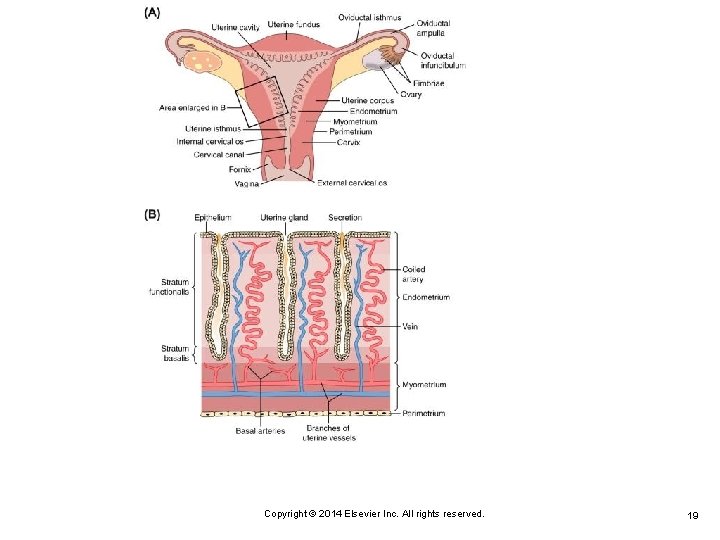
Copyright © 2014 Elsevier Inc. All rights reserved. 19
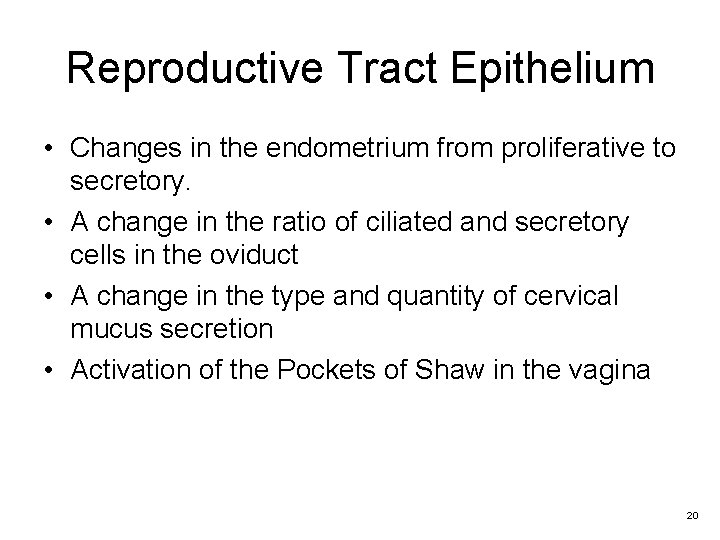
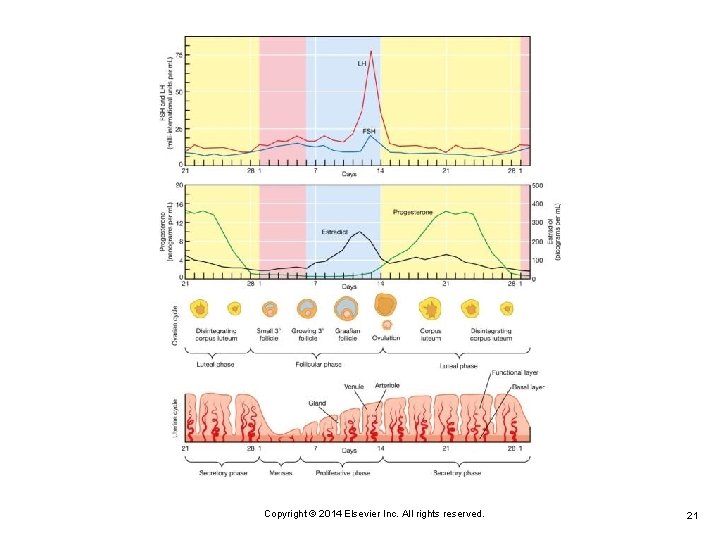
Reproductive Tract Epithelium • Changes in the endometrium from proliferative to secretory. • A change in the ratio of ciliated and secretory cells in the oviduct • A change in the type and quantity of cervical mucus secretion • Activation of the Pockets of Shaw in the vagina 20
Copyright © 2014 Elsevier Inc. All rights reserved. 21
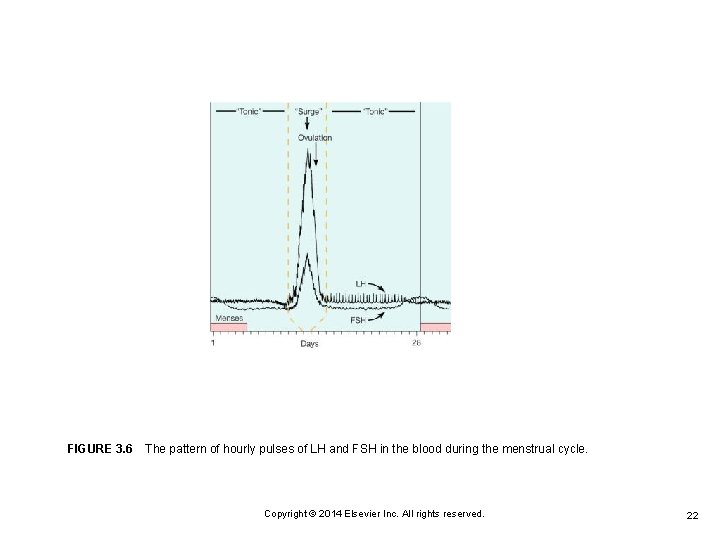
FIGURE 3. 6 The pattern of hourly pulses of LH and FSH in the blood during the menstrual cycle. Copyright © 2014 Elsevier Inc. All rights reserved. 22
Copyright © 2014 Elsevier Inc. All rights reserved. 23
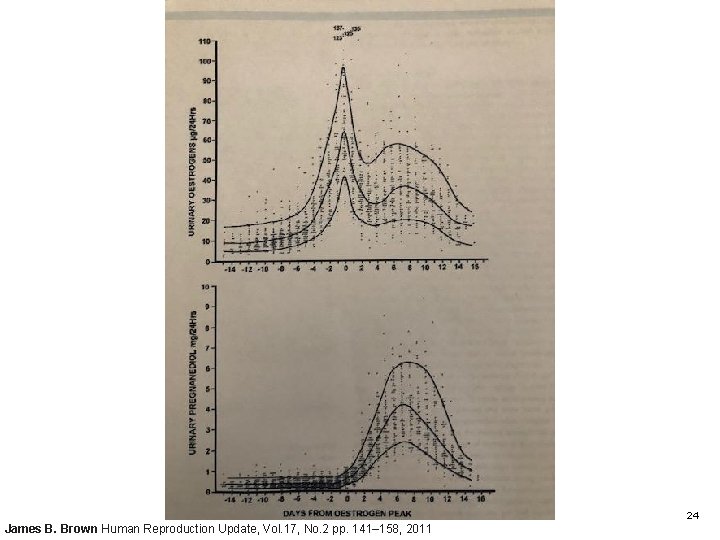
24 James B. Brown Human Reproduction Update, Vol. 17, No. 2 pp. 141– 158, 2011
Human Reproduction Update, Vol. 17, No. 2 pp. 141– 158, 2011 Advanced Access publication on October 5, 2010 doi: 10. 1093/humupd/dmq 040 Types of ovarian activity in women and their significance: the continuum (a reinterpretation of early findings) James B. Brown † Emeritus Professor of Obstetrics and Gynaecology, University of Melbourne, Victoria 3010, Australia Correspondence address. Adrian Thomas, 206 Albert Street, East Melbourne, Victoria, Australia. 3002; Tel: +61 -3 -94197918; Fax: +61 -3 -94194407; E-mail: athomas@melbpc. org. au Submitted on May 16, 2010; resubmitted on July 21, 2010; accepted on August 2, 2010 Continuum: A normal process that occurs during a women’s reproductive life. Starts in fetal development progresses through puberty, the reproductive years including transitions from pregnancy to lactation and back, ending with menopause. 25
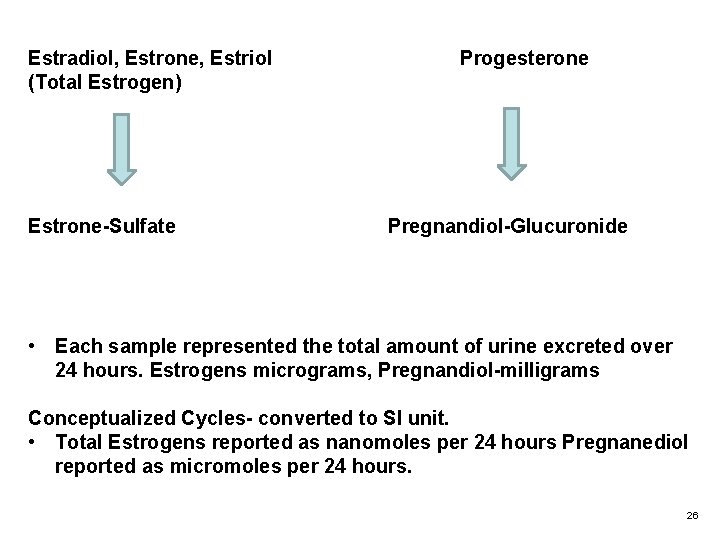
Estradiol, Estrone, Estriol (Total Estrogen) Estrone-Sulfate Progesterone Pregnandiol-Glucuronide • Each sample represented the total amount of urine excreted over 24 hours. Estrogens micrograms, Pregnandiol-milligrams Conceptualized Cycles- converted to SI unit. • Total Estrogens reported as nanomoles per 24 hours Pregnanediol reported as micromoles per 24 hours. 26