
Reproductive organs produce and transport gametes Gametogenesis Production
- Slides: 15
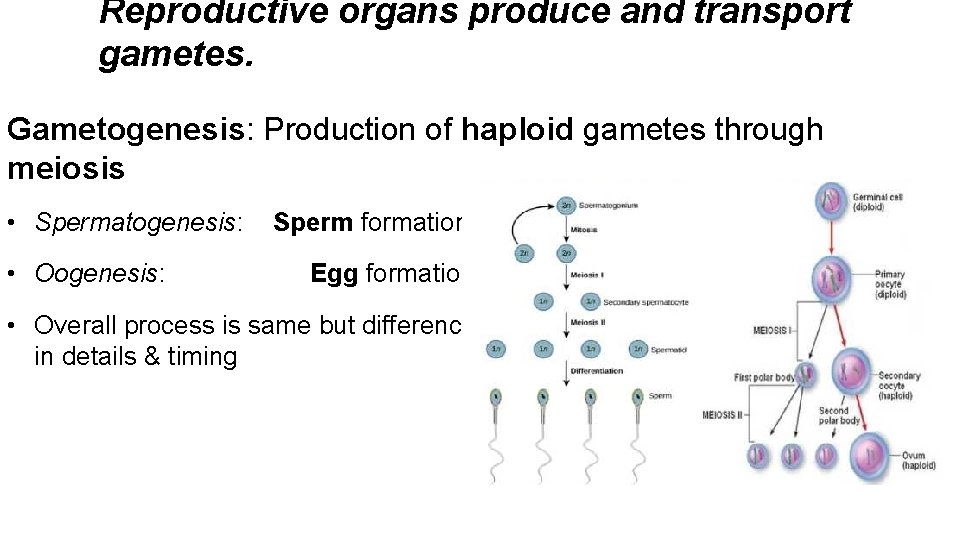
Reproductive organs produce and transport gametes. Gametogenesis: Production of haploid gametes through meiosis • Spermatogenesis: • Oogenesis: Sperm formation Egg formation • Overall process is same but difference in details & timing
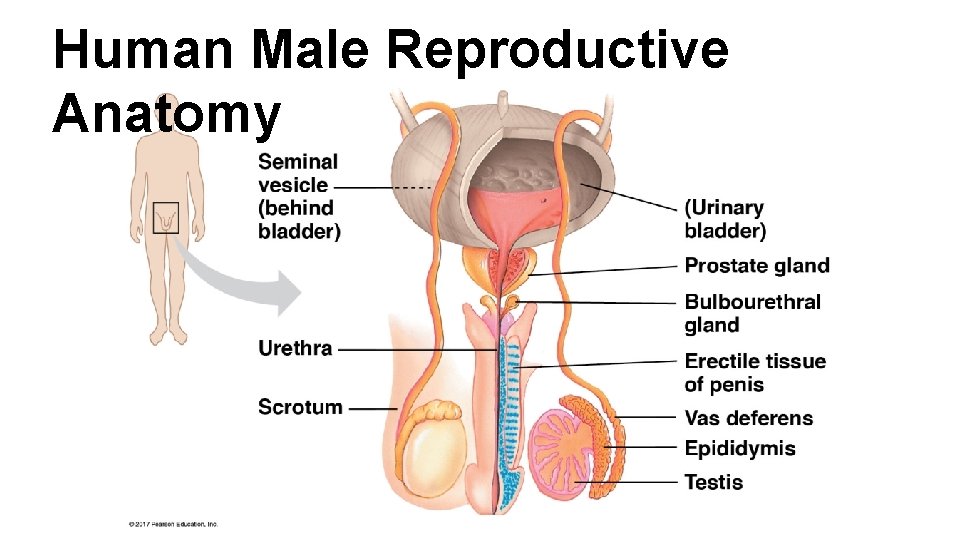
Human Male Reproductive Anatomy
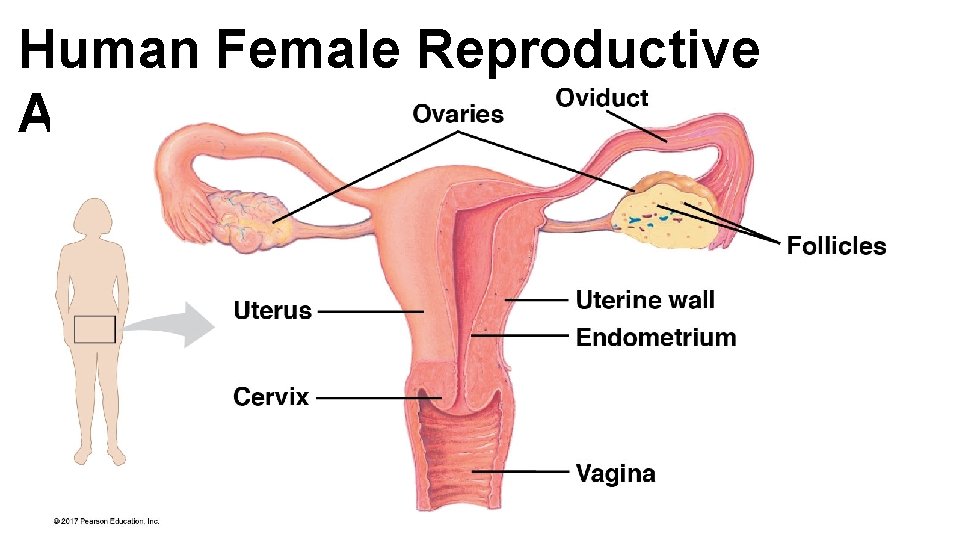
Human Female Reproductive Anatomy
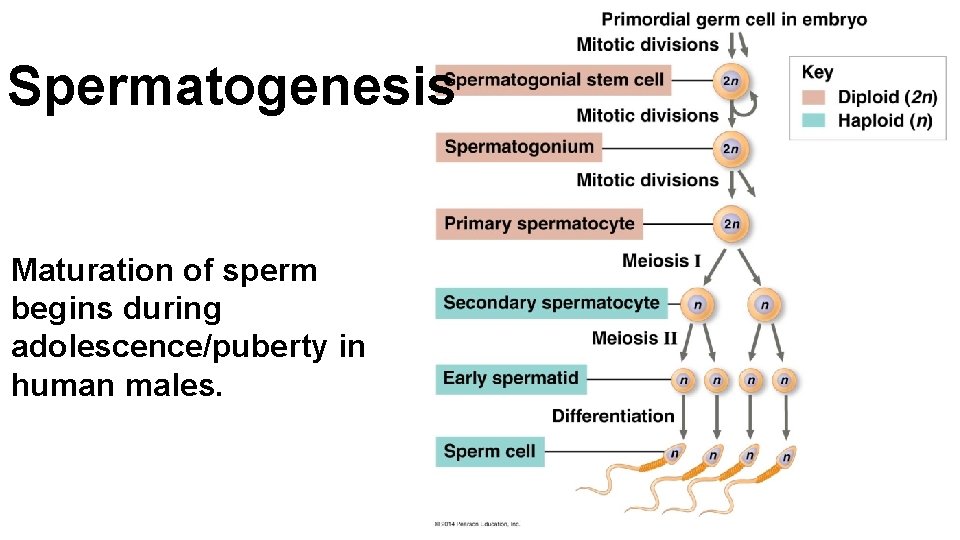
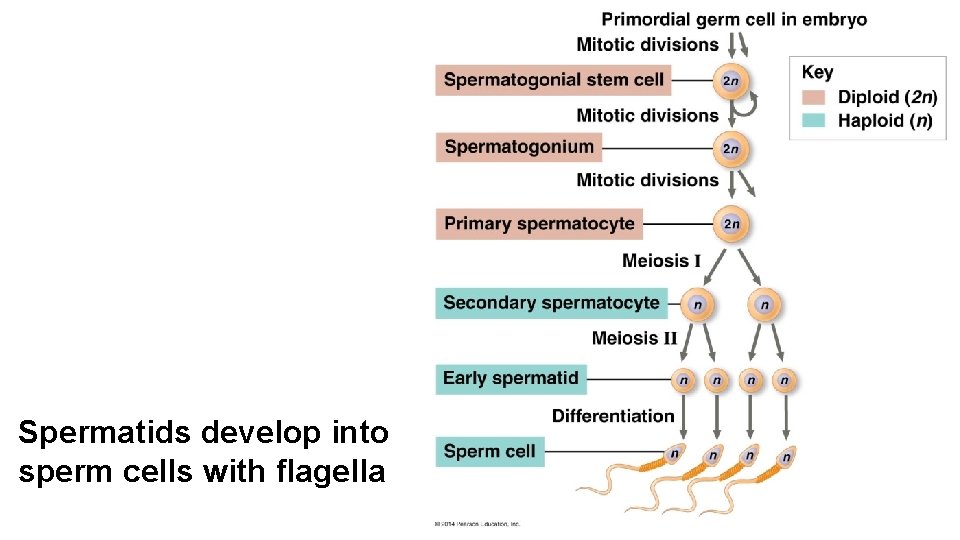
Spermatogenesis Maturation of sperm begins during adolescence/puberty in human males.
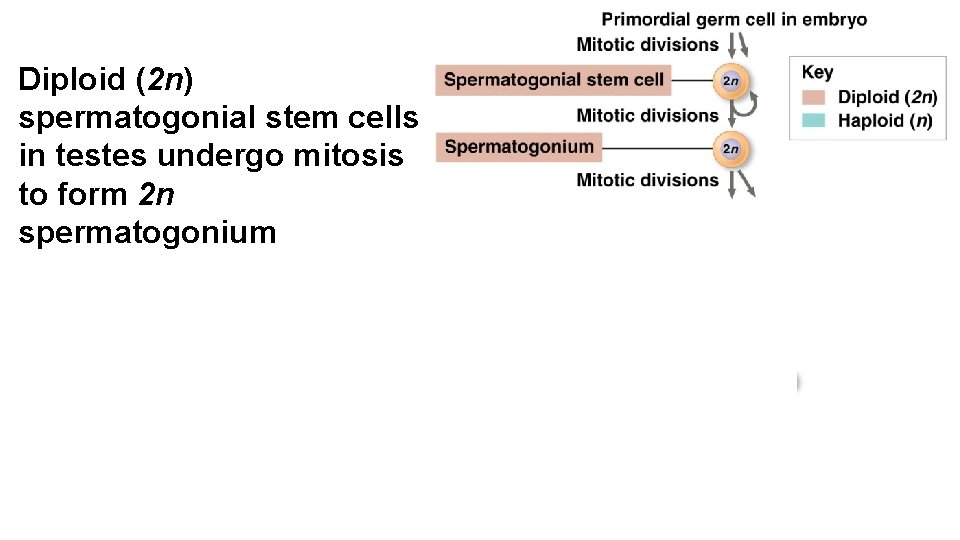
Diploid (2 n) spermatogonial stem cells in testes undergo mitosis to form 2 n spermatogonium
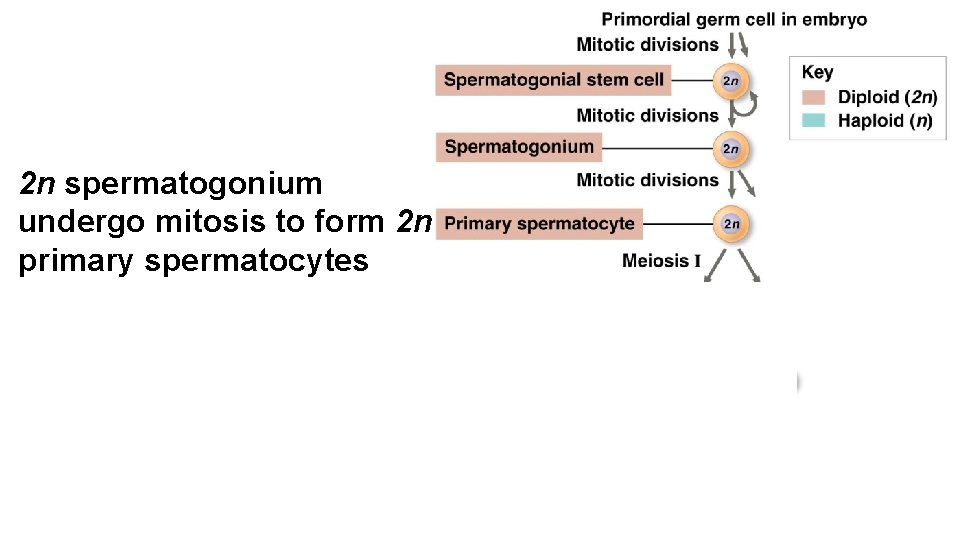
2 n spermatogonium undergo mitosis to form 2 n primary spermatocytes
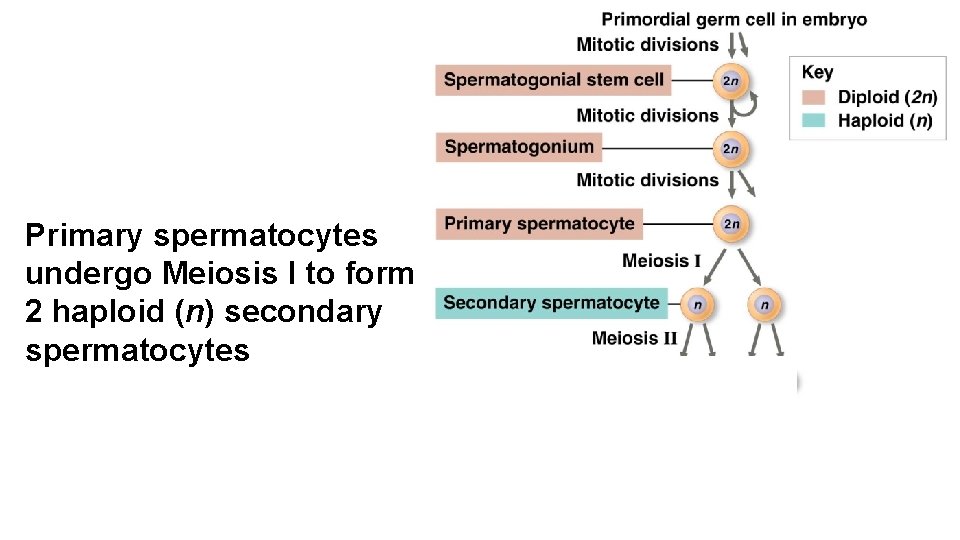
Primary spermatocytes undergo Meiosis I to form 2 haploid (n) secondary spermatocytes
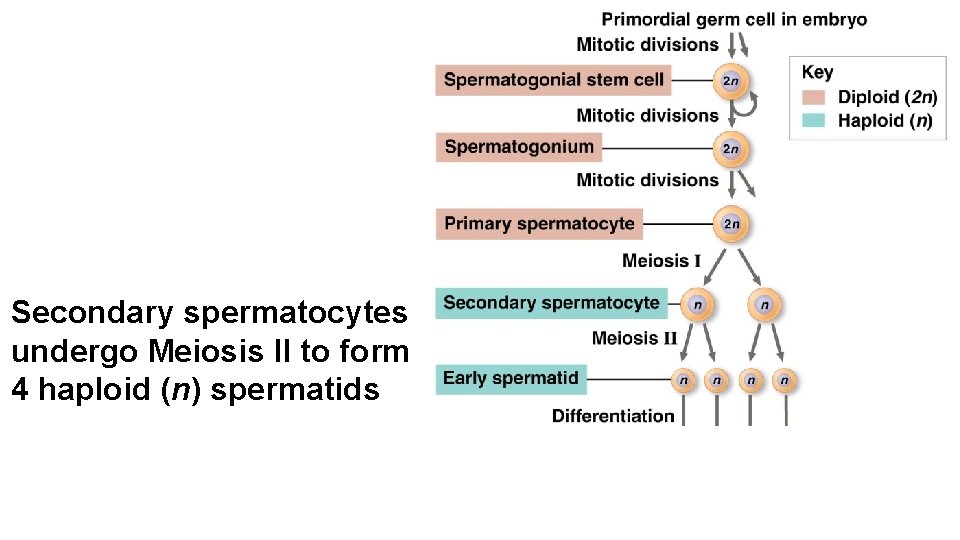
Secondary spermatocytes undergo Meiosis II to form 4 haploid (n) spermatids
Spermatids develop into sperm cells with flagella
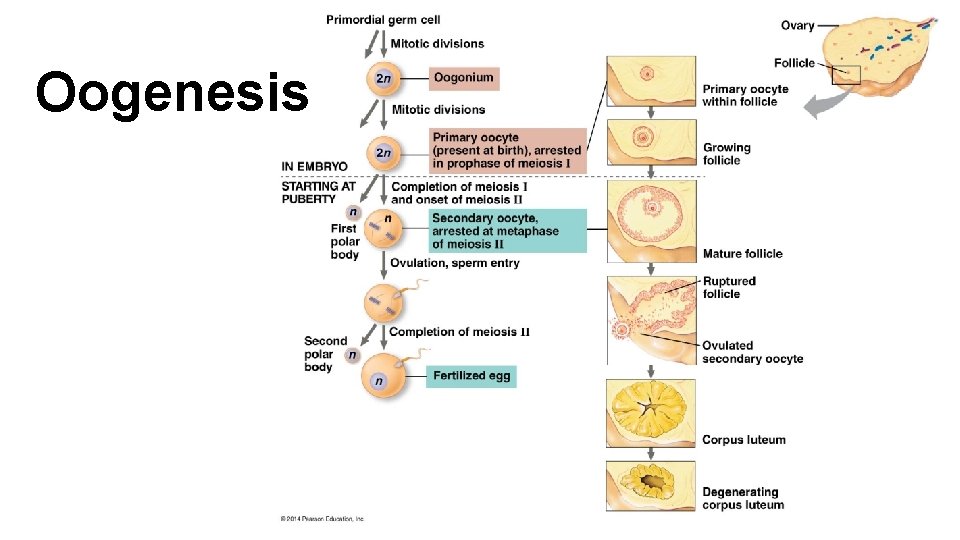
Oogenesis
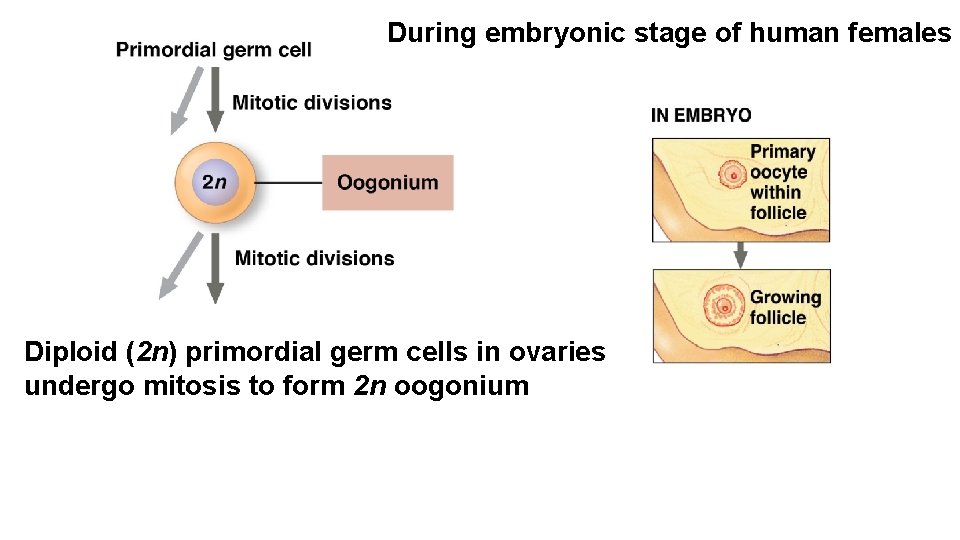
During embryonic stage of human females Diploid (2 n) primordial germ cells in ovaries undergo mitosis to form 2 n oogonium
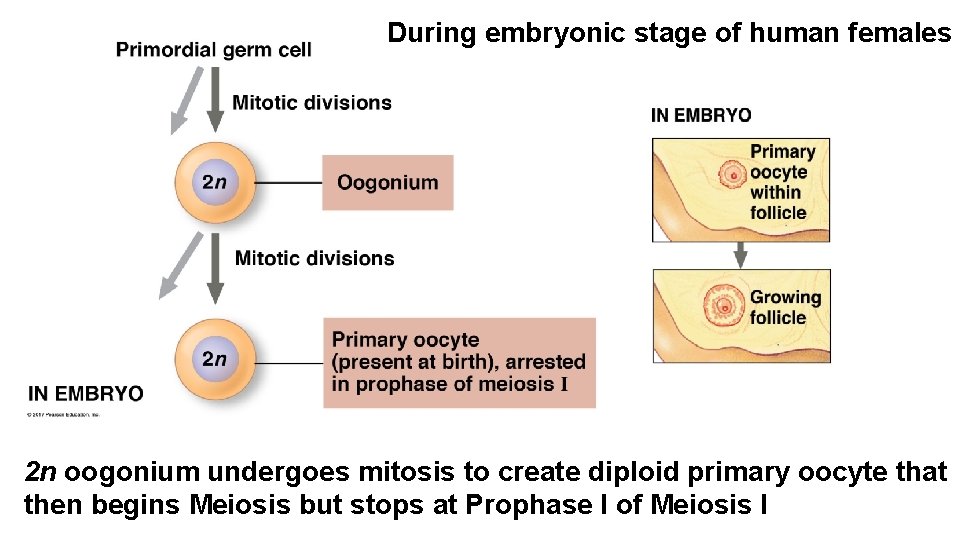
During embryonic stage of human females 2 n oogonium undergoes mitosis to create diploid primary oocyte that then begins Meiosis but stops at Prophase I of Meiosis I
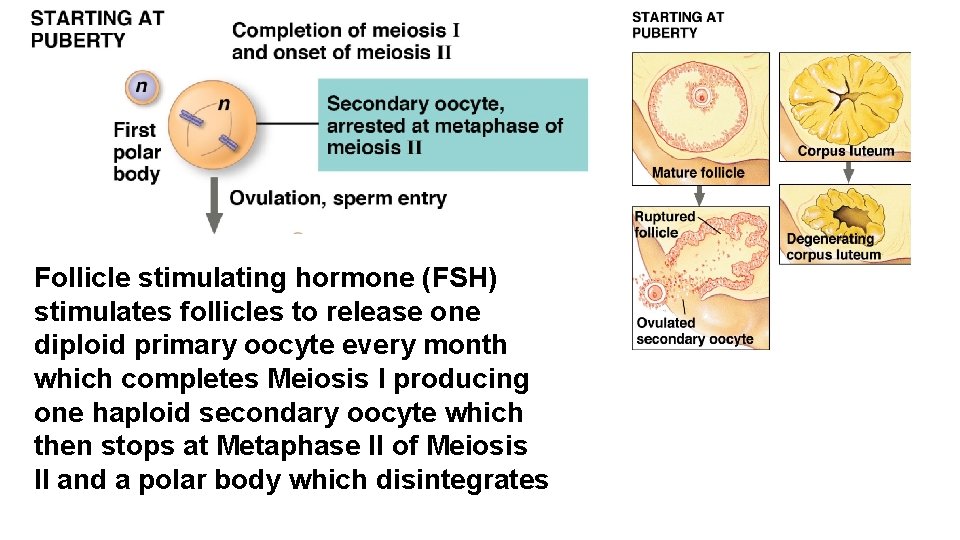
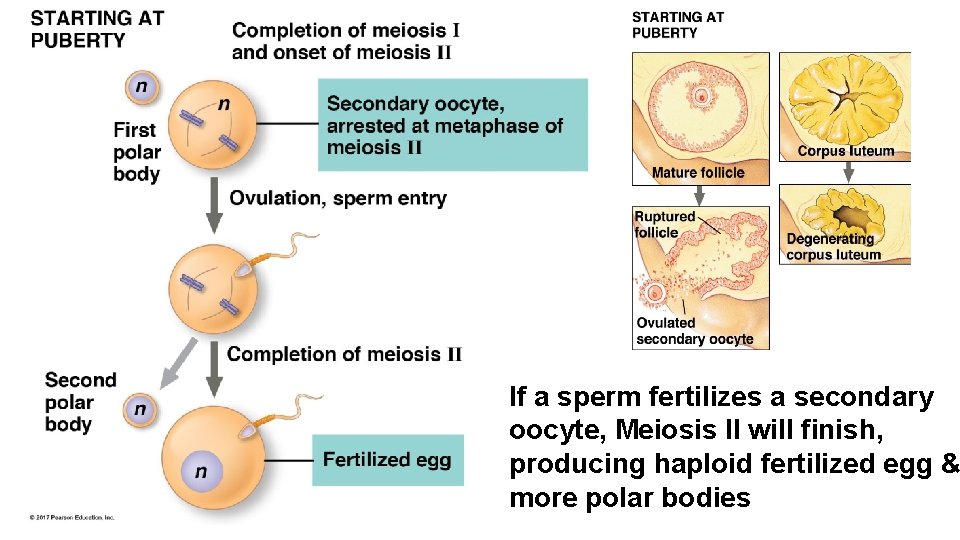
During Follicle stimulating hormone (FSH) stimulates follicles to release one diploid primary oocyte every month which completes Meiosis I producing one haploid secondary oocyte which then stops at Metaphase II of Meiosis II and a polar body which disintegrates
During If a sperm fertilizes a secondary oocyte, Meiosis II will finish, producing haploid fertilized egg & more polar bodies
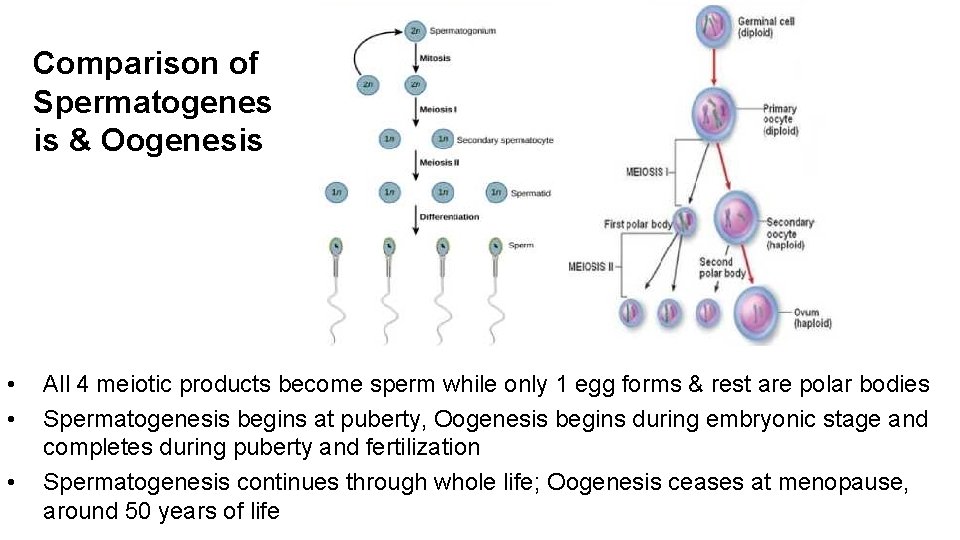
Comparison of Spermatogenes is & Oogenesis • • • All 4 meiotic products become sperm while only 1 egg forms & rest are polar bodies Spermatogenesis begins at puberty, Oogenesis begins during embryonic stage and completes during puberty and fertilization Spermatogenesis continues through whole life; Oogenesis ceases at menopause, around 50 years of life