
Reproductive Morphology Male Semeniferous tubules Reproductive Morphology Male
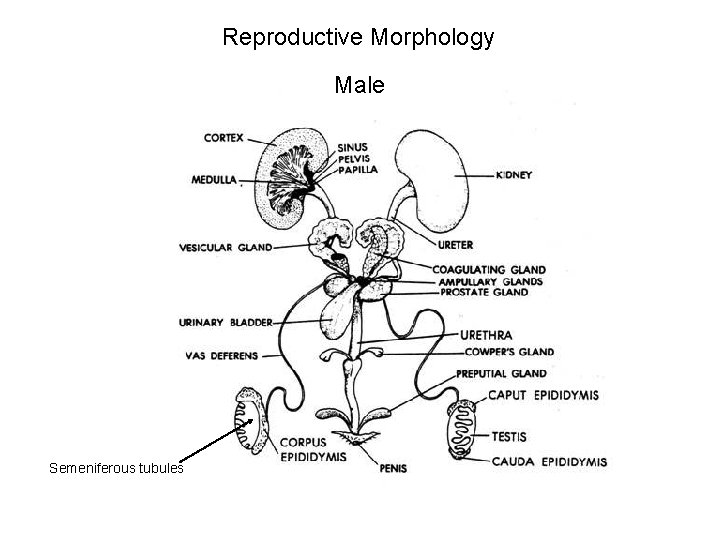
Reproductive Morphology Male Semeniferous tubules

Reproductive Morphology Male Position of testes varies: May remain in abdominal cavity permanently (Monotremes, Xenarthrans, & most marine mammals) May reside in abdominal cavity but descend into scrotum during breeding season through inguinal canal (bats and rodents) May be permanently housed in scrotum (most primates and terrestrial carnivorans) Many marsupials have a bifurcate penis:
Variation in Bacula Chipmunks Ground squirrels
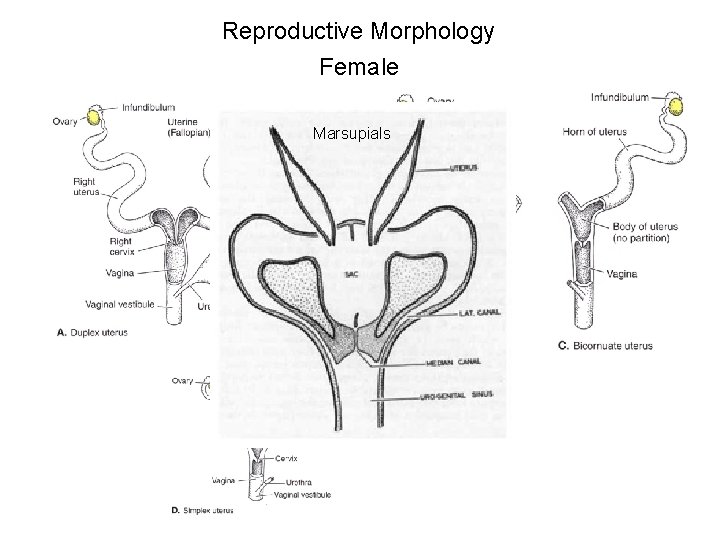
Reproductive Morphology Female Marsupials
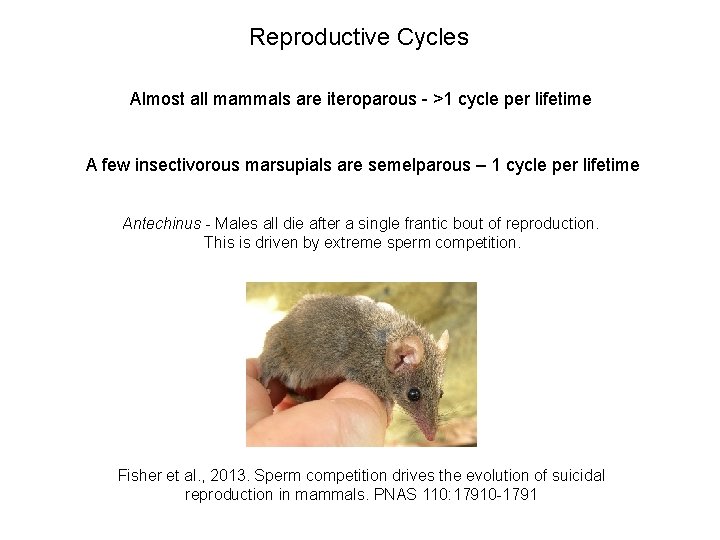
Reproductive Cycles Almost all mammals are iteroparous - >1 cycle per lifetime A few insectivorous marsupials are semelparous – 1 cycle per lifetime Antechinus - Males all die after a single frantic bout of reproduction. This is driven by extreme sperm competition. Fisher et al. , 2013. Sperm competition drives the evolution of suicidal reproduction in mammals. PNAS 110: 17910 -1791
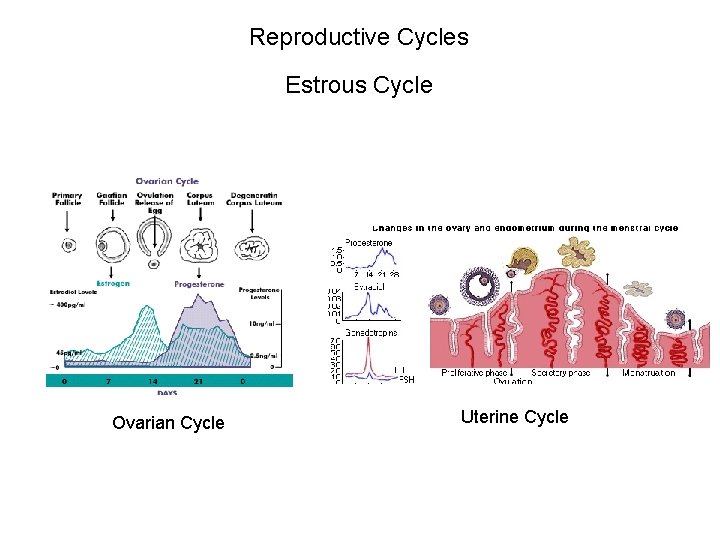
Reproductive Cycles Estrous Cycle Ovarian Cycle Uterine Cycle
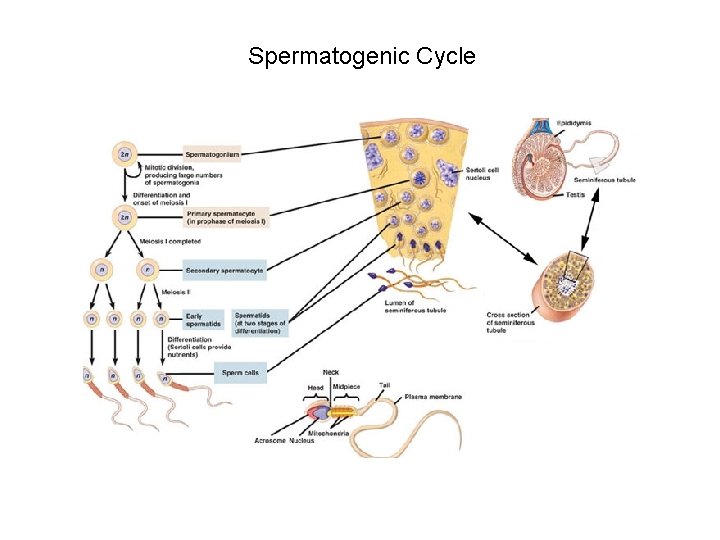
Spermatogenic Cycle
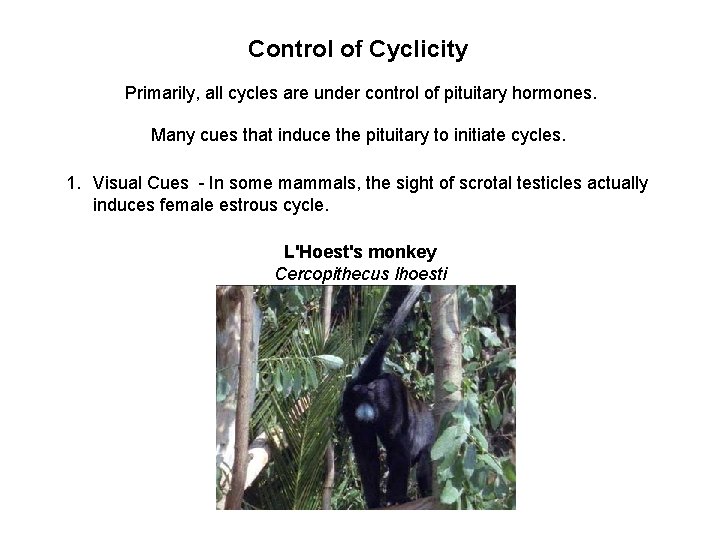
Control of Cyclicity Primarily, all cycles are under control of pituitary hormones. Many cues that induce the pituitary to initiate cycles. 1. Visual Cues - In some mammals, the sight of scrotal testicles actually induces female estrous cycle. L'Hoest's monkey Cercopithecus lhoesti
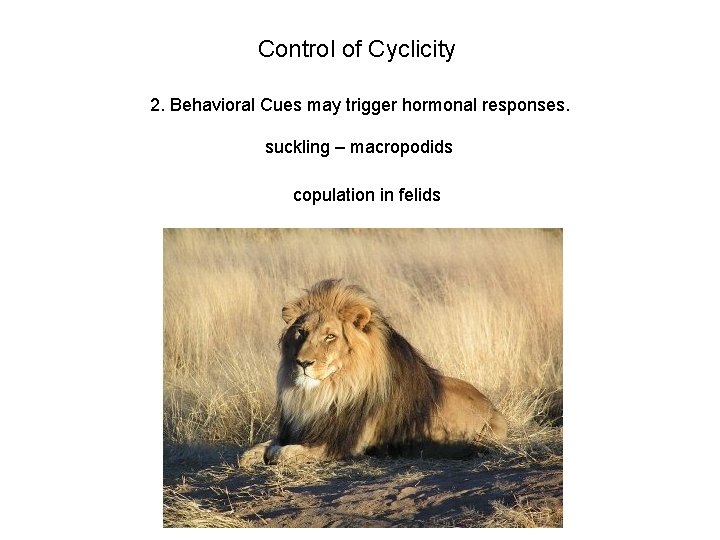
Control of Cyclicity 2. Behavioral Cues may trigger hormonal responses. suckling – macropodids copulation in felids
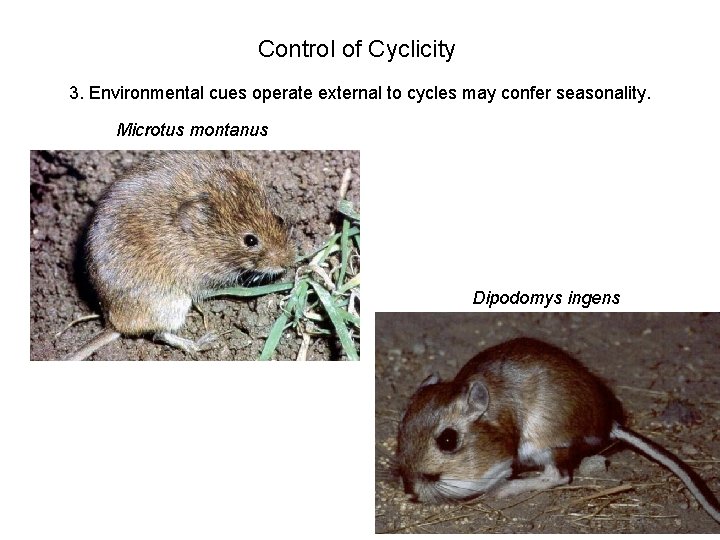
Control of Cyclicity 3. Environmental cues operate external to cycles may confer seasonality. Microtus montanus Dipodomys ingens
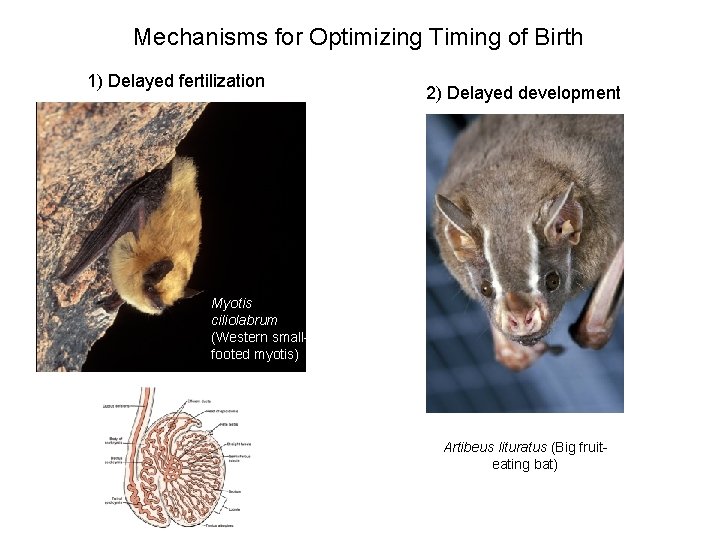
Mechanisms for Optimizing Timing of Birth 1) Delayed fertilization 2) Delayed development Myotis ciliolabrum (Western smallfooted myotis) Artibeus lituratus (Big fruiteating bat)
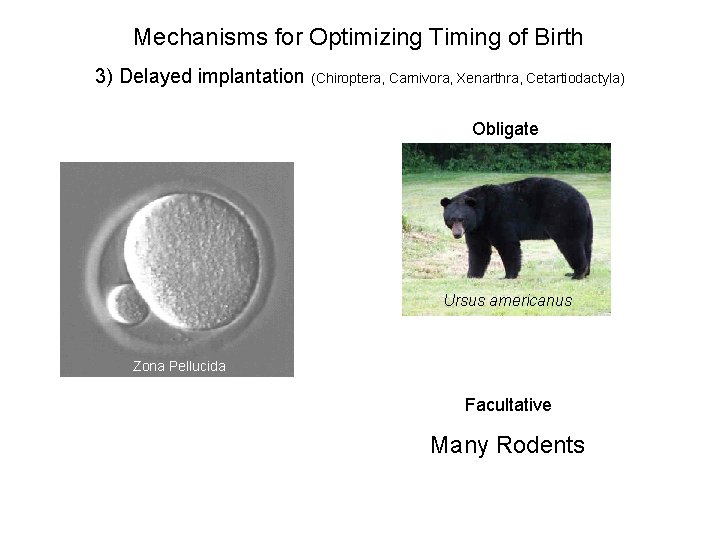
Mechanisms for Optimizing Timing of Birth 3) Delayed implantation (Chiroptera, Carnivora, Xenarthra, Cetartiodactyla) Obligate Ursus americanus Zona Pellucida Facultative Many Rodents
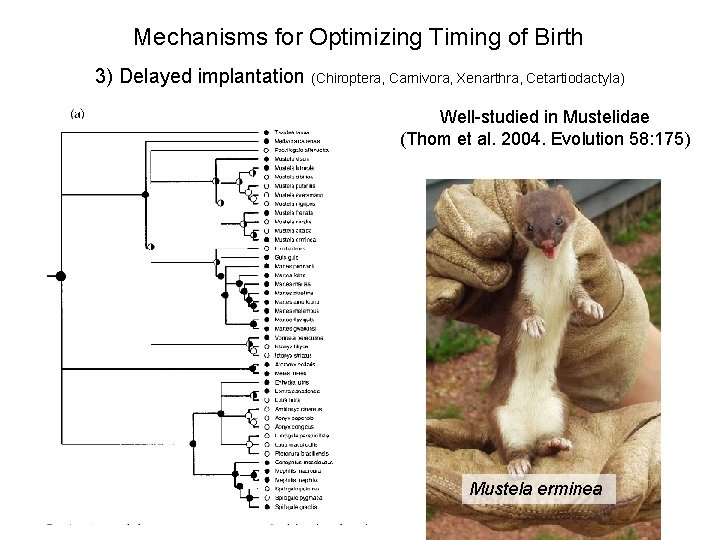
Mechanisms for Optimizing Timing of Birth 3) Delayed implantation (Chiroptera, Carnivora, Xenarthra, Cetartiodactyla) Well-studied in Mustelidae (Thom et al. 2004. Evolution 58: 175) Mustela erminea
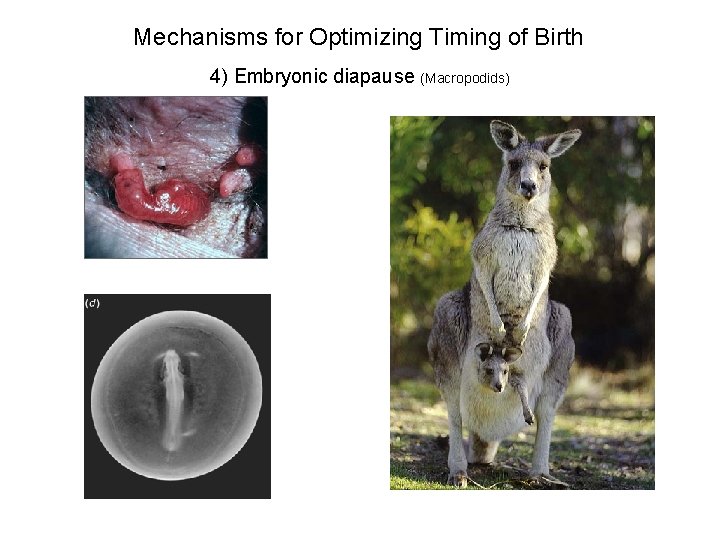
Mechanisms for Optimizing Timing of Birth 4) Embryonic diapause (Macropodids)
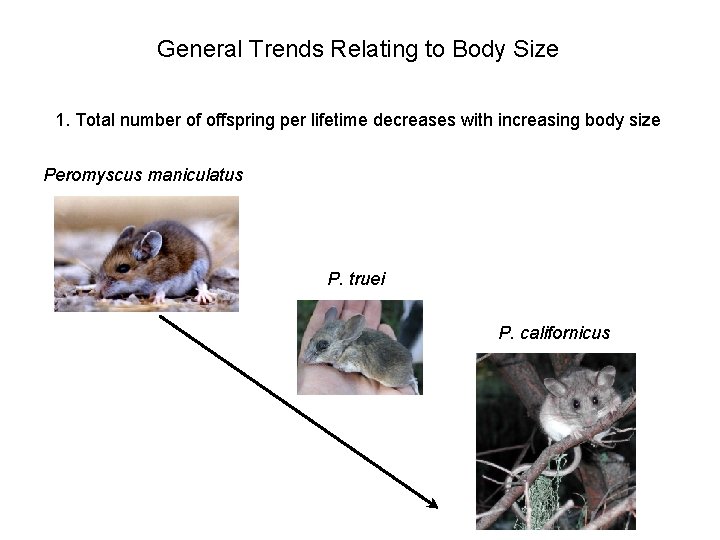
General Trends Relating to Body Size 1. Total number of offspring per lifetime decreases with increasing body size Peromyscus maniculatus P. truei P. californicus
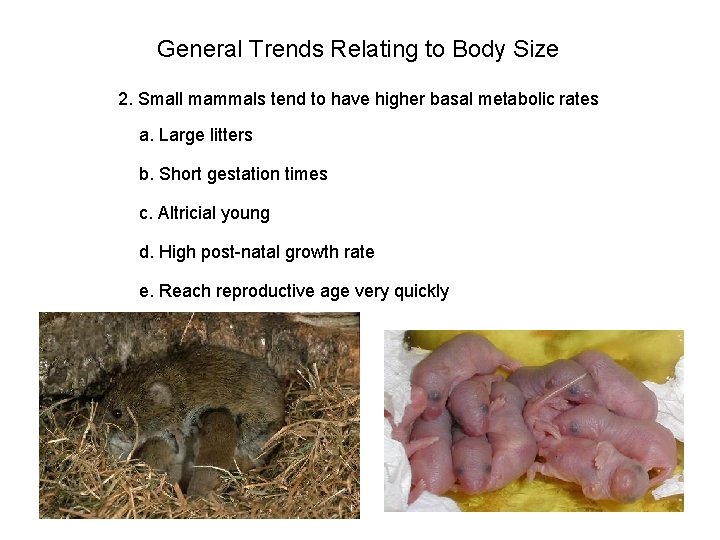
General Trends Relating to Body Size 2. Small mammals tend to have higher basal metabolic rates a. Large litters b. Short gestation times c. Altricial young d. High post-natal growth rate e. Reach reproductive age very quickly
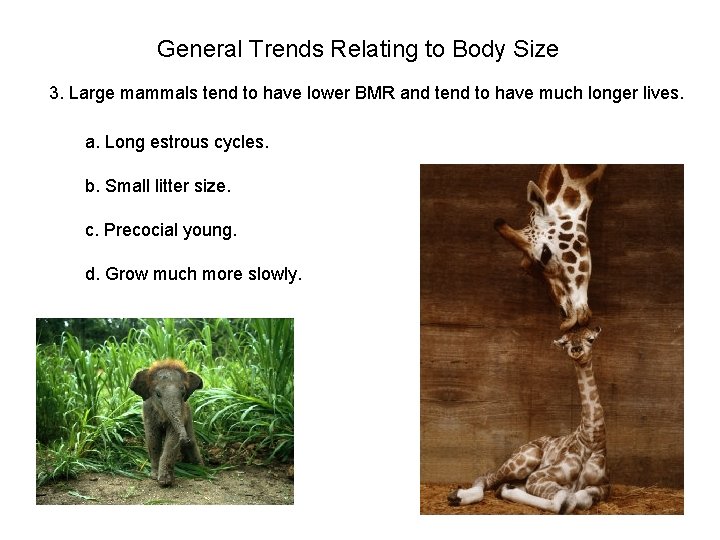
General Trends Relating to Body Size 3. Large mammals tend to have lower BMR and tend to have much longer lives. a. Long estrous cycles. b. Small litter size. c. Precocial young. d. Grow much more slowly.
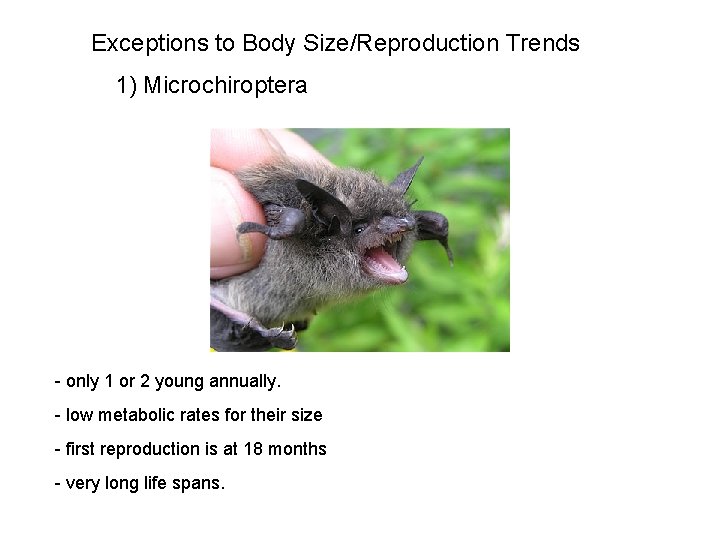
Exceptions to Body Size/Reproduction Trends 1) Microchiroptera - only 1 or 2 young annually. - low metabolic rates for their size - first reproduction is at 18 months - very long life spans.
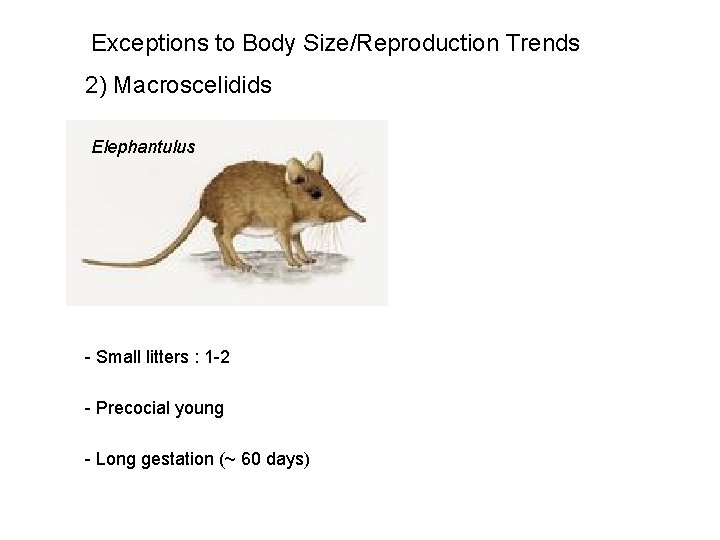
Exceptions to Body Size/Reproduction Trends 2) Macroscelidids Elephantulus - Small litters : 1 -2 - Precocial young - Long gestation (~ 60 days)
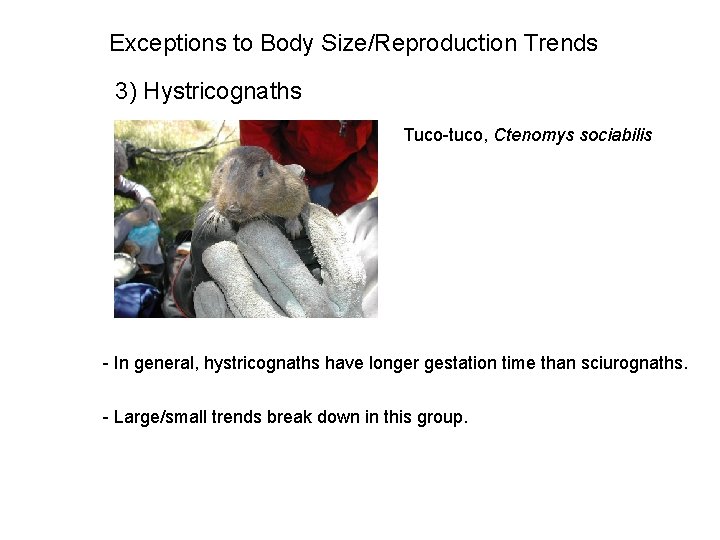
Exceptions to Body Size/Reproduction Trends 3) Hystricognaths Tuco-tuco, Ctenomys sociabilis - In general, hystricognaths have longer gestation time than sciurognaths. - Large/small trends break down in this group.
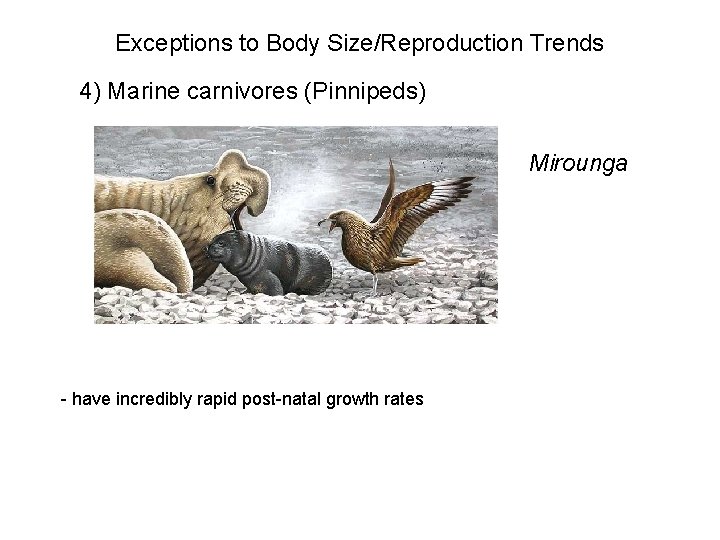
Exceptions to Body Size/Reproduction Trends 4) Marine carnivores (Pinnipeds) Mirounga - have incredibly rapid post-natal growth rates
- Slides: 21