
Reproductive and Urinary Systems The goal of reproductive
- Slides: 23
Reproductive and Urinary Systems
The goal of reproductive systems is to produce offspring. Female Reproductive System v The “parts”: v. Labia majora and minora-external folds of tissue that mark entrance to vagina. v. Clitoris-similar to penis in structure and function(seriously)
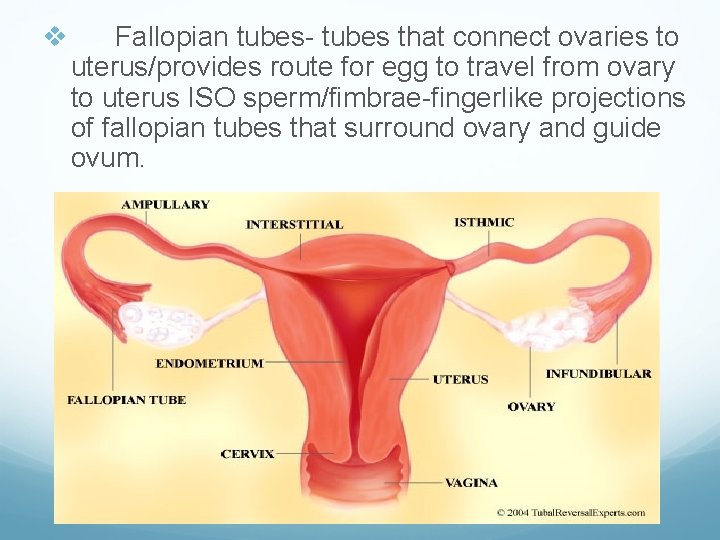
v. Internal parts: v. Vagina-”birth canal”/passageway for penis, menstrual flow, and baby v. Cervix-found at the top of the vagina/round, muscular opening to uterus/opens slightly for menstrual flow…. greatly for delivery of baby v. Uterus-hollow, pear-shaped organ that holds & supports baby until delivery/sheds lining once monthly if no pregnancy occurs
v Fallopian tubes- tubes that connect ovaries to uterus/provides route for egg to travel from ovary to uterus ISO sperm/fimbrae-fingerlike projections of fallopian tubes that surround ovary and guide ovum.
v. Ovaries-female gonad/one on each side of uterus/contain 2 million oocytes that will convert into ova that are capable of creating offspring/also produce hormones that control menstrual cycle. Female Hormones: v. Estrogen-made by ovary/causes secondary sex characs of female during puberty/also helps control menstrual cycle
v. Progesterone-produced by ovary/ hormone that controls pregnancy/also helps control menstrual cycle v. Follicle stimulation hormone(FSH)produced by pituitary/stimulates ovary to ripen an oocyte into ovum v. Lutenizing hormone(LH)-produced by the pituitary/causes release of egg from ovary(ovulation)
Ovulation & Menstruation v 1 st day of cycle is the first day of bleeding v. Blood comes from the vascular inner lining of uterus(endometrium) v. Estrogen and progesterone levels increase during the month and cause the lining to thicken in hopes of pregnancy v. Ovulation(release of ovum) occurs on the 1214 th day of cycle(may vary) v. Ovum moves from ovary to uterus because of the cilia inside fallopian tubes
v. If fertilization does not occur, hormones drop and menstruation occurs v. Menstrual flow lasts 5 -7 days(sometimes more, sometimes less) v. Complete cycle is around 28 days/It is normal for the cycle to be irregular until pregnancy occurs, then cycles become very stable
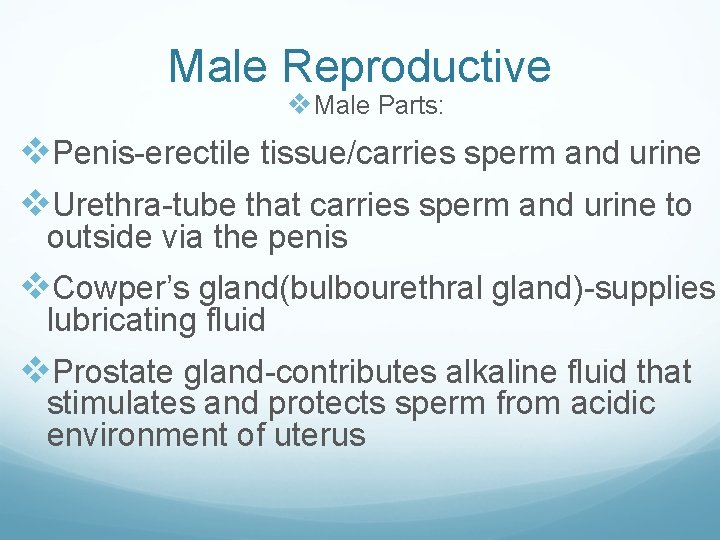
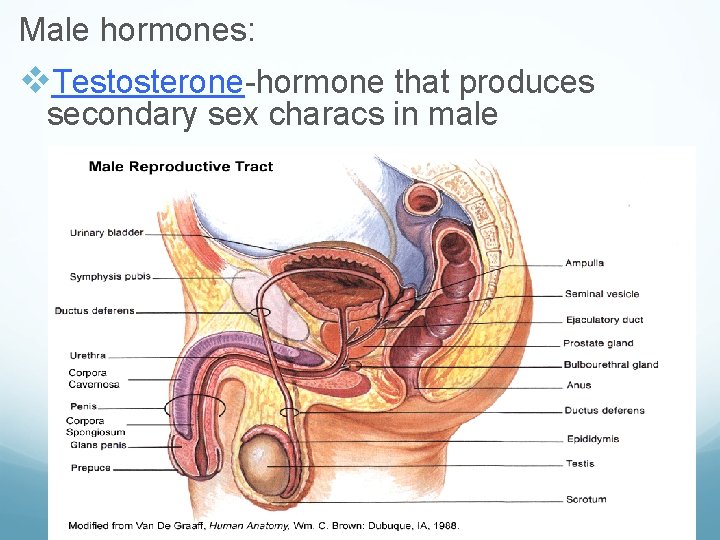
Male Reproductive v Male Parts: v. Penis-erectile tissue/carries sperm and urine v. Urethra-tube that carries sperm and urine to outside via the penis v. Cowper’s gland(bulbourethral gland)-supplies lubricating fluid v. Prostate gland-contributes alkaline fluid that stimulates and protects sperm from acidic environment of uterus
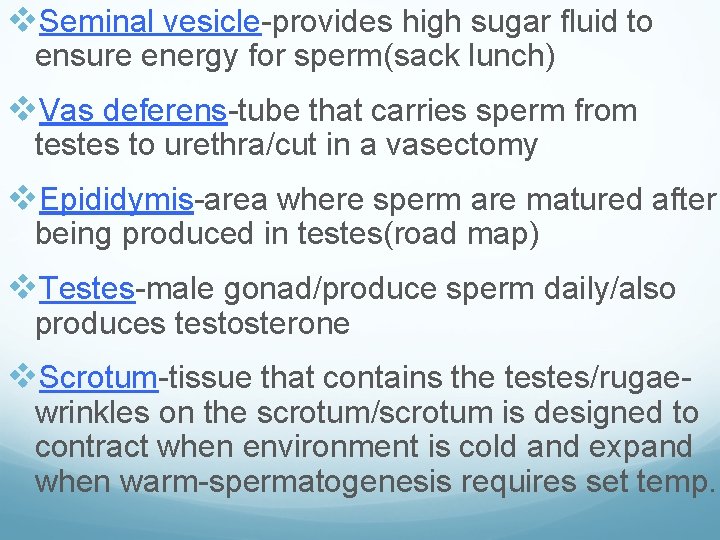
v. Seminal vesicle-provides high sugar fluid to ensure energy for sperm(sack lunch) v. Vas deferens-tube that carries sperm from testes to urethra/cut in a vasectomy v. Epididymis-area where sperm are matured after being produced in testes(road map) v. Testes-male gonad/produce sperm daily/also produces testosterone v. Scrotum-tissue that contains the testes/rugae- wrinkles on the scrotum/scrotum is designed to contract when environment is cold and expand when warm-spermatogenesis requires set temp.
Male hormones: v. Testosterone-hormone that produces secondary sex characs in male
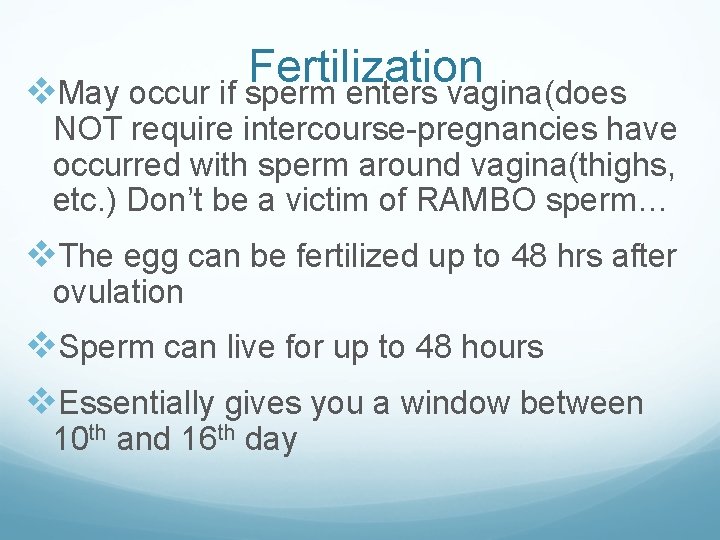
Fertilization v. May occur if sperm enters vagina(does NOT require intercourse-pregnancies have occurred with sperm around vagina(thighs, etc. ) Don’t be a victim of RAMBO sperm… v. The egg can be fertilized up to 48 hrs after ovulation v. Sperm can live for up to 48 hours v. Essentially gives you a window between 10 th and 16 th day
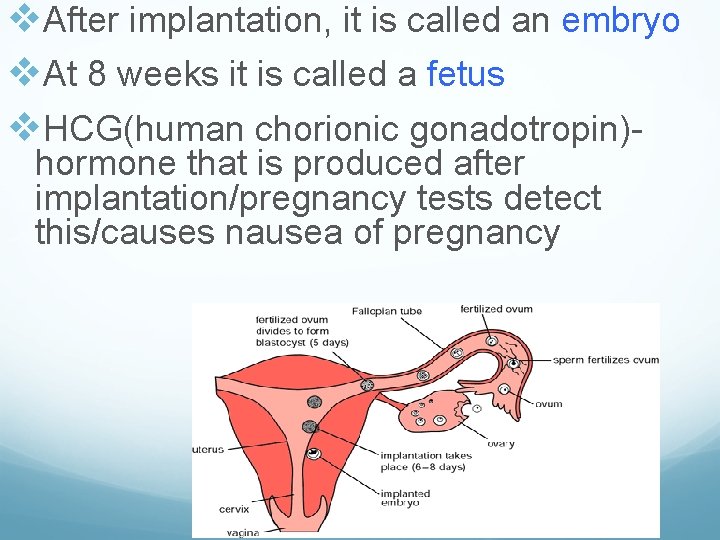
v. Fertilization is designed to take place in the fallopian tubes(can occur in uterus, but implantation will probably not occur) v. After fertilization, the egg and sperm form a zygote v. The zygote undergoes mitotic divisions until it becomes a blastula(5 -7 days) then implants in surrounding tissue(supposed to be uterus, but can implant in fallopian tubes or even outside uterus.
v. After implantation, it is called an embryo v. At 8 weeks it is called a fetus v. HCG(human chorionic gonadotropin)hormone that is produced after implantation/pregnancy tests detect this/causes nausea of pregnancy
Fetal Development v. Amnion(amniotic sac)-bag that encloses baby and fluid v. Amniotic fluid-circulates around and through baby/provides cushion v. Placenta-disc-like organ that connects baby’s circulation with mom’s/no direct connection between blood supply, but many things can cross from mom to placenta(gases, nutrients, wastes, drugs)
v 5 wks-heart begins to beat v 12 wks-brain is fully formed v 20 wks-sex organs are visible(penis and clitoris look very similar at this point) v 22 -24 wks-baby can survive outside of mom(may have respiratory problems) v 38 -40 wks-considered full term pregnancy
v. Vernix-cheesy(blah) substance that covers baby to protect skin in utero v. Lanugo-fine hair that covers newborns(the earlier the baby, the hairier-scary v. Fetal sex-male = XY female=XX v 106 boys born for every 100 girls…. fewer adult males because of high male infant mortality v. Black female babies most likely to survive
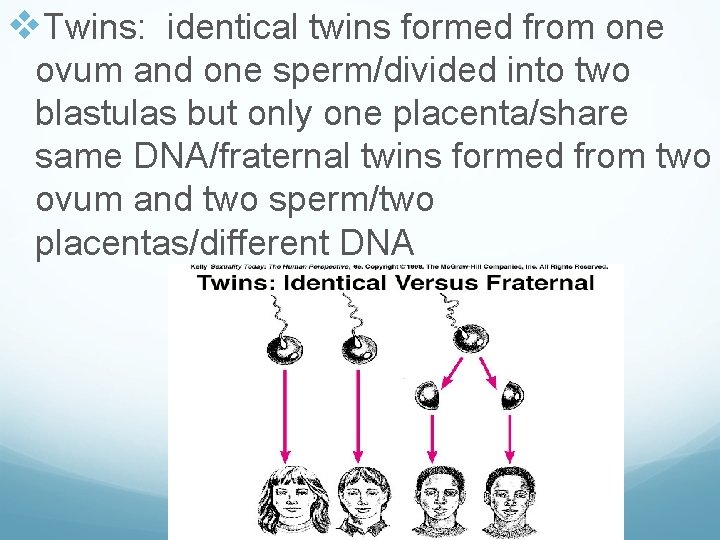
v. Twins: identical twins formed from one ovum and one sperm/divided into two blastulas but only one placenta/share same DNA/fraternal twins formed from two ovum and two sperm/two placentas/different DNA
Delivery of baby v. Full term pregnancy is 38 -40 wks/ anything before this time is considered preterm-doctors will try to stop labor if possible/if delivery is imminent, will give steroids to mature the baby’s lungs quickly v. Unsure of mechanism, but is believed that the baby’s liver, when mature, sends out a hormone that triggers contractions.
v. Pituitary produces oxytocin that causes uterus to contract v. The cervix must thin and dilate to 10 cms/doctors & nurses estimate one fingertip to be 2 cm v 1 st stage of labor-longest stage/dilation and thinning of cervix due to uterine contractions/may last many hours in first baby/ends at 10 cm dilation v 2 nd stage-starts with pushing and ends with delivery of baby
v 3 rd stage of labor-begins with clamping umbilical cord between baby and placenta and ends with delivery of placenta
Reproductive Conditions v. Endometriosis-tissue of uterus moves outside of uterus and begins to grow on organs and intestines/builds up during the month, but cannot shed tissue to outside/causes intense pain and bleeding/treated with birth control pills and/or surgery v. Ovarian cyst-benign growth on ovaries/cause pain/treat with birth control pills, possible surgery
v. Tubal pregnancy-implantation of embryo in fallopian tubes/cannot survive/will either terminate in ruptured tube or surg. v. D&C-surgical procedure to remove lining of uterus/done to stop bleeding from heavy periods, after miscarriage, or to terminate pregnancy v. Tubal ligation-method of birth control where fallopian tubes are severed v. Vasectomy-method of birth control where vas deferens are severed