
REPRODUCTION The process that continues life on Earth
- Slides: 19
REPRODUCTION The process that continues life on Earth
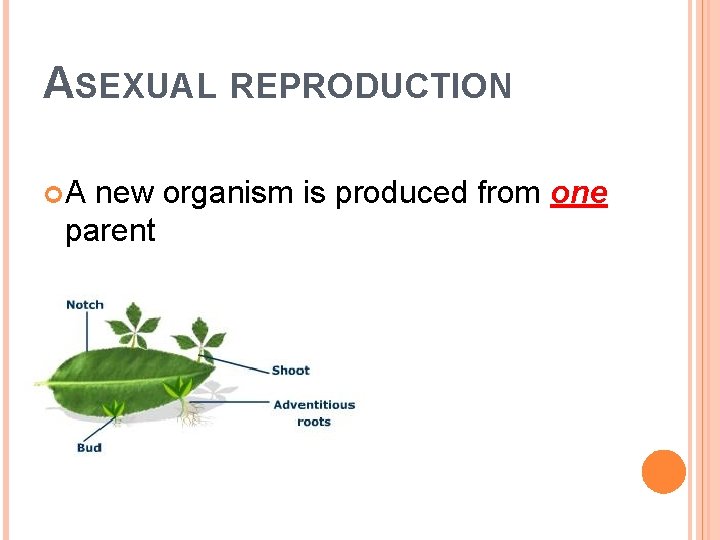
ASEXUAL REPRODUCTION A new organism is produced from one parent
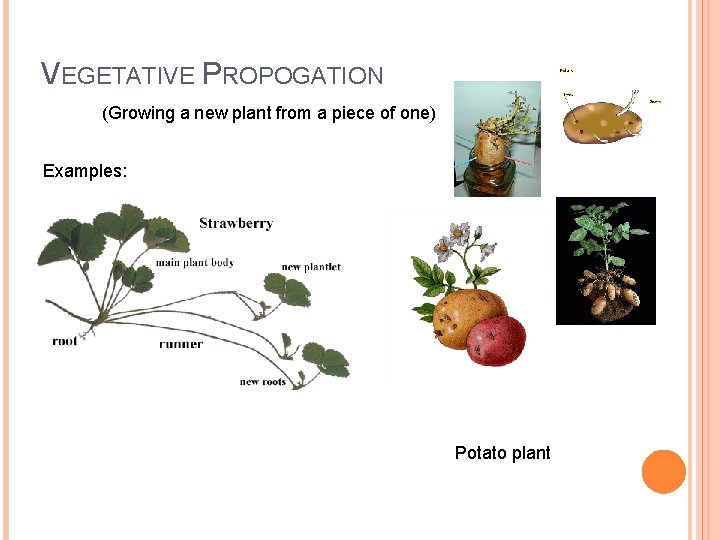
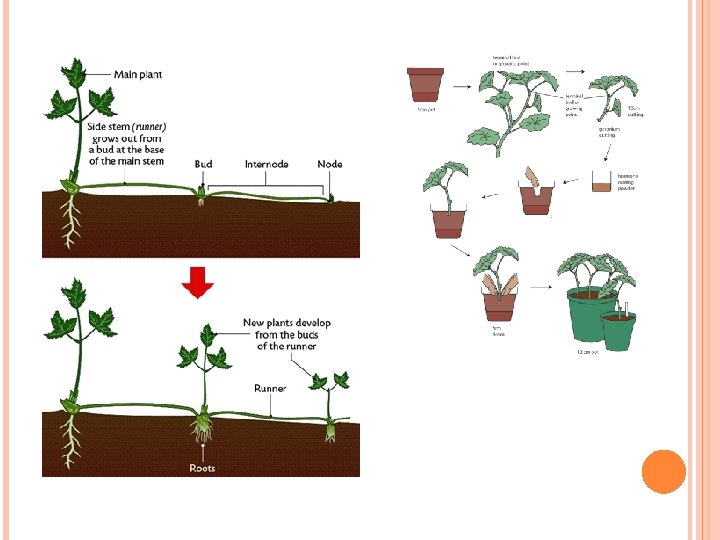
VEGETATIVE PROPOGATION (Growing a new plant from a piece of one) Examples: Potato plant
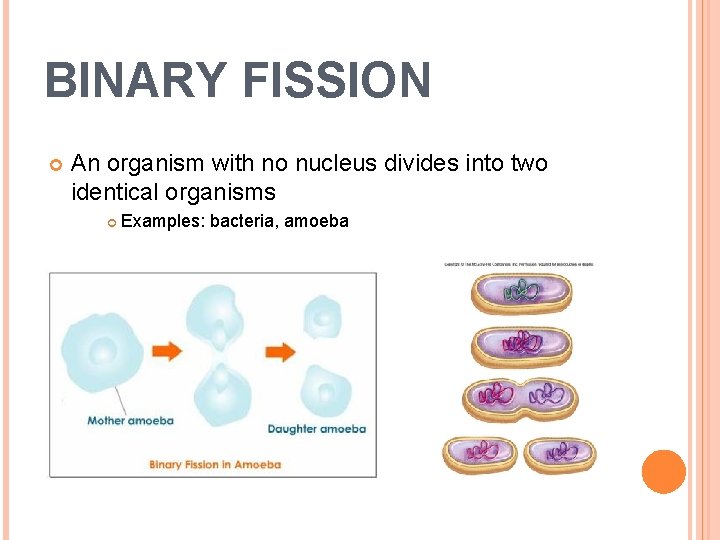
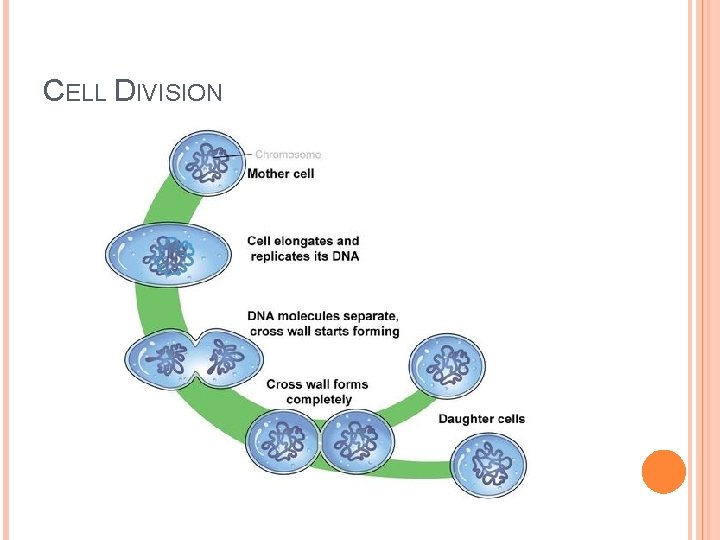
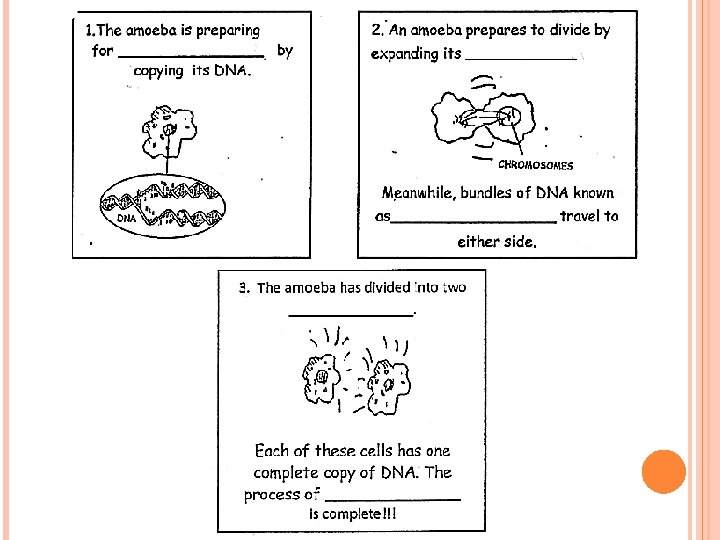
BINARY FISSION An organism with no nucleus divides into two identical organisms Examples: bacteria, amoeba
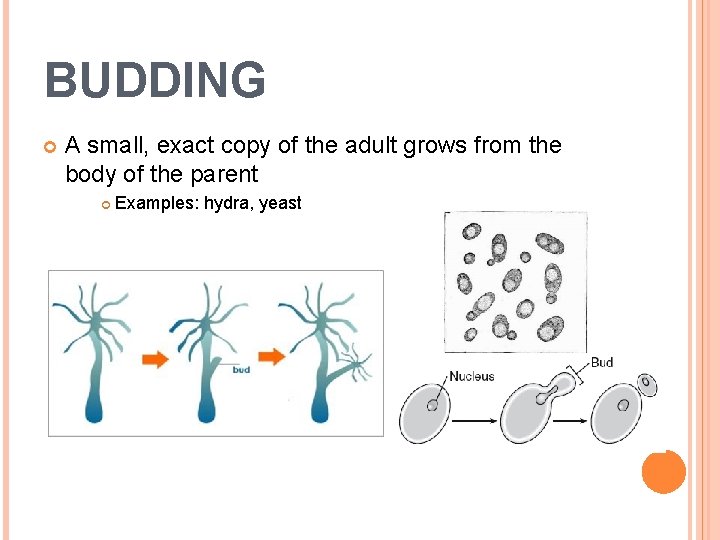
BUDDING A small, exact copy of the adult grows from the body of the parent Examples: hydra, yeast
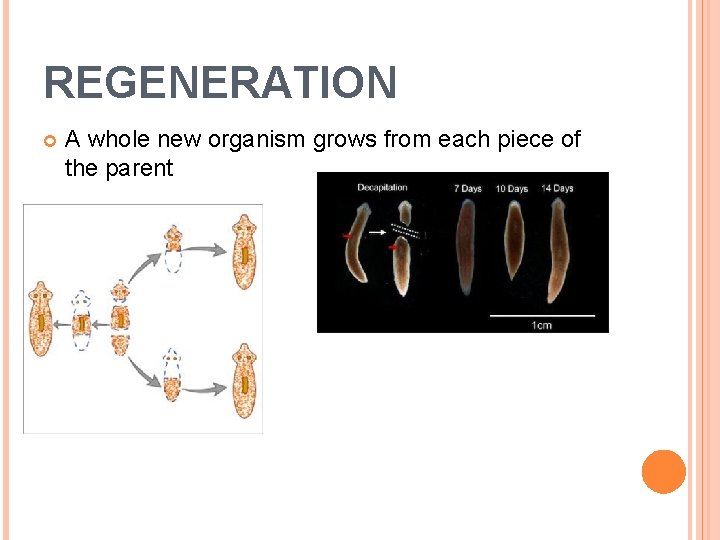
REGENERATION A whole new organism grows from each piece of the parent
ADVANTAGES OF ASEXUAL REPRODUCTION o Organisms can reproduce without a mate. o Large number of offspring rapidly. o Stable environments with very little change are favorable for organisms to reproduce asexually.
DISADVANTAGES OF ASEXUAL REPRODUCTION Offspring are genetically identical to each other and to the parent. No or very little genetic variation within a population. • Any mutation in the parent cell, can cause harmful effects on the survival ability of the offspring. • If there is harmful mutation in the organisms, environment changes could be deadly to all the individuals.
CELL DIVISION
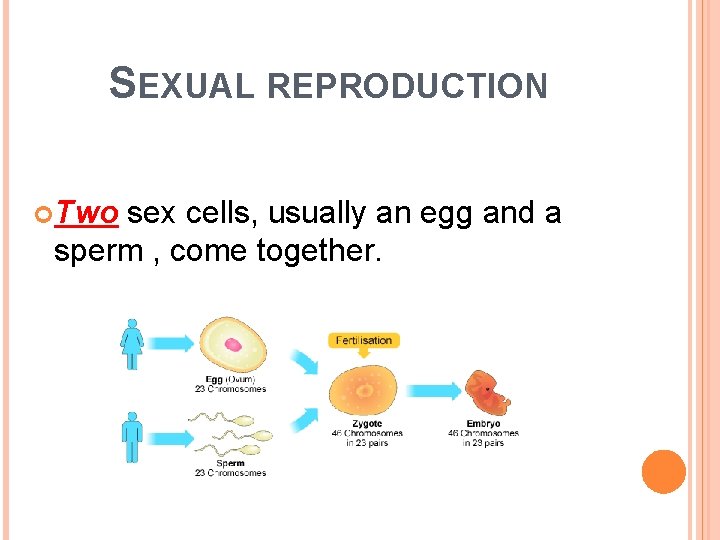
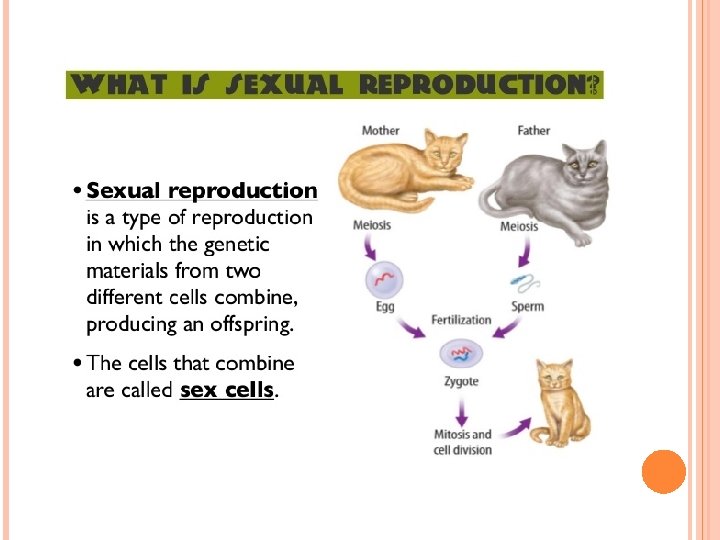
SEXUAL REPRODUCTION Two sex cells, usually an egg and a sperm , come together.
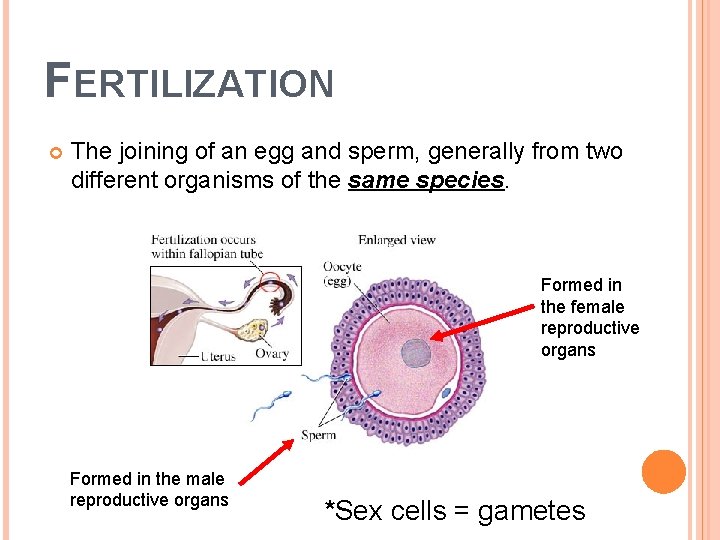
FERTILIZATION The joining of an egg and sperm, generally from two different organisms of the same species. Formed in the female reproductive organs Formed in the male reproductive organs *Sex cells = gametes
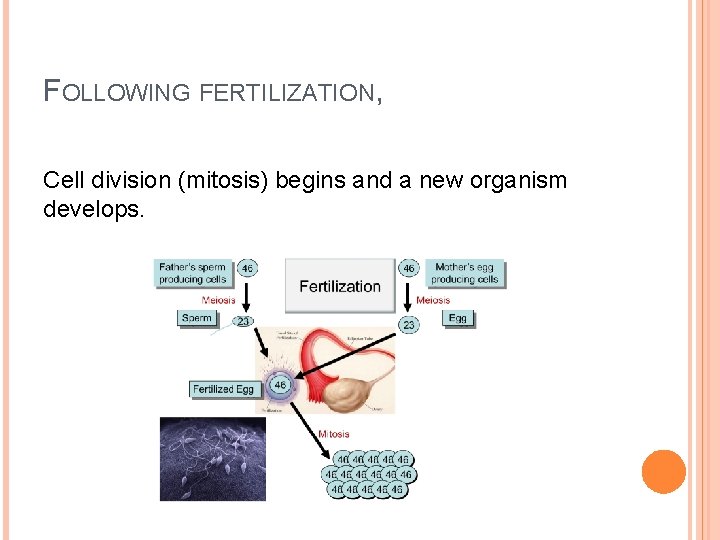
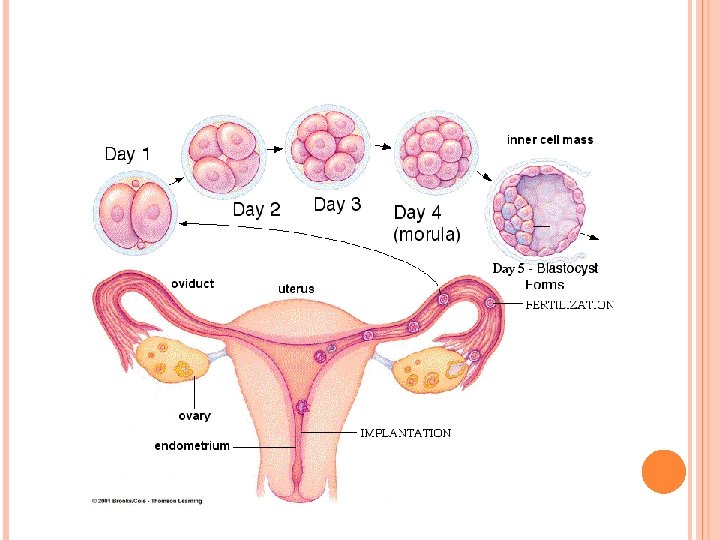
FOLLOWING FERTILIZATION, Cell division (mitosis) begins and a new organism develops.
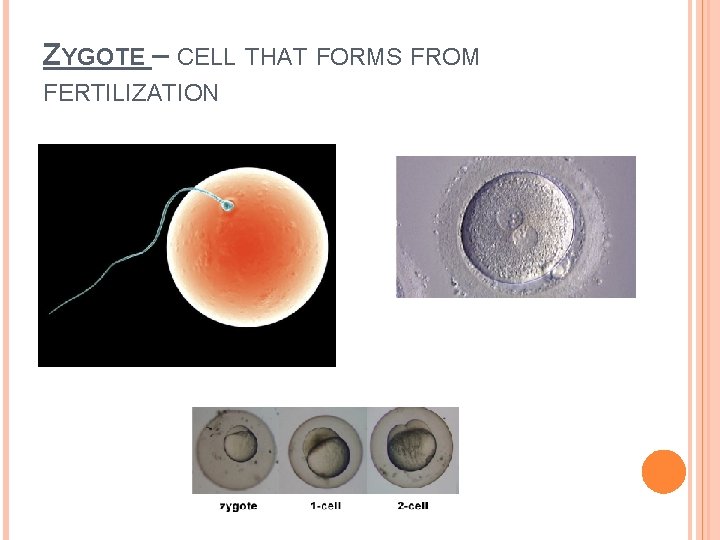
ZYGOTE – CELL THAT FORMS FROM FERTILIZATION
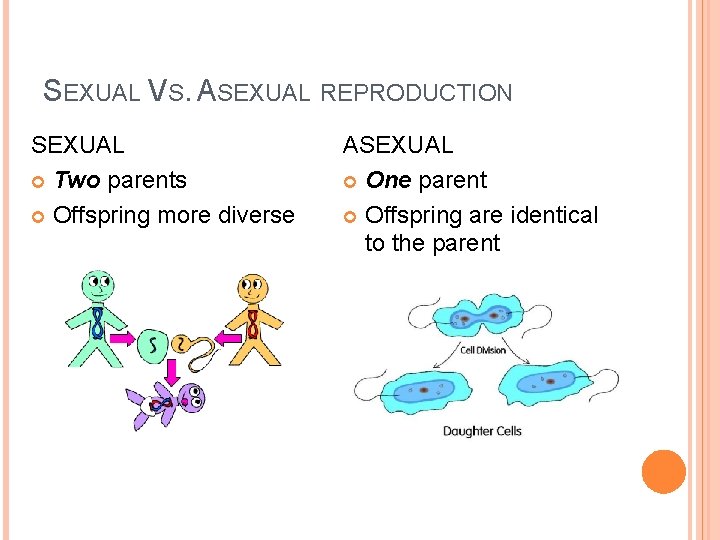
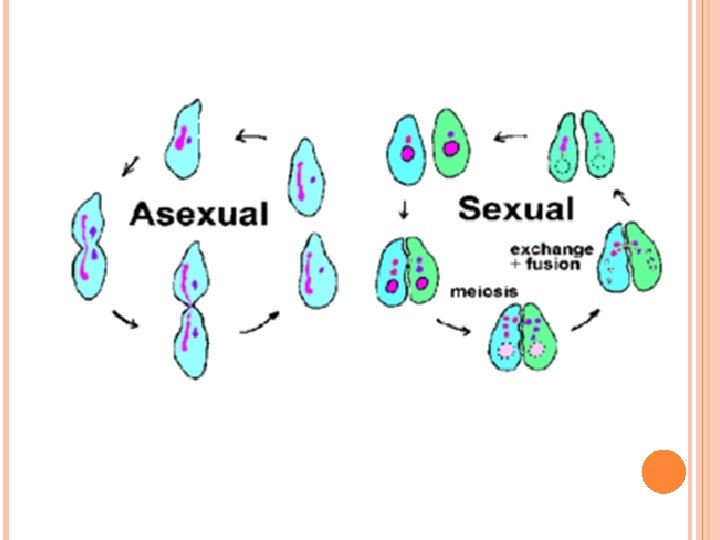
SEXUAL VS. ASEXUAL REPRODUCTION SEXUAL Two parents Offspring more diverse ASEXUAL One parent Offspring are identical to the parent