
Reproduction The Mammalian Strategy Relatively few intrauterine young



- Slides: 49
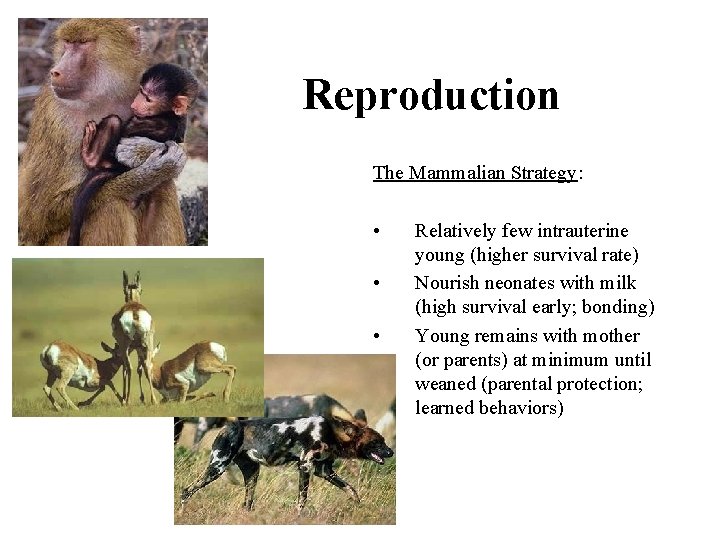
Reproduction The Mammalian Strategy: • • • Relatively few intrauterine young (higher survival rate) Nourish neonates with milk (high survival early; bonding) Young remains with mother (or parents) at minimum until weaned (parental protection; learned behaviors)
Reproduction The Mammalian Strategy: • • Amount of energy invested per young is lower than nonmammals; Relatively few young produced but most survive to potentially reproduce
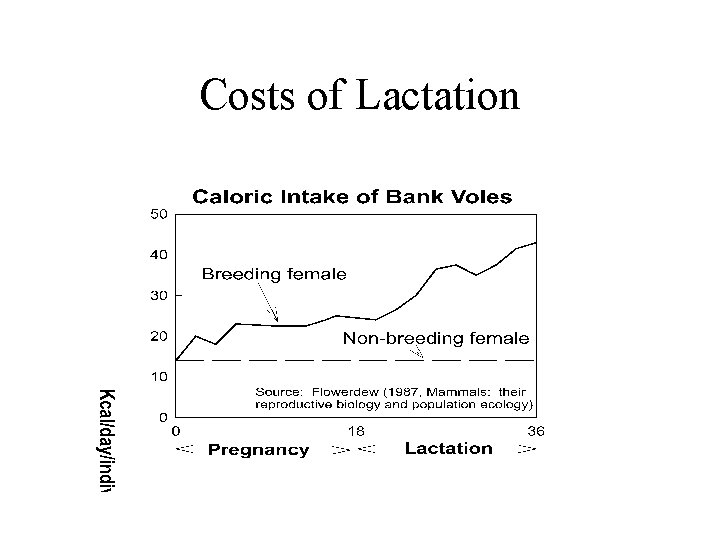
Costs of Lactation
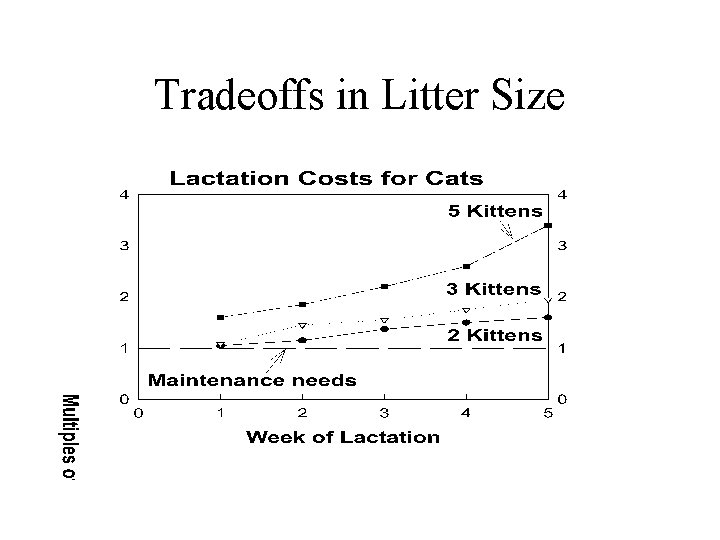
Tradeoffs in Litter Size
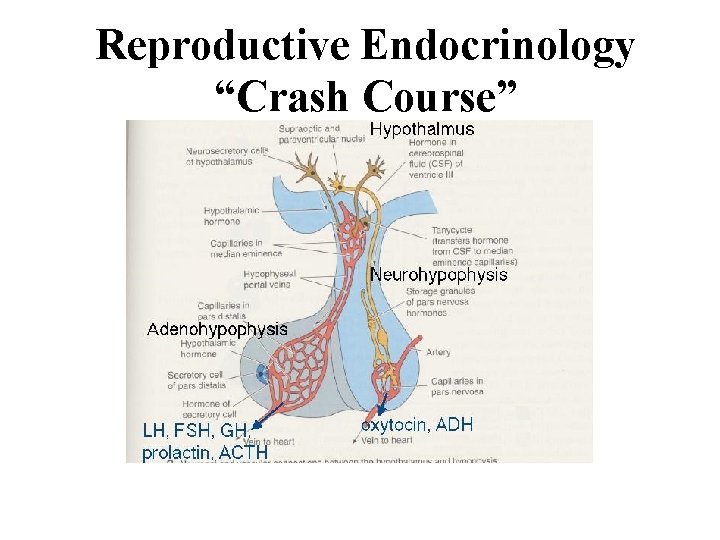
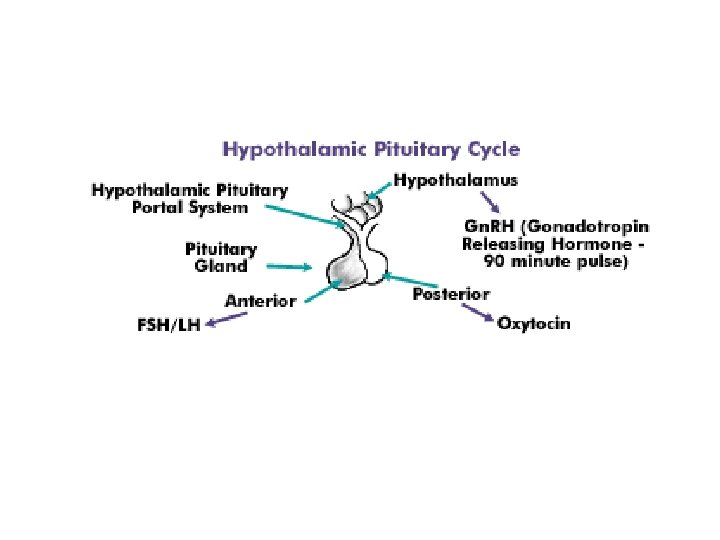
Reproductive Endocrinology “Crash Course”
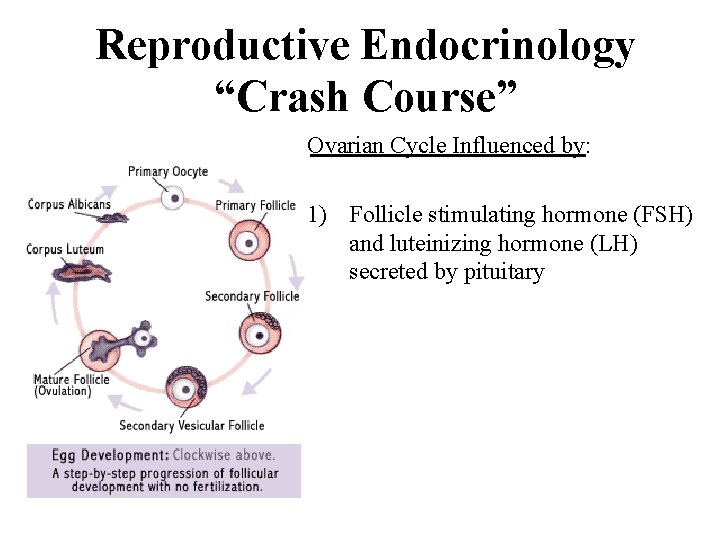
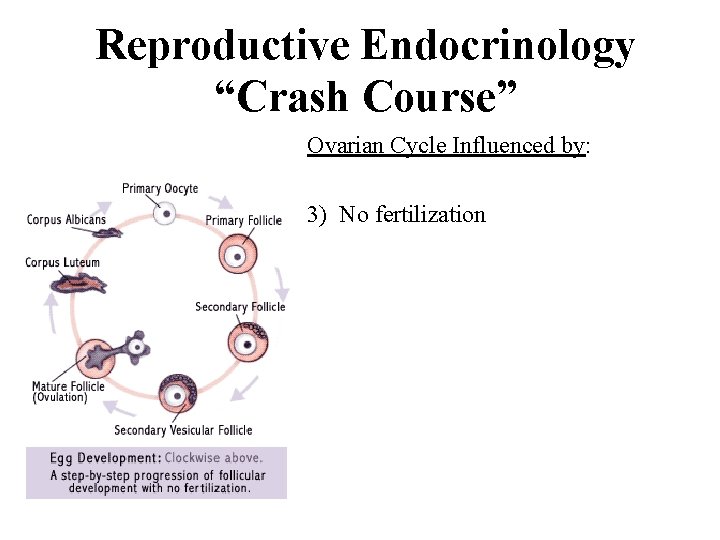
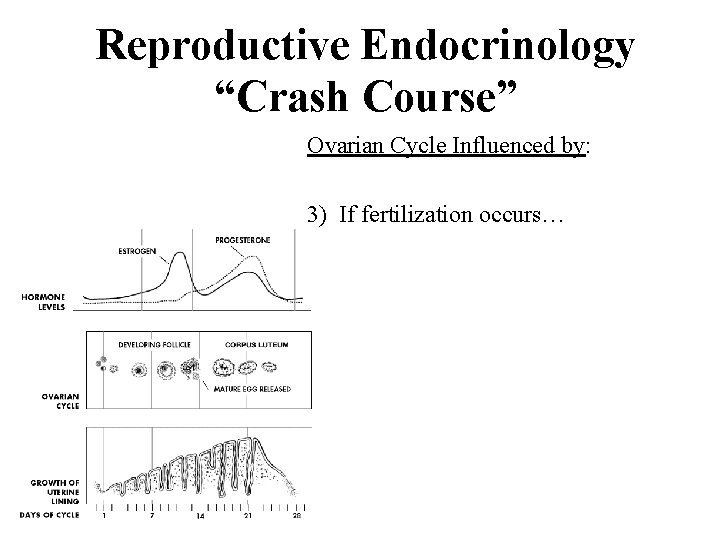
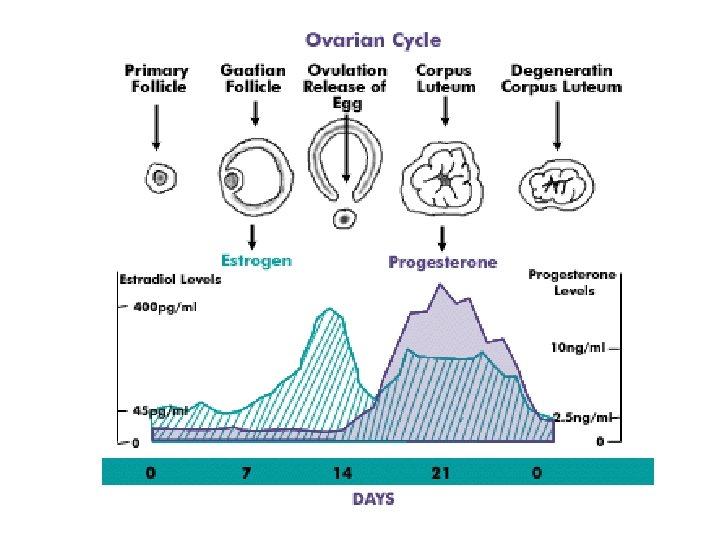
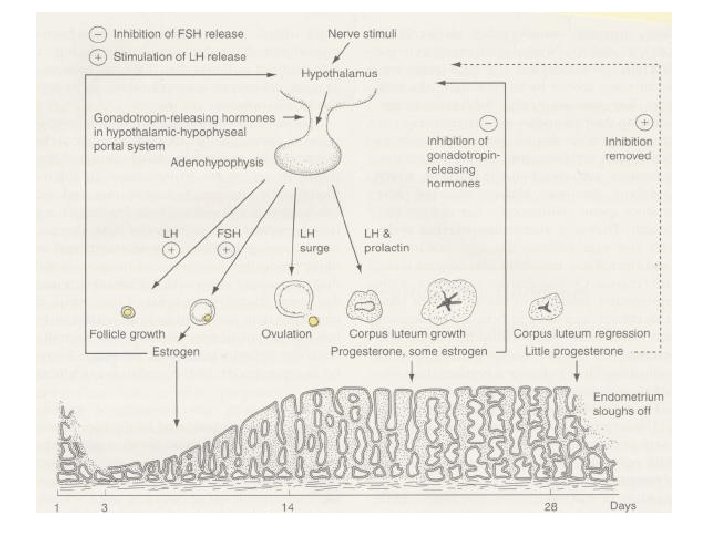
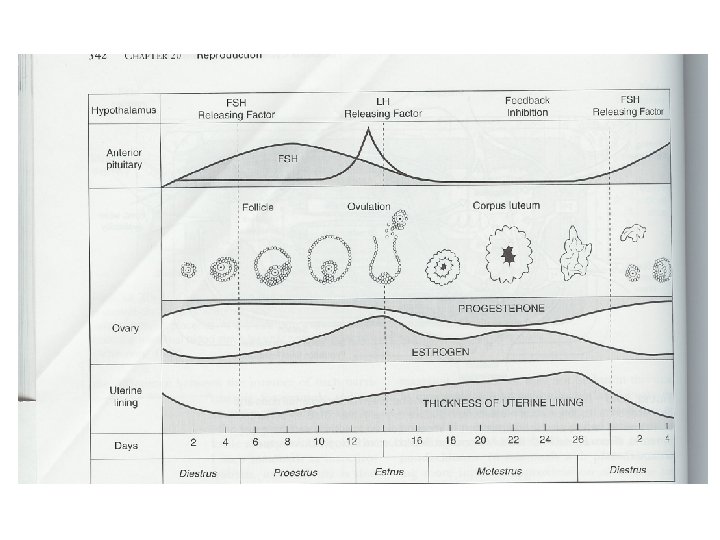
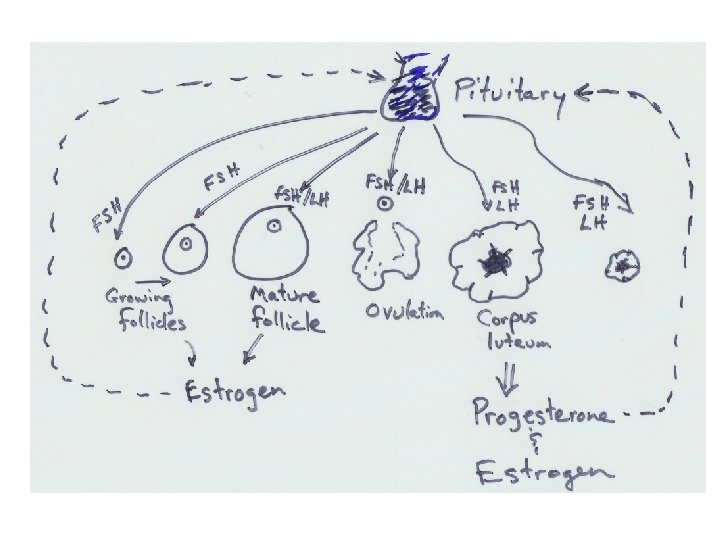
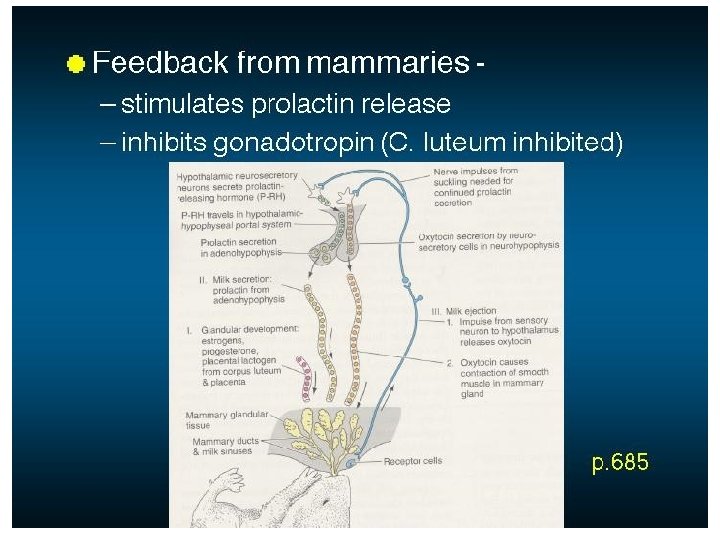
Reproductive Endocrinology “Crash Course” Ovarian Cycle Influenced by: 1) Follicle stimulating hormone (FSH) and luteinizing hormone (LH) secreted by pituitary
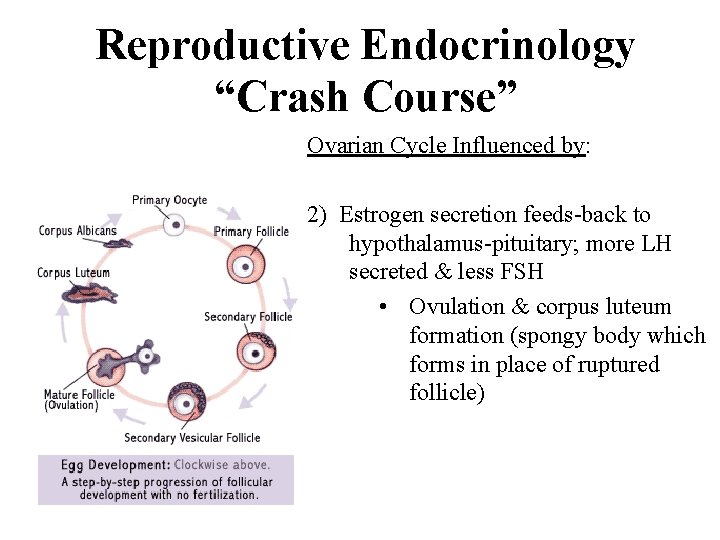
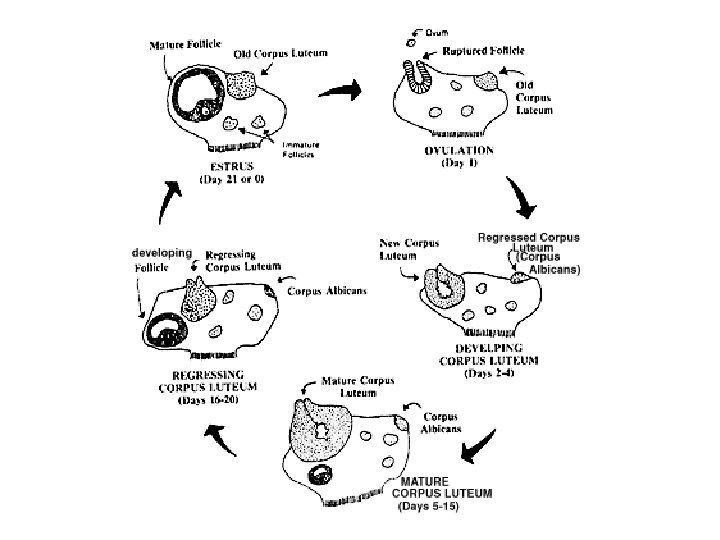
Reproductive Endocrinology “Crash Course” Ovarian Cycle Influenced by: 2) Estrogen secretion feeds-back to hypothalamus-pituitary; more LH secreted & less FSH • Ovulation & corpus luteum formation (spongy body which forms in place of ruptured follicle)
Reproductive Endocrinology “Crash Course” Ovarian Cycle Influenced by: 3) No fertilization
Reproductive Endocrinology “Crash Course” Ovarian Cycle Influenced by: 3) If fertilization occurs…
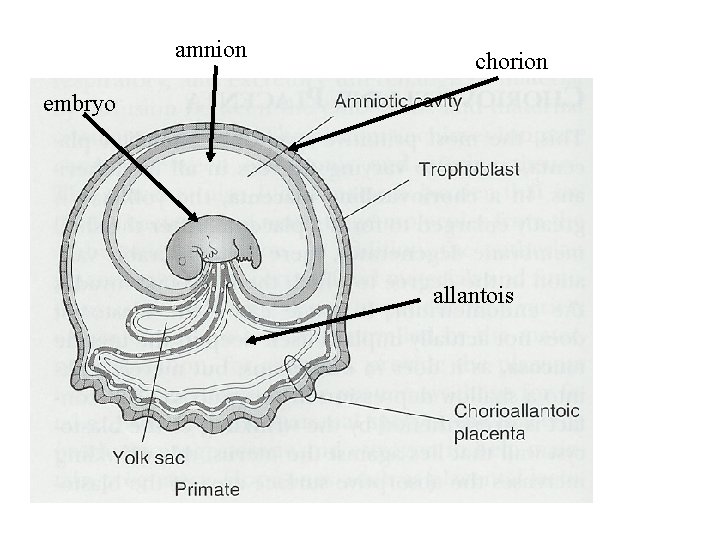
amnion chorion embryo allantois
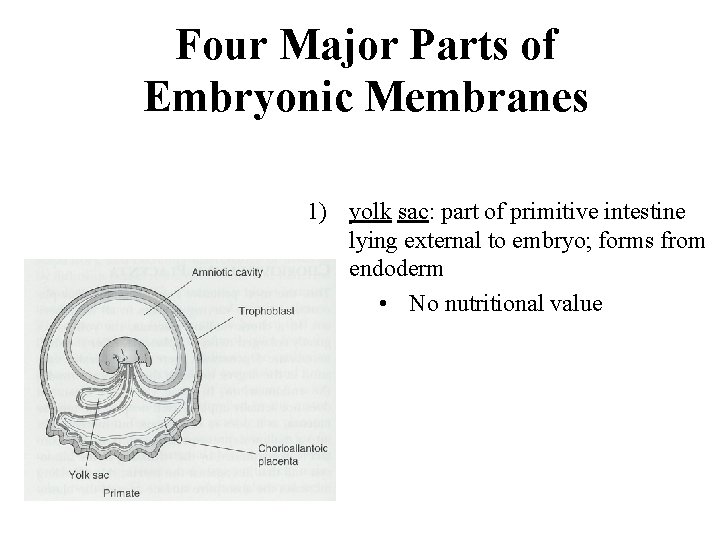
Four Major Parts of Embryonic Membranes 1) yolk sac: part of primitive intestine lying external to embryo; forms from endoderm • No nutritional value
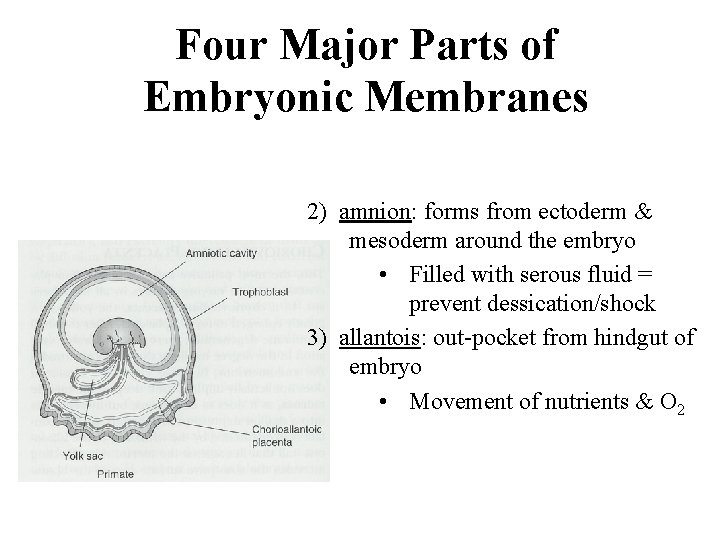
Four Major Parts of Embryonic Membranes 2) amnion: forms from ectoderm & mesoderm around the embryo • Filled with serous fluid = prevent dessication/shock 3) allantois: out-pocket from hindgut of embryo • Movement of nutrients & O 2
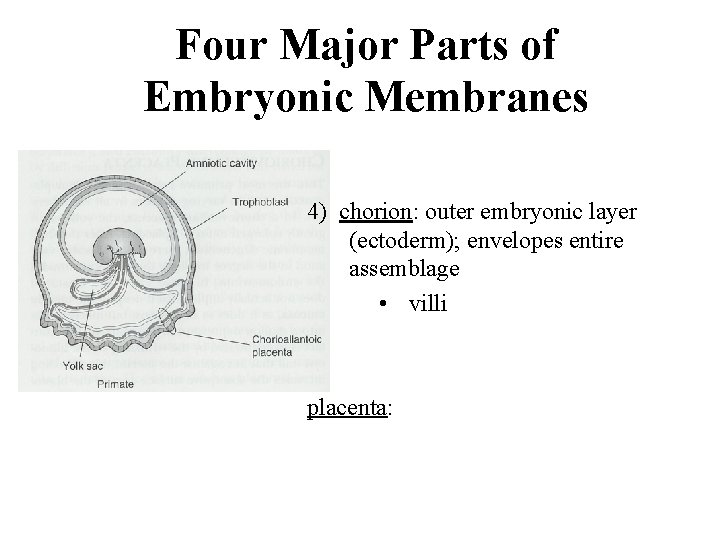
Four Major Parts of Embryonic Membranes 4) chorion: outer embryonic layer (ectoderm); envelopes entire assemblage • villi placenta:
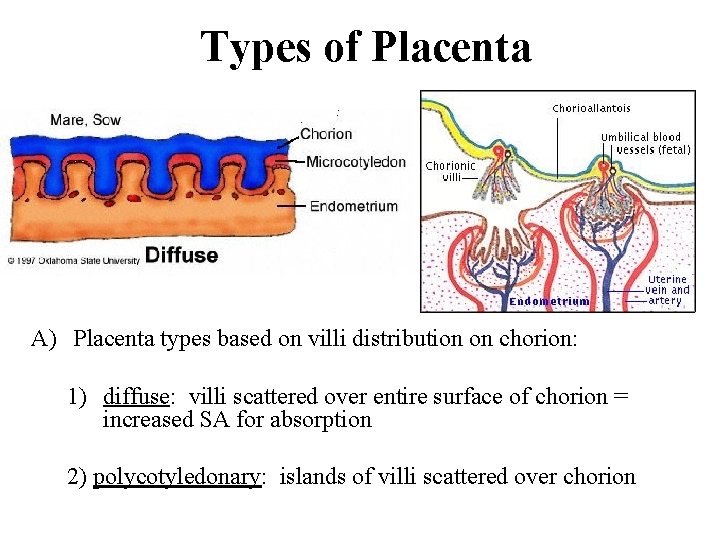
Types of Placenta A) Placenta types based on villi distribution on chorion: 1) diffuse: villi scattered over entire surface of chorion = increased SA for absorption 2) polycotyledonary: islands of villi scattered over chorion
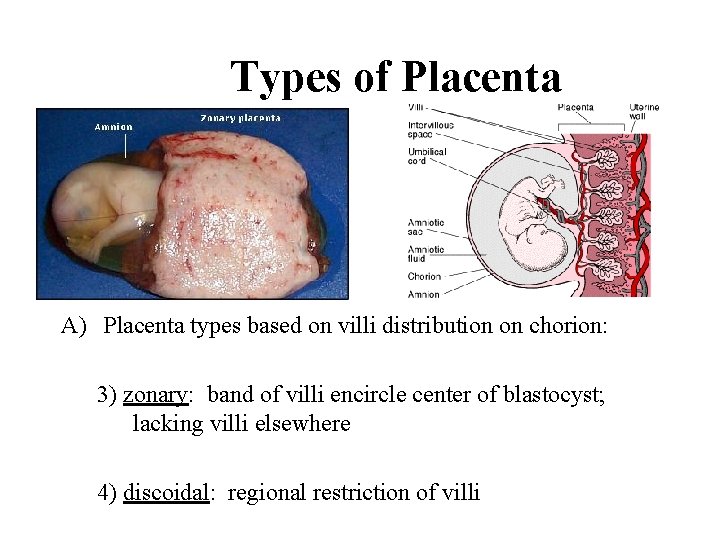
Types of Placenta A) Placenta types based on villi distribution on chorion: 3) zonary: band of villi encircle center of blastocyst; lacking villi elsewhere 4) discoidal: regional restriction of villi
discoidal zonary diffuse
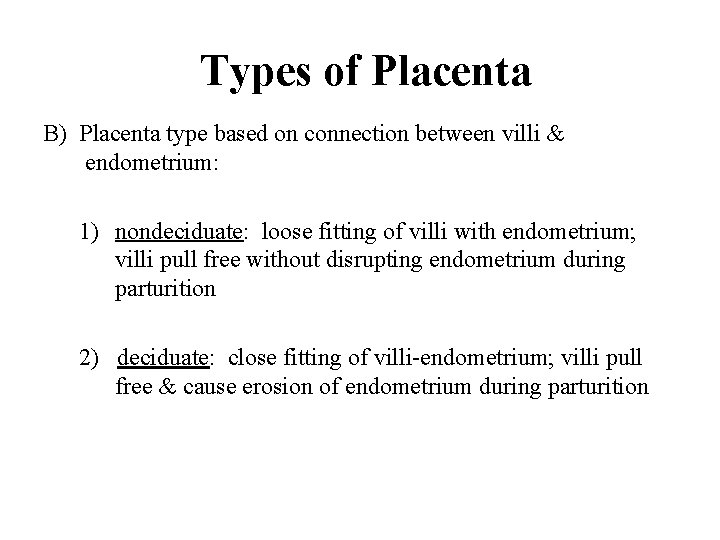
Types of Placenta B) Placenta type based on connection between villi & endometrium: 1) nondeciduate: loose fitting of villi with endometrium; villi pull free without disrupting endometrium during parturition 2) deciduate: close fitting of villi-endometrium; villi pull free & cause erosion of endometrium during parturition
Types of Placenta C) Placenta type based on degree of intimacy between embryonic & maternal parts: 1) choriovitelline: blastocyst lies in endometrium depression; does not embed 2) chorioallantoic: villi; blastocyst rests against endometrium at allantoischorion contact point
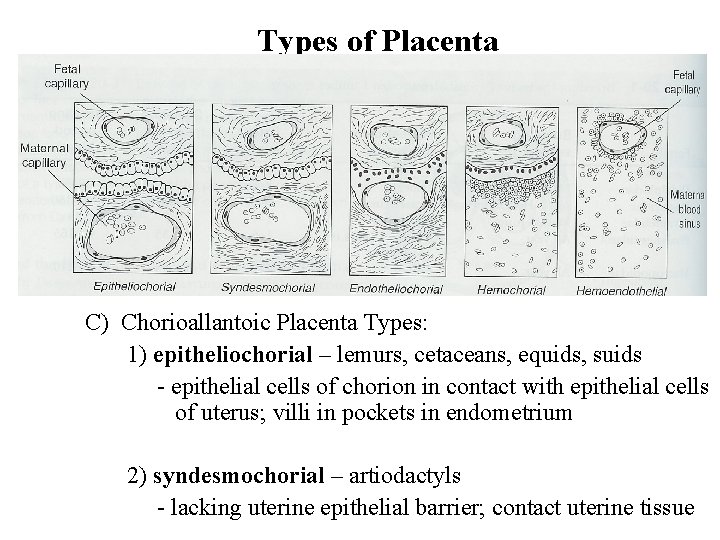
Types of Placenta C) Chorioallantoic Placenta Types: 1) epitheliochorial – lemurs, cetaceans, equids, suids - epithelial cells of chorion in contact with epithelial cells of uterus; villi in pockets in endometrium 2) syndesmochorial – artiodactyls - lacking uterine epithelial barrier; contact uterine tissue
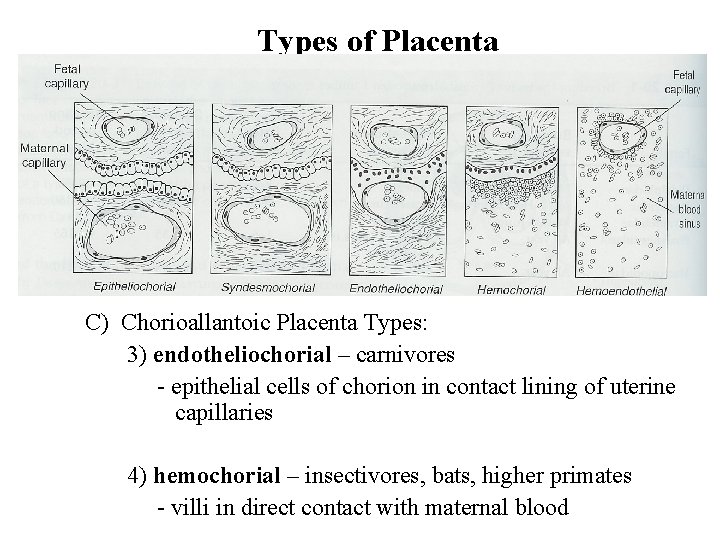
Types of Placenta C) Chorioallantoic Placenta Types: 3) endotheliochorial – carnivores - epithelial cells of chorion in contact lining of uterine capillaries 4) hemochorial – insectivores, bats, higher primates - villi in direct contact with maternal blood
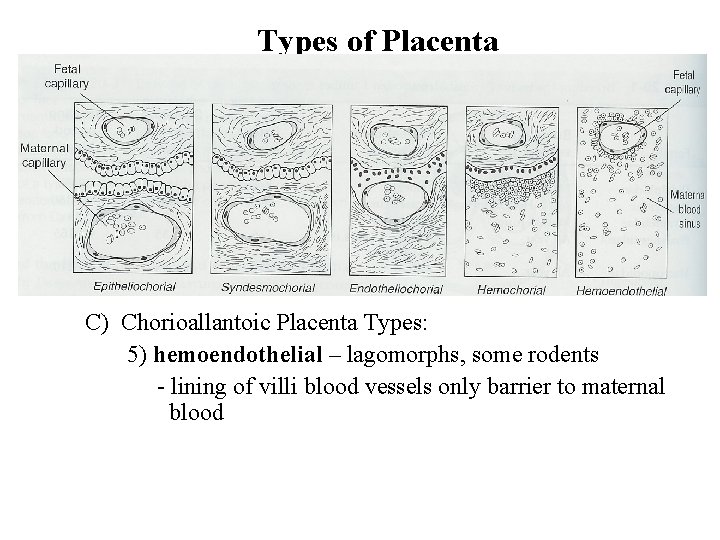
Types of Placenta C) Chorioallantoic Placenta Types: 5) hemoendothelial – lagomorphs, some rodents - lining of villi blood vessels only barrier to maternal blood
Reproductive Patterns 1) Continuous embryonic development (“typical”) a)
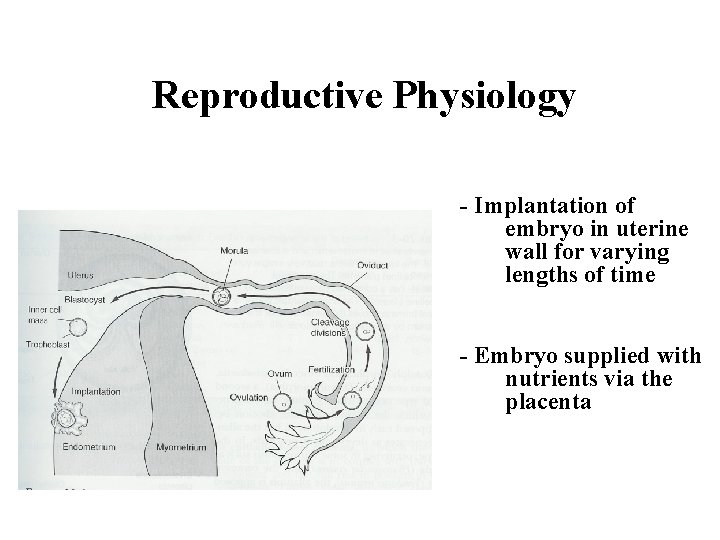
Reproductive Physiology - Implantation of embryo in uterine wall for varying lengths of time - Embryo supplied with nutrients via the placenta
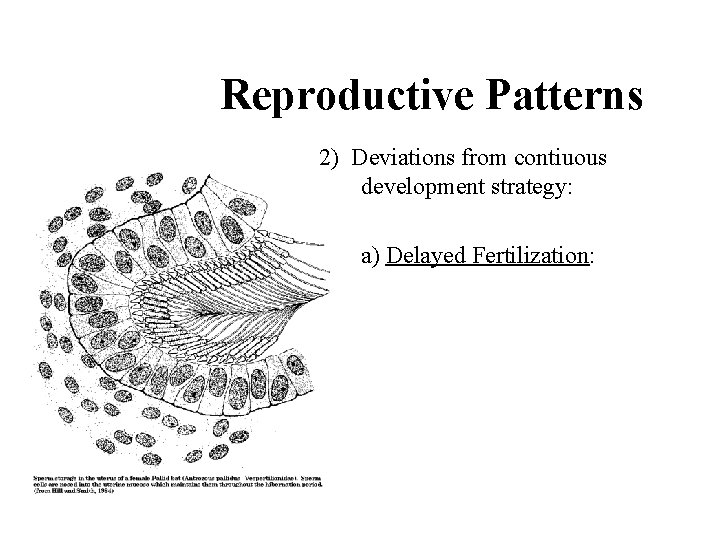
Reproductive Patterns 2) Deviations from contiuous development strategy: a) Delayed Fertilization:
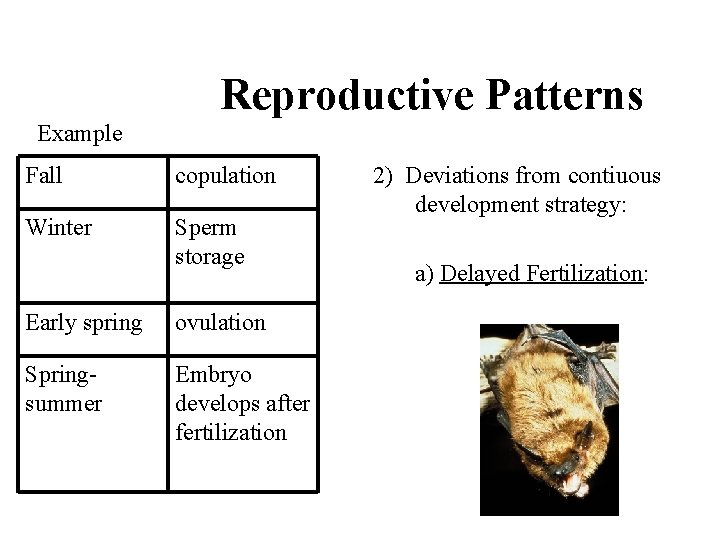
Reproductive Patterns Example Fall copulation Winter Sperm storage Early spring ovulation Springsummer Embryo develops after fertilization 2) Deviations from contiuous development strategy: a) Delayed Fertilization:
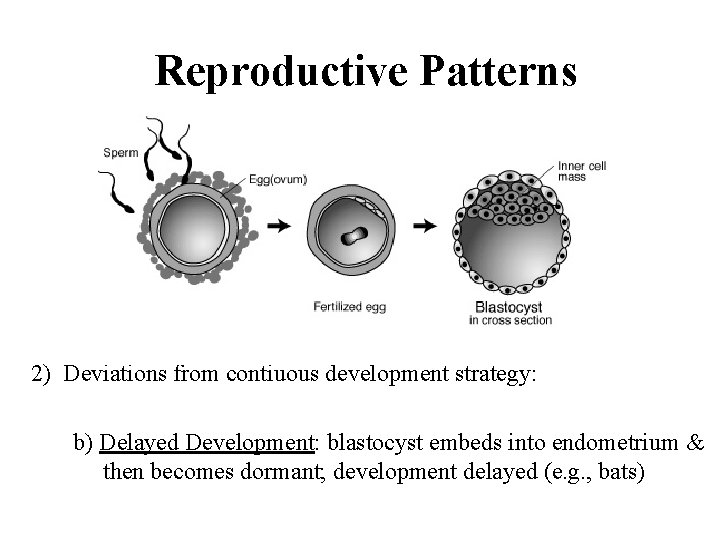
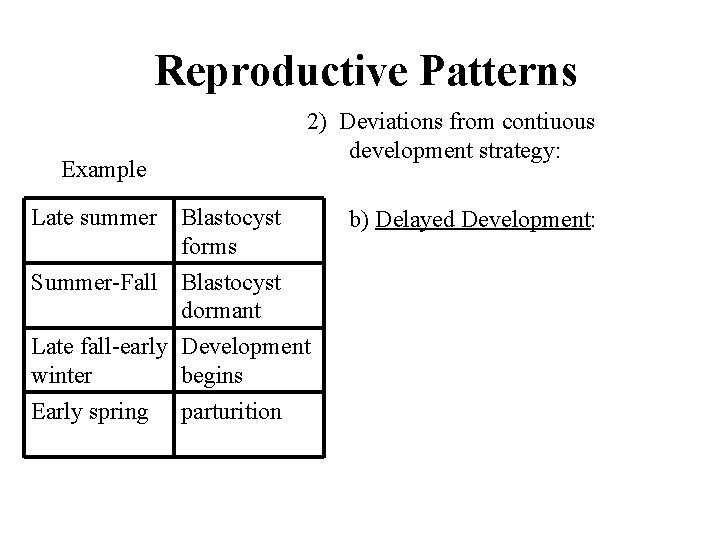
Reproductive Patterns 2) Deviations from contiuous development strategy: b) Delayed Development: blastocyst embeds into endometrium & then becomes dormant; development delayed (e. g. , bats)
Reproductive Patterns Example 2) Deviations from contiuous development strategy: Late summer Blastocyst forms Summer-Fall Blastocyst dormant Late fall-early Development winter begins Early spring parturition b) Delayed Development:
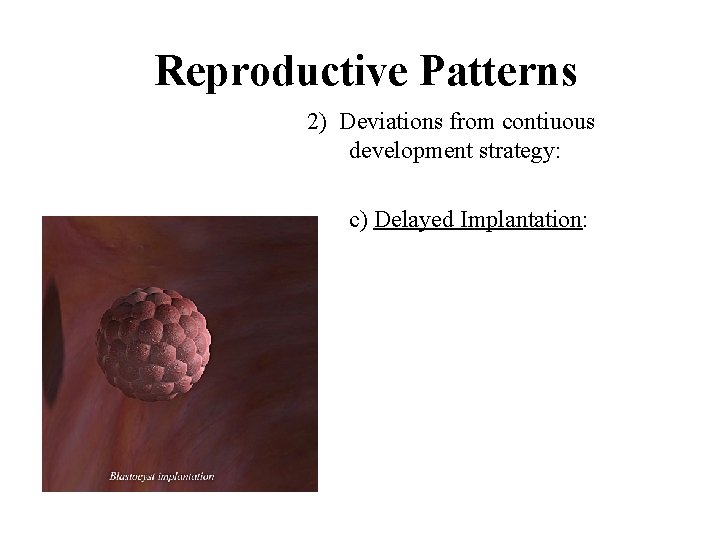
Reproductive Patterns 2) Deviations from contiuous development strategy: c) Delayed Implantation:
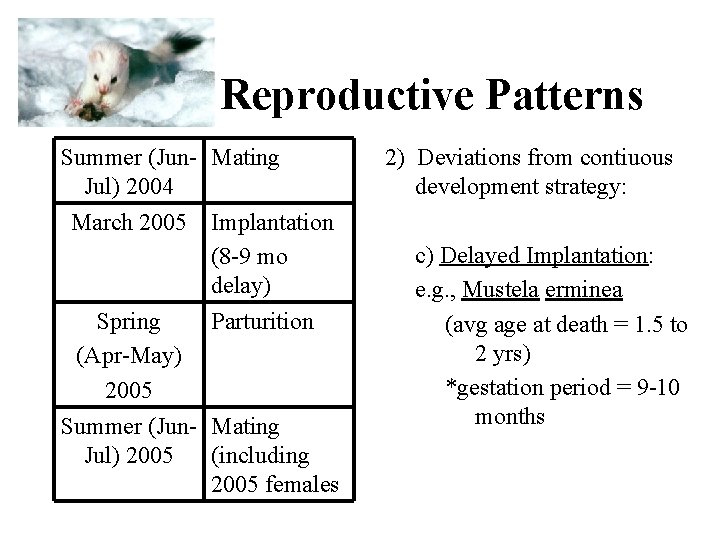
Reproductive Patterns Summer (Jun- Mating Jul) 2004 March 2005 Implantation (8 -9 mo delay) Spring Parturition (Apr-May) 2005 Summer (Jun- Mating Jul) 2005 (including 2005 females 2) Deviations from contiuous development strategy: c) Delayed Implantation: e. g. , Mustela erminea (avg age at death = 1. 5 to 2 yrs) *gestation period = 9 -10 months
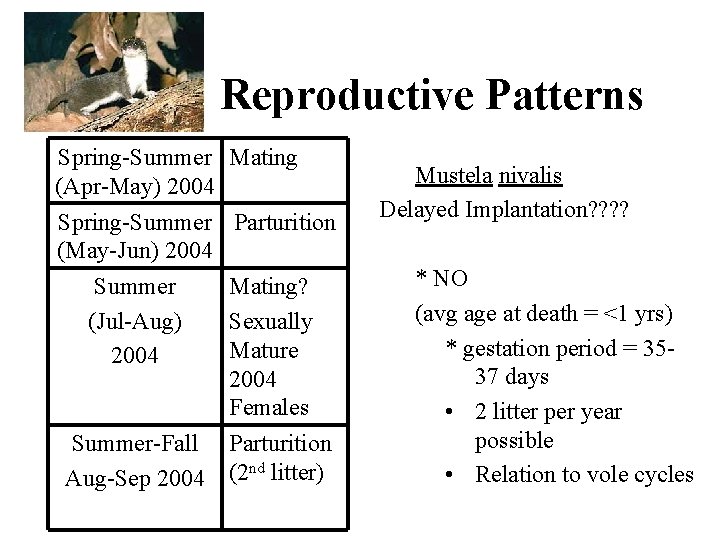
Reproductive Patterns Spring-Summer Mating (Apr-May) 2004 Spring-Summer Parturition (May-Jun) 2004 Summer (Jul-Aug) 2004 Summer-Fall Aug-Sep 2004 Mating? Sexually Mature 2004 Females Parturition (2 nd litter) Mustela nivalis Delayed Implantation? ? * NO (avg age at death = <1 yrs) * gestation period = 3537 days • 2 litter per year possible • Relation to vole cycles
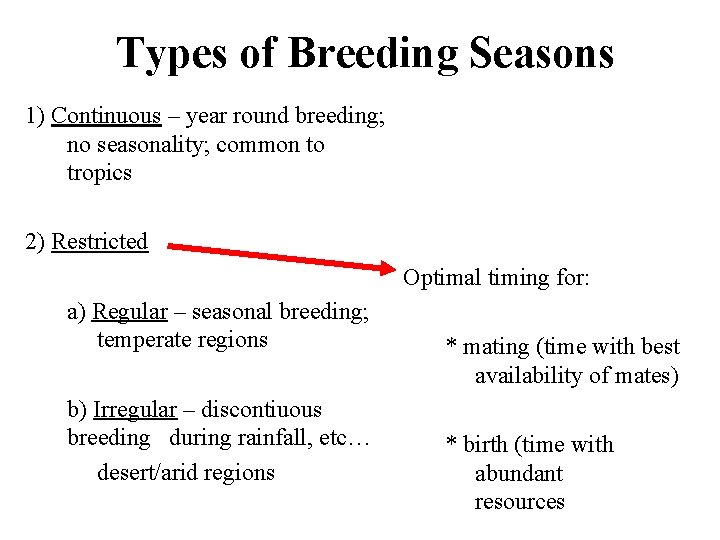
Types of Breeding Seasons 1) Continuous – year round breeding; no seasonality; common to tropics 2) Restricted Optimal timing for: a) Regular – seasonal breeding; temperate regions b) Irregular – discontiuous breeding during rainfall, etc… desert/arid regions * mating (time with best availability of mates) * birth (time with abundant resources
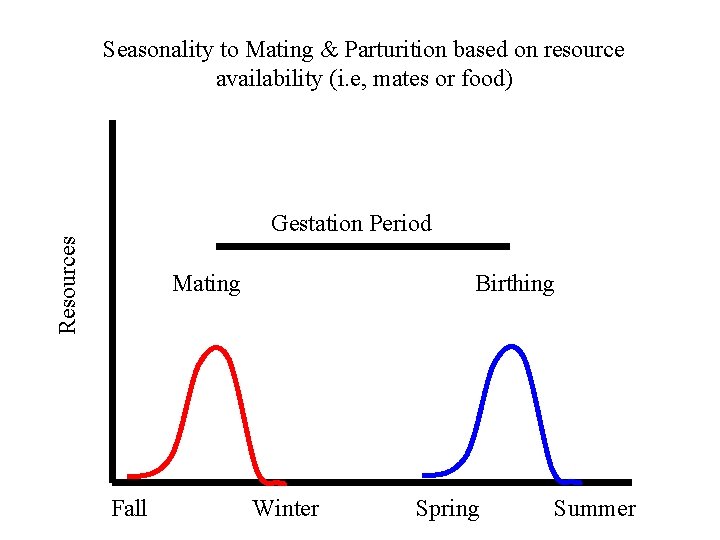
Seasonality to Mating & Parturition based on resource availability (i. e, mates or food) Resources Gestation Period Mating Fall Birthing Winter Spring Summer
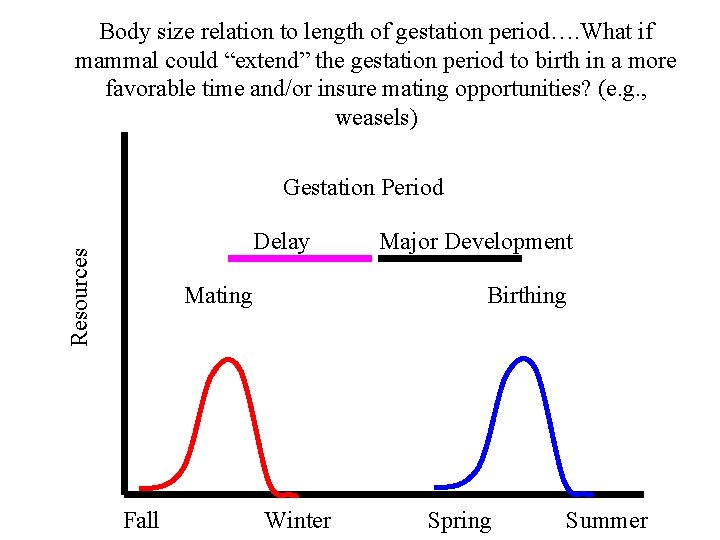
Body size relation to length of gestation period…. What if mammal could “extend” the gestation period to birth in a more favorable time and/or insure mating opportunities? (e. g. , weasels) Gestation Period Resources Delay Mating Fall Major Development Birthing Winter Spring Summer
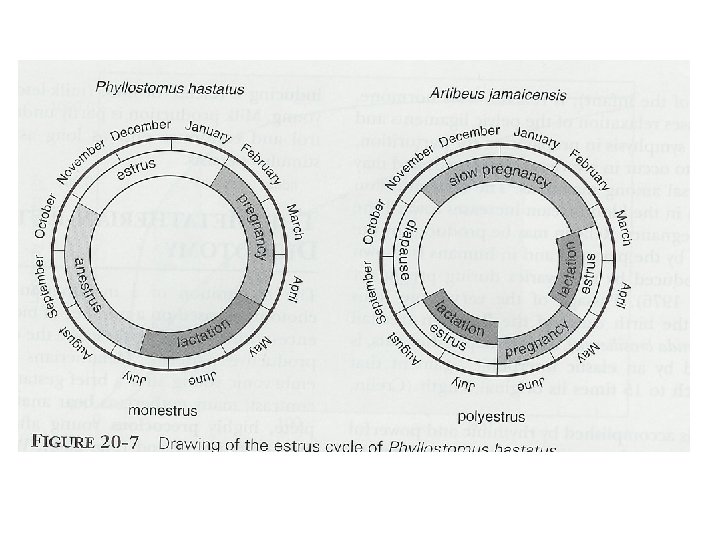
Reproduction Sexual Maturity (puberty) – age when capable of producing gametes influence onset/cessation (restricted) *environmental factors efficiency of reproduction (continuous)
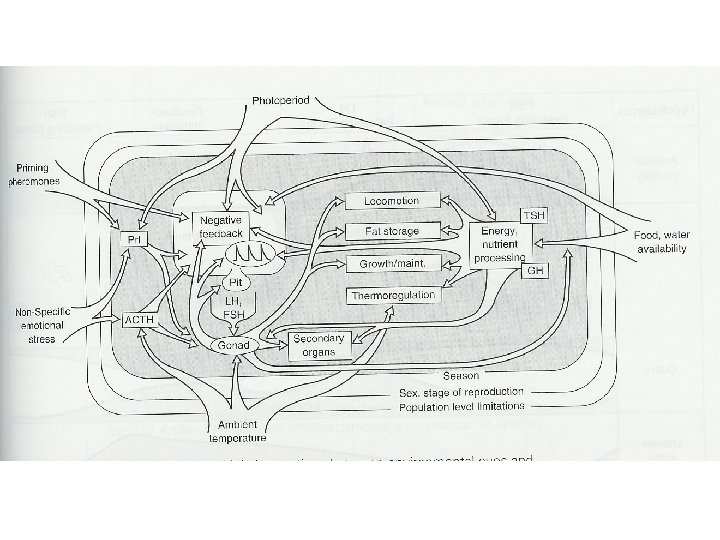
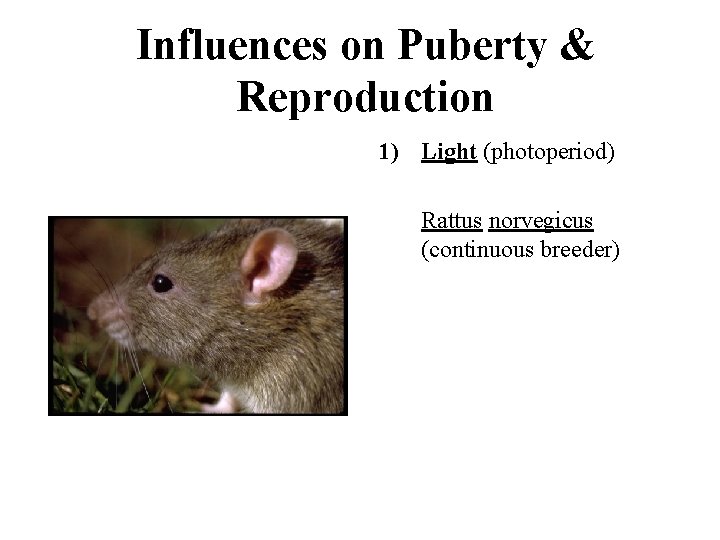
Influences on Puberty & Reproduction 1) Light (photoperiod) Rattus norvegicus (continuous breeder)
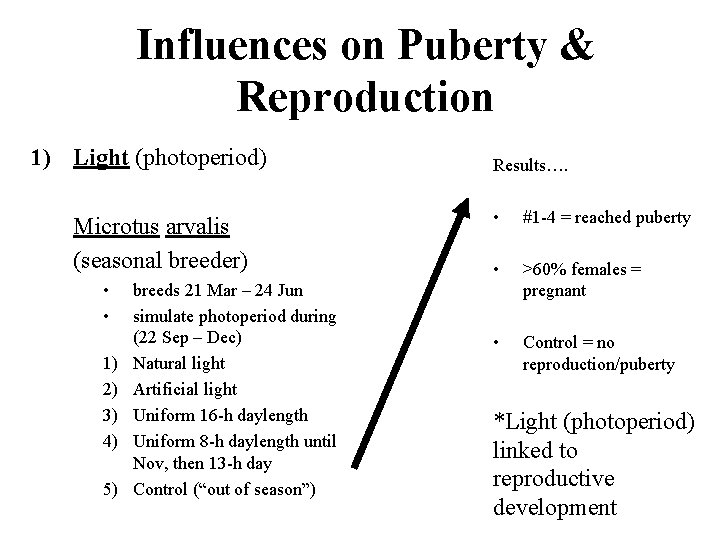
Influences on Puberty & Reproduction 1) Light (photoperiod) Microtus arvalis (seasonal breeder) • • 1) 2) 3) 4) 5) breeds 21 Mar – 24 Jun simulate photoperiod during (22 Sep – Dec) Natural light Artificial light Uniform 16 -h daylength Uniform 8 -h daylength until Nov, then 13 -h day Control (“out of season”) Results…. • #1 -4 = reached puberty • >60% females = pregnant • Control = no reproduction/puberty *Light (photoperiod) linked to reproductive development
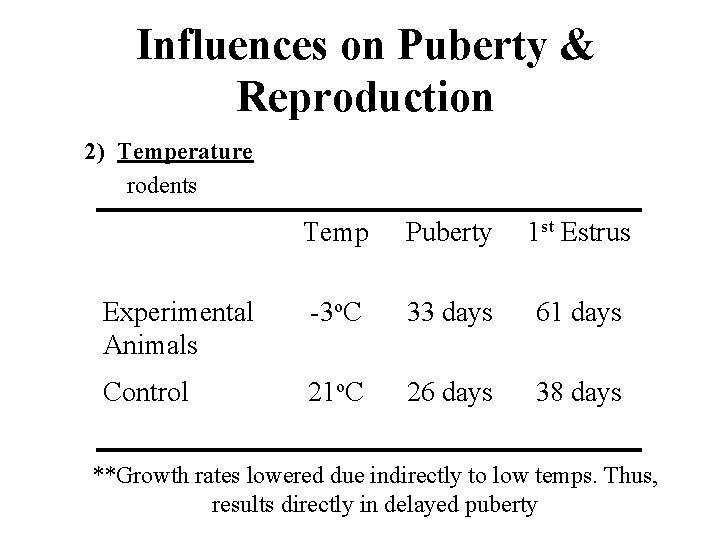
Influences on Puberty & Reproduction 2) Temperature rodents Temp Puberty 1 st Estrus Experimental Animals -3 o. C 33 days 61 days Control 21 o. C 26 days 38 days **Growth rates lowered due indirectly to low temps. Thus, results directly in delayed puberty
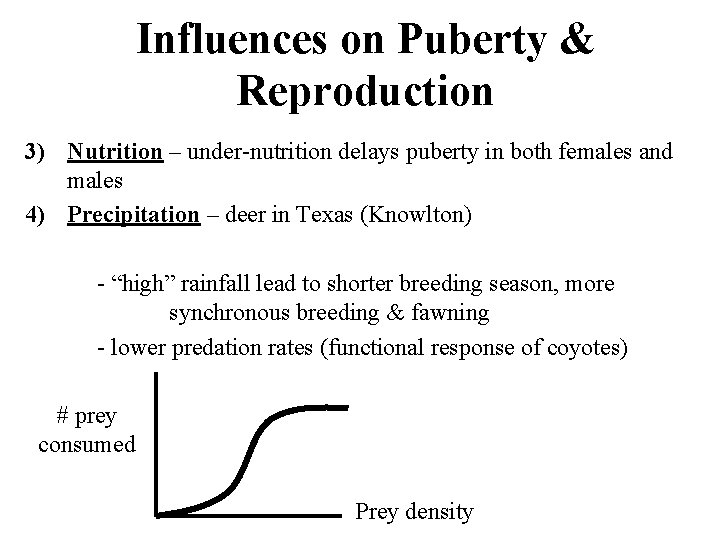
Influences on Puberty & Reproduction 3) Nutrition – under-nutrition delays puberty in both females and males 4) Precipitation – deer in Texas (Knowlton) - “high” rainfall lead to shorter breeding season, more synchronous breeding & fawning - lower predation rates (functional response of coyotes) # prey consumed Prey density
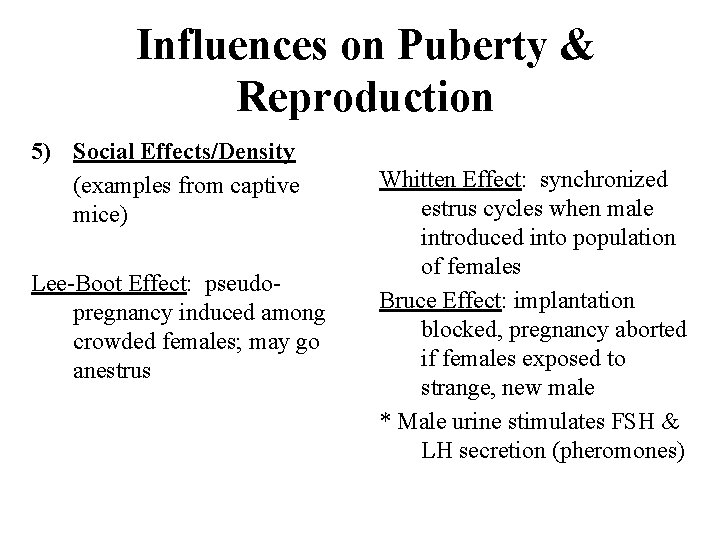
Influences on Puberty & Reproduction 5) Social Effects/Density (examples from captive mice) Lee-Boot Effect: pseudopregnancy induced among crowded females; may go anestrus Whitten Effect: synchronized estrus cycles when male introduced into population of females Bruce Effect: implantation blocked, pregnancy aborted if females exposed to strange, new male * Male urine stimulates FSH & LH secretion (pheromones)
Readings • Reproductive Cycles & Life-History Strategies, pp. 354 -356 • Litter Size & Reproductive “Seasons”, pp. 356 -357 • Lactation and Postnatal Growth, pp. 359 -363