
Reproduction Revision 1 Biology Key Stage 3 Reproduction
Reproduction Revision 1 Biology - Key Stage 3 Reproduction - Lesson 7 Mr Wyatt 1
Describe how the zygote develops during gestation. You should include; ● What cell division is ● What a zygote is ● What the embryo and foetus stages are ● How long gestation is 2
Explain, using a diagram, how many chromosomes are in a zygote. You should include; ● A simple diagram with a sperm, an egg and a zygote ● How many chromosomes are in each of these 3
What changes happen in the female body during puberty? What are they for? Keywords to include; ● Hips ● Period ● Menstrual Cycle ● Breast 4
Describe how the zygote develops during gestation. (Answers) Cell division is when one cell splits into two. This involves the cell first growing and copying everything within it. A zygote is a single cell made when a sperm fertilises an egg. The zygote keeps dividing until you get a small bundle of cells called an embryo. The cells in the embryo keep dividing until you get a larger bundle of cells called a foetus. The whole gestation period takes 9 months for a baby to develop. 5
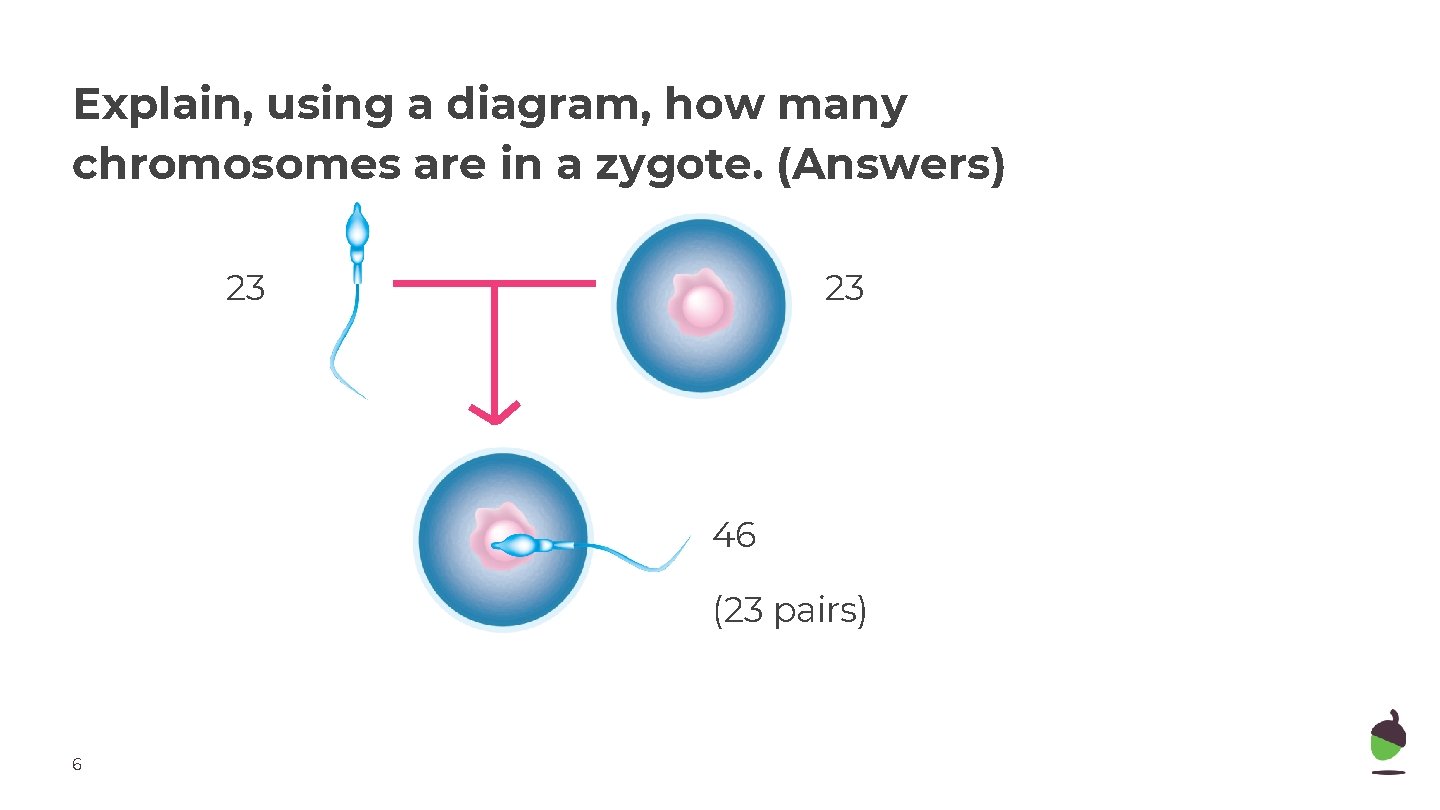
Explain, using a diagram, how many chromosomes are in a zygote. (Answers) 23 23 46 (23 pairs) 6
What changes happen in the female body during puberty? What are they for? (Answers) Hips widen so that there is space for a baby to be born. The menstrual cycle starts, which is a 28 day cycle including ovulation and a period. This allows the woman to become pregnant. Breasts develop which enables the mother to breastfeed the baby after it has been born. 7
![References 8 ● Slide [7] - [Wikimedia] - [DBCLS] - [Sperm togopic] ● Slide](http://slidetodoc.com/presentation_image_h2/08965429cd0abc8be01c7feb2aa9d33e/image-8.jpg "References 8 ● Slide [7] - [Wikimedia] - [DBCLS] - [Sperm togopic] ● Slide")
References 8 ● Slide [7] - [Wikimedia] - [DBCLS] - [Sperm togopic] ● Slide [7] - [Wikimedia] - [DBCLS] - [Ovum]
- Slides: 8