
REPRODUCTION REPRODUCTION Reproduction is the process by which
REPRODUCTION

REPRODUCTION Reproduction is the process by which organisms produce offspring
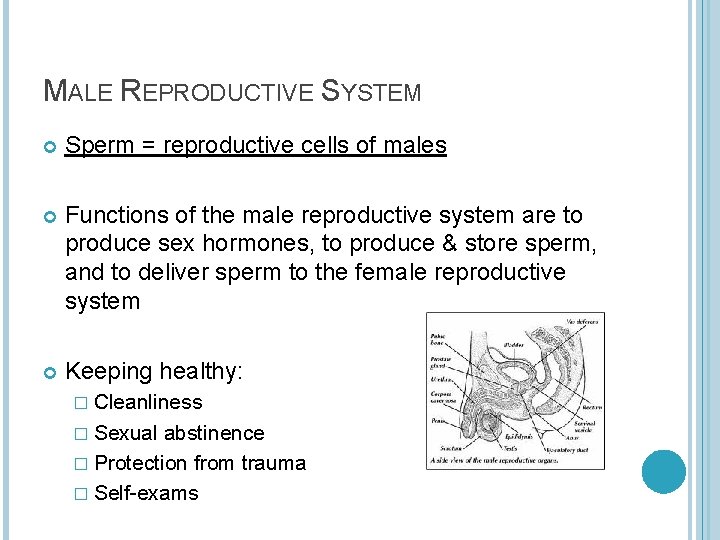
MALE REPRODUCTIVE SYSTEM Sperm = reproductive cells of males Functions of the male reproductive system are to produce sex hormones, to produce & store sperm, and to deliver sperm to the female reproductive system Keeping healthy: � Cleanliness � Sexual abstinence � Protection from trauma � Self-exams
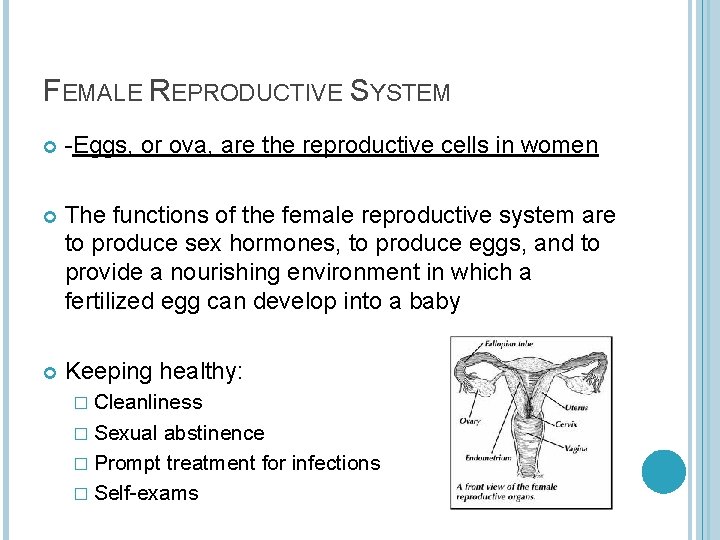
FEMALE REPRODUCTIVE SYSTEM -Eggs, or ova, are the reproductive cells in women The functions of the female reproductive system are to produce sex hormones, to produce eggs, and to provide a nourishing environment in which a fertilized egg can develop into a baby Keeping healthy: � Cleanliness � Sexual abstinence � Prompt treatment for infections � Self-exams

EGG TRAVELING THROUGH FEMALE REPRODUCTIVE SYSTEM
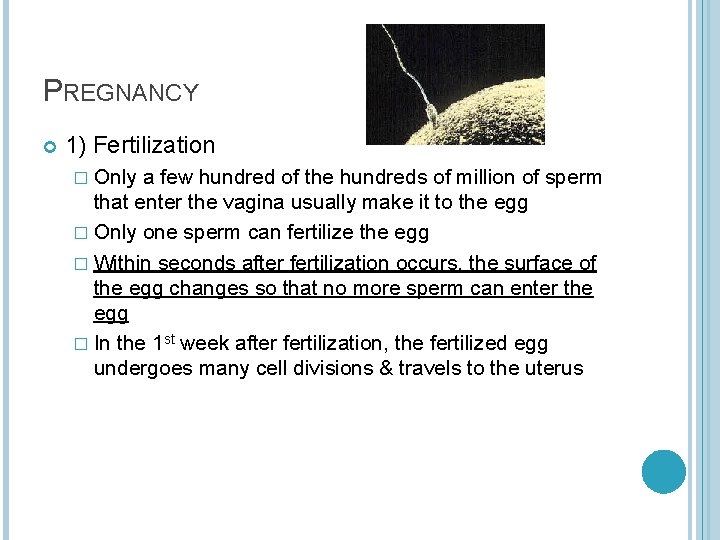
PREGNANCY 1) Fertilization � Only a few hundred of the hundreds of million of sperm that enter the vagina usually make it to the egg � Only one sperm can fertilize the egg � Within seconds after fertilization occurs, the surface of the egg changes so that no more sperm can enter the egg � In the 1 st week after fertilization, the fertilized egg undergoes many cell divisions & travels to the uterus
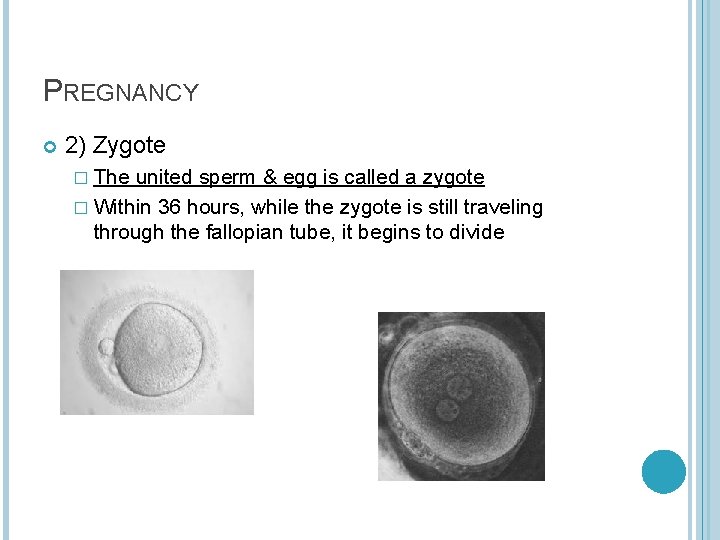
PREGNANCY 2) Zygote � The united sperm & egg is called a zygote � Within 36 hours, while the zygote is still traveling through the fallopian tube, it begins to divide
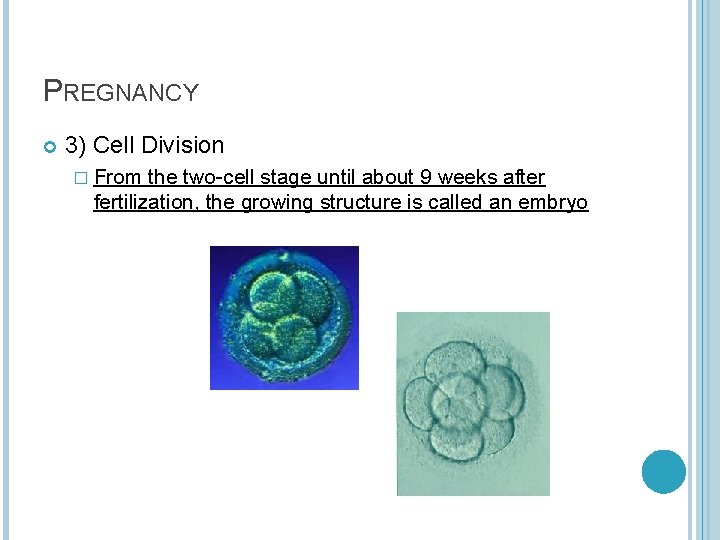
PREGNANCY 3) Cell Division � From the two-cell stage until about 9 weeks after fertilization, the growing structure is called an embryo

PREGNANCY 4) Blastocyst � About 5 days after fertilization, the embryo reaches the uterus, where it floats free for a few days � This ‘clump’ of cells is called a blastocyst
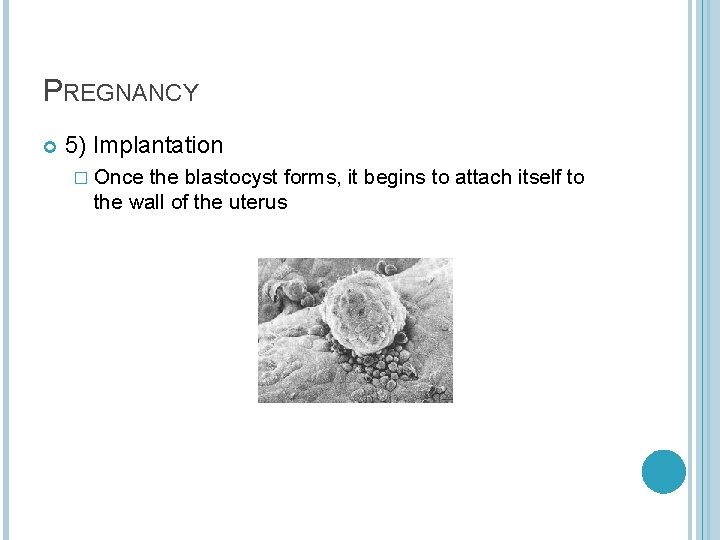
PREGNANCY 5) Implantation � Once the blastocyst forms, it begins to attach itself to the wall of the uterus
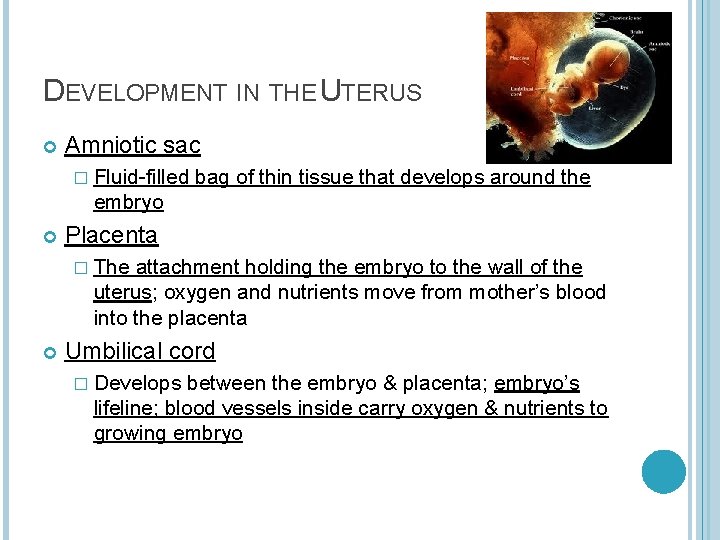
DEVELOPMENT IN THE UTERUS Amniotic sac � Fluid-filled bag of thin tissue that develops around the embryo Placenta � The attachment holding the embryo to the wall of the uterus; oxygen and nutrients move from mother’s blood into the placenta Umbilical cord � Develops between the embryo & placenta; embryo’s lifeline; blood vessels inside carry oxygen & nutrients to growing embryo
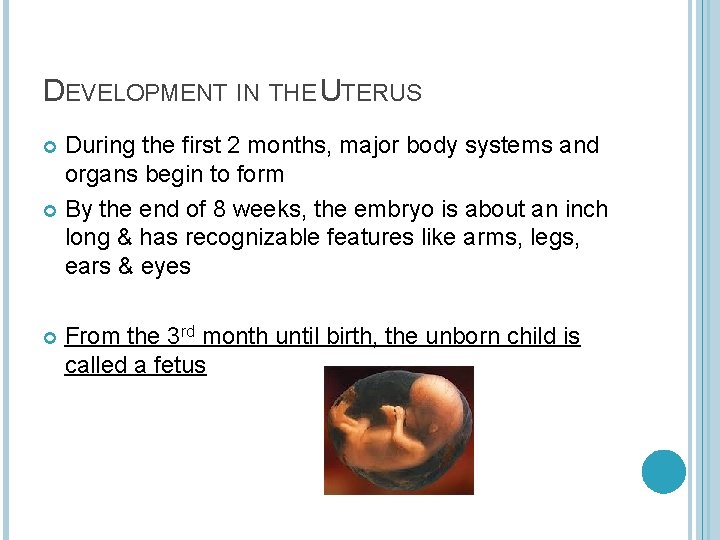
DEVELOPMENT IN THE UTERUS During the first 2 months, major body systems and organs begin to form By the end of 8 weeks, the embryo is about an inch long & has recognizable features like arms, legs, ears & eyes From the 3 rd month until birth, the unborn child is called a fetus
HEALTHY PREGNANCY Getting proper nutrition & exercise and avoiding drugs & environmental hazards are especially important before & throughout pregnancy Pregnant women only need to eat about 300 extra calories a day Folic acid is a very important vitamin � It helps develop the neural tube, which will turn into the spinal cord
HEALTHY PREGNANCY A pregnant woman should talk to her doctor before using any prescription or over-the-counter drugs, including pain medications, creams & lotions and vitamins Environmental hazards: � Xrays � Lead � Mercury � Cat litter
CHILD BIRTH 1) Labor � The work performed by the mother’s body to push the fetus out � For a 1 st child, labor can last 2 -24 hours or longer � Contractions of the muscles of the uterus cause the cervix to dilate, or expand � Near the end of this stage, the amniotic sac breaks
CHILD BIRTH 2) Delivery of baby � This stage can take from 30 minutes to more than 2 hours � Contractions continue & the baby is pushed out � Once the baby is out, the doctor clamps & cuts the umbilical cord � Baby is looked over, and it’s vital signs are listened to
CHILD BIRTH Delivery of after birth � Even though the baby is born, the birth process is not complete � Contractions push out the placenta during this third stage � This lasts only about 15 -30 minutes
COMPLICATIONS AT BIRTH Stillbirth: Occurs when a fetus dies and is expelled from the body after the 20 th week of pregnancy Cesarean section: C-section; surgical method of birth; incision in lower abdomen to uterus Premature birth: delivery of a live baby before the 37 th week of pregnancy; the earlier the birth, the more problems the baby tends to have; organs may not be fully developed
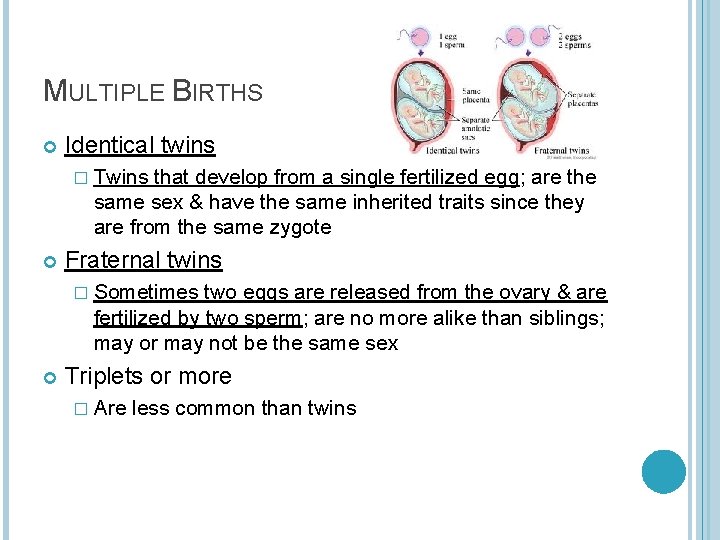
MULTIPLE BIRTHS Identical twins � Twins that develop from a single fertilized egg; are the same sex & have the same inherited traits since they are from the same zygote Fraternal twins � Sometimes two eggs are released from the ovary & are fertilized by two sperm; are no more alike than siblings; may or may not be the same sex Triplets or more � Are less common than twins
- Slides: 19