
Reproduction Plant Anatomy and Reproduction How do plants
- Slides: 19
Reproduction Plant Anatomy and Reproduction
How do plants reproduce? • The plant Kingdom actually has three forms of sexual reproduction (in addition to asexual reproduction): – Flowers – Cones – Spores Produce seeds
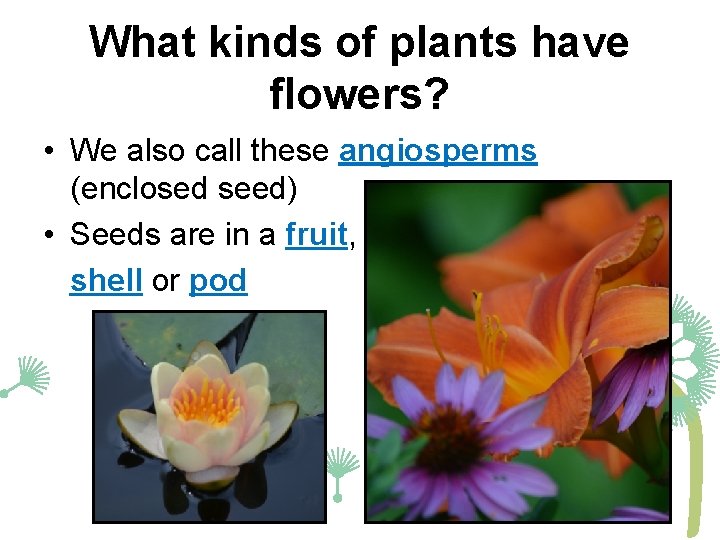
What kinds of plants have flowers? • We also call these angiosperms (enclosed seed) • Seeds are in a fruit, shell or pod
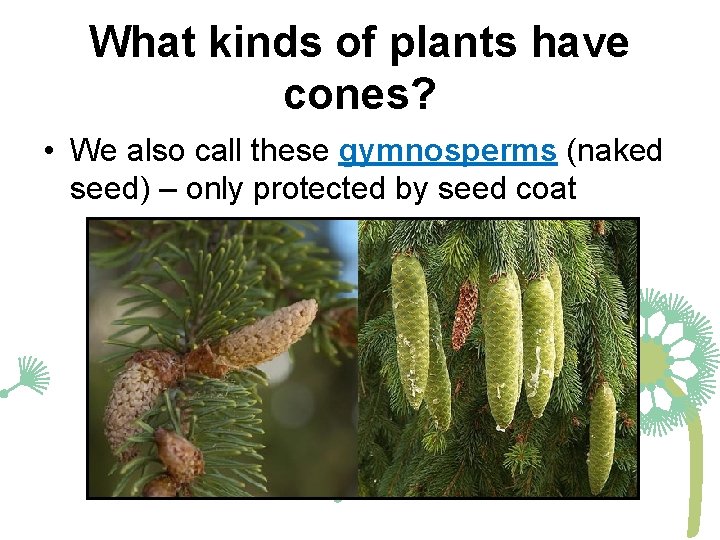
What kinds of plants have cones? • We also call these gymnosperms (naked seed) – only protected by seed coat
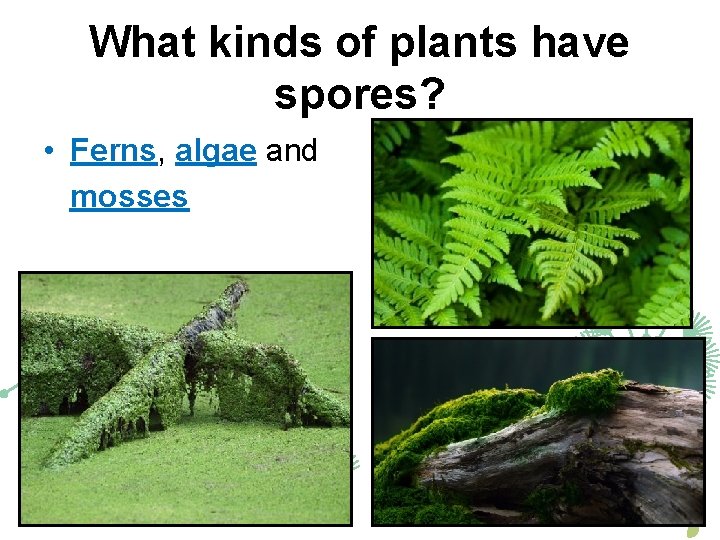
What kinds of plants have spores? • Ferns, algae and mosses
What is a seed? • A seed contains everything required to produce a new plant • It contains: – Embryo – small immature plant – Food reserves – for the plant to grow – Cotyledon – become the first leaves – Seed coat – protective covering
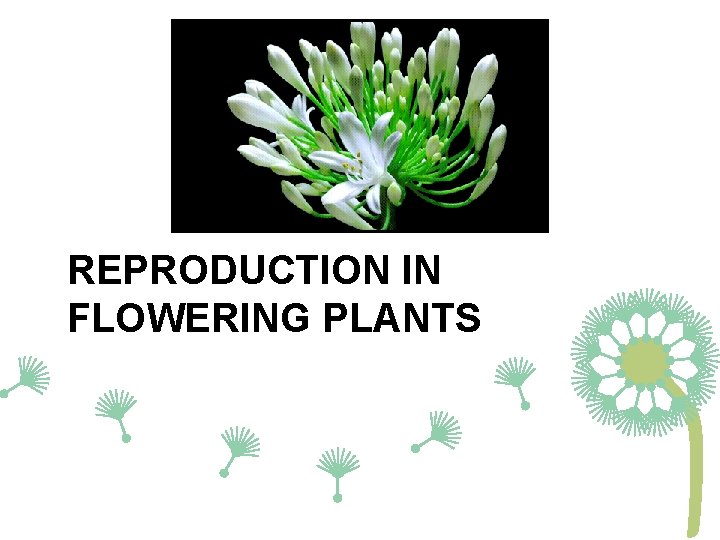
REPRODUCTION IN FLOWERING PLANTS
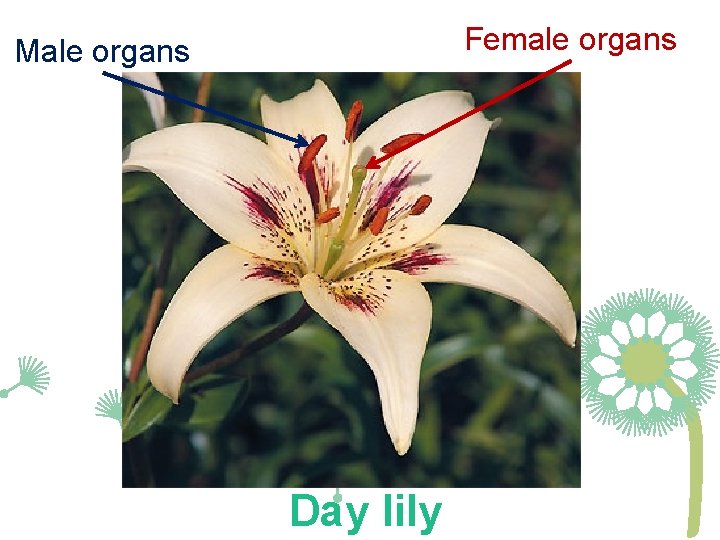
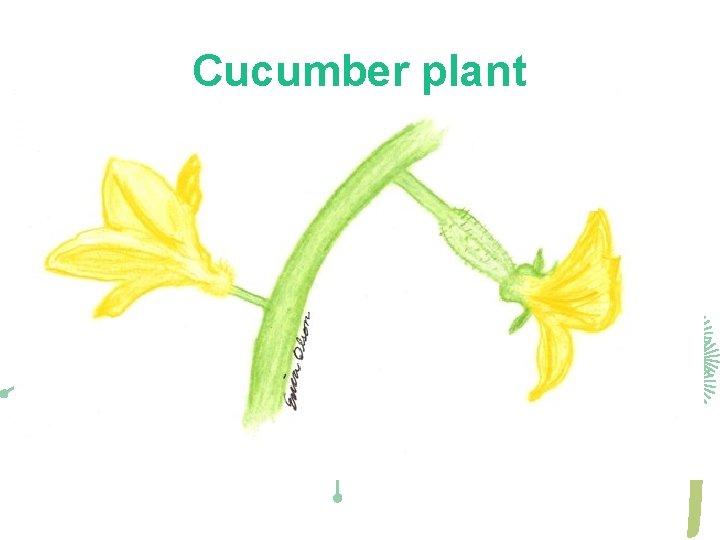
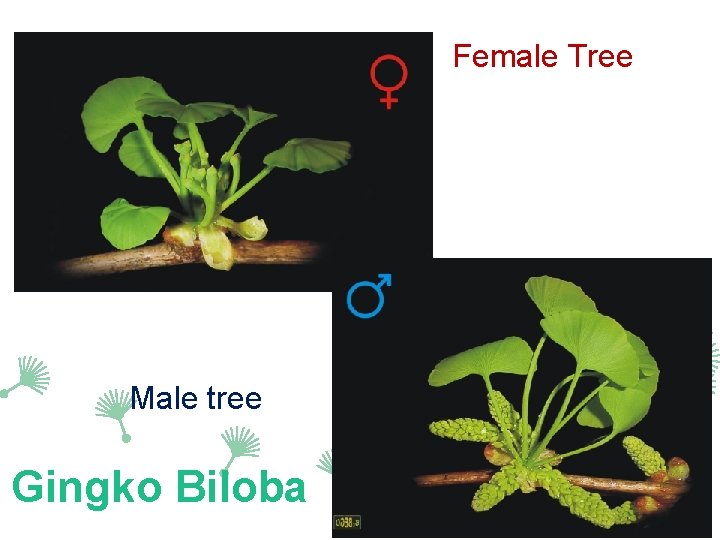
Reproductive Organs in Plants • Flowers of plants house the reproductive organs of the plant – Some plants have flowers that have both the male and female reproductive parts – Some plants have separate male and female flowers on the same plant – And some plants will produce only one or the other
Female organs Male organs Day lily
Cucumber plant
Female Tree Male tree Gingko Biloba
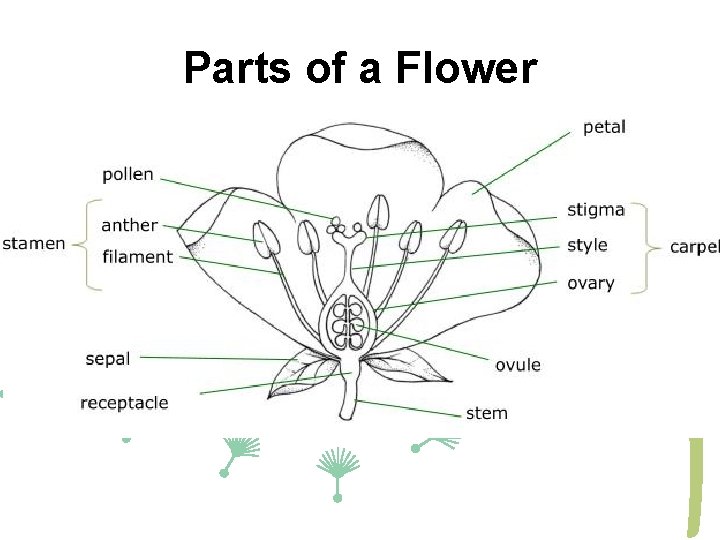
Parts of a Flower
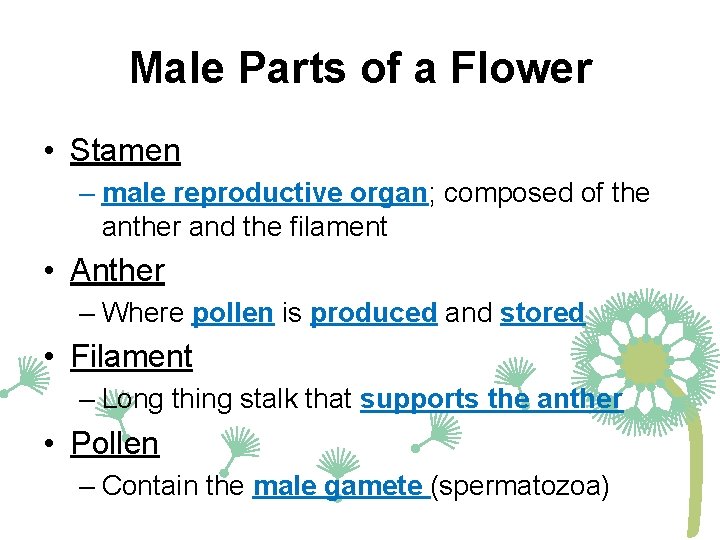
Male Parts of a Flower • Stamen – male reproductive organ; composed of the anther and the filament • Anther – Where pollen is produced and stored • Filament – Long thing stalk that supports the anther • Pollen – Contain the male gamete (spermatozoa)
Yes, pollen is plant sperm!
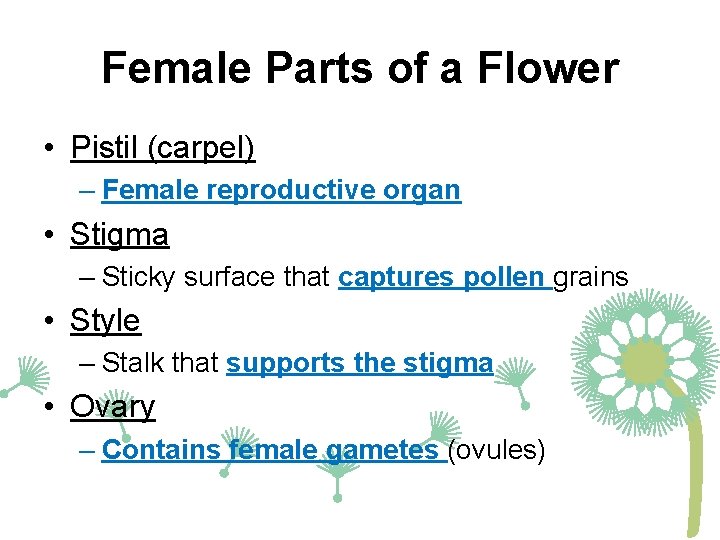
Female Parts of a Flower • Pistil (carpel) – Female reproductive organ • Stigma – Sticky surface that captures pollen grains • Style – Stalk that supports the stigma • Ovary – Contains female gametes (ovules)
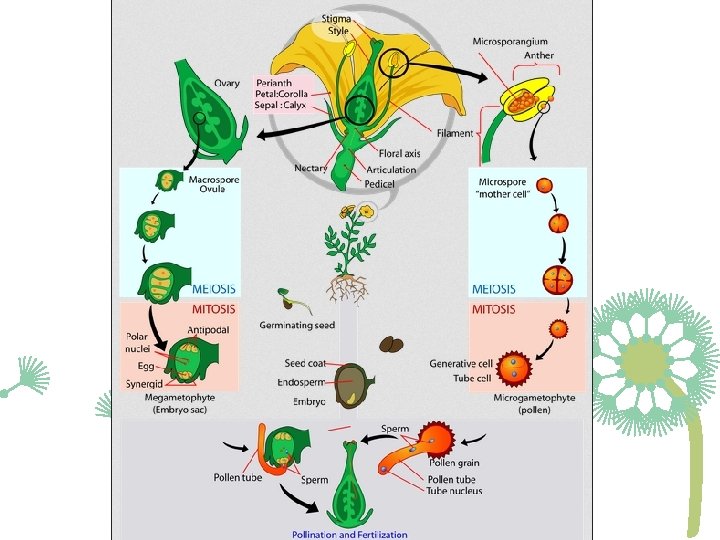
Plant Reproduction Cycle • Step 1: produce flowers with male and female parts • Step 2: female ovaries produce ovules while the male anthers produce pollen • Step 3: pollen is carried to the stigma (ex: by wind, insects) • Step 4: pollen travels down towards ovules
Plant Reproduction Cycle • Step 5: fertilization – male and female gametes combine to produce the zygote • Step 6: seeds develop (fructification) • Step 7: seed dispersal – this can happen by animals, water, wind, the plant itself and humans (ex: sowing seeds) • Step 8: seed starts to grow into a new plant (germination)
WORKBOOK p. 137 -139 (Worlds 1)