
Reproduction Notes Asexual Reproduction offspring produced by one
Reproduction Notes
Asexual Reproduction: offspring produced by one parent and are identical to parent. Types: 1. Budding 2. Regeneration 3. Binary fission 4. Sporulation 5. Vegetative
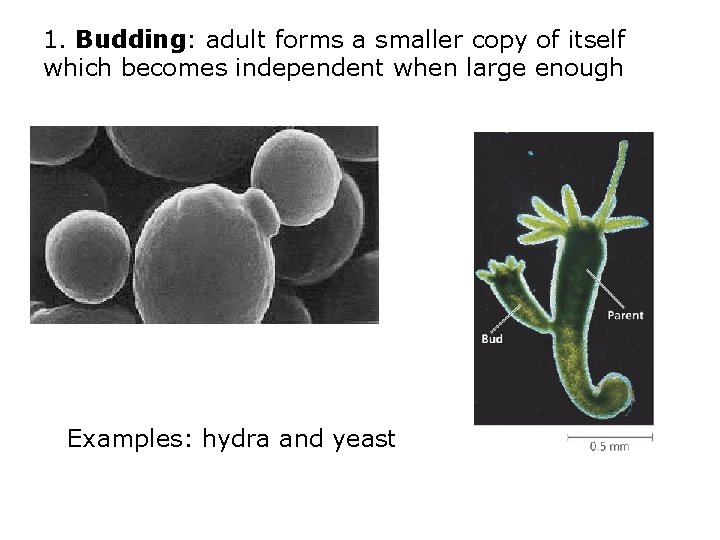
1. Budding: adult forms a smaller copy of itself which becomes independent when large enough Examples: hydra and yeast
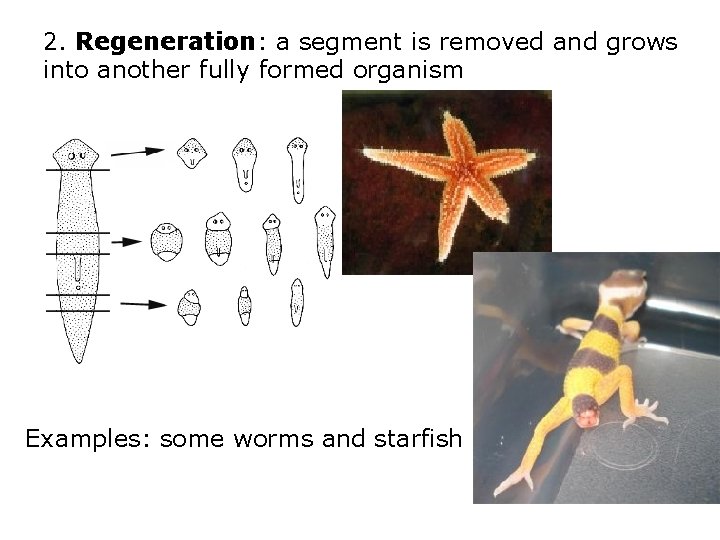
2. Regeneration: a segment is removed and grows into another fully formed organism Examples: some worms and starfish
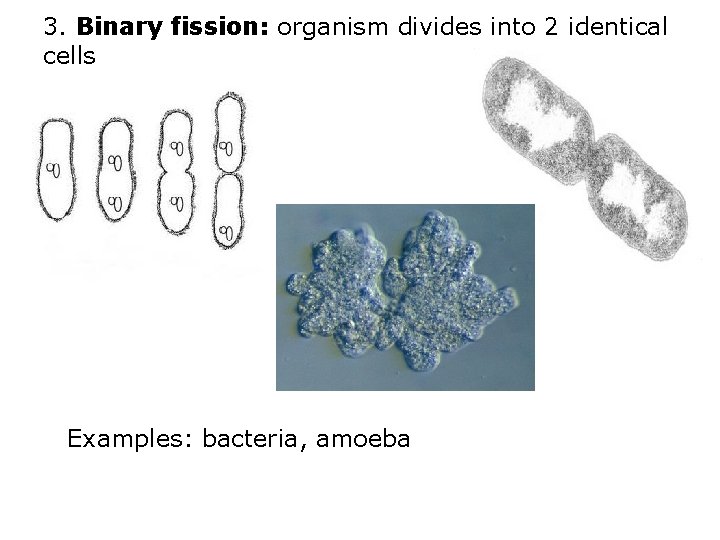
3. Binary fission: organism divides into 2 identical cells Examples: bacteria, amoeba
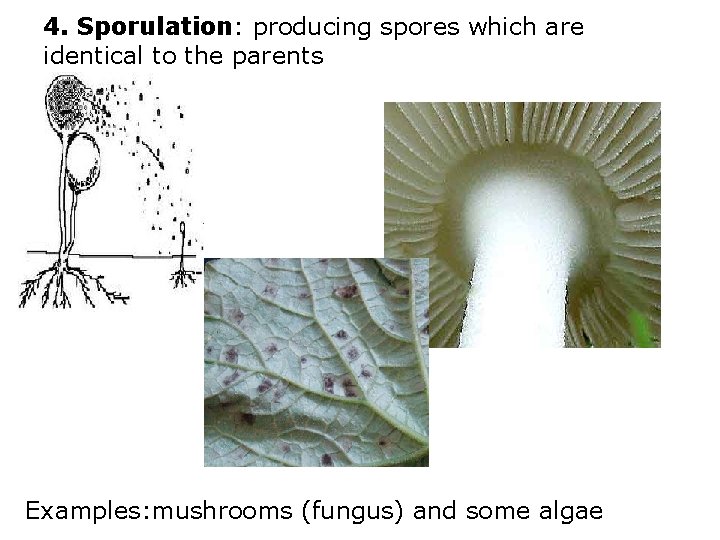
4. Sporulation: producing spores which are identical to the parents Examples: mushrooms (fungus) and some algae
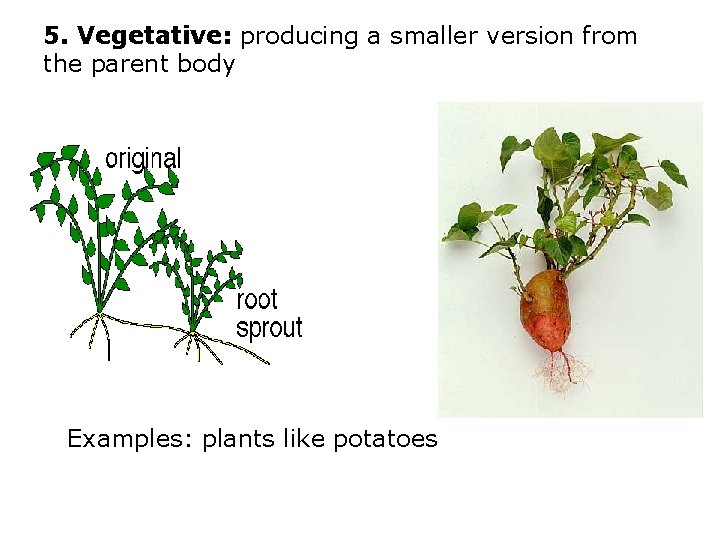
5. Vegetative: producing a smaller version from the parent body Examples: plants like potatoes
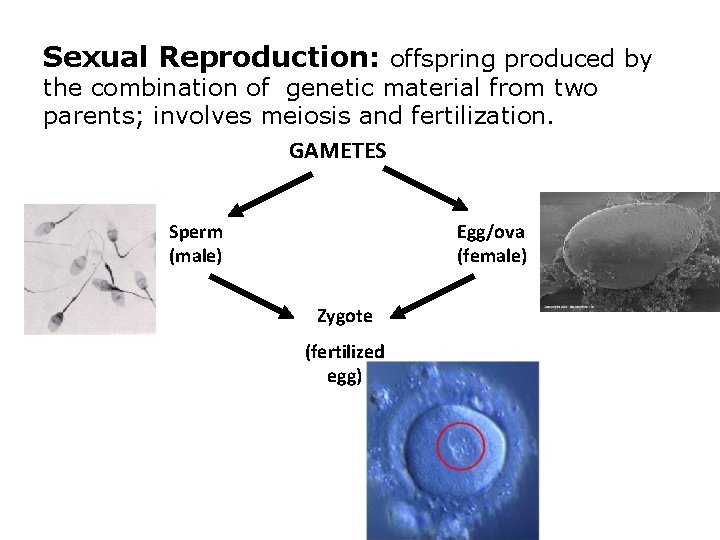
Sexual Reproduction: offspring produced by the combination of genetic material from two parents; involves meiosis and fertilization. GAMETES Sperm (male) Egg/ova (female) Zygote (fertilized egg)
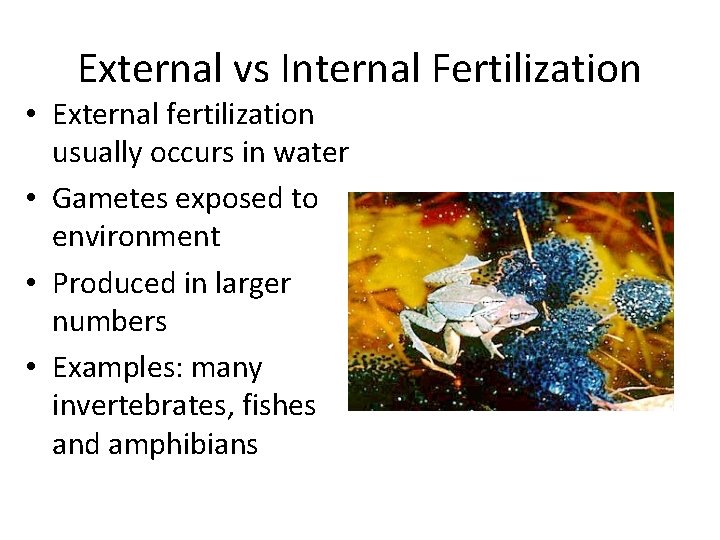
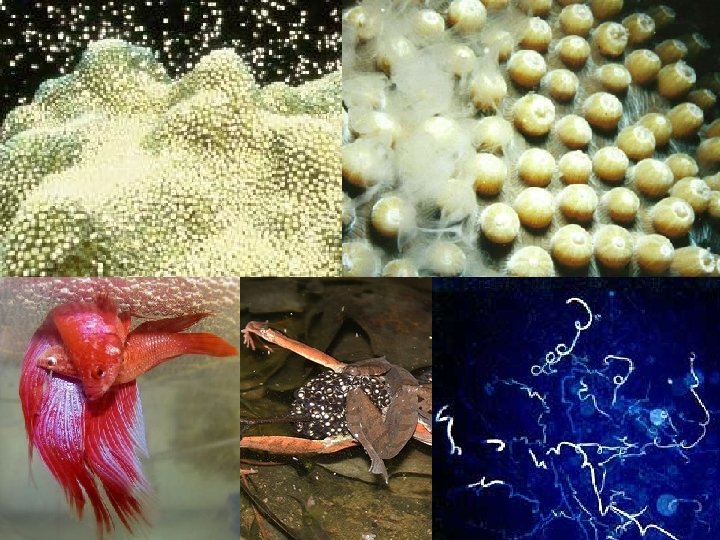
External vs Internal Fertilization • External fertilization usually occurs in water • Gametes exposed to environment • Produced in larger numbers • Examples: many invertebrates, fishes and amphibians
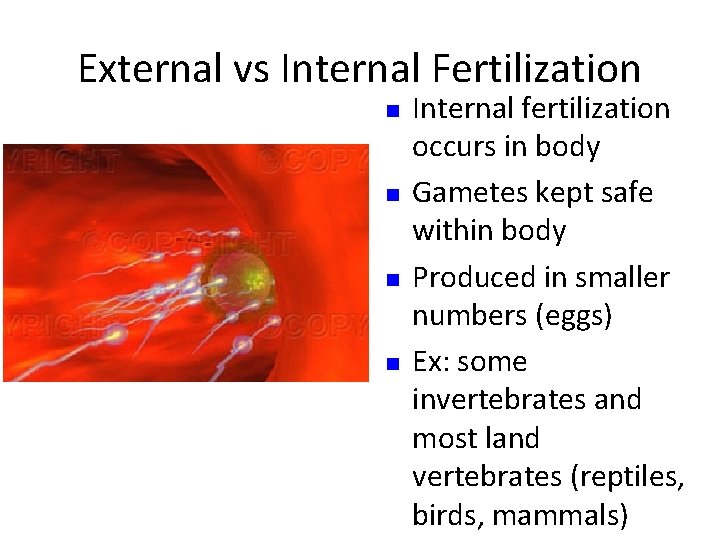
External vs Internal Fertilization n n Internal fertilization occurs in body Gametes kept safe within body Produced in smaller numbers (eggs) Ex: some invertebrates and most land vertebrates (reptiles, birds, mammals)
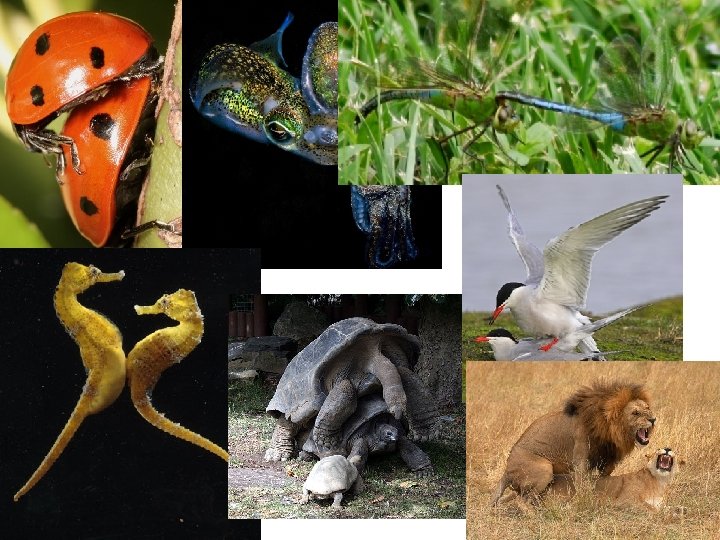
Internal Fertilization • Requires special sex organs. • Mating must take place within a certain time period for fertilization to occur: • Adaptations to stimulate mating process: –Mating calls (songs) –Special feathers or color patches –Chemicals called pheromones • (bats mate in fall but female stores sperm until spring, when fertilization occurs)
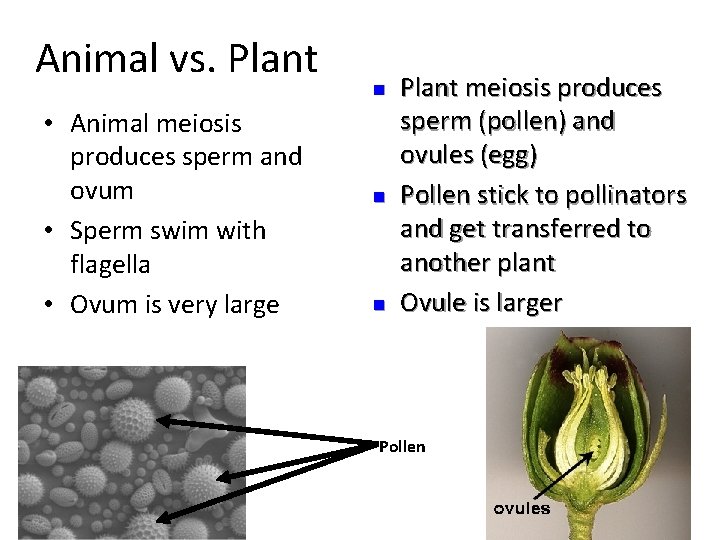
Animal vs. Plant • Animal meiosis produces sperm and ovum • Sperm swim with flagella • Ovum is very large n n n Plant meiosis produces sperm (pollen) and ovules (egg) Pollen stick to pollinators and get transferred to another plant Ovule is larger Pollen
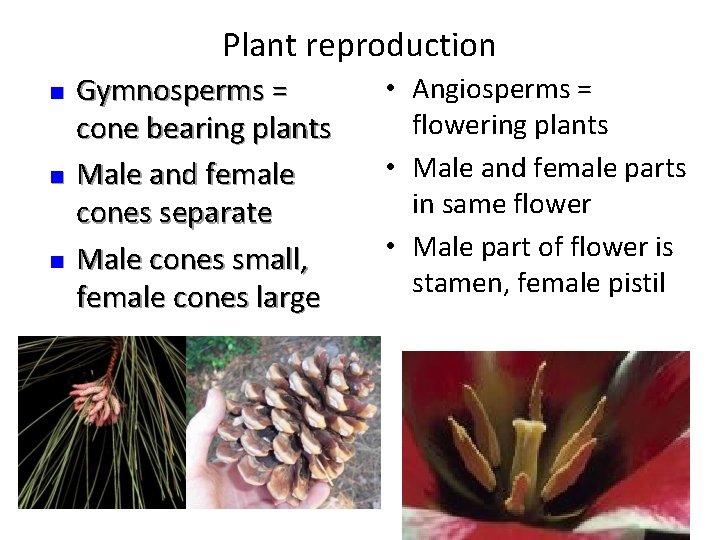
Plant reproduction n Gymnosperms = cone bearing plants Male and female cones separate Male cones small, female cones large • Angiosperms = flowering plants • Male and female parts in same flower • Male part of flower is stamen, female pistil
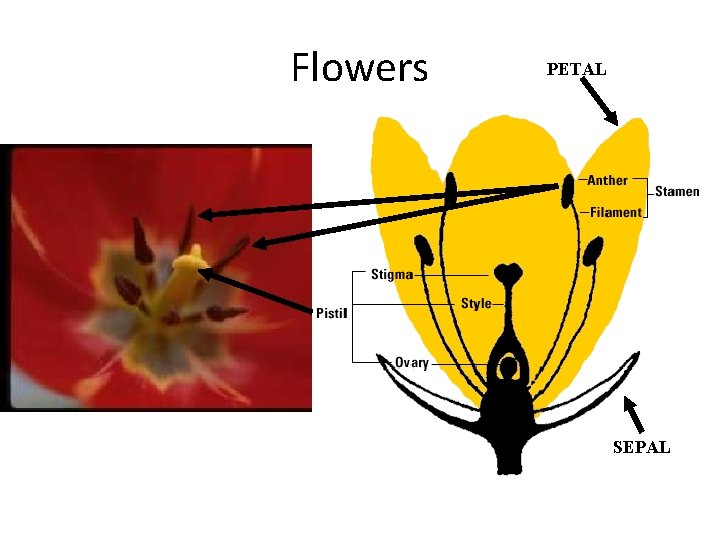
Flowers PETAL SEPAL
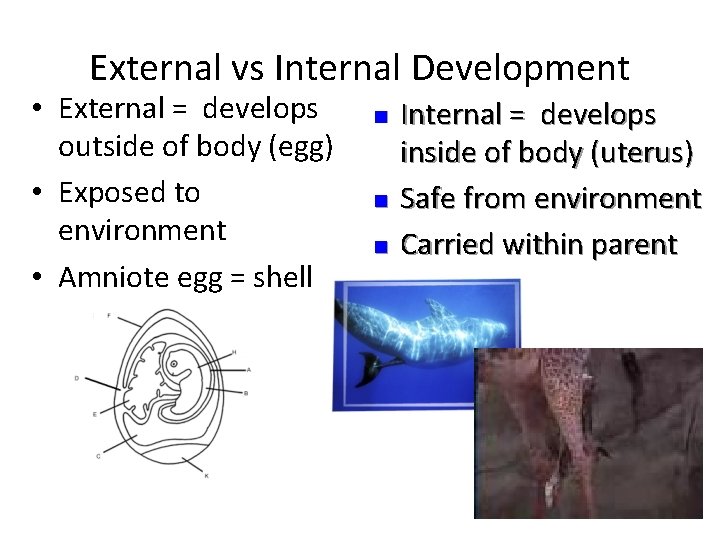
External vs Internal Development • External = develops outside of body (egg) • Exposed to environment • Amniote egg = shell n n n Internal = develops inside of body (uterus) Safe from environment Carried within parent
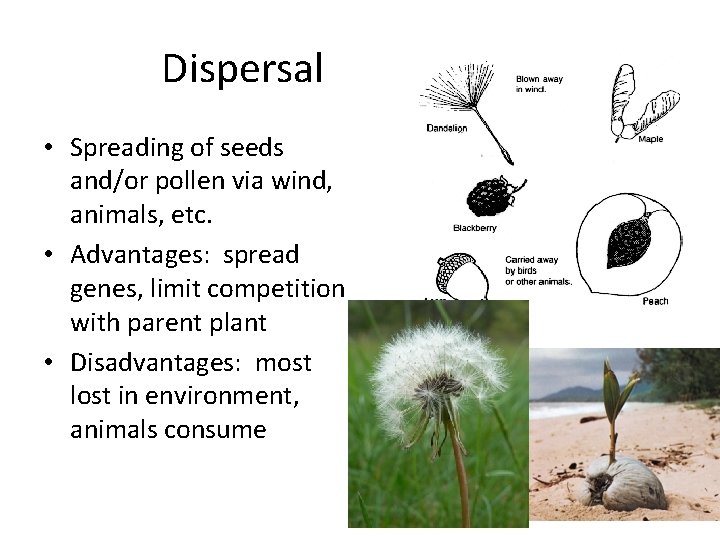
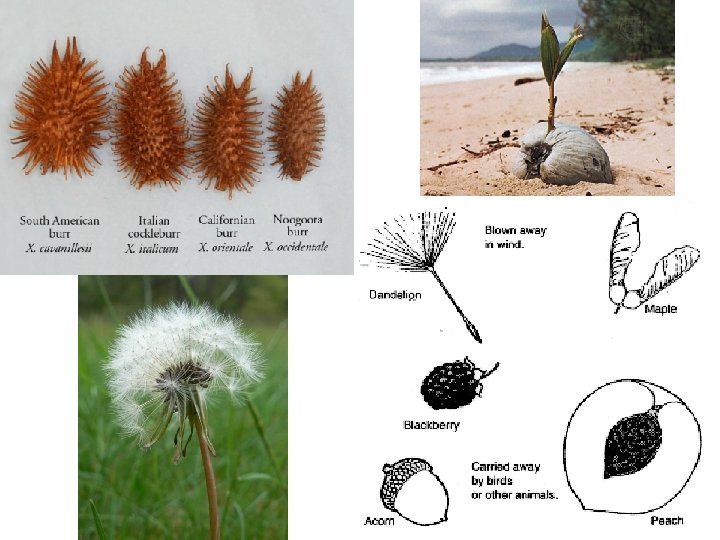
Dispersal • Spreading of seeds and/or pollen via wind, animals, etc. • Advantages: spread genes, limit competition with parent plant • Disadvantages: most lost in environment, animals consume
- Slides: 19