
REPRODUCTION is the process through which living things
- Slides: 18
REPRODUCTION is the process through which living things produce new individuals of the same kind.
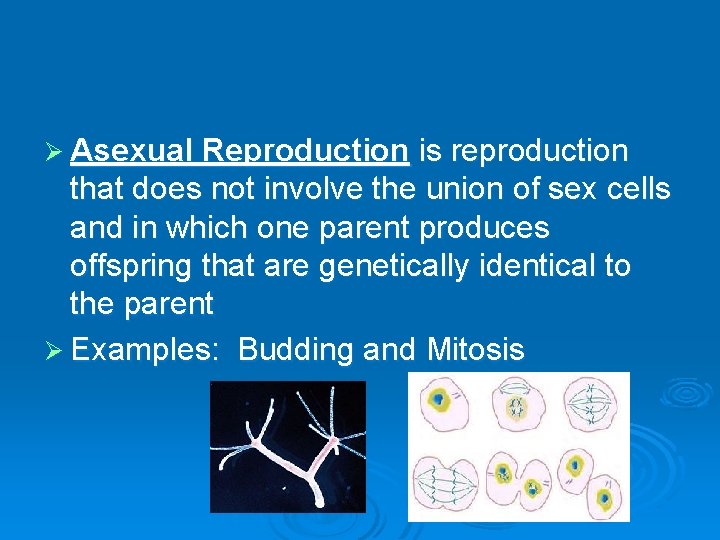
Ø Asexual Reproduction is reproduction that does not involve the union of sex cells and in which one parent produces offspring that are genetically identical to the parent Ø Examples: Budding and Mitosis
Ø Sexual Reproduction is reproduction in which the sex cells from two parents unite to produce offspring that share traits from both parents. Ø Male Sex Cells (Gamete) = Sperm Ø Female Sex Cell (Gamete) = Egg Ø Fertilization is the joining of a sperm cell and an egg cell
Within each sperm and egg cell are chromosomes, which are responsible for passing on inherited characteristics from one generation to the next (skin, eye, hair color) Each cell in the human body has 46 chromosomes. THE SEX CELLS CONTAIN 23 CHROMOSOMES.
During fertilization, the nucleus of the fertilized egg contains 46 chromosomes (the normal number of chromosomes for all body cells).
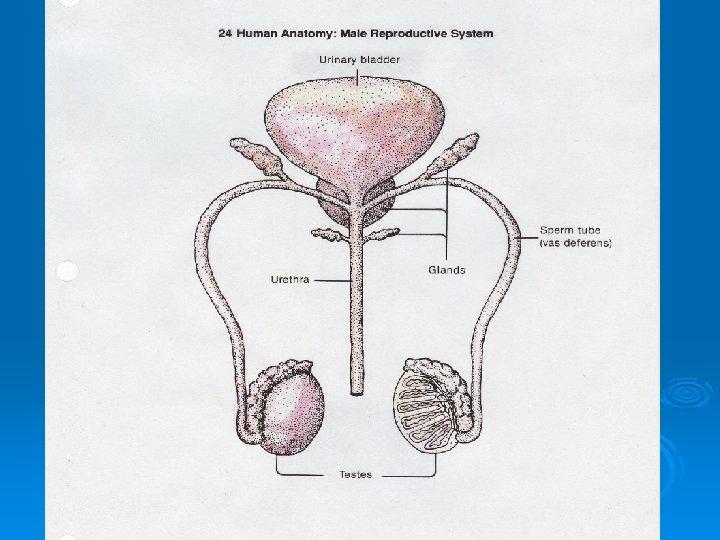
THE MALE REPRODUCTIVE SYSTEM • Testes = the primary male reproductive organs, responsible for producing sperm and testosterone (a hormone responsible for a number of adult male characteristics) Scrotum = external pouch of skin that holds the testes Urethra = A larger tube that carries sperm to the outside of the body through the penis
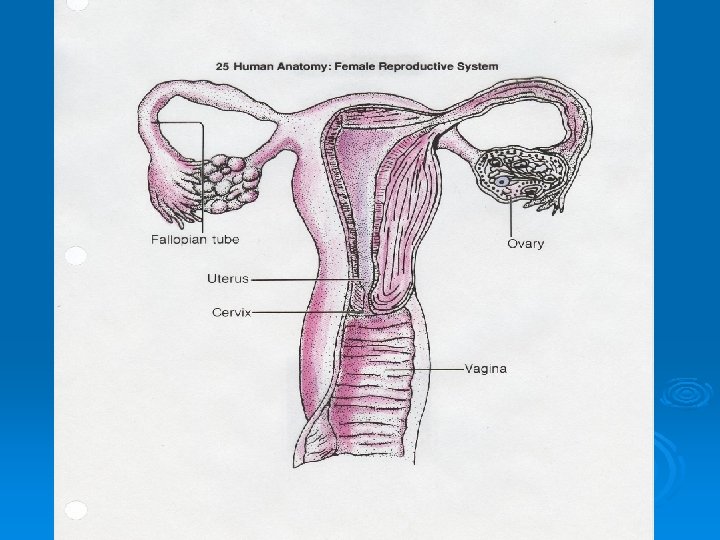
THE FEMALE REPRODUCTIVE SYSTEM • Ovaries = the primary female reproductive organs, responsible for producing eggs and estrogen (a hormone that triggers the development of a number of adult female characteristics) Fallopian Tubes = structure through which an egg travels from the ovary to the uterus
Uterus = Hollow muscular organ in which a fertilized egg develops. (also called the “womb”) Vagina = The passageway through which a baby passes during the birth process and the passageway for sperm to enter the body
THE MENSTRUAL CYCLE The monthly cycle of change that occurs in the female reproductive system is called the menstrual cycle. 2 purposes: * Development of an egg and release of that egg for fertilization * Preparation of the uterus to receive a fertilized egg
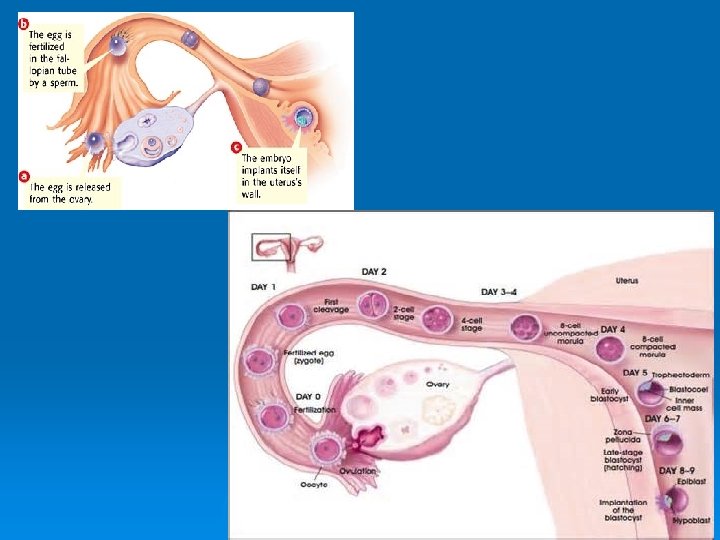
1. The ovary releases a ripened egg from a follicle (pocket of cells); this process is known as Ovulation and it is one of the steps of the menstrual cycle. 2. The egg is swept into the Fallopian tube, and swept toward the uterus by cilia. 3. If sperm are present in the Fallopian tube, the egg can be fertilized. (only 1 sperm is required to fertilize one egg).
4. If a fertilized egg reaches the lining of the uterus, it implants itself there and eventually develops into a new human. 5. If the egg is not fertilized, it and the lining of the uterus begin to break down (menstruation).
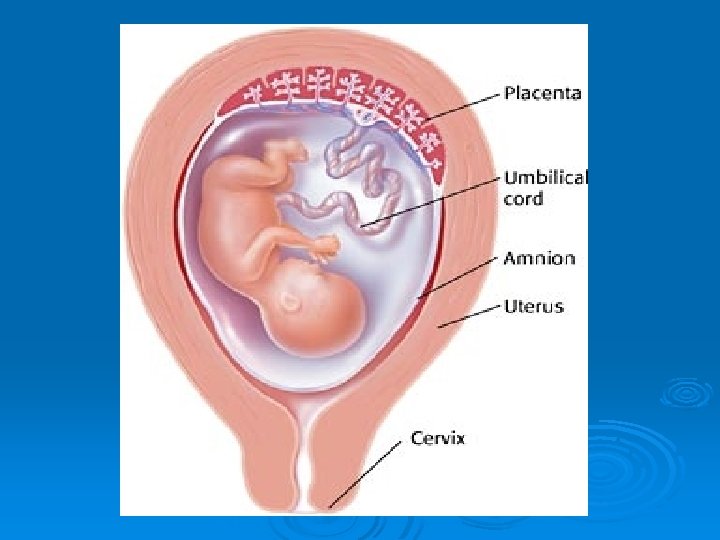
STAGES OF DEVELOPMENT BEFORE BIRTH ZYGOTE = Fertilized egg; the 1 st cell of the new individual EMBRYO = Developing baby from the 2 nd to the 8 th week of development * amniotic sac = membrane formed around the embryo that cushions and protects it * placenta = thin barrier through which food, oxygen, and wastes are exchanged between mother and embryo
FETUS = Developing baby from 8 th week until birth * Umbilical cord = connects the fetus to the placenta
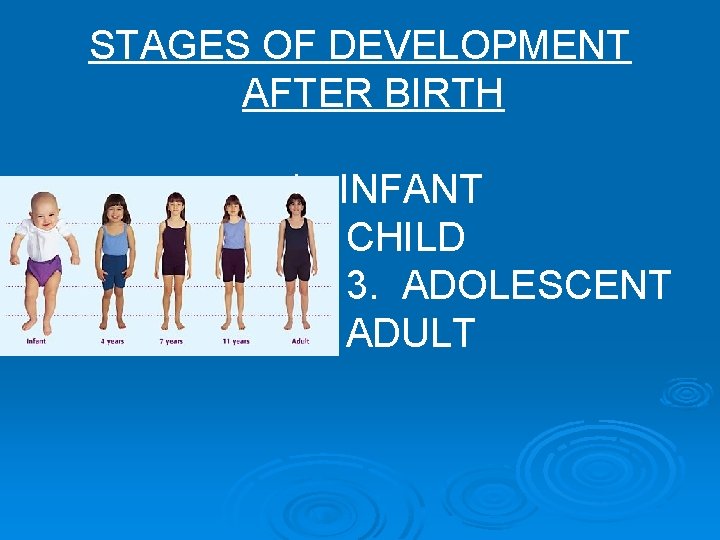
STAGES OF DEVELOPMENT AFTER BIRTH 1. INFANT 2. CHILD 3. ADOLESCENT 4. ADULT