
REPRODUCTION IN THE MALE ANATOMY and HORMONES Bambang
REPRODUCTION IN THE MALE (ANATOMY and HORMONES) Bambang Ariyadi
INTRODUCTION • Reproduction is the first and most important requisite of livestock breeding. • The importance of the broiler breeder male for fertilizing eggs is rivaled only by his genetic influence on broiler breeder progeny. • The number of fertile eggs produced for hatching dictates the ultimate profitability of the breeder flock.
INTRODUCTION • Managing the reproduction efficiency of the hen and rooster is the basis of broiler breeder production. • Excessive body weight (BW) gain has adverse effects on the reproductive performance of parent breeders. • Underfeeding causes failure to attain peak egg numbers, while overfeeding is more commonly associated with a very rapid decline in egg numbers following a brief period of peak egg output
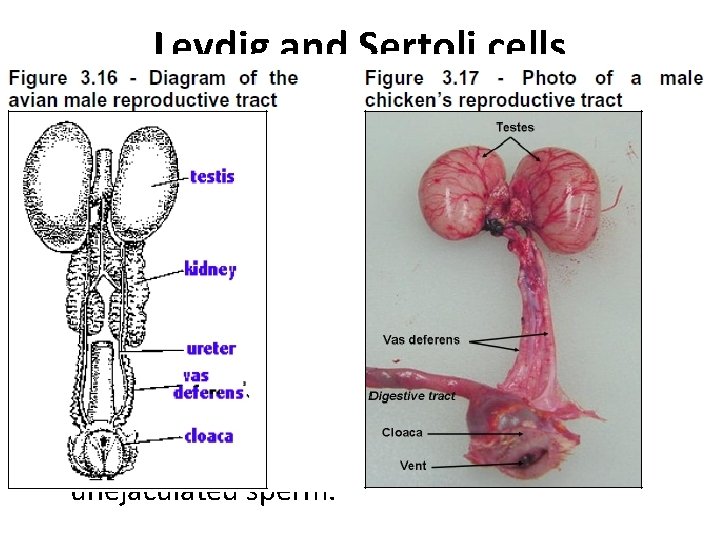
MALE ANATOMY : Testes • Males of all avian species have testes that are internally located in the center of the body cavity. • In domestic birds, they are located just anterior to the kidneys and are attached to the dorsal body wall. • Therefore, spermatogenesis proceeds at the internal body temperature of 41 o. C in birds as opposed to the scrotal temperature of 24 -26 o. C in mammals. • The color of the testes varies from white to creamy white.
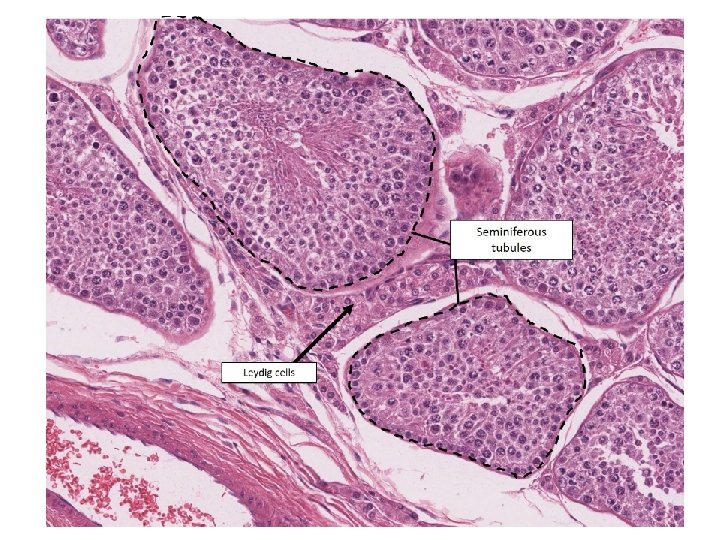
Leydig and Sertoli cells • The testes are composed of two major cell types, Leydig and Sertoli cells. • Leydig cells are dispersed in the spaces between the seminiferous tubules, where they are associated with blood and lymph vessels. • Leydig cells contain the steroidogenic enzymes necessary for the production of androgens (testosterone androstenedione) and respond rapidly to luteinizing hormone (LH).
Leydig and Sertoli cells • Sertoli cells located within the seminiferous tubules secrete inhibin, estrogens, androgenbinding protein. • Spermatogenesis depends upon the availability of testosterone , follicle stimulating hormone (FSH), Sertoli cell activity, and interactions between Sertoli and germ cells. • There is evidence that both Sertoli cells and the epithelial cells of the epididymis can reabsorb spermatozoa in order to eliminate unejaculated sperm.
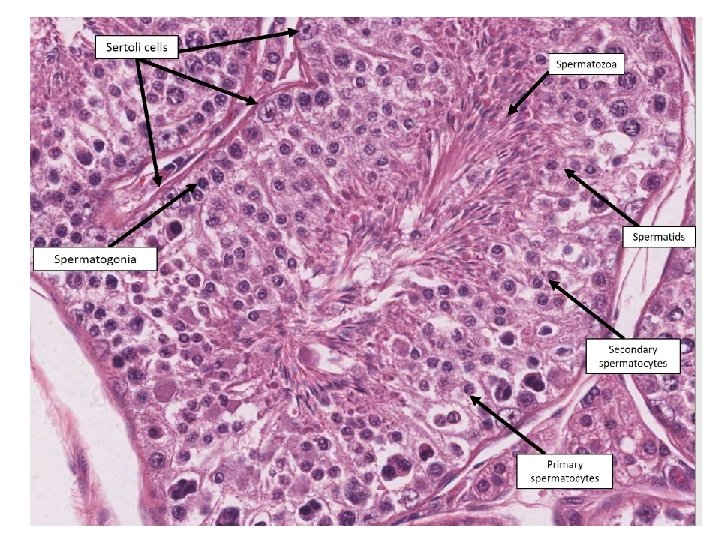
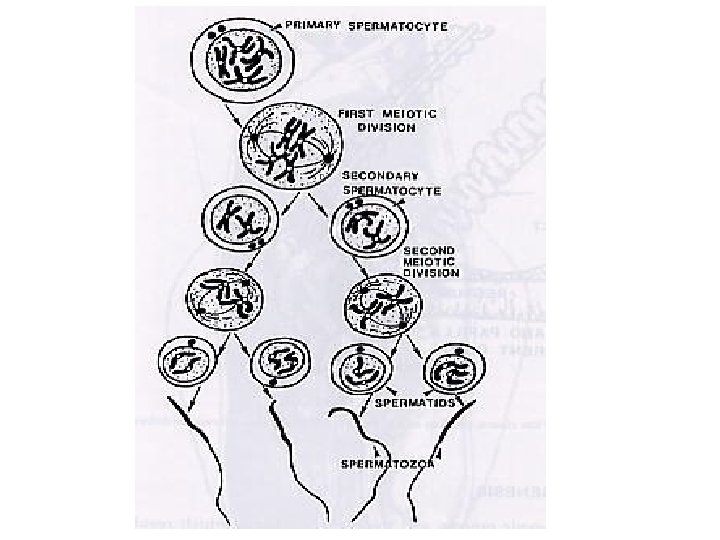
Spermatogenesis • The first stage of spermatogenesis occurs in the periphery of the seminiferous tubules lined with spermatogonia. • Spermatogonia are diploid dividing mitotically, to retain a constant population of stem cells for spermatogenesis, and to produce the spermatocytes. • spermatogonia are transformed from primary spermatocytes into two secondary spermatocytes, four spermatids, and spermatozoa.
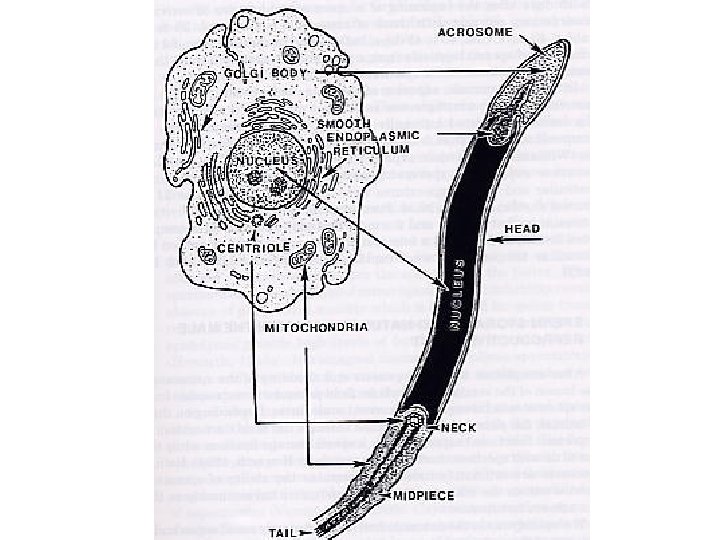
Spermatogenesis • At each stage of spermatogenesis, the cell is transported closer to the lumen of the tubule, where it is finally released as a complete spermatozoon. • The final phase of sperm formation, spermiogenesis, consists of the elongation of the spermatid nucleus to form the head and the shedding of most of the cytoplasm.
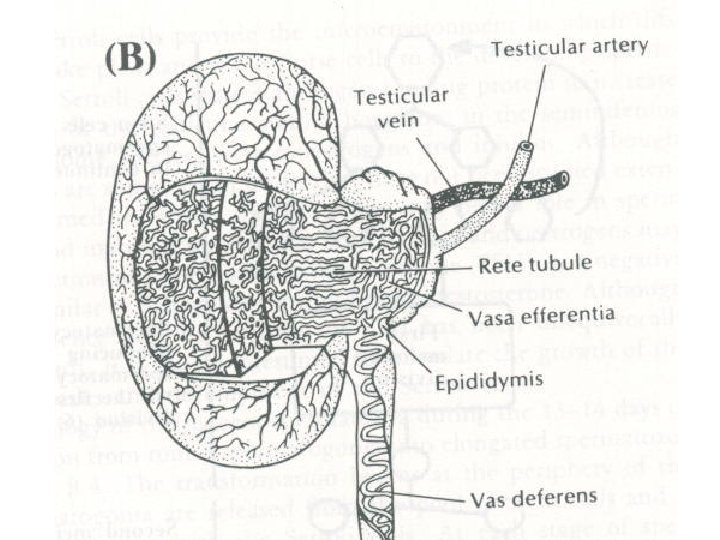
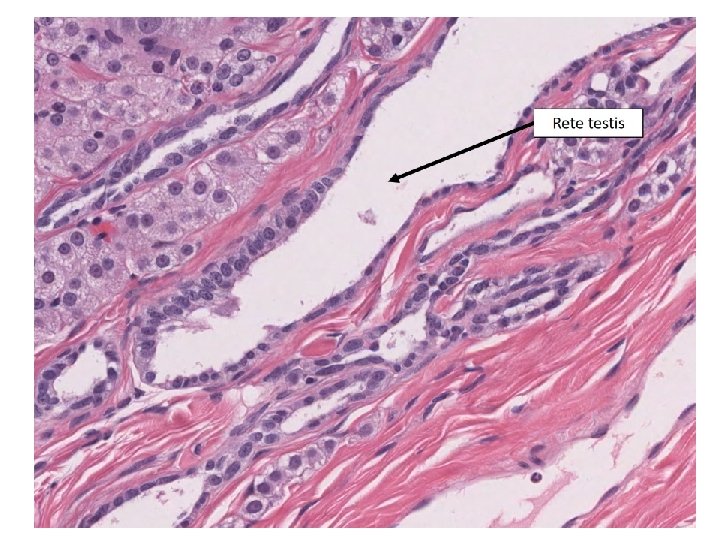
Transport and storage of sperm • After the semen has been produced, the seminiferous tubules in birds are arranged as a network of interconnected ducts that empty into the rete testis. • Tightly opposed to each testis is a small structure that has often been termed an epididymis or ductus epididymis. • The epididymal region consists of efferent tubules carrying sperm from the testis to a single epididymal duct, which is apparent on the epididymal surface
Transport and storage of sperm • Leading from each epididymis is a coiled tube, the vas deferens, which traverses posterior, is attached to the dorsal body wall, and terminates at a small phallus in the cloaca. • Just before its termination, the vas deferens become somewhat enlarged and serves as a storage site for spermatozoa, as does the entire duct. • Each vas deferens terminates in small papilla and ejects the semen into the cloaca.

Sperm maturation • Maturation of spermatozoa is synchronized within regions of each seminiferous tubule and consequently, all of the germ cells within the region are in the same stage of differentiation between spermatogonia and spermatozoa. • Structural differentiation of spermatozoa is thought to be complete before it leaves the rete tubules. • Sperm taken from the testis or epididymis of the cock, were capable of producing fertility at a very low level because sperm motility is obtained in the vas deferens. • Estimates of total transit time from the testes to the terminal region of the vasa deferentia range from 1 to 4 d
Semen composition • Semen is a mixture of sperm cells and lymph fluid. • The composition of semen is quite variable, the sperm cells being mixed with secretory fluids from the engorged phallic apparatus and with digestive and urinary tract wastes. • Seminal plasma consists of protein, fructose, sorbitol, citric acid, inositol, glyceryl phosphoryl choline, ergothioneine, sodium, potassium, calcium, magnesium, and chloride.
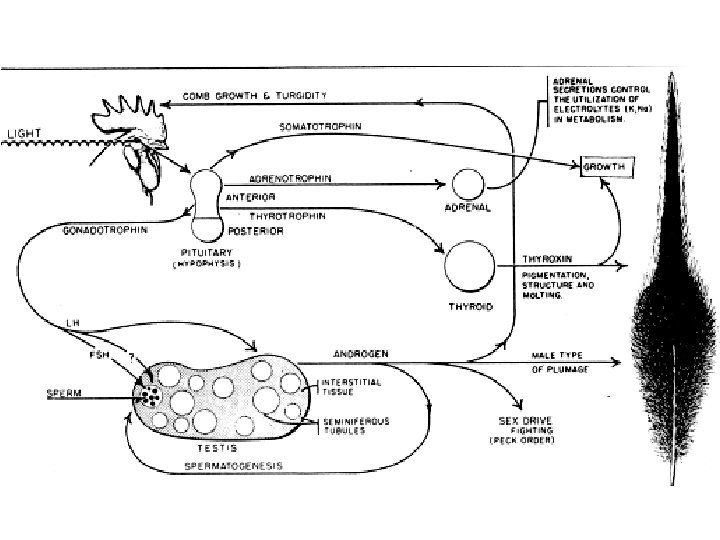
HORMONES • A number of hormones control sexual maturity, semen production, and the behaviors connected with reproduction, aggression, and stress in male breeders. • As in the female, photostimulation affects the hypothalamus causing the release of luteinizing hormone releasing hormone (LHRH) that affects the pituitary. • At the onset of a photostimulatory photoperiod, there are rapid increases in blood levels of LH and FSH released from the pituitary.
HORMONES • Removal of the pituitary (hypophysectomy) in the cock causes a rapid atrophy of the testes. • Either LH or FSH stimulates testicular growth, but the gonadotrophins have different target cells. • Follicle stimulating hormone stimulated growth, differentiation and spermatogenic activity of the seminiferous tubules. • Luteinizing hormone affects steroidogenic activity of the Leydig cells. • Increased LH also stimulates the development and maintenance of accessory sexual organs
Target cells • Gonadotrophins affect the testes by binding to specific cell-surface receptors on two distinct types of testicular parenchymal cells: Sertoli and Leydig cells. • Follicle stimulating hormone acts on Sertoli cells. • In the male, androgen production coincides with the development of spermatogenesis and testicular growth. • Full testicular function is brought about by the combined action of FSH and testosterone
Target cells • Leydig cells respond rapidly to LH through rapid increases in the secondary messenger c. AMP. • Luteinizing hormone acts on Leydig cells to promote their development and the production of androgens such as testosterone. • The principal steroids secreted by Leydig cells include testosterone androstenedione, a precursor of testosterone.
Testosterone • Increases in testosterone production during photostimulation result in a stimulatory effect of androgens on spermatogenesis. • Testosterone is also essential for maintenance of the excurrent ducts, maintenance of secondary sexual attributes, the expression of specific behaviors, and the alteration in pattern of Gn. RH secretion. • In chickens, testosterone is secreted in discrete pulses, which closely follow LH pulses.
Testosterone • There is a marked increase in the secretion of androgen in the male chick at about 30 d posthatch. • During the onset of puberty in the male, there is an increase in plasma LH followed within 1 -2 wk by an increase in plasma testosterone (from 2. 3 ng/m. L at 16 wk to 9. 5 ng/m. L at 24 wk). • However, plasma levels of testosterone are several times lower than those found in the testicular vein.
Secondary sexual characteristics and testosterone • The acquisition of secondary sex characteristics, as roosters mature, is a consequence of the hormonal secretions from the testes that, in turn, are regulated by the secretion of gonadotrophin from the anterior pituitary gland gonadotrophin releasing hormones (Gn. RH) from the hypothalamus. • Male secondary sex characteristics include comb, plumage, and wattle development. • Androgens are also responsible for the full expression of the characteristic voice of the rooster.
Secondary sexual characteristics and testosterone • Androgens are required to induce growth of the comb and wattles in roosters. • In both sexes, the development of the comb coincides with increased plasma concentration of androgens. • Rath et al. (1996) reported an increase in comb weight with testosterone.
Behavior and testosterone • Testosterone is associated with sexual activity and social aggressiveness of the cock. • Testosterone is the major hormone found to affect mating behavior in males of different avian species. • Testosterone injected into chicks results in precocious male sexual behavior, such as mounting, treading, and crowing.
Negative feedback • The testes produce and secrete a number of steroids, which are involved in a negative feedback effect on gonadotrophin secretion. • In the cockerel, the increase in plasma levels of LH, at the onset of puberty, may be the result of a decrease in the sensitivity of LHRH secreting neurons to the negative feedback effects of testicular steroids. • Levels of LH decline when testosterone levels are increasing. • Testosterone is the major feedback regulator of LH secretion.
Negative feedback • Levels of FSH decline more slowly than those of LH and do so as the testes are approaching full size. • Inhibin B, produced in the Sertoli cells, has been associated with the negative feedback of the hypothalamus and pituitary. • Activin produced by the testes, has been associated with stimulation of the production of LHRH, LH, and FSH.
Leptin • Adipose tissue functions very much like other endocrine tissues, releasing a hormone, leptin, into the circulatory system to relay a message to its target. • The major target for this hormonal message appears to be the hypothalamus. • Leptin functions as a tropic factor for the reproductive system. • The firing of Gn. RH-containing neurons and secretion of Gn. RH to the pituitary is elicited by leptin-mediated activation of leptin-receptor-expressing neurons and by other factors, such as growth hormone, neuropeptide Y, and insulin. • These factors control the reproductive process.
Leptin and male reproduction • Leptin also affects the male reproductive system. • In animal and human studies, weight loss results in decreased leptin levels. • Leptin is not inhibited by feed restriction, but leptin levels may decrease if broiler breeder males are subjected to BW loss (decrease in fatpad weight).
Corticosterone • Stress induces corticosterone release. • Corticosterone is a hormone produced by the adrenal glands in response to adrenocorticotropic hormone (ACTH). • Corticosterone acts on the brain to influence behavior by changes in perception. • High plasma concentrations of corticosterone can differentially inhibit behavioral components of reproduction (e. g. , territoriality) without affecting the adenohypopyseal-gonadal axis (e. g. , LH and testosterone).
Corticosterone • Both short term feed deprivation and long-term energy restriction cause increased corticosterone secretion in laying chickens. • Stress levels of corticosterone that decrease BW may leave LH and reproductive hormones unaffected. • Possible increases in corticosterone, with mating, territorial, and nesting pressures, may require either a facilitating role for corticosterone in reproduction or an uncoupling of changes in circulating corticosterone for various reproductive parameters, in order for the reproductive phase to survive.
- Slides: 34