
REPRODUCTION IN ANIMALS CLASS VIII MODULE 2 FERTILISATION


- Slides: 16
REPRODUCTION IN ANIMALS CLASS –VIII MODULE 2 FERTILISATION PREPARED BY A K MISHRA TGT/SS, AECS-3, MUMBAI
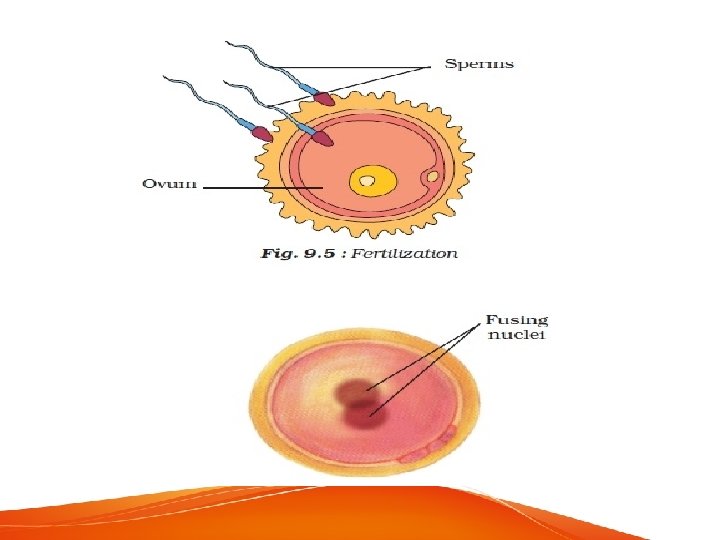
* The first step in process of reproduction is the fusion of a sperm and an ovum. • When sperms come in contact of with an egg , one of the sperms may fuse with the egg. • Such fusion of the egg and the sperm is called fertilisation. • During fertilisation , the nuclei of the sperm and egg fuse to form a zygote.
TYPES OF FERTILISATION 1. INTERNAL FERTILISATION 2. EXTERNAL FERTILISATION INTERNAL FERTISATION Fertilisation which takes inside the female body is called internal fertilisation. Example- Humans , Cows , Dogs , Hens etc
IVF OR in vitro fertilization • The fertilisation of an egg that takes place outside the body in a test tube or any other apparatus is known as IVF or in vitro fertilisation.
EXTERNAL FERTILISATION • The type of fertilisation in which the fusion of a male and a female gamete takes place outside the body of the female is called external fertilisation. Example: 1. Aquatic animals such as fish, star fish. 2. Frog etc.
Test-tubes Babies • In this technique freshly released egg and sperms are put together for a few hours for IVF. In case fertilisation occurs, the zygote is allowed to develop for about a week and then placed in the mother’s uterus. Complete development takes place in the uterus and the baby is born like any other normal baby. Babies born through this technique are called test-tube babies.
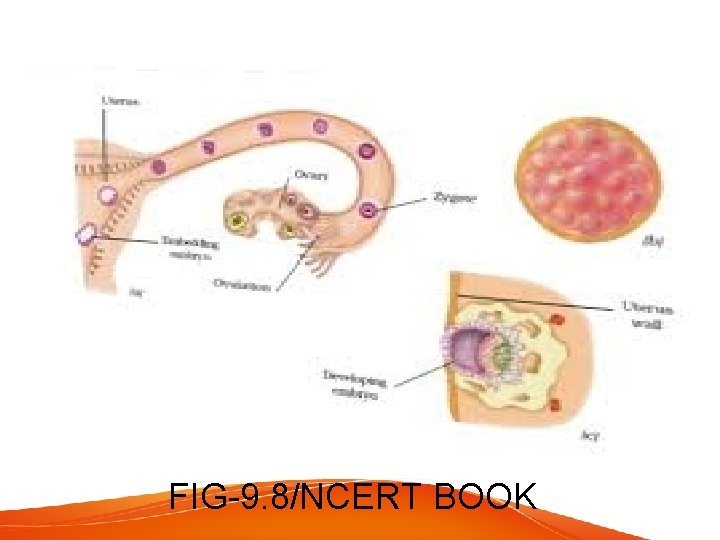
DEVELOPMENT OF EMBRYO • Fertilisation results in formation of zygote which begins to develop into an embryo. • The zygote divides repeatedly to give rise to a ball of cells. • The cells then begin to form groups that develop into different tissues and organs of the body.
• This developing structure is termed an embryo. • The embryo gets embedded in the wall of the uterus for further development. • The embryo continues to develop in the uterus. • It gradually develops body parts such as hands, legs, head, eyes, ears etc.
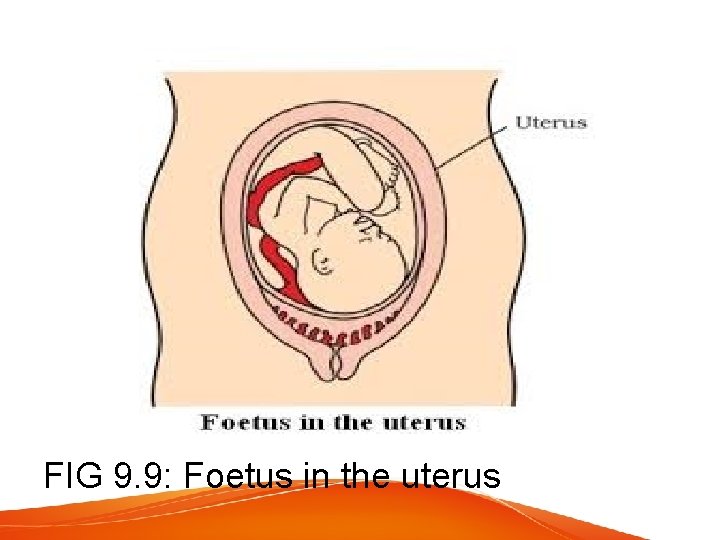
• The stage of the embryo in the which all the body parts can be identified is called a foetus. • When the development of the foetus is complete, the mother gives birth to the baby.
FIG-9. 8/NCERT BOOK
FIG 9. 9: Foetus in the uterus
INTERNAL FERTILISATION IN HEN • Internal fertilisation takes place in hen also. • Soon after fertilisation , the zygote divides repeatedly and travel down the oviduct. • As it travels down, many protective layers are formed around it. • The hard shell that of egg is one such protective layer.
HEN’S EGG • After the hard shell is formed around the developing embryo , the hen finally lays the egg. • The embryo takes about 3 weeks to develop in to chick.
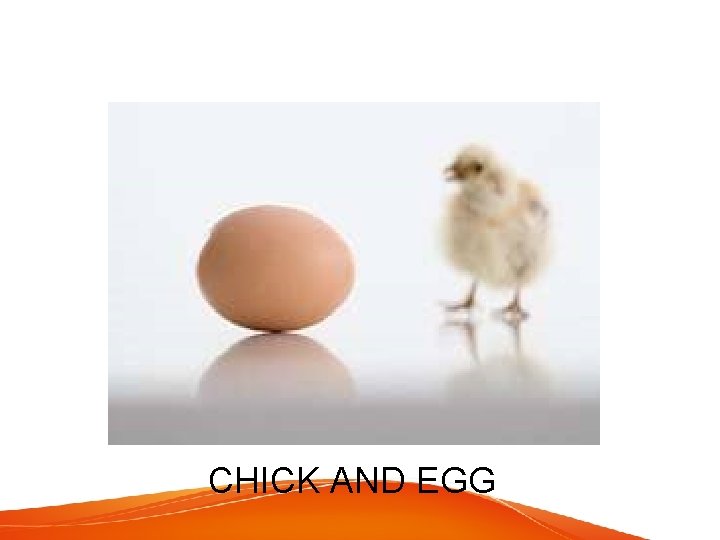
CHICK AND EGG
THANK YOU END OF M 2