
Reproduction data in USDA database George R Wiggans

Reproduction data in USDA database George R. Wiggans Animal Improvement Programs Laboratory Agricultural Research Service, USDA, Beltsville, MD wiggans@aipl. arsusda. gov 2005

History Pre-1997 Days pregnant reported with lactation records 1997 – Earliest breeding information from specific breeding records 2003 – Pregnancy diagnosis code added to lactation records Format 5 for reproduction data All reported breeding events stored ADSA 2005: Reproduction data in USDA database (2) G. R. Wiggans 2005
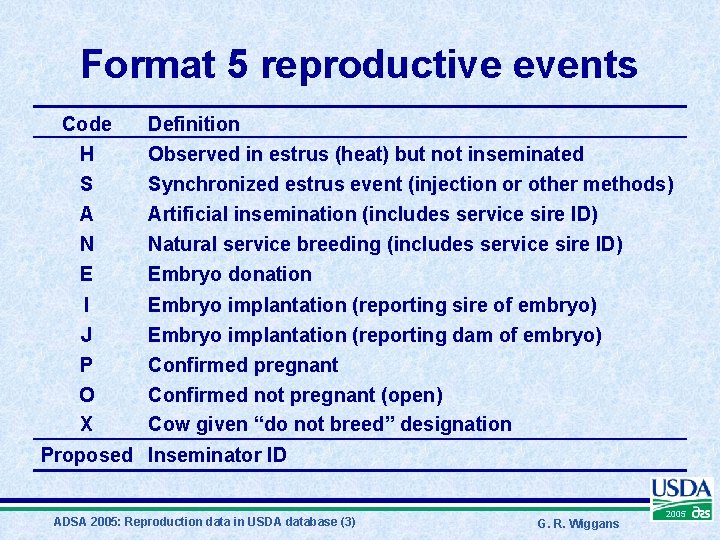
Format 5 reproductive events Code Definition H Observed in estrus (heat) but not inseminated S Synchronized estrus event (injection or other methods) A Artificial insemination (includes service sire ID) N Natural service breeding (includes service sire ID) E Embryo donation I Embryo implantation (reporting sire of embryo) J Embryo implantation (reporting dam of embryo) P Confirmed pregnant O X Confirmed not pregnant (open) Cow given “do not breed” designation Proposed Inseminator ID ADSA 2005: Reproduction data in USDA database (3) G. R. Wiggans 2005

Database design • Record key – Cow, calving, herd • Record fields – Status and production data – Up to 50 test-day segments – Up to 50 reproductive events ADSA 2005: Reproduction data in USDA database (4) G. R. Wiggans 2005
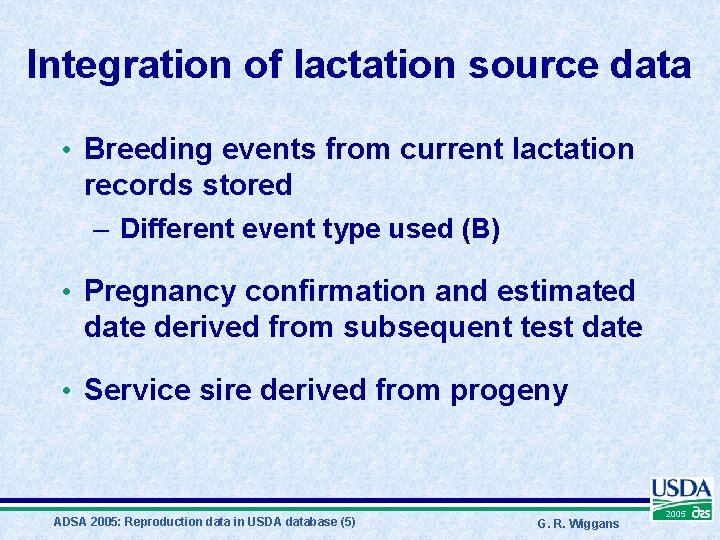
Integration of lactation source data • Breeding events from current lactation records stored – Different event type used (B) • Pregnancy confirmation and estimated date derived from subsequent test date • Service sire derived from progeny ADSA 2005: Reproduction data in USDA database (5) G. R. Wiggans 2005
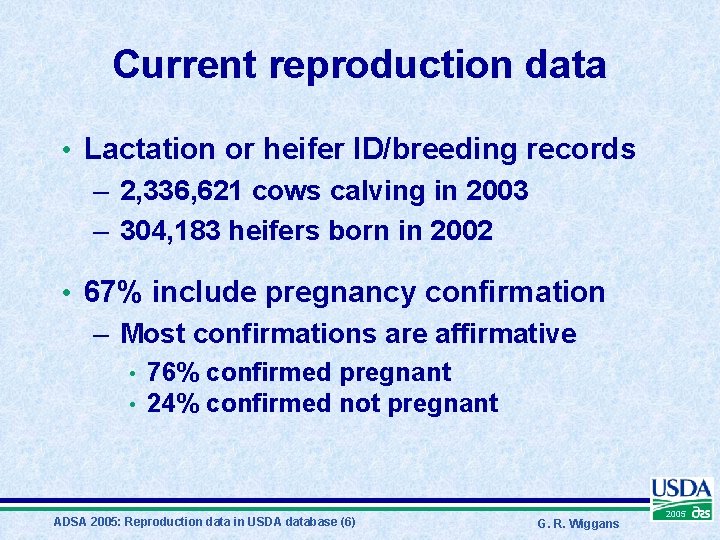
Current reproduction data • Lactation or heifer ID/breeding records – 2, 336, 621 cows calving in 2003 – 304, 183 heifers born in 2002 • 67% include pregnancy confirmation – Most confirmations are affirmative • • 76% confirmed pregnant 24% confirmed not pregnant ADSA 2005: Reproduction data in USDA database (6) G. R. Wiggans 2005
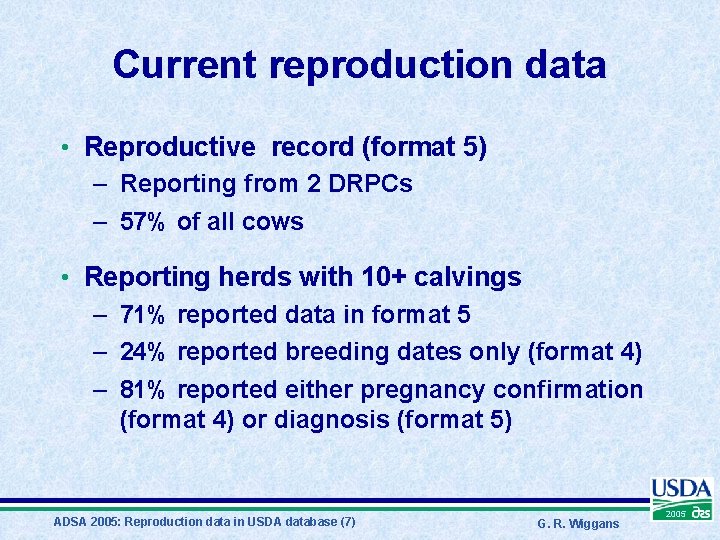
Current reproduction data • Reproductive record (format 5) – Reporting from 2 DRPCs – 57% of all cows • Reporting herds with 10+ calvings – 71% reported data in format 5 – 24% reported breeding dates only (format 4) – 81% reported either pregnancy confirmation (format 4) or diagnosis (format 5) ADSA 2005: Reproduction data in USDA database (7) G. R. Wiggans 2005
Current reproduction data • Cows – 86% include at least 1 breeding – Mean number of breedings: 2. 1 • Heifers – 82% include at least 1 breeding – Mean number of breedings: 1. 5 ADSA 2005: Reproduction data in USDA database (8) G. R. Wiggans 2005
Format 5 data • 89% of breedings include service sire • Almost no estrus synchronization • Very few embryo transfers – As either donor or recipient ADSA 2005: Reproduction data in USDA database (9) G. R. Wiggans 2005
Uses • Daughter pregnancy rate evaluation – Pregnancy status used to improve estimates of days open for lactations without subsequent calving • Pedigree validation • Planned evaluation of male fertility • Research resource ADSA 2005: Reproduction data in USDA database (10) G. R. Wiggans 2005
Service sire vs. calf sire • 111, 546 Holsteins – Born June – December 2004 – Registry status 75 – 100% – Not embryo transfer – Sire and dam reported • Comparison – Match: 48. 7% – Service sire unknown: 49. 3% – Sires different: 2. 0% ADSA 2005: Reproduction data in USDA database (11) G. R. Wiggans 2005
Resolution of differences • Allow breeds to query AIPL database prior to issuance of registration: – Dam's calving date – Dam's service sire – Calf pedigree • Benefits: – Use of data recorded closest to event – Conflicts resolved prior to registration – Conflicts between breed and DHI reduced ADSA 2005: Reproduction data in USDA database (12) G. R. Wiggans 2005
Summary • Extensive set of reproduction information collected • High proportion of recent cows have some data • Used to improve DPR • May add to accuracy of sire identification • Data for planned male fertility evaluation ADSA 2005: Reproduction data in USDA database (13) G. R. Wiggans 2005
- Slides: 13