
Representation Why do we represent things Lascaux cave
- Slides: 56
Representation
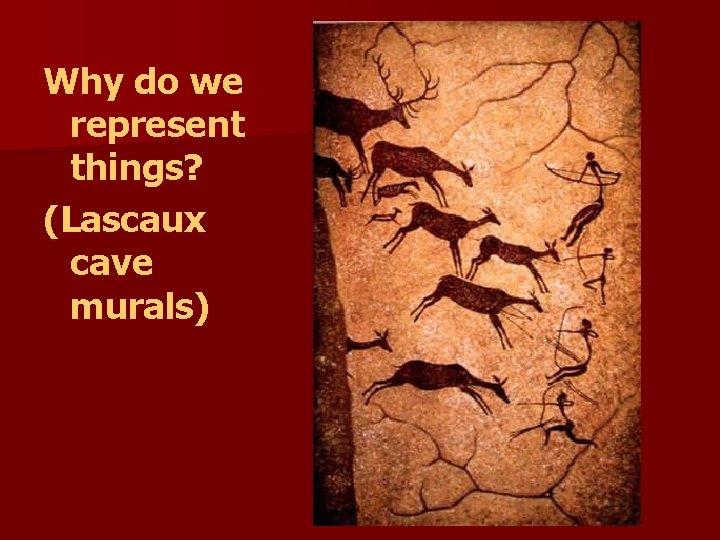
Why do we represent things? (Lascaux cave murals)
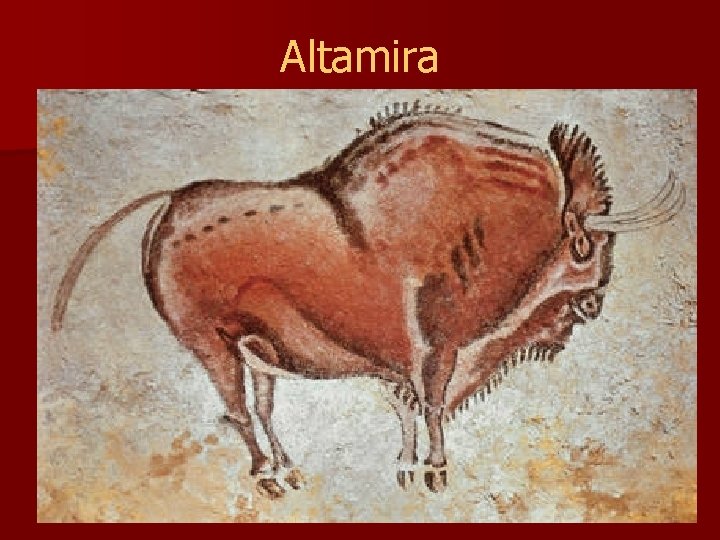
Altamira
Why do we represent things/others? n To gain power over them (cave paintings) n For fun (enjoying the perfection or artistry of representation) n We represent what is invisible (thoughts, feelings) n We represent what is absent: the past, the dead
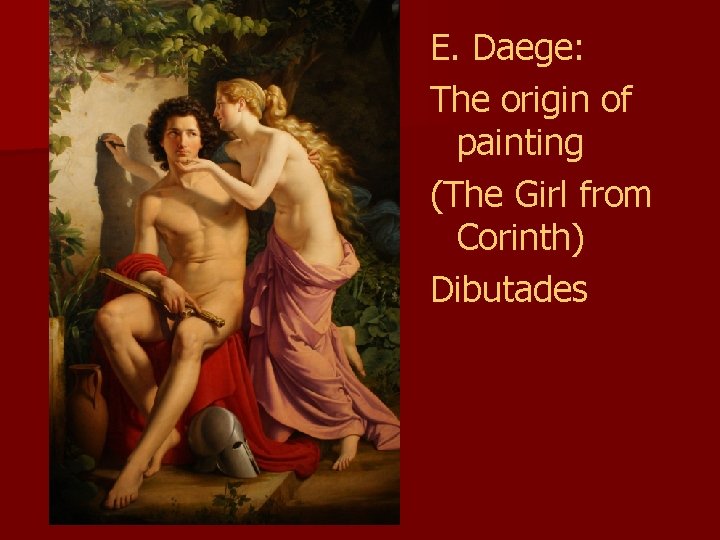
E. Daege: The origin of painting (The Girl from Corinth) Dibutades
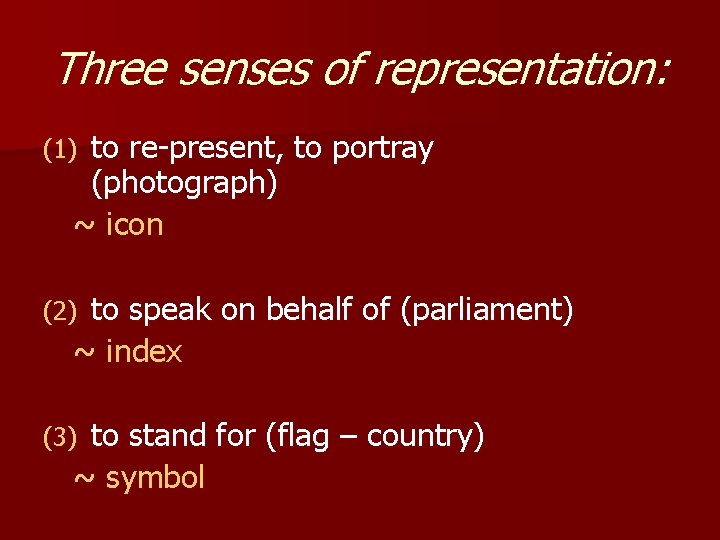
Three senses of representation: to re-present, to portray (photograph) ~ icon (1) to speak on behalf of (parliament) ~ index (2) to stand for (flag – country) ~ symbol (3)
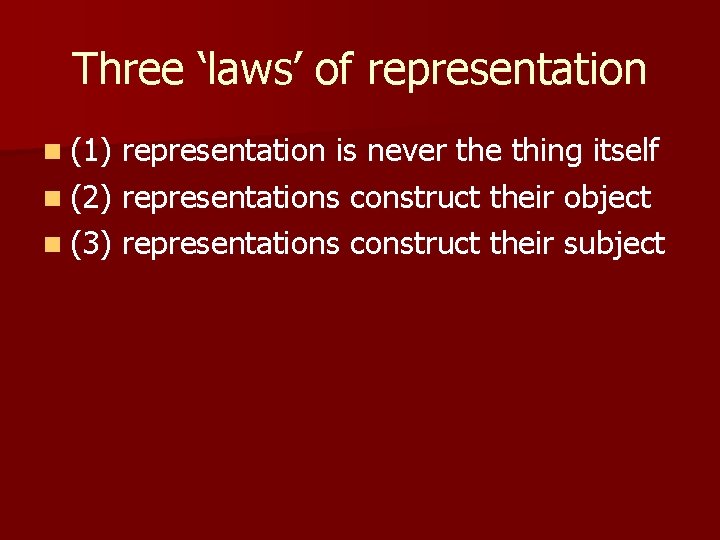
Three ‘laws’ of representation n (1) representation is never the thing itself n (2) representations construct their object n (3) representations construct their subject
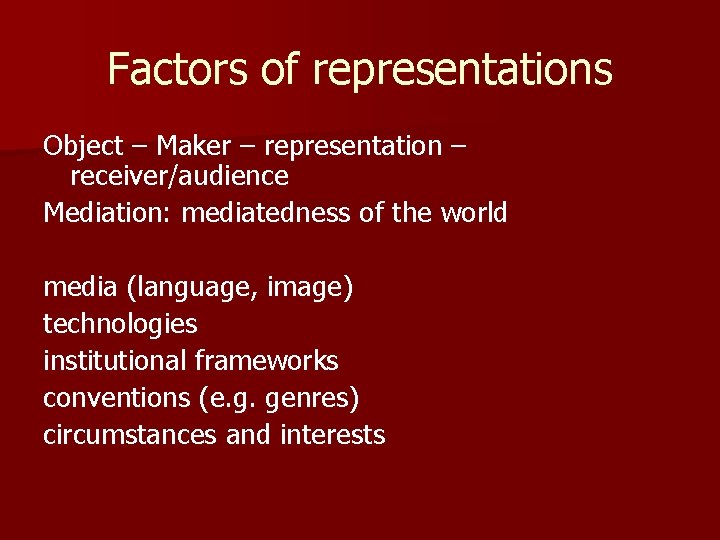
Factors of representations Object – Maker – representation – receiver/audience Mediation: mediatedness of the world media (language, image) technologies institutional frameworks conventions (e. g. genres) circumstances and interests
1. a representation is never the thing itself “In that Empire, the craft of Cartography attained such Perfection that the map of a single province covered the space of an entire City, and the map of the Empire itself an entire Province. In the course of Time, these extensive maps were found wanting, and so the College of Cartographers evolved a Map of the Empire that was of the same Scale as the Empire and that coincided with it point for point. … In the western Deserts, tattered Fragments of the Map are still to be found, sheltering an occasional Beast or beggar” (Jorge Luis Borges)
2. representations are always constructed n Chinese encyclopaedia of animals: “In its remote pages it is written that animals are divided into a, belonging to the emperor b, embalmed c, trained d, sucking pigs e, sirens f, fabulous g, unleashed dogs h, included in this classification i, which jump about like lunatics j, innumerable k, drawn with a very fine camel-hair brush l, etcetera m, which have just broken the pitcher n, which look from a distance like flies. ” (J. L. Borges)
Representation as construction n Commercials: construct the product n History n TV news n ‘reality shows’ editing; framing, selection, ordering
Visual representation n Aristotle: images’ n „Man ‘we can only think in terms of can understand nothing without images” (St. Thomas Aquinas)
IDOLATRY - ICONOCLASM “Thou shalt not make any graven image, or any likeness of any thing that is in heaven above, or that is in the earth beneath, or that is in the waters beneath the earth” (Deuteronomy 5. 8)
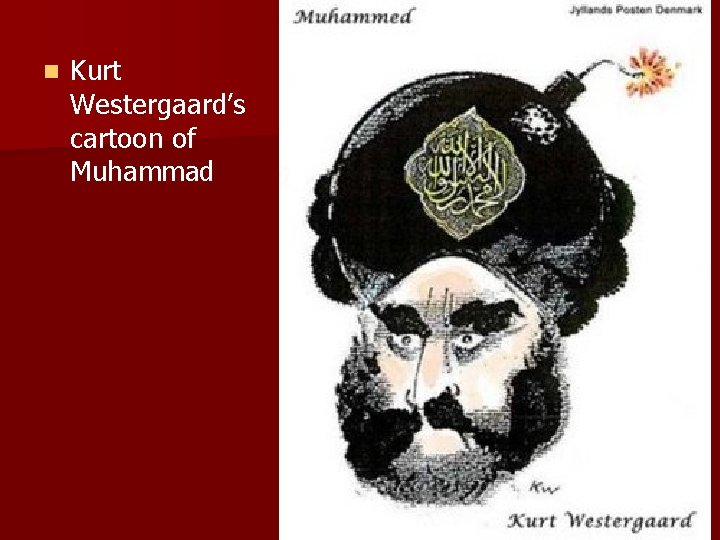
n Kurt Westergaard’s cartoon of Muhammad
What is ‘wrong’ with images? (1) philosophical argument - Plato: images are copies of copies (Ideas or Forms) (2) theological argument: worshipping objects instead of the real thing Christianity: started out as iconoclastic Changed strategy in 7 th century Protestantism: new turn (the host and the wine)
“Images are dangerous. Images, no matter how discreetly chosen, come loaded with conscious and unconscious memories; no matter how limited their proposed use, they burn lasting outlines into the mind. Often images overwhelm the idea they are supposed to be carrying. ” (Thomas Mathews) Emotional charge of concrete images – language requires abstraction (anti-smoking campaign)
Representations of death n Death is unknown; resists representation; the very limit of representation n Death as an ‘event’ n Death as a condition
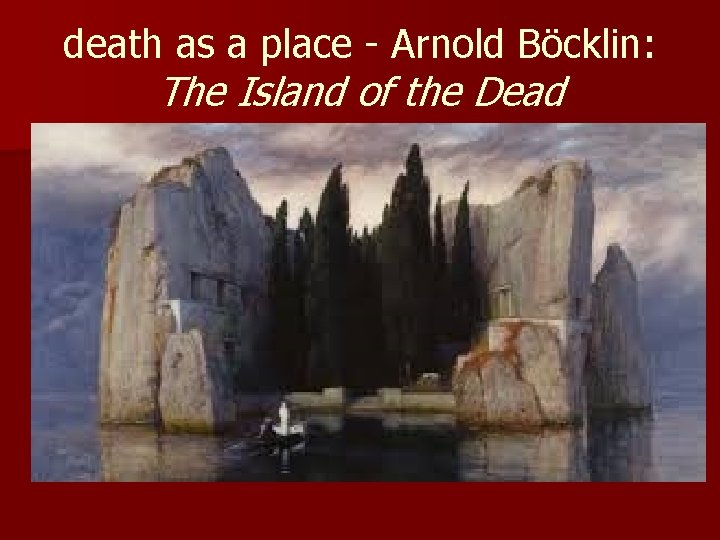
death as a place - Arnold Böcklin: The Island of the Dead
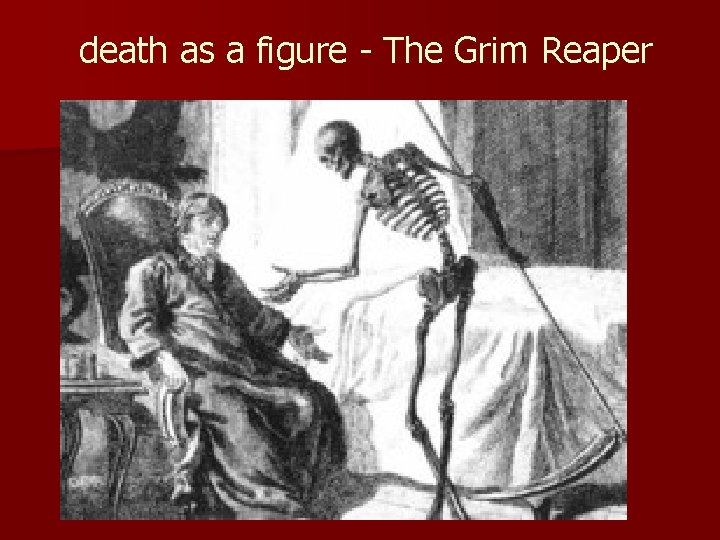
death as a figure - The Grim Reaper
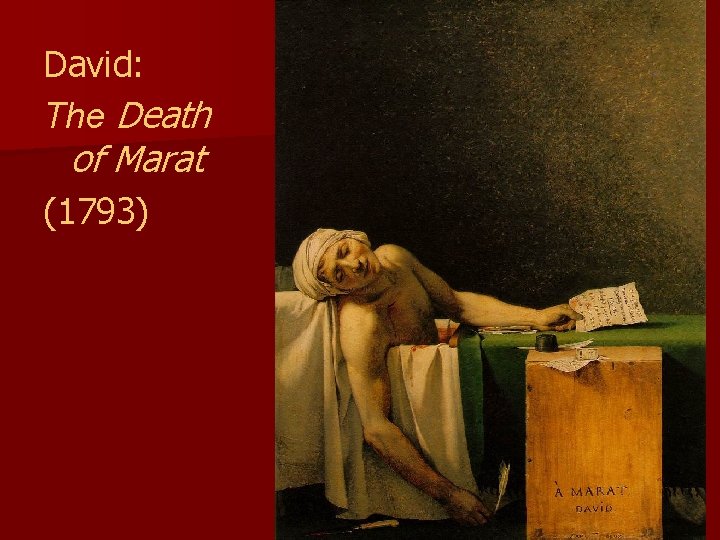
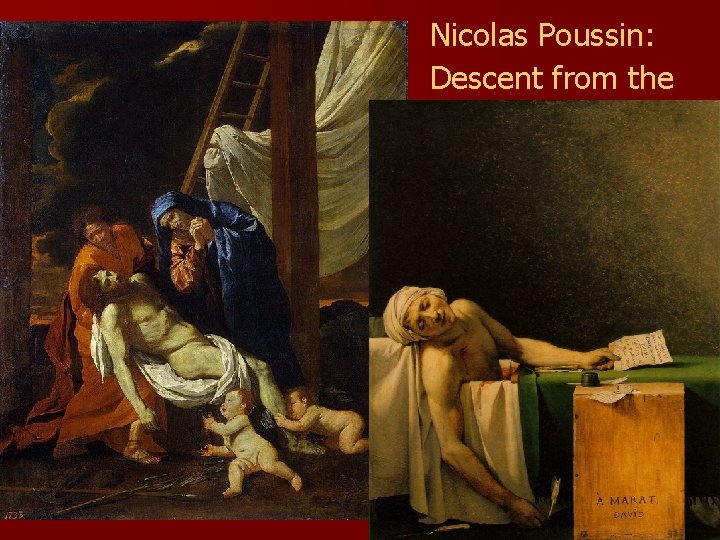
David: The Death of Marat (1793)
Nicolas Poussin: Descent from the Cross
Death of Marat n accurate, realistic in its details n yet: the death becomes allegorical n lighting and background n perspective/point of view n face and body n visual quotation (‘descent from the cross’)
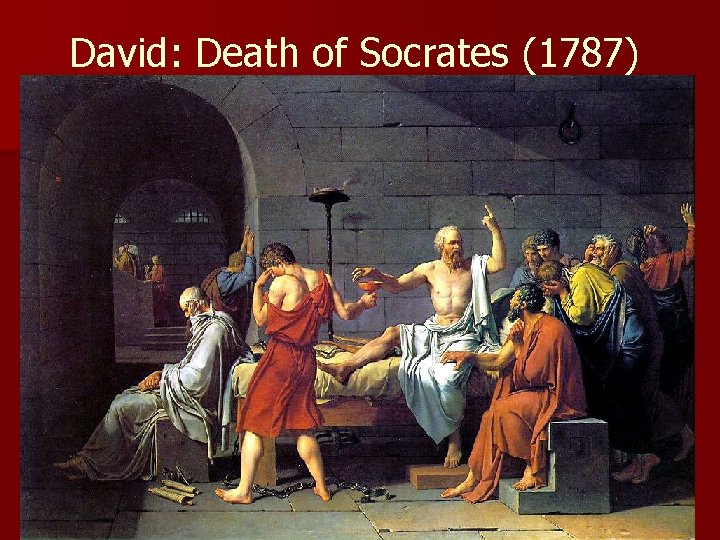
David: Death of Socrates (1787)
Death of Socrates n forced to drink hemlock n Dying: the last act of his life n (Plato: philosophy = learning to die) n Sacrificing a cock to Asclepius
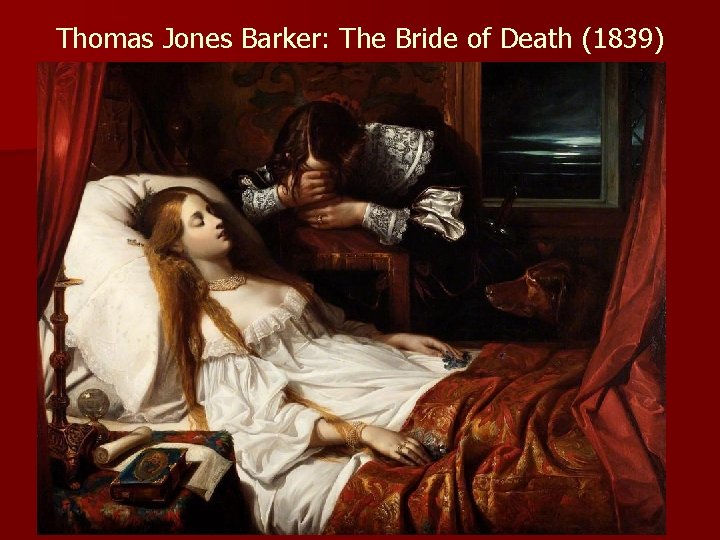
Thomas Jones Barker: The Bride of Death (1839)
The Bride of Death n Not a ‘historical’ event or legend n Victorian sentimentality n (Poe: the most poetic subject) n Theatricality n Allegorical elevation dog, hourglass, violets, pearls
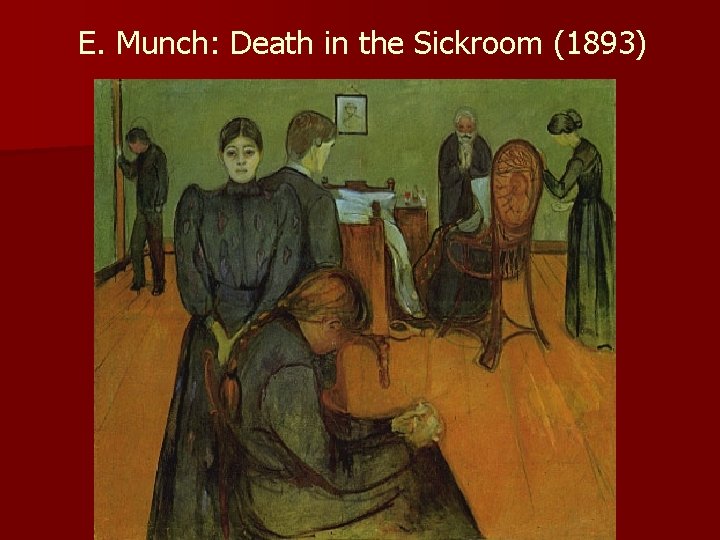
E. Munch: Death in the Sickroom (1893)
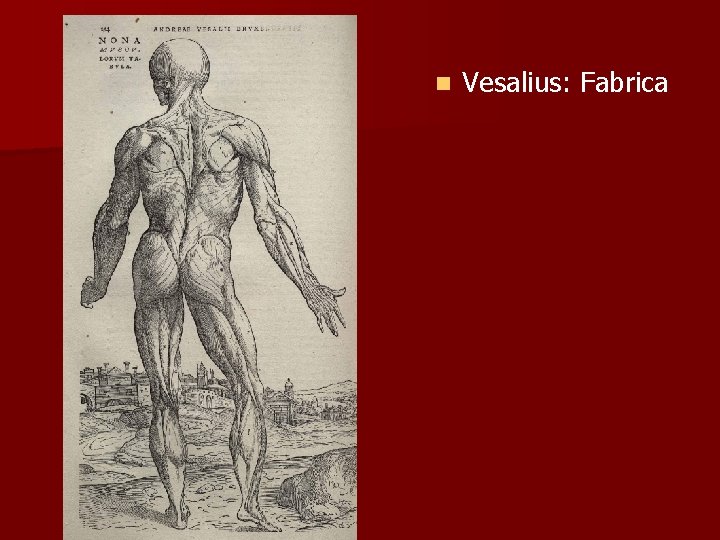
Different representations of death n philosophical n artistic n scientific, medical n anatomy = ‘cutting up’ (paradox: looking for the secret of life by cutting up dead bodies)
n Vesalius: Fabrica
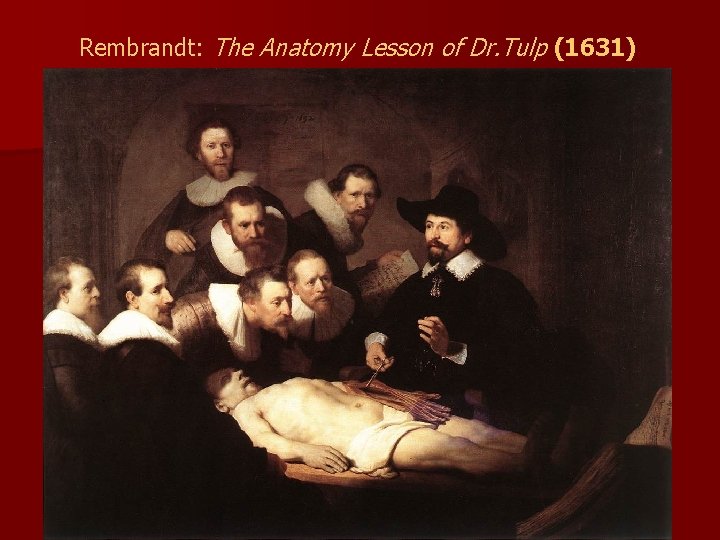
Rembrandt: The Anatomy Lesson of Dr. Tulp (1631)
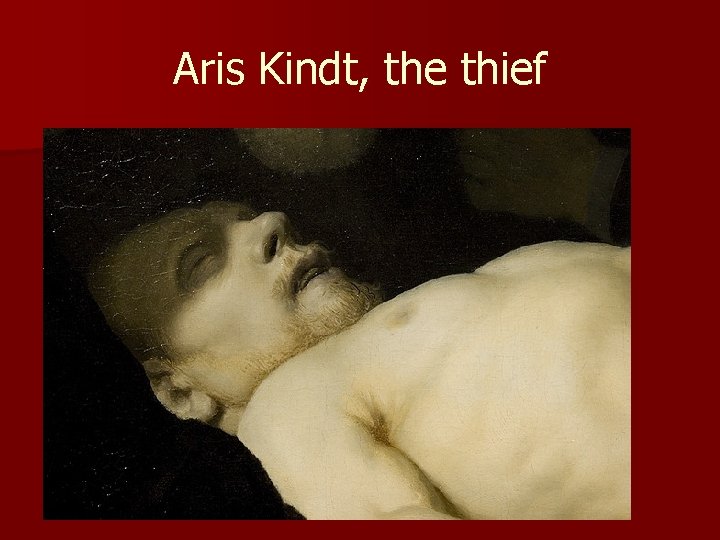
Aris Kindt, the thief
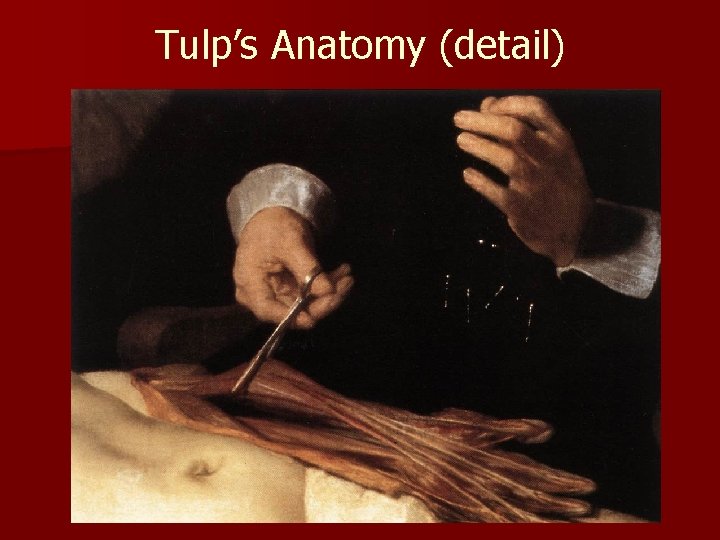
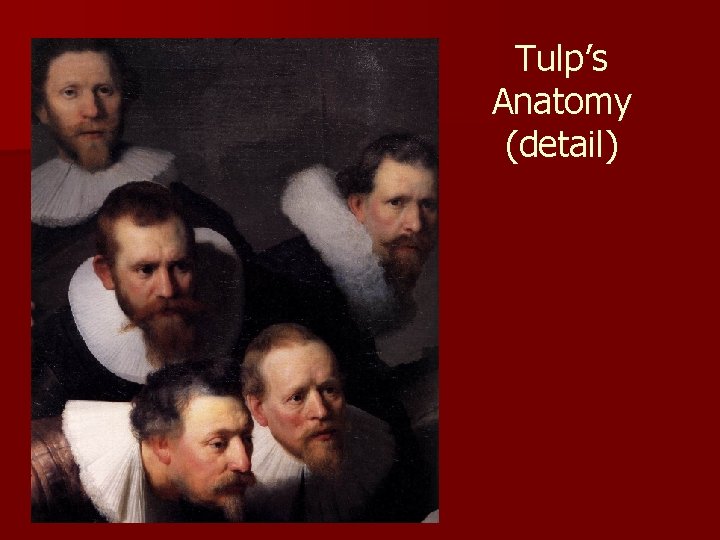
Tulp’s Anatomy (detail)
Tulp’s Anatomy (detail)
Tulp’s Anatomy Lesson n Celebration of modern science n Ritual punishment of the thief n ‘the two bodies’: n Anatomical atlas: mechanistic view of the body (whose body? ) n The body as a feeling, suffering, lived body (the wrong hand)
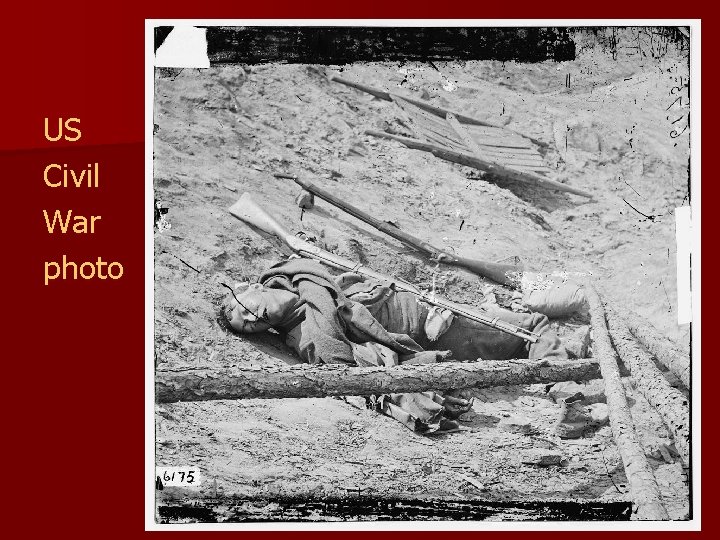
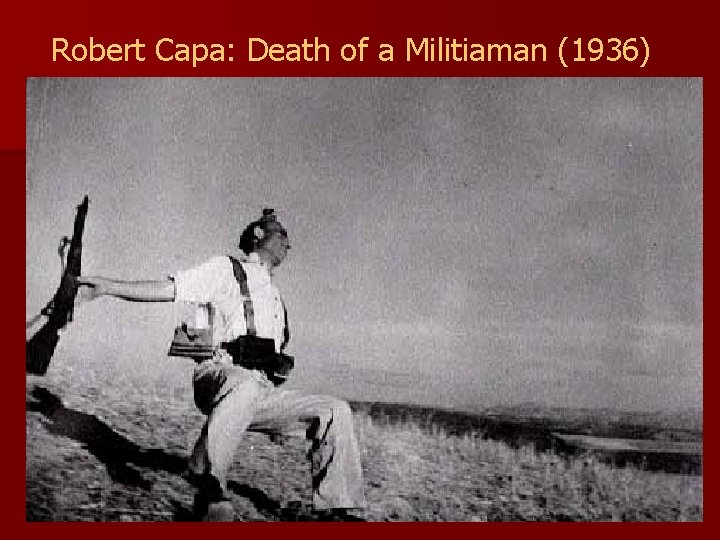
The medium and technology of representation n Photography and painting n „take” a photo vs „make” a painting n forged painting vs. forged photograph n painting: follows artistic, generic conventions n photograph: ‘this really was there’ n art vs reality
Leonardo da Vinci’s guidelines for war paintings: n “The conquered and the defeated must be pale, wearing a frown, their foreheads wrinkled with pain, their mouths open, like people who are wailing … The dead must be fully or partly covered in dust; the blood trickling from the corpse into the dust must be marked by its colour. Others, in their agony, are snarling their teeth, their eyes rolling, their clenched hands close to their bodies, their legs all distorted. ”
US Civil War photo
Robert Capa: Death of a Militiaman (1936)
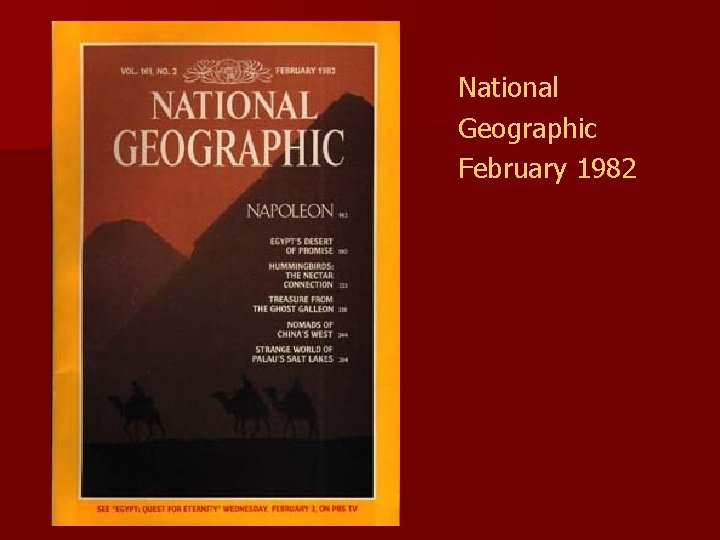
National Geographic February 1982
Third rule of representation n Representations viewers/readers construct their
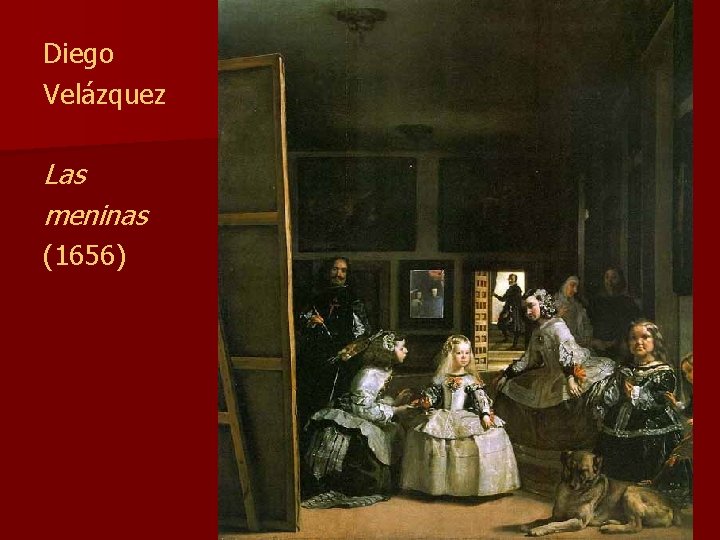
Diego Velázquez Las meninas (1656)
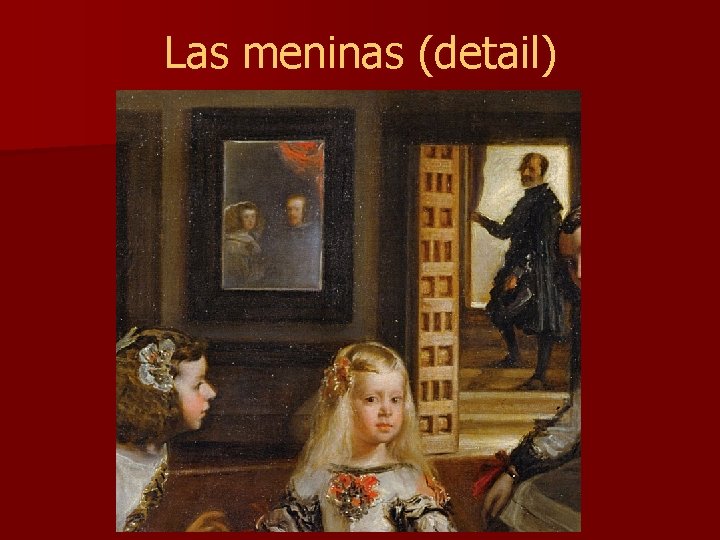
Las meninas (detail)
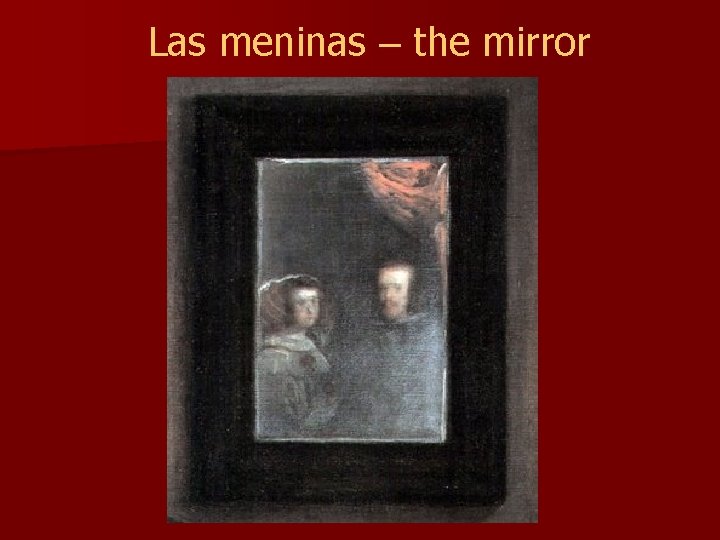
Las meninas – the mirror
Las Meninas n The spectator as the focus of attention (the model: the king/queen of the country) The spectator ‘derealised’ by the painting (ghosted)
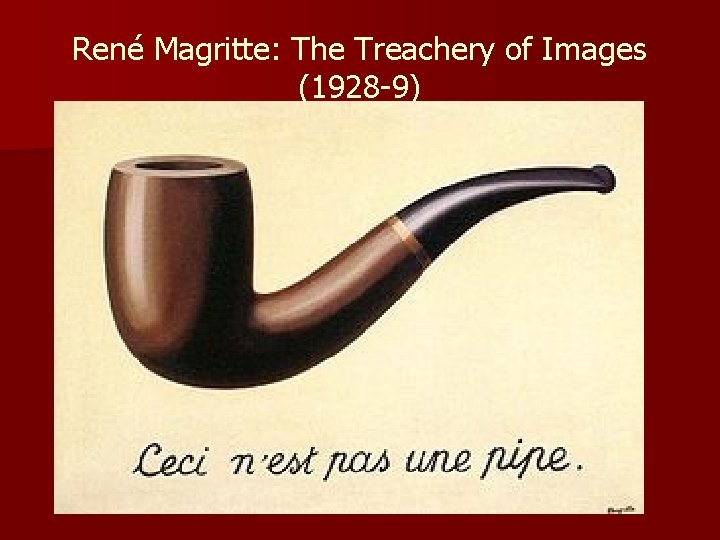
René Magritte: The Treachery of Images (1928 -9)
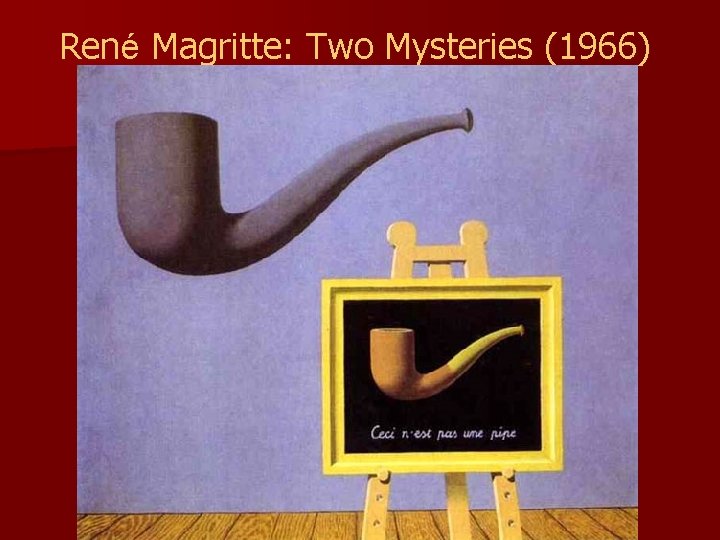
René Magritte: Two Mysteries (1966)
Mise an abyme ‘put/cast in an abyss’ infinite regression On your breakfast table is your packet of cornflakes, and on your packet is a picture of the smiling Kellogg family at breakfast, and on their table is a picture of your packet which has a picture of the smiling Kellogg family, and so on (M. Ashmore) e. g. Hamlet: the ‘mousetrap scene’ Midsummer Night’s Dream: the play of the ‘rude mechanicals’
n Re-presentations: we think that the model (‘reality’) precedes, pre-exists the representation
Representations and schemata n Do we represent what we see?
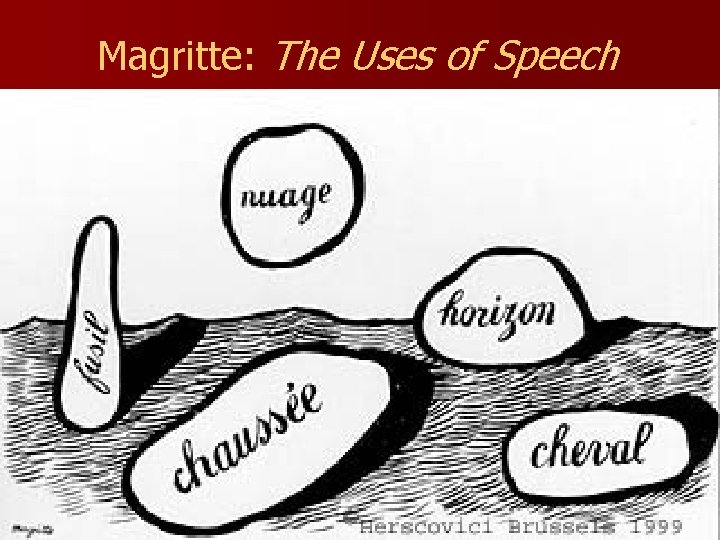
Magritte: The Uses of Speech
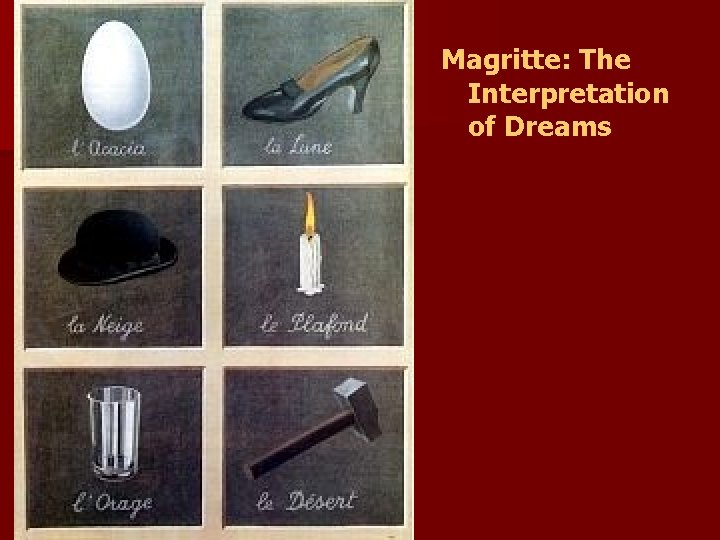
Magritte: The Interpretation of Dreams
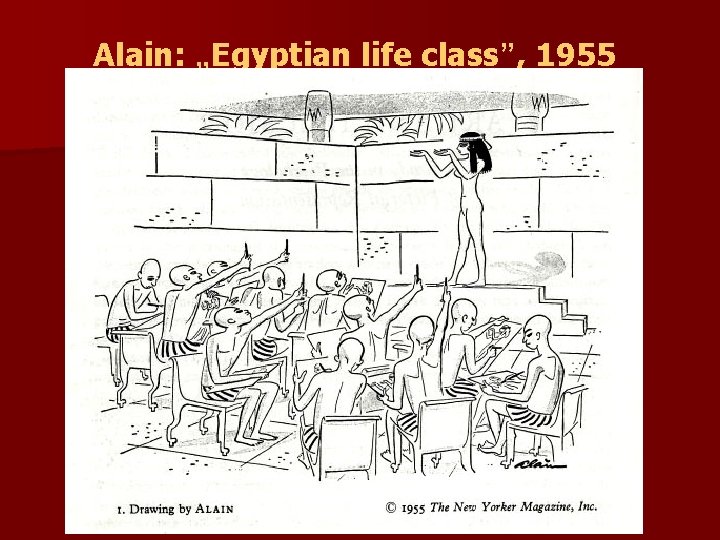
Alain: „Egyptian life class”, 1955
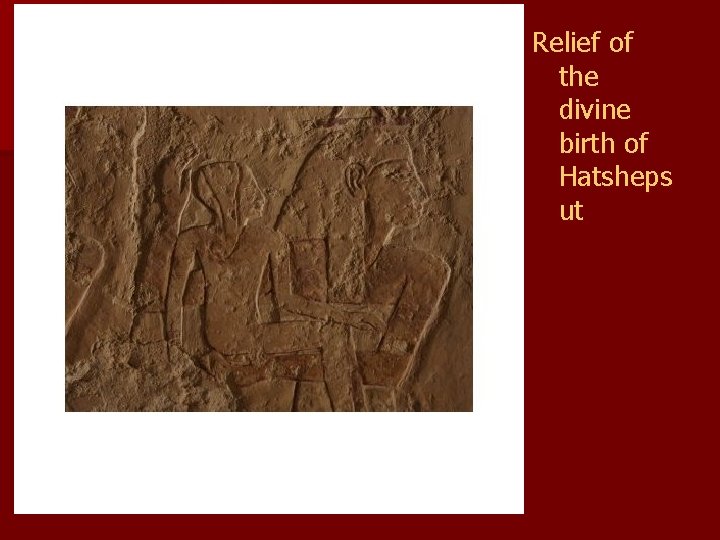
Relief of the divine birth of Hatsheps ut
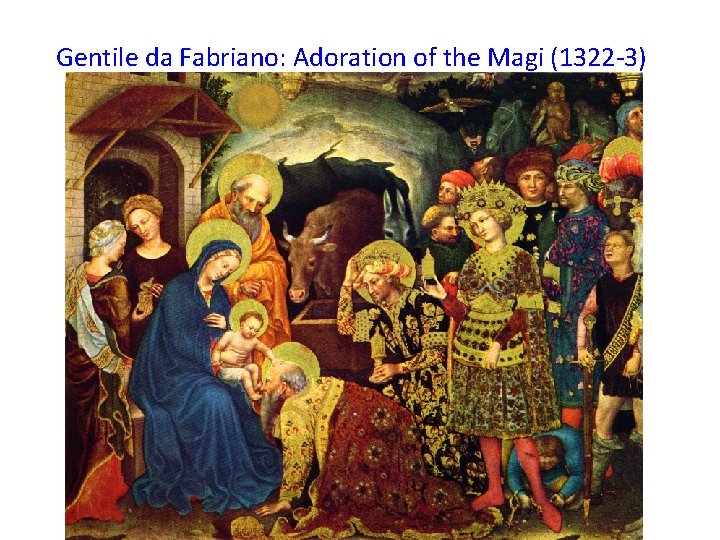
Gentile da Fabriano: Adoration of the Magi (1322 -3)
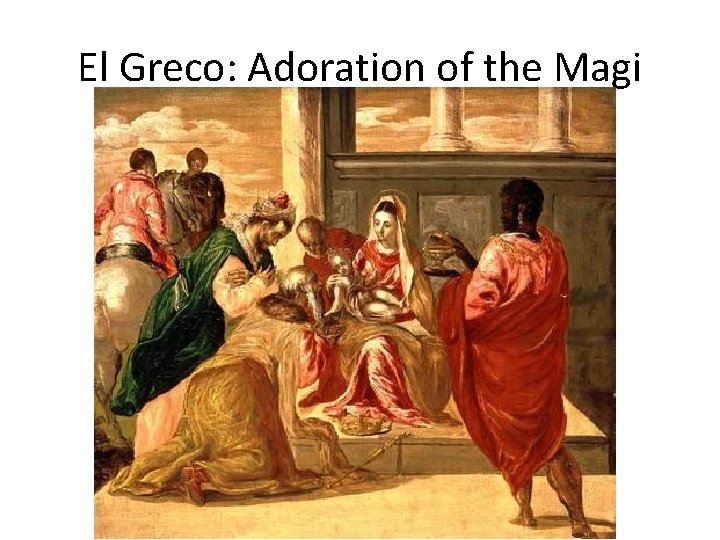
El Greco: Adoration of the Magi
The power of representations ‘society of the spectacle’ (Guy Debord) images replace what we see Emile Zola: “I don’t think we can claim that we have seen something until we have not photographed it”