
Reporting suspected abuse and neglected of a child
Reporting suspected abuse and neglected of a child
Early Head Start Standards Code of Conduct • Performance Standard: 1302. 90(c)(1)(i-v), 1302. 90(c)(2), 1302. 92(b)(2), 1302. 103 (d)(ii), 1303. 20 1304. 52(i)(1)(iv) • Minimum Standards: 746. 1309(c), 746. 1311, 746. 501(25), 746. 901(10), 746. 1303(3) • Purpose: To establish a method of reporting suspected or known child maltreatment in compliance with applicable Federal, State –Texas Family Code Section 261. 101, or Tribal laws. All UTRGV-PSJAEHS-CCP Program employees must adhere to protecting the privacy of the child.
Early Head Start Standards Code of Conduct 1302. 90 (C)(1)(ii) • (1) A program must ensure all staff, consultants, contractors, and volunteers abide by the program’s standards of conduct that: • (ii) Ensure staff, consultants, contractors, and volunteers do not maltreat or endanger the health or safety of children, including, at a minimum, that staff must NOT: • • (A) Use corporal punishment; (B) Use isolation to discipline a child; (C) Bind or tie a child to restrict movement or tape a child’s mouth; (D) Use or withhold food as a punishment or reward;
Cont. Standards of Conduct • (E) Use toilet learning/training methods that punish, demean, or humiliate a child; • (F) Use any form of emotional abuse, including public or private humiliation, rejecting, terrorizing, extended ignoring, or corrupting a child; • (G) Physically abuse a child; • (H) Use any form of verbal abuse, including profane, sarcastic language, threats, or derogatory remarks about the child or child’s family; or, • (I) Use physical activity or outdoor time as a punishment or reward;
Cont. Standards of Conduct • Section 261. 101 of the Texas Family Code • Any individual having cause to believe that a child’s physical, mental health or welfare has been or may be adversely affected by abuse or neglect by any person is obligated to report immediately, but no later than the 48 th hour the person suspects the child has been or may be abused or neglected • All Early Head Start staff persons are “mandated reporters” • Legally obligated to report suspected child abuse or neglect • Report to Texas Department of Family and Protective Services
Cont. Standards of Conduct • By law, professionals may not delegate the duty to report to another person or entity or rely on another person or entity to make the report • You are protected by law from liability when you make a report or provide information in good faith during a CPS investigation. (Texas Family Code, Section 261. 106) • you are not protected from civil or criminal liability if you report your own abuse or neglect of a child or intentionally file a false report against someone else. (Texas Family Code, Section 261. 106).
Cont. Standards of Conduct • Failure to Report suspected child maltreatment (abuse and neglect) • Criminal offense (Texas Family Code, Section 261. 106) • Punishable by either a fine or imprisonment or both • Child makes an outcry of child maltreatment • Do not have child repeat it others • Child has visible bruises or physical trauma to his/her body • DO NOT show others • Having the child repeat or displaying the bruises/physical trauma can further stress and humiliate the child. • Do not try to investigate, do not take photos or video of the child and do not confront the suspected abuser.
Terms > Abuse: Includes physical abuse, neglect, emotional abuse and sexual abuse > Child Protective Services (CPS): A government agency that investigates reports of abuse and neglect of children > Emotional and verbal abuse: Rejecting children, blaming them, or constantly scolding them, particularly for problems beyond their control > Mandated reporter: A person who is required by law to report maltreatment
Terms > Neglect: Failing to provide for a child's basic needs, including food, water, a place to live, love and attention > Physical abuse: Intentionally causing an injury to a child > Sexual abuse: Includes any inappropriate sexual behavior with a child, including touching or taking photographs
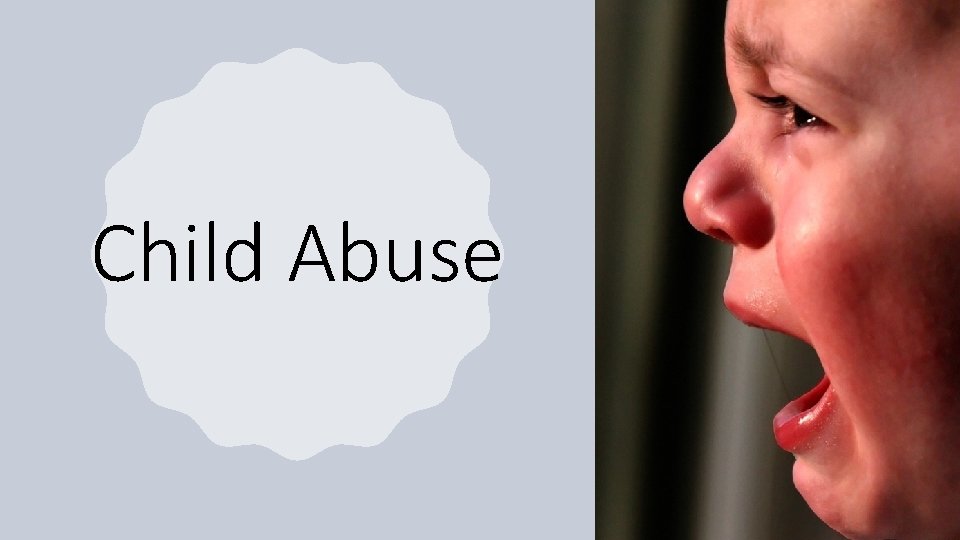
Child Abuse
Types of Child Abuse > > Physical Neglect Sexual Emotional
Physical Abuse > Physical signs > Unexplained > > Bruises or welts Burns Fractures or dislocations Bald patches on scalp > Behavioral signs > Student states he/she “deserves” > > > > > punishment Fearful when others cry Behavioral extremes (aggressive, withdrawn) Frightened of parents or caretakers Afraid to go home Child reports injury by parents or caretakers Needy for affection Manipulative behaviors to get attention Unable to focus – daydreaming Self abusive behavior or lack of concern for personal safety Wary of adult contact
Neglect > Physical signs > Not meeting basic needs (food, shelter, clothing) > Failure to thrive (underweight, small for age) > Persistent hunger > Poor hygiene > Inappropriate dress for season or weather > Consistent lack of supervision and emotional care > Unattended physical problems or medical needs > Abandonment
Neglect > Behavioral signs > Begging or stealing food > Early arrival or departure from school > Frequent visits to the school nurse > Difficulty with vision or hearing > Poor coordination > Often tired or falling asleep in class > Takes on adult roles and responsibilities > Substance abuse > Acting out behavior > Educational failure > Verbalizing lack of caretaking
Sexual abuse > Physical signs > Difficulty walking or sitting > Torn, stained, or bloody undergarments > Pain, swelling, or itching in genital area > Pain when urinating > Vaginal or penile discharge > Bruises, bleeding, or tears around the genital area > Sexually transmitted diseases
Sexual Abuse > Behavioral signs > Unwilling to change for gym or participate in PE activities > Sexual behavior or knowledge inappropriate to child’s age > Sexual acting out on younger children > Poor peer relations > Delinquent or runaway behavior > Report of sexual assault > Drastic change in school performance
Reporting Child Abuse
Mandated Reporters All Head Start and Early Head Start staff persons are "mandated reporters. " As mandated reporters, staff members working for Head Start and Early Head Start programs are legally obligated to report suspected child abuse or neglect to the appropriate state child protection agency
Mandated Reporters > > > Teachers Doctors Nurses Social workers Counselors Psychologists
• Staff persons are required to report incidents where there is a reasonable suspicion that abuse or neglect has occurred or there is a substantial risk that abuse or neglect may occur, either in the care of a Head Start agency or outside of the program. • It is not the responsibility of the staff person or the program to investigate whether abuse or neglect actually occurred, but rather to report probable incidents. • Programs and individuals must not attempt to investigate; to do so can jeopardize the accuracy of the official investigation conducted by child protective services. • Any employee who is the subject of a reported case of abuse or neglect must be removed from contact with children during the state investigation and until the charge is fully resolved.
• Programs and individuals must not attempt to investigate; to do so can jeopardize the accuracy of the official investigation conducted by child protective services. • Any employee who is the subject of a reported case of abuse or neglect must be removed from contact with children during the state investigation and until the charge is fully resolved.
Individuals reporting suspected child abuse or neglect will be asked for specific information, such as: • The child's name and location • The name and relationship (if known) of the person you believe may have abused or is abusing the • What you have seen or heard regarding the abuse or neglect • The names of any other people who might know about the abuse • Your name and phone number (voluntary)
• Head Start programs are strongly reminded that staff, consultants, and volunteers are prohibited from engaging in corporal punishment, emotional or physical abuse, or humiliation of children at any time (45 CFR 1304. 52(i)(1)(iv)). • Head Start children should feel safe in the program setting at all times. Disciplinary action towards children cannot involve isolation, the use of food as punishment or reward, or the denial of basic needs (45 CFR 1304. 52(i)(1)(iv)).
Prevention > Education and knowledge can prevent child abuse.
• Early childhood development practices encourage staff to use prevention and redirection methods for disruptive behavior. • Centers should determine the root cause of the behavior to ultimately resolve the matter. • Referral must be made to a mental health consultant available who can assist them in identifying the causes of children's challenging behavior and implement appropriate strategies to ensure children and staff are safe.
- Slides: 26