
Reporting and Assessment What has changed Redesigned Curriculum




- Slides: 17
Reporting and Assessment
What has changed?
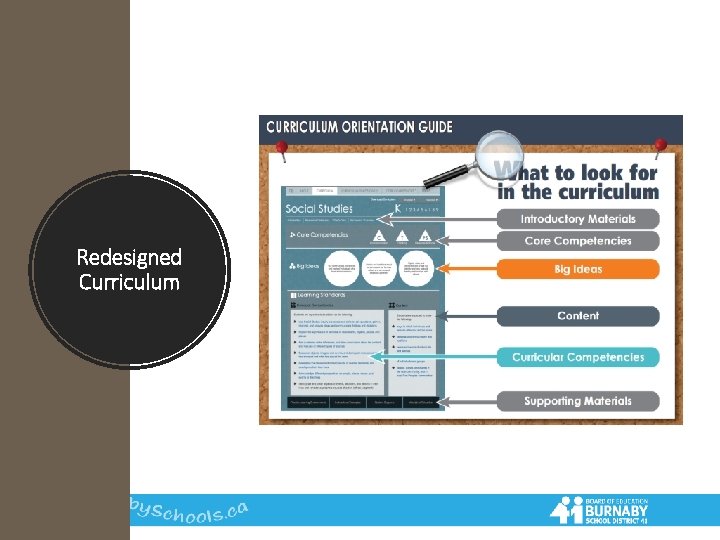
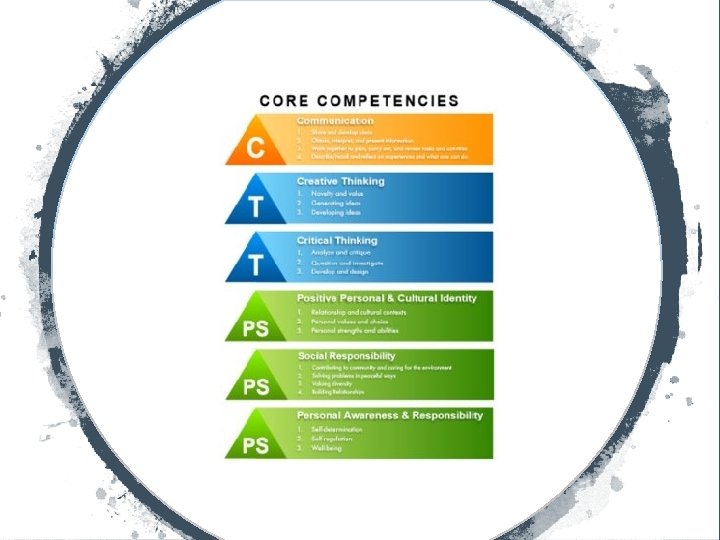
Redesigned Curriculum
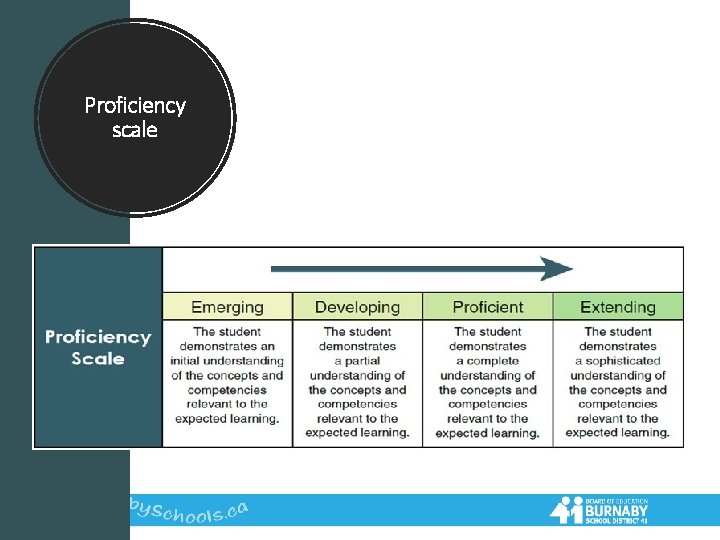
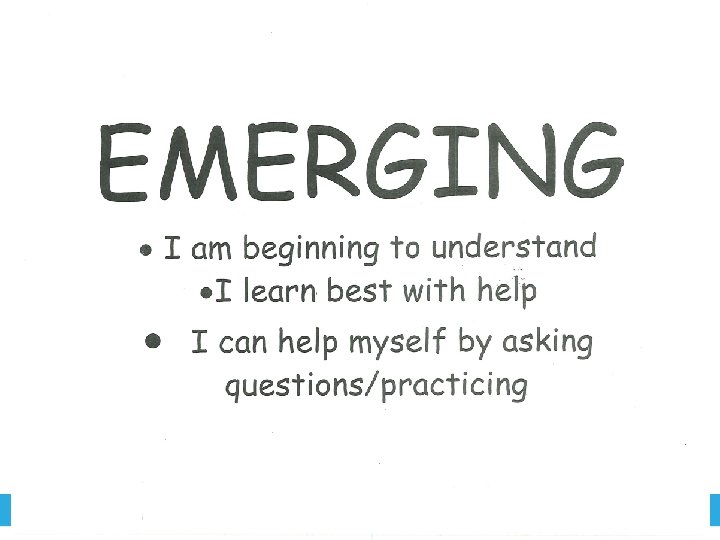
Proficiency scale
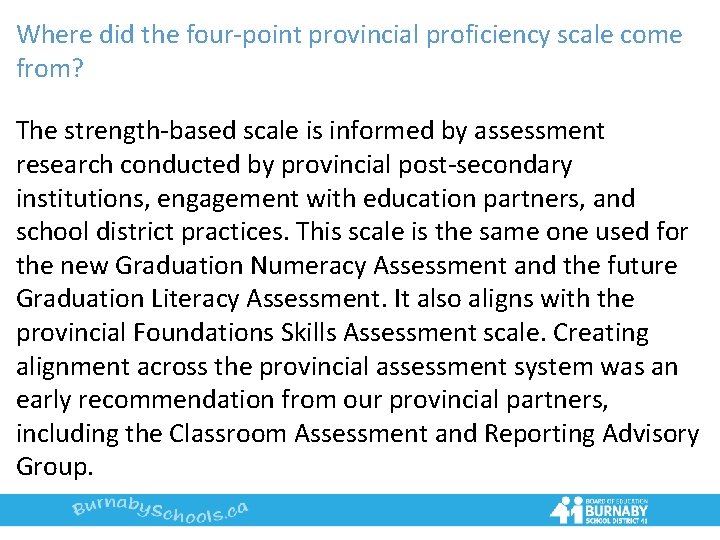
Where did the four-point provincial proficiency scale come from? The strength-based scale is informed by assessment research conducted by provincial post-secondary institutions, engagement with education partners, and school district practices. This scale is the same one used for the new Graduation Numeracy Assessment and the future Graduation Literacy Assessment. It also aligns with the provincial Foundations Skills Assessment scale. Creating alignment across the provincial assessment system was an early recommendation from our provincial partners, including the Classroom Assessment and Reporting Advisory Group.
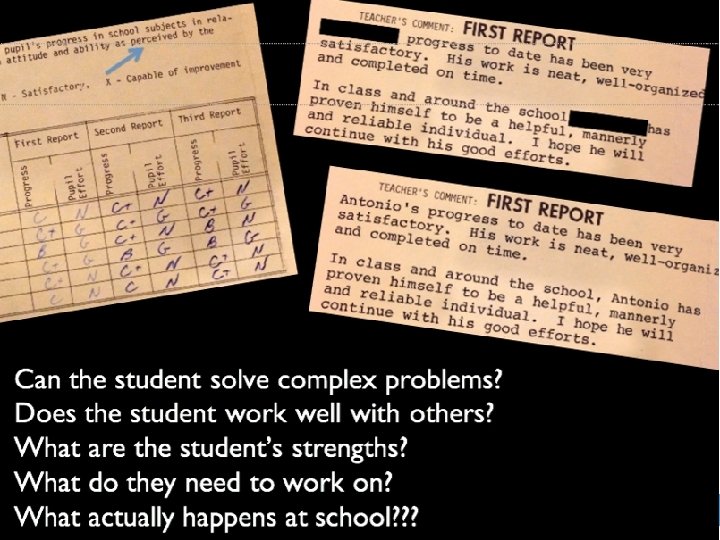
Why have things changed?
“It’s important to us to see our students grow as learners. It’s important for us that our students graduate knowing what they need to know and having the skills they need to succeed in life after high school. Letter grades do not help us meet these goals. ” Denise Lamarche, 2017
“Removing letter grades is not a shift towards a feel-good, kumbaya education where academics don’t matter. It’s the exact opposite, in fact. This is academic rigour. ” Denise Lamarche, 2017
What decades of research tells us: 1. Grades tend to diminish students’ interest in whatever they are learning 2. Grades create a preference for the easiest possible task 3. Grades tend to reduce the quality of students’ thinking
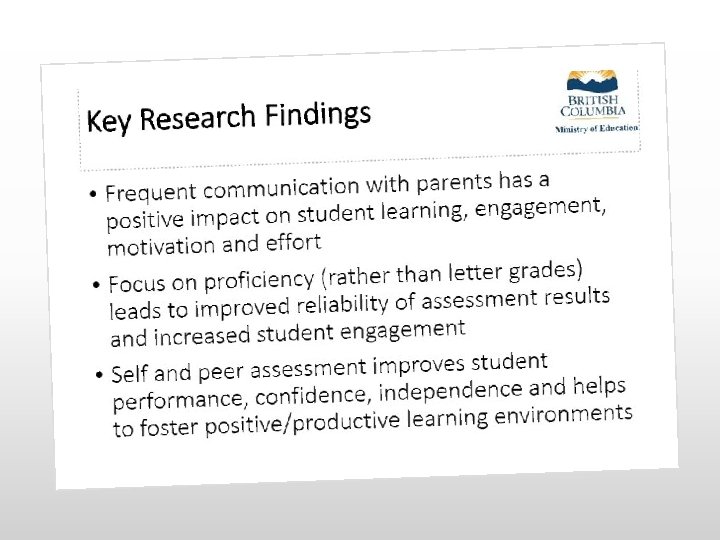
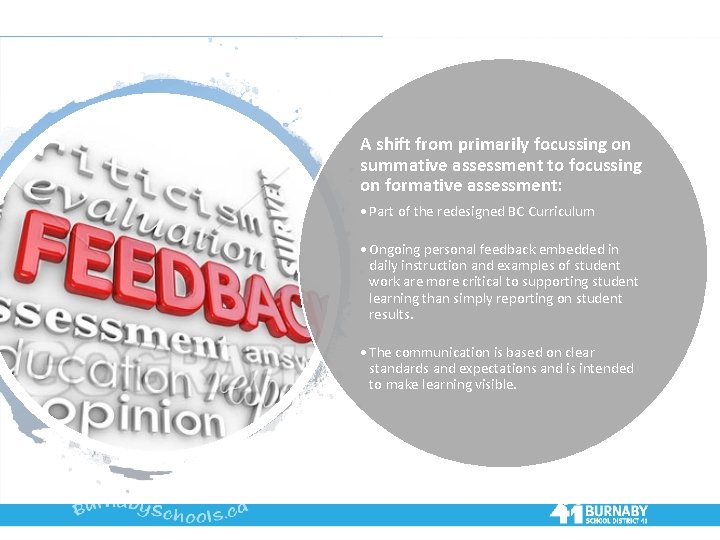
A shift from primarily focussing on summative assessment to focussing on formative assessment: • Part of the redesigned BC Curriculum • Ongoing personal feedback embedded in daily instruction and examples of student work are more critical to supporting student learning than simply reporting on student results. • The communication is based on clear standards and expectations and is intended to make learning visible.