
Reported Speech Questions Indirektna pitanja U engleskom jeziku


- Slides: 18
Reported Speech Questions
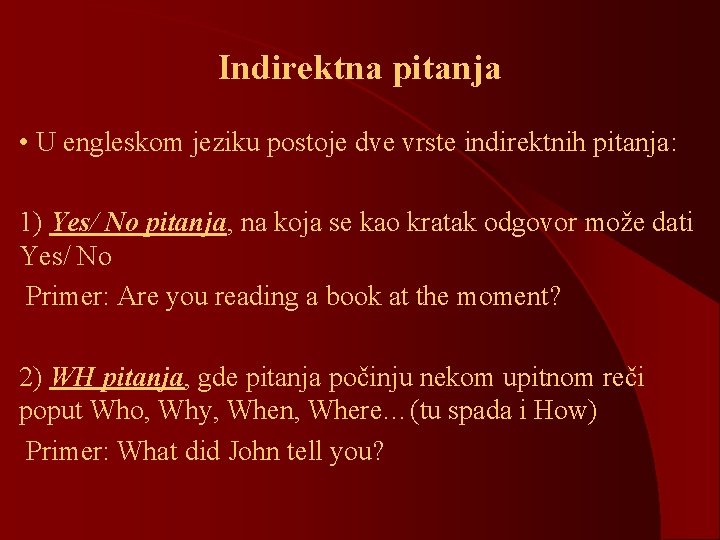
Indirektna pitanja • U engleskom jeziku postoje dve vrste indirektnih pitanja: 1) Yes/ No pitanja, na koja se kao kratak odgovor može dati Yes/ No Primer: Are you reading a book at the moment? 2) WH pitanja, gde pitanja počinju nekom upitnom reči poput Who, Why, When, Where…(tu spada i How) Primer: What did John tell you?
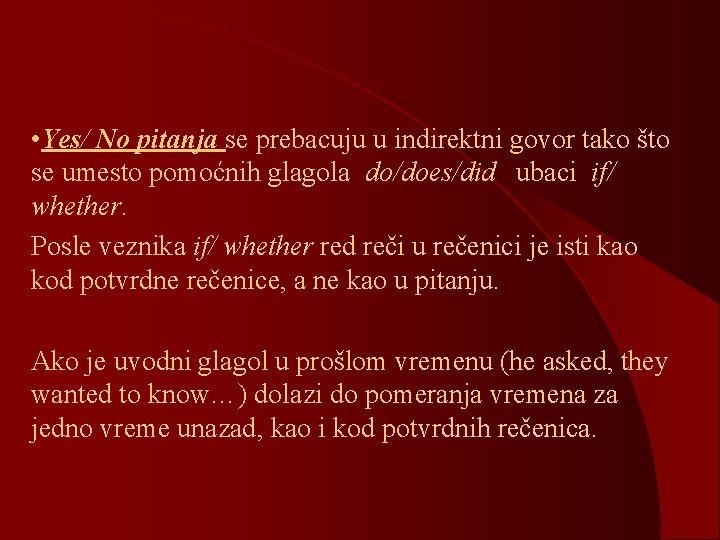
• Yes/ No pitanja se prebacuju u indirektni govor tako što se umesto pomoćnih glagola do/does/did ubaci if/ whether. Posle veznika if/ whether red reči u rečenici je isti kao kod potvrdne rečenice, a ne kao u pitanju. Ako je uvodni glagol u prošlom vremenu (he asked, they wanted to know…) dolazi do pomeranja vremena za jedno vreme unazad, kao i kod potvrdnih rečenica.
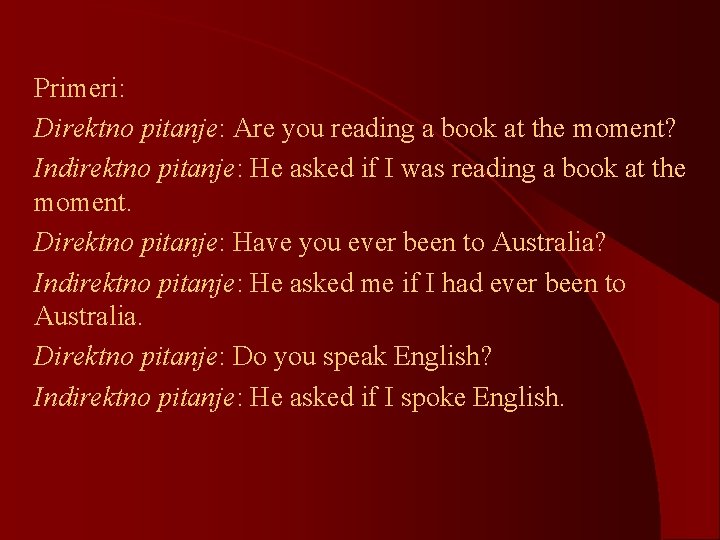
Primeri: Direktno pitanje: Are you reading a book at the moment? Indirektno pitanje: He asked if I was reading a book at the moment. Direktno pitanje: Have you ever been to Australia? Indirektno pitanje: He asked me if I had ever been to Australia. Direktno pitanje: Do you speak English? Indirektno pitanje: He asked if I spoke English.
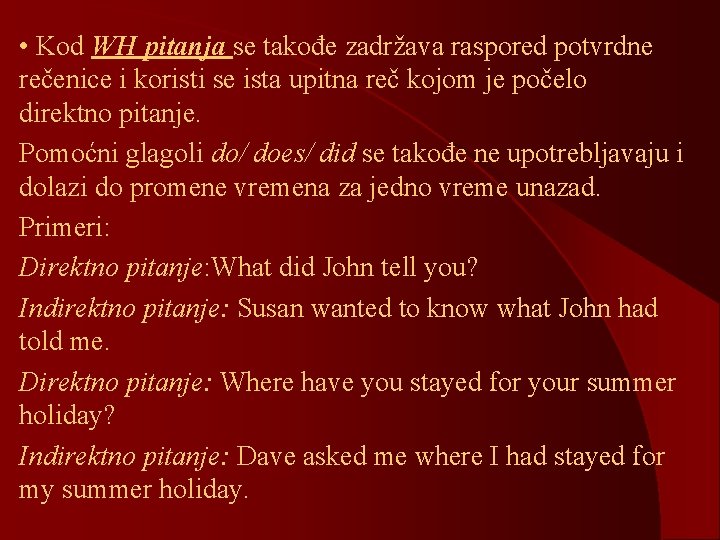
• Kod WH pitanja se takođe zadržava raspored potvrdne rečenice i koristi se ista upitna reč kojom je počelo direktno pitanje. Pomoćni glagoli do/ does/ did se takođe ne upotrebljavaju i dolazi do promene vremena za jedno vreme unazad. Primeri: Direktno pitanje: What did John tell you? Indirektno pitanje: Susan wanted to know what John had told me. Direktno pitanje: Where have you stayed for your summer holiday? Indirektno pitanje: Dave asked me where I had stayed for my summer holiday.
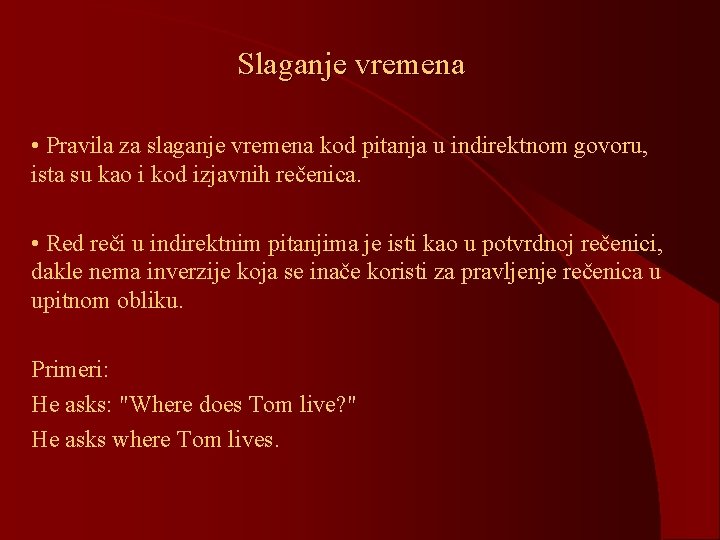
Slaganje vremena • Pravila za slaganje vremena kod pitanja u indirektnom govoru, ista su kao i kod izjavnih rečenica. • Red reči u indirektnim pitanjima je isti kao u potvrdnoj rečenici, dakle nema inverzije koja se inače koristi za pravljenje rečenica u upitnom obliku. Primeri: He asks: "Where does Tom live? " He asks where Tom lives.
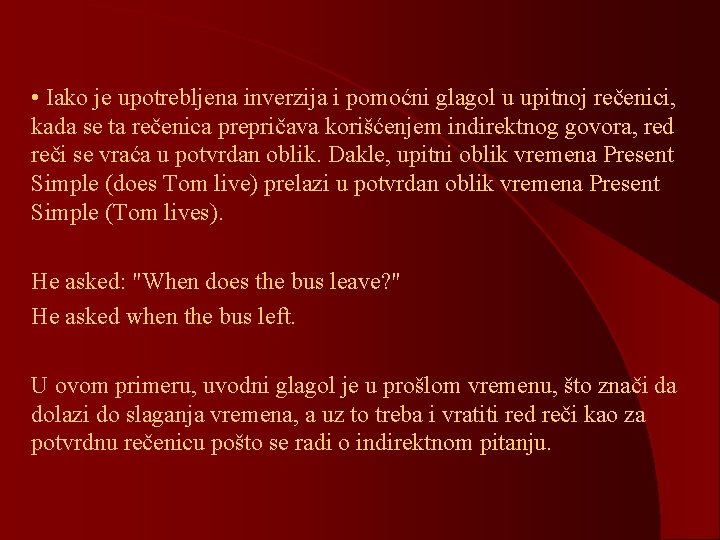
• Iako je upotrebljena inverzija i pomoćni glagol u upitnoj rečenici, kada se ta rečenica prepričava korišćenjem indirektnog govora, red reči se vraća u potvrdan oblik. Dakle, upitni oblik vremena Present Simple (does Tom live) prelazi u potvrdan oblik vremena Present Simple (Tom lives). He asked: "When does the bus leave? " He asked when the bus left. U ovom primeru, uvodni glagol je u prošlom vremenu, što znači da dolazi do slaganja vremena, a uz to treba i vratiti red reči kao za potvrdnu rečenicu pošto se radi o indirektnom pitanju.
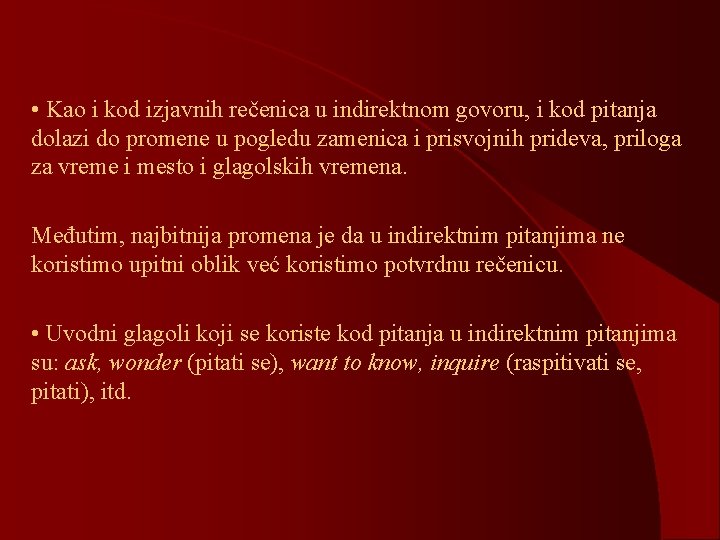
• Kao i kod izjavnih rečenica u indirektnom govoru, i kod pitanja dolazi do promene u pogledu zamenica i prisvojnih prideva, priloga za vreme i mesto i glagolskih vremena. Međutim, najbitnija promena je da u indirektnim pitanjima ne koristimo upitni oblik već koristimo potvrdnu rečenicu. • Uvodni glagoli koji se koriste kod pitanja u indirektnim pitanjima su: ask, wonder (pitati se), want to know, inquire (raspitivati se, pitati), itd.
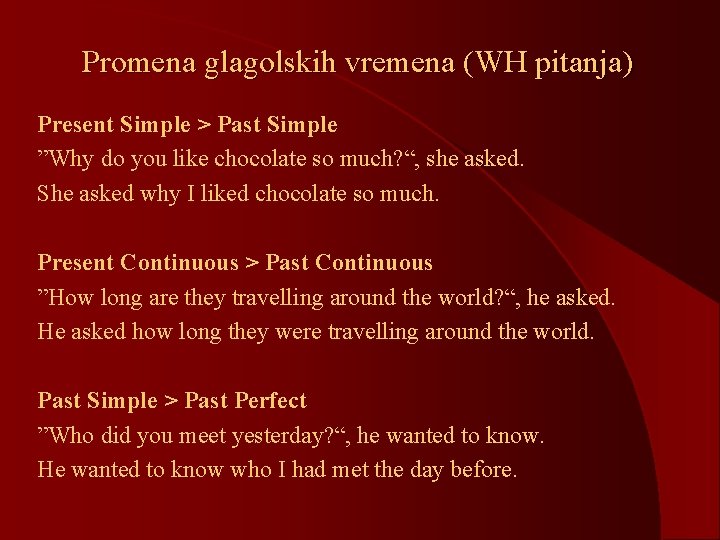
Promena glagolskih vremena (WH pitanja) Present Simple > Past Simple ”Why do you like chocolate so much? “, she asked. She asked why I liked chocolate so much. Present Continuous > Past Continuous ”How long are they travelling around the world? “, he asked. He asked how long they were travelling around the world. Past Simple > Past Perfect ”Who did you meet yesterday? “, he wanted to know. He wanted to know who I had met the day before.
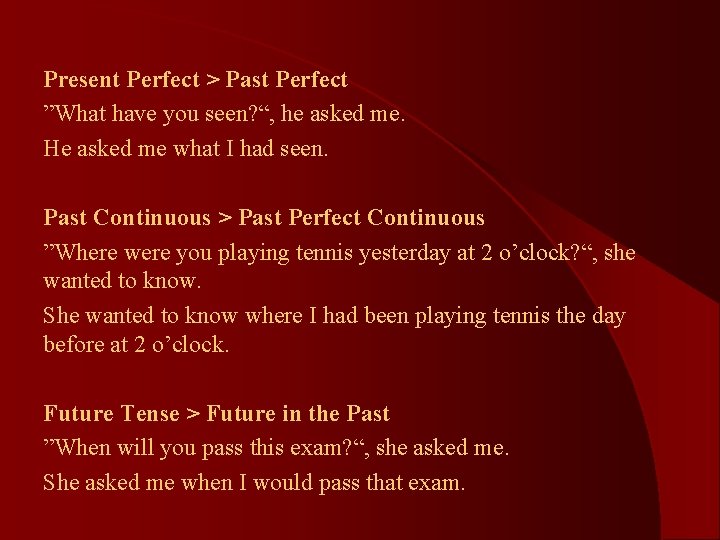
Present Perfect > Past Perfect ”What have you seen? “, he asked me. He asked me what I had seen. Past Continuous > Past Perfect Continuous ”Where were you playing tennis yesterday at 2 o’clock? “, she wanted to know. She wanted to know where I had been playing tennis the day before at 2 o’clock. Future Tense > Future in the Past ”When will you pass this exam? “, she asked me. She asked me when I would pass that exam.
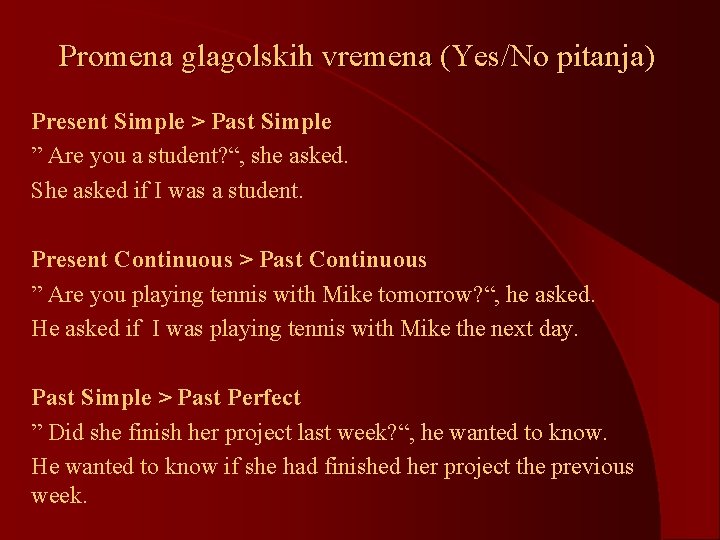
Promena glagolskih vremena (Yes/No pitanja) Present Simple > Past Simple ” Are you a student? “, she asked. She asked if I was a student. Present Continuous > Past Continuous ” Are you playing tennis with Mike tomorrow? “, he asked. He asked if I was playing tennis with Mike the next day. Past Simple > Past Perfect ” Did she finish her project last week? “, he wanted to know. He wanted to know if she had finished her project the previous week.
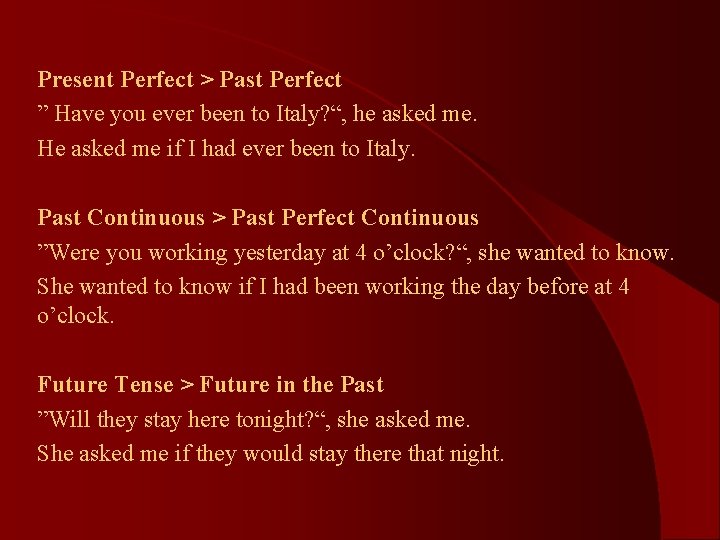
Present Perfect > Past Perfect ” Have you ever been to Italy? “, he asked me. He asked me if I had ever been to Italy. Past Continuous > Past Perfect Continuous ”Were you working yesterday at 4 o’clock? “, she wanted to know. She wanted to know if I had been working the day before at 4 o’clock. Future Tense > Future in the Past ”Will they stay here tonight? “, she asked me. She asked me if they would stay there that night.
Exercises: I Change the direct questions into indirect questions. 1. “Do you want to see the museum? ” asked the tour guide. The tour guide asked if I wanted to see the museum. 2. “Are there any letters for me? ” Mary wanted to know if there were any letters for her. 3. “Where can I park my car? ” asked John asked where he could park his car. 4. “Did you use my toothbrush? ” Charlie asked if I had used his toothbrush. 5. “How long have you learned French? ” the teacher asked. The teacher asked how long I had learned French.
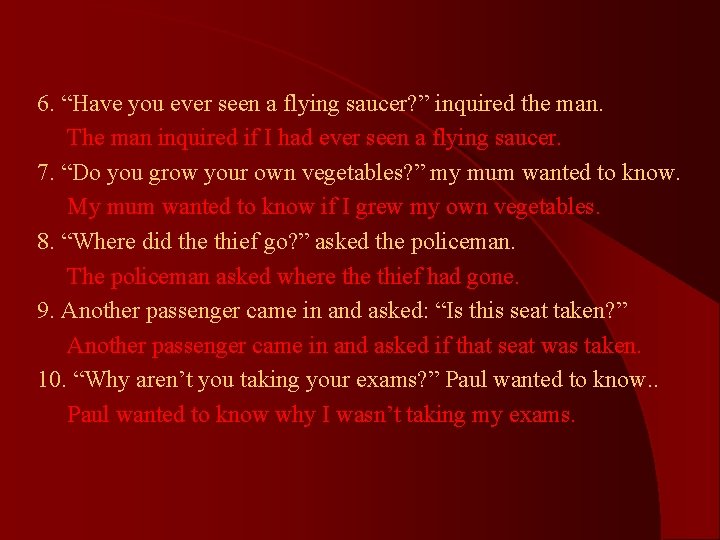
6. “Have you ever seen a flying saucer? ” inquired the man. The man inquired if I had ever seen a flying saucer. 7. “Do you grow your own vegetables? ” my mum wanted to know. My mum wanted to know if I grew my own vegetables. 8. “Where did the thief go? ” asked the policeman. The policeman asked where thief had gone. 9. Another passenger came in and asked: “Is this seat taken? ” Another passenger came in and asked if that seat was taken. 10. “Why aren’t you taking your exams? ” Paul wanted to know. . Paul wanted to know why I wasn’t taking my exams.
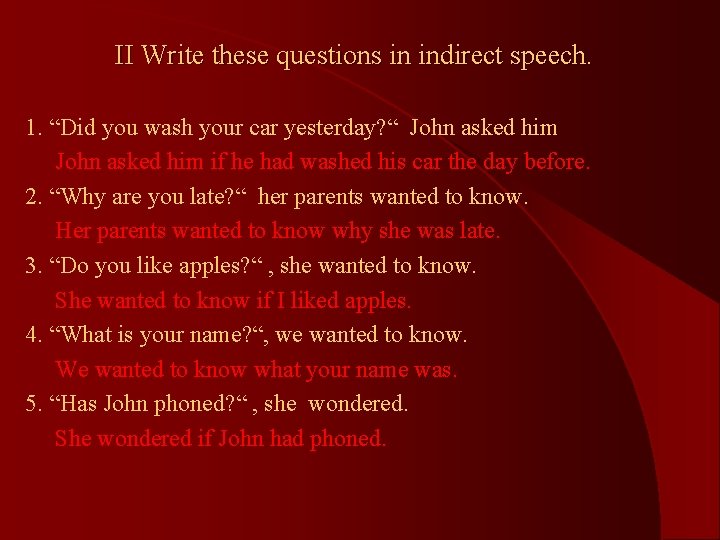
II Write these questions in indirect speech. 1. “Did you wash your car yesterday? “ John asked him if he had washed his car the day before. 2. “Why are you late? “ her parents wanted to know. Her parents wanted to know why she was late. 3. “Do you like apples? “ , she wanted to know. She wanted to know if I liked apples. 4. “What is your name? “, we wanted to know. We wanted to know what your name was. 5. “Has John phoned? “ , she wondered. She wondered if John had phoned.
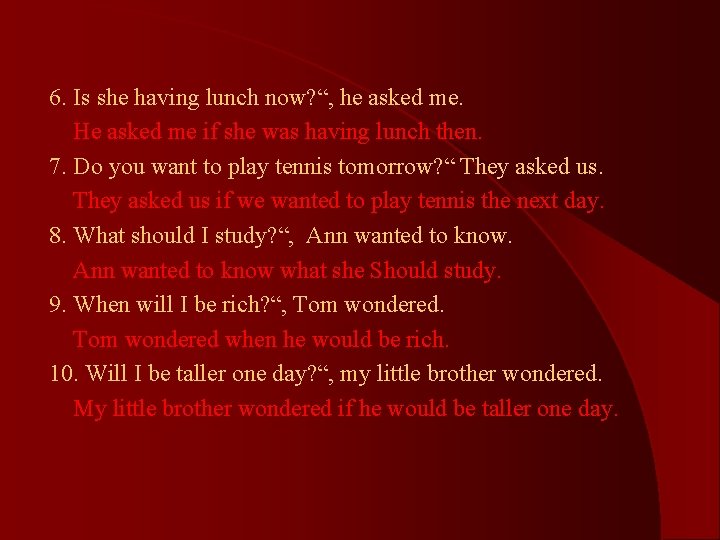
6. Is she having lunch now? “, he asked me. He asked me if she was having lunch then. 7. Do you want to play tennis tomorrow? “ They asked us if we wanted to play tennis the next day. 8. What should I study? “, Ann wanted to know what she Should study. 9. When will I be rich? “, Tom wondered when he would be rich. 10. Will I be taller one day? “, my little brother wondered. My little brother wondered if he would be taller one day.
III Change the following questions into the Reported Speech. 1. Christopher: "Do you want to dance? " Christopher asked me if I wanted to dance. 2. Betty: "When did you come? „ Betty wanted to know when I had come. 3. Mark: "Has John arrived? „ Mark asked if John had arrived. 4. Ronald: "Where does Maria park her car? „ Ronald wanted to know where Maria parked her car. 5. Elisabeth: "Did you watch the latest film? „ Elisabeth asked him if he had watched the latest film.
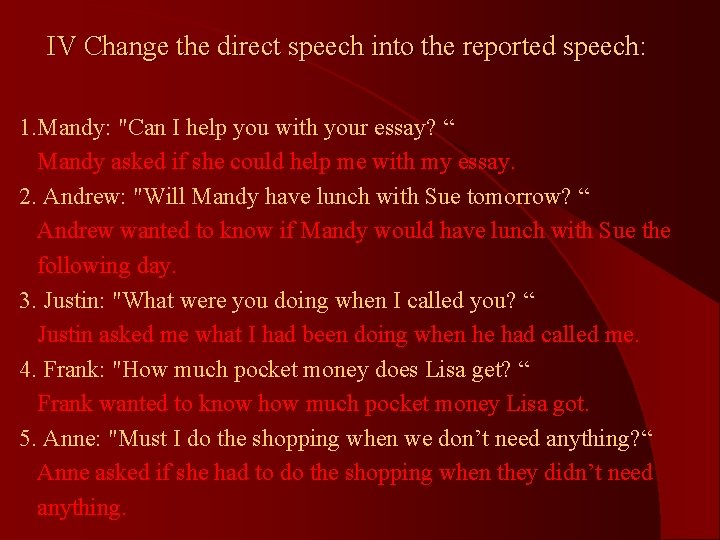
IV Change the direct speech into the reported speech: 1. Mandy: "Can I help you with your essay? “ Mandy asked if she could help me with my essay. 2. Andrew: "Will Mandy have lunch with Sue tomorrow? “ Andrew wanted to know if Mandy would have lunch with Sue the following day. 3. Justin: "What were you doing when I called you? “ Justin asked me what I had been doing when he had called me. 4. Frank: "How much pocket money does Lisa get? “ Frank wanted to know how much pocket money Lisa got. 5. Anne: "Must I do the shopping when we don’t need anything? “ Anne asked if she had to do the shopping when they didn’t need anything.