
REPORTED SPEECH MARC ROVIRA AND DANIEL MUOZDELGADO Reported
- Slides: 14
REPORTED SPEECH MARC ROVIRA AND DANIEL MUÑOZ-DELGADO
Reported Speech (also called Indirect Speech) is used to communicate what someone else said, think or believe, but without using the exact words.
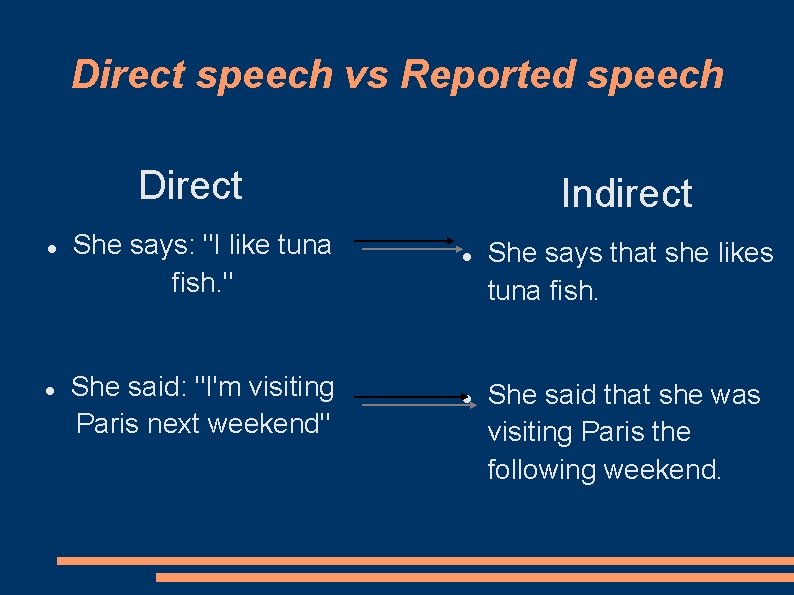
Direct speech vs Reported speech Direct Indirect She says: "I like tuna fish. " She said: "I'm visiting Paris next weekend" She says that she likes tuna fish. She said that she was visiting Paris the following weekend.
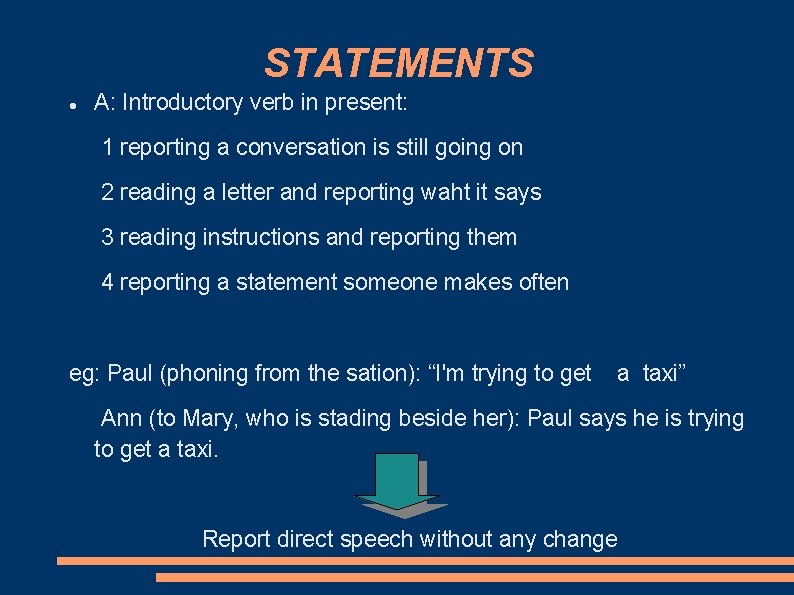
STATEMENTS A: Introductory verb in present: 1 reporting a conversation is still going on 2 reading a letter and reporting waht it says 3 reading instructions and reporting them 4 reporting a statement someone makes often eg: Paul (phoning from the sation): “I'm trying to get a taxi” Ann (to Mary, who is stading beside her): Paul says he is trying to get a taxi. Report direct speech without any change
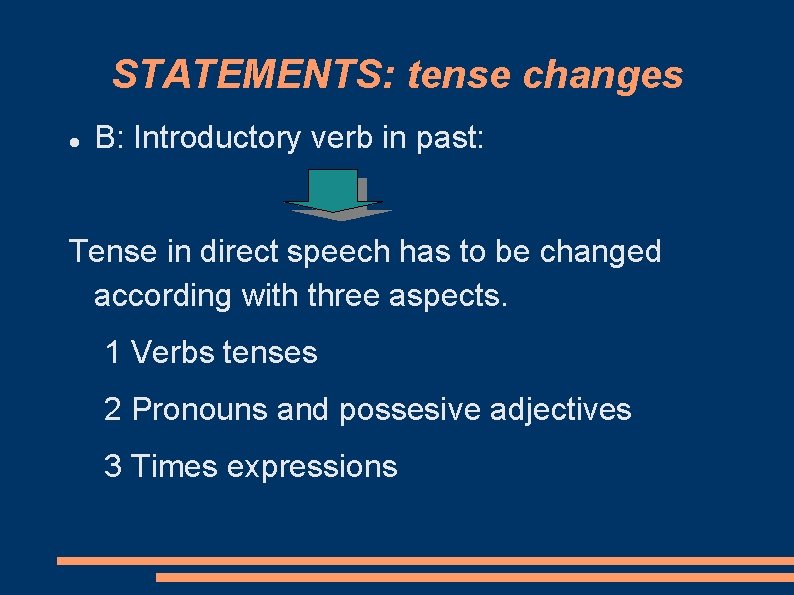
STATEMENTS: tense changes B: Introductory verb in past: Tense in direct speech has to be changed according with three aspects. 1 Verbs tenses 2 Pronouns and possesive adjectives 3 Times expressions
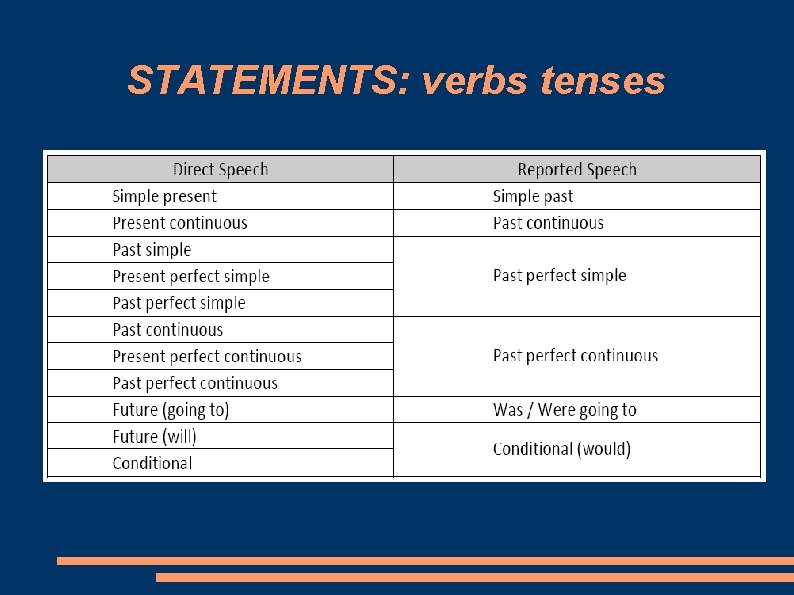
STATEMENTS: verbs tenses
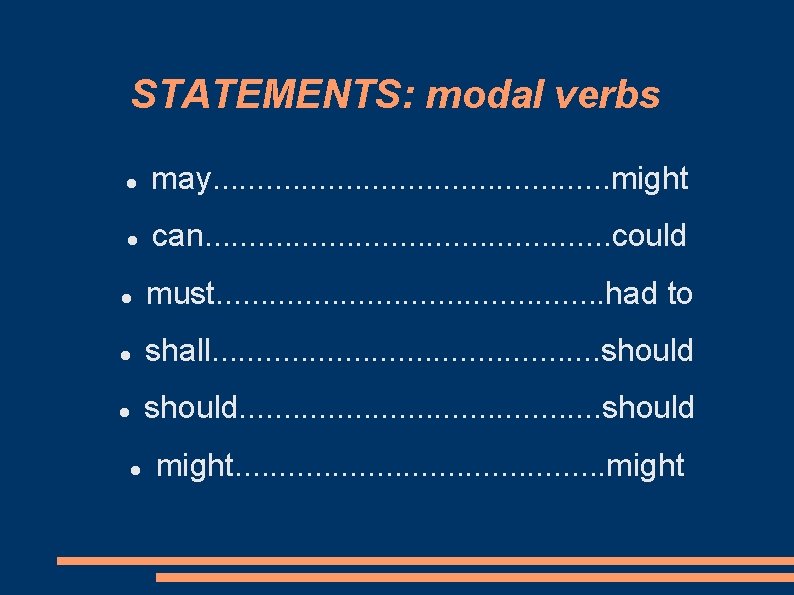
STATEMENTS: modal verbs may. . . might can. . . could must. . . had to shall. . . should. . . . . should might. . . . . might
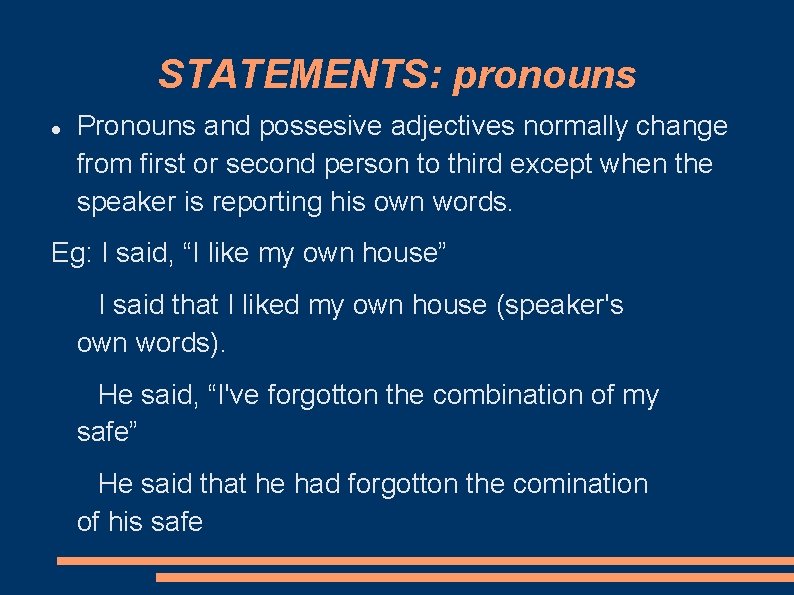
STATEMENTS: pronouns Pronouns and possesive adjectives normally change from first or second person to third except when the speaker is reporting his own words. Eg: I said, “I like my own house” I said that I liked my own house (speaker's own words). He said, “I've forgotton the combination of my safe” He said that he had forgotton the comination of his safe
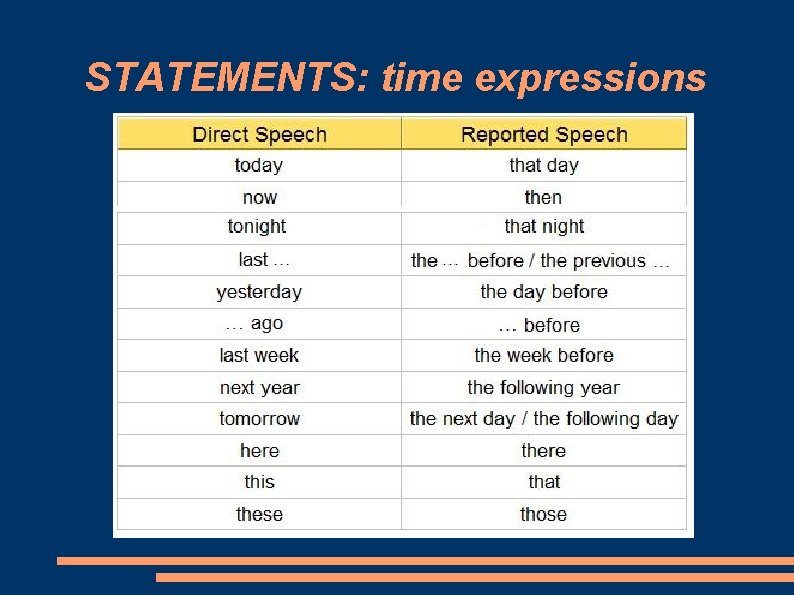
STATEMENTS: time expressions
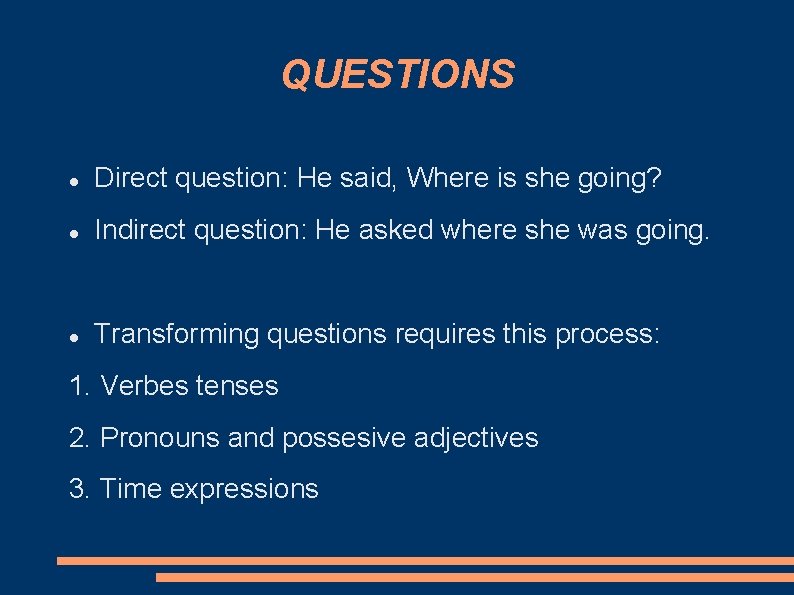
QUESTIONS Direct question: He said, Where is she going? Indirect question: He asked where she was going. Transforming questions requires this process: 1. Verbes tenses 2. Pronouns and possesive adjectives 3. Time expressions
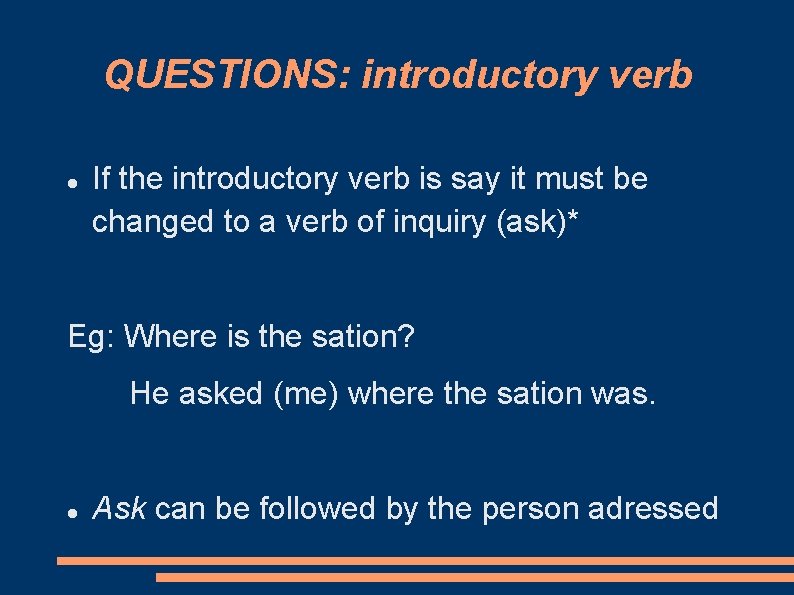
QUESTIONS: introductory verb If the introductory verb is say it must be changed to a verb of inquiry (ask)* Eg: Where is the sation? He asked (me) where the sation was. Ask can be followed by the person adressed
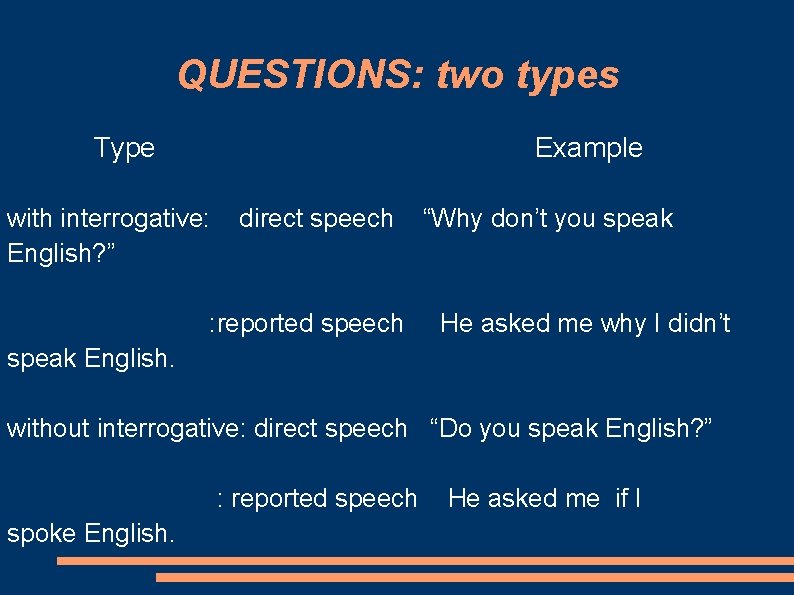
QUESTIONS: two types Type Example with interrogative: English? ” direct speech : reported speech “Why don’t you speak He asked me why I didn’t speak English. without interrogative: direct speech “Do you speak English? ” : reported speech spoke English. He asked me if I
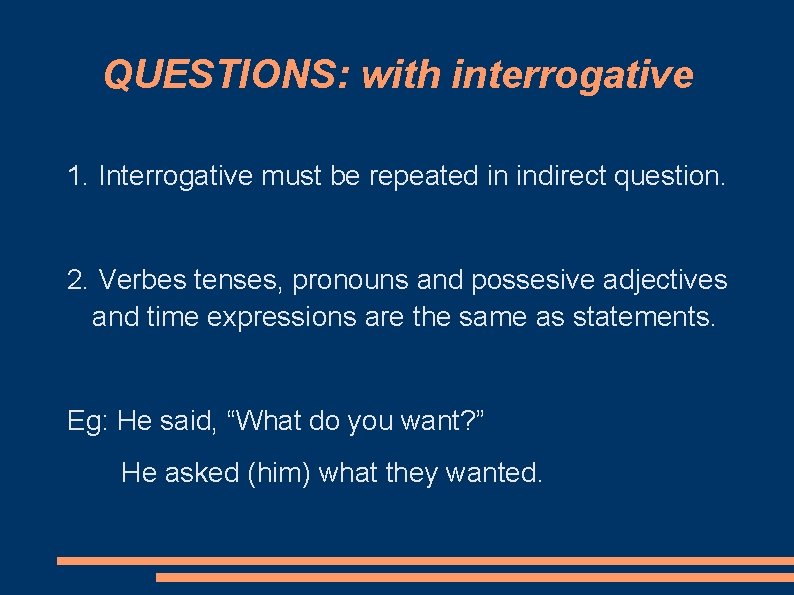
QUESTIONS: with interrogative 1. Interrogative must be repeated in indirect question. 2. Verbes tenses, pronouns and possesive adjectives and time expressions are the same as statements. Eg: He said, “What do you want? ” He asked (him) what they wanted.
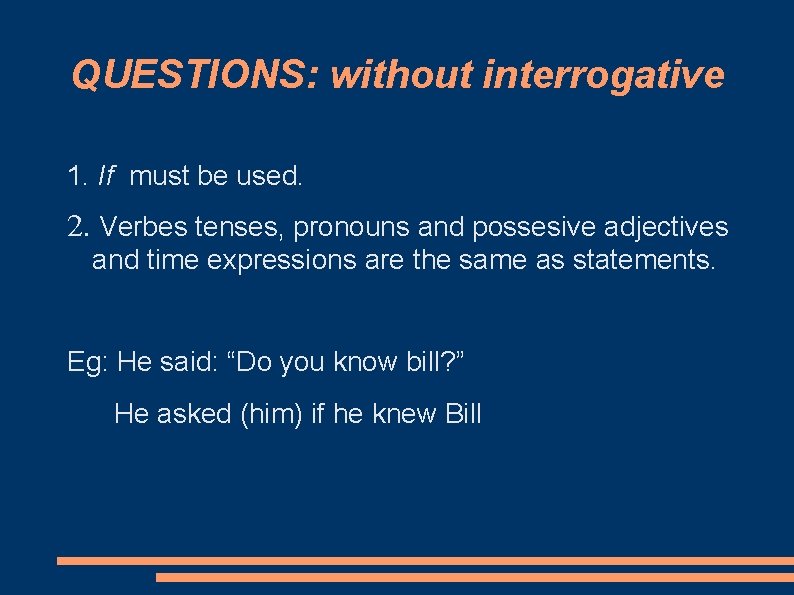
QUESTIONS: without interrogative 1. If must be used. 2. Verbes tenses, pronouns and possesive adjectives and time expressions are the same as statements. Eg: He said: “Do you know bill? ” He asked (him) if he knew Bill