
Replication Transcription and Translation Warm Up Base Pairing
Replication, Transcription and Translation
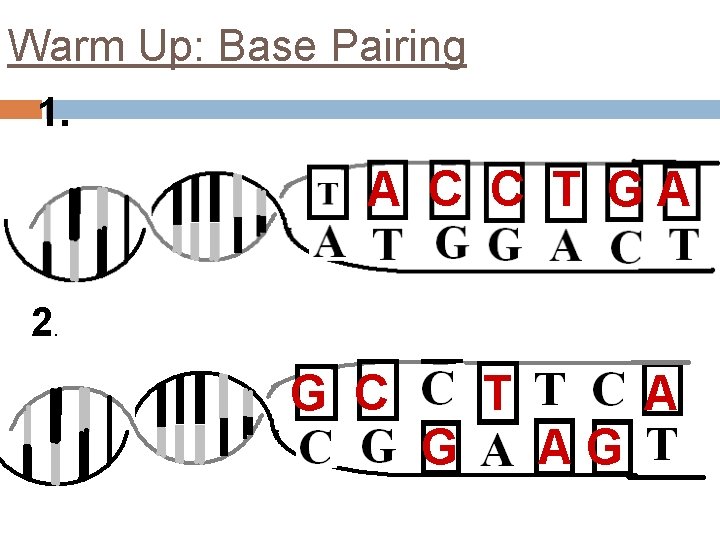
Warm Up: Base Pairing 1. A C C T GA 2. G C T G A AG
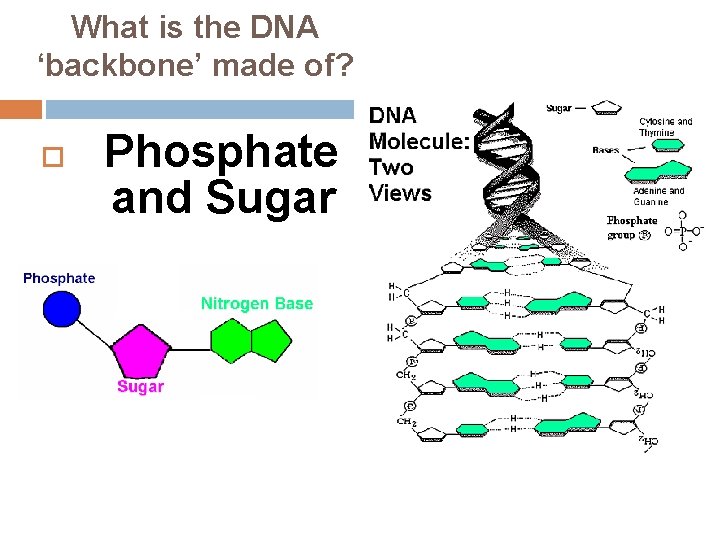
What is the DNA ‘backbone’ made of? Phosphate and Sugar
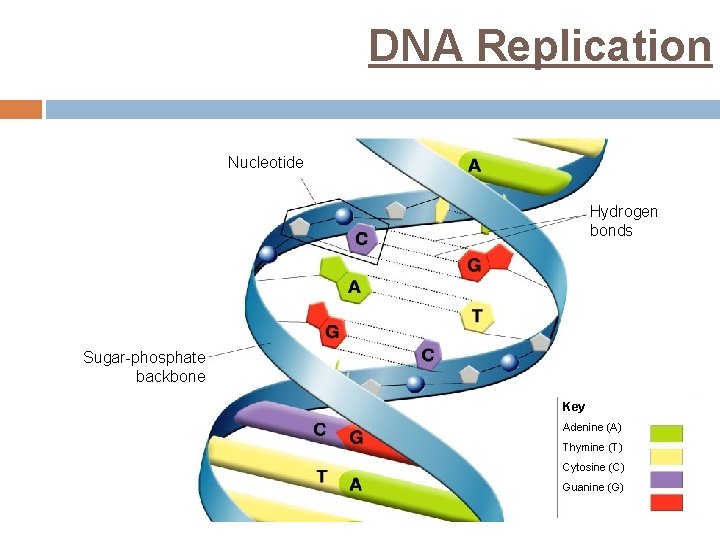
DNA Replication Nucleotide Hydrogen bonds Sugar-phosphate backbone Key Adenine (A) Thymine (T) Cytosine (C) Guanine (G)
What is DNA replication? Making a copy of DNA Why is DNA replication important for cells and multicellular organisms? Replication allows cells to divide Forming cells that are genetically identical to the original
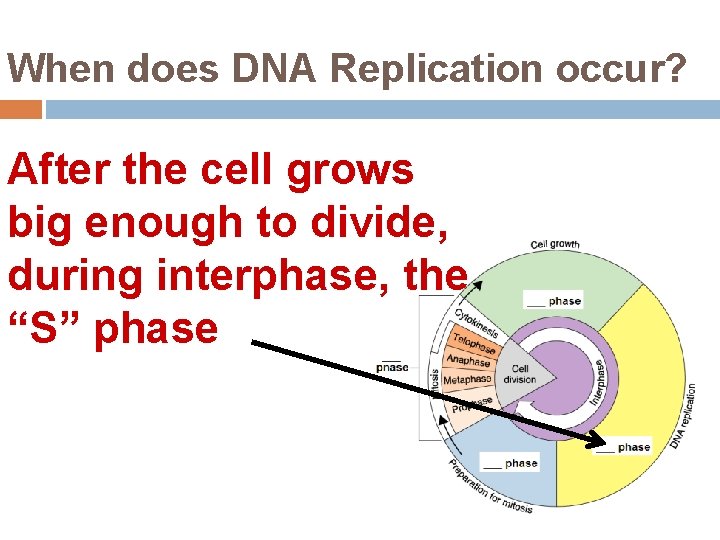
When does DNA Replication occur? After the cell grows big enough to divide, during interphase, the “S” phase
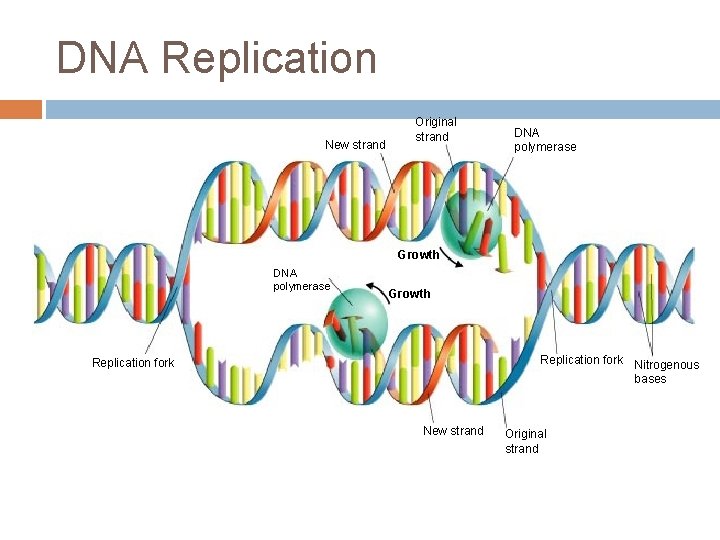
DNA Replication New strand Original strand DNA polymerase Growth Replication fork Nitrogenous bases Replication fork New strand Original strand
Important Enzyme #1 Helicase Unwinds DNA at the replication fork.
Important Enzyme #2 DNA Polymerase Principal enzyme in DNA replication; adds nucleotides to growing strand of DNA and proofreads new strand of DNA
Steps in DNA Replication 1. Helicase enzyme breaks the hydrogen bonds between base pairs. This unzips the double helix at a position called the replication fork. 2. There is an abundant supply of nucleotides in the nucleus for the formation of the new polynucleotides. 3. Nucleotides base pair to the bases in the original strands with hydrogen bonds. 4. DNA polymerase joins together the nucleotides together with strong covalent bonds to form a new complementary polynucleotide strand. 5. The double strand reforms a double helix. 6. Two copies of the DNA molecule form behind the replication fork. These are the new daughter chromosomes.
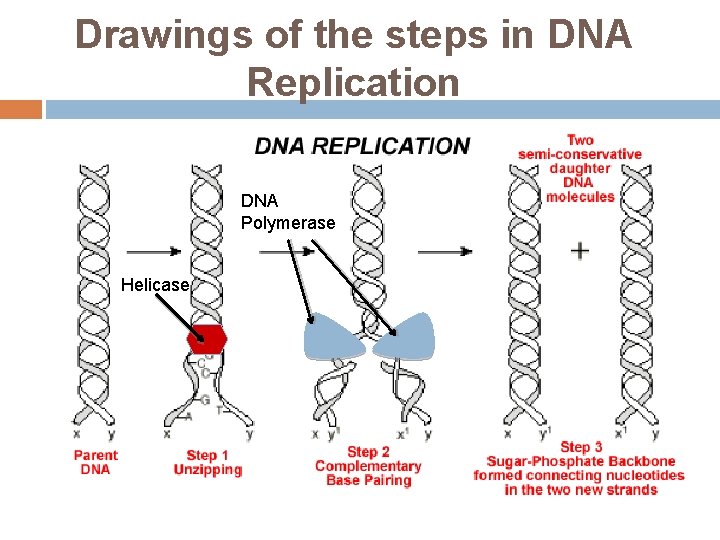
Drawings of the steps in DNA Replication DNA Polymerase Helicase
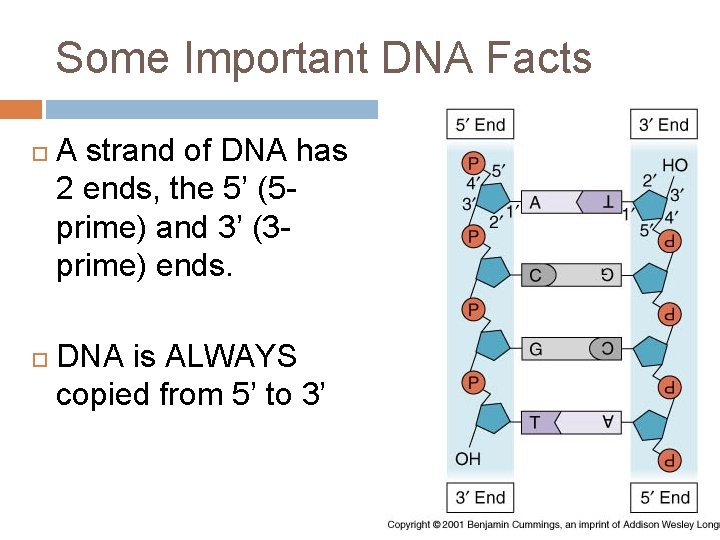
Some Important DNA Facts A strand of DNA has 2 ends, the 5’ (5 prime) and 3’ (3 prime) ends. DNA is ALWAYS copied from 5’ to 3’
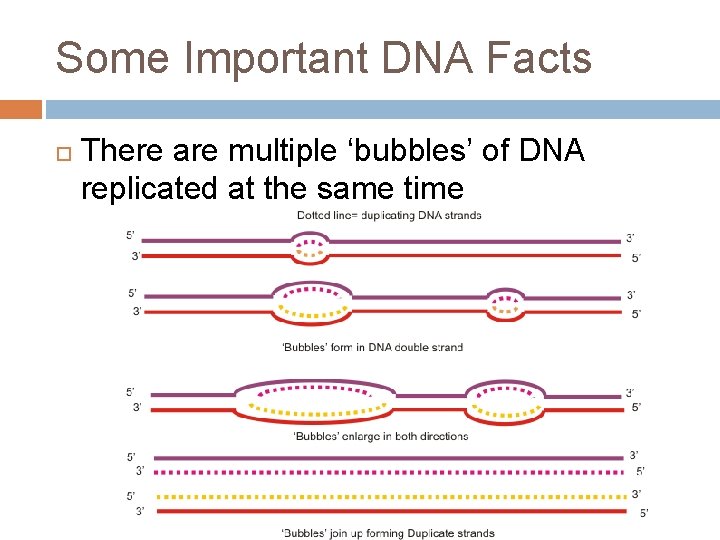
Some Important DNA Facts There are multiple ‘bubbles’ of DNA replicated at the same time
What is ‘semi-conservative’ replication? In the new DNA created, one strand is from the original, and one is a new one. Semi = part of Conserve = save Why is ‘semi-conservative’ important? The DNA is copied EXACTLY generation to generation
RNA Where is DNA stored? Nucleus ___________ What organelle makes proteins? Ribosomes ___________ Where are proteins made? Cytoplasm ___________
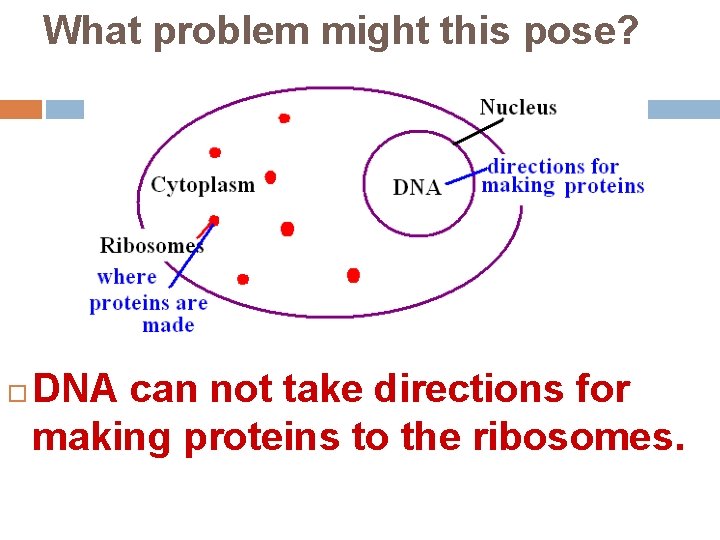
What problem might this pose? DNA can not take directions for making proteins to the ribosomes.
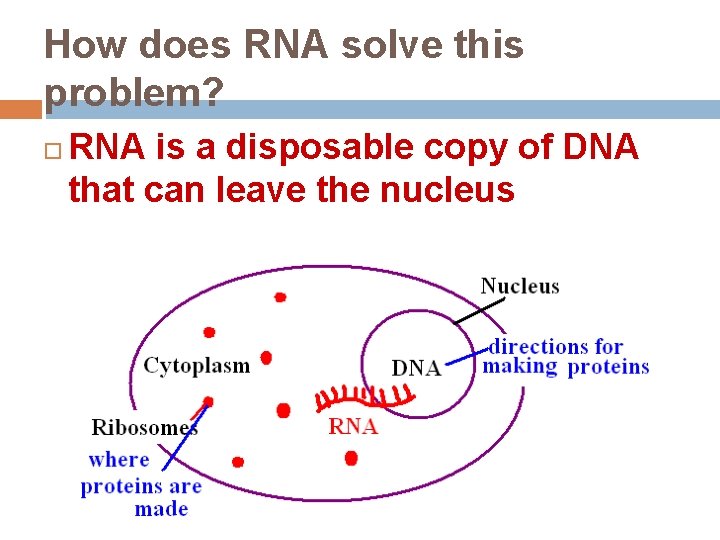
How does RNA solve this problem? RNA is a disposable copy of DNA that can leave the nucleus
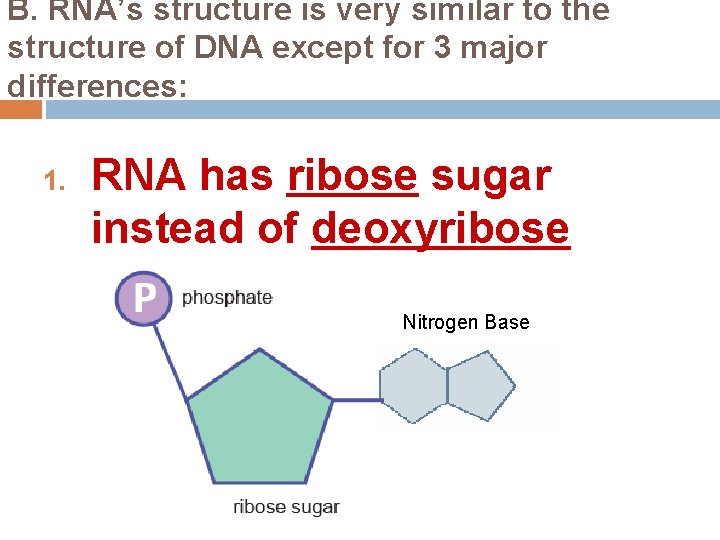
B. RNA’s structure is very similar to the structure of DNA except for 3 major differences: 1. RNA has ribose sugar instead of deoxyribose Nitrogen Base
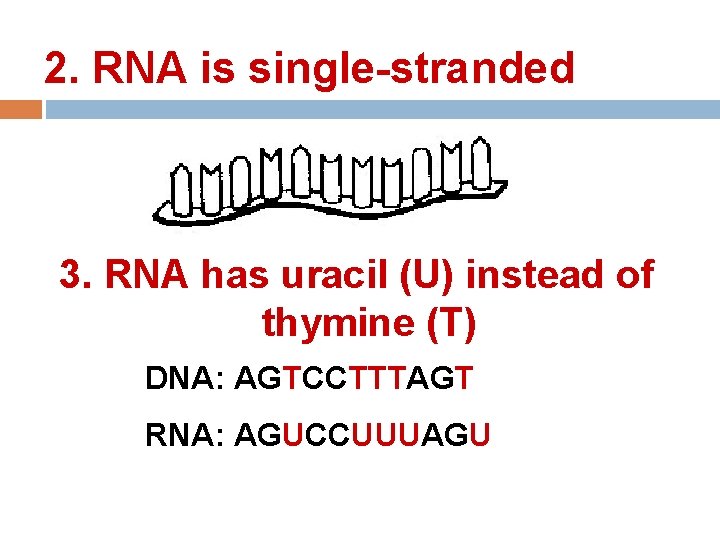
2. RNA is single-stranded 3. RNA has uracil (U) instead of thymine (T) DNA: AGTCCTTTAGT RNA: AGUCCUUUAGU
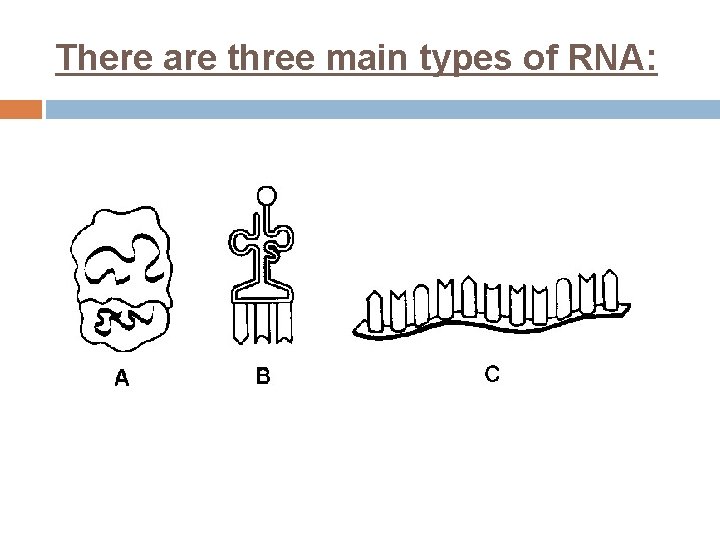
There are three main types of RNA:
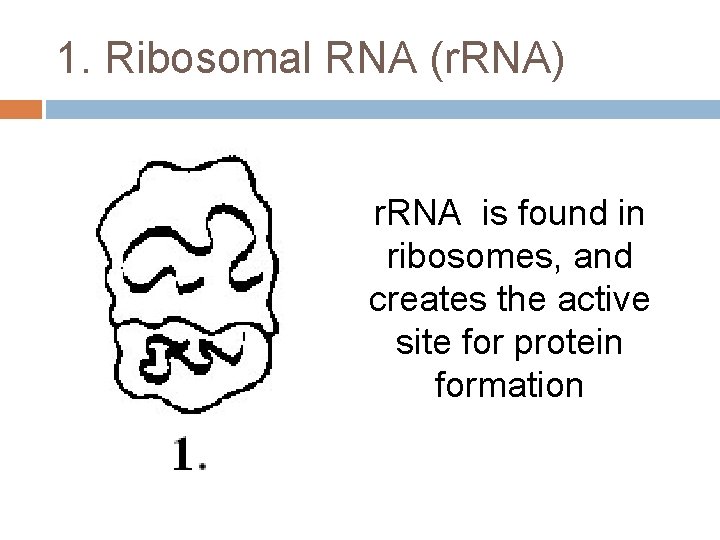
1. Ribosomal RNA (r. RNA) r. RNA is found in ribosomes, and creates the active site for protein formation
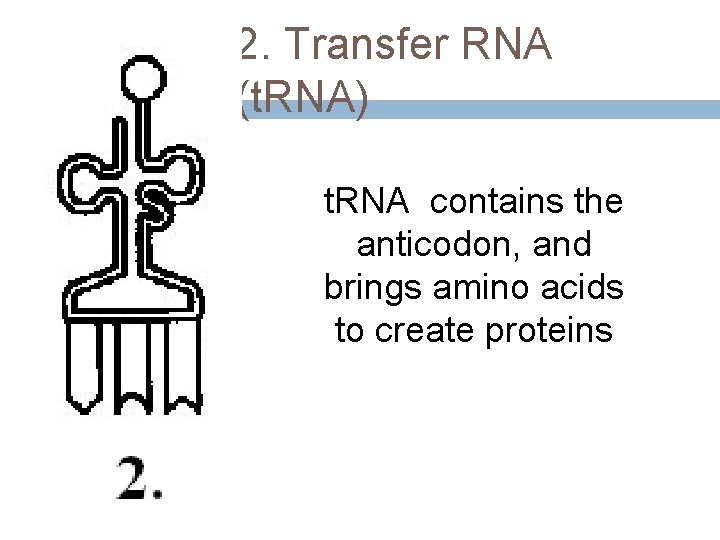
2. Transfer RNA (t. RNA) t. RNA contains the anticodon, and brings amino acids to create proteins
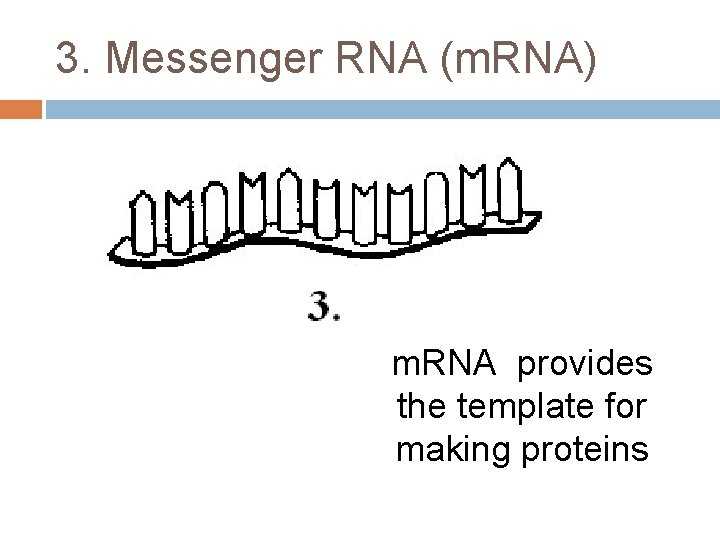
3. Messenger RNA (m. RNA) m. RNA provides the template for making proteins
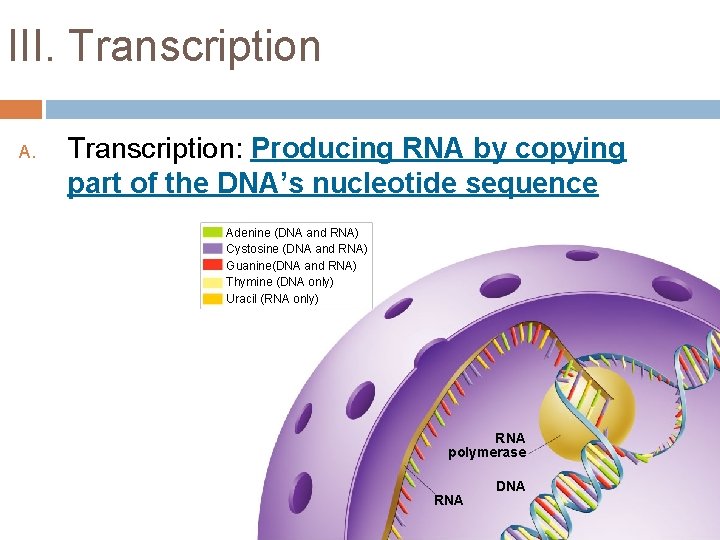
III. Transcription A. Transcription: Producing RNA by copying part of the DNA’s nucleotide sequence Adenine (DNA and RNA) Cystosine (DNA and RNA) Guanine(DNA and RNA) Thymine (DNA only) Uracil (RNA only) RNA polymerase RNA DNA
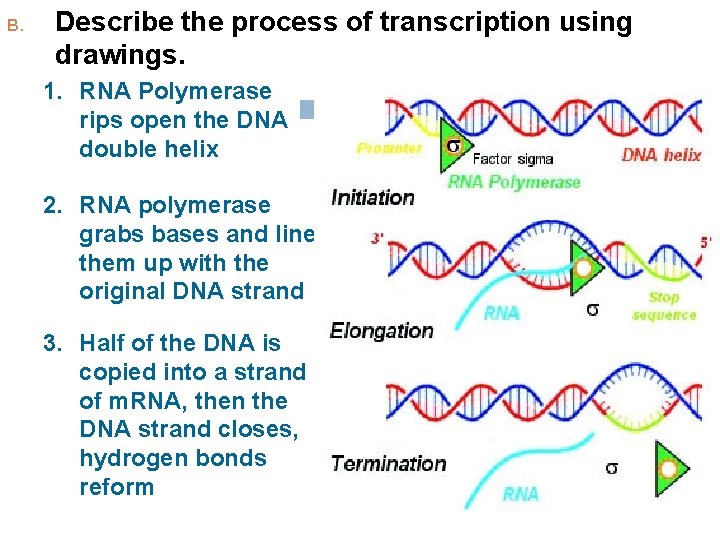
B. Describe the process of transcription using drawings. 1. RNA Polymerase rips open the DNA double helix 2. RNA polymerase grabs bases and lines them up with the original DNA strand 3. Half of the DNA is copied into a strand of m. RNA, then the DNA strand closes, hydrogen bonds reform
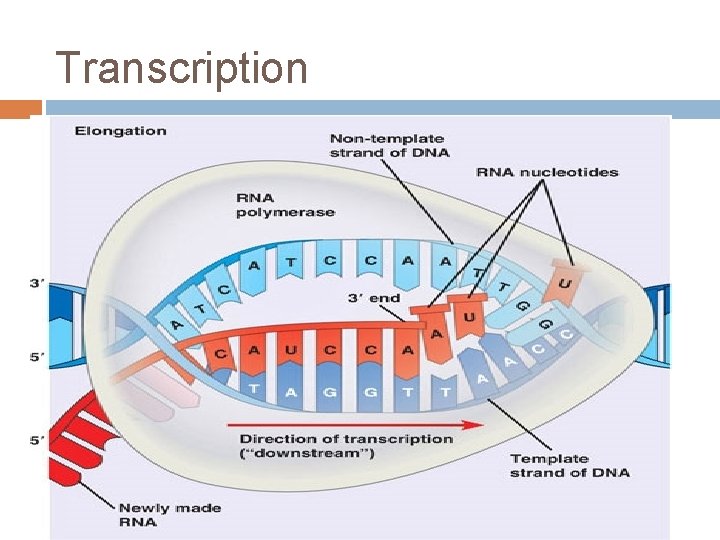
Transcription
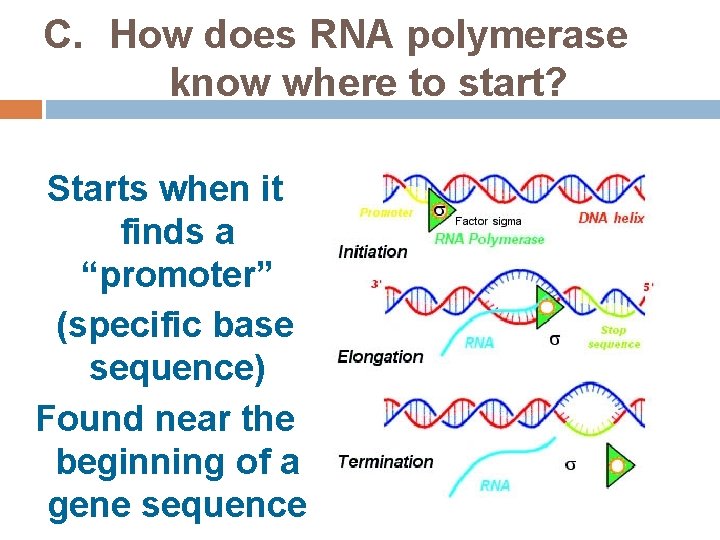
C. How does RNA polymerase know where to start? Starts when it finds a “promoter” (specific base sequence) Found near the beginning of a gene sequence
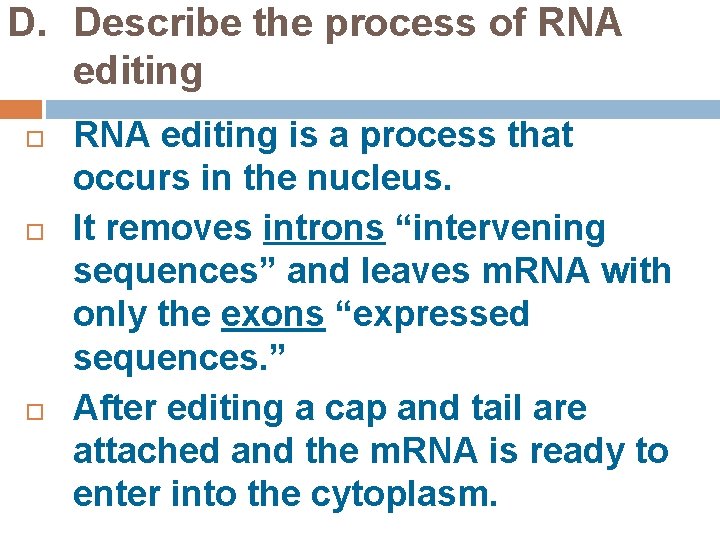
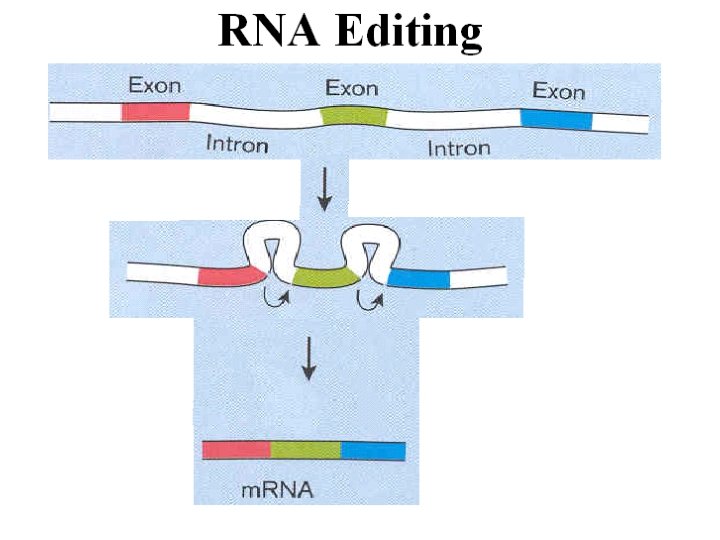
D. Describe the process of RNA editing is a process that occurs in the nucleus. It removes introns “intervening sequences” and leaves m. RNA with only the exons “expressed sequences. ” After editing a cap and tail are attached and the m. RNA is ready to enter into the cytoplasm.
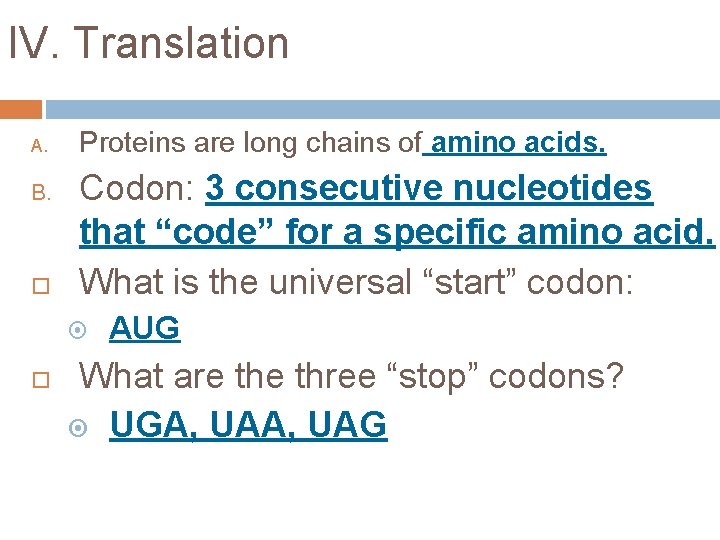
IV. Translation A. B. Proteins are long chains of amino acids. Codon: 3 consecutive nucleotides that “code” for a specific amino acid. What is the universal “start” codon: AUG What are three “stop” codons? UGA, UAG
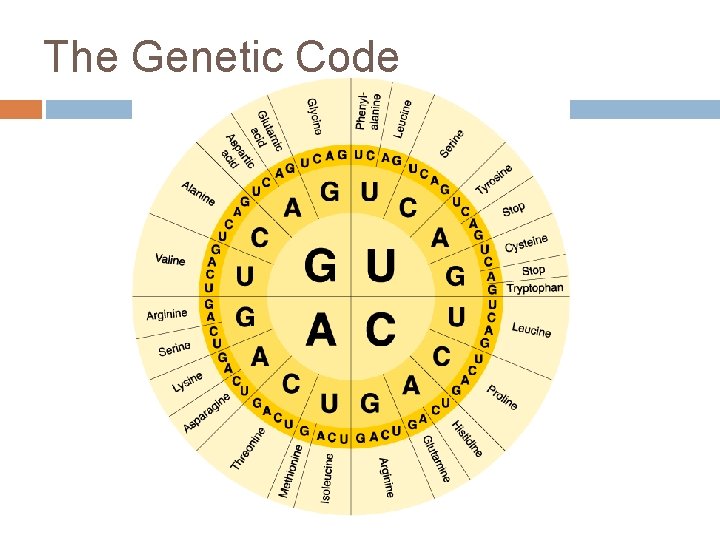
The Genetic Code
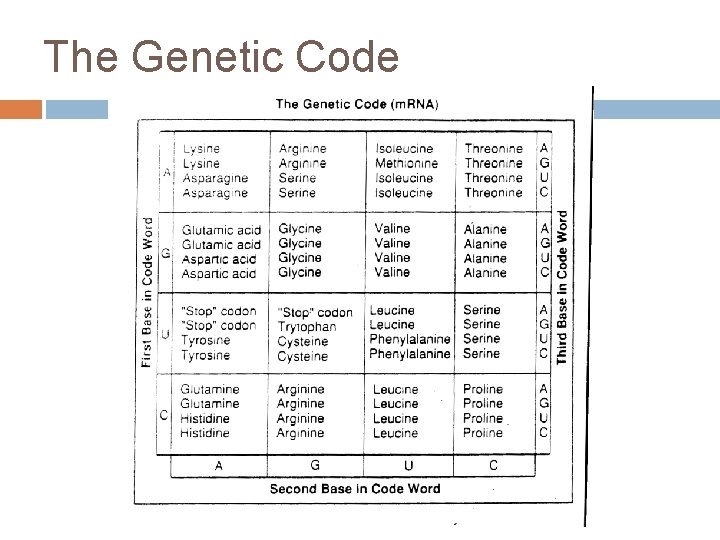
The Genetic Code
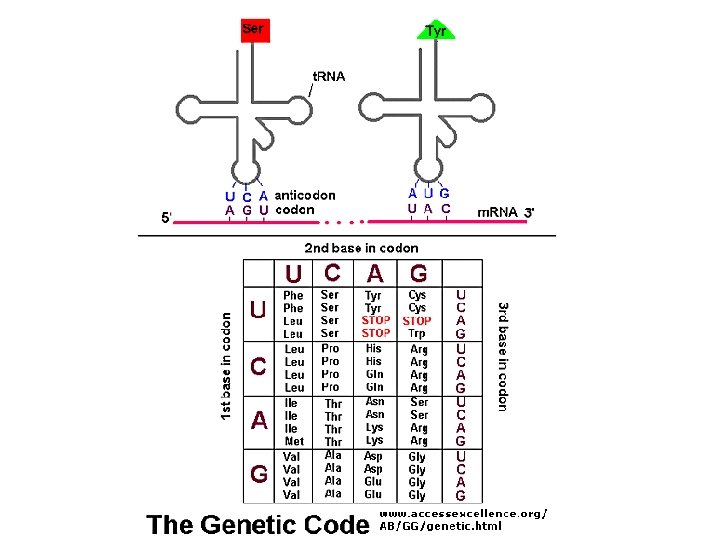
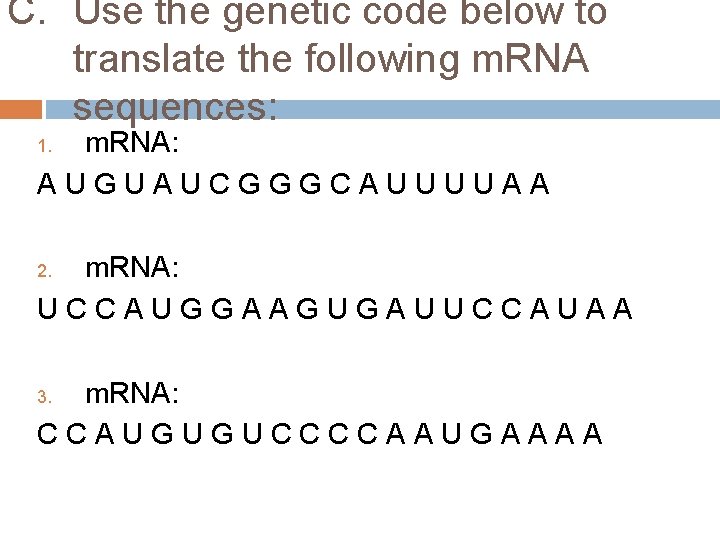
C. Use the genetic code below to translate the following m. RNA sequences: m. RNA: AUGUAUCGGGCAUUUUAA 1. m. RNA: UCCAUGGAAGUGAUUCCAUAA 2. m. RNA: CCAUGUGUCCCCAAUGAAAA 3.
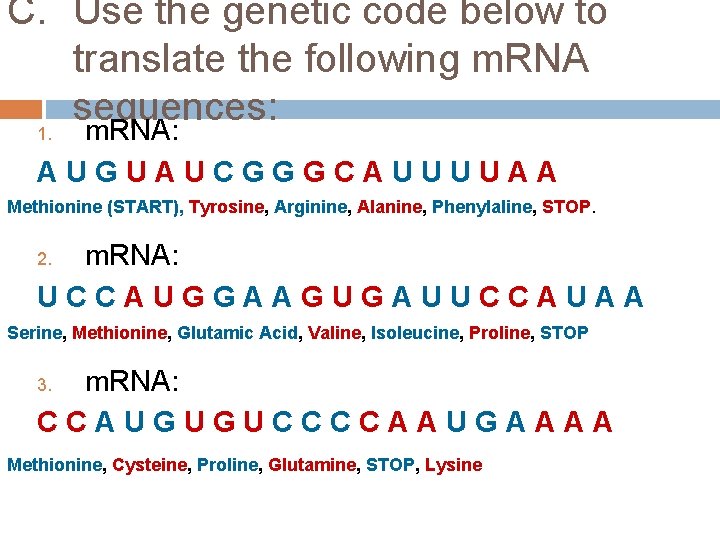
C. Use the genetic code below to translate the following m. RNA sequences: 1. m. RNA: AUGUAUCGGGCAUUUUAA Methionine (START), Tyrosine, Arginine, Alanine, Phenylaline, STOP. m. RNA: UCCAUGGAAGUGAUUCCAUAA 2. Serine, Methionine, Glutamic Acid, Valine, Isoleucine, Proline, STOP m. RNA: CCAUGUGUCCCCAAUGAAAA 3. Methionine, Cysteine, Proline, Glutamine, STOP, Lysine
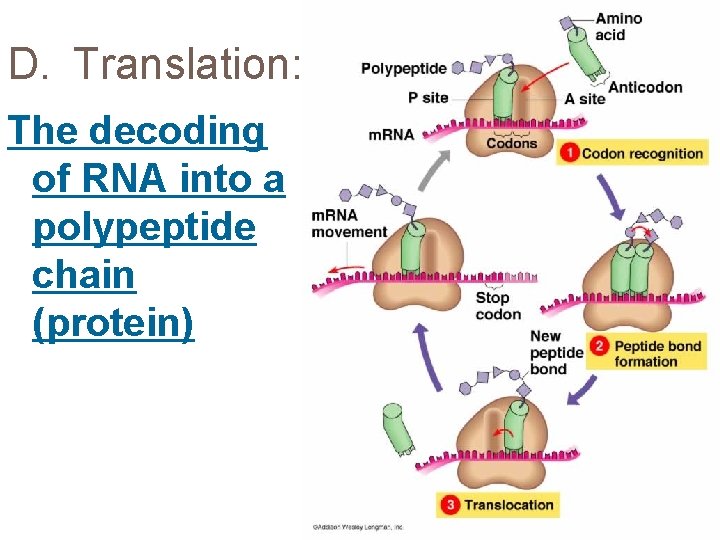
D. Translation: The decoding of RNA into a polypeptide chain (protein)
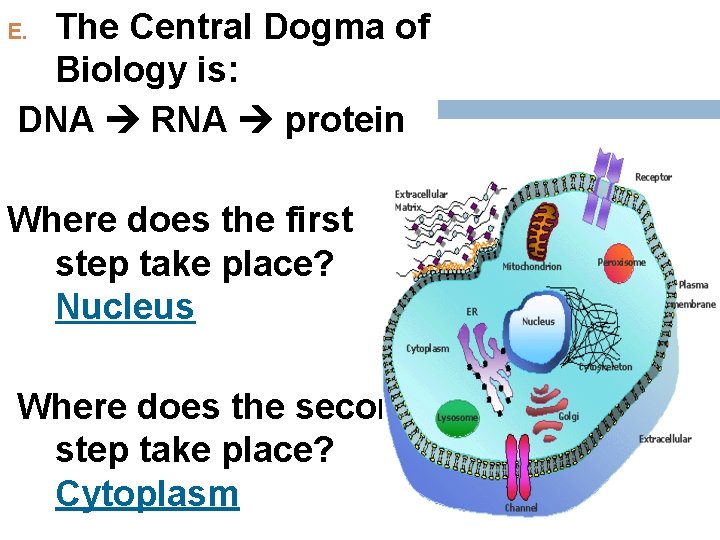
The Central Dogma of Biology is: DNA RNA protein E. Where does the first step take place? Nucleus Where does the second step take place? Cytoplasm
F. What is the job of t. RNA during translation? Bringing amino acids to the ribosomes and match them up with the correct base on m. RNA. What is an anticodon? The three bases on a t. RNA that match with the m. RNA codons. G. What is the role of the ribosome during translation? It is the site of protein assembly
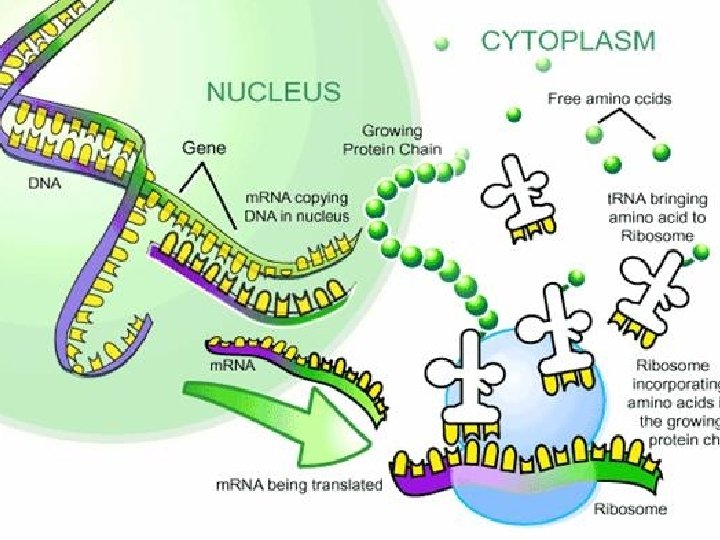
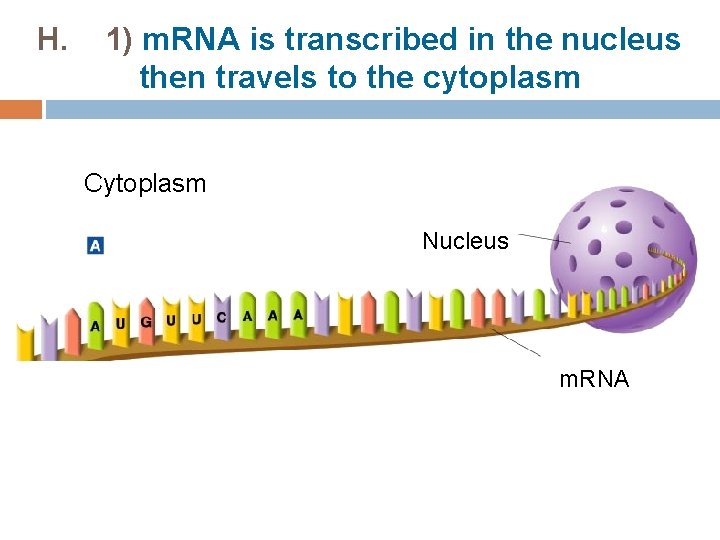
H. 1) m. RNA is transcribed in the nucleus then travels to the cytoplasm Cytoplasm Nucleus m. RNA

2) Ribosome grabs m. RNA. t. RNA brings amino acids to the ribosome Phenylalanine Lysine (amino acid) t. RNA Methionine Ribosome m. RNA Start codon Cytoplasm
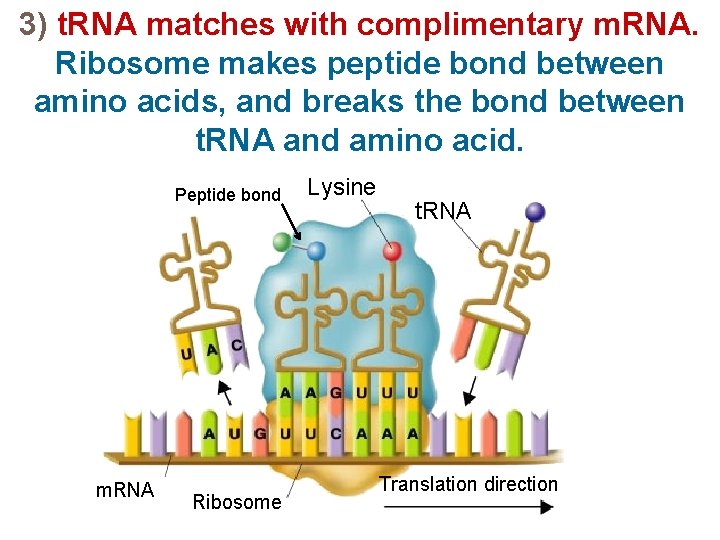
3) t. RNA matches with complimentary m. RNA. Ribosome makes peptide bond between amino acids, and breaks the bond between t. RNA and amino acid. Peptide bond m. RNA Ribosome Lysine t. RNA Translation direction
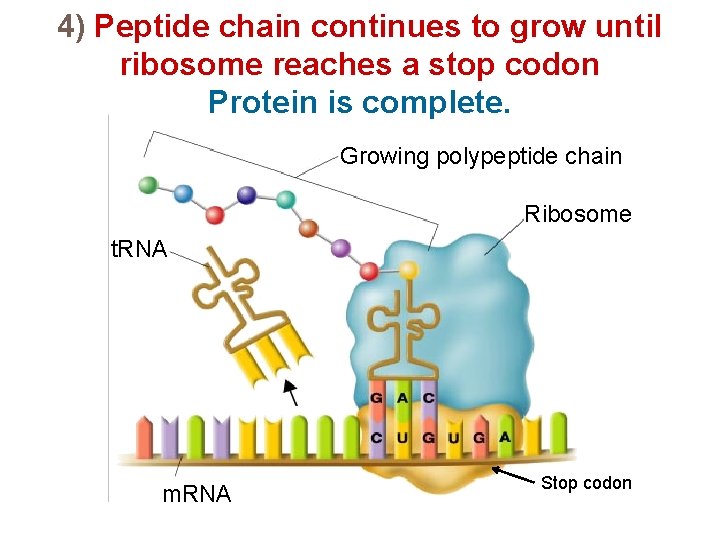
4) Peptide chain continues to grow until ribosome reaches a stop codon Protein is complete. Growing polypeptide chain Ribosome t. RNA m. RNA Stop codon
- Slides: 43