
Replication of DNA Notes Animations Cell Cycle n
- Slides: 21
Replication of DNA Notes & Animations
Cell Cycle n n G 1: Growth S: Synthesis of DNA (Replication) G 2: Growth, preparation of organelle for mitosis M: Mitosis
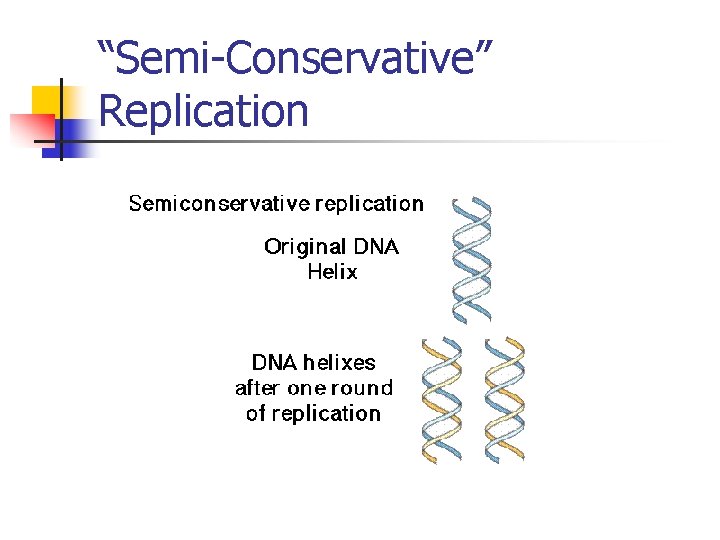
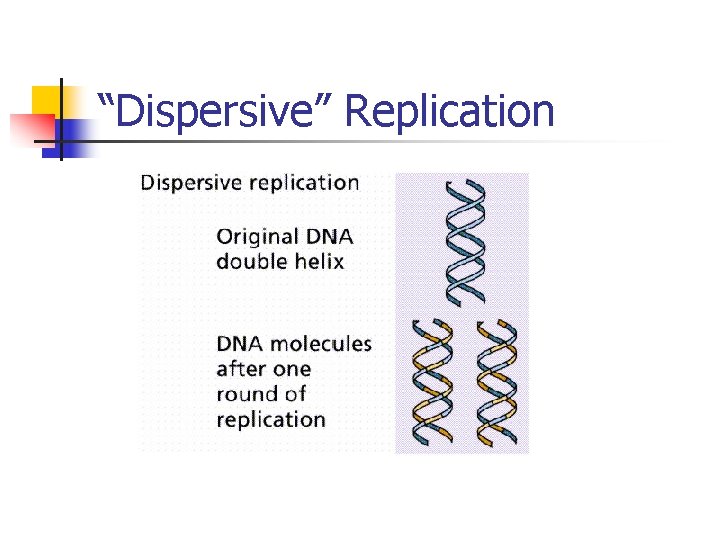
How does DNA Replicate? n Meselson and Stahl’s experiment: n n n Hypothesis 1: “conservative” replication Hypothesis 2: “semi-conservative” replication Hypothesis 3: “dispersive” replication
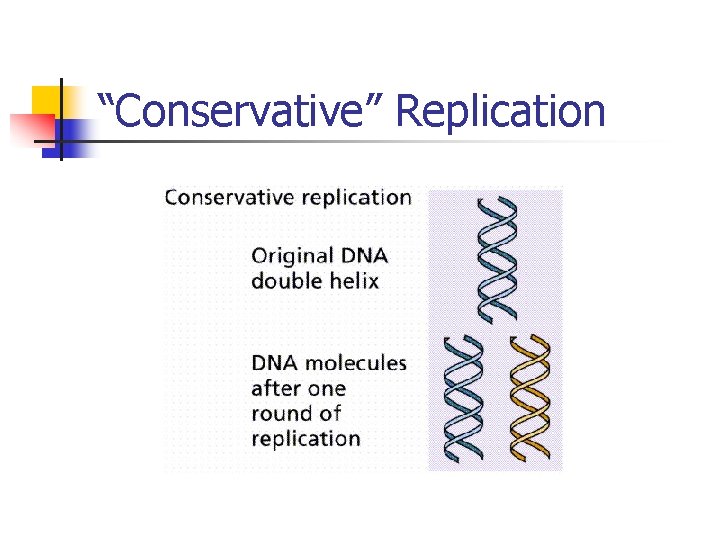
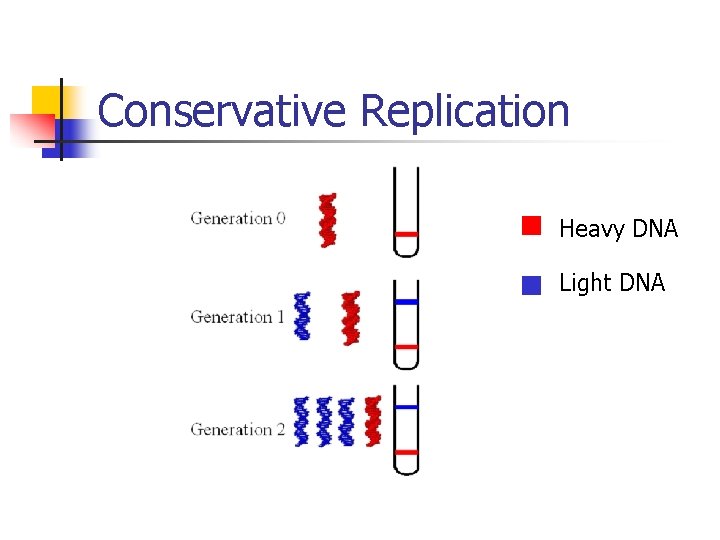
“Conservative” Replication
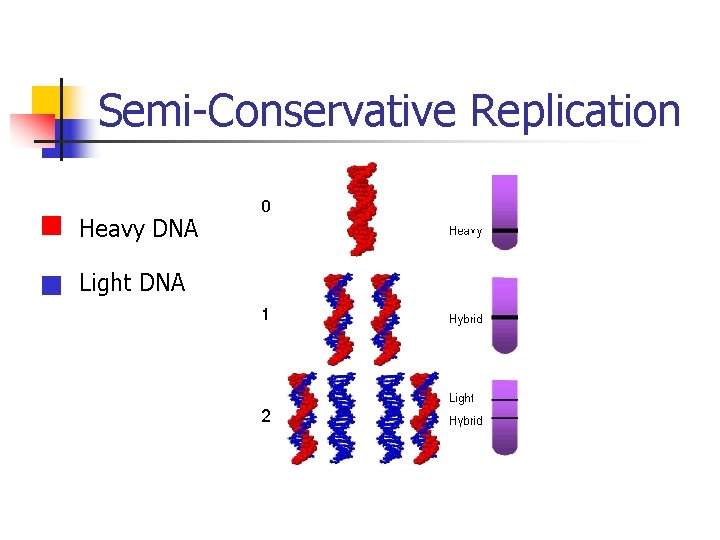
“Semi-Conservative” Replication
“Dispersive” Replication
Method n n n E. coli grown in 15 N (heavy Nitrogen) medium. Allowed to reproduce for 17 generations. (Makes all DNA heavy. ) Then, transferred to 14 N media & allowed to reproduce again (New DNA will be light) Centrifuged (spun) so that “heavy” DNA sinks to bottom, “light” DNA stays on top.
Predictions n “Conservative” Replication: n After 1 replication, 2 distinct bands n n original “heavy” DNA at bottom, new “light” DNA on top After 2 replications, same 2 bands, but more DNA in “light” band
Conservative Replication Heavy DNA Light DNA
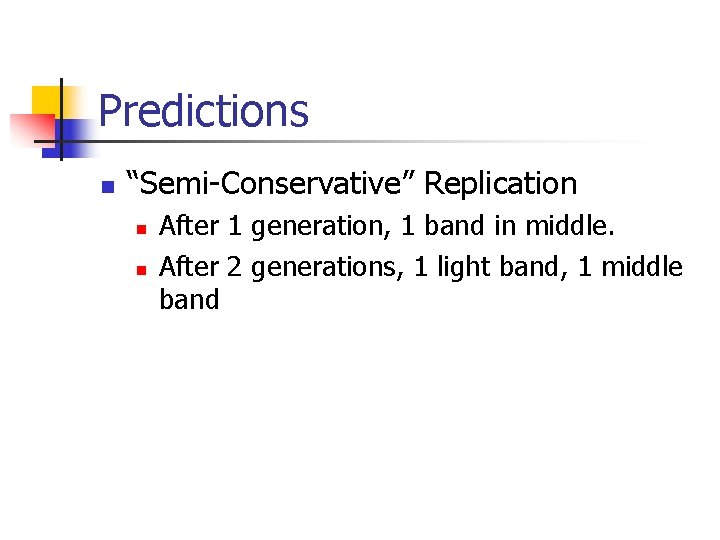
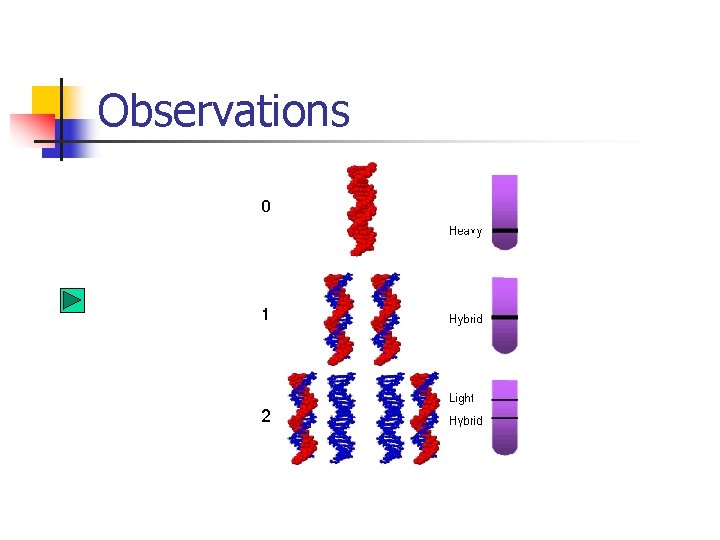
Predictions n “Semi-Conservative” Replication n n After 1 generation, 1 band in middle. After 2 generations, 1 light band, 1 middle band
Semi-Conservative Replication Heavy DNA Light DNA
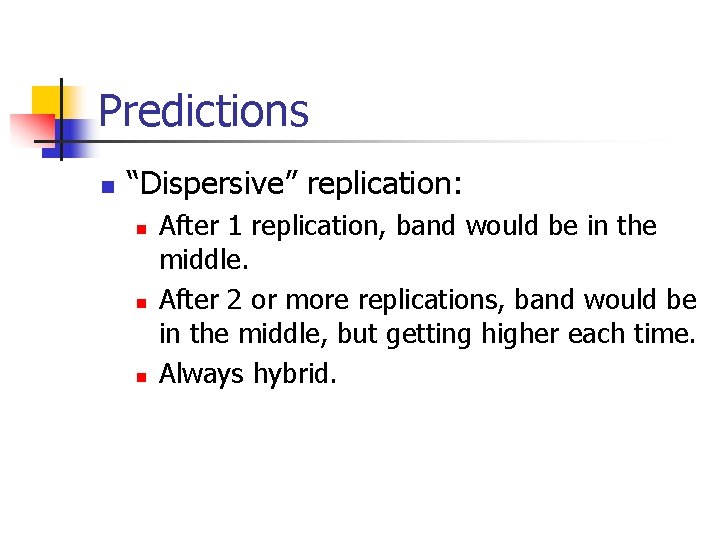
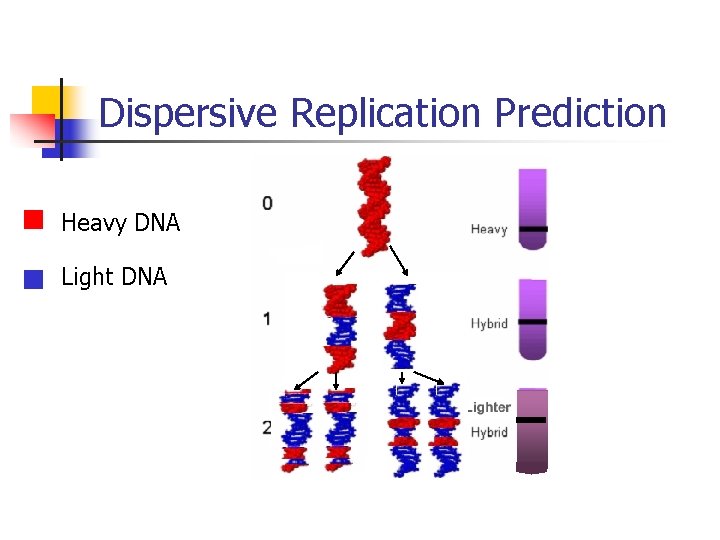
Predictions n “Dispersive” replication: n n n After 1 replication, band would be in the middle. After 2 or more replications, band would be in the middle, but getting higher each time. Always hybrid.
Dispersive Replication Prediction Heavy DNA Light DNA
Observations
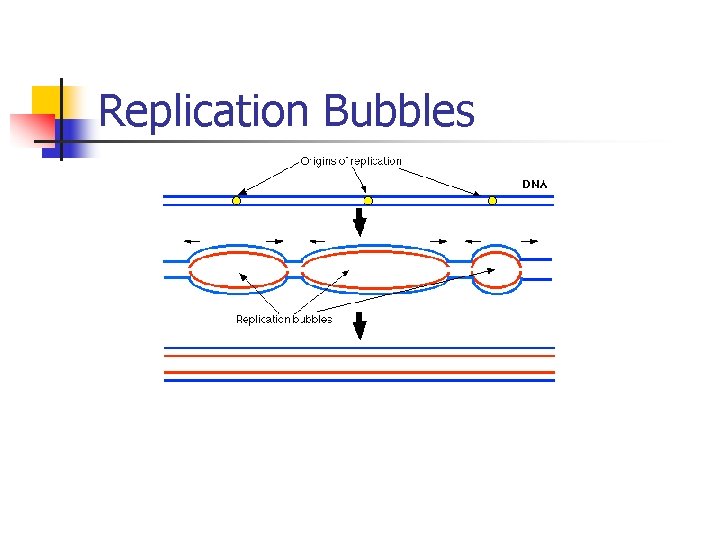
Now we know… n Replication consists of 3 steps: n Initiation: n n n DNA helicase unwinds double helix by breaking H-bonds Proteins hold DNA apart (if not, DNA would reanneal – stick back together) Replication begins in 2 directions from many origins in eukaryotes – speeds up process
Replication Bubbles
Replication: Step 2 n Elongation: n n Requires 4 more enzymes (eukaryotes) Primase n n Makes RNA primer DNA polymerase III n n Can’t start from nothing – attaches to primer Moves in a 5’ to 3’ direction continuously (adds nucleotides to 3’C)
Uh oh, what about 3’ 5’? n Made in short fragments called Okazaki fragments n n n Consist of RNA primer, then DNA polymerase adds a short sequence, then start over Called the “lagging” strand 5’ 3’ called the “leading” strand
Elongation, continued… n DNA polymerase I n n Replaces RNA primers with DNA nucleotides and proofreads the new strand DNA ligase n Joins Okazaki fragments together
Proofreading n n When mistake is found, it is cut out and replaced with correct base (Pol I) Errors missed at a rate of 1/billion bases!
Step 3 of Replication n Termination n n Helix re-anneals automatically. Note: strands can’t be fully finished because DNA polymerase I cannot replace the primers at the ends of the DNA. n Ends of chromosomes are stretches of repetitive “junk” DNA called Telomeres n n Telomeres extended by telomerase (expressed during meiosis, and by cancerous cells) Chromosomes lose about 100 bases from this telomeric region every replication