
Replication of DNA Notes Animations Cell Cycle n
- Slides: 13
Replication of DNA Notes & Animations
Cell Cycle n n G 1: Growth S: Synthesis of DNA (Replication) G 2: Growth, preparation of organelle for mitosis M: Mitosis
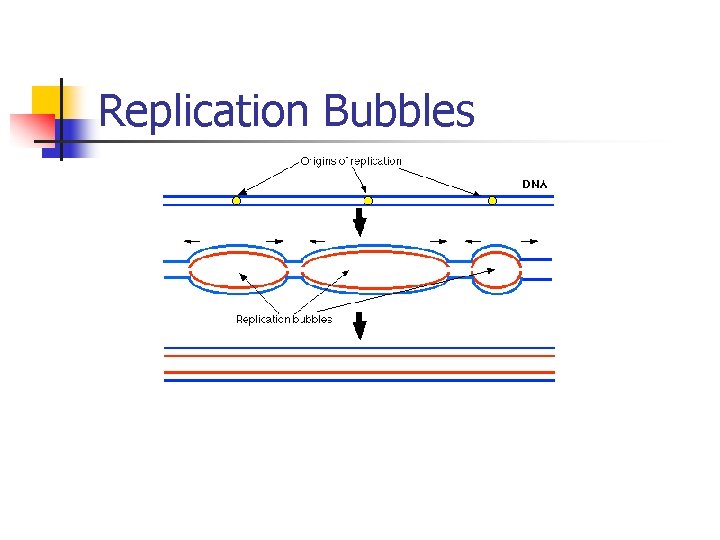
Stage: Synthesis of DNA n Replication consists of 3 steps: n Initiation: n n n DNA helicase unwinds double helix by breaking H-bonds Proteins hold DNA apart (if not, DNA would reanneal – stick back together) Replication begins in 2 directions from many origins in eukaryotes – speeds up process
Replication Bubbles
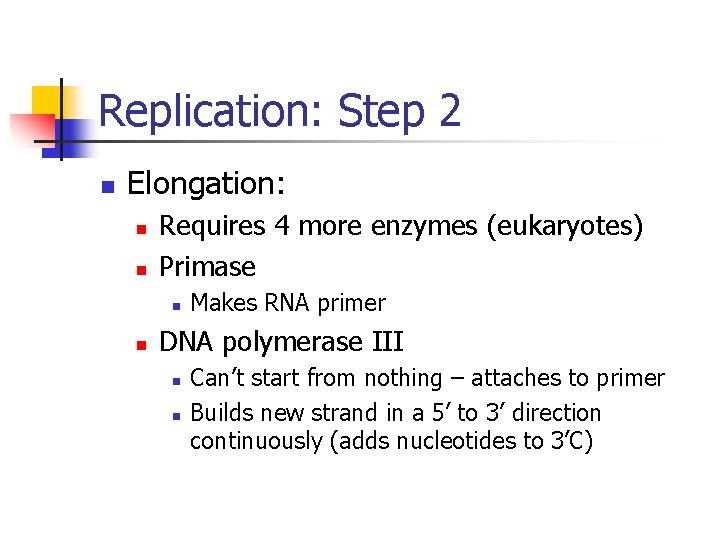
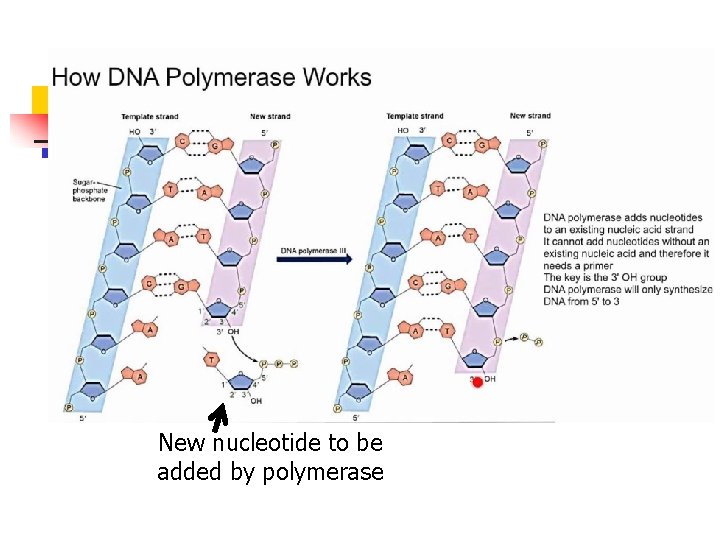
Replication: Step 2 n Elongation: n n Requires 4 more enzymes (eukaryotes) Primase n n Makes RNA primer DNA polymerase III n n Can’t start from nothing – attaches to primer Builds new strand in a 5’ to 3’ direction continuously (adds nucleotides to 3’C)
New nucleotide to be added by polymerase
The enzymes on one strand of the DNA work towards the fork, but what about the enzymes reading other strand?
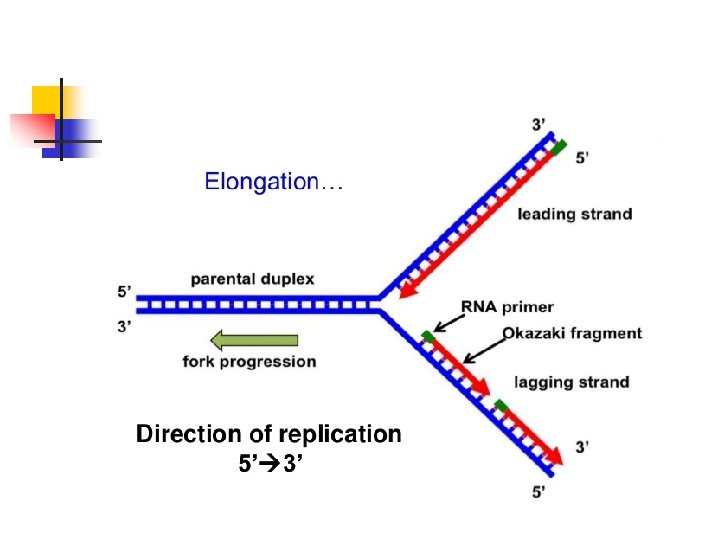
What about the other strand? n Made in short fragments called Okazaki fragments n n n Consist of RNA primer, then DNA polymerase adds a short sequence, then start over Called the “lagging” strand The strand that has polymerase working towards the fork is called the “leading” strand
Elongation, continued… n DNA polymerase I n n Replaces RNA primers with DNA nucleotides and proofreads the new strand DNA ligase n Joins Okazaki fragments together
Proofreading n n When mistake is found, it is cut out and replaced with correct base (Pol I) Errors missed at a rate of 1/billion bases!
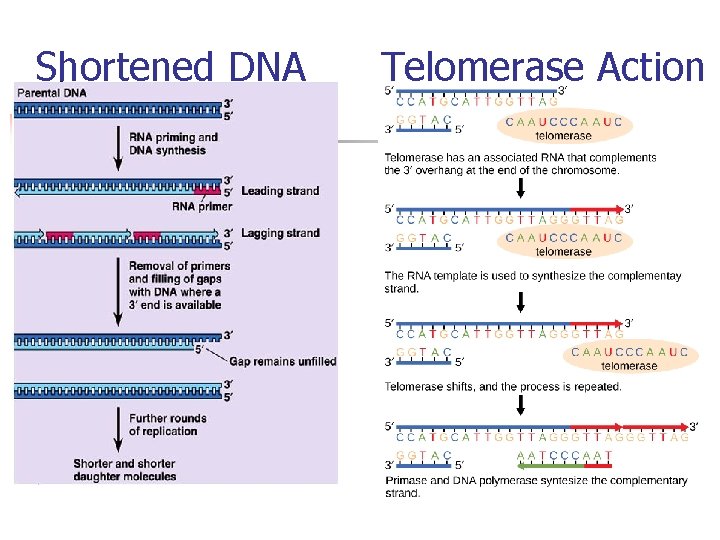
Step 3 of Replication n Termination n n Helix re-anneals automatically. Note: strands can’t be fully finished because DNA polymerase I cannot replace the primers at the ends of the DNA. n Ends of chromosomes are stretches of repetitive “junk” DNA called Telomeres n n Telomeres extended by telomerase (found in some stem cells and cancer cells) Chromosomes lose about 100 bases from this telomeric region every replication
Shortened DNA Telomerase Action