
Replacing Infrastructure Pipeline Safety and Methane Reduction Benefits
Replacing Infrastructure: Pipeline Safety and Methane Reduction Benefits 2013 NASUCA Mid-Year Meeting: June 12, 2013
Overview 1. Safety First 2. Consumers and the public benefit from pipe replacement. 3. Methane Emissions: It’s time to cool off the hype and engage in fact-based analysis. 4. Why replace pipe now? 2
3
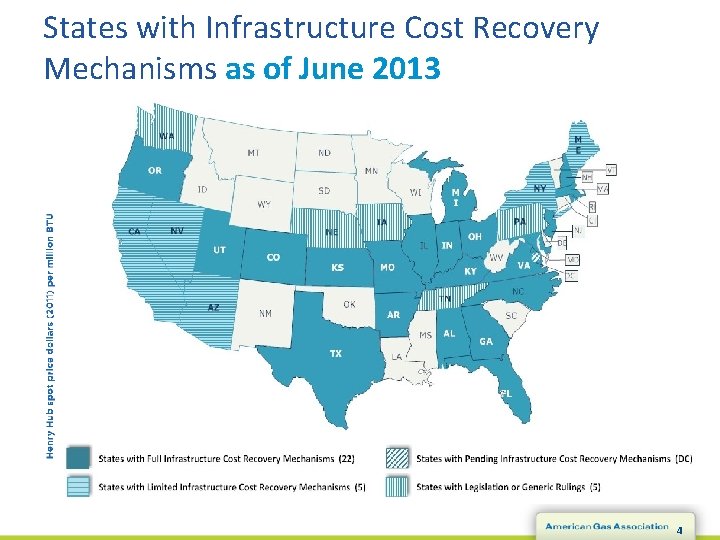
States with Infrastructure Cost Recovery Mechanisms as of June 2013 Source: Rethinking Natural Gas, A Future for Natural Gas in the U. S. Economy, p. 6, American Gas Association, © 2012, Citing Source: Wood Mac. Kenzie Spring 2012. See paper for outlook limitations. 4
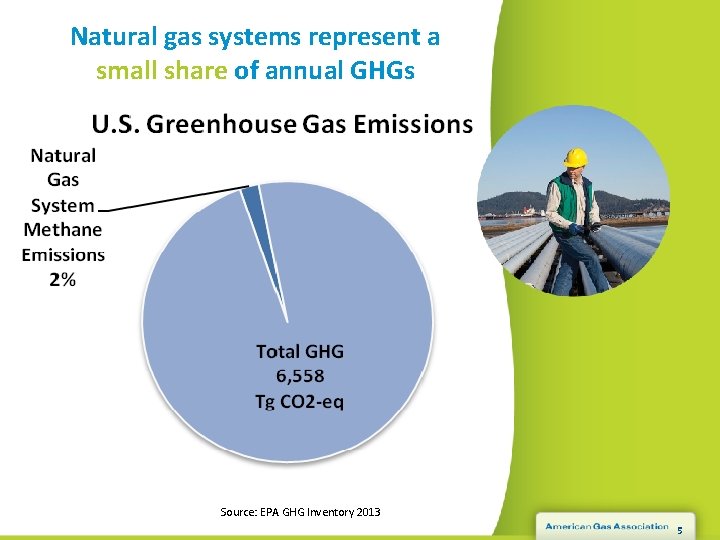
Natural gas systems represent a small share of annual GHGs its inception in 1993. Source: EPA GHG Inventory 2013 5

Natural Gas Systems Lead the Pack on Economy-wide Methane Reductions U. S. Methane Emissions (Million Metric Tons CO 2 -eq. ) Natural Gas Systems -29 650 600 Other Systems -8 550 500 619 582 450 400 2007 2011 Source: EPA GHG Inventory 2013 6

Technological advances, industry best practices and infrastructure investment… add up to a declining emissions trend Methane Emissions from Natural Gas Systems (Million Metric Tons CO 2 -equivalent) 180 161 159 168 163 151 144 145 2010 2011 140 120 100 80 60 1990 2005 2007 2008 2009 Source: EPA GHG Inventory 2013 7

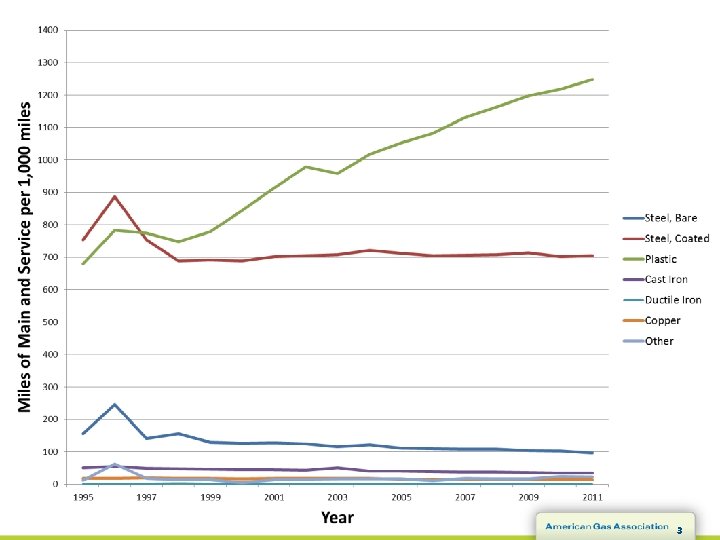
Distribution: Methane Emissions Shrinking • Methane emissions from distribution shrank 16 percent since 1990 … • even though we added almost 300, 000 (30 percent more) miles of distribution mains … • to serve 17 million (30 percent) more customers • Why? Because we replaced thousands of miles of existing cast iron and bare steel pipe with modern PE plastic pipe • Result: EPA estimates distribution systems emitted 0. 3% of produced natural gas in 2011 8
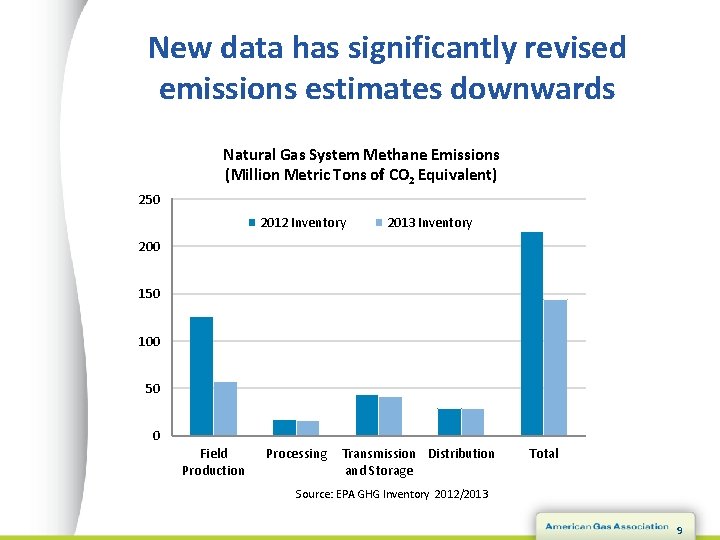
New data has significantly revised emissions estimates downwards Natural Gas System Methane Emissions (Million Metric Tons of CO 2 Equivalent) 250 2012 Inventory 2013 Inventory 200 150 100 50 0 Field Production Processing Transmission Distribution and Storage Total Source: EPA GHG Inventory 2012/2013 9
Methane Emissions Estimations Declining as they become more accurate • EPA 2012 Annual Inventory of U. S. Greenhouse Gas Emissions • originally estimated 2. 5% – 3. 2% of produced gas emitted in 2010 from well to customer. • New 2013 EPA Inventory • only estimates 1. 5% of produced gas emitted in 2011 from well to customer, and of this, • only estimtes 0. 3% of produced gas was emitted from gas distribution in 2011. • EPA also found emissions from distribution have declined over time due to replacing cast iron and bare steel pipe. 10
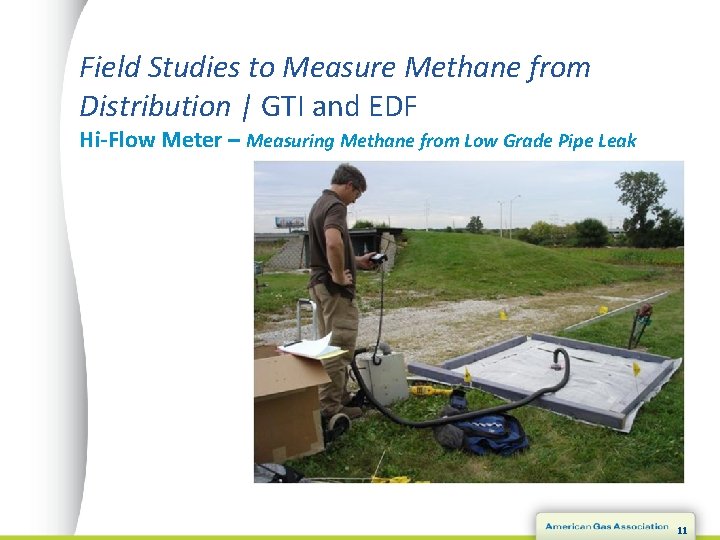
Field Studies to Measure Methane from Distribution | GTI and EDF Hi-Flow Meter – Measuring Methane from Low Grade Pipe Leak 11
• What is Lost and Unaccounted For (LUAF) Gas? • LUAF includes small amounts for gas theft and emissions, but there is no correlation between LUAF and emissions. • EPA has long recognized the limitations of LUAF and rejected idea of using LUAF to measure or estimate methane emissions. LUAF is Not a Good Measure of Emissions 12
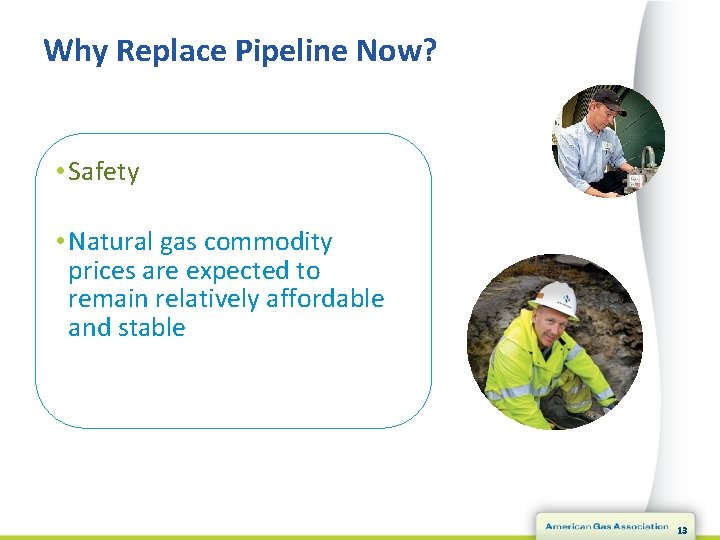
Why Replace Pipeline Now? • Safety • Natural gas commodity prices are expected to remain relatively affordable and stable 13
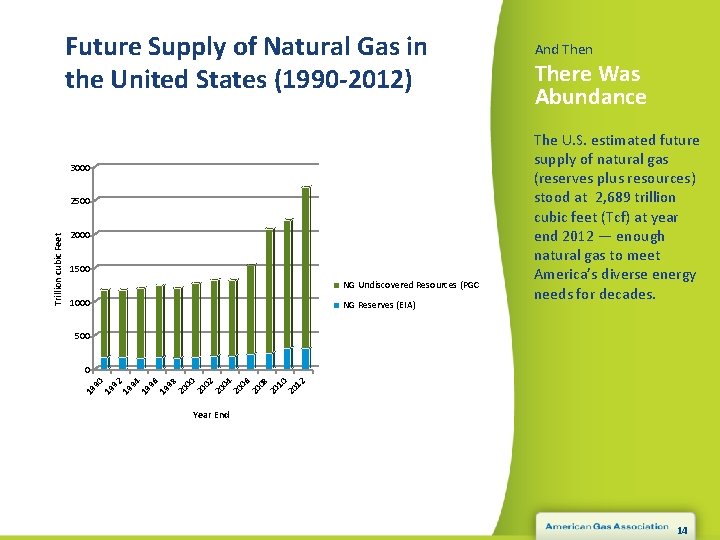
Future Supply of Natural Gas in the United States (1990 -2012) 3000 2000 1500 NG Undiscovered Resources (PGC) 1000 NG Reserves (EIA) There Was Abundance The U. S. estimated future supply of natural gas (reserves plus resources) stood at 2, 689 trillion cubic feet (Tcf) at year end 2012 — enough natural gas to meet America’s diverse energy needs for decades. 500 10 20 12 08 20 06 20 04 20 02 20 00 20 98 20 96 19 94 19 92 19 19 90 0 19 Trillion cubic Feet 2500 And Then Year End 14
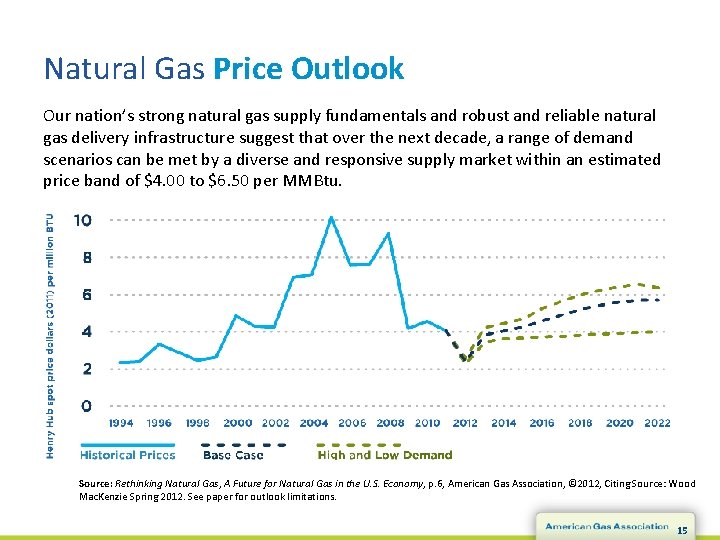
Natural Gas Price Outlook Our nation’s strong natural gas supply fundamentals and robust and reliable natural gas delivery infrastructure suggest that over the next decade, a range of demand scenarios can be met by a diverse and responsive supply market within an estimated price band of $4. 00 to $6. 50 per MMBtu. Source: Rethinking Natural Gas, A Future for Natural Gas in the U. S. Economy, p. 6, American Gas Association, © 2012, Citing Source: Wood Mac. Kenzie Spring 2012. See paper for outlook limitations. 15
Find Us Online www. aga. org www. truebluenaturalgas. org http: //twitter. com/AGA_naturalgas Paula Gant AGA Senior Vice President, Policy and Planning pgant@aga. org www. facebook. com/naturalgas www. linkedin. com/company/50905 ? trk=tyah 16
- Slides: 16