
Repeaters Introduction An amateur radio repeater is an
- Slides: 8
Repeaters Introduction An amateur radio repeater is an electronic device that receives a weak or low-level amateur radio signal and retransmits it at a higher level or higher power, so that the signal can cover longer distances without degradation. Many repeaters are located on hilltops or on tall buildings as the higher location increases their coverage area, sometimes referred to as the radio horizon, or "footprint. “ From Wikipedia
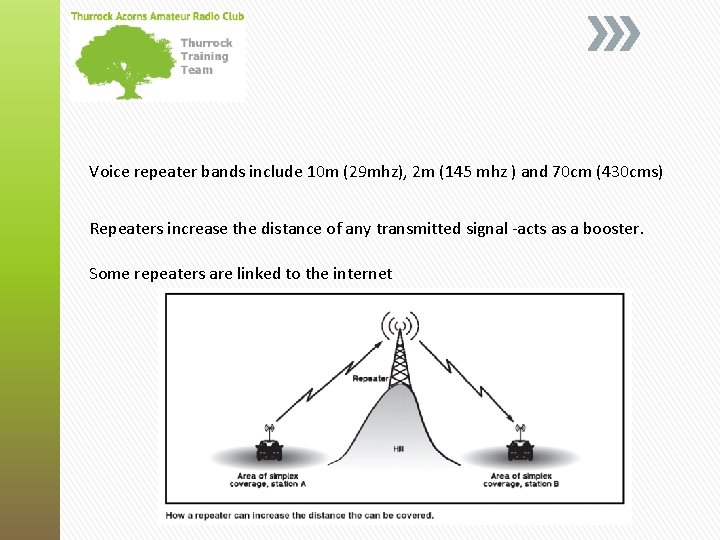
Voice repeater bands include 10 m (29 mhz), 2 m (145 mhz ) and 70 cm (430 cms) Repeaters increase the distance of any transmitted signal -acts as a booster. Some repeaters are linked to the internet
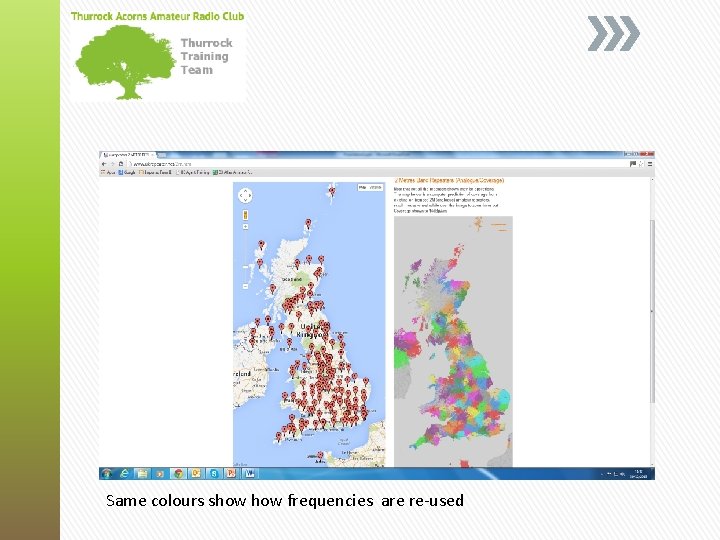
Same colours show frequencies are re-used
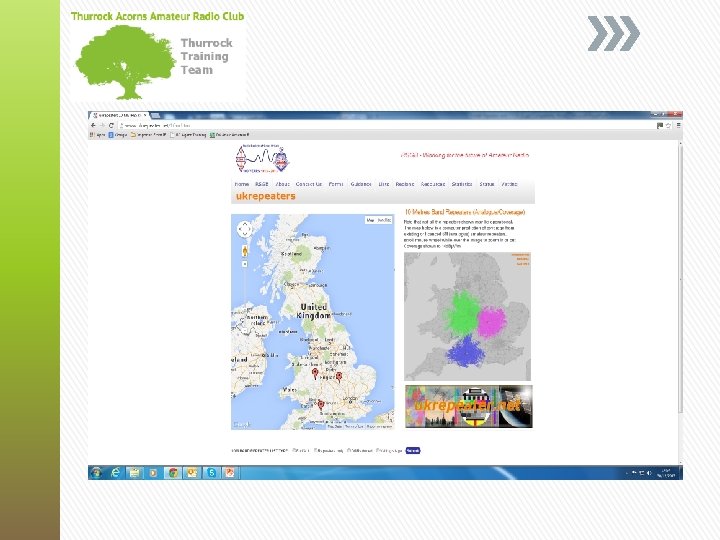
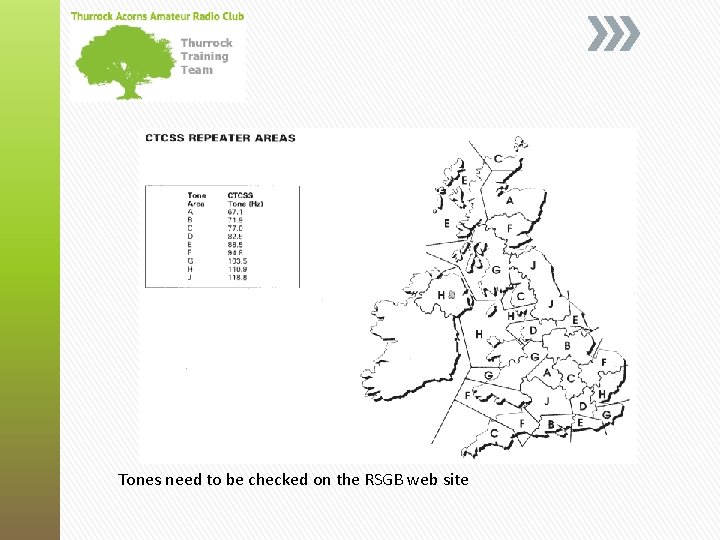
Repeaters have a frequency difference between Input and output so they can transmit at the same time as receiving. For example: 2 m Repeaters transmit 600 k. Hz above their input frequency 2 m repeaters either need a 1750 tone or a CTCSS tone to gain access (CTCSS tones may apply to other repeaters) Repeaters will periodically identify themselves via the use of morse. Full details of the UK repeaters can be found on the RSGB web site.
To access a repeaters your transmitter will require to be able to transmit on a different frequency to the receiving. In the case of 2 m (145. xxxmhz) it would need to have a 600 KHZ split. On 10 M (29. XXX it would need a 100 KHz split). I have always found it best to give both the station you are working and your call sign as often as is practicable. Remember some repeaters have timeouts so don’t make the overs (transmissions) too long. If /mobile remember if you go up a hill your signal will travel much further than normal.
Tones need to be checked on the RSGB web site