
Repeat Biopsies and the Potential Value of BiologicallyInformed
Repeat Biopsies and the Potential Value of Biologically-Informed Acquired Resistance Therapy Lecia V. Sequist, MD, MPH Associate Professor of Medicine, Harvard Medical School Mary B. Saltonstall Endowed Chair in Oncology, Massachusetts General Hospital
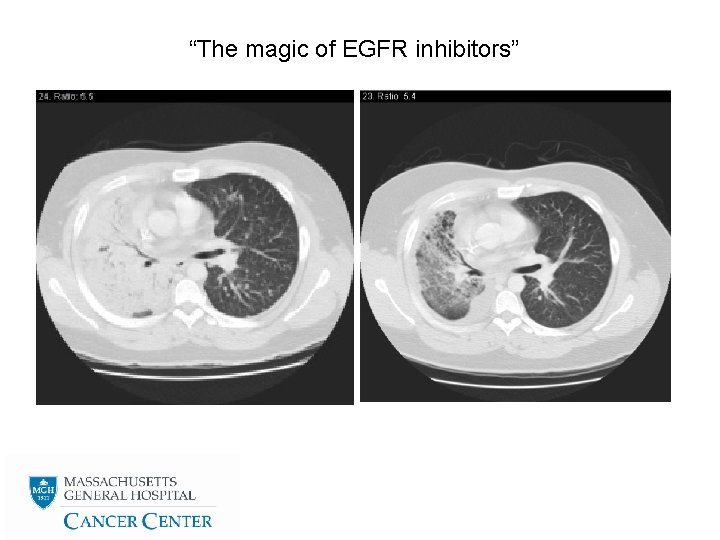
“The magic of EGFR inhibitors”
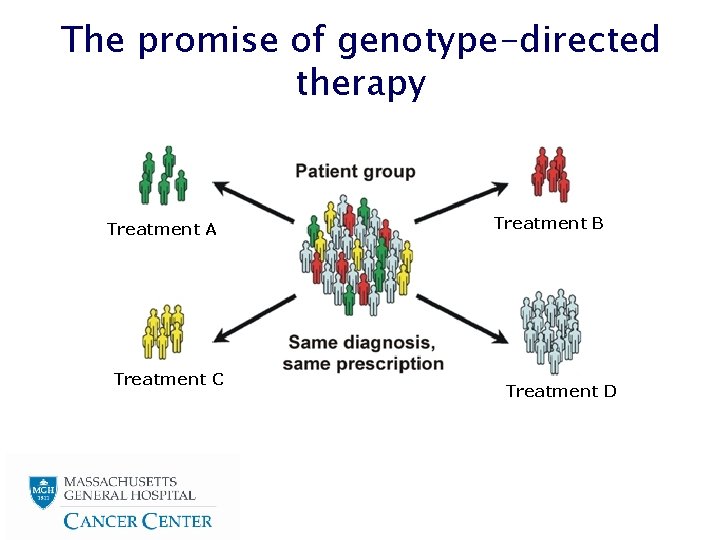
The promise of genotype-directed therapy Treatment A Treatment C Treatment B Treatment D
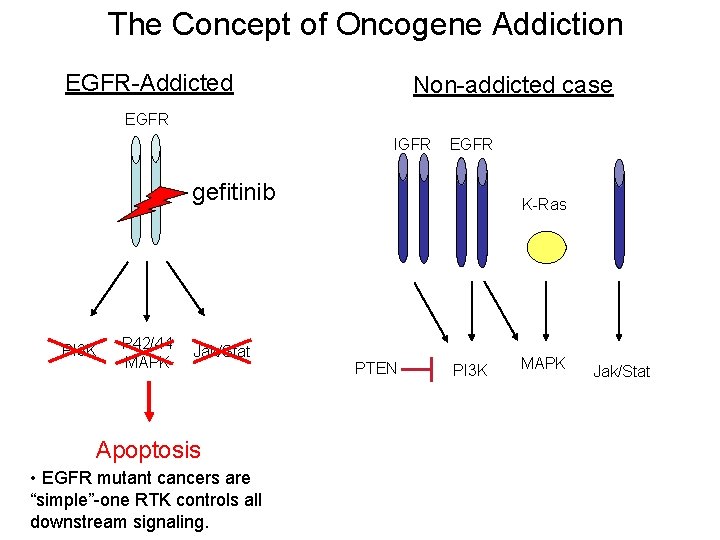
The Concept of Oncogene Addiction EGFR-Addicted Non-addicted case EGFR IGFR EGFR gefitinib PI 3 K P 42/44 Jak/Stat MAPK Apoptosis • EGFR mutant cancers are “simple”-one RTK controls all downstream signaling. K-Ras PTEN PI 3 K MAPK Jak/Stat
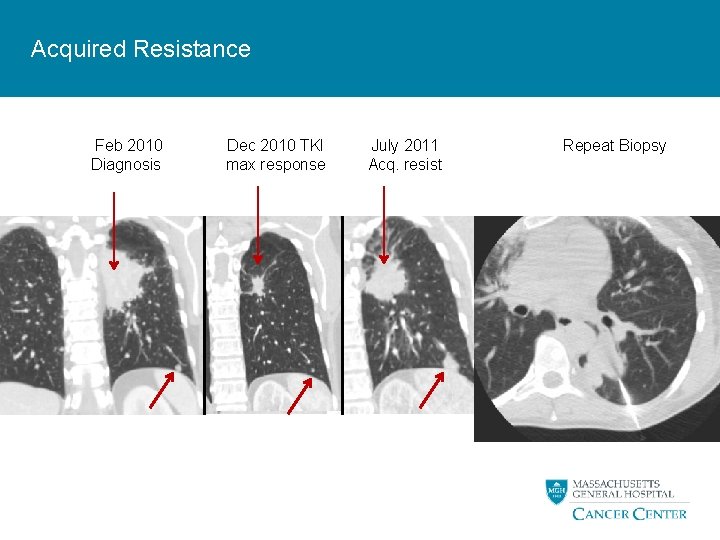
Acquired Resistance Feb 2010 Diagnosis Dec 2010 TKI max response July 2011 Acq. resist Repeat Biopsy
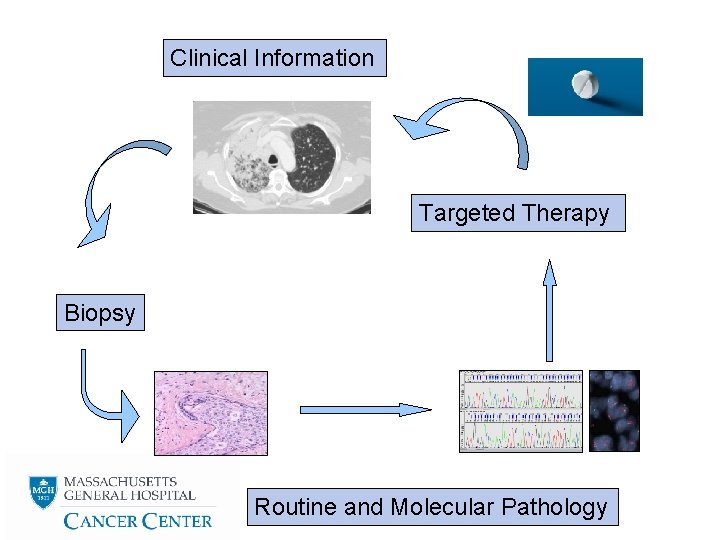
Clinical Information Targeted Therapy Biopsy Routine and Molecular Pathology
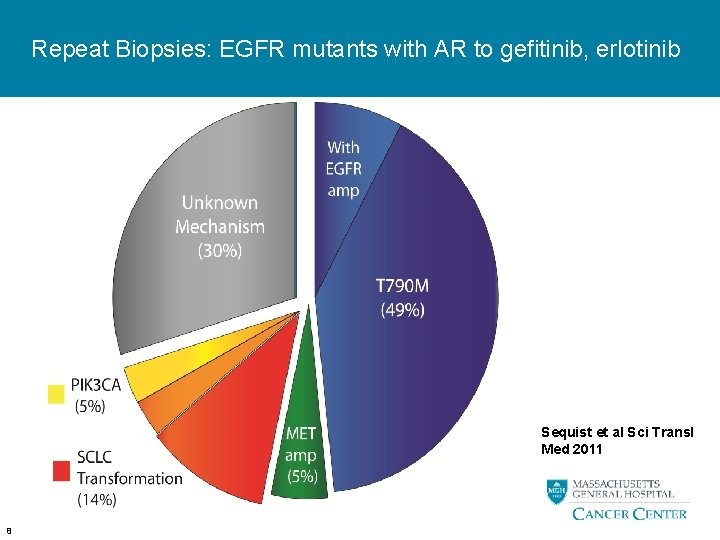
Repeat Biopsies: EGFR mutants with AR to gefitinib, erlotinib Sequist et al Sci Transl Med 2011 8
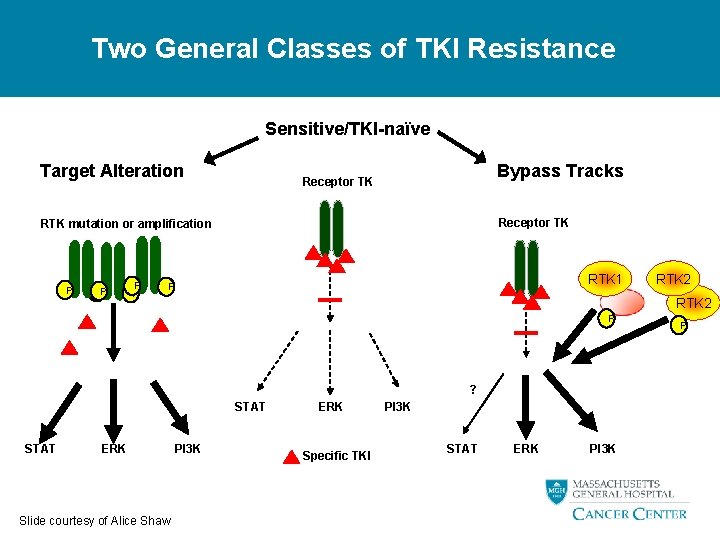
Two General Classes of TKI Resistance Sensitive/TKI-naïve Target Alteration Bypass Tracks Receptor TK RTK mutation or amplification P PP P P RTK 1 P RTK 2 P ? STAT ERK Slide courtesy of Alice Shaw RTK 2 PI 3 K ERK Specific TKI PI 3 K STAT ERK PI 3 K P
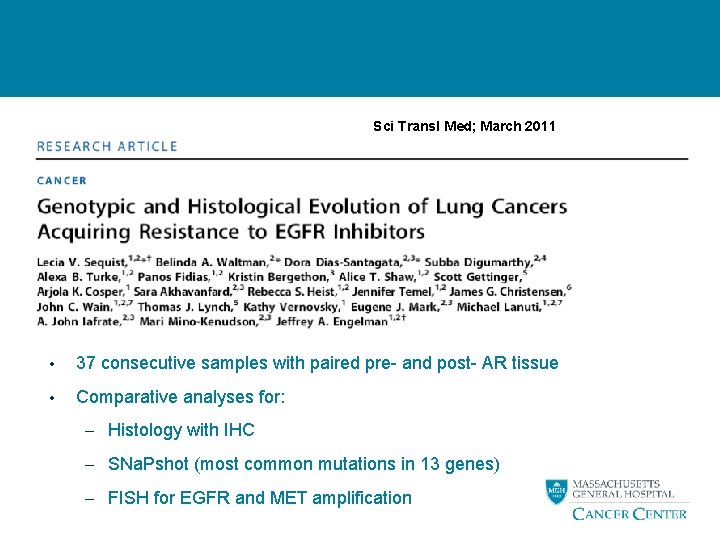
Sci Transl Med; March 2011 • 37 consecutive samples with paired pre- and post- AR tissue • Comparative analyses for: – Histology with IHC – SNa. Pshot (most common mutations in 13 genes) – FISH for EGFR and MET amplification
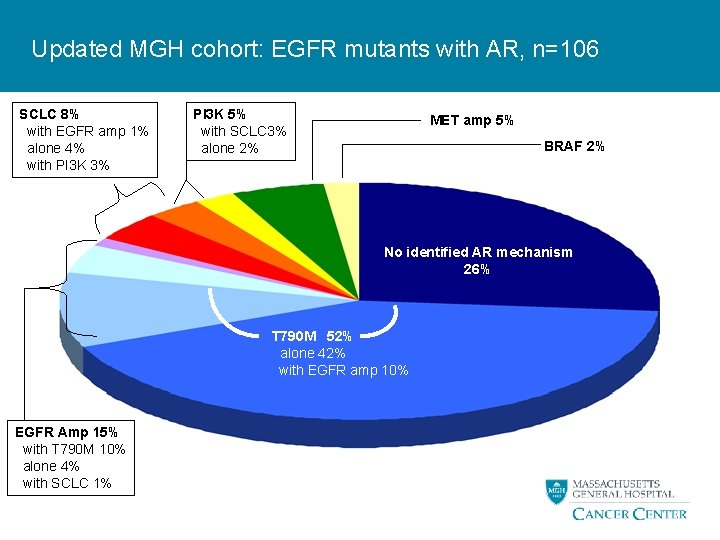
Updated MGH cohort: EGFR mutants with AR, n=106 SCLC 8% with EGFR amp 1% alone 4% with PI 3 K 3% PI 3 K 5% with SCLC 3% alone 2% MET amp 5% BRAF 2% No identified AR mechanism 26% T 790 M 52% alone 42% with EGFR amp 10% EGFR Amp 15% with T 790 M 10% alone 4% with SCLC 1%
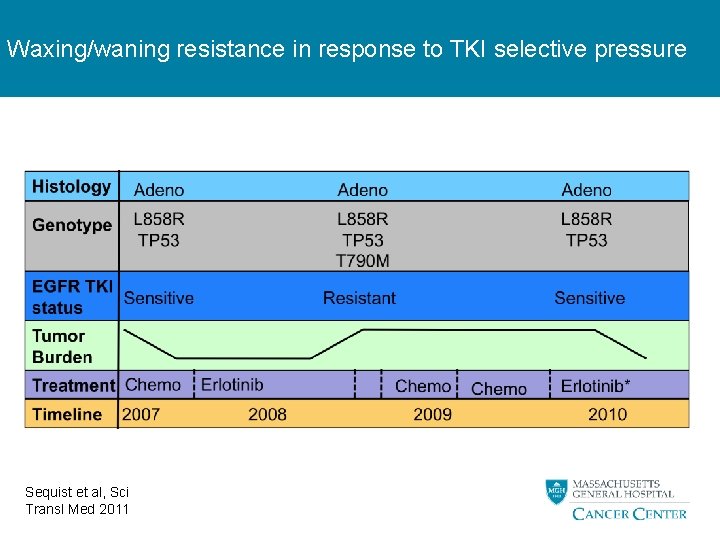
Waxing/waning resistance in response to TKI selective pressure Sequist et al, Sci Transl Med 2011
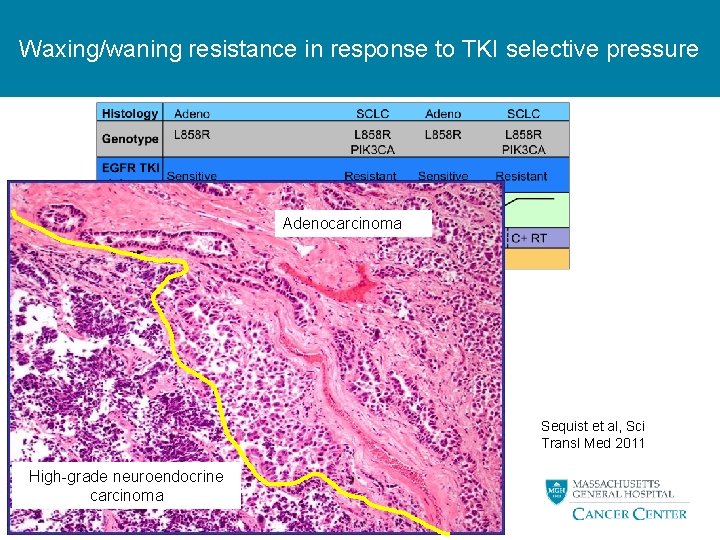
Waxing/waning resistance in response to TKI selective pressure Adenocarcinoma Sequist et al, Sci Transl Med 2011 High-grade neuroendocrine carcinoma
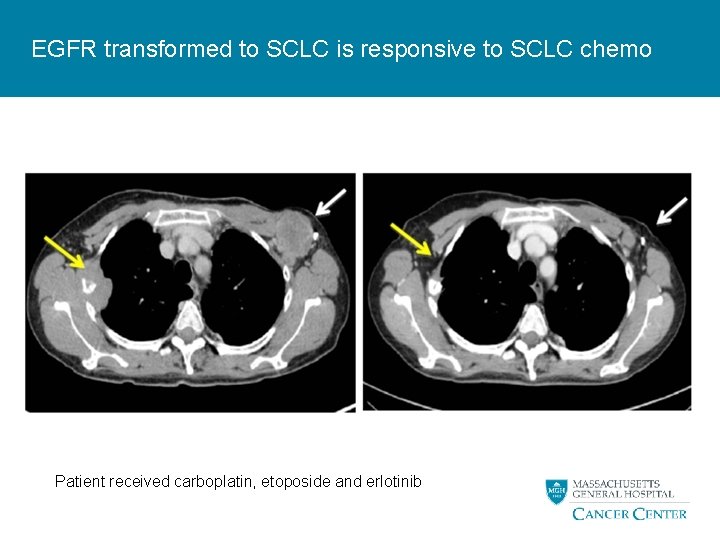
EGFR transformed to SCLC is responsive to SCLC chemo Patient received carboplatin, etoposide and erlotinib
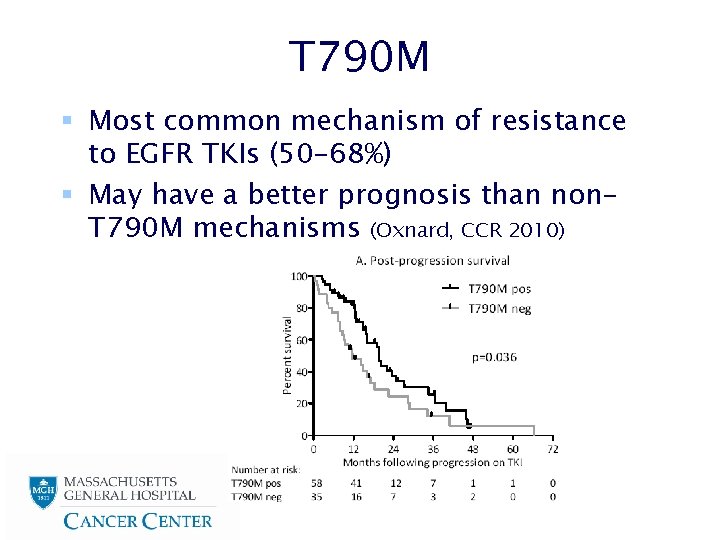
T 790 M § Most common mechanism of resistance to EGFR TKIs (50 -68%) § May have a better prognosis than non. T 790 M mechanisms (Oxnard, CCR 2010)
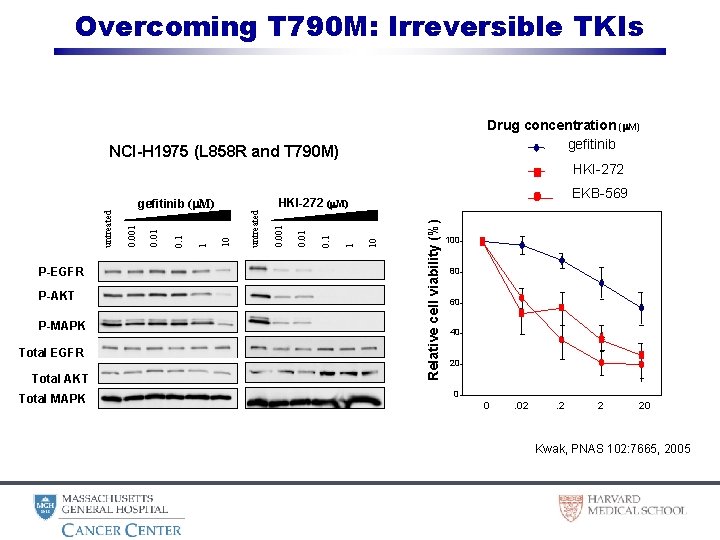
Overcoming T 790 M: Irreversible TKIs Drug concentration ( M) gefitinib NCI-H 1975 (L 858 R and T 790 M) P-AKT P-MAPK Total EGFR Total AKT Total MAPK 120 10 1 0. 01 0. 001 untreated 10 1 0. 01 EKB-569 HKI-272 ( M) Relative cell viability (%) P-EGFR gefitinib ( M) 0. 001 untreated HKI-272 100 80 60 40 20 0 0 . 02 . 2 2 20 Kwak, PNAS 102: 7665, 2005
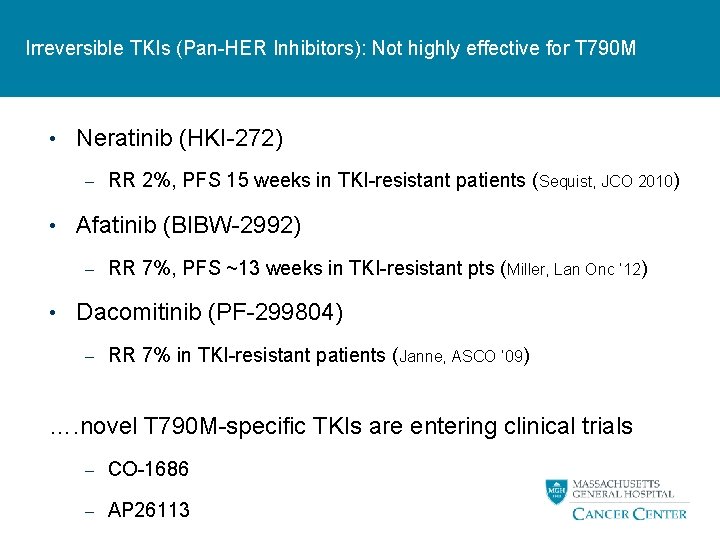
Irreversible TKIs (Pan-HER Inhibitors): Not highly effective for T 790 M • Neratinib (HKI-272) – RR 2%, PFS 15 weeks in TKI-resistant patients (Sequist, JCO 2010) • Afatinib (BIBW-2992) – RR 7%, PFS ~13 weeks in TKI-resistant pts (Miller, Lan Onc ‘ 12) • Dacomitinib (PF-299804) – RR 7% in TKI-resistant patients (Janne, ASCO ’ 09) …. novel T 790 M-specific TKIs are entering clinical trials – CO-1686 – AP 26113
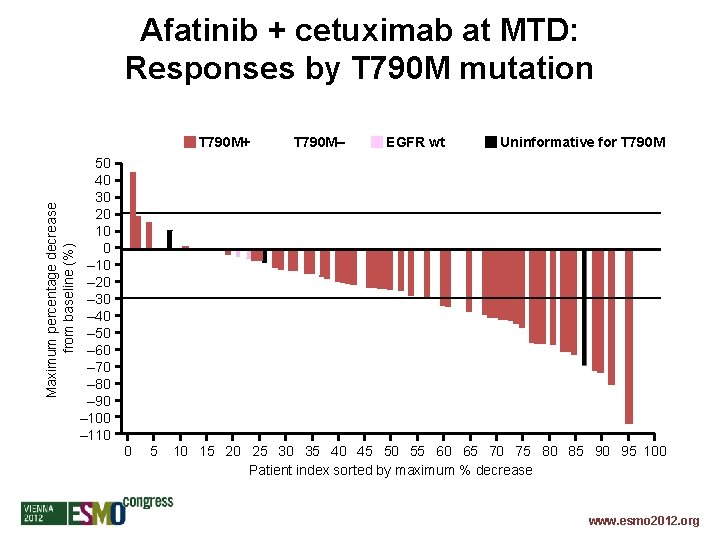
Afatinib + cetuximab at MTD: Responses by T 790 M mutation Maximum percentage decrease from baseline (%) T 790 M+ 50 40 30 20 10 0 – 10 – 20 – 30 – 40 – 50 – 60 – 70 – 80 – 90 – 100 – 110 0 5 T 790 M– EGFR wt Uninformative for T 790 M 10 15 20 25 30 35 40 45 50 55 60 65 70 75 80 85 90 95 100 Patient index sorted by maximum % decrease www. esmo 2012. org
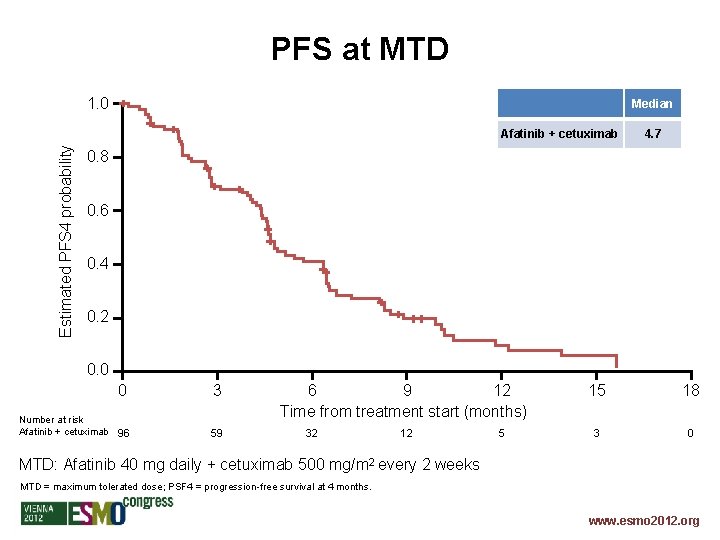
PFS at MTD 1. 0 Median Estimated PFS 4 probability Afatinib + cetuximab 4. 7 0. 8 0. 6 0. 4 0. 2 0. 0 0 Number at risk Afatinib + cetuximab 96 3 59 6 9 12 Time from treatment start (months) 32 12 5 15 18 3 0 MTD: Afatinib 40 mg daily + cetuximab 500 mg/m 2 every 2 weeks MTD = maximum tolerated dose; PSF 4 = progression-free survival at 4 months. www. esmo 2012. org
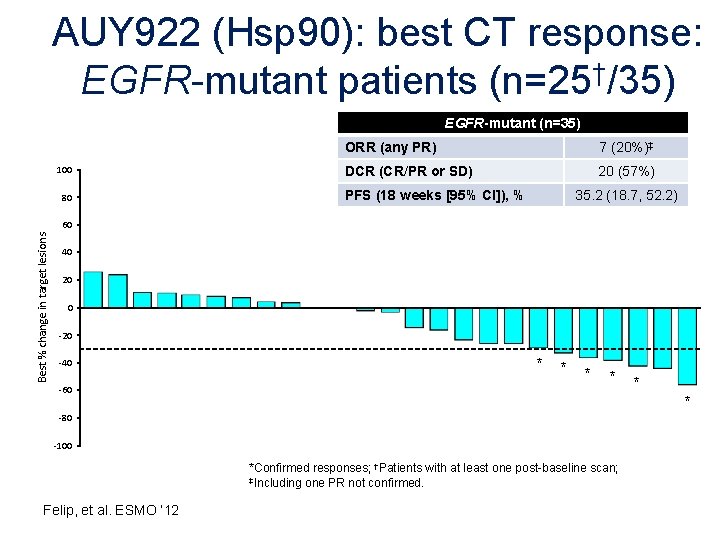
AUY 922 (Hsp 90): best CT response: EGFR-mutant patients (n=25†/35) EGFR-mutant (n=35) 100 80 ORR (any PR) 7 (20%)‡ DCR (CR/PR or SD) 20 (57%) PFS (18 weeks [95% CI]), % 35. 2 (18. 7, 52. 2) Best % change in target lesions 60 40 20 0 -20 -40 -60 * * * -80 -100 *Confirmed responses; †Patients with at least one post-baseline scan; ‡Including one PR not confirmed. Felip, et al. ESMO ‘ 12 *
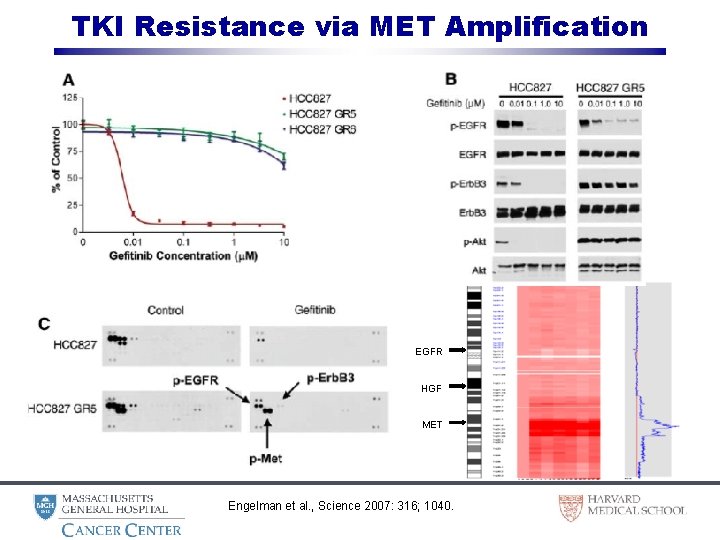
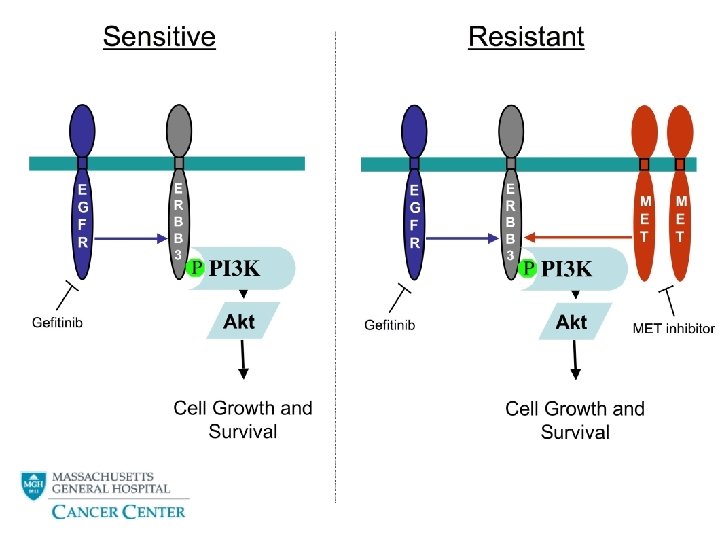
TKI Resistance via MET Amplification EGFR HGF MET Engelman et al. , Science 2007: 316; 1040.
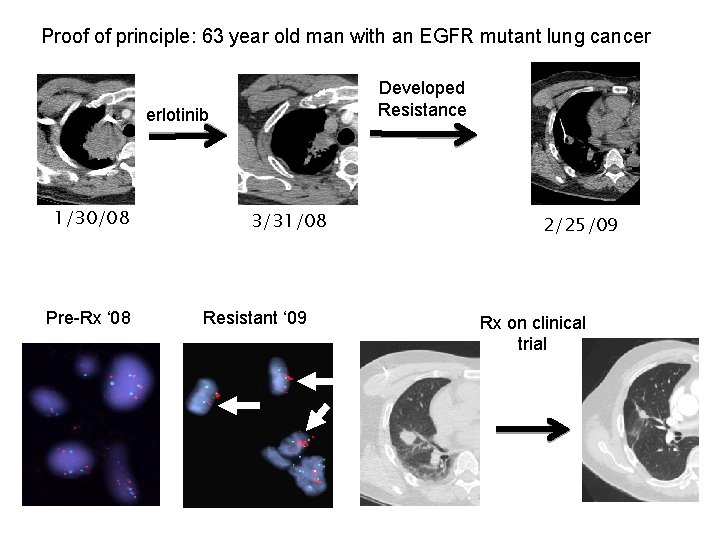
Proof of principle: 63 year old man with an EGFR mutant lung cancer Developed Resistance erlotinib 1/30/08 Pre-Rx ‘ 08 3/31/08 Resistant ‘ 09 2/25/09 Rx on clinical trial
Met Inhibitors in Clinical Trials ARQ-197, specific MET inhibitor § Randomized phase II of erlotinib +/- ARQ-197 in TKI-naïve patients showed PFS benefit of combo but wasn’t designed to look at EGFR mutants or acquired resistance to EGFR TKIs (Sequist, JCO 2011) Met-mab § Randomized phase II of erlotinib +/- MET-Mab in TKI-naïve paitents showed benefit of combo but again wasn’t designed to look at EGFR mutants or acquired resistance to EGFR TKIs (Spigel , ASCO 2011) XL-184, MET + RET + VEGF § Randomized phase II of erlotinib +/- XL-184 in TKI-resistant patients, completed but not reported yet Crizotinib: § We know it works in MET amp patients, but we don’t know about EGFR mutant, TKI resistant pts with MET amp
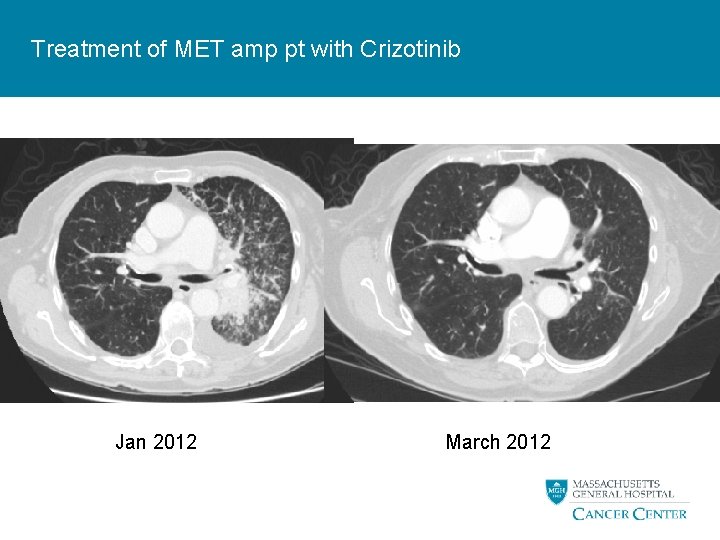
Treatment of MET amp pt with Crizotinib Jan 2012 March 2012
Clinical Strategies for Patients in the Clinic 1. Repeat biopsies whenever possible 2. Clinical trials whenever possible 3. Treatment beyond progression and local therapy for local progression 4. Continuing TKI beyond with otherapies
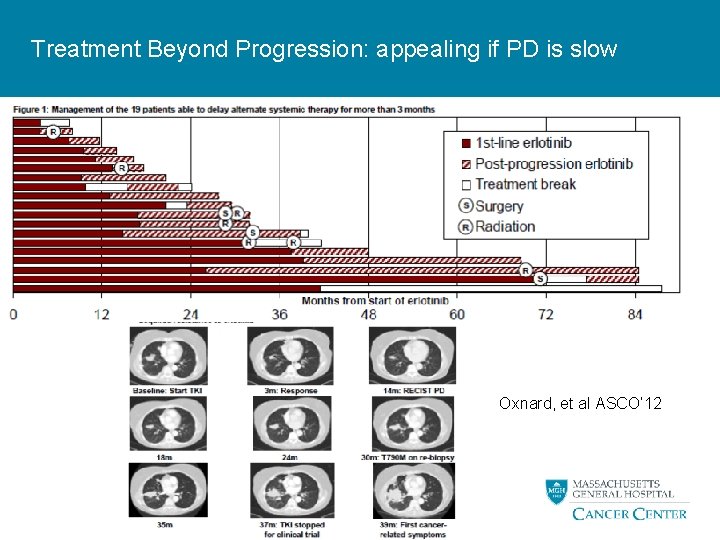
Treatment Beyond Progression: appealing if PD is slow Oxnard, et al ASCO’ 12
Summary and Future Directions • Genotype-directed therapy paradigm has revolutionized NSCLC landscape • Treatment of resistance has proven complicated • Repeat biopsies of patients with AR will continue to greatly supplement lab-based research • Prevention may be a potent strategy, especially since pre-disposition toward certain mechanisms may be identifiable. Need more ideal combination regimens • Need to develop less-invasive ways of assessing tumor genotype
Acknowledgments MGH Cancer Center Jeff Engelman Alice Shaw Daniel Haber Becca Heist Jerry Azzoli Jennifer Temel Inga Lennes Justin Gainor Panos Fidias Rachel Rosovsky Mike Lanuti Subba Digumarthy Michele Myers Marguerite Parkman Emily Howe Engelman Lab Tony Faber Matt Niederest Elizabeth Lockerman MGH Pathology John Iafrate Mari Mino-Kenudson Dora Dias-Santagata Vicente Morales Haber/Toner Lab Shyamala Maheswaran Shannon Stott John Walsh James Sullivan Mike Rothenberg Yale Tom Lynch Scott Gettinger Sarah Goldberg Katie Politi Germans Trias i Pujol, Barcelona Teresa Moran Stanford Joel Neal Vanderbilt William Pao Kadaoki Ohashi UCSF Belinda Waltman Funding Uniting Against Lung Cancer NIH/NCI (R 21 CA 156000) MGH Thoracic Oncology MGH Pathology
- Slides: 29