
Reopening our buildings Activities Recommendations 6 Step Plan
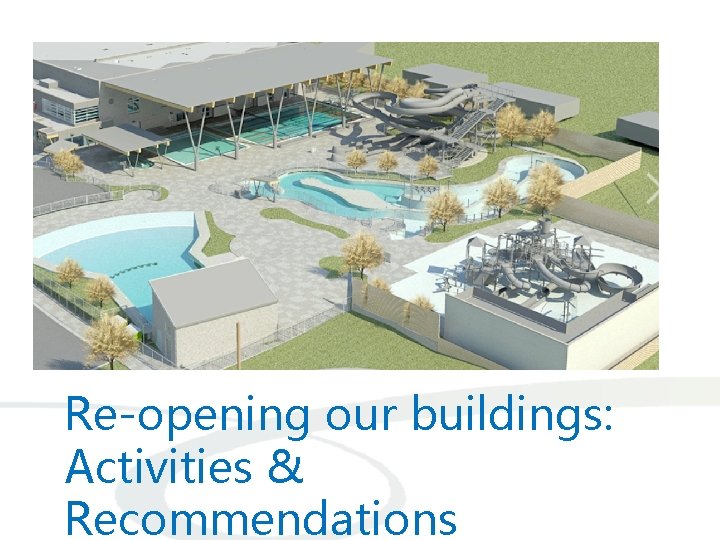
Re-opening our buildings: Activities & Recommendations


6 Step Plan Know Where you Stand: Gather HVAC plans and System Manuals, educate yourself on your options Speed & Cost: Establish your budget, Risk Toleranc e Prepare: With your HVAC Pro, create your statement of work plan Execute Phase 1: Put into place the Fast, short term interim adjustments Execute Phase 2: Mid to longer term projects; harden your buildings Audit: Is it Working? Adjust
Who do you listen to – filter the noise for me ASHRAE’s (American Society of Heating and Air-Conditioning Engineers): Transmission of SARS-Co. V-2 through the air is sufficiently likely… … Changes to building operations, including the operation of HVAC systems, can reduce airborne exposures. Ventilation, Disinfection and filtration provided by HVAC systems can reduce the airborne concentration of SARS-Co. V-2 and the risk of transmission through the air. CDC guidance states: “Intensify cleaning, disinfection, and ventilation”
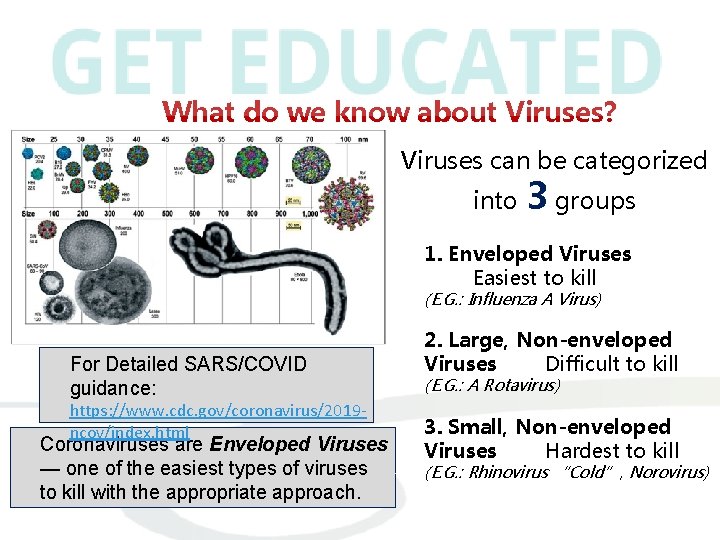
What do we know about Viruses? Viruses can be categorized into 3 groups 1. Enveloped Viruses Easiest to kill (E. G. : Influenza A Virus) For Detailed SARS/COVID guidance: https: //www. cdc. gov/coronavirus/2019 ncov/index. html Coronaviruses are Enveloped Viruses — one of the easiest types of viruses to kill with the appropriate approach. 2. Large, Non-enveloped Viruses Difficult to kill (E. G. : A Rotavirus) 3. Small, Non-enveloped Viruses Hardest to kill (E. G. : Rhinovirus “Cold”, Norovirus)

Room Air Recirculation can spread contaminants? Partitions are not the solution. HVAC diffusers are meant to mix the air Chinese restaurant case study of transmission via HVAC
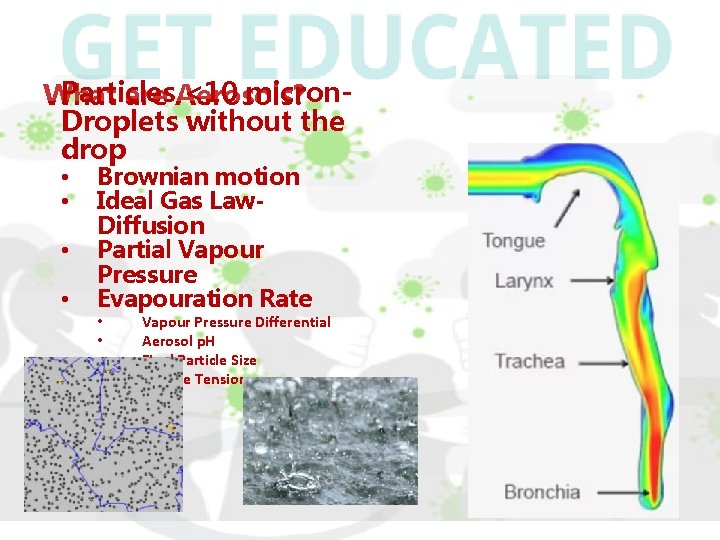
Particles <10 micron. What are Aerosols? Droplets without the drop • • Brownian motion Ideal Gas Law. Diffusion Partial Vapour Pressure Evapouration Rate • • Vapour Pressure Differential Aerosol p. H Final Particle Size Surface Tension What are Aerosols? <10 Micron
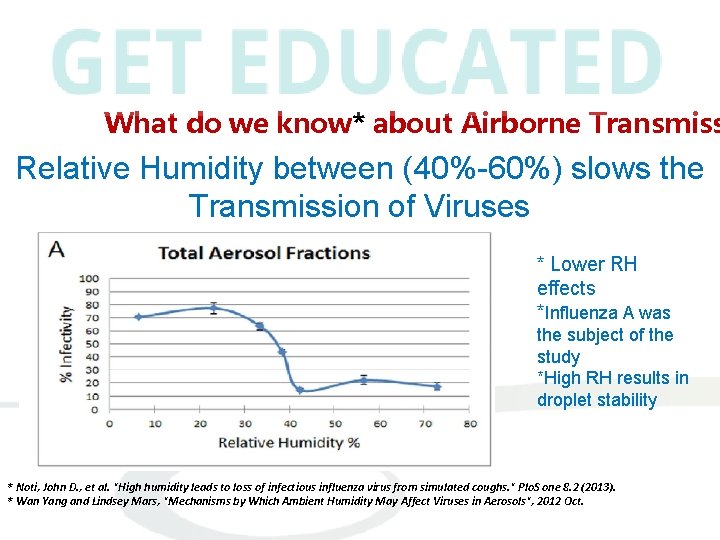
What do we know* about Airborne Transmiss Relative Humidity between (40%-60%) slows the Transmission of Viruses * Lower RH effects *Influenza A was the subject of the study *High RH results in droplet stability * Noti, John D. , et al. "High humidity leads to loss of infectious influenza virus from simulated coughs. " Plo. S one 8. 2 (2013). * Wan Yang and Lindsey Mars, "Mechanisms by Which Ambient Humidity May Affect Viruses in Aerosols", 2012 Oct.
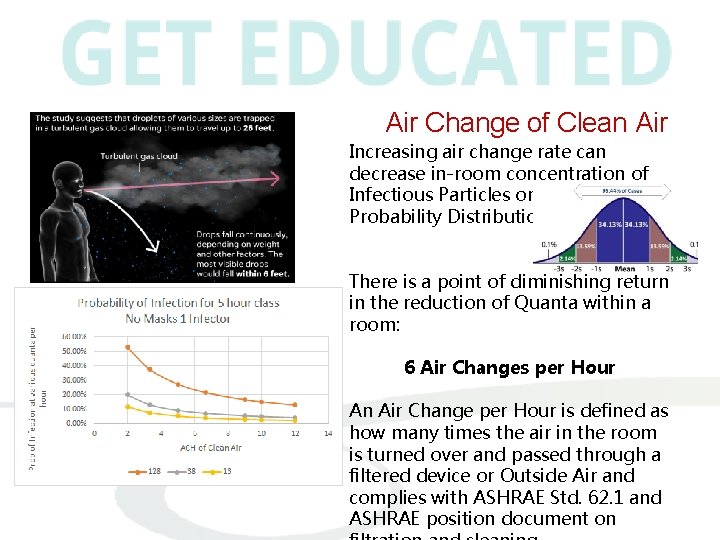
Air Change of Clean Air Increasing air change rate can decrease in-room concentration of Infectious Particles or Quanta Probability Distribution There is a point of diminishing return in the reduction of Quanta within a room: 6 Air Changes per Hour An Air Change per Hour is defined as how many times the air in the room is turned over and passed through a filtered device or Outside Air and complies with ASHRAE Std. 62. 1 and ASHRAE position document on
Outside Air Ventilation - Dilution § Outside Air requirements are governed by ASHRAE 62. 1 § There is no relaxation in the code requirements Outside air ventilation rates should be increased to as much as the systems can accommodate (up to 100 percent), depending on outside climate conditions and the systems’ ability to maintain air handling system discharge air conditions, airflow rates, temperature, and humidity conditions necessary in order to maintain good thermal, humidity, and indoor air quality.

Filtration – target MERV 13 § § Minimum Efficienc Reporting Value MERV vs MERVa
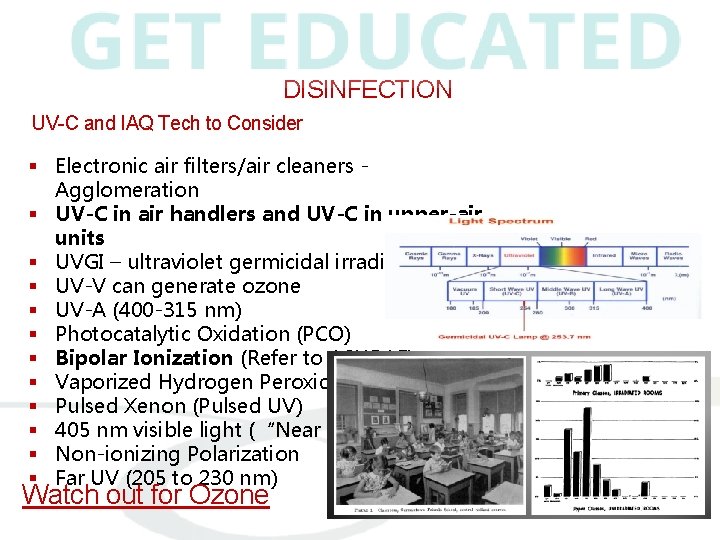
DISINFECTION UV-C and IAQ Tech to Consider § Electronic air filters/air cleaners Agglomeration § UV-C in air handlers and UV-C in upper-air units § UVGI – ultraviolet germicidal irradiation § UV-V can generate ozone § UV-A (400 -315 nm) § Photocatalytic Oxidation (PCO) § Bipolar Ionization (Refer to ASHRAE) § Vaporized Hydrogen Peroxide (VHP) § Pulsed Xenon (Pulsed UV) § 405 nm visible light (“Near UV”) § Non-ionizing Polarization § Far UV (205 to 230 nm) Watch out for Ozone
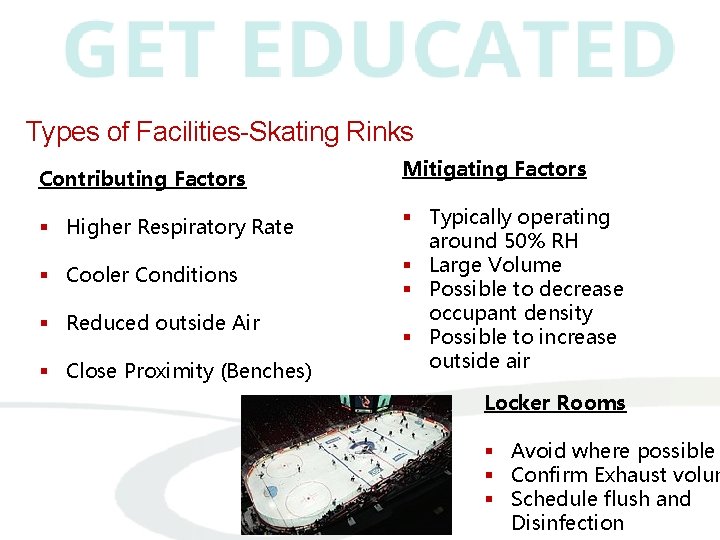
Types of Facilities-Skating Rinks Contributing Factors Mitigating Factors § Higher Respiratory Rate § Typically operating around 50% RH § Large Volume § Possible to decrease occupant density § Possible to increase outside air § Cooler Conditions § Reduced outside Air § Close Proximity (Benches) Locker Rooms § Avoid where possible § Confirm Exhaust volum § Schedule flush and Disinfection
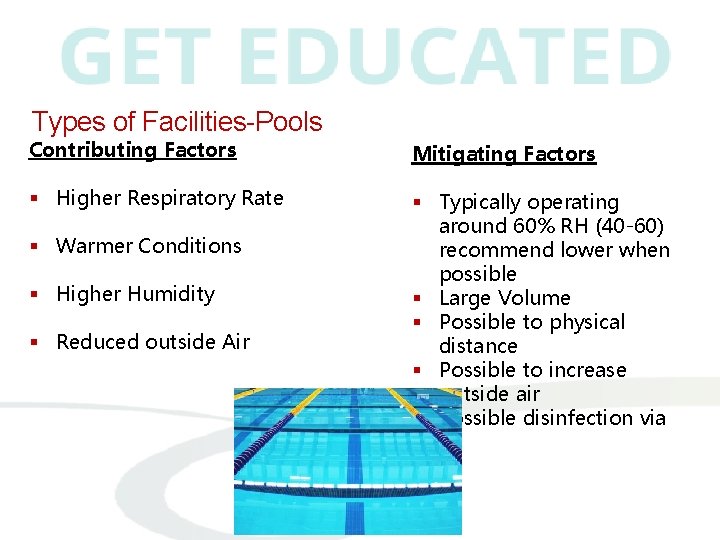
Types of Facilities-Pools Contributing Factors Mitigating Factors § Higher Respiratory Rate § Typically operating around 60% RH (40 -60) recommend lower when possible § Large Volume § Possible to physical distance § Possible to increase outside air § Possible disinfection via Cl § Warmer Conditions § Higher Humidity § Reduced outside Air
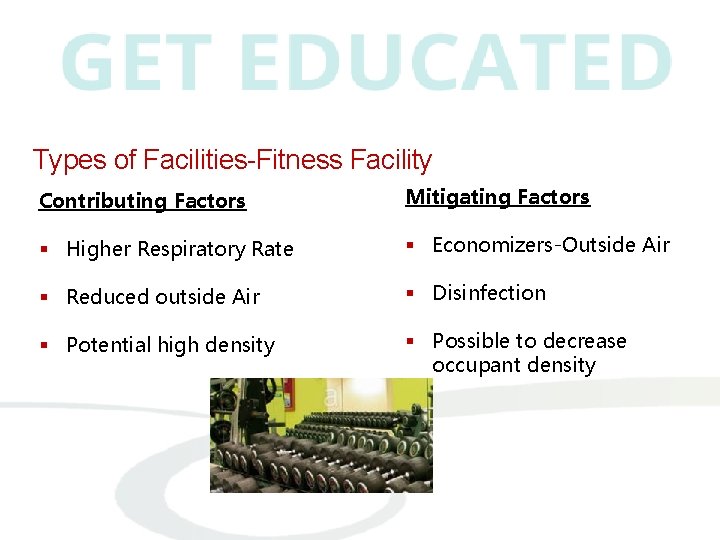
Types of Facilities-Fitness Facility Contributing Factors Mitigating Factors § Higher Respiratory Rate § Economizers-Outside Air § Reduced outside Air § Disinfection § Potential high density § Possible to decrease occupant density
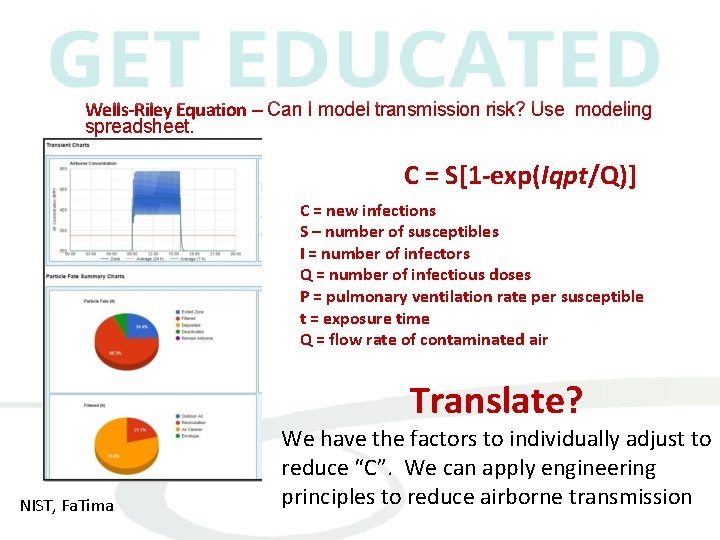
Wells-Riley Equation – Can I model transmission risk? Use modeling spreadsheet. C = S[1 -exp(Iqpt/Q)] C = new infections S – number of susceptibles I = number of infectors Q = number of infectious doses P = pulmonary ventilation rate per susceptible t = exposure time Q = flow rate of contaminated air Translate? NIST, Fa. Tima We have the factors to individually adjust to reduce “C”. We can apply engineering principles to reduce airborne transmission

What is the game plan?
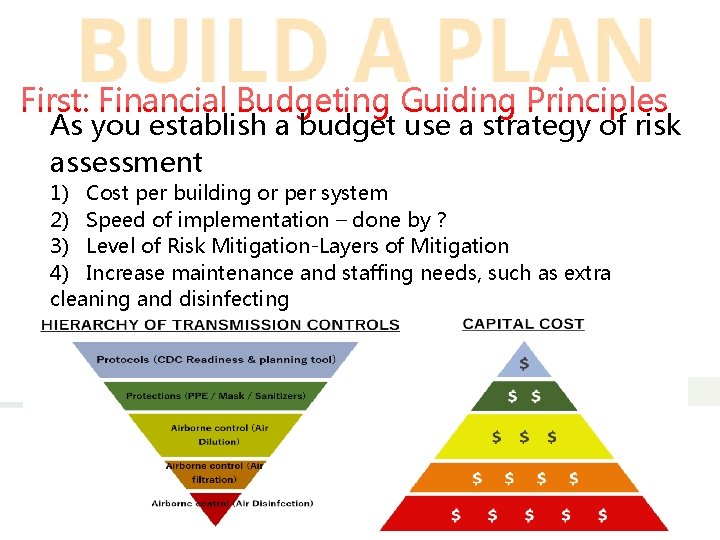
First: Financial Budgeting Guiding Principles As you establish a budget use a strategy of risk assessment 1) Cost per building or per system 2) Speed of implementation – done by ? 3) Level of Risk Mitigation-Layers of Mitigation 4) Increase maintenance and staffing needs, such as extra cleaning and disinfecting
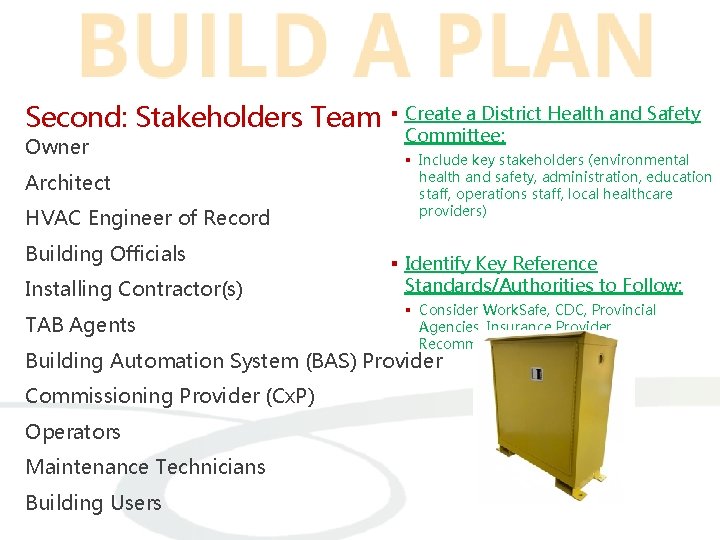
Second: Stakeholders Team § Create a District Health and Safety Owner Architect HVAC Engineer of Record Building Officials Installing Contractor(s) TAB Agents Committee: § Include key stakeholders (environmental health and safety, administration, education staff, operations staff, local healthcare providers) § Identify Key Reference Standards/Authorities to Follow: § Consider Work. Safe, CDC, Provincial Agencies, Insurance Provider Recommendations Building Automation System (BAS) Provider Commissioning Provider (Cx. P) Operators Maintenance Technicians Building Users
Third: Get Organized, HVAC Pre-Assessment and Begin Gather Information- Administrative Phase § Baseline/Indoor Air Quality –Check Temps and Humidity – find out how much OA you have § Gather HVAC Plans and Manuals and maintenance information on systems in place § Understand your Building Management System (BMS) § Maintenance - Prioritize HVAC backlog –Ex: Outside Air Dampers, building management systems § Review Filter Order information for existing MERV 13 or higher § Work with vendors and procurement officers to make sure supplies will not be interrupted
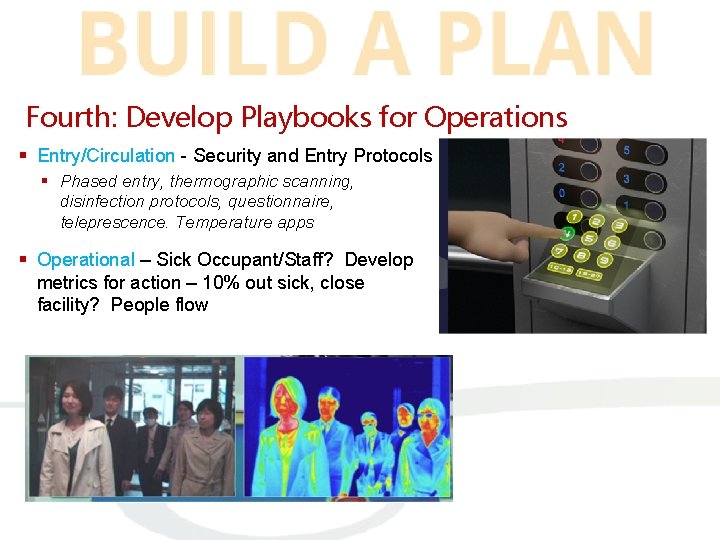
Fourth: Develop Playbooks for Operations § Entry/Circulation - Security and Entry Protocols § Phased entry, thermographic scanning, disinfection protocols, questionnaire, teleprescence. Temperature apps § Operational – Sick Occupant/Staff? Develop metrics for action – 10% out sick, close facility? People flow
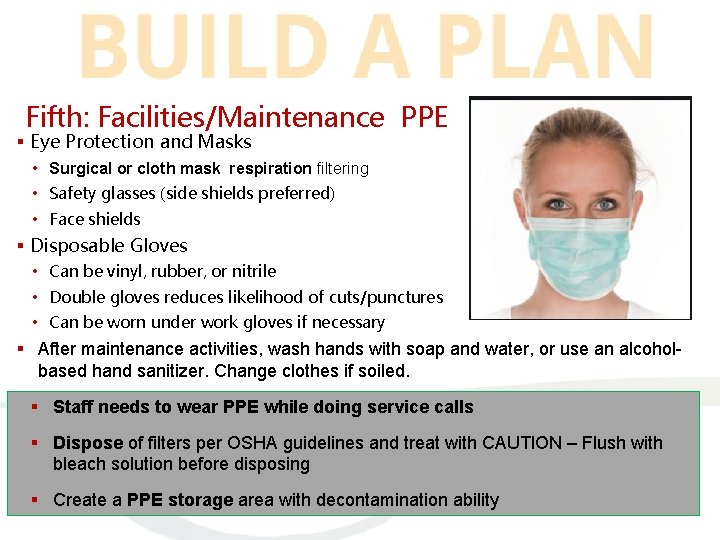
Fifth: Facilities/Maintenance PPE § Eye Protection and Masks • Surgical or cloth mask respiration filtering • Safety glasses (side shields preferred) • Face shields § Disposable Gloves • Can be vinyl, rubber, or nitrile • Double gloves reduces likelihood of cuts/punctures • Can be worn under work gloves if necessary § After maintenance activities, wash hands with soap and water, or use an alcoholbased hand sanitizer. Change clothes if soiled. § Staff needs to wear PPE while doing service calls § Dispose of filters per OSHA guidelines and treat with CAUTION – Flush with bleach solution before disposing § Create a PPE storage area with decontamination ability
Easy to Implement Recommendations – Short & Long Term
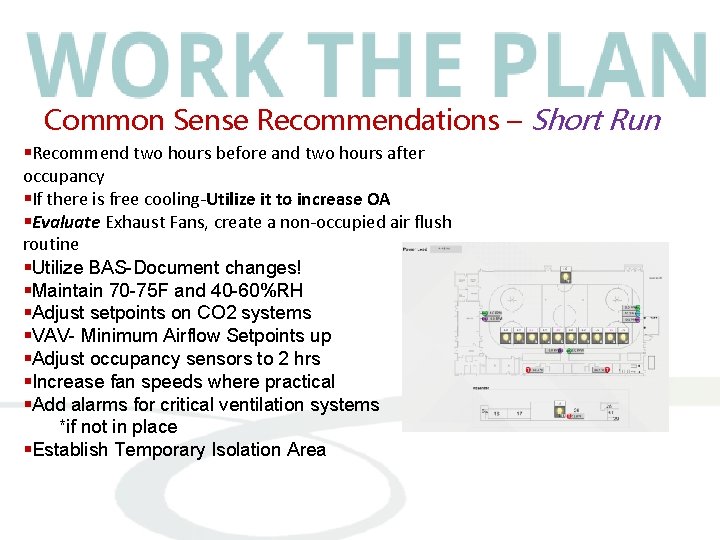
Common Sense Recommendations – Short Run §Recommend two hours before and two hours after occupancy §If there is free cooling-Utilize it to increase OA §Evaluate Exhaust Fans, create a non-occupied air flush routine §Utilize BAS-Document changes! §Maintain 70 -75 F and 40 -60%RH §Adjust setpoints on CO 2 systems §VAV- Minimum Airflow Setpoints up §Adjust occupancy sensors to 2 hrs §Increase fan speeds where practical §Add alarms for critical ventilation systems *if not in place §Establish Temporary Isolation Area
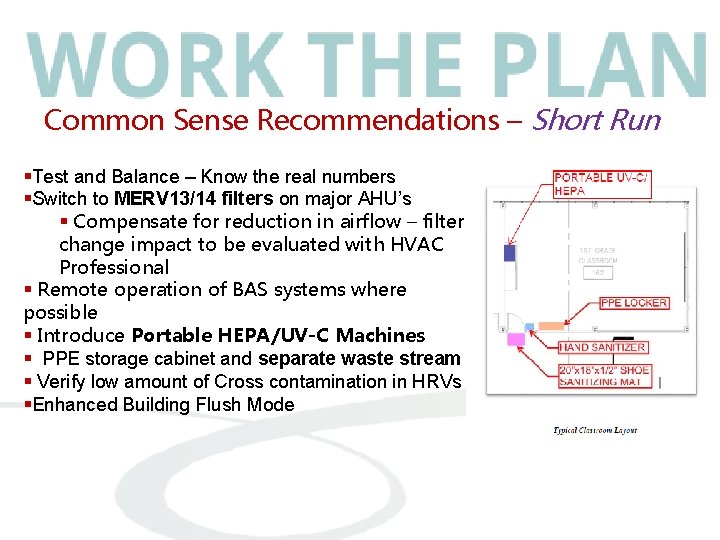
Common Sense Recommendations – Short Run §Test and Balance – Know the real numbers §Switch to MERV 13/14 filters on major AHU’s § Compensate for reduction in airflow – filter change impact to be evaluated with HVAC Professional § Remote operation of BAS systems where possible § Introduce Portable HEPA/UV-C Machines § PPE storage cabinet and separate waste stream § Verify low amount of Cross contamination in HRVs §Enhanced Building Flush Mode
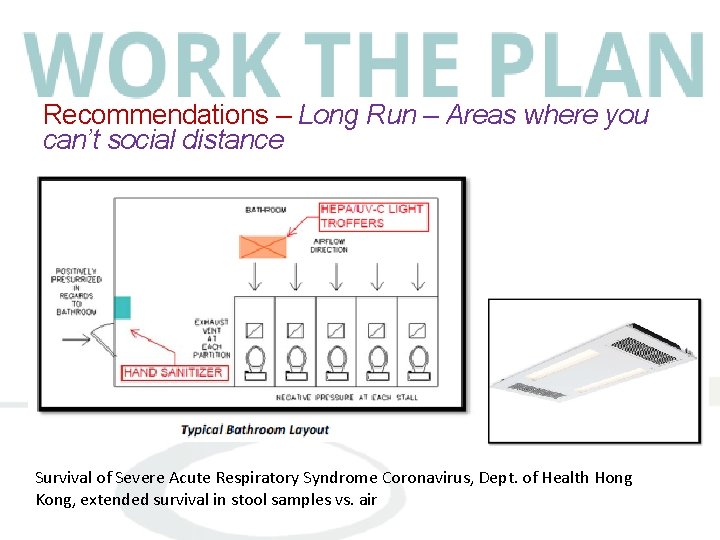
Recommendations – Long Run – Areas where you can’t social distance Survival of Severe Acute Respiratory Syndrome Coronavirus, Dept. of Health Hong Kong, extended survival in stool samples vs. air
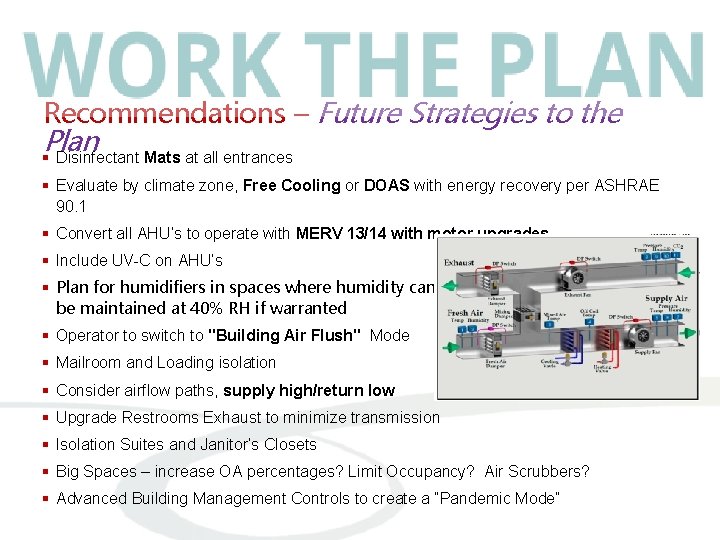
Recommendations – Future Strategies to the Plan § Disinfectant Mats at all entrances § Evaluate by climate zone, Free Cooling or DOAS with energy recovery per ASHRAE 90. 1 § Convert all AHU’s to operate with MERV 13/14 with motor upgrades § Include UV-C on AHU’s § Plan for humidifiers in spaces where humidity can not be maintained at 40% RH if warranted § Operator to switch to "Building Air Flush" Mode § Mailroom and Loading isolation § Consider airflow paths, supply high/return low § Upgrade Restrooms Exhaust to minimize transmission § Isolation Suites and Janitor’s Closets § Big Spaces – increase OA percentages? Limit Occupancy? Air Scrubbers? § Advanced Building Management Controls to create a “Pandemic Mode” 26 of 22
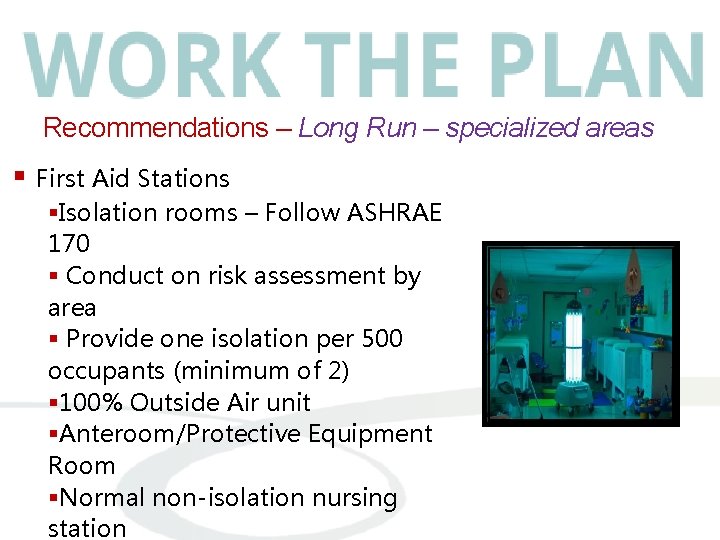
Recommendations – Long Run – specialized areas § First Aid Stations §Isolation rooms – Follow ASHRAE 170 § Conduct on risk assessment by area § Provide one isolation per 500 occupants (minimum of 2) § 100% Outside Air unit §Anteroom/Protective Equipment Room §Normal non-isolation nursing station
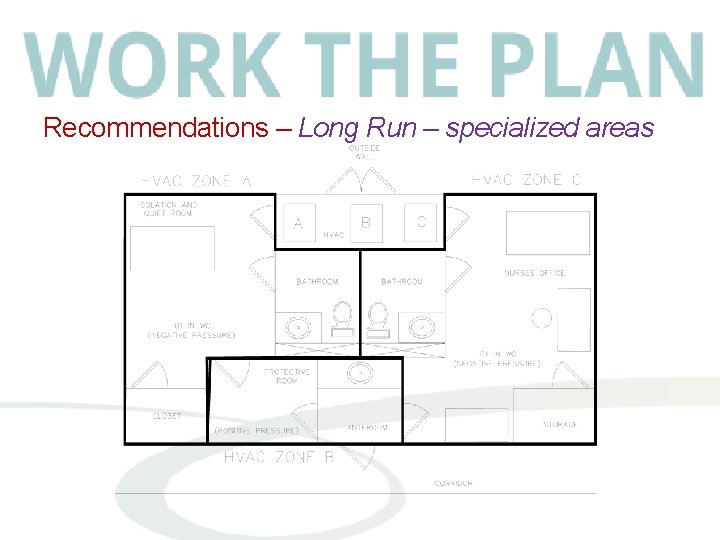
Recommendations – Long Run – specialized areas
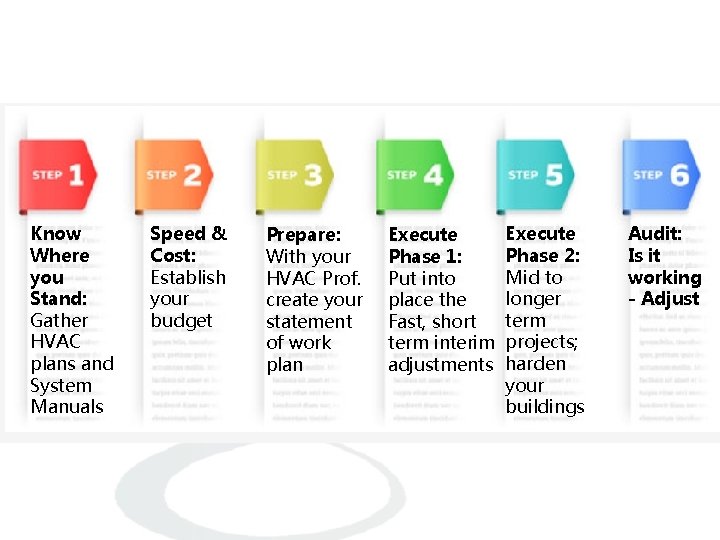
6 Step Plan Know Where you Stand: Gather HVAC plans and System Manuals Speed & Cost: Establish your budget Prepare: With your HVAC Prof. create your statement of work plan Execute Phase 1: Put into place the Fast, short term interim adjustments Execute Phase 2: Mid to longer term projects; harden your buildings Audit: Is it working - Adjust
Questions? Kyle Hasenkox Kyle. Hasenkox@RPEn g. ca Kyle@RPEng. ca
- Slides: 31