
Renewable Energy Systems UNIT4 Biomass CONTENTS v Introduction
Renewable Energy Systems UNIT-4 Biomass
CONTENTS v Introduction v Photosynthesis Process v Steps Of Photosynthesis v Biomass Energy Conversion v Direct Combustion v Thermo Chemical Conversion v Biochemical Conversion v Biogas Generation v Classification Of Biogas Plants v Factors Affecting Biogas Production v Applications Of Biomass v Site Selection v Advantages & Disadvantages
Introduction to Biomass: ü India is a land of village where the energy required for domestic purpose such as cooking is met from dried woods, twigs and leaves of plants and other dried organic matter such as cow dung. ü This organic matter called as biomass is available freely as waste. ü It contains stored energy from the sun. ü It is a renewable energy source because we can always grow more trees and crops, and waste will always exist. ü The biomass is fast renewable forms of energy and available freely as waste and discarded matters.
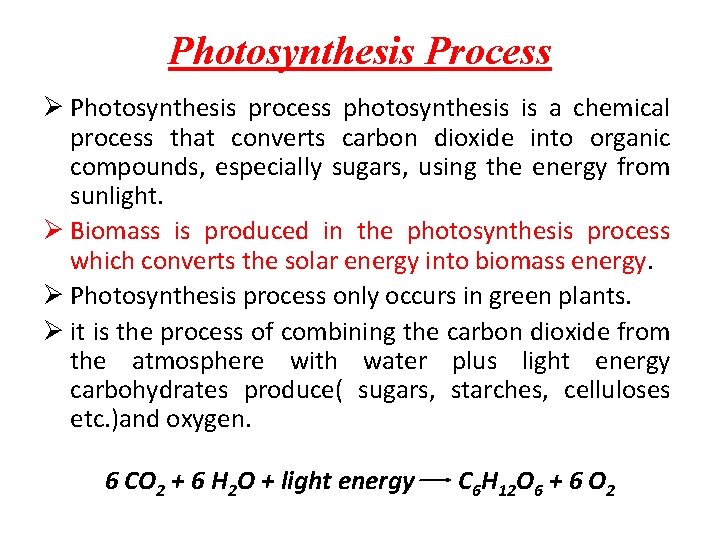
Photosynthesis Process Ø Photosynthesis process photosynthesis is a chemical process that converts carbon dioxide into organic compounds, especially sugars, using the energy from sunlight. Ø Biomass is produced in the photosynthesis process which converts the solar energy into biomass energy. Ø Photosynthesis process only occurs in green plants. Ø it is the process of combining the carbon dioxide from the atmosphere with water plus light energy carbohydrates produce( sugars, starches, celluloses etc. )and oxygen. 6 CO 2 + 6 H 2 O + light energy C 6 H 12 O 6 + 6 O 2
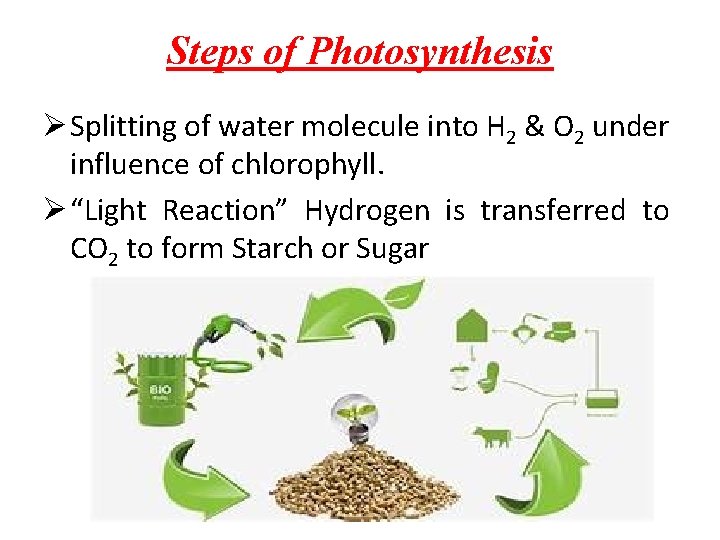
Steps of Photosynthesis Ø Splitting of water molecule into H 2 & O 2 under influence of chlorophyll. Ø “Light Reaction” Hydrogen is transferred to CO 2 to form Starch or Sugar

Biomass Energy Conversion Ø The various process used for conversion of biomass into energy or bio fuels can be classified as follows: 1) Direct combustion 2) Thermo chemical conversion 3) Biochemical conversion

Direct Combustion • The direct combustion of biomass in presence of oxygen/air to produce heat and by products is called direct combustion. • The complete combustion of biomass into ash is called incineration. • This heat energy in the product gases or in the form of steam can be used for various applications like space heating or cooling, power generation process heating in industries or any other application. • However, if biomass energy by combustion is used as co generation with conventional fuels, the utilization of biomass energy makes it an attractive proposition.
Thermo Chemical Conversion Ø The thermo chemical reaction can convert the organic biomass into more valuable and convenient form of products as gaseous and liquid fuels residue and by-products etc. These processes can be carried out in following ways: A. Gasification B. Pyrolysis
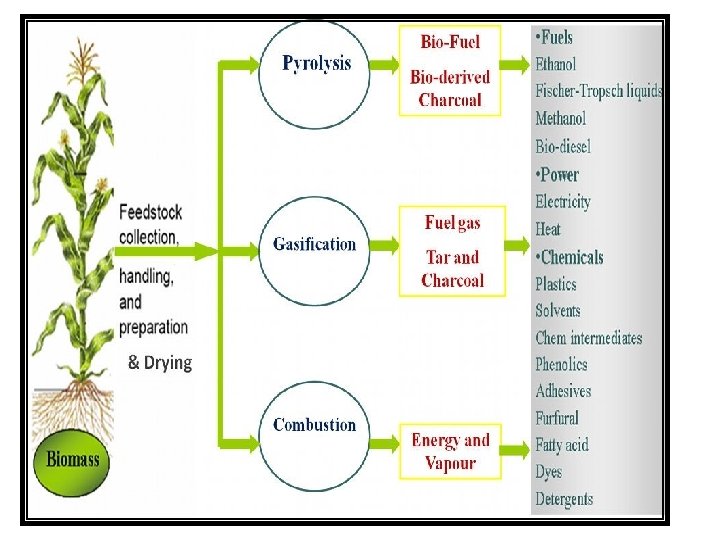
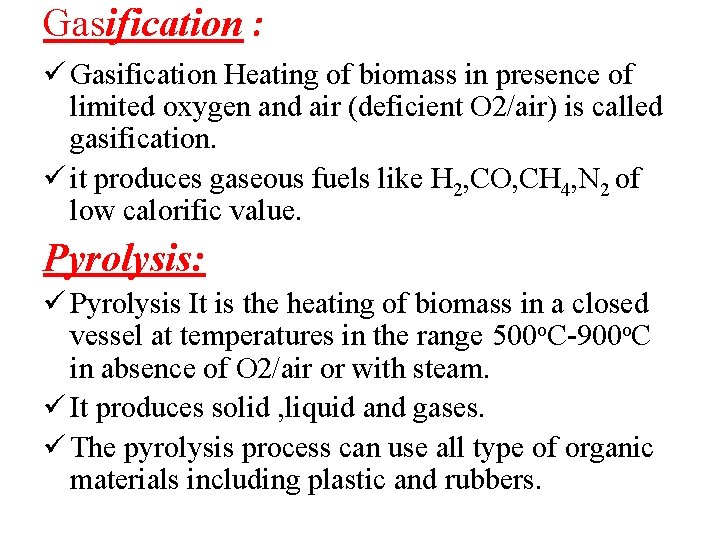
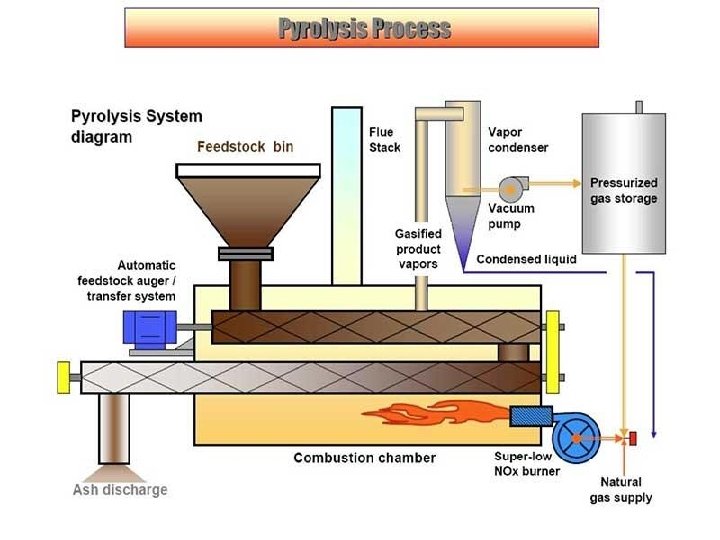
Gasification : ü Gasification Heating of biomass in presence of limited oxygen and air (deficient O 2/air) is called gasification. ü it produces gaseous fuels like H 2, CO, CH 4, N 2 of low calorific value. Pyrolysis: ü Pyrolysis It is the heating of biomass in a closed vessel at temperatures in the range 500 o. C-900 o. C in absence of O 2/air or with steam. ü It produces solid , liquid and gases. ü The pyrolysis process can use all type of organic materials including plastic and rubbers.
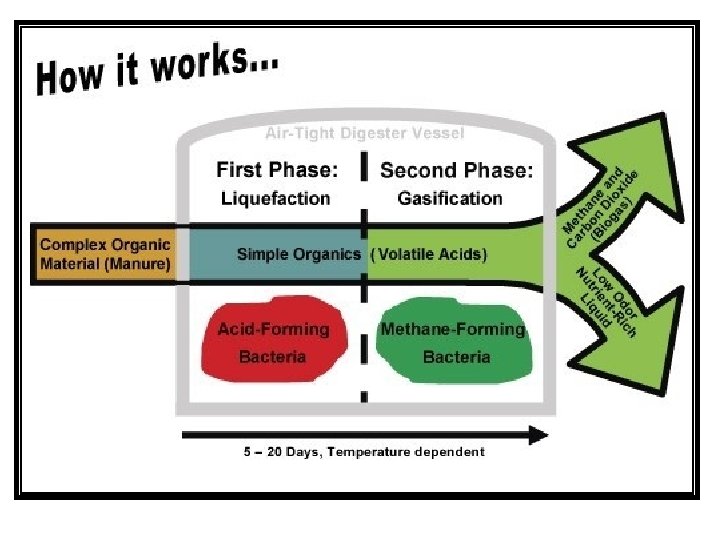
Biochemical Conversion Ø In biochemical processes the bacteria and micro organisms are used to transform the raw biomass into useful energy like methane and ethane gas. Ø Following organic treatments are given to the biomass: 1) Fermentation of biomass(Aerobic digestion) 2) Anaerobic digestion of biomass
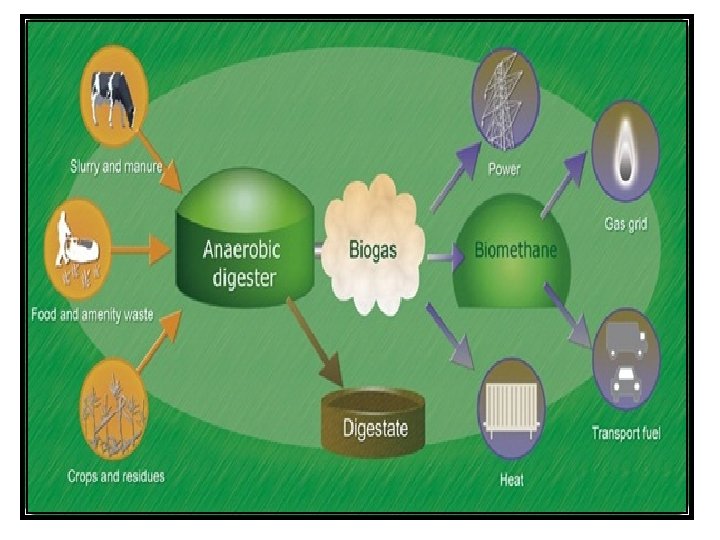
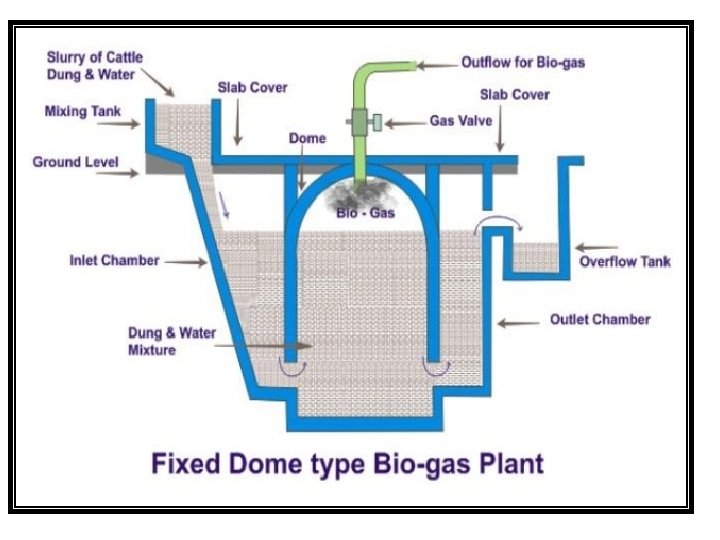
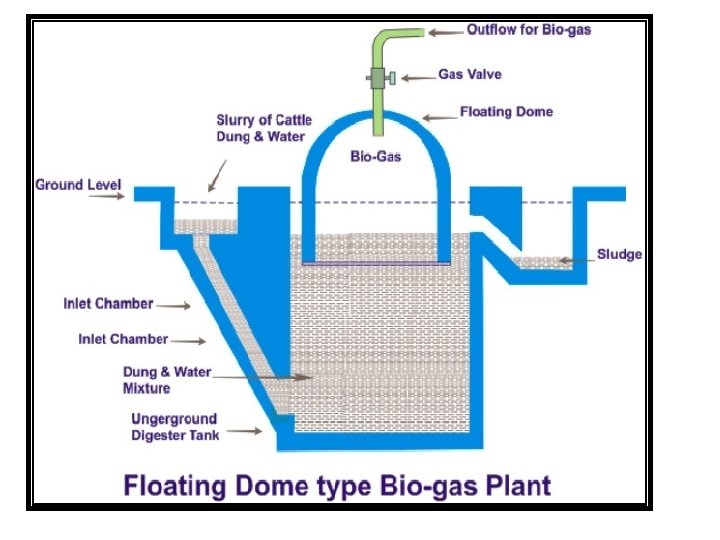
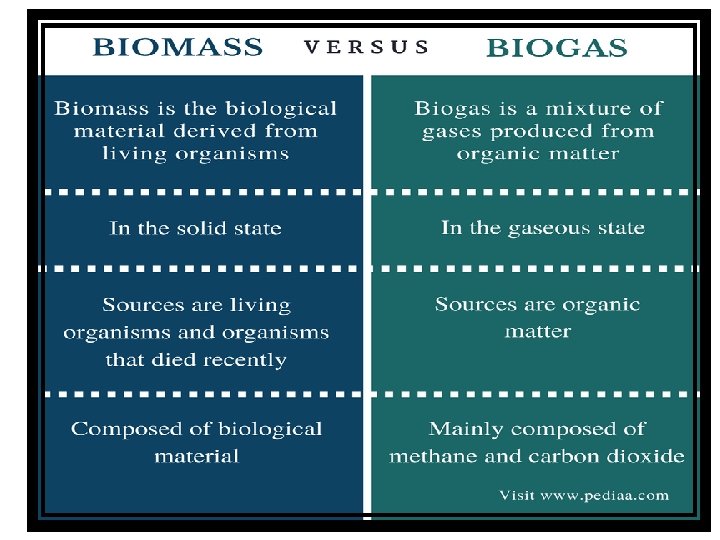
Biogas Generation § Biogas contains 55 -65% methane, 30 -40% CO 2 and the remainders are impurities like H 2 S, H 2, N 2 gases. § Cattle dung can produce 0. 037 m 3 of biogas per kg of cow dung. § The calorific value of gas is 21000 to 23000 k. J/kg or about 38000 k. J/m 3 of gas. § The material from which biogas is produced retains its value as fertilizer or as animal feed which can be used after certain processing.
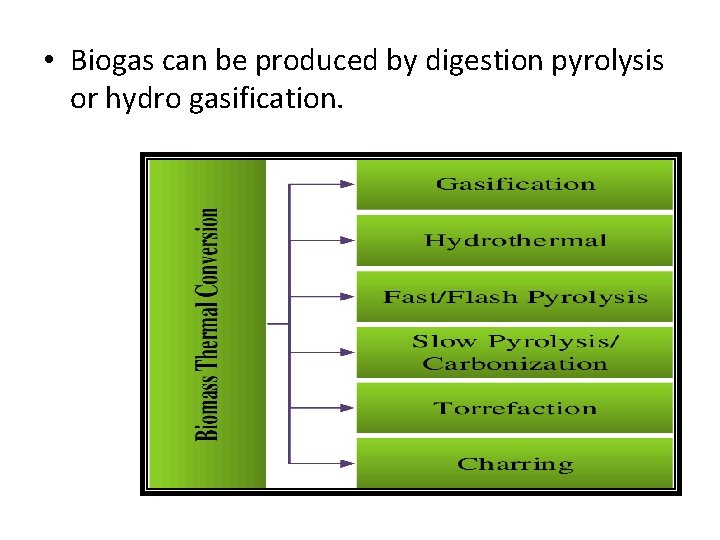
• Biogas can be produced by digestion pyrolysis or hydro gasification.
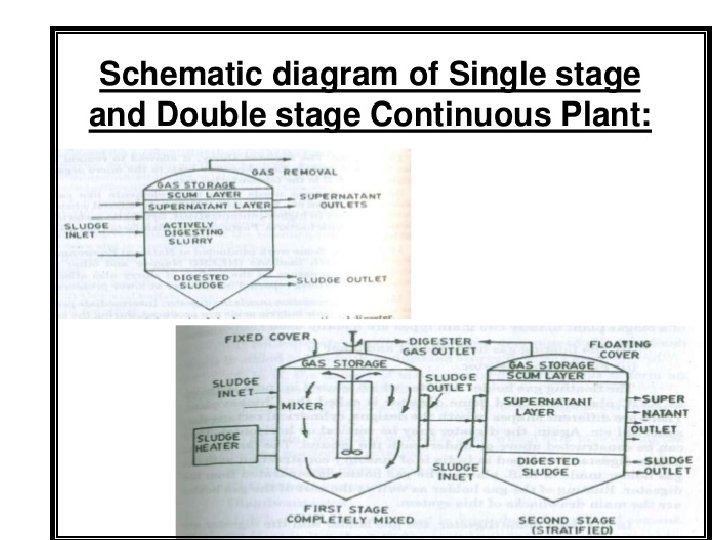
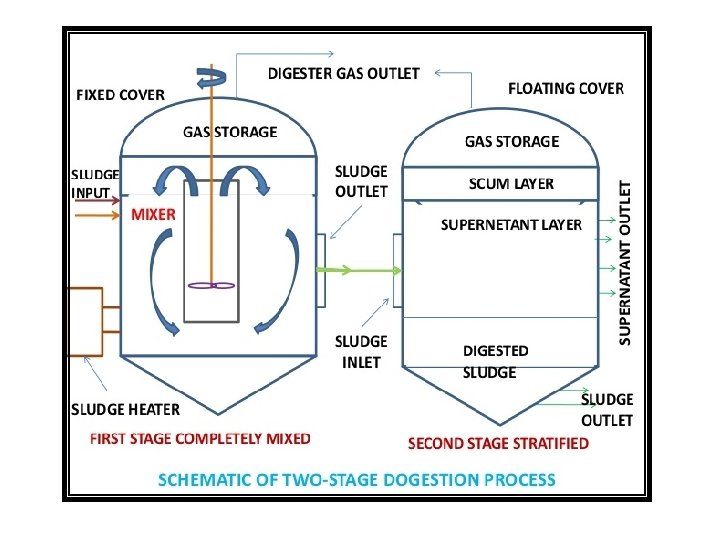
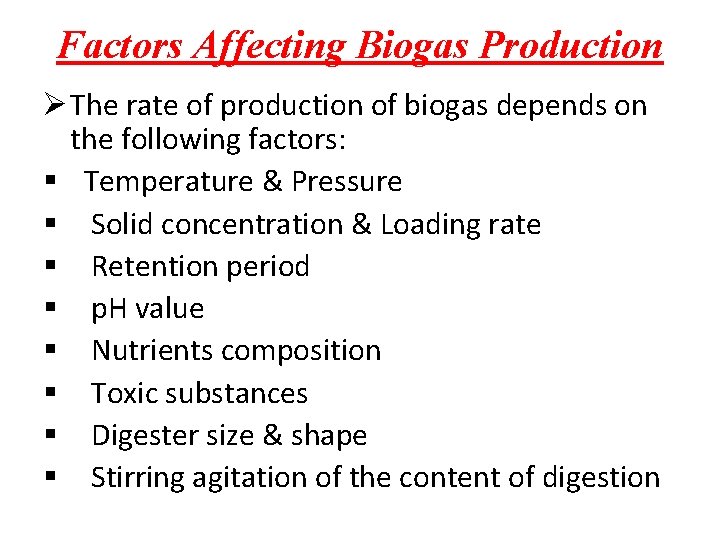
Factors Affecting Biogas Production Ø The rate of production of biogas depends on the following factors: § Temperature & Pressure § Solid concentration & Loading rate § Retention period § p. H value § Nutrients composition § Toxic substances § Digester size & shape § Stirring agitation of the content of digestion
Application of biomass ü Waste organic biomass can be directly used as domestic fuels. ü Biogas is used as domestic fuels in gas stoves like LPG. ü Biogas can be used to run the engines, boilers and turbines. ü It is used for heating the water. ü Biogas is used as cooking fuel. ü Biogas is metal light gas burner for lighting purpose. ü Biogas is used for water heating. It is used as fuel in I. C. Engine. ü It is used as fuel to run agricultural machineries. ü It is used to run diesel engine generator set to produce electricity. ü It is used for running pumps for irrigation purpose.
Site Selection v. Following factors must be considered while selecting the site for a biogas plant: 1. Distance 2. Minimum gradient 3. Open space 4. Water table 5. Seasonal run off 6. Distance from wells 7. Space requirements 8. Availability of water 9. Sources of cow dung/materials for biogas generation
Advantages of biomass ü Biomass is perennial source of renewable energy ü It can be repeatedly grown and obtained as biomass. ü Biomass is non pollutant of atmosphere. ü Methane gas produced from biomass is used as domestic fuel in gas stoves. ü Biomass is available everywhere and no need of any transportations. ü The biomass can be grown in near by seas and lakes. ü The lands can be spread for food crop production.
Disadvantages of biomass ü Biomass contains 50 -90% water and it is heavy. Hence transportation if needed is very difficult. ü Direct combustion of biomass produces smokes and smells. ü Calorific value of biomass if burnt in the raw form is very less. Biogas plants need lots of care and maintenance for its successful operations. ü It is economical if raw biomass such as cow dung is freely available. ü Biogas plants can’t be used in urban areas where the space availability is limited.
- Slides: 30