
Renewable Energy Lab Overview Experimental Objective Background Information
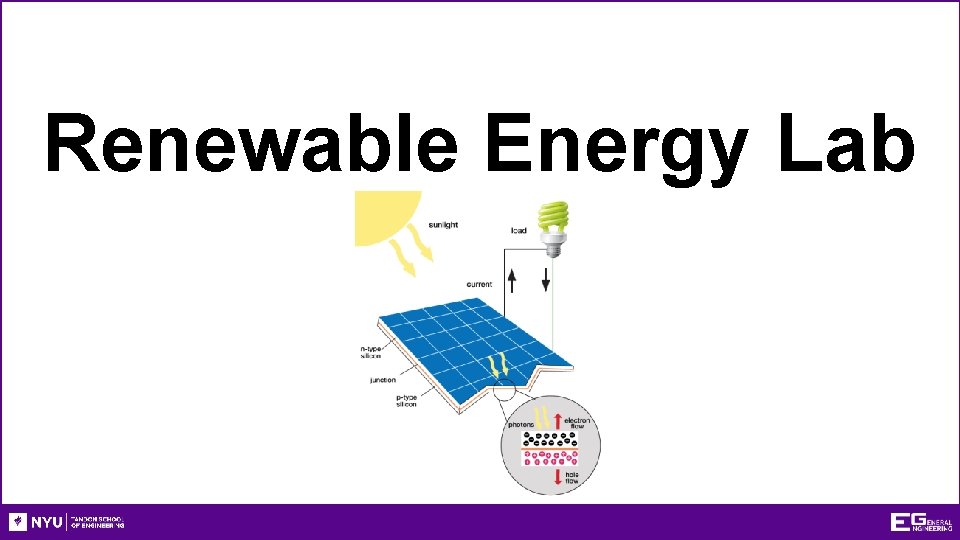
Renewable Energy Lab
Overview • Experimental Objective • Background Information • Materials • Procedure • Assignment • Closing
Experimental Objective • Test the capabilities of solar panels and wind turbines • Test the capabilities of the hydrogen fuel cells and capacitors • Design a renewable energy car to compete against the other groups
Background Information • Renewable Energy • Solar panels • Wind-turbine technology • Hydrogen fuel cells • Electronic Components
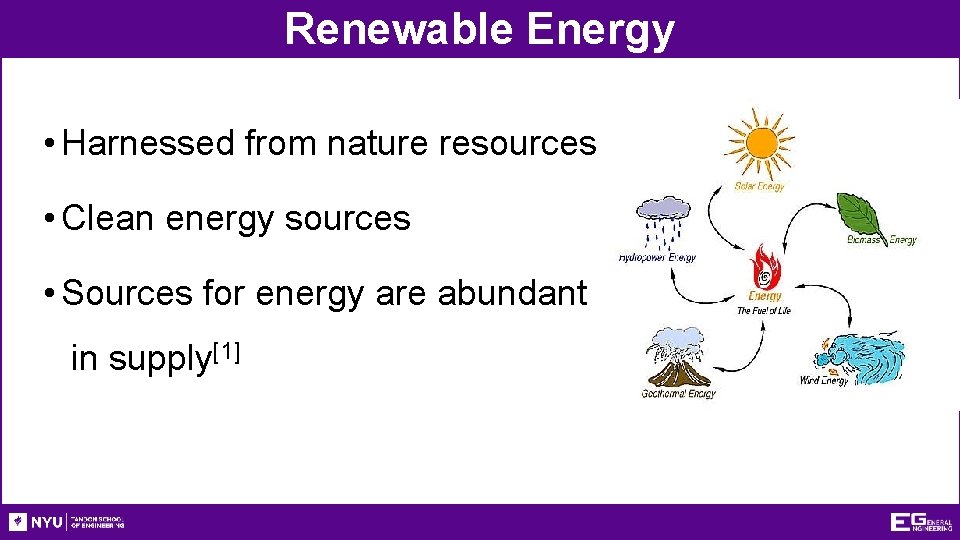
Renewable Energy • Harnessed from nature resources • Clean energy sources • Sources for energy are abundant in supply[1]
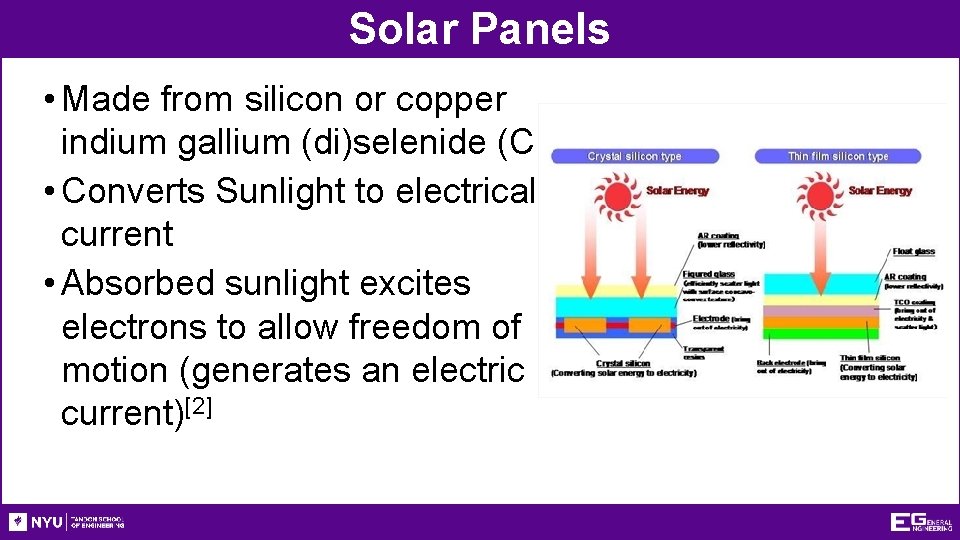
Solar Panels • Made from silicon or copper indium gallium (di)selenide (CIGS) • Converts Sunlight to electrical current • Absorbed sunlight excites electrons to allow freedom of motion (generates an electric current)[2]
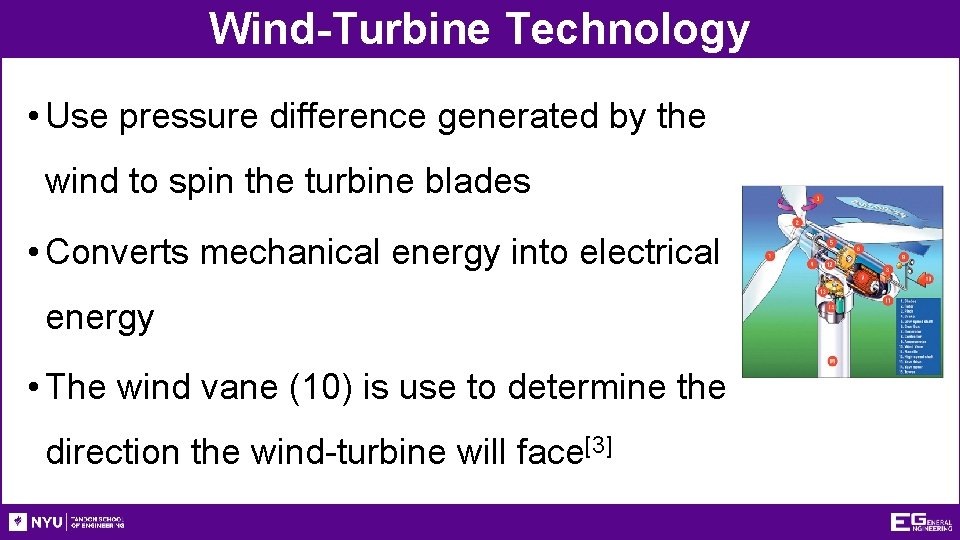
Wind-Turbine Technology • Use pressure difference generated by the wind to spin the turbine blades • Converts mechanical energy into electrical energy • The wind vane (10) is use to determine the direction the wind-turbine will face[3]
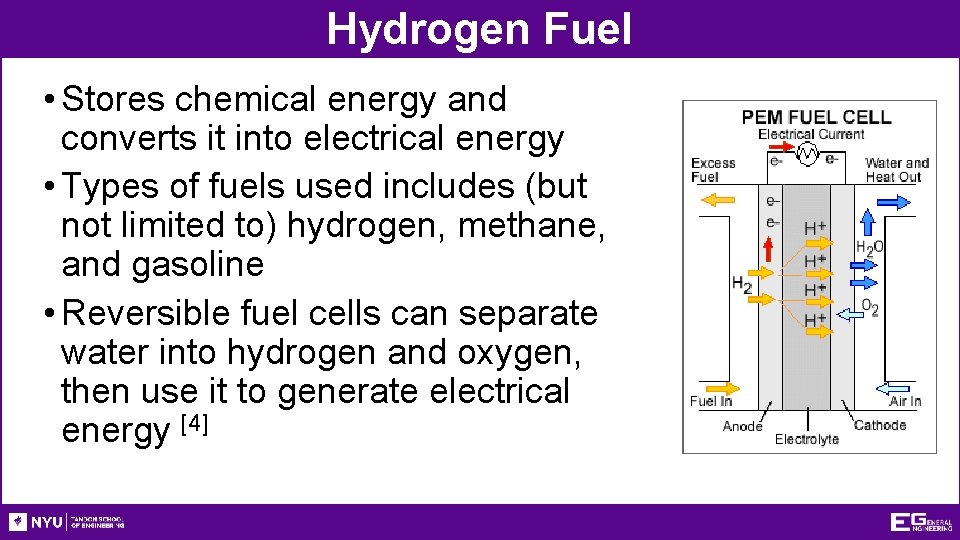
Hydrogen Fuel • Stores chemical energy and converts it into electrical energy • Types of fuels used includes (but not limited to) hydrogen, methane, and gasoline • Reversible fuel cells can separate water into hydrogen and oxygen, then use it to generate electrical energy [4]
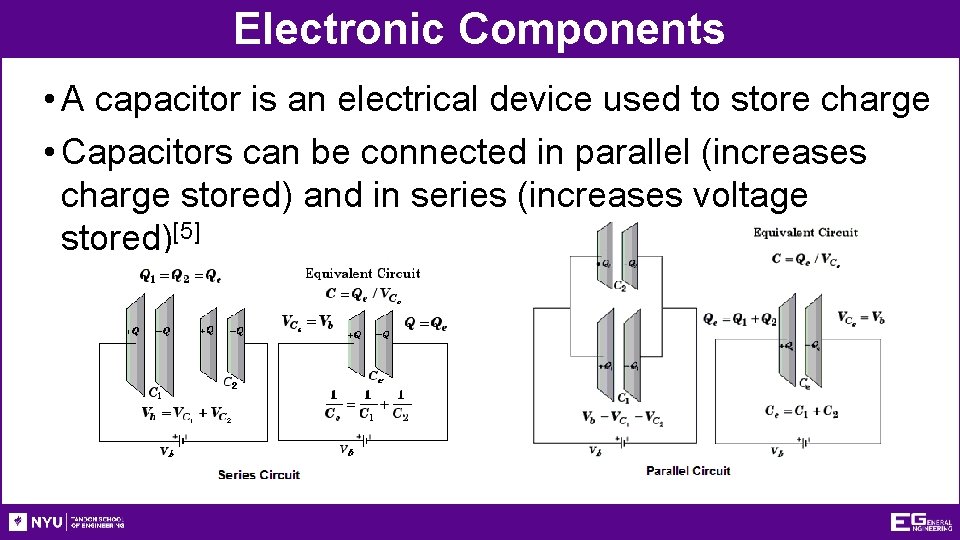
Electronic Components • A capacitor is an electrical device used to store charge • Capacitors can be connected in parallel (increases charge stored) and in series (increases voltage stored)[5]
Competition Rules • Power storage devices must be contained in the car • The only power sources allowed are the wind-turbine and solar panel • The renewable energy car may not be pushed or launched • The renewable energy car should not be touched after it has started to move • The car will run for up to five minutes or until the car comes to a stop
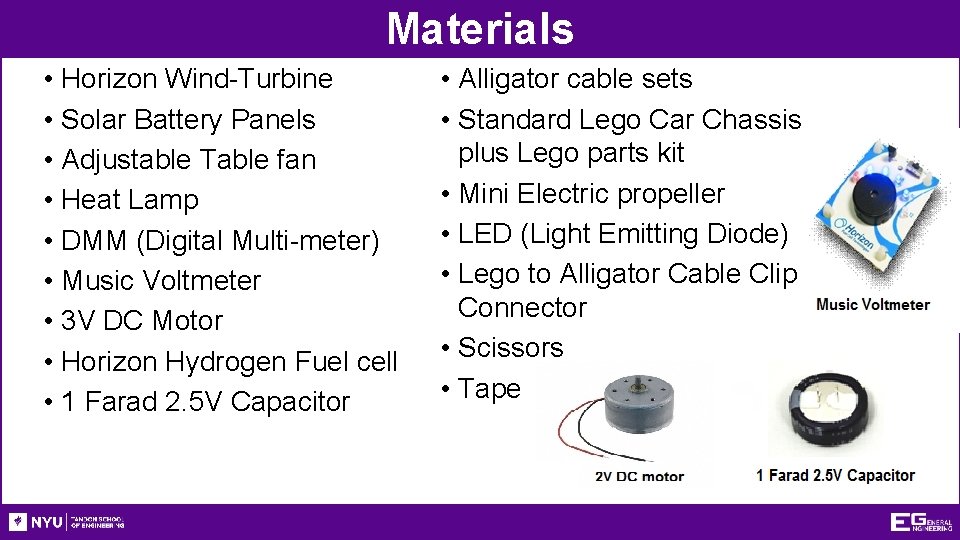
Materials • Horizon Wind-Turbine • Solar Battery Panels • Adjustable Table fan • Heat Lamp • DMM (Digital Multi-meter) • Music Voltmeter • 3 V DC Motor • Horizon Hydrogen Fuel cell • 1 Farad 2. 5 V Capacitor • Alligator cable sets • Standard Lego Car Chassis plus Lego parts kit • Mini Electric propeller • LED (Light Emitting Diode) • Lego to Alligator Cable Clip Connector • Scissors • Tape
Materials Price List • Horizon Wind-Turbine ($5. 00/each) • Solar Battery Panels ($10. 00/each) • Horizon Hydrogen Fuel cell ($12. 00/each) • 1 Farad 5. 5 V Capacitor ($3. 00/each) • Alligator cable sets ($0. 50/each pair) • Standard Lego Car Chassis plus Lego parts kit (only one kit) • Lego to Alligator Cable Clip Connector ($0. 10/each) • Tape ($0. 10/feet)
Procedure • Part 1: Test the Power sources using music voltmeter • Solar panel • Wind-turbine • Part 2: Test the power storage devices • Hydrogen fuel cell • Capacitor • Part 3: Design a renewable energy car using the power sources and power storage devices of your choice
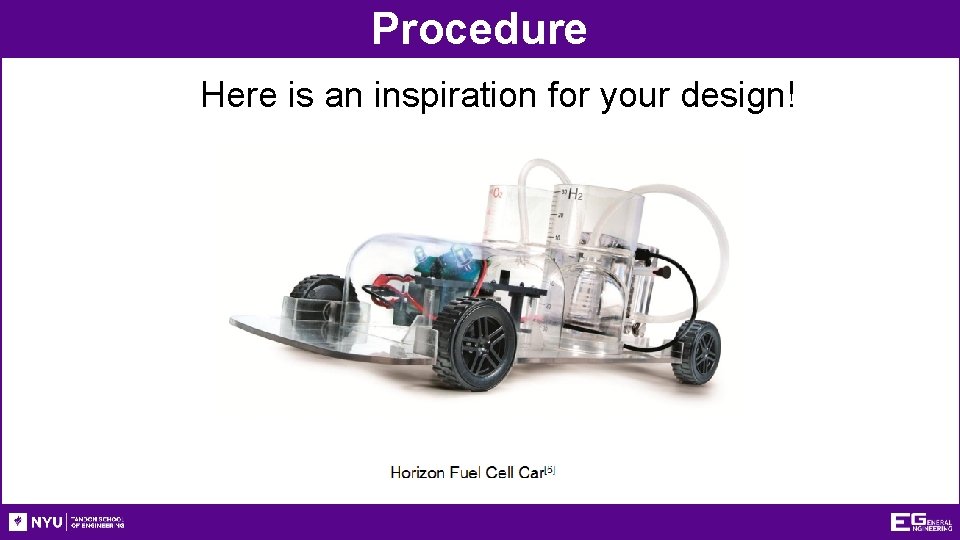
Procedure Here is an inspiration for your design!
Assignment: Report • Individual lab reports • Title page • Discussion of topics in the manual • Include a picture of your vehicle • Scan in lab notes (ask TA for assistance) • TA must initial that table and graph were completed
Assignment: Presentation • Team presentation • State rules of competition • Describe your design and its concepts • Include table of class results, cost and photo/video of design • How could your current design be improved? • Refer to “Creating Power. Point Presentations” found on EG website
Closing • Have all original data signed by TA • Submit all work electronically • Clean up workstations • Return all materials to TA
Works Cited 1. Eriksson, J. . "Renewable energy vs. fossil fuel. " Renewable power news. N. p. , 2010. Web. 26 Jul 2012. <http: //www. renewablepowernews. com/archives/1413>. 2. http: //www. agc-flatglass. com/AGC-Flat-Glass/English/Other/News-Overview/News -Detail/page. aspx/1014? newsitem=1273. 3. . The structure of a modern wind turbine – an overview. N. p. , n. d. Web. 26 Jul 2012. <http: //www. wwindea. org/technology/ch 01/en/1_2. html>. 4. Reg Tyler, . "Types of Fuel Cells. " Energy efficeny and renewable energy. U. S. Department of Energy, 2011. Web. 24 Jul 2012. <http: //www 1. eere. energy. gov/hydrogenandfuelcells/fc_types. html>. 5. . Rotational Equilibrium. WWU, n. d. Web. 26 Jul 2012. <http: //faculty. wwu. edu/vawter/Physics. Net/Topics. Main. Template. html>. 6. http: //www. horizonfuelcell. com/files/Education_Series_PDF. pdf
- Slides: 18