Rendering Fog CSS 522 Topics in Rendering March

- Slides: 21
Rendering Fog CSS 522 Topics in Rendering March 01, 2011 Scott and Lew
Overview: � Background of Fog � Method used to simulate it � Perlin's Noise � Why Perlin's Noise is cool? � Rendering fog with Perlin's Noise ◦ Pseudo Implementation
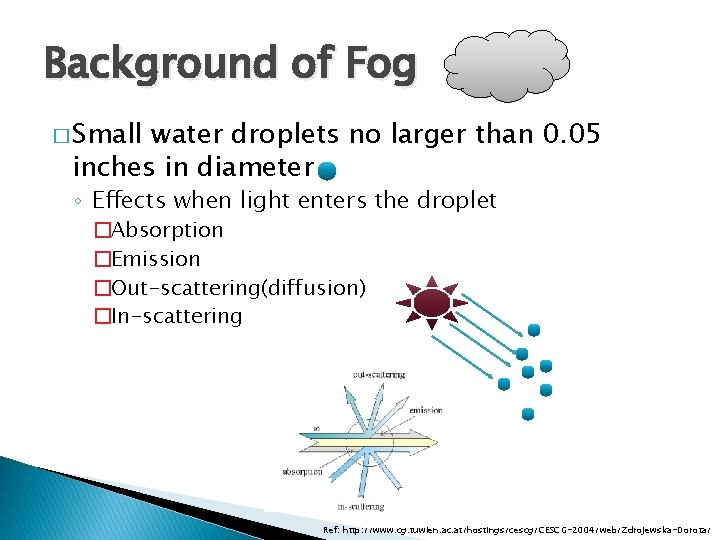
Background of Fog � Small water droplets no larger than 0. 05 inches in diameter ◦ Effects when light enters the droplet �Absorption �Emission �Out-scattering(diffusion) �In-scattering Ref: http: //www. cg. tuwien. ac. at/hostings/cescg/CESCG-2004/web/Zdrojewska-Dorota/
Challenges with Physics-Based Model � � Visible clouds and fog are created by millions and millions of water droplets refracting and reflecting light This is impractical to model – it might provide a more realistic rendering but comes at the expense of an impossibly huge amount of geometry to render. It also doesn’t make sense to define the size & position of each water droplet in a scene The visually interesting aspects of fog come from the aggregation of these particles, rather than the particles themselves
Previous Implementations Approaches � Render as textures on geometry � Render as sprites � Render as texture on background Shortcomings � Texture-based approaches doesn’t accurately reflect different camera positions � � None of these approaches allow geometry to interact with the fog (can’t see the effects of placing geometry inside or behind the fog) These also don’t capture the effects of multiple light sources or colored light
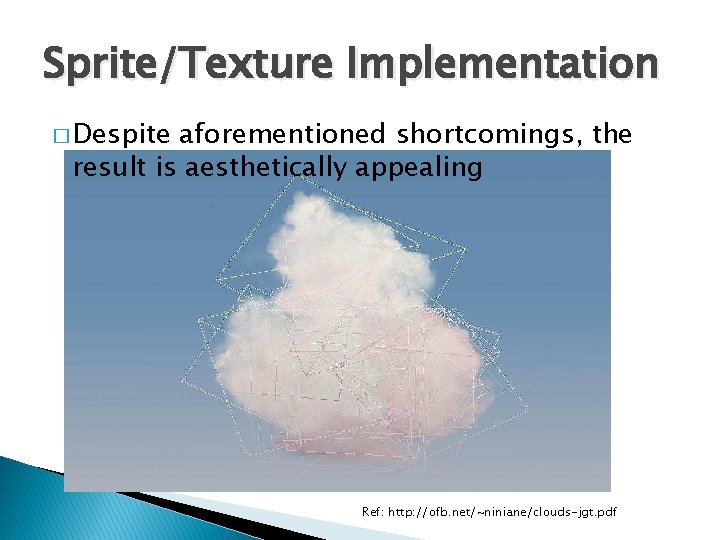
Sprite/Texture Implementation � Despite aforementioned shortcomings, the result is aesthetically appealing Ref: http: //ofb. net/~niniane/clouds-jgt. pdf
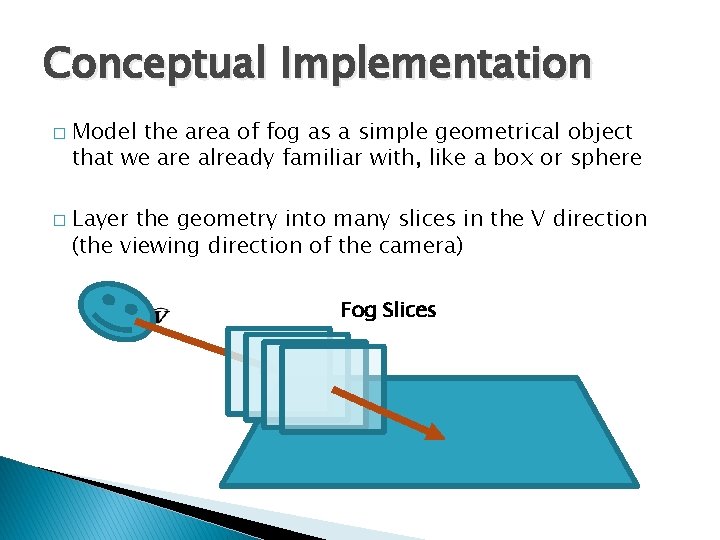
Conceptual Implementation � � Model the area of fog as a simple geometrical object that we are already familiar with, like a box or sphere Layer the geometry into many slices in the V direction (the viewing direction of the camera) Fog Slices
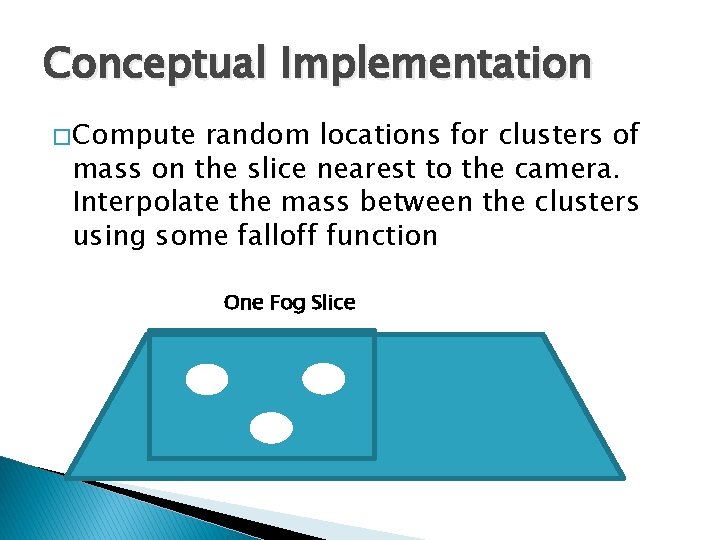
Conceptual Implementation � Compute random locations for clusters of mass on the slice nearest to the camera. Interpolate the mass between the clusters using some falloff function One Fog Slice
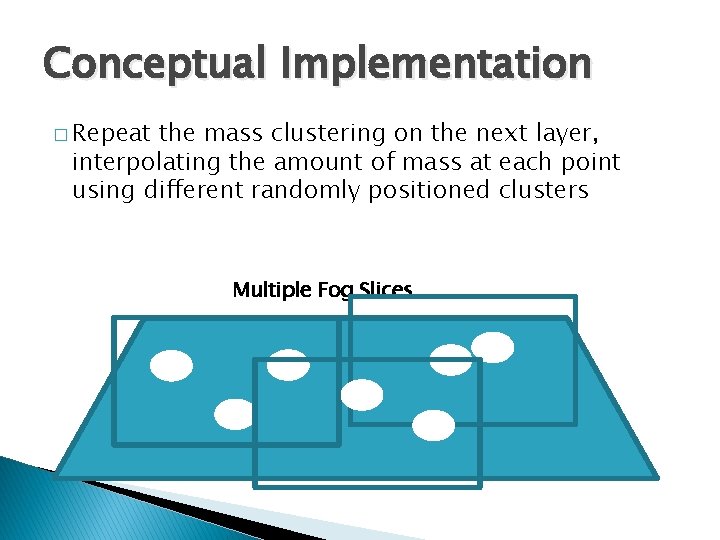
Conceptual Implementation � Repeat the mass clustering on the next layer, interpolating the amount of mass at each point using different randomly positioned clusters Multiple Fog Slices
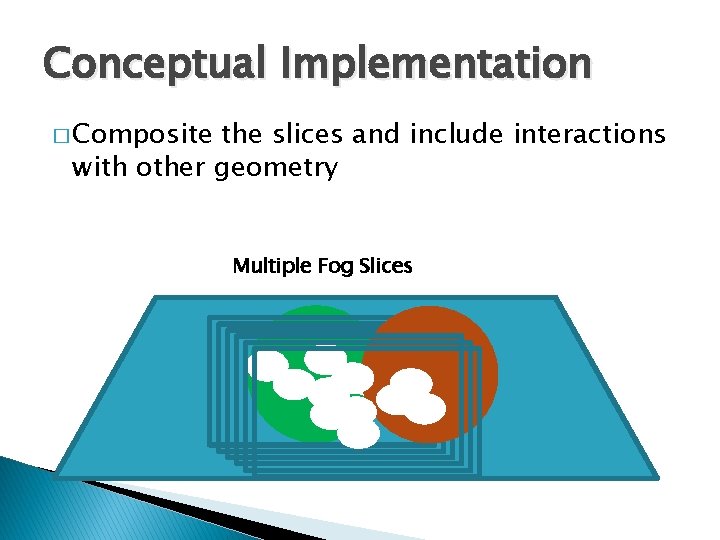
Conceptual Implementation � Composite the slices and include interactions with other geometry Multiple Fog Slices
Detailed Implementation Now that we have conceptual mass distributed in 3 D space, how do we render it? � � Intersect rays with our fog geometry as usual. Determine how much mass a ray intersects with at the first layer. Calculate how much mass the ray hit to determine the opacity of this intersection. More mass == more opacity If the opacity < 1, shoot another ray in the same direction. It will either intersect with the next layer, another piece of geometry, or nothing at all. Compute shading until we don’t intersect with any more geometry
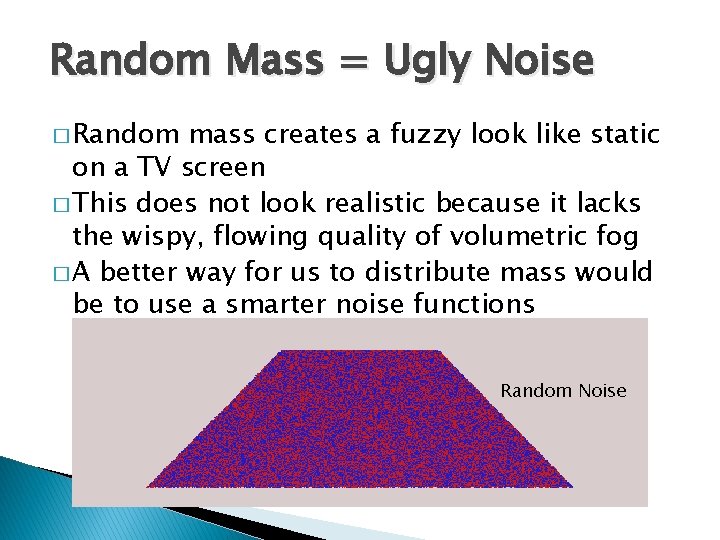
Random Mass = Ugly Noise � Random mass creates a fuzzy look like static on a TV screen � This does not look realistic because it lacks the wispy, flowing quality of volumetric fog � A better way for us to distribute mass would be to use a smarter noise functions Random Noise
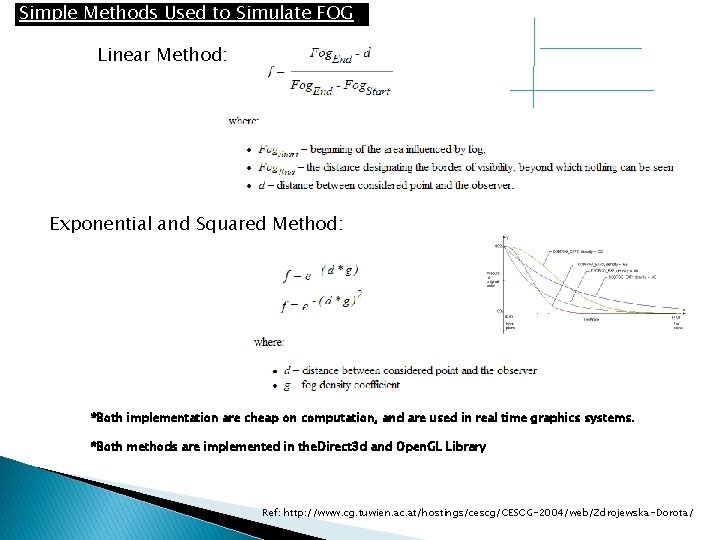
Simple Methods Used to Simulate FOG Linear Method: Exponential and Squared Method: *Both implementation are cheap on computation, and are used in real time graphics systems. *Both methods are implemented in the. Direct 3 d and Open. GL Library Ref: http: //www. cg. tuwien. ac. at/hostings/cescg/CESCG-2004/web/Zdrojewska-Dorota/
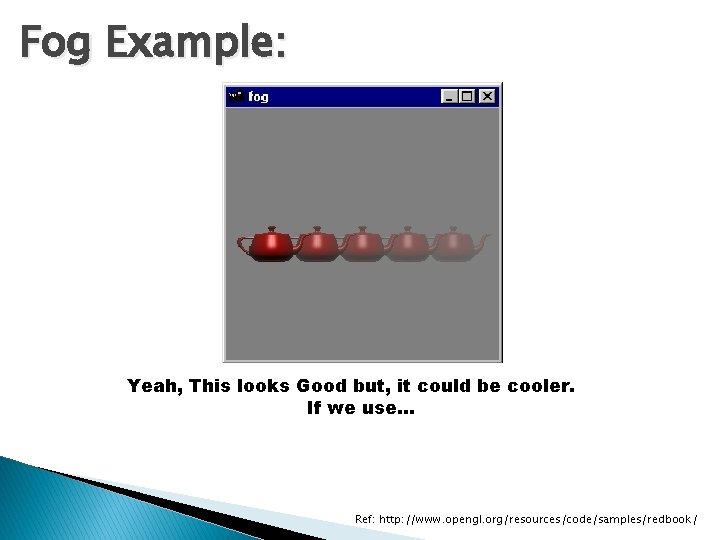
Fog Example: Yeah, This looks Good but, it could be cooler. If we use… Ref: http: //www. opengl. org/resources/code/samples/redbook/
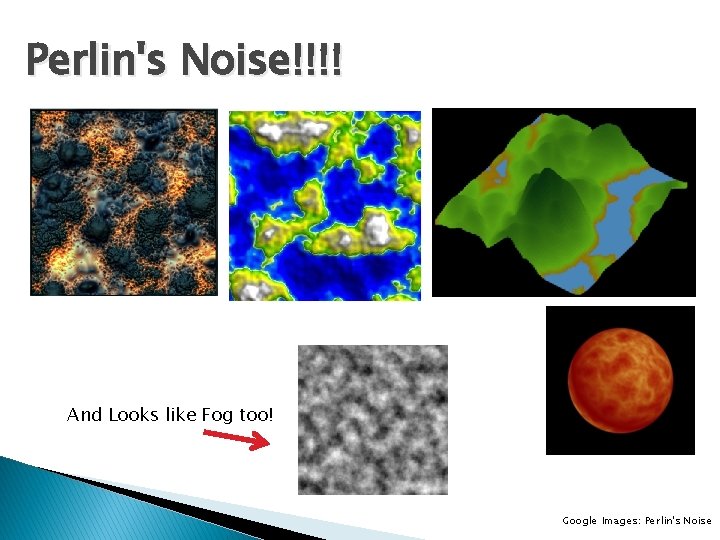
Perlin's Noise!!!! And Looks like Fog too! Google Images: Perlin's Noise
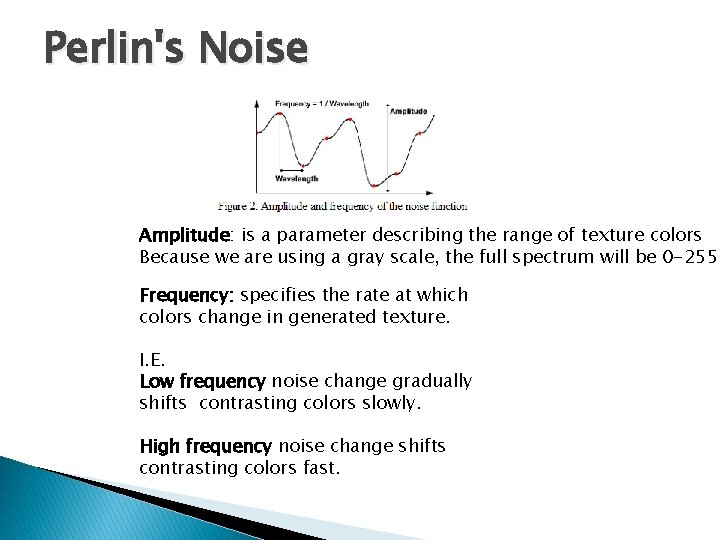
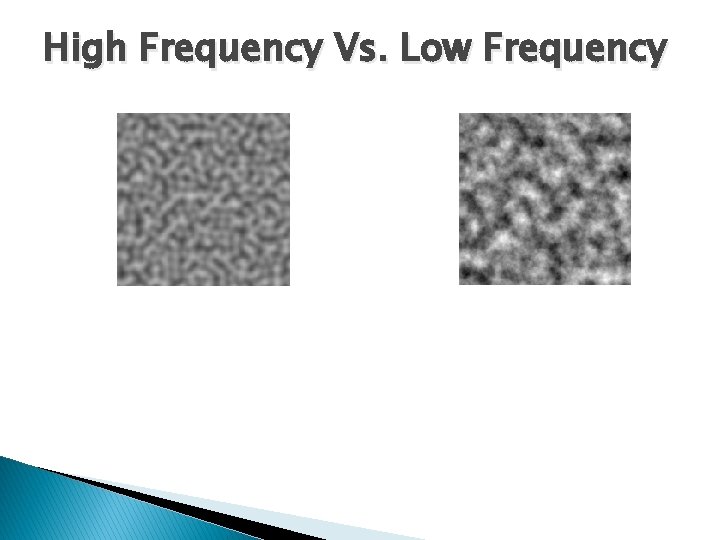
Perlin's Noise Amplitude: is a parameter describing the range of texture colors Because we are using a gray scale, the full spectrum will be 0 -255. Frequency: specifies the rate at which colors change in generated texture. I. E. Low frequency noise change gradually shifts contrasting colors slowly. High frequency noise change shifts contrasting colors fast.
High Frequency Vs. Low Frequency
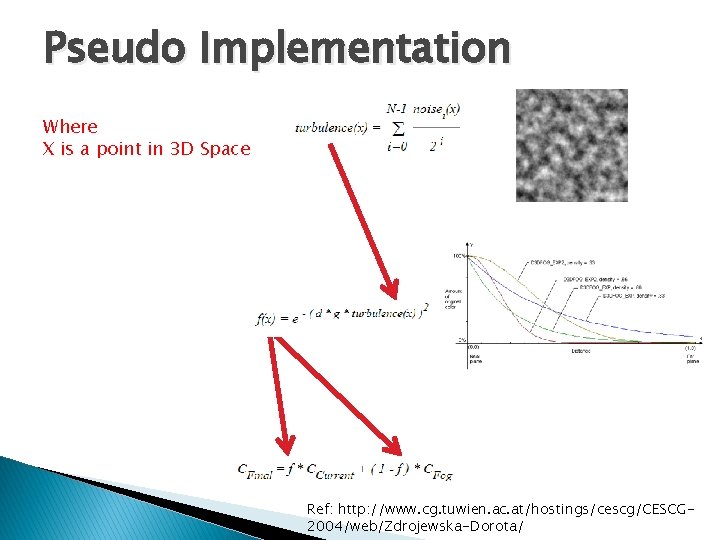
Pseudo Implementation Where X is a point in 3 D Space Ref: http: //www. cg. tuwien. ac. at/hostings/cescg/CESCG 2004/web/Zdrojewska-Dorota/
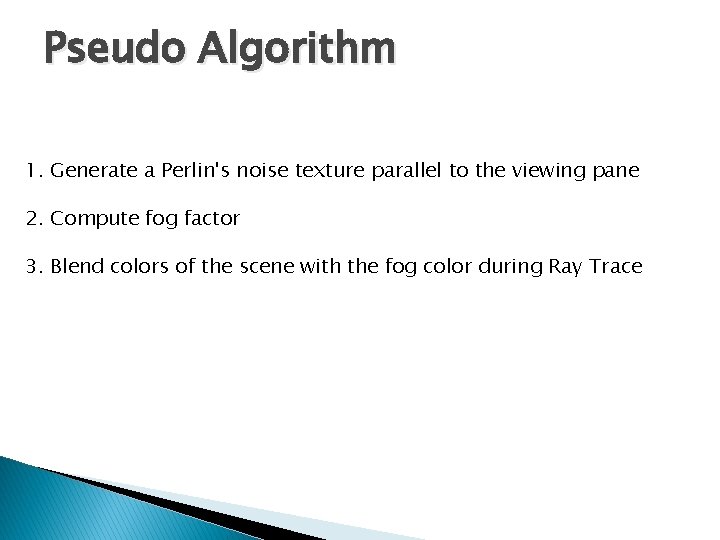
Pseudo Algorithm 1. Generate a Perlin's noise texture parallel to the viewing pane 2. Compute fog factor 3. Blend colors of the scene with the fog color during Ray Trace
Questions Ref: http: //www. cg. tuwien. ac. at/hostings/cescg/CE SCG-2004/web/Zdrojewska-Dorota/