
RENCONTRES DE MORIOND March 2005 Rare Decays David
![Motivations 1 - New experimental results for the rare decays [NA 48 ’ 03]](https://slidetodoc.com/presentation_image_h2/76ba61bc59d072644a493986a428073b/image-2.jpg "Motivations 1 - New experimental results for the rare decays [NA 48 ’ 03]")
![Constraints from Branching Ratios [PDG ’ 02] Key-quantities [NA 48 ’ 03] Order p](https://slidetodoc.com/presentation_image_h2/76ba61bc59d072644a493986a428073b/image-5.jpg "Constraints from Branching Ratios [PDG ’ 02] Key-quantities [NA 48 ’ 03] Order p")
![Octet Dominance Hypothesis and Large-NC Predictions Octet Dominance. Hypothesis[EPd. R ‘ 87]: Large-Nc Predictions:](https://slidetodoc.com/presentation_image_h2/76ba61bc59d072644a493986a428073b/image-6.jpg "Octet Dominance Hypothesis and Large-NC Predictions Octet Dominance. Hypothesis[EPd. R ‘ 87]: Large-Nc Predictions:")
![Prediction for CP Conserving Part [Buchalla et al. ‘ 03] CP Direct Violating Part](https://slidetodoc.com/presentation_image_h2/76ba61bc59d072644a493986a428073b/image-14.jpg "Prediction for CP Conserving Part [Buchalla et al. ‘ 03] CP Direct Violating Part")
- Slides: 15
RENCONTRES DE MORIOND March 2005 Rare Decays David GREYNAT in collaboration with S. FRIOT and E. de RAFAEL ar. Xiv: hep-ph/0404136 or PLB 595 (2004) 301
Motivations 1 - New experimental results for the rare decays [NA 48 ’ 03] Those results allow for a Re-analysis of the CP violating rare decay Computation of some of the coupling constants of the effective 2 - to leading and next-to-leading orders in Large NC QCD
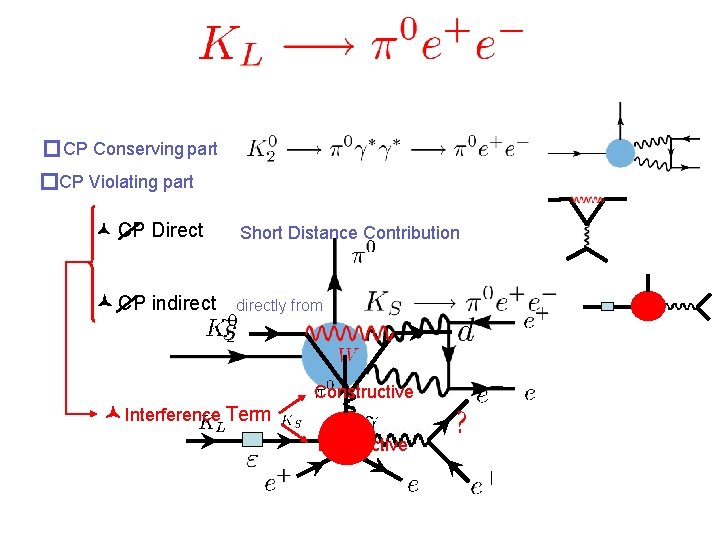
�CP Conserving part �CP Violating part CP Direct Short Distance Contribution CP indirectly from Constructive Interference Term Destructive ?
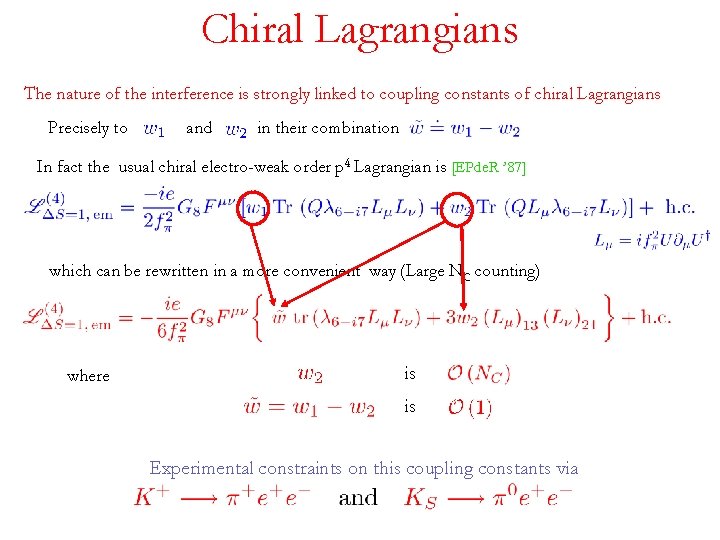
Chiral Lagrangians The nature of the interference is strongly linked to coupling constants of chiral Lagrangians Precisely to and in their combination In fact the usual chiral electro-weak order p 4 Lagrangian is [EPde. R ’ 87] which can be rewritten in a more convenient way (Large NC counting) where is is Experimental constraints on this coupling constants via
Constraints from Branching Ratios [PDG ’ 02] Key-quantities [NA 48 ’ 03] Order p 4
Octet Dominance Hypothesis and Large-NC Predictions Octet Dominance. Hypothesis[EPd. R ‘ 87]: Large-Nc Predictions: Through the bosonization of the factorized part of the operator matched to O(p 4) chiral Lagrangian gives See also [Bruno Prades ’ 93]
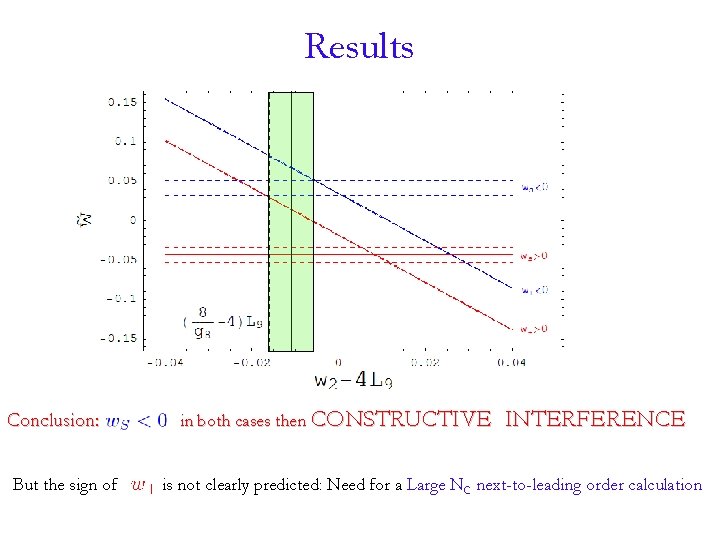
Results Conclusion: But the sign of in both cases then CONSTRUCTIVE INTERFERENCE is not clearly predicted: Need for a Large NC next-to-leading order calculation
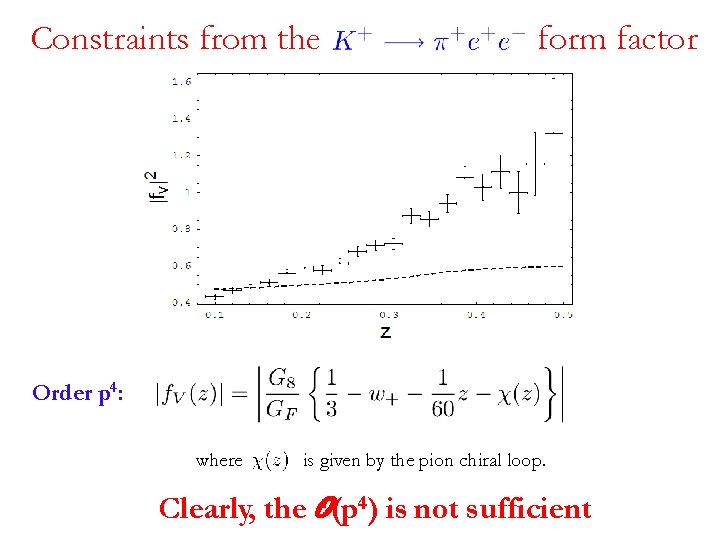
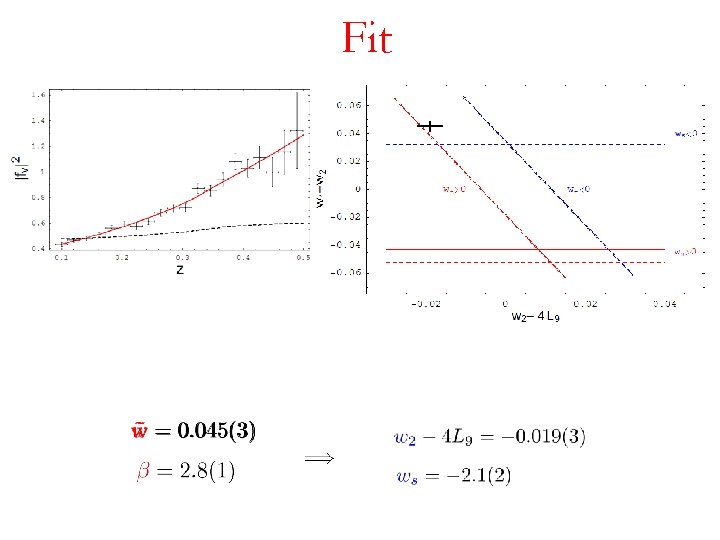
Constraints from the form factor Order p 4: where is given by the pion chiral loop. Clearly, the O(p 4) is not sufficient
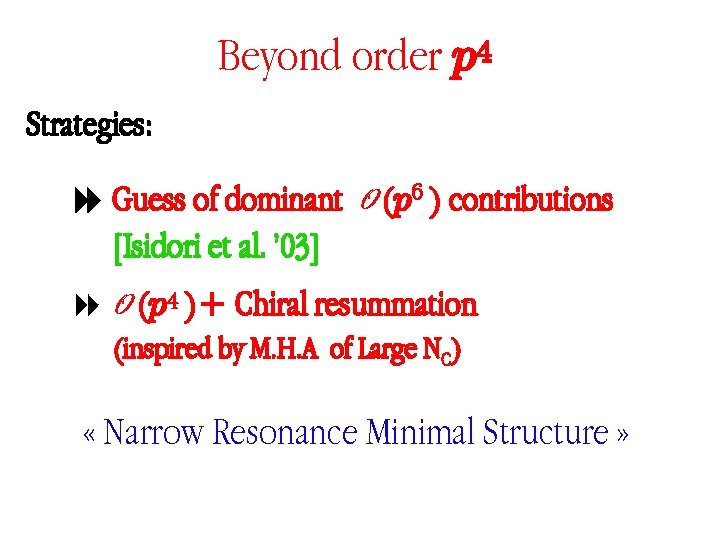
Beyond order 4 p Strategies: Guess of dominant O (p 6 ) contributions [Isidori et al. ’ 03] 8 O (p 4 )+ Chiral resummation (inspired by M. H. A of Large NC) « Narrow Resonance Minimal Structure »
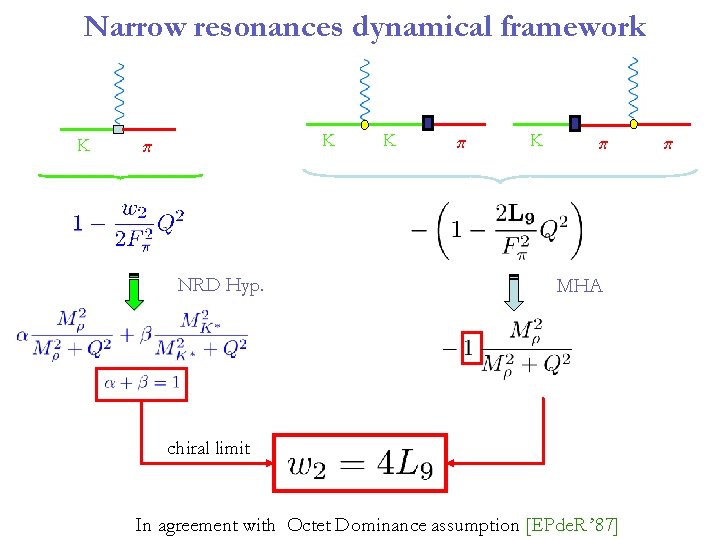
Narrow resonances dynamical framework K K NRD Hyp. K K MHA chiral limit In agreement with Octet Dominance assumption [EPde. R ’ 87]
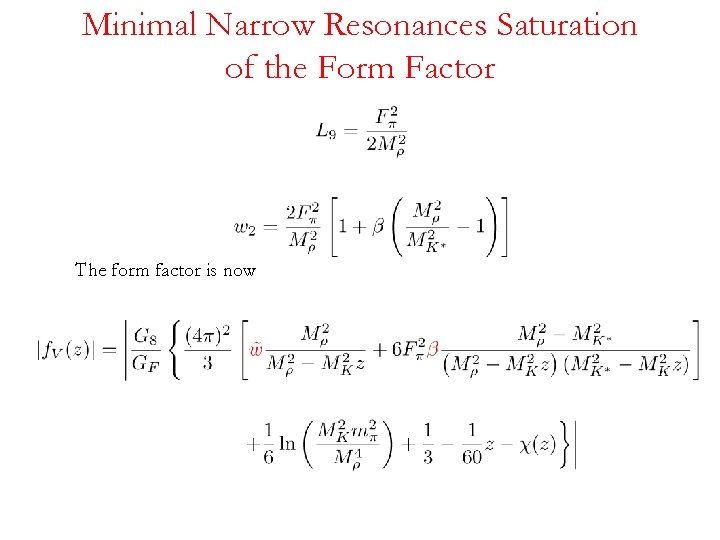
Minimal Narrow Resonances Saturation of the Form Factor The form factor is now
Fit
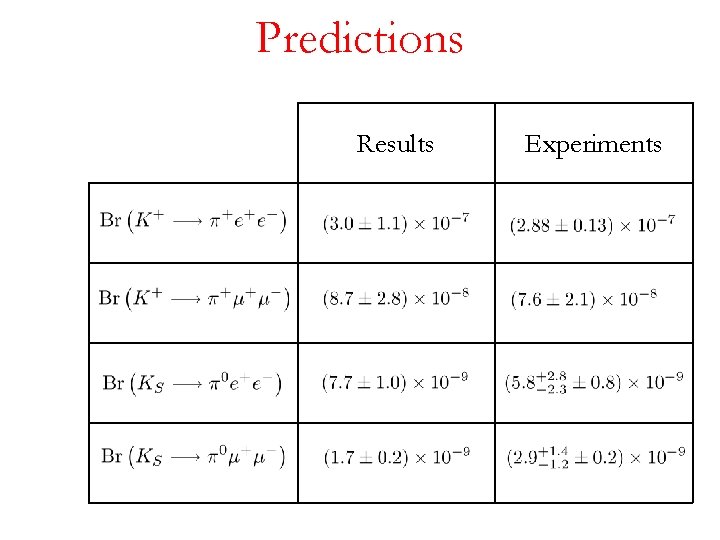
Predictions Results Experiments
Prediction for CP Conserving Part [Buchalla et al. ‘ 03] CP Direct Violating Part [Buchalla et al. ‘ 03] CP Indirect Violating Part [NA 48 ‘ 03] Interference term [this work]
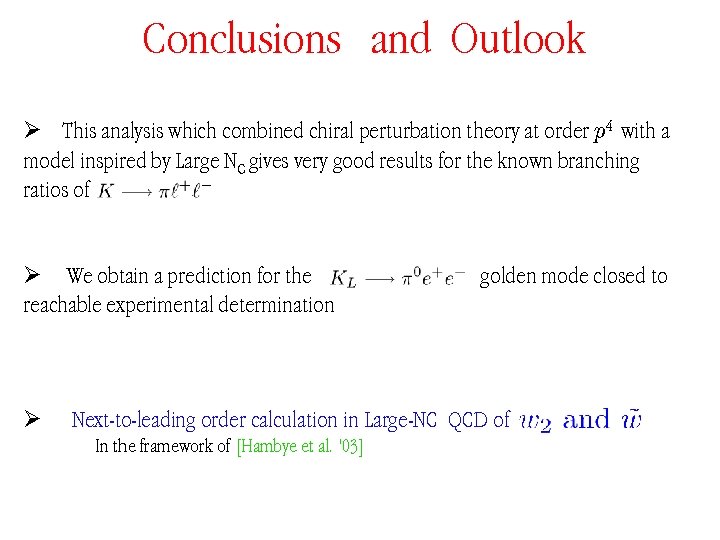
Conclusions and Outlook Ø This analysis which combined chiral perturbation theory at order p 4 with a model inspired by Large NC gives very good results for the known branching ratios of Ø We obtain a prediction for the reachable experimental determination Ø golden mode closed to Next-to-leading order calculation in Large-NC QCD of In the framework of [Hambye et al. ’ 03]