
Renal Urinary and Endocrine Disorders University of San
- Slides: 35
Renal, Urinary and Endocrine Disorders University of San Francisco Dr. M. Maag © 2003 Margaret Maag 1
Class 7 Objectives n Upon completion of this lesson, the student will be able to n n differentiate between acute and chronic renal failure. examine the symptoms associated with hypo- and hyperactivity of the pituitary, thyroid, and adrenal glands. tell a classmate the difference between Type 1 and Type 2 diabetes mellitus. assess the clinical conditions that give rise to diabetes insipidus and SIADH. 2
BUN & Creatinine Evaluation of Renal Function n BUN: Blood Urea Nitrogen ( 10 mg/d. L ) n n n Reflects excretion of “ UREA ” n Urea is an end product of protein metabolism Is affected by volume status & protein intake n Rises when GFR decreases below 40 -60% Creatinine: ( 1 mg/ d. L ) n n Product of muscle metabolism Not affected by fluid status or diet 3
Acute Renal Failure n Sudden interruption of renal function n n n Caused by: obstruction, poor circulation, kidney disease or medications Kidneys are unable to clear fluids & nitrogen waste products Classified as: Prerenal Intrarenal Postrenal 4
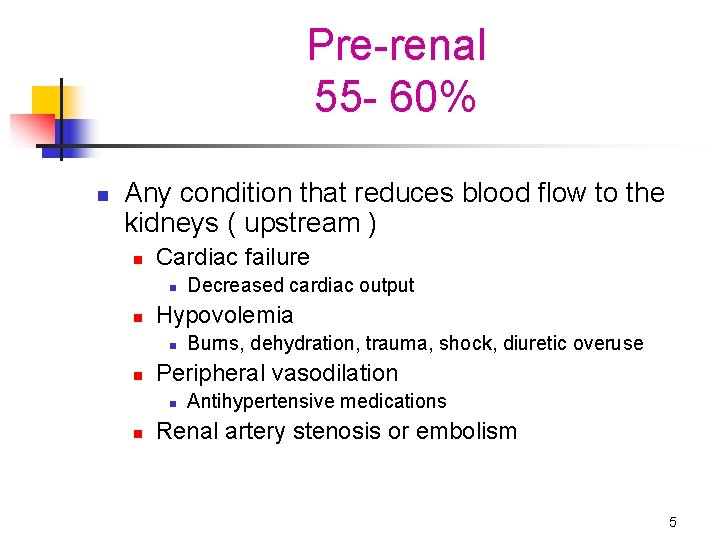
Pre-renal 55 - 60% n Any condition that reduces blood flow to the kidneys ( upstream ) n Cardiac failure n n Hypovolemia n n Burns, dehydration, trauma, shock, diuretic overuse Peripheral vasodilation n n Decreased cardiac output Antihypertensive medications Renal artery stenosis or embolism 5
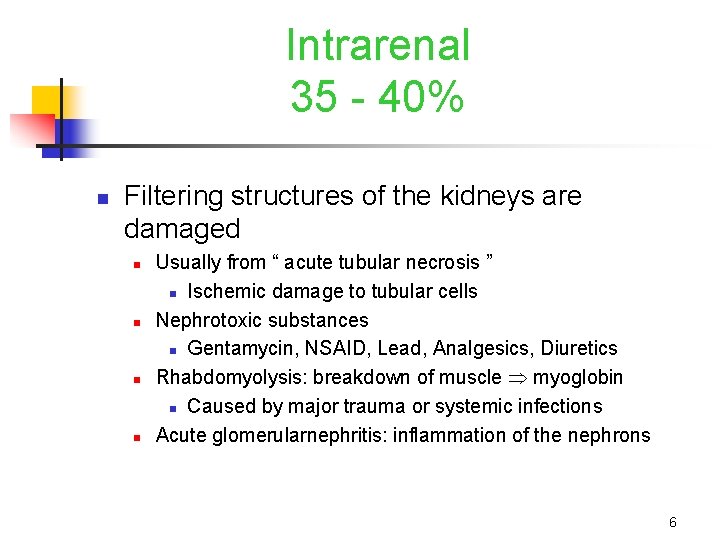
Intrarenal 35 - 40% n Filtering structures of the kidneys are damaged n n Usually from “ acute tubular necrosis ” n Ischemic damage to tubular cells Nephrotoxic substances n Gentamycin, NSAID, Lead, Analgesics, Diuretics Rhabdomyolysis: breakdown of muscle myoglobin n Caused by major trauma or systemic infections Acute glomerularnephritis: inflammation of the nephrons 6
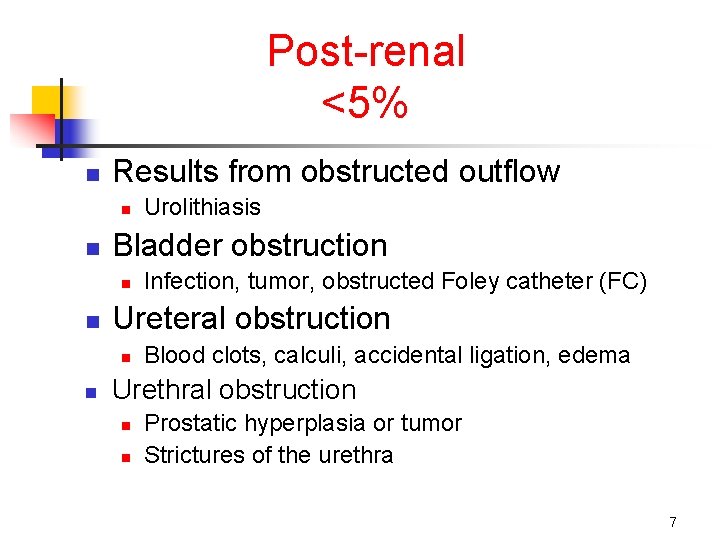
Post-renal <5% n Results from obstructed outflow n n Bladder obstruction n n Infection, tumor, obstructed Foley catheter (FC) Ureteral obstruction n n Urolithiasis Blood clots, calculi, accidental ligation, edema Urethral obstruction n n Prostatic hyperplasia or tumor Strictures of the urethra 7
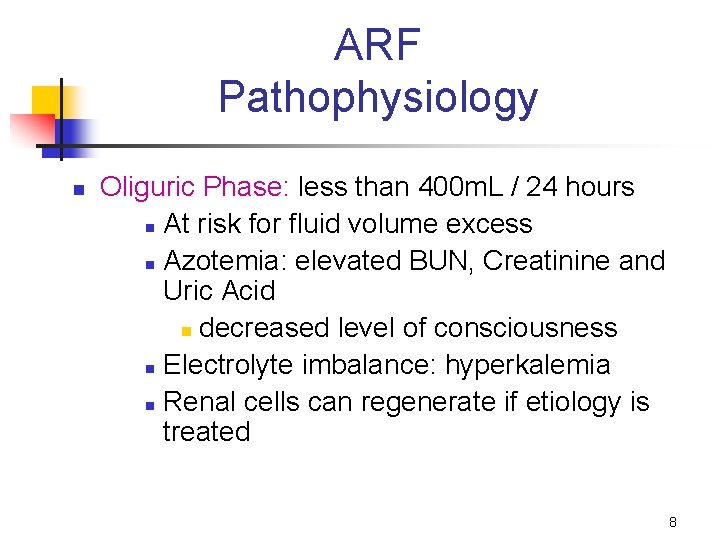
ARF Pathophysiology n Oliguric Phase: less than 400 m. L / 24 hours n At risk for fluid volume excess n Azotemia: elevated BUN, Creatinine and Uric Acid n decreased level of consciousness n Electrolyte imbalance: hyperkalemia n Renal cells can regenerate if etiology is treated 8
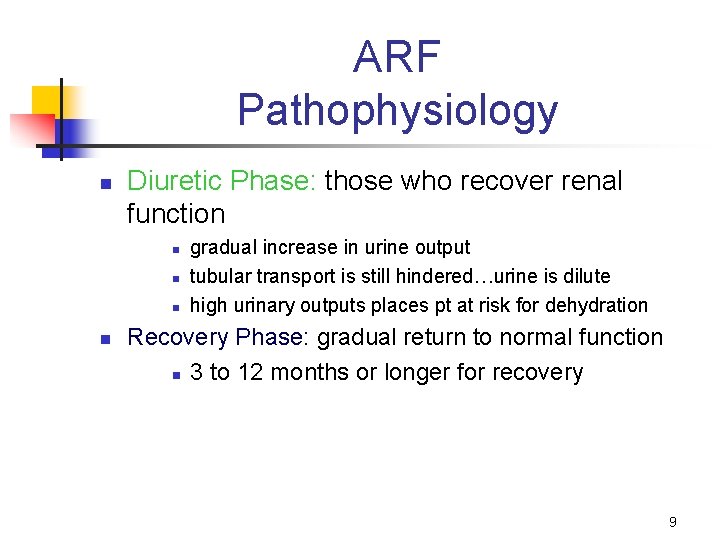
ARF Pathophysiology n Diuretic Phase: those who recover renal function n n gradual increase in urine output tubular transport is still hindered…urine is dilute high urinary outputs places pt at risk for dehydration Recovery Phase: gradual return to normal function n 3 to 12 months or longer for recovery 9
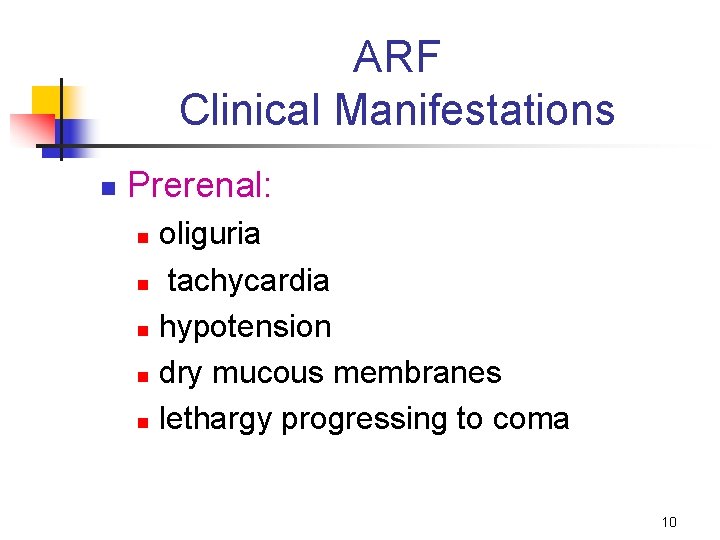
ARF Clinical Manifestations n Prerenal: oliguria n tachycardia n hypotension n dry mucous membranes n lethargy progressing to coma n 10
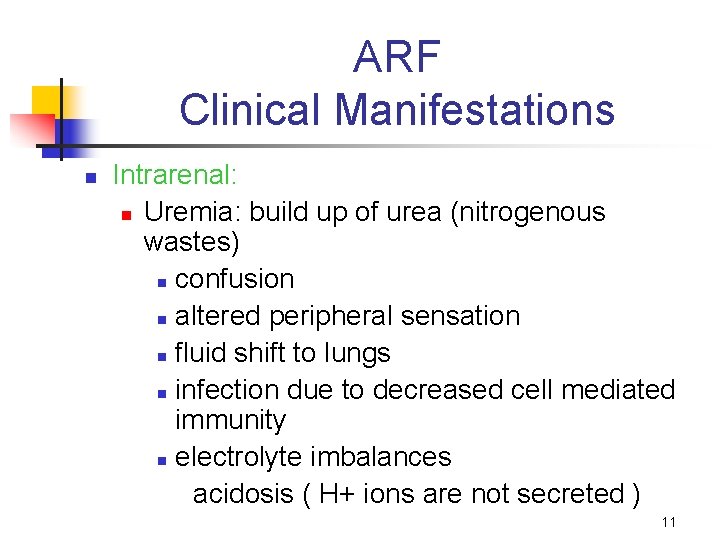
ARF Clinical Manifestations n Intrarenal: n Uremia: build up of urea (nitrogenous wastes) n confusion n altered peripheral sensation n fluid shift to lungs n infection due to decreased cell mediated immunity n electrolyte imbalances acidosis ( H+ ions are not secreted ) 11
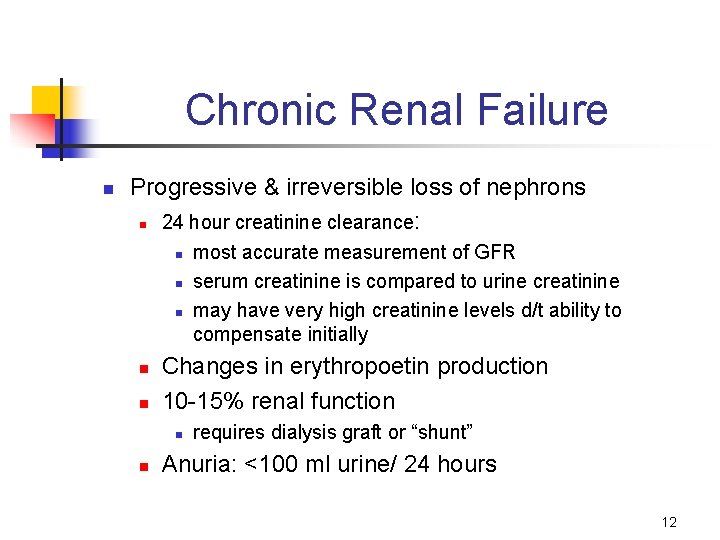
Chronic Renal Failure n Progressive & irreversible loss of nephrons n 24 hour creatinine clearance: n n n Changes in erythropoetin production 10 -15% renal function n n most accurate measurement of GFR serum creatinine is compared to urine creatinine may have very high creatinine levels d/t ability to compensate initially requires dialysis graft or “shunt” Anuria: <100 ml urine/ 24 hours 12
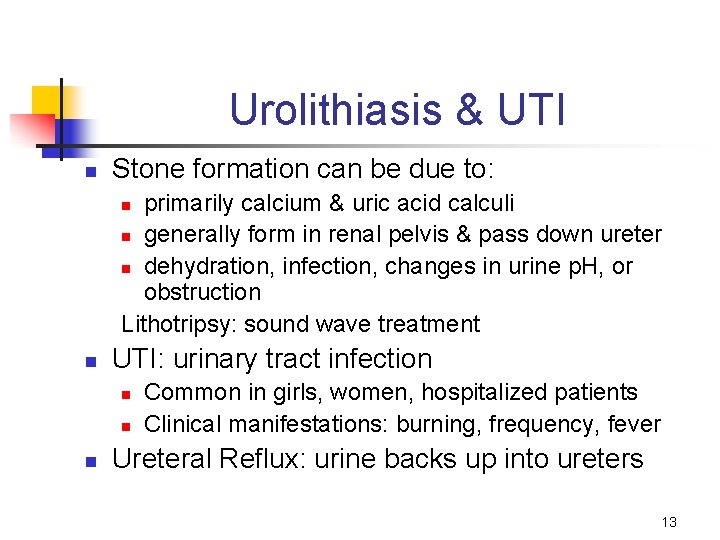
Urolithiasis & UTI n Stone formation can be due to: primarily calcium & uric acid calculi n generally form in renal pelvis & pass down ureter n dehydration, infection, changes in urine p. H, or obstruction Lithotripsy: sound wave treatment n n UTI: urinary tract infection n Common in girls, women, hospitalized patients Clinical manifestations: burning, frequency, fever Ureteral Reflux: urine backs up into ureters 13
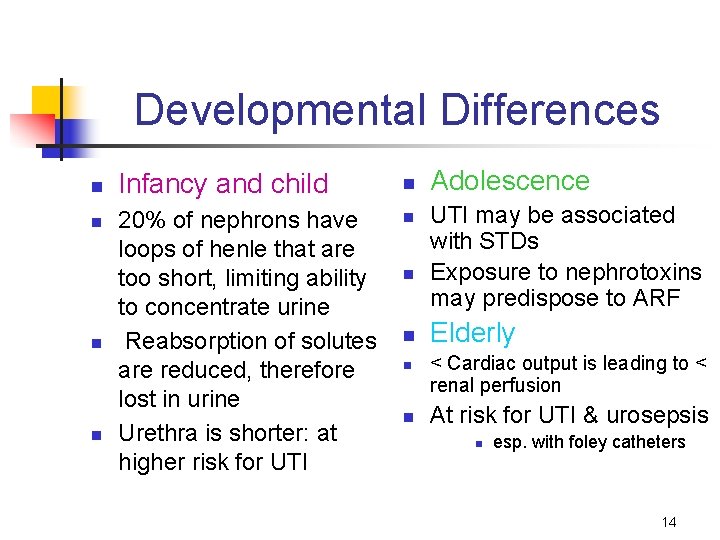
Developmental Differences n n Infancy and child n 20% of nephrons have loops of henle that are too short, limiting ability to concentrate urine Reabsorption of solutes are reduced, therefore lost in urine Urethra is shorter: at higher risk for UTI n n n Adolescence UTI may be associated with STDs Exposure to nephrotoxins may predispose to ARF Elderly < Cardiac output is leading to < renal perfusion At risk for UTI & urosepsis n esp. with foley catheters 14
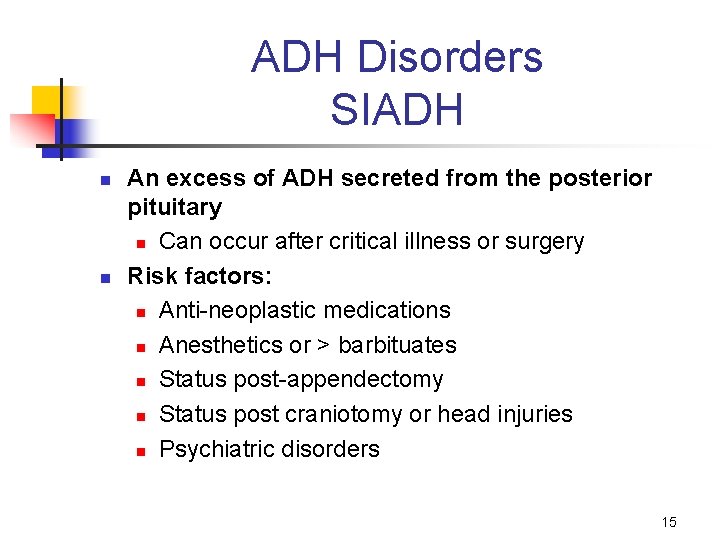
ADH Disorders SIADH n n An excess of ADH secreted from the posterior pituitary n Can occur after critical illness or surgery Risk factors: n Anti-neoplastic medications n Anesthetics or > barbituates n Status post-appendectomy n Status post craniotomy or head injuries n Psychiatric disorders 15
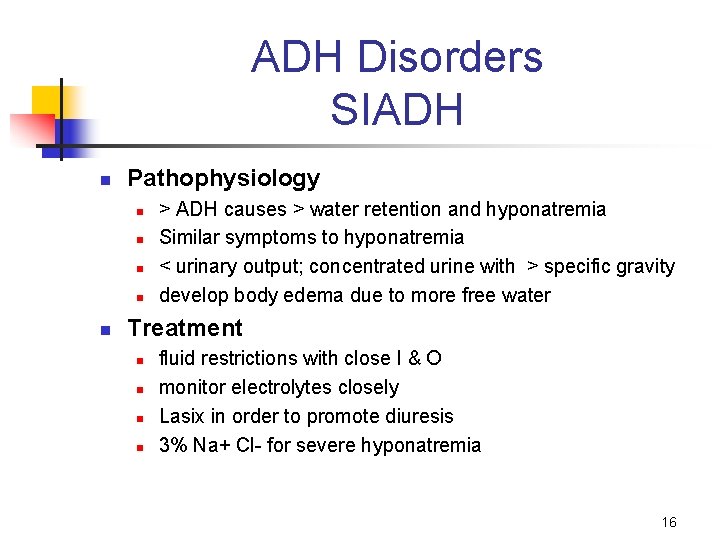
ADH Disorders SIADH n Pathophysiology n n n > ADH causes > water retention and hyponatremia Similar symptoms to hyponatremia < urinary output; concentrated urine with > specific gravity develop body edema due to more free water Treatment n n fluid restrictions with close I & O monitor electrolytes closely Lasix in order to promote diuresis 3% Na+ Cl- for severe hyponatremia 16
Diabetes Insipidus n A deficiency of ADH: < ADH = > water loss n n Neurogenic: Lack of ADH secreted by posterior pituitary n CVA: circle of Willis is affected n Cranial trauma, surgery, pituitary tumor Nephrogenic: Less common n Acute tubular necrosis n n n damage to cells interferes with ADH effect Pathophysiology: leads to n polyuria, polydipsia, hypovolemic shock Rx: n give fluids (up to 500 cc / hr) to replace the 15 - 20 L / day loss n DDAVP = Nasal spray hormone replacement 17
Introduction to Diabetes n n Diabetes is a disease in which the body does not produce or cannot properly use insulin. Current research findings point to the body’s immune system turning on its own pancreatic beta cells that produce insulin as a cause. Untreated, diabetes can lead to kidney disease, blindness, heart disease, stroke and / or amputation of extremities due to peripheral nerve damage. 18
Type 1 DM n n n Type 1 - Juvenile Onset Diabetes In this form of the disease, the body does not make any insulin at all. It occurs most often in children and young adults. The islet cells of Langerhans are destroyed in type I diabetes mellitus. This occurs probably as a consequence of a genetic susceptibility, followed by the onset of autoimmune destruction triggered by some environmental factor such as a viral infection. A vaccine may soon be developed as a result of current research efforts. n The vaccine would be anti-antibody 19
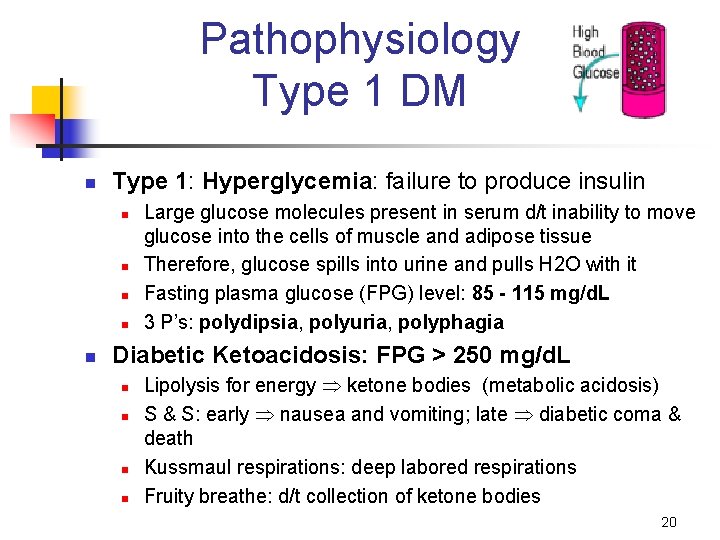
Pathophysiology Type 1 DM n Type 1: Hyperglycemia: failure to produce insulin n n Large glucose molecules present in serum d/t inability to move glucose into the cells of muscle and adipose tissue Therefore, glucose spills into urine and pulls H 2 O with it Fasting plasma glucose (FPG) level: 85 - 115 mg/d. L 3 P’s: polydipsia, polyuria, polyphagia Diabetic Ketoacidosis: FPG > 250 mg/d. L n n Lipolysis for energy ketone bodies (metabolic acidosis) S & S: early nausea and vomiting; late diabetic coma & death Kussmaul respirations: deep labored respirations Fruity breathe: d/t collection of ketone bodies 20
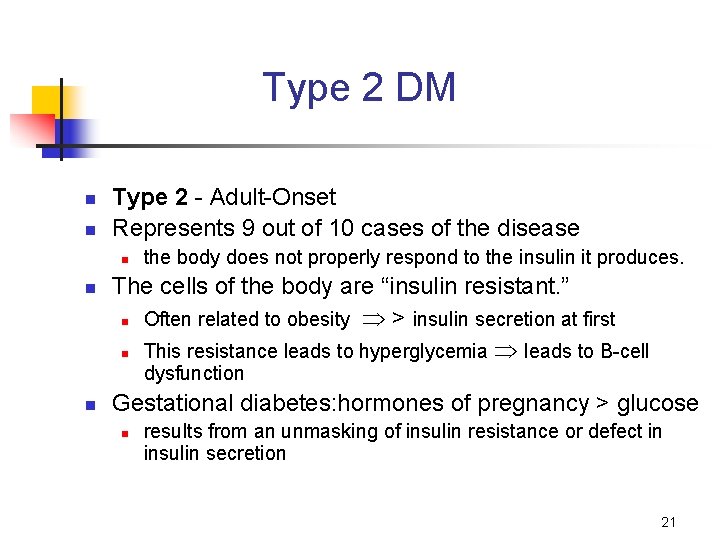
Type 2 DM n n Type 2 - Adult-Onset Represents 9 out of 10 cases of the disease n n the body does not properly respond to the insulin it produces. The cells of the body are “insulin resistant. ” n Often related to obesity > insulin secretion at first n This resistance leads to hyperglycemia leads to B-cell dysfunction n Gestational diabetes: hormones of pregnancy > glucose n results from an unmasking of insulin resistance or defect in insulin secretion 21
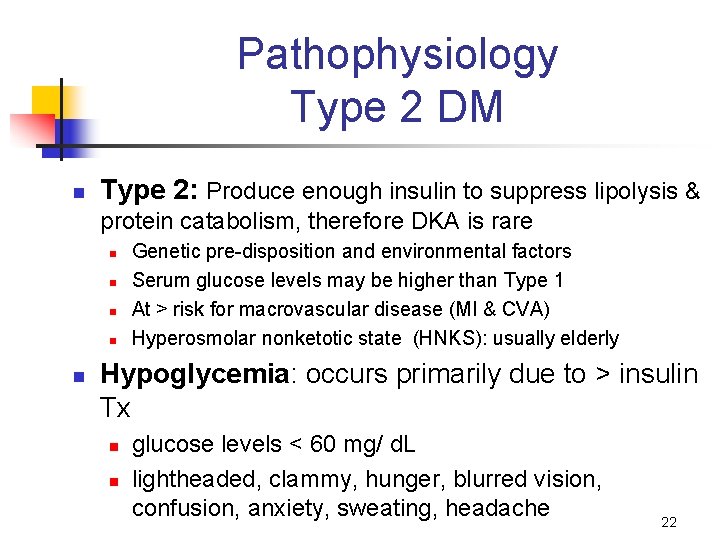
Pathophysiology Type 2 DM n Type 2: Produce enough insulin to suppress lipolysis & protein catabolism, therefore DKA is rare n n n Genetic pre-disposition and environmental factors Serum glucose levels may be higher than Type 1 At > risk for macrovascular disease (MI & CVA) Hyperosmolar nonketotic state (HNKS): usually elderly Hypoglycemia: occurs primarily due to > insulin Tx n n glucose levels < 60 mg/ d. L lightheaded, clammy, hunger, blurred vision, confusion, anxiety, sweating, headache 22
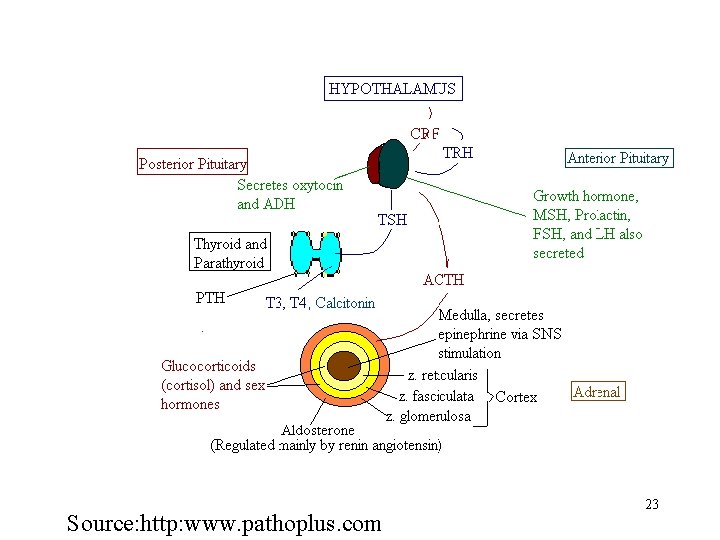
Source: http: www. pathoplus. com 23
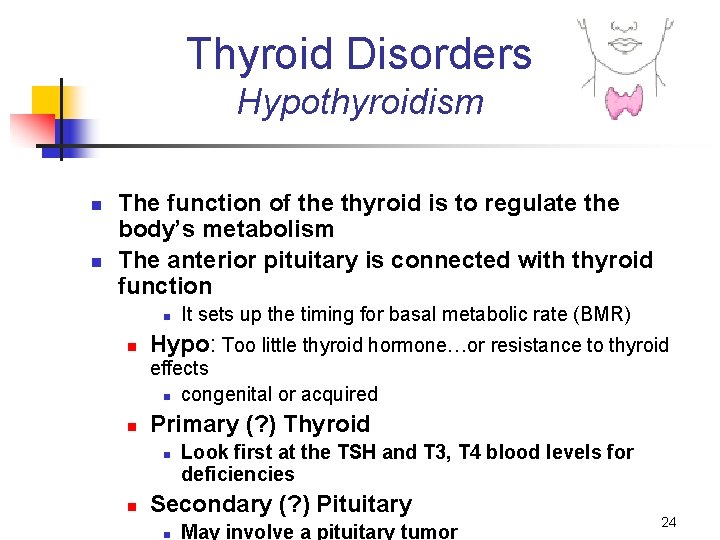
Thyroid Disorders Hypothyroidism n n The function of the thyroid is to regulate the body’s metabolism The anterior pituitary is connected with thyroid function n n It sets up the timing for basal metabolic rate (BMR) Hypo: Too little thyroid hormone…or resistance to thyroid effects n congenital or acquired n Primary (? ) Thyroid n n Look first at the TSH and T 3, T 4 blood levels for deficiencies Secondary (? ) Pituitary n May involve a pituitary tumor 24
Hypothyroidism n Acquired situations: Causes n n n Worldwide: a deficiency in iodine ? Family history ? Systemic inflammatory conditions (associated with higher risk) n Autoimmune (Hashimoto’s Thyroiditis) n n most common form of primary hypothyroidism Congenital situations: “Cretinism” n n “thyroid agenesis”: failure of gland to develop in utero Teratogens or genetic influence (Turner’s or Down’s Syndrome) n Ingestion of “goitrogens” by mother n suppress development of fetal thyroid 25
Pathophysiology n n n Insufficient metabolism and tissue development in infants and children n < physical and mental growth “Sluggish” feeling in adults Weight gain/ dry skin/ coarse hair Myxedema: > fluid in connective tissues (doughy look) Myexedema Coma: multisystem failure/ precipitated by CVA ? n > TSH and < T 3 T 4 levels 26
Treatment n n n Cretinism. . . give thyroid replacement Levothyroxine (T 4) replacement Avoid T 3 replacement n tachycardia, palpitations Protect skin and advise Iodine therapy Early screening n warm clothing for < tolerance to cold climate 27
Hyperthyroidism n n A hypermetabolic state caused by > levels of thyroid hormones in the blood Mainly due to hyperfunction of the thyroid gland n n Grave’s disease: Ig G antibodies latch to the TSH receptors and inappropriately stimulate thyroid gland Thyroiditis: an inflammatory response that initiates the release of thyroid hormones Thyroid cancer: very rare/ airway obstruction/ dysphagia with > size Excessive treatment of signs & symptoms of 28
Hyperthyroidism n n Signs & Symptoms: “Thyrotoxicosis” n Goiter: enlarged thyroid n Exopthalmos: “Bug eyes” n Increased heart rate n Emotional at times n Heat intolerance n Nervousness & Palpitations n Weight loss n n Clients experience n > cardiac output n > oxygen consumption n > peripheral blood flow n > body temperature Tx: Anti-thyroid meds before 40 n Thionamides Radioactive Iodine & Lithium n Inhibit synthesis & 29
Parathyroid Function n The main purpose of the 4 parathyroid glands are to control calcium within the blood in a very tight range n n It controls how much Ca+ is in the bones n n n 8. 5 - 10. 5 mg/d. L affecting density and strength < Ca+ levels stimulate glands to > parathyroid hormone and vice versa Influences the release of Ca+ from the bones 30
Adrenal Glands n Adrenals produce > 50 steroids, but the main ones are: n Cortisol (hydrocortisone), Aldosterone and Androgens produce by the adrenal cortex n Absence of corticoidsteroids: What happens? n Glucocorticoids: Cortisol increases serum glucose & hepatic glycogen (stimulates protein catabolism & gluconeogenesis) n inhibit the effects of insulin n affect carbohydrate, protein and fat metabolism n maintains emotional stability & affects immune function n Aldosterone deficiency results in sodium loss & hyperkalemia n Epinephrine & Norepinephrine secreted by adrenal medulla 31
Adrenal Cortex Dysfunction n Cushing’s Syndrome: “Hypercortisolism” n manifestations from long-term use of glucocorticoidsteroids n Exogenous administration for: n asthma, poison oak, cancer, organ transplants n Titrate Prednisone when you discontinue the medication n S & S: > wt, “moon-like” face, hirsutism, glucose intolerance, osteoporosis in elderly 32
Adrenal Cortex Dysfunction n Cushing’s Disease: due to > endogenous levels of cortisols n Endogenous excess: > ACTH by an anterior pituitary tumor n Cortisol excess = depression of the immune system (< lymphocytes) & catbolism of protein and peripheral fat 33
Adrenal Insufficiency n n n Primary: May be caused by anatomic destruction of the gland, either autoimmune or surgical in origin. n Addison’s Disease n Autoimmune destruction of 3 layers of the adrenal cortex Risk factors: AIDS, TB, Metastatic cancers: lung, breast, GI tract Secondary: Deficiency of cortisol androgens…but not in aldosterone n Remember cortisol regulates salt, sugar, sex drive 34
References n n n Hansen, M. (1998). Pathophysiology: Foundations of disease and clinical intervention. Philadelphia: Saunders. Huether, S. E. , & Mc. Cance, K. L. (2002). Pathophysiology. St. Louis: Mosby. http: //www. pathoplus. com 35