
Renal Renin Angiotensin System Lisa M HarrisonBernard Ph
Renal Renin Angiotensin System Lisa M. Harrison-Bernard, Ph. D. LSUHSC, New Orleans lharris@lsuhsc. edu
Renal Physiology - Lectures 1. 2. 3. 4. 5. 6. Physiology of Body Fluids * Structure & Function of the Kidneys * Renal Clearance & Glomerular Filtration * Regulation of Renal Blood Flow * * Transport of Sodium & Chloride * Transport of Urea, Glucose, Phosphate, Calcium & Organic Solutes 7. * Regulation of Potassium Balance * 8. Regulation of Water Balance 9. Transport of Acids & Bases 10. * Integration of Salt & Water Balance * * Renin-angiotensin system (RAS) discussed in lecture
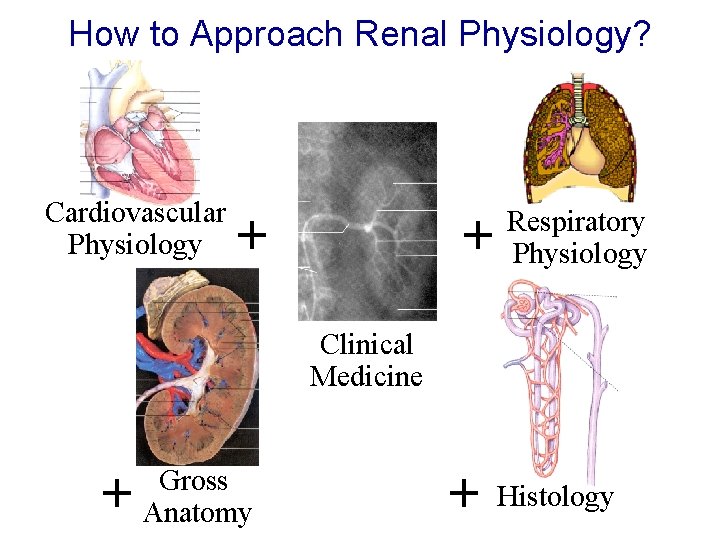
How to Approach Renal Physiology? Cardiovascular Physiology + + Respiratory Physiology Clinical Medicine + Gross Anatomy + Histology
Learning Objectives 1. Diagram formation of angiotensin II (Ang. II) 2. Identify 3 factors that promote renin release 3. Describe influence of Ang. II on renal blood flow (RBF) & glomerular filtration rate (GFR) 4. Describe effects of Ang. II on regulation of Na+ reabsorption along nephron 5. Explain role of RAS in response to decrease in blood volume 6. ULTIMATE GOAL TO MAINTAIN EXTRACELLULAR FLUID VOLUME (ECFV) & BLOOD PRESSURE (BP)
Renin-Angiotensin System 1. RAS Cascade 2. Control of Renin Secretion 3. Hemodynamic Actions of Ang. II 4. Tubular Actions of Ang. II 5. Role of RAS in Δ Effective Circulating Volume
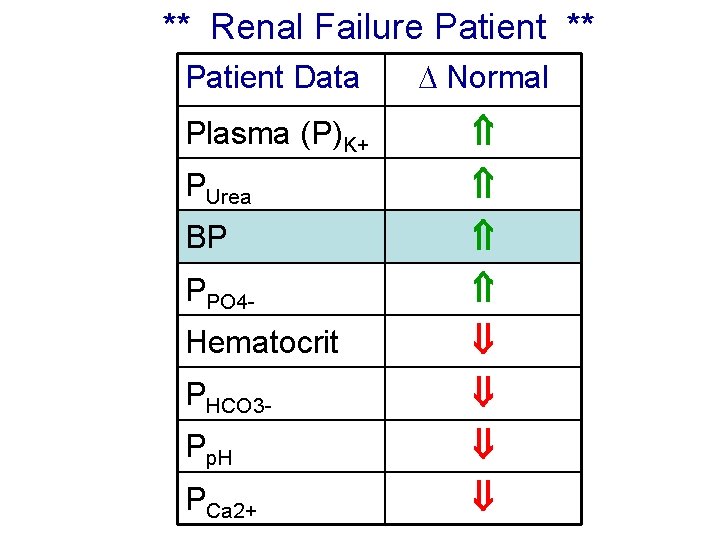
** Renal Failure Patient ** Patient Data Normal Plasma (P)K+ PUrea BP PPO 4 - Hematocrit PHCO 3 - Pp. H PCa 2+
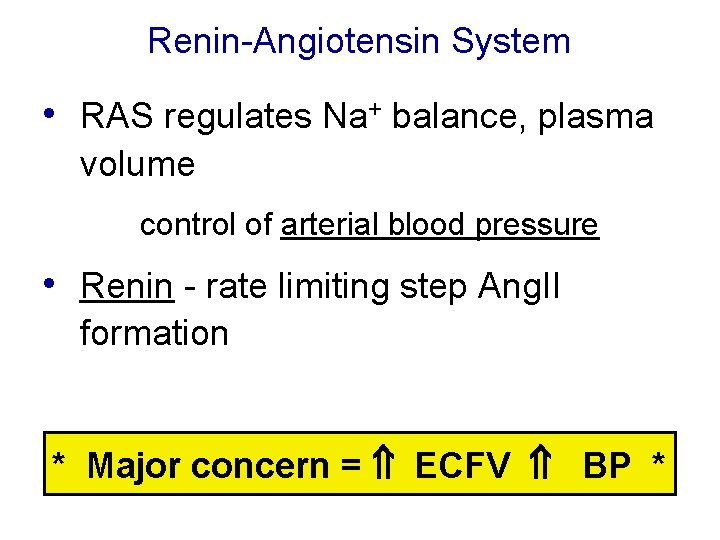
Renin-Angiotensin System • RAS regulates Na+ balance, plasma volume control of arterial blood pressure • Renin - rate limiting step Ang. II formation * Major concern = ECFV BP *
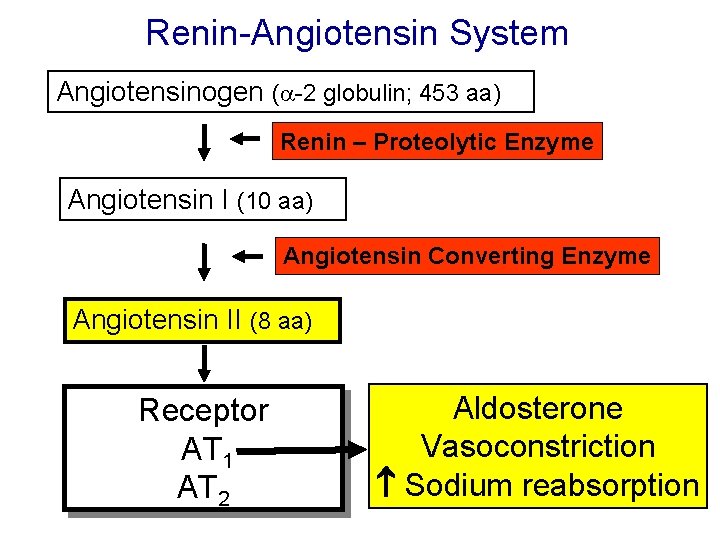
Renin-Angiotensin System Angiotensinogen (a-2 globulin; 453 aa) Renin – Proteolytic Enzyme Angiotensin I (10 aa) Angiotensin Converting Enzyme Angiotensin II (8 aa) Receptor AT 1 AT 2 Aldosterone Vasoconstriction Sodium reabsorption
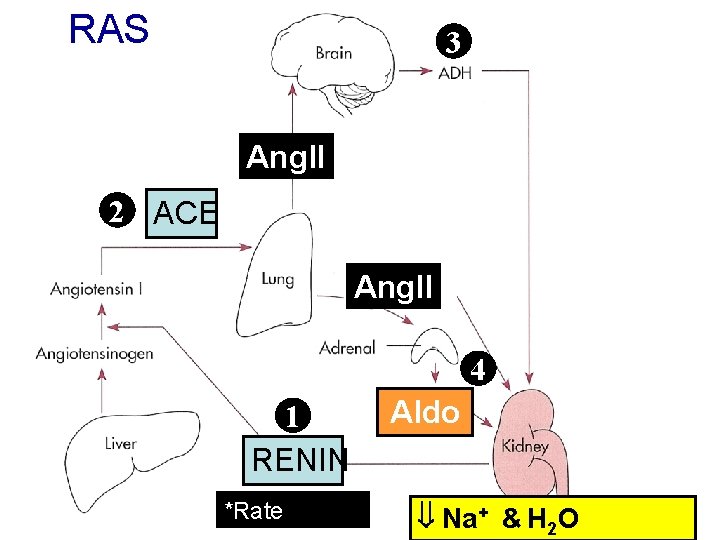
RAS 3 Ang. II 2 ACE Ang. II 4 1 RENIN *Rate Aldo Na+ & H 2 O
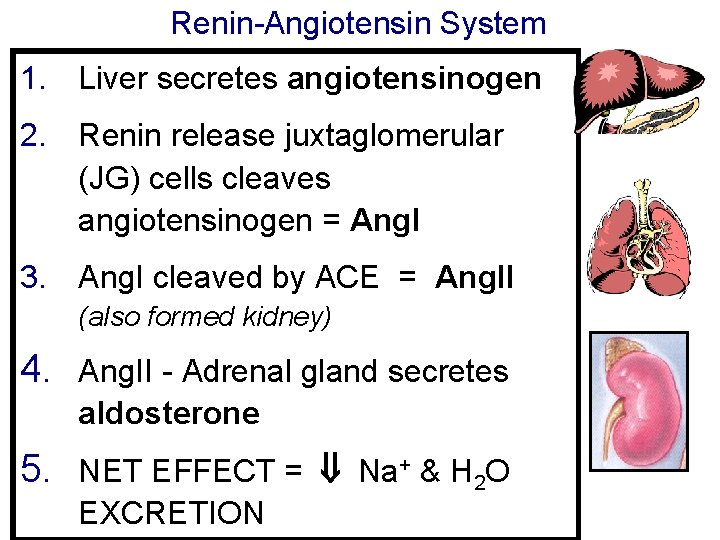
Renin-Angiotensin System 1. Liver secretes angiotensinogen 2. Renin release juxtaglomerular (JG) cells cleaves angiotensinogen = Ang. I 3. Ang. I cleaved by ACE = Ang. II (also formed kidney) 4. Ang. II - Adrenal gland secretes aldosterone 5. NET EFFECT = Na+ & H 2 O EXCRETION
Renin-Angiotensin System 1. Renin-Angiotensin System Cascade 2. Control of Renin Secretion 3. Hemodynamic Actions of Ang. II 4. Tubular Actions of Ang. II 5. Role of RAS in Δ Effective Circulating Volume
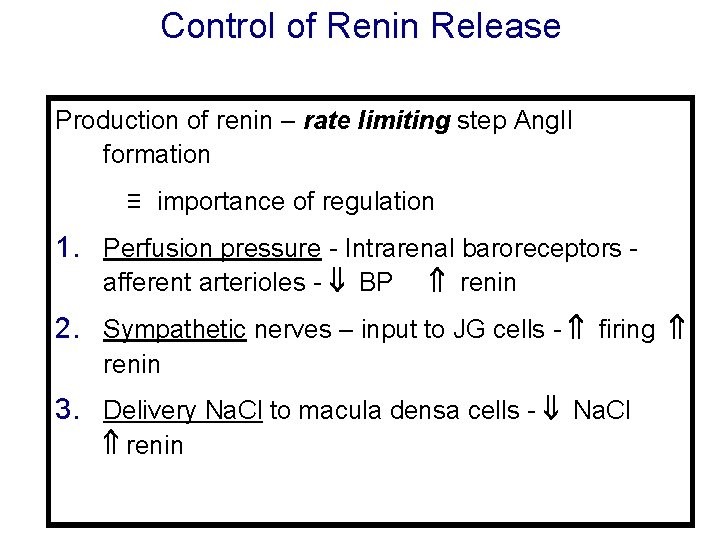
Control of Renin Release Production of renin – rate limiting step Ang. II formation ≡ importance of regulation 1. Perfusion pressure - Intrarenal baroreceptors afferent arterioles - BP renin 2. Sympathetic nerves – input to JG cells - firing renin 3. Delivery Na. Cl to macula densa cells - Na. Cl renin

Control of Renin Release 1 1. “Renal” baroreceptors – JG cells afferent arteriole § RAP stretch renin release § RAP stretch Ca 2+ renin release RENIN
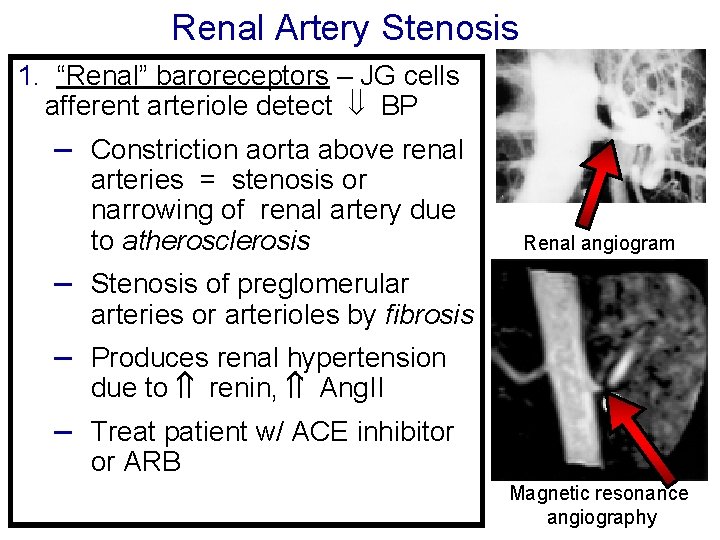
Renal Artery Stenosis 1. “Renal” baroreceptors – JG cells afferent arteriole detect BP – Constriction aorta above renal arteries = stenosis or narrowing of renal artery due to atherosclerosis Renal angiogram – Stenosis of preglomerular arteries or arterioles by fibrosis – Produces renal hypertension due to renin, Ang. II – Treat patient w/ ACE inhibitor or ARB Magnetic resonance angiography
Control of Renin Release 2. Influence of sympathetic nerves on JG cells § activity of nerves renin secretion Fig. 16. 5 from Vander, Sherman, and Luciano. Human Physiology: The Mechanisms of Body Function (8 th ed. ), 2000.
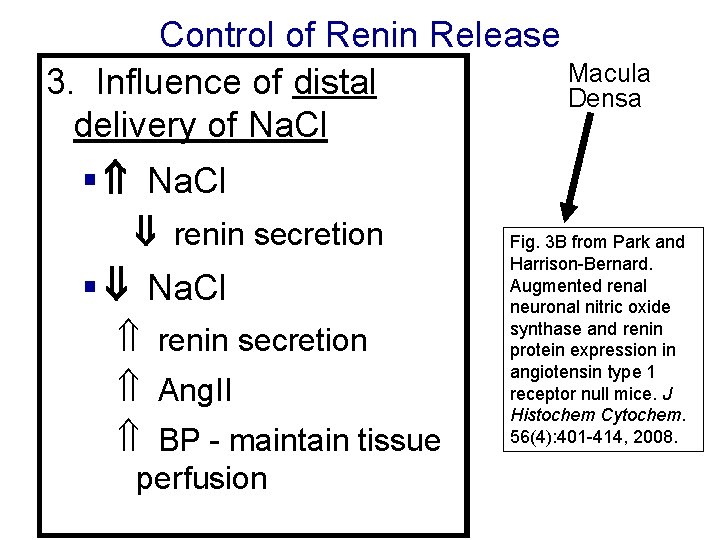
Control of Renin Release Macula 3. Influence of distal Densa delivery of Na. Cl § Na. Cl renin secretion Ang. II BP - maintain tissue perfusion Fig. 3 B from Park and Harrison-Bernard. Augmented renal neuronal nitric oxide synthase and renin protein expression in angiotensin type 1 receptor null mice. J Histochem Cytochem. 56(4): 401 -414, 2008.
Feedback from Macula Densa Fig. 3 -8 from Koeppen and Stanton. Renal Physiology (4 th ed. ). Mosby Physiology Monograph Series, 2007.
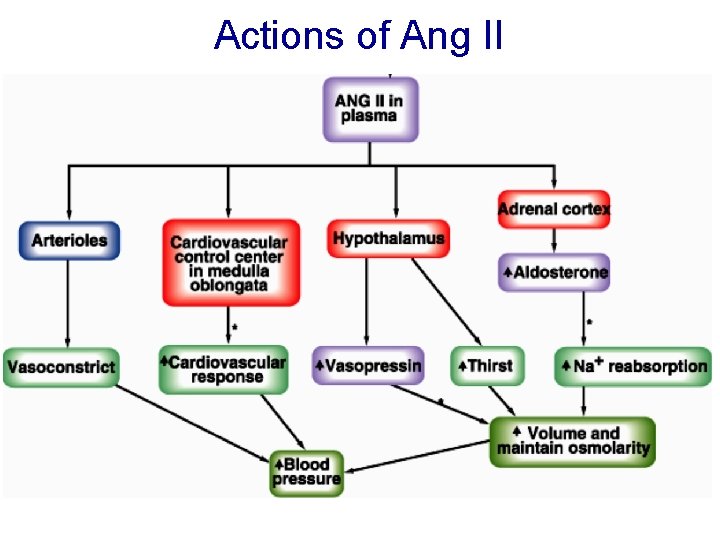
Actions of Ang II
Renin-Angiotensin System (RAS) 1. Renin-Angiotensin System Cascade 2. Control of Renin Secretion 3. Hemodynamic Actions of Ang. II 4. Tubular Actions of Ang. II 5. Role of RAS in Δ Effective Circulating Volume
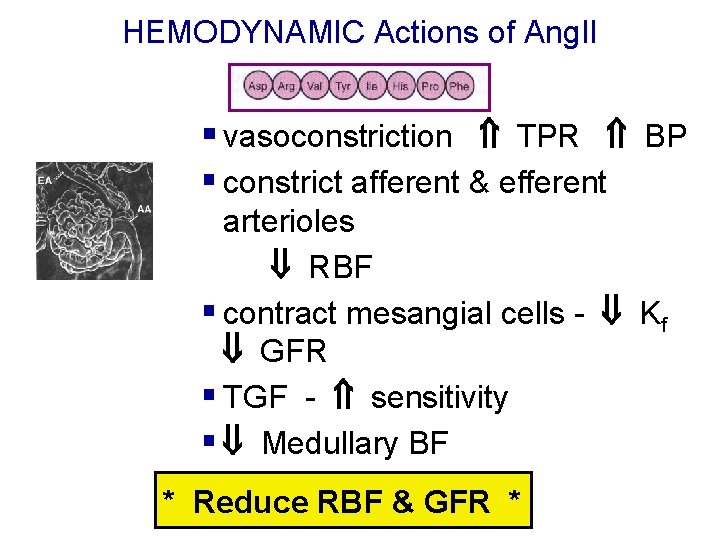
HEMODYNAMIC Actions of Ang. II § vasoconstriction TPR BP § constrict afferent & efferent arterioles RBF § contract mesangial cells - Kf GFR § TGF - sensitivity § Medullary BF * Reduce RBF & GFR *
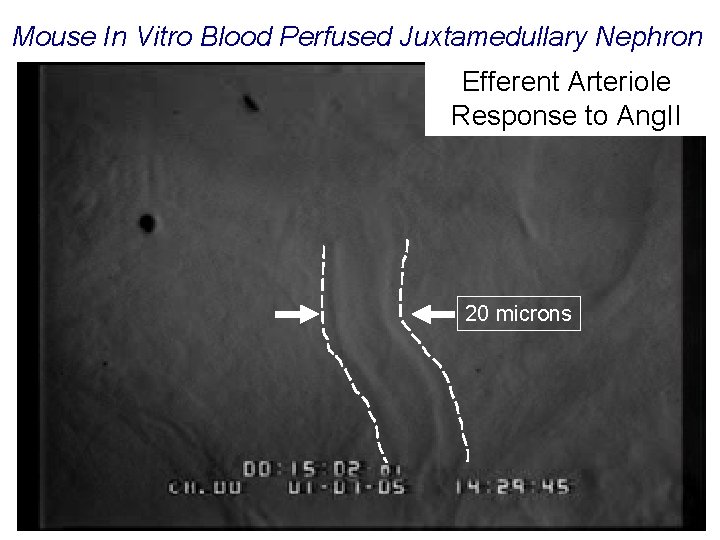
Mouse In Vitro Blood Perfused Juxtamedullary Nephron Efferent Arteriole Response to Ang. II 20 microns
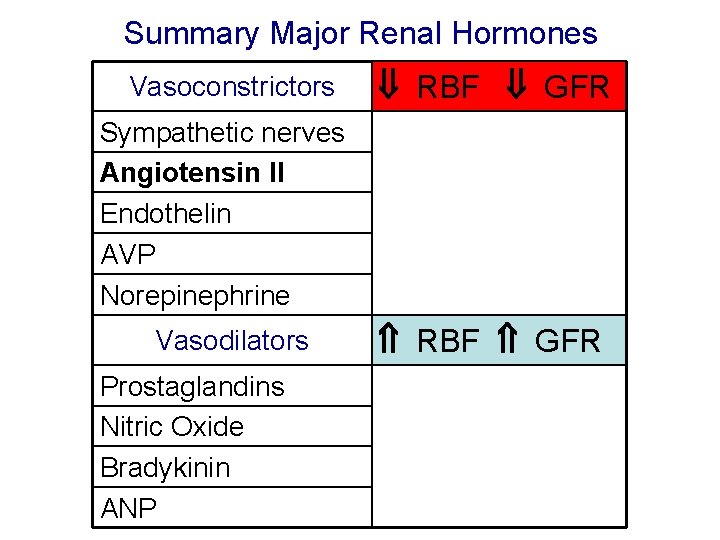
Summary Major Renal Hormones Vasoconstrictors RBF GFR Sympathetic nerves Angiotensin II Endothelin AVP Norepinephrine Vasodilators Prostaglandins Nitric Oxide Bradykinin ANP RBF GFR
Renin-Angiotensin System (RAS) 1. RAS Cascade 2. Control of Renin Secretion 3. Hemodynamic Actions of Ang. II 4. Tubular Actions of Ang. II 5. Role of RAS in Δ Effective Circulating Volume
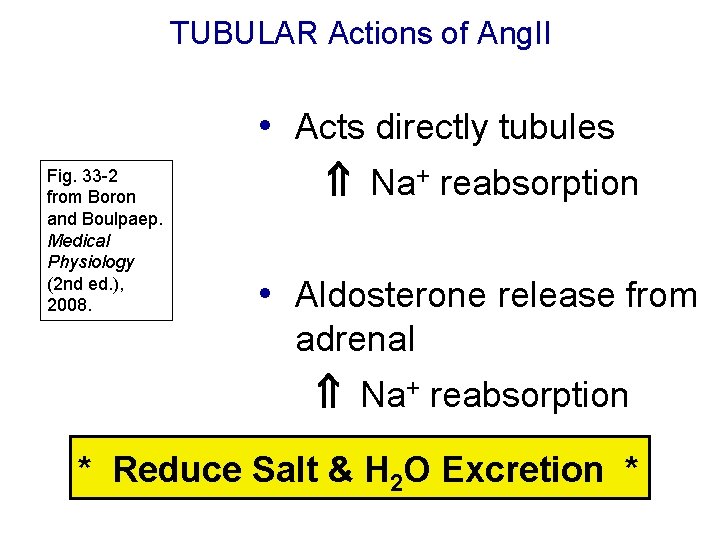
TUBULAR Actions of Ang. II • Acts directly tubules Fig. 33 -2 from Boron and Boulpaep. Medical Physiology (2 nd ed. ), 2008. Na+ reabsorption • Aldosterone release from adrenal Na+ reabsorption * Reduce Salt & H 2 O Excretion *
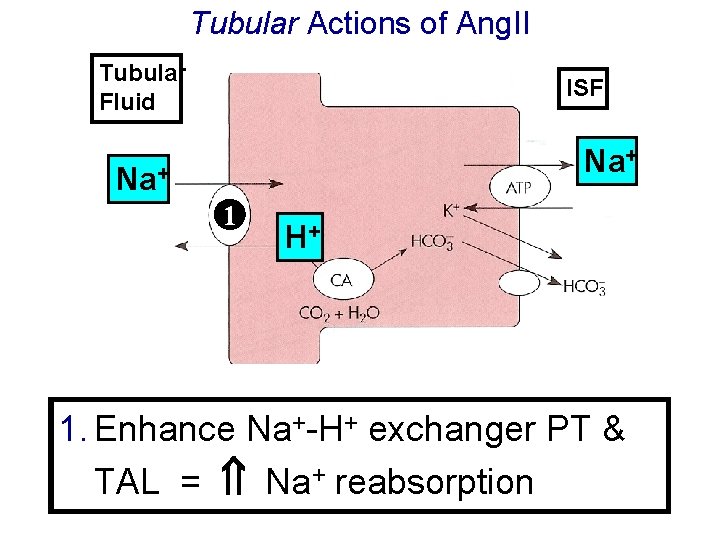
Tubular Actions of Ang. II Tubular Fluid ISF Na+ 1 H+ 1. Enhance Na+-H+ exchanger PT & TAL = Na+ reabsorption
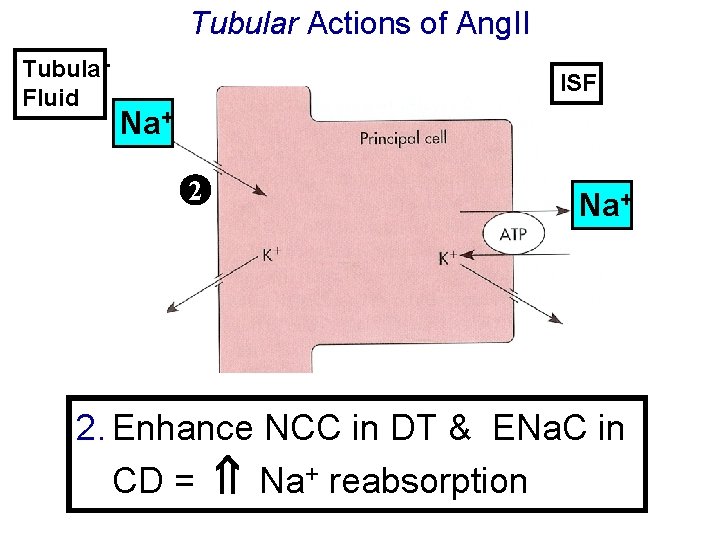
Tubular Actions of Ang. II Tubular Fluid ISF Na+ 2. Enhance NCC in DT & ENa. C in CD = Na+ reabsorption
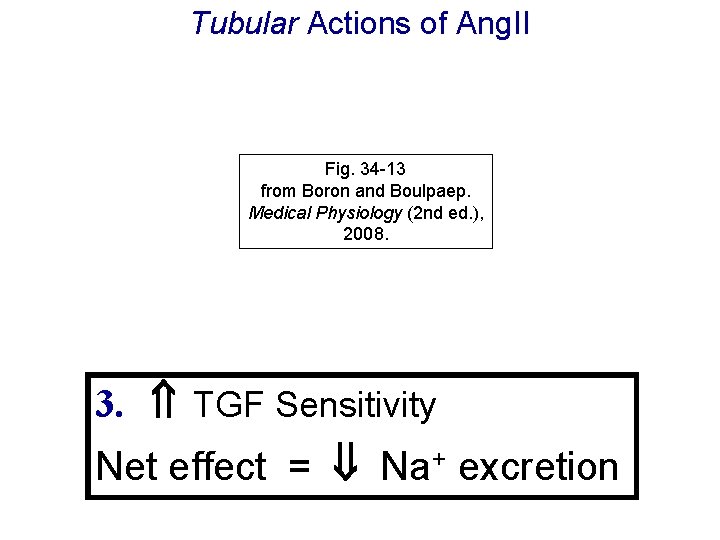
Tubular Actions of Ang. II Fig. 34 -13 from Boron and Boulpaep. Medical Physiology (2 nd ed. ), 2008. 3. TGF Sensitivity Net effect = Na+ excretion
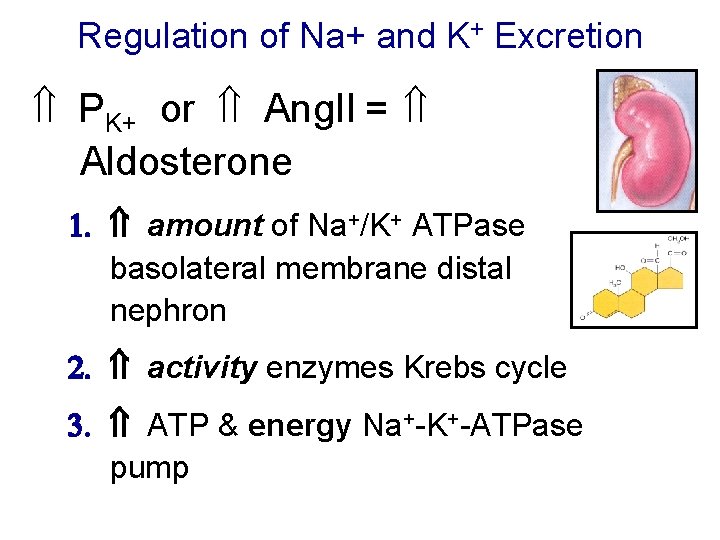
Regulation of Na+ and K+ Excretion PK+ or Ang. II = Aldosterone 1. amount of Na+/K+ ATPase basolateral membrane distal nephron 2. activity enzymes Krebs cycle 3. ATP & energy Na+-K+-ATPase pump
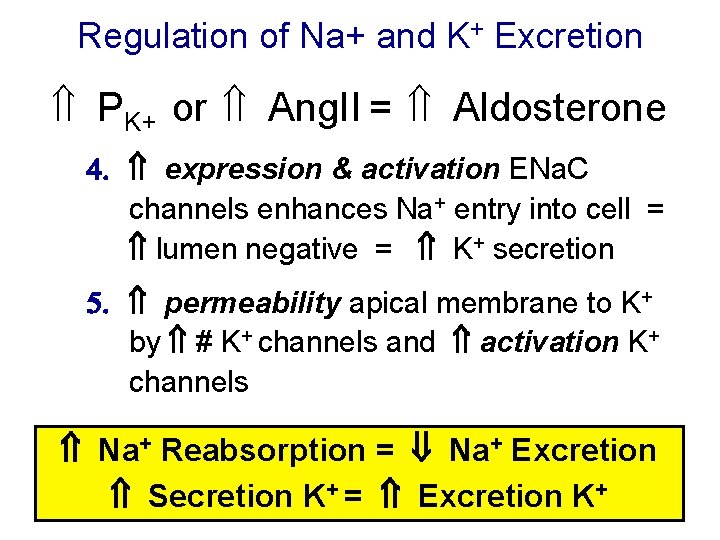
Regulation of Na+ and K+ Excretion PK+ or Ang. II = Aldosterone 4. expression & activation ENa. C channels enhances Na+ entry into cell = lumen negative = K+ secretion 5. permeability apical membrane to K+ by # K+ channels and activation K+ channels Na+ Reabsorption = Na+ Excretion Secretion K+ = Excretion K+
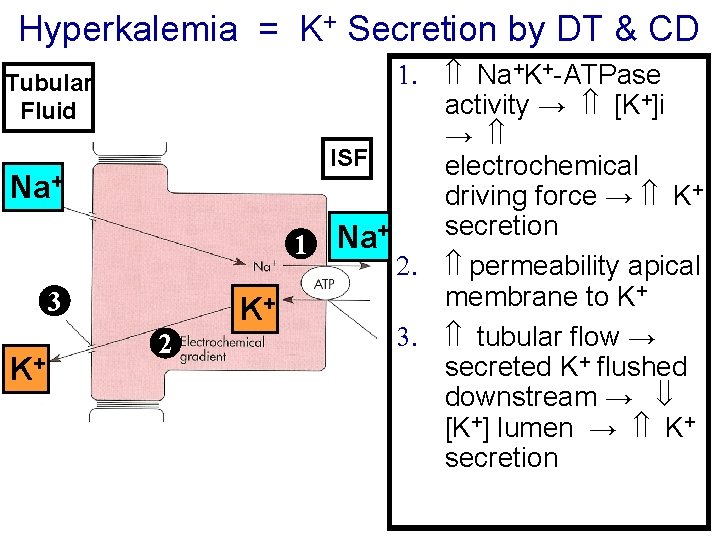
Hyperkalemia = K+ Secretion by DT & CD Tubular Fluid Na+ 3 K+ K+ 2 1. Na+K+-ATPase activity → [K+]i → ISF electrochemical driving force → K+ secretion + Na 1 2. permeability apical membrane to K+ 3. tubular flow → secreted K+ flushed downstream → [K+] lumen → K+ secretion
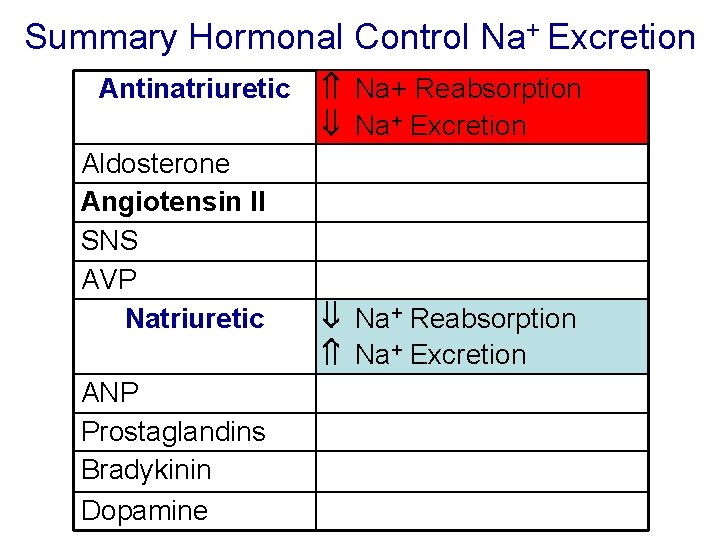
Summary Hormonal Control Na+ Excretion Antinatriuretic Aldosterone Angiotensin II SNS AVP Natriuretic ANP Prostaglandins Bradykinin Dopamine Na+ Reabsorption Na+ Excretion
Which patients would benefit from drugs that block RAS?
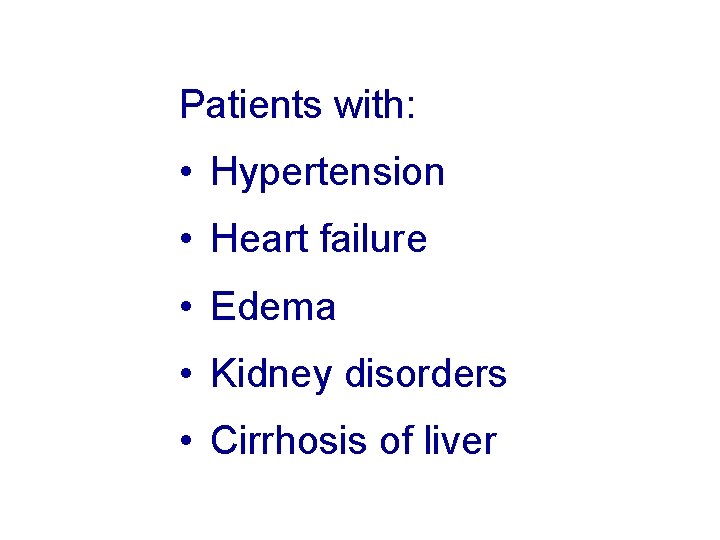
Patients with: • Hypertension • Heart failure • Edema • Kidney disorders • Cirrhosis of liver
Renin-Angiotensin System (RAS) 1. Renin-Angiotensin System Cascade 2. Control of Renin Secretion 3. Hemodynamic Actions of Ang. II 4. Tubular Actions of Ang. II 5. Role of RAS in Δ Effective Circulating Volume
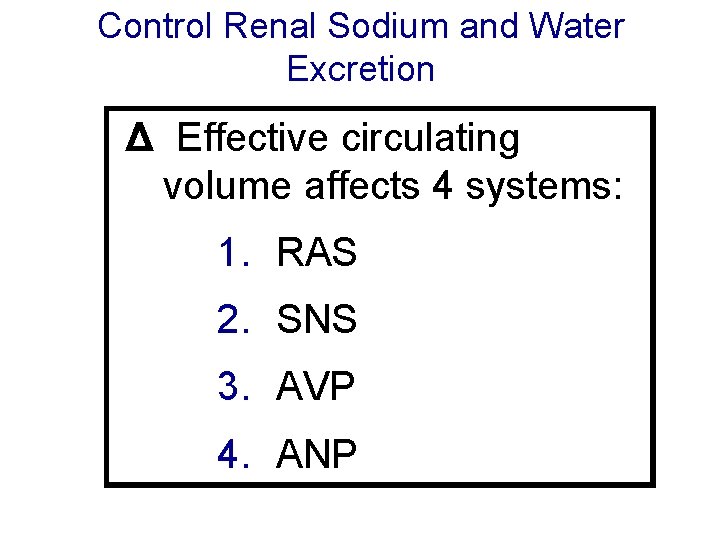
Control Renal Sodium and Water Excretion Δ Effective circulating volume affects 4 systems: 1. RAS 2. SNS 3. AVP 4. ANP
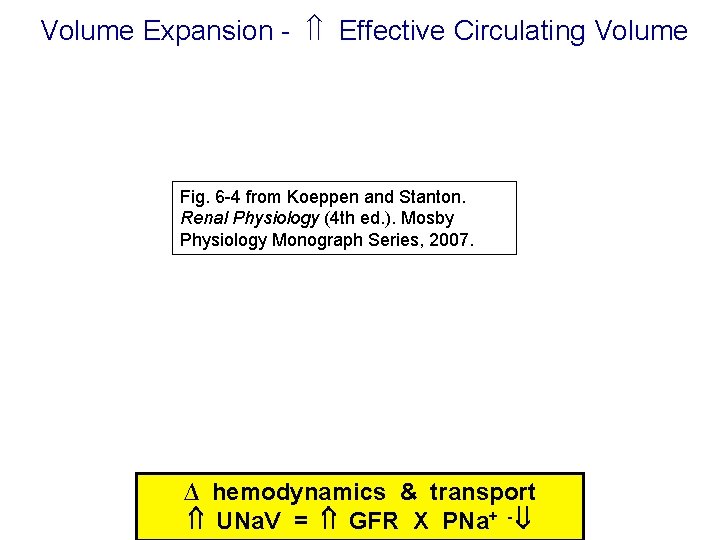
Volume Expansion - Effective Circulating Volume Fig. 6 -4 from Koeppen and Stanton. Renal Physiology (4 th ed. ). Mosby Physiology Monograph Series, 2007. ∆ hemodynamics & transport UNa. V = GFR X PNa+ -
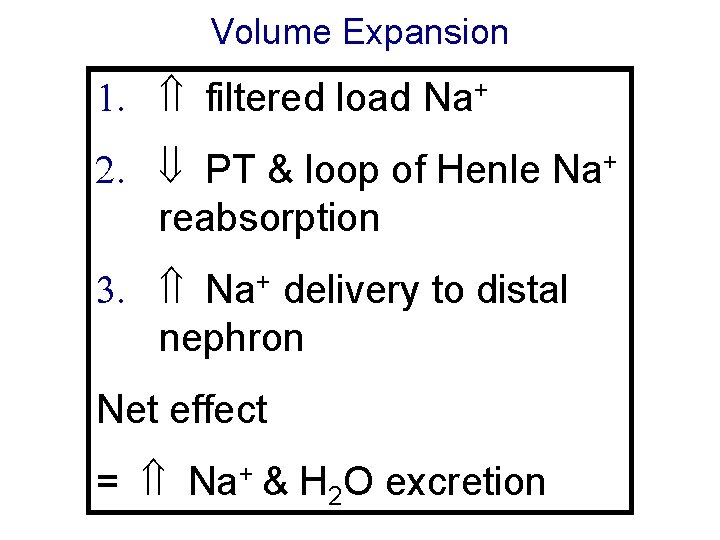
Volume Expansion 1. filtered load Na+ 2. PT & loop of Henle Na+ reabsorption 3. Na+ delivery to distal nephron Net effect = Na+ & H 2 O excretion
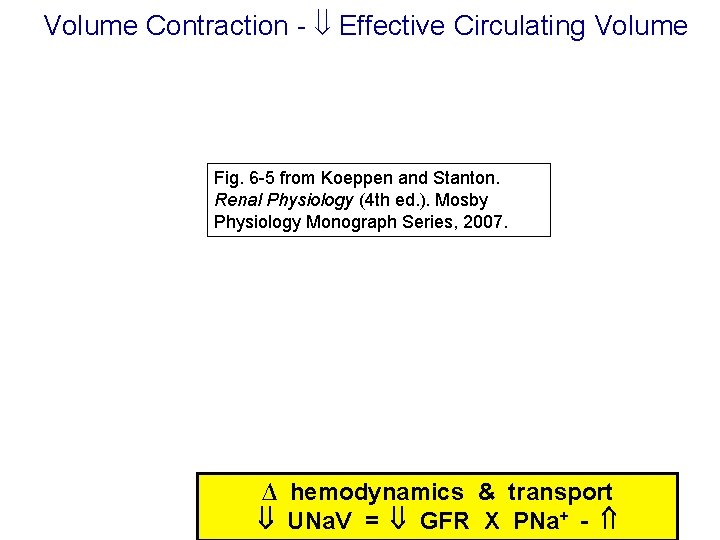
Volume Contraction - Effective Circulating Volume Fig. 6 -5 from Koeppen and Stanton. Renal Physiology (4 th ed. ). Mosby Physiology Monograph Series, 2007. ∆ hemodynamics & transport UNa. V = GFR X PNa+ -
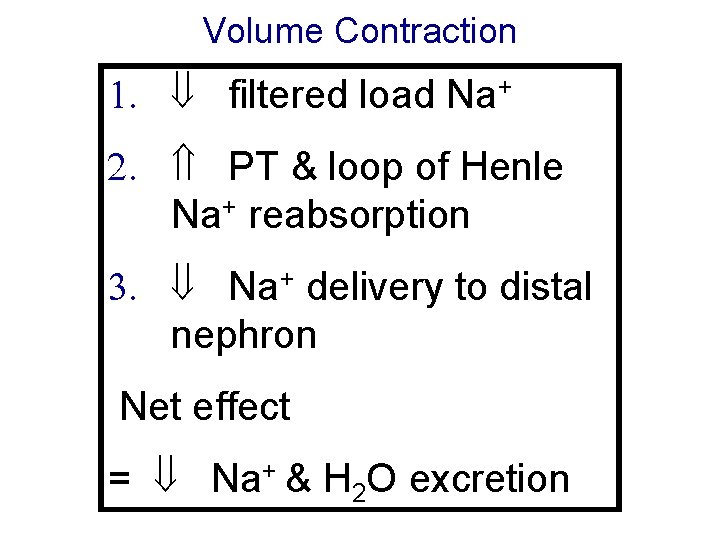
Volume Contraction 1. filtered load Na+ 2. PT & loop of Henle Na+ reabsorption 3. Na+ delivery to distal nephron Net effect = Na+ & H 2 O excretion
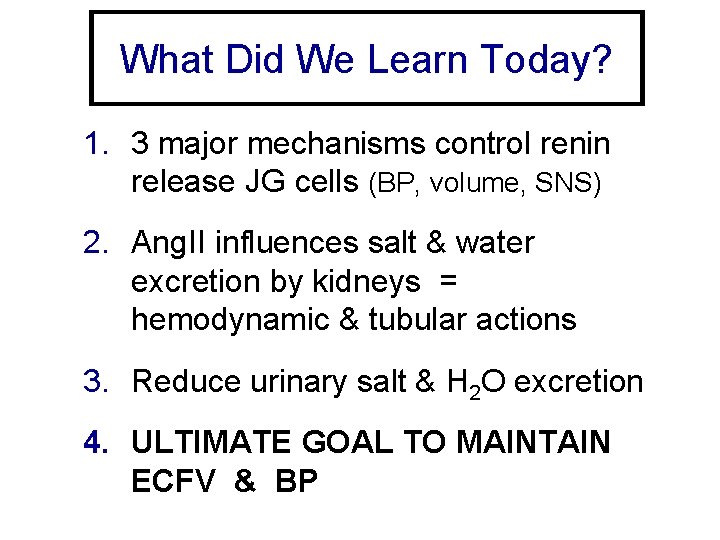
What Did We Learn Today? 1. 3 major mechanisms control renin release JG cells (BP, volume, SNS) 2. Ang. II influences salt & water excretion by kidneys = hemodynamic & tubular actions 3. Reduce urinary salt & H 2 O excretion 4. ULTIMATE GOAL TO MAINTAIN ECFV & BP
- Slides: 40