
Renal regulation of electrolite excretion blood volume and
Renal regulation of electrolite excretion, blood volume and acid-base balance
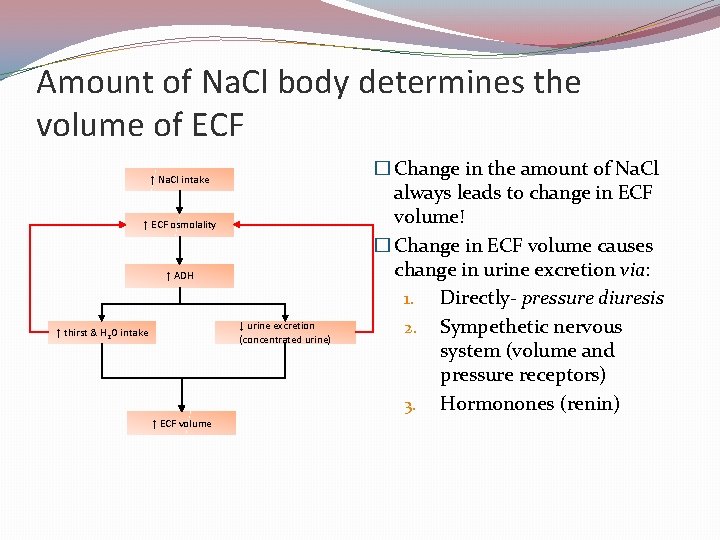
Amount of Na. Cl body determines the volume of ECF ↑ Na. Cl intake ↑ ECF osmolality ↑ ADH ↓ urine excretion (concentrated urine) ↑ thirst & H 2 O intake ↑ ECF volume � Change in the amount of Na. Cl always leads to change in ECF volume! � Change in ECF volume causes change in urine excretion via: 1. Directly- pressure diuresis 2. Sympethetic nervous system (volume and pressure receptors) 3. Hormonones (renin)
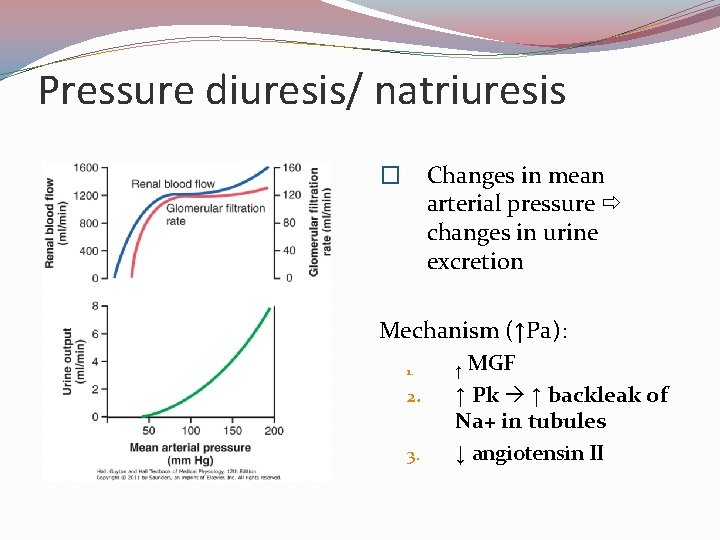
Pressure diuresis/ natriuresis Changes in mean arterial pressure changes in urine excretion � Mechanism (↑Pa): 1. 2. 3. MGF ↑ Pk ↑ backleak of Na+ in tubules ↓ angiotensin II ↑
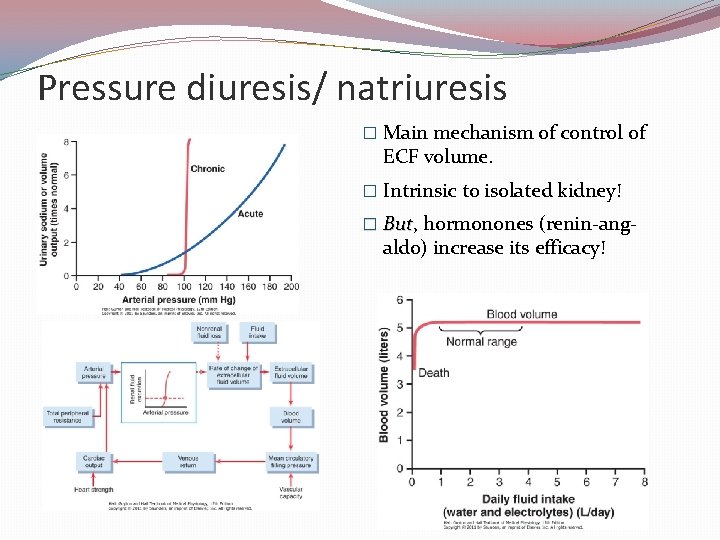
Pressure diuresis/ natriuresis � Main mechanism of control of ECF volume. � Intrinsic to isolated kidney! � But, But hormonones (renin-angaldo) increase its efficacy!
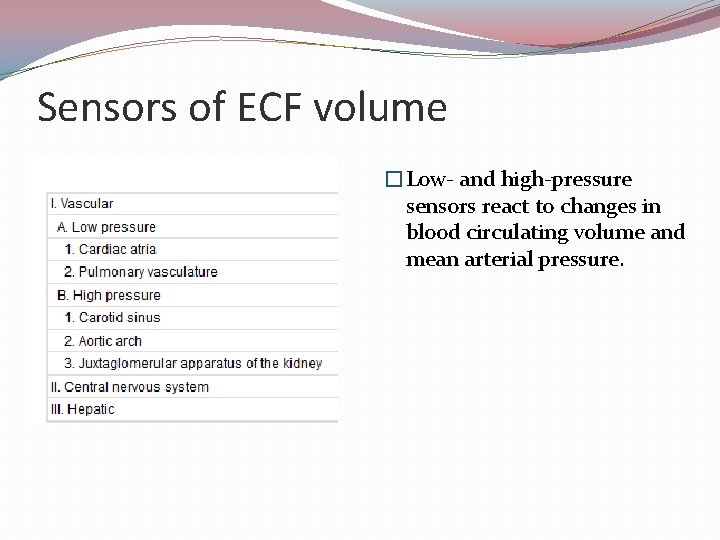
Sensors of ECF volume �Low- and high-pressure sensors react to changes in blood circulating volume and mean arterial pressure.
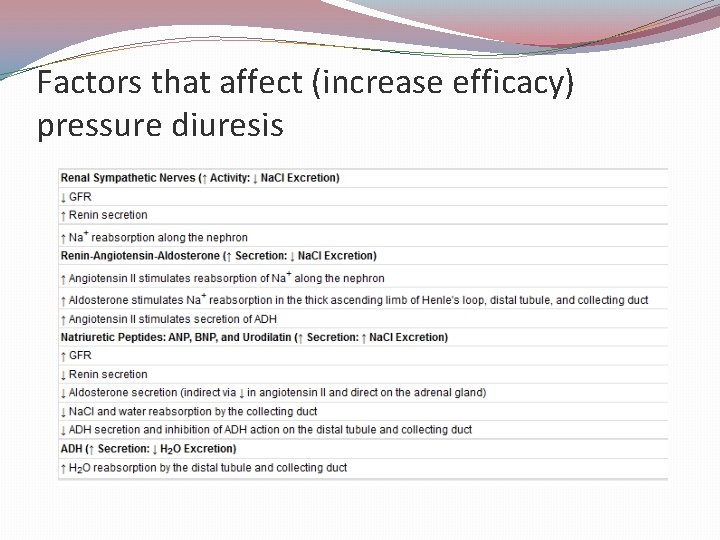
Factors that affect (increase efficacy) pressure diuresis
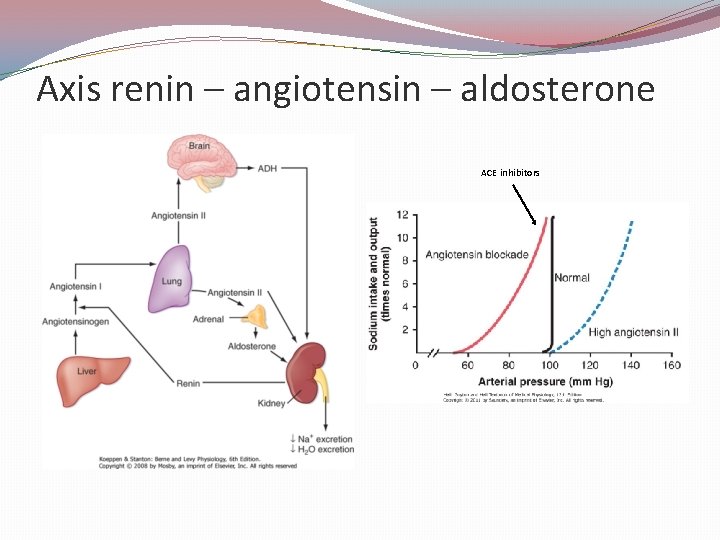
Axis renin – angiotensin – aldosterone ACE inhibitors
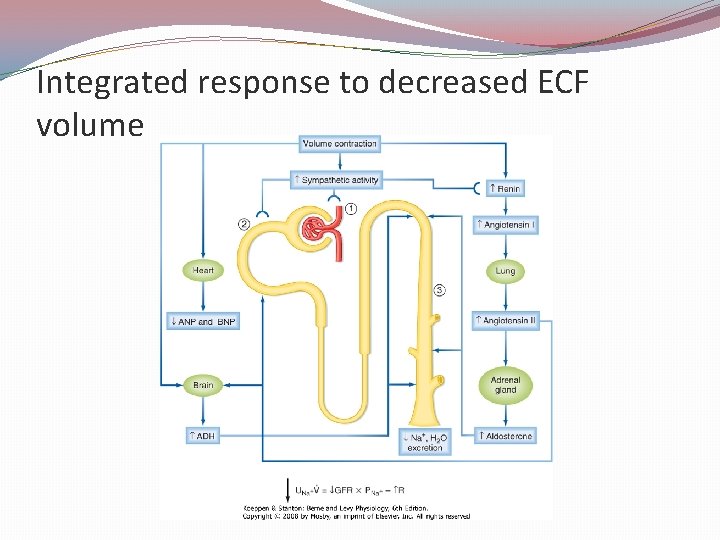
Integrated response to decreased ECF volume
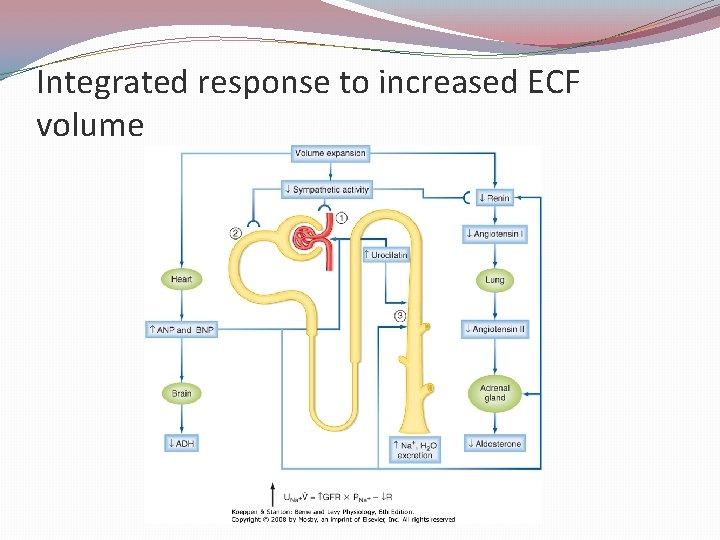
Integrated response to increased ECF volume
Regulation of ECF potassium concentration and potassium excretion
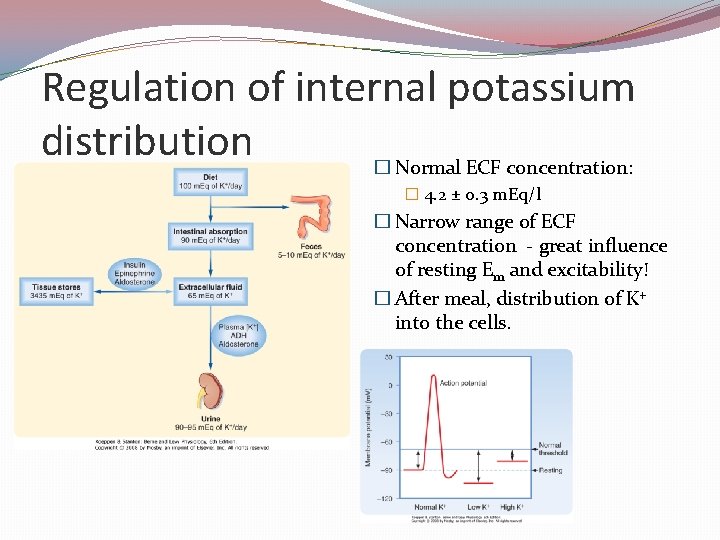
Regulation of internal potassium distribution � Normal ECF concentration: � 4. 2 ± 0. 3 m. Eq/l � Narrow range of ECF concentration - great influence of resting Em and excitability! � After meal, distribution of K+ into the cells.
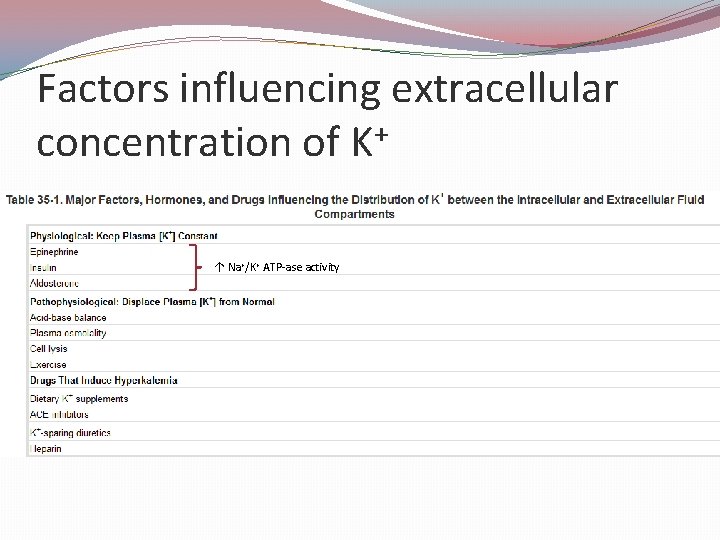
Factors influencing extracellular + concentration of K ↑ Na+/K+ ATP-ase activity
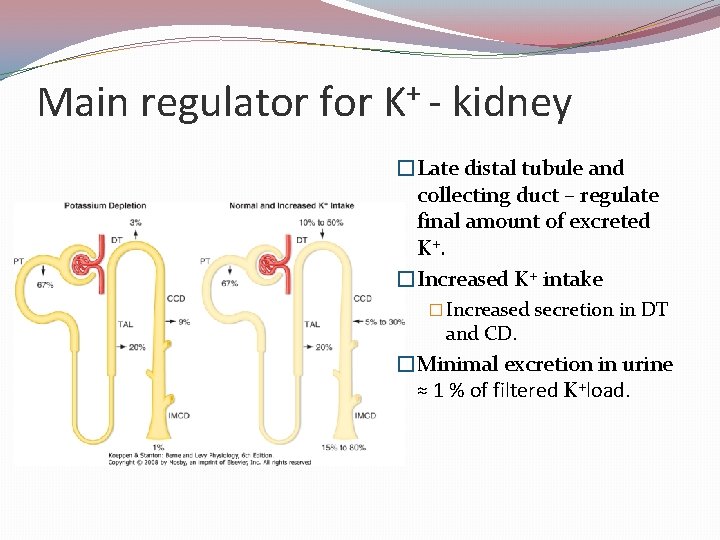
Main regulator for K+ - kidney �Late distal tubule and collecting duct – regulate final amount of excreted K+. �Increased K+ intake � Increased secretion in DT and CD. �Minimal excretion in urine ≈ 1 % of filtered K+load.
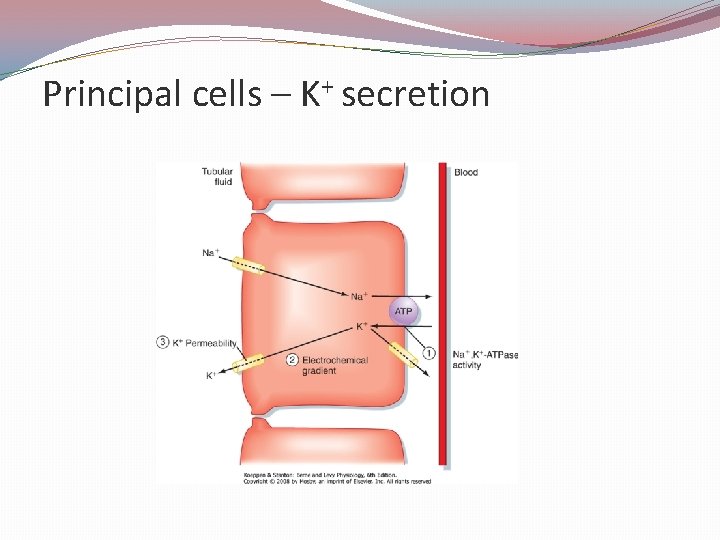
Principal cells – K+ secretion
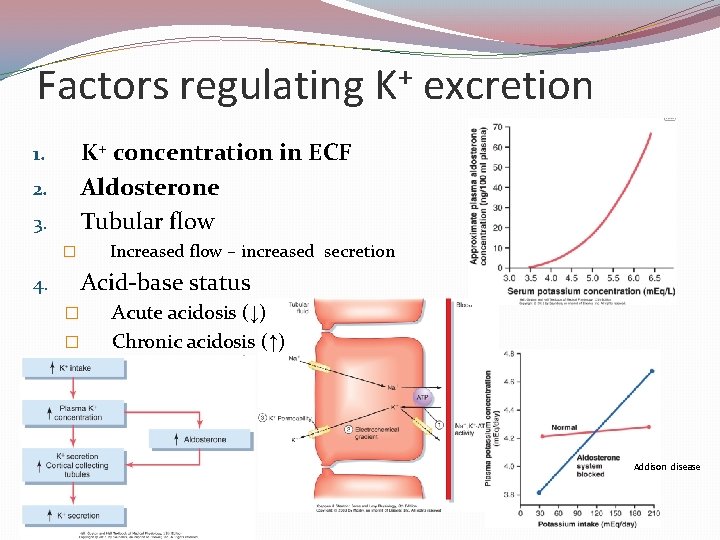
Factors regulating K+ excretion K+ concentration in ECF Aldosterone Tubular flow 1. 2. 3. Increased flow – increased secretion � Acid-base status 4. � � Acute acidosis (↓) Chronic acidosis (↑) Addison disease
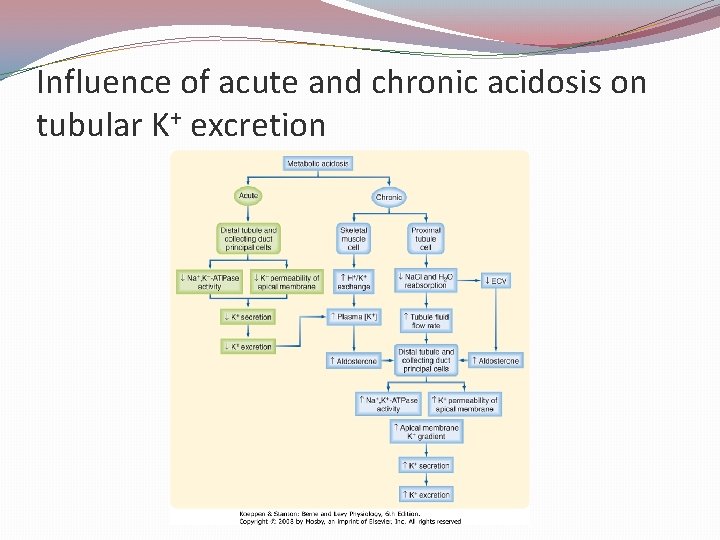
Influence of acute and chronic acidosis on tubular K+ excretion
Acid-base regulation
p. H • H+ concentration is very low (3 x 10⁶ lower than Na+) expressed as –log [H+] ili p. H. • Normal p. H = 7. 4 (between 6. 8 i 7. 8 compatible with life). • All biochemical reactions are sensitive to p. H. • Production/intake of acid and base = elimination of acid/base constant p. H
Production of acid and base • In physiological conditions, large amounts of volatile acid (CO 2) are produced (15 -20 mol/day) • eliminated completely in the lungs. • CO 2 + H 2 O H 2 CO 3 H+ + HCO 3 • Metabolism of normal diet results in more acid than alkali (50 -100 mmol/day) nonvolatile acid (eliminated in kidneys). • Nonvolatile acid: aminoacid metabolism(H 2 SO 4, HCl), anaerobic metabolism (lactic acid)…
Control of acid-base balance 1. Buffering of H+ by body fluids (buffer systems). systems 2. Respiratory regulation (CO 2) 3. Renal control (regulation of amount of nonvolatile acid/base) � Buffer systems in body fluids (ECF and ICF) prevent changes in p. H until lungs and kidneys (especially!) excrete the surplus of acid or base.
Buffer systems • First line of defence – prevent local changes of p. H • Do not remove H+ from the body or add them (just prevent local changes in free H+). • Pairs of weaks acids and bases (can reversibly release or bind H+ ): • buffer + H+ ↔ Hbuffer
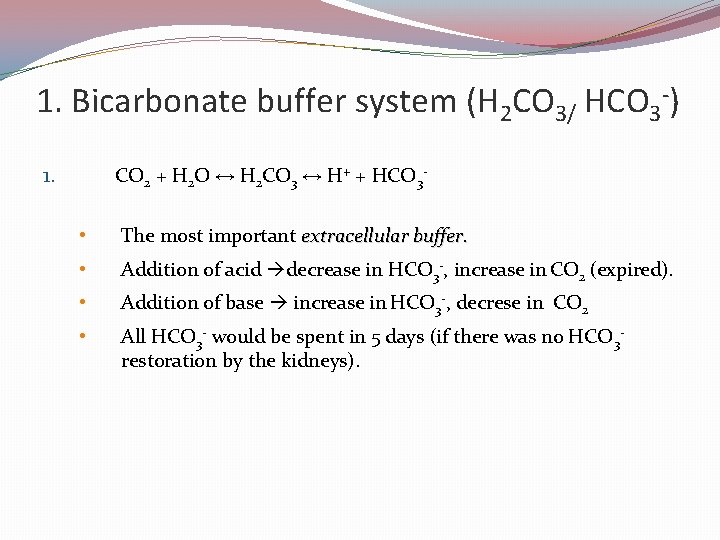
1. Bicarbonate buffer system (H 2 CO 3/ HCO 3 -) 1. CO 2 + H 2 O ↔ H 2 CO 3 ↔ H+ + HCO 3 - • The most important extracellular buffer. • Addition of acid decrease in HCO 3 -, increase in CO 2 (expired). • Addition of base increase in HCO 3 -, decrese in CO 2 • All HCO 3 - would be spent in 5 days (if there was no HCO 3 restoration by the kidneys).
2. Phosphate buffer system (H 2 PO 4 -/HPO 42 -) • Buffers intracellular and renal tubular fluid. H 2 PO 4 - ↔ H+ + HPO 42 -
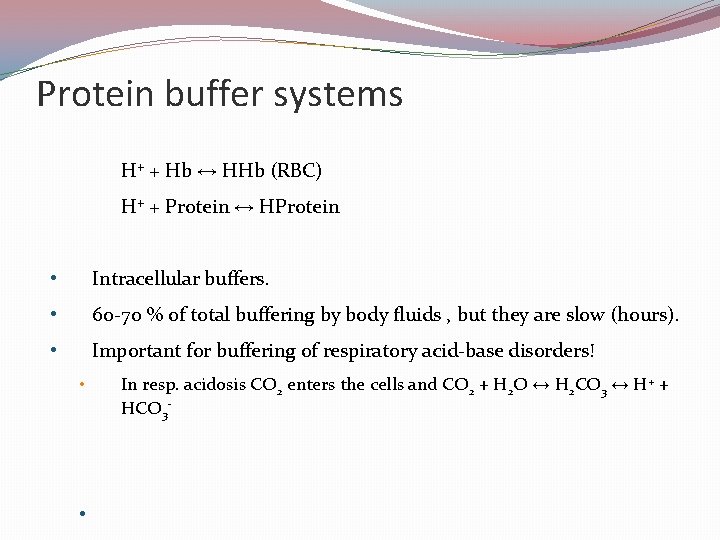
Protein buffer systems H+ + Hb ↔ HHb (RBC) H+ + Protein ↔ HProtein • Intracellular buffers. • 60 -70 % of total buffering by body fluids , but they are slow (hours). • Important for buffering of respiratory acid-base disorders! • • In resp. acidosis CO 2 enters the cells and CO 2 + H 2 O ↔ H 2 CO 3 ↔ H+ + HCO 3 -
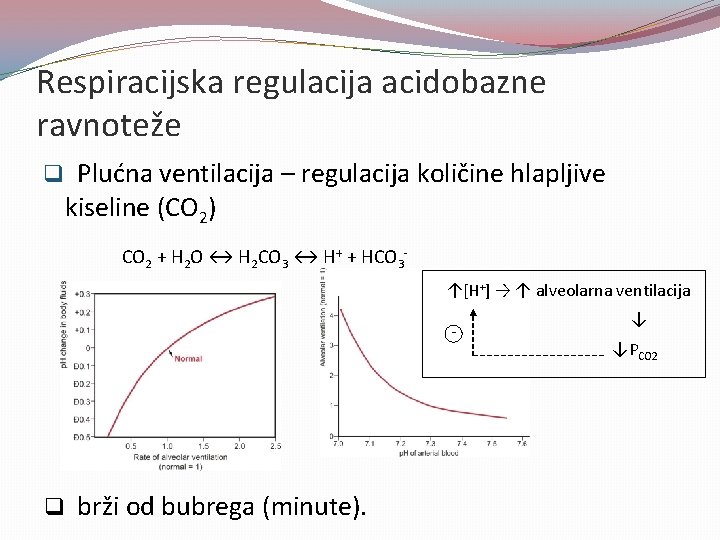
Respiracijska regulacija acidobazne ravnoteže q Plućna ventilacija – regulacija količine hlapljive kiseline (CO 2) CO 2 + H 2 O ↔ H 2 CO 3 ↔ H+ + HCO 3↑[H+] → ↑ alveolarna ventilacija - q brži od bubrega (minute). ↓ ↓PCO 2
Renal control of acid base balance • Kidney control the amount of H+ i HCO 3 - iona which they excrete. • Excretion of either acid or basic urine. • Normally • Reabsorption of all filtered HCO 3 - (180 l/day x 23 mmol/l = 4320 mmol/day) • And, excrete the excess H+ (replenish HCO 3 - used for buffering) • In all processes : tubular secretion of H+. • p. H of urine cannot be lower than 4!
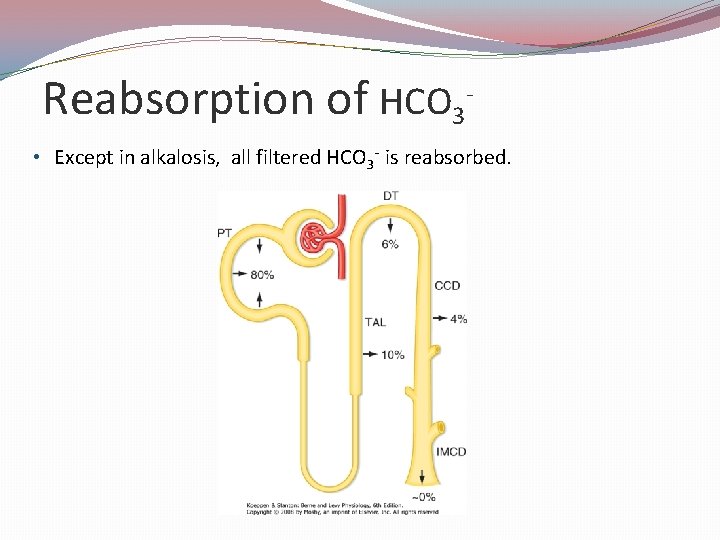
Reabsorption of HCO 3 • Except in alkalosis, all filtered HCO 3 - is reabsorbed.
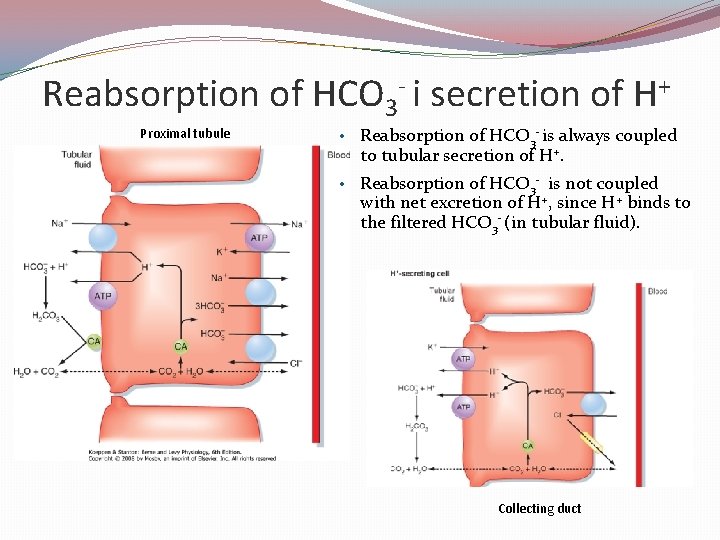
Reabsorption of HCO 3 - i secretion of H+ Proximal tubule • Reabsorption of HCO 3 - is always coupled to tubular secretion of H+. • Reabsorption of HCO 3 - is not coupled with net excretion of H+, since H+ binds to the filtered HCO 3 - (in tubular fluid). Collecting duct
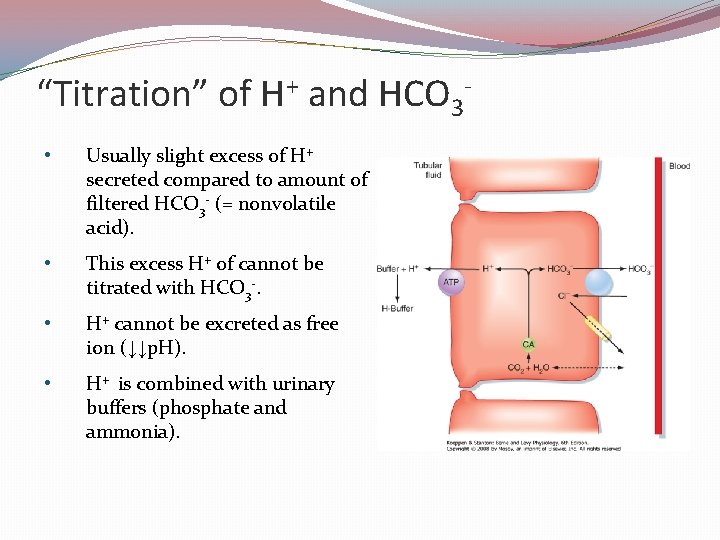
“Titration” of H+ and HCO 3 • Usually slight excess of H+ secreted compared to amount of filtered HCO 3 - (= nonvolatile acid). • This excess H+ of cannot be titrated with HCO 3 -. • H+ cannot be excreted as free ion (↓↓p. H). • H+ is combined with urinary buffers (phosphate and ammonia).
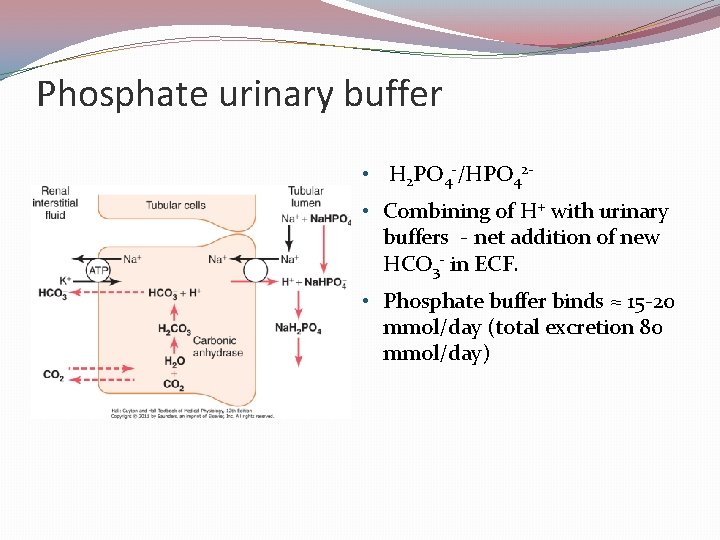
Phosphate urinary buffer • H 2 PO 4 -/HPO 42 • Combining of H+ with urinary buffers - net addition of new HCO 3 - in ECF. • Phosphate buffer binds ≈ 15 -20 mmol/day (total excretion 80 mmol/day)
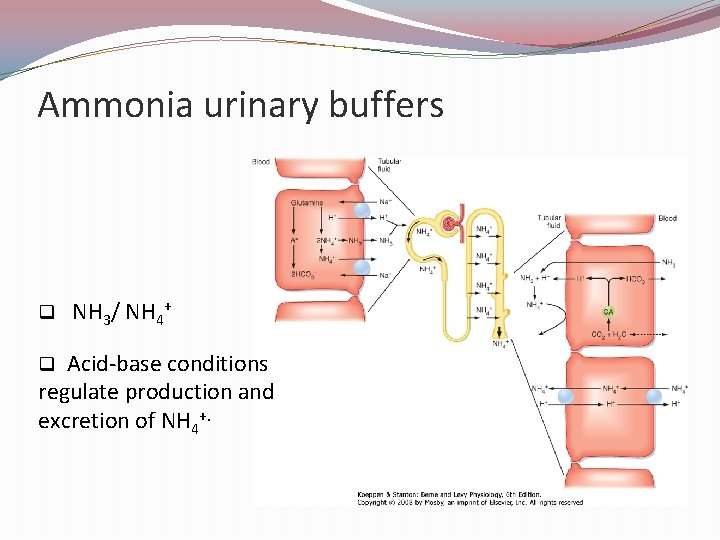
Ammonia urinary buffers q NH 3/ NH 4+ Acid-base conditions regulate production and excretion of NH 4+. q
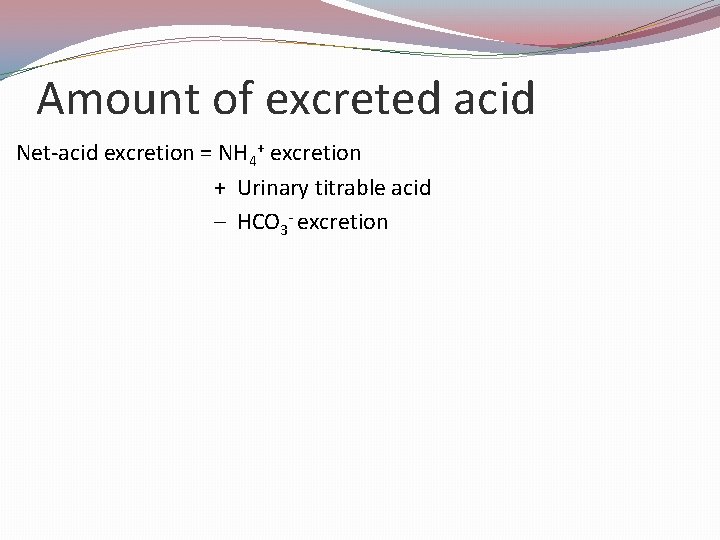
Amount of excreted acid Net-acid excretion = NH 4+ excretion + Urinary titrable acid – HCO 3 - excretion
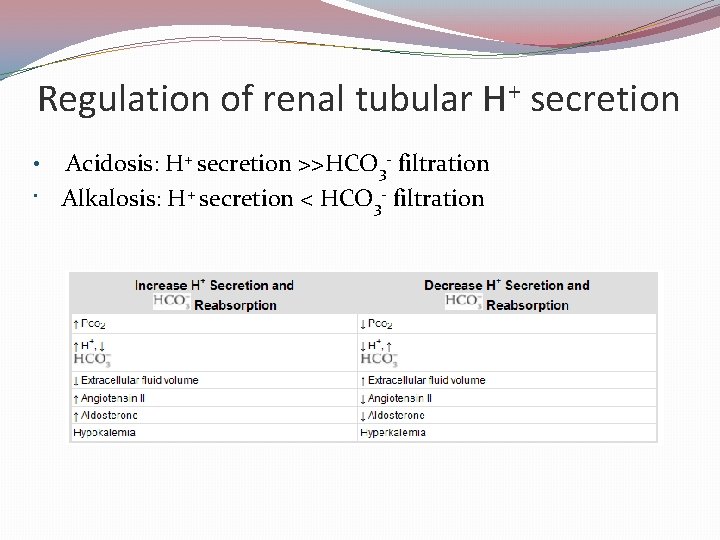
Regulation of renal tubular H+ secretion • • Acidosis: H+ secretion >>HCO 3 - filtration Alkalosis: H+ secretion < HCO 3 - filtration
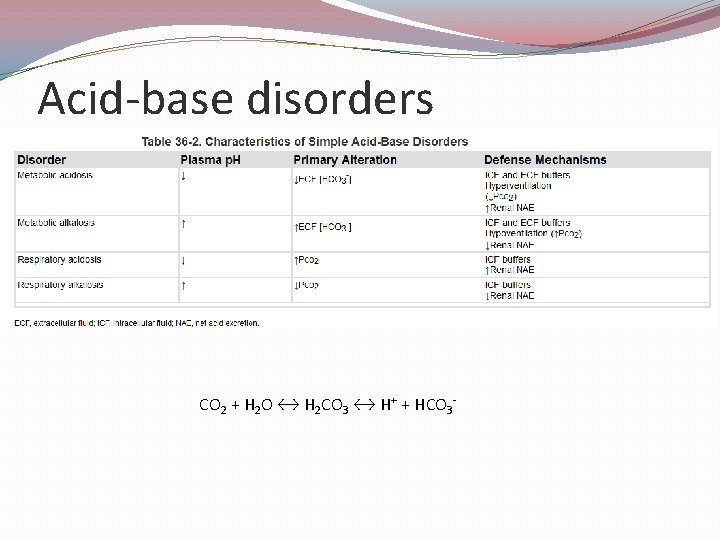
Acid-base disorders CO 2 + H 2 O ↔ H 2 CO 3 ↔ H+ + HCO 3 -
Metabolic acidosis �↓p. H, ↓[HCO 3 -] �Compensation: �Intra- and extra-cellular buffering �hyperventilation i ↓ p. CO 2 �↑ renal H+ excretion �Causes: loss of alkali (diarrhea) addition of acid (ketoacidosis, lactacidosis , renal failure). �Acidosis can be solved only when primary cause is removed (compensation cannot bring p. H to normal!)
Metabolic alkalosis �↑ p. H, ↑[HCO 3 -] �Compensation: �Intra- and extra-cellular buffering �hypoventilation i ↑ p. CO 2 (limited due to hypoxia) �↑ renal HCO 3 - excretion (decreased in hypovolemia) �Causes: loss of acid (vomiting), addition of alkali (anticaids).
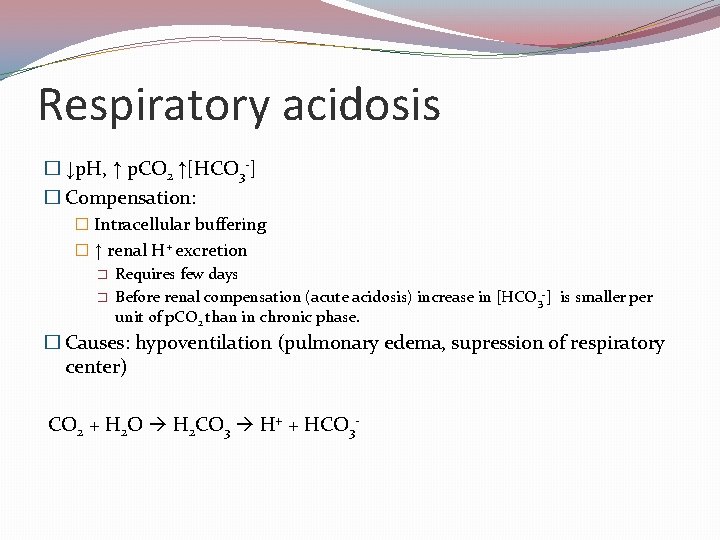
Respiratory acidosis � ↓p. H, ↑ p. CO 2 ↑[HCO 3 -] � Compensation: � Intracellular buffering � ↑ renal H+ excretion � Requires few days � Before renal compensation (acute acidosis) increase in [HCO 3 -] is smaller per unit of p. CO 2 than in chronic phase. � Causes: hypoventilation (pulmonary edema, supression of respiratory center) CO 2 + H 2 O H 2 CO 3 H+ + HCO 3 -
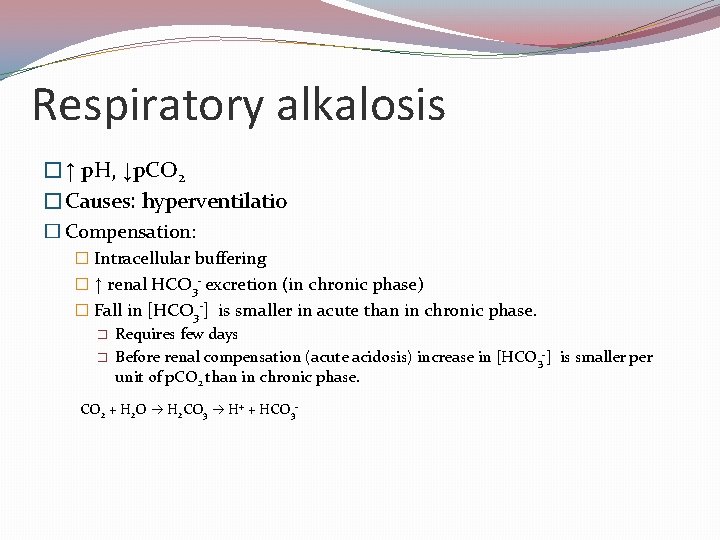
Respiratory alkalosis �↑ p. H, ↓p. CO 2 �Causes: hyperventilatio � Compensation: � Intracellular buffering � ↑ renal HCO 3 - excretion (in chronic phase) � Fall in [HCO 3 -] is smaller in acute than in chronic phase. � Requires few days � Before renal compensation (acute acidosis) increase in [HCO 3 -] is smaller per unit of p. CO 2 than in chronic phase. CO 2 + H 2 O H 2 CO 3 H+ + HCO 3 -
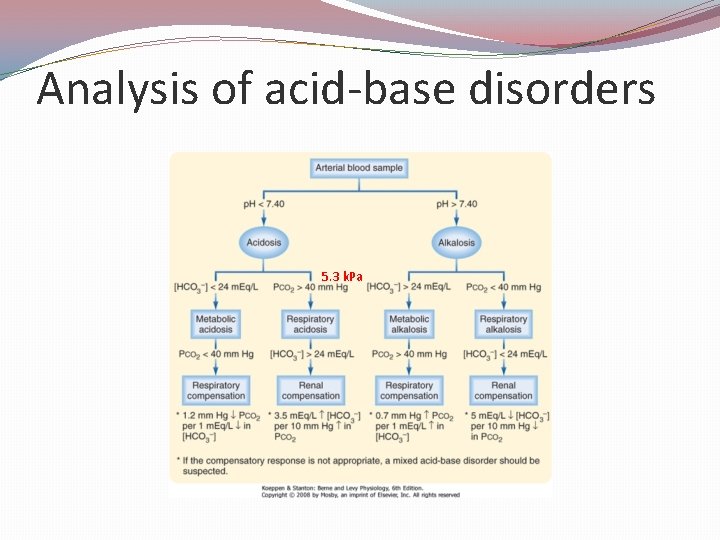
Analysis of acid-base disorders 5. 3 k. Pa
- Slides: 39