
Renal Problems in the Surgical Patient Dr Bob
Renal Problems in the Surgical Patient Dr. Bob Richardson TGH Nephrology 2009
Agenda n n Assessment of kidney function Acute renal failure Case studies of acute renal failure Chronic kidney disease n n Causes and stages of chronic kidney disease Surgery in patients with chronic kidney disease Surgery in dialysis patients Routine IV therapy in healthy patients
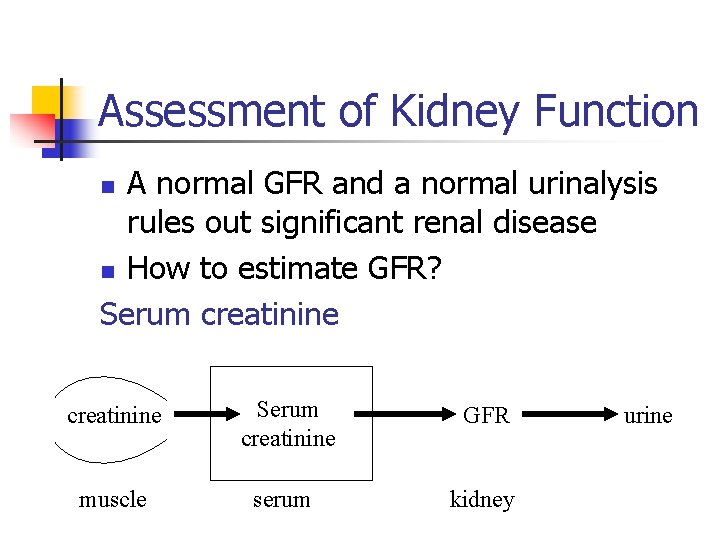
Assessment of Kidney Function A normal GFR and a normal urinalysis rules out significant renal disease n How to estimate GFR? Serum creatinine n creatinine Serum creatinine GFR muscle serum kidney urine
Serum creatinine is an imperfect method of estimating GFR; there is no perfect method.
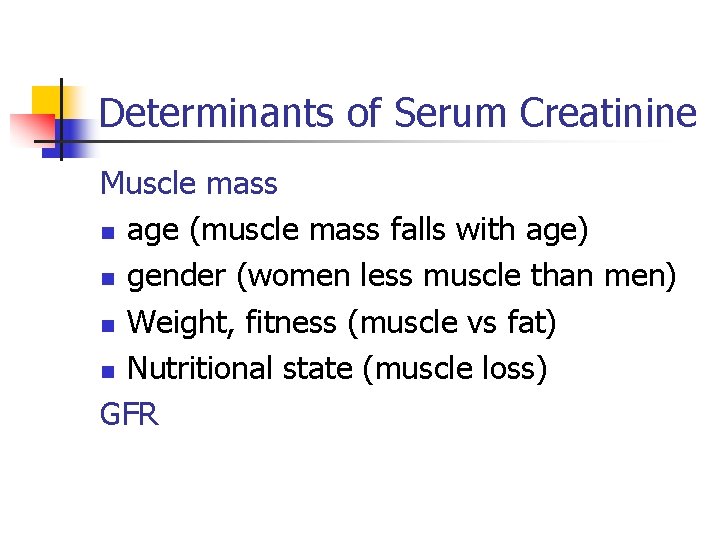
Determinants of Serum Creatinine Muscle mass n age (muscle mass falls with age) n gender (women less muscle than men) n Weight, fitness (muscle vs fat) n Nutritional state (muscle loss) GFR
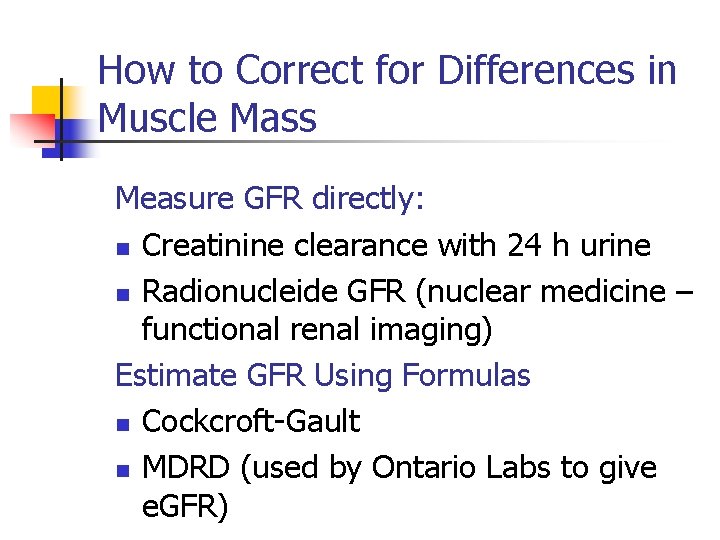
How to Correct for Differences in Muscle Mass Measure GFR directly: n Creatinine clearance with 24 h urine n Radionucleide GFR (nuclear medicine – functional renal imaging) Estimate GFR Using Formulas n Cockcroft-Gault n MDRD (used by Ontario Labs to give e. GFR)
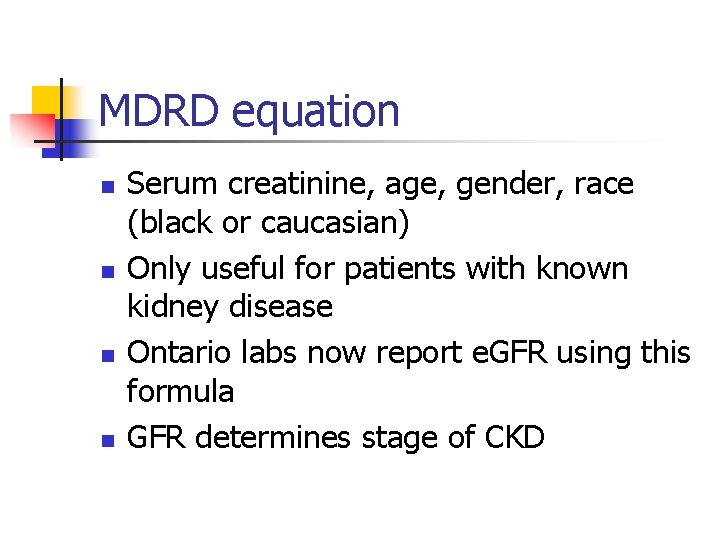
MDRD equation n n Serum creatinine, age, gender, race (black or caucasian) Only useful for patients with known kidney disease Ontario labs now report e. GFR using this formula GFR determines stage of CKD
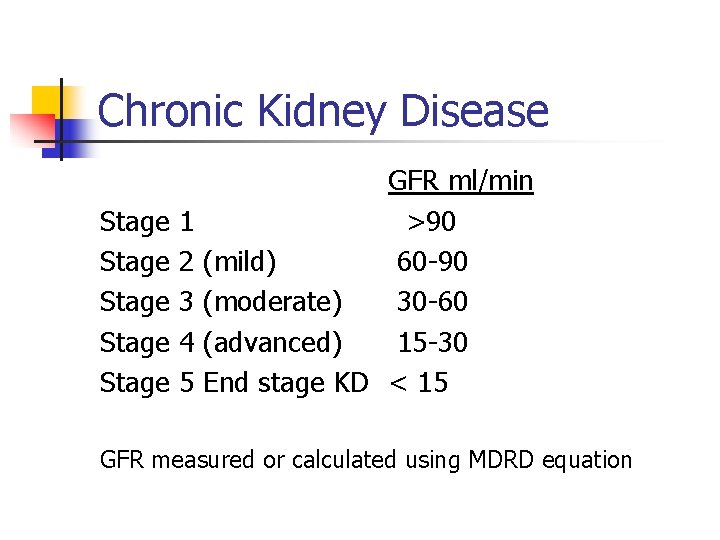
Chronic Kidney Disease Stage Stage 1 2 3 4 5 GFR ml/min >90 (mild) 60 -90 (moderate) 30 -60 (advanced) 15 -30 End stage KD < 15 GFR measured or calculated using MDRD equation
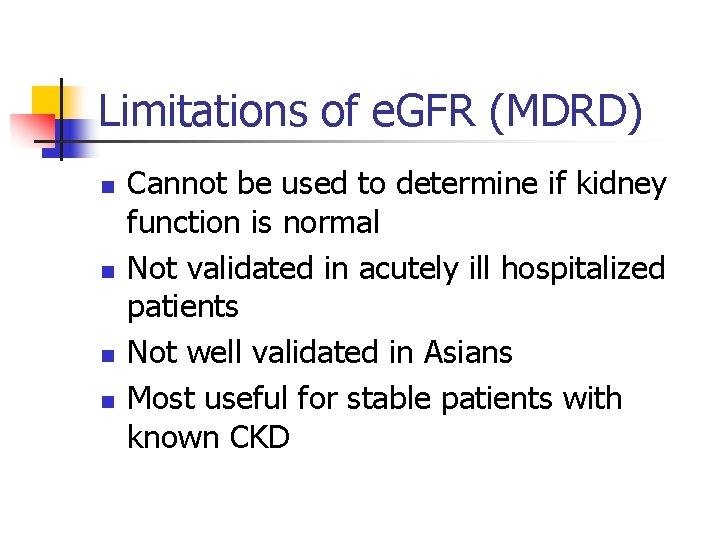
Limitations of e. GFR (MDRD) n n Cannot be used to determine if kidney function is normal Not validated in acutely ill hospitalized patients Not well validated in Asians Most useful for stable patients with known CKD
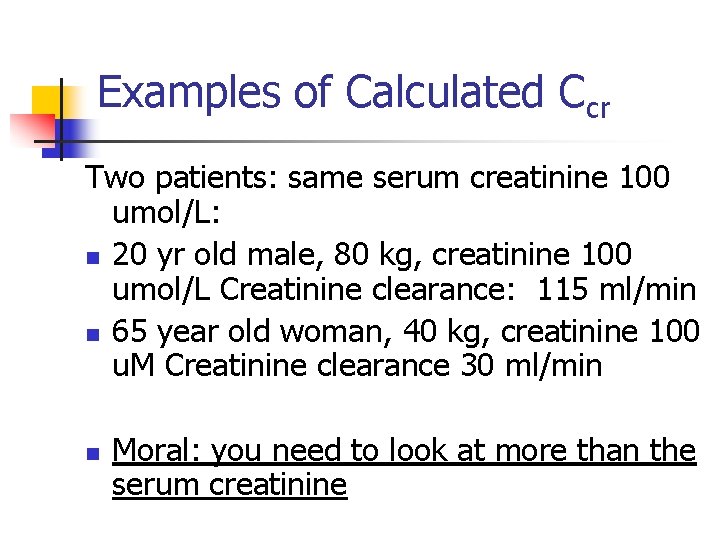
Examples of Calculated Ccr Two patients: same serum creatinine 100 umol/L: n 20 yr old male, 80 kg, creatinine 100 umol/L Creatinine clearance: 115 ml/min n 65 year old woman, 40 kg, creatinine 100 u. M Creatinine clearance 30 ml/min n Moral: you need to look at more than the serum creatinine
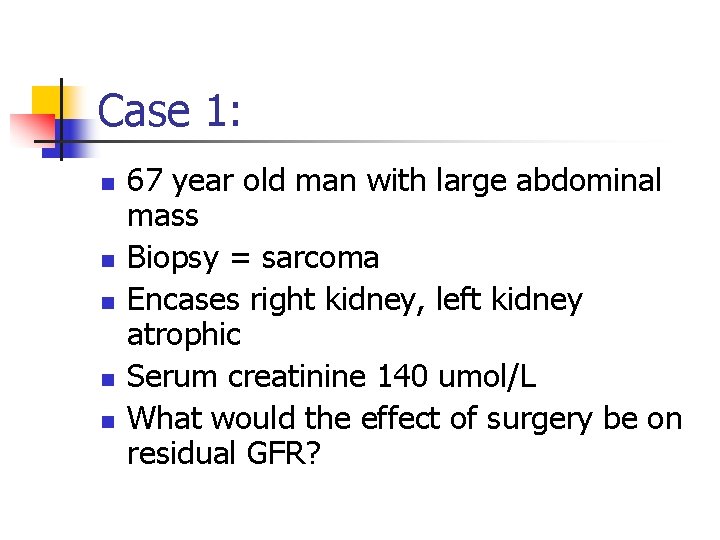
Case 1: n n n 67 year old man with large abdominal mass Biopsy = sarcoma Encases right kidney, left kidney atrophic Serum creatinine 140 umol/L What would the effect of surgery be on residual GFR?
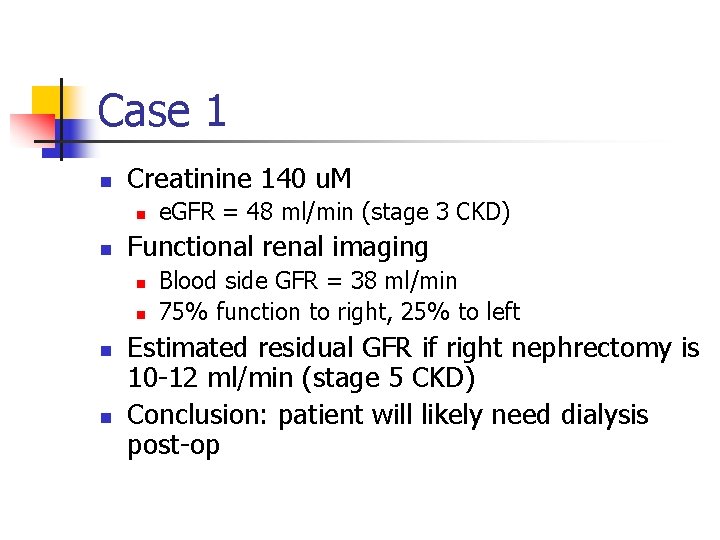
Case 1 n Creatinine 140 u. M n n Functional renal imaging n n e. GFR = 48 ml/min (stage 3 CKD) Blood side GFR = 38 ml/min 75% function to right, 25% to left Estimated residual GFR if right nephrectomy is 10 -12 ml/min (stage 5 CKD) Conclusion: patient will likely need dialysis post-op
Acute Renal Failure n n n n Renal response to reduced effective circulating volume Prerenal ARF Ischemic and toxic acute tubular necrosis Obstruction Abdominal compartment syndrome Case studies Dialysis for ARF
Renal Response to Reduced Effective Circulating Volume n What is “effective circulating volume”? n n n cardiac output vs peripheral vascular resistance how cardiovascular receptors “see” arterial filling Effective circulating volume is reduced in: n n n volume depletion (hemorrhage, diarrhea etc) systemic vasodilatation (sepsis, liver failure) congestive heart failure
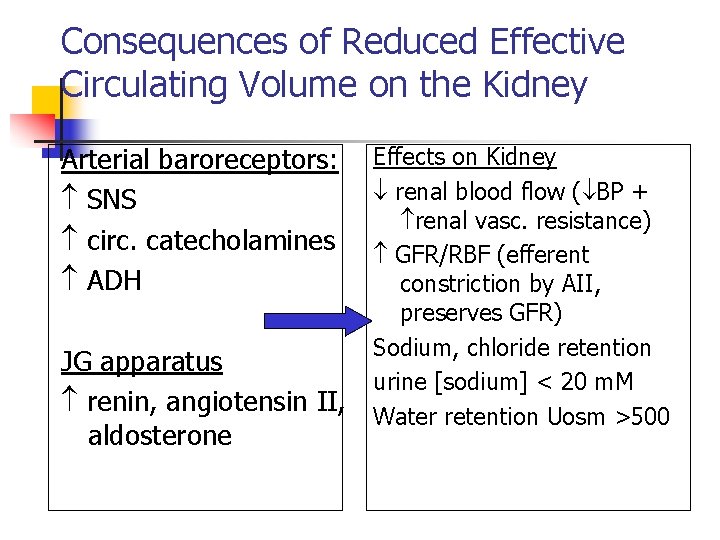
Consequences of Reduced Effective Circulating Volume on the Kidney Arterial baroreceptors: SNS circ. catecholamines ADH JG apparatus renin, angiotensin II, aldosterone Effects on Kidney renal blood flow ( BP + renal vasc. resistance) GFR/RBF (efferent constriction by AII, preserves GFR) Sodium, chloride retention urine [sodium] < 20 m. M Water retention Uosm >500
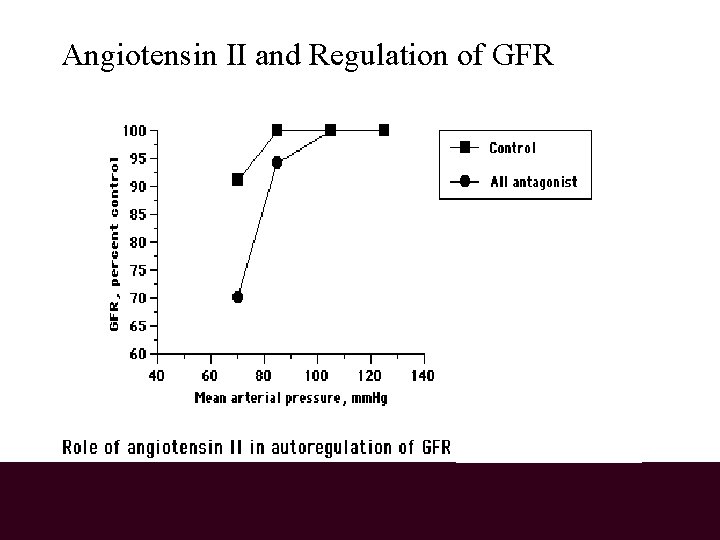
Angiotensin II and Regulation of GFR
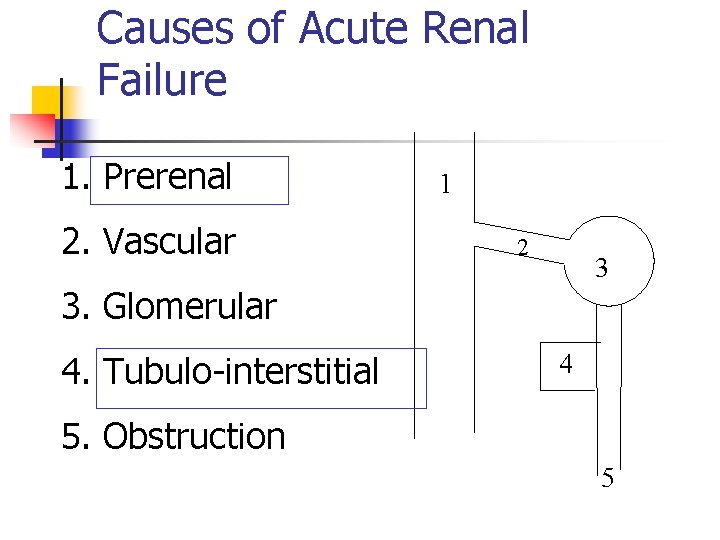
Causes of Acute Renal Failure 1. Prerenal 2. Vascular 1 2 3 3. Glomerular 4. Tubulo-interstitial 4 5. Obstruction 5
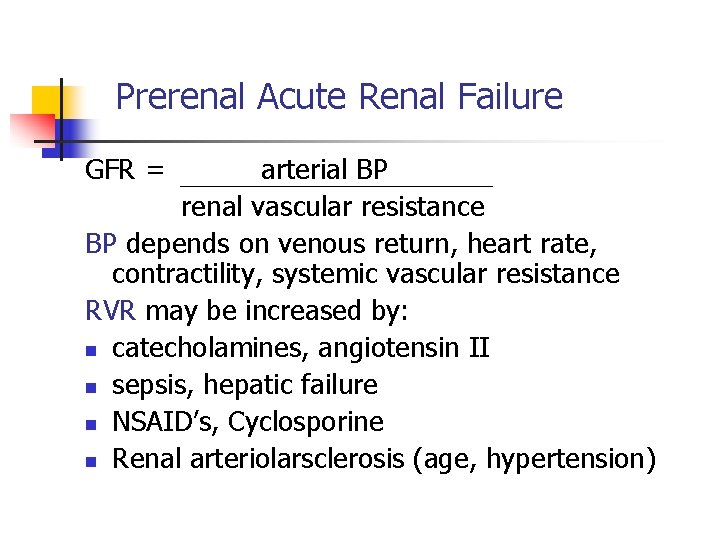
Prerenal Acute Renal Failure GFR = arterial BP renal vascular resistance BP depends on venous return, heart rate, contractility, systemic vascular resistance RVR may be increased by: n catecholamines, angiotensin II n sepsis, hepatic failure n NSAID’s, Cyclosporine n Renal arteriolarsclerosis (age, hypertension)
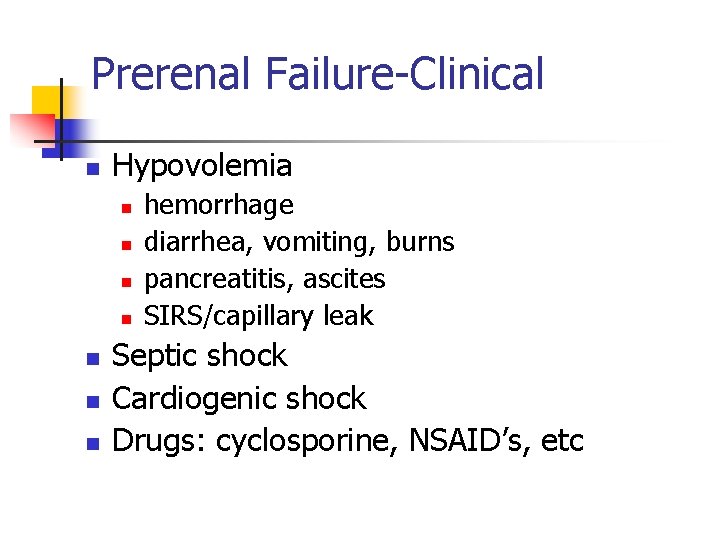
Prerenal Failure-Clinical n Hypovolemia n n n n hemorrhage diarrhea, vomiting, burns pancreatitis, ascites SIRS/capillary leak Septic shock Cardiogenic shock Drugs: cyclosporine, NSAID’s, etc
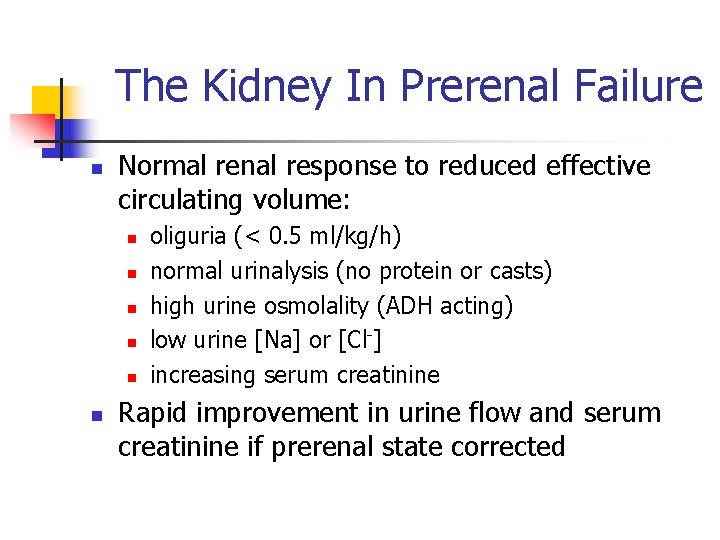
The Kidney In Prerenal Failure n Normal renal response to reduced effective circulating volume: n n n oliguria (< 0. 5 ml/kg/h) normal urinalysis (no protein or casts) high urine osmolality (ADH acting) low urine [Na] or [Cl-] increasing serum creatinine Rapid improvement in urine flow and serum creatinine if prerenal state corrected
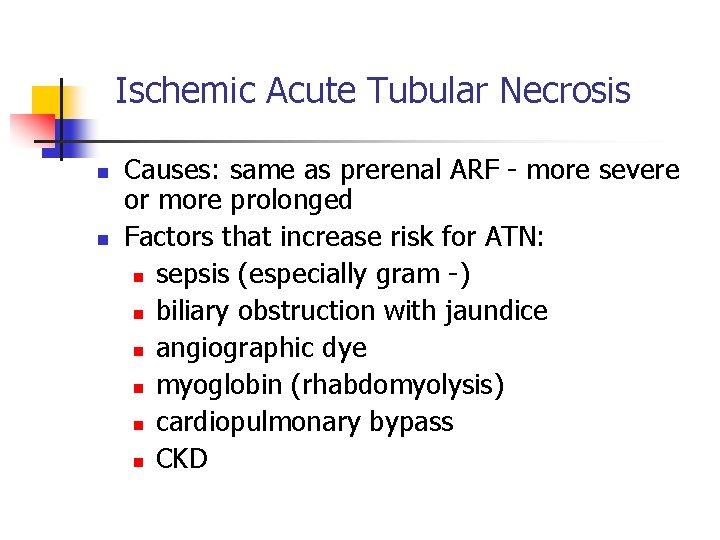
Ischemic Acute Tubular Necrosis n n Causes: same as prerenal ARF - more severe or more prolonged Factors that increase risk for ATN: n sepsis (especially gram -) n biliary obstruction with jaundice n angiographic dye n myoglobin (rhabdomyolysis) n cardiopulmonary bypass n CKD
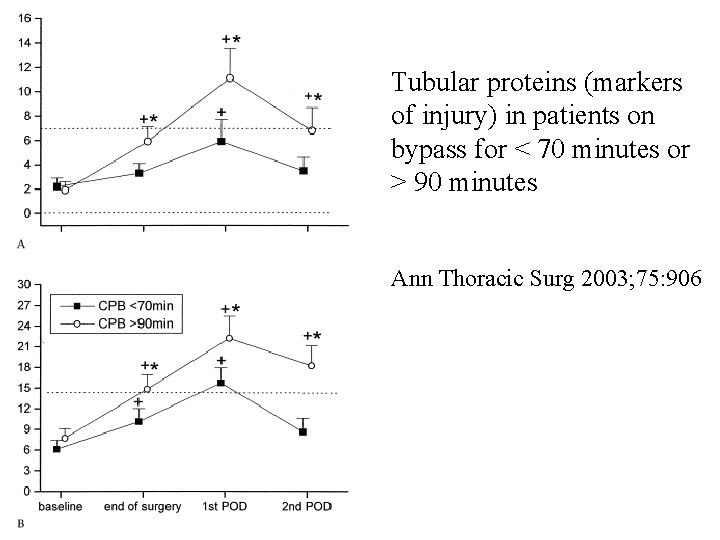
Tubular proteins (markers of injury) in patients on bypass for < 70 minutes or > 90 minutes Ann Thoracic Surg 2003; 75: 906
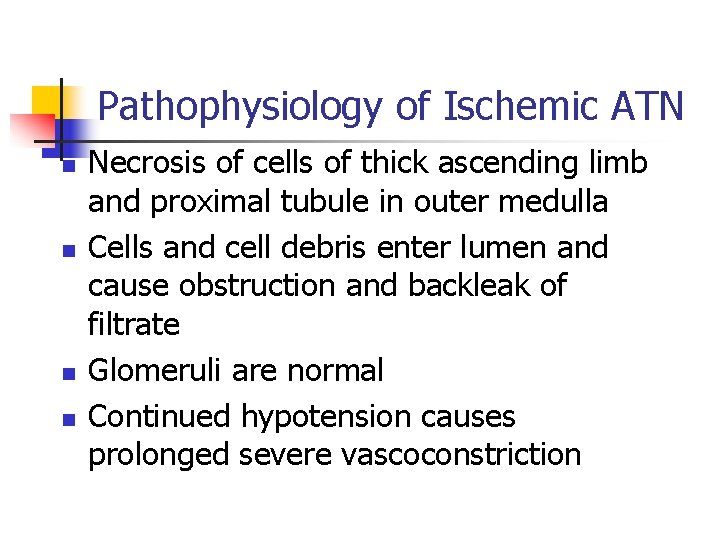
Pathophysiology of Ischemic ATN n n Necrosis of cells of thick ascending limb and proximal tubule in outer medulla Cells and cell debris enter lumen and cause obstruction and backleak of filtrate Glomeruli are normal Continued hypotension causes prolonged severe vascoconstriction
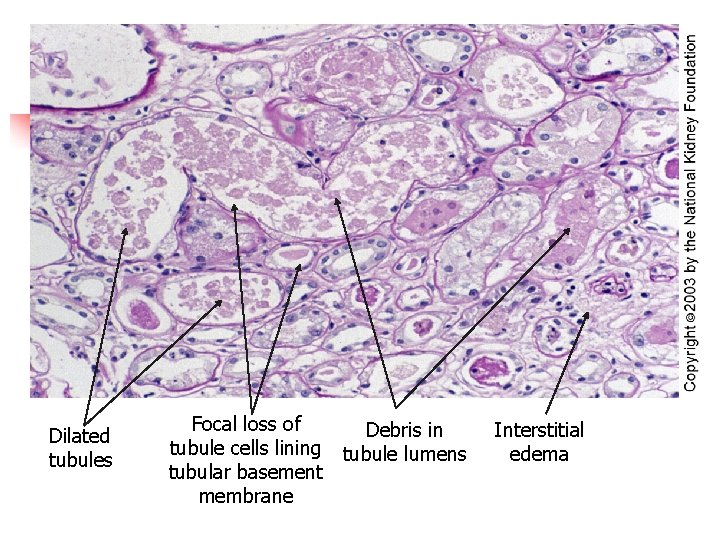
Dilated tubules Focal loss of Debris in tubule cells lining tubule lumens tubular basement membrane Interstitial edema
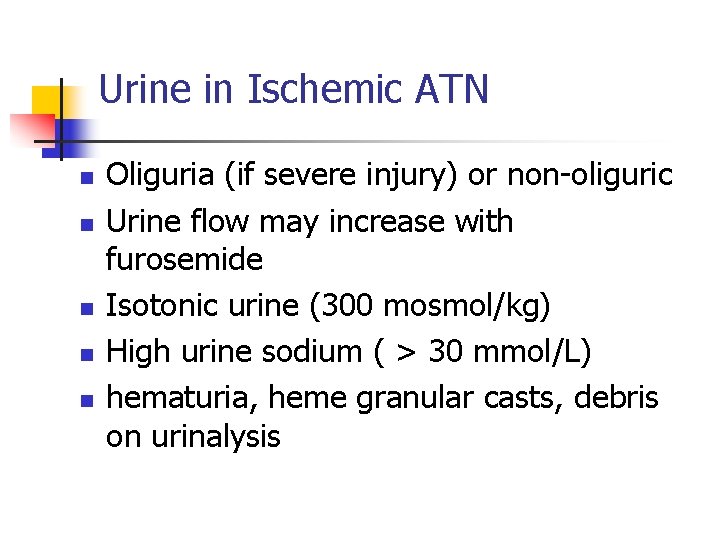
Urine in Ischemic ATN n n n Oliguria (if severe injury) or non-oliguric Urine flow may increase with furosemide Isotonic urine (300 mosmol/kg) High urine sodium ( > 30 mmol/L) hematuria, heme granular casts, debris on urinalysis
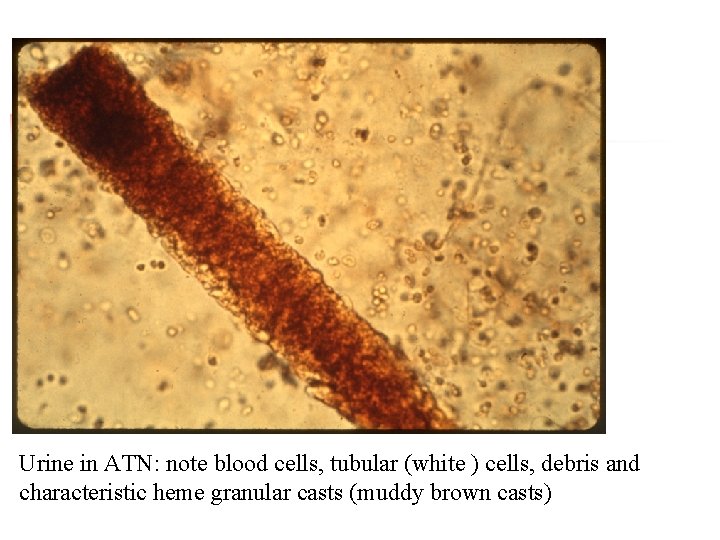
Urine in ATN: note blood cells, tubular (white ) cells, debris and characteristic heme granular casts (muddy brown casts)
Toxic Acute Tubular Necrosis n n Aminoglycosides, amphotericin, cisplatin etc Aminoglycosides: n n n accumulate in proximal tubule, cause cell necrosis tubular obstruction and backleak non-oliguric, creatinine at 7 -10 days toxicity most related to duration of therapy prevent by limiting course to < 10 days
Obstruction and Acute Renal Failure n n n Males: prostate Females: pelvic malignancy Either: n n n single kidney and stone, clot retroperitoneal malignancy n lymphoma n bladder, rectum Retroperitoneal fibrosis
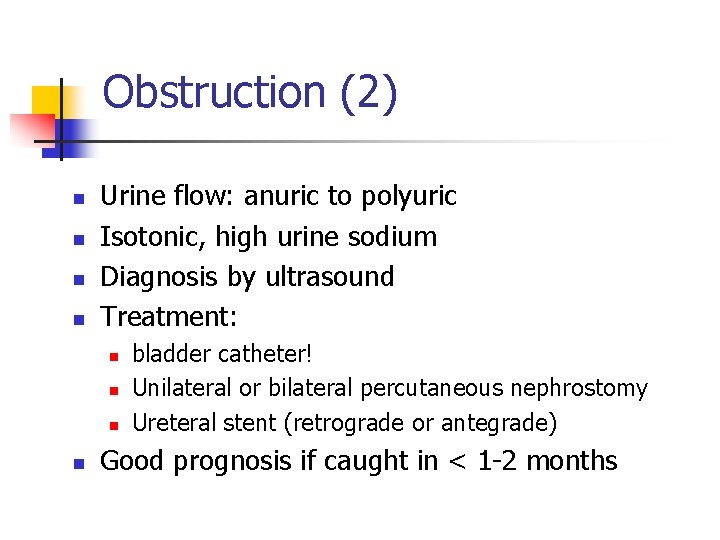
Obstruction (2) n n Urine flow: anuric to polyuric Isotonic, high urine sodium Diagnosis by ultrasound Treatment: n n bladder catheter! Unilateral or bilateral percutaneous nephrostomy Ureteral stent (retrograde or antegrade) Good prognosis if caught in < 1 -2 months
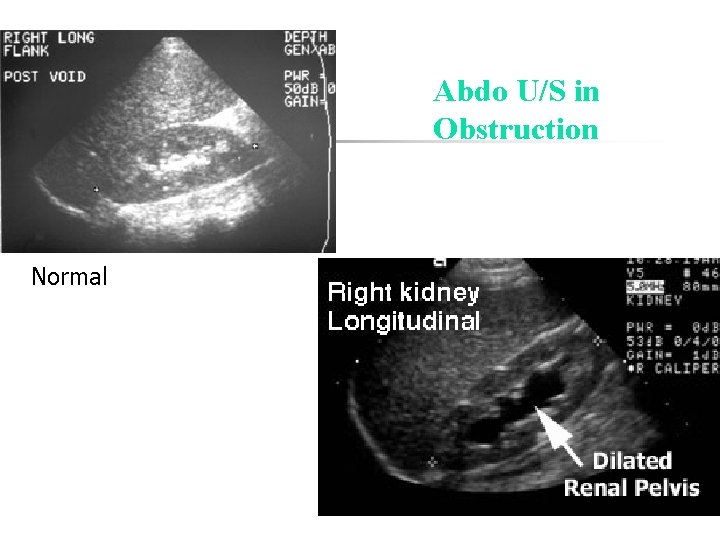
Abdo U/S in Obstruction Normal
Other Causes of Acute Renal Failure
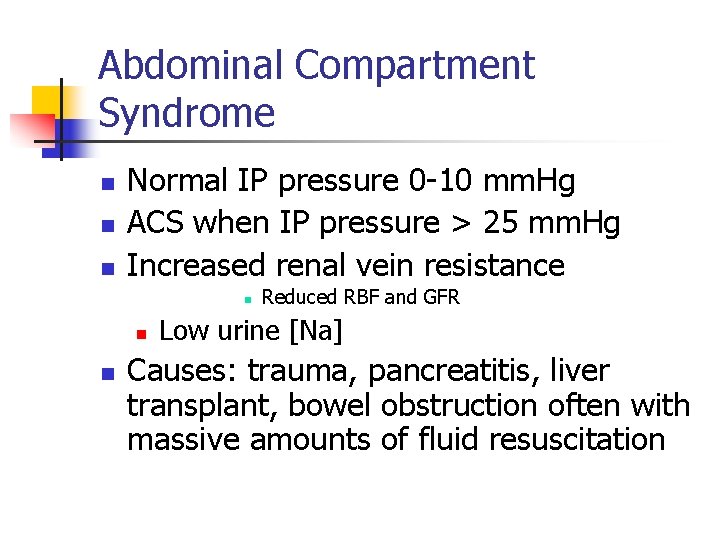
Abdominal Compartment Syndrome n n n Normal IP pressure 0 -10 mm. Hg ACS when IP pressure > 25 mm. Hg Increased renal vein resistance n n n Reduced RBF and GFR Low urine [Na] Causes: trauma, pancreatitis, liver transplant, bowel obstruction often with massive amounts of fluid resuscitation
Atheroembolic disease n n n obstruction and inflammation of small renal vessels due to cholesterol emboli follows aortography, CABG, aortic OR usually elderly vasculopaths - aortic AS ischemic toes, livido reticularis, abdo pain slowly progressive renal failure over weeks bland urinalysis, eospinophilia
Contrast-induced ARF n n n Non-oliguric ARF within 24 h of procedure Cause unknown (vascular vs toxic) Risk factors: n n Prevention: n n n Stage 4 -5 (GFR < 30 ml/min) diabetic nephropathy with GFR < 40 ml/min) Congestive heart failure IV saline or IV sodium bicarbonate N-acetylcysteine (controversial) Prognosis: usually good except DM + CKD 4 -5
Less Common Causes of ARF n n Allergic interstitial nephritis – drug reaction penicillins, cipro, NSAID’s, Septra etc Thrombotic Microangiopathy (hemolytic uremic syndrome) n n n Toxemia of pregnancy Bone marrow transplant Cyclosporine Toxigenic E. Coli (Walkerton) Malignant hypertension etc.
Assessment of Patient with ARF History: prior renal function; BP, ECFV n Drugs: diuretics, antibiotics, NSAID’s, ACE inhibitors, angio dye, cyclosporine n Physical Exam: BP, JVP, edema, ascites, peripheral pulses, bruits, urine flow n Lab: lytes, creatinine, urea, CBC, blood film, urinalysis, urine lytes, osmolality Renal U/S, renal biopsy if dg unclear n
Consequences of Acute Renal Failure n n n ECF volume: pulmonary edema, edema Hyperkalemia if oliguria Uremia: anorexia, nausea, vomiting, encephalopthy, etc Metabolic acidosis, hypocalcemia, hyperphosphatemia, anemia Prognosis: n n with multiorgan failure in ICU mortality 60 -70% with no other organ failure, prognosis is good
Dialysis for Acute Renal Failure Indications: n Pulmonary edema n Hyperkalemia n Serum creatinine > 500 umol/L n Serum creatinine > 300 with oliguria Methods: n Conventional HD (3 -5 h, 3 -6 days/wk) n CRRT - using Prisma machine heparin vs citrate n SLED (sustained low efficiency HD) 8 hours 3 -6 days/wk
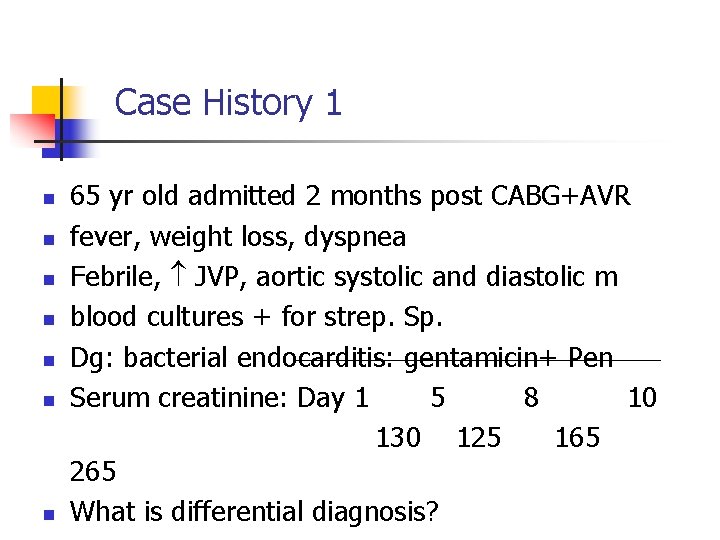
Case History 1 n n n n 65 yr old admitted 2 months post CABG+AVR fever, weight loss, dyspnea Febrile, JVP, aortic systolic and diastolic m blood cultures + for strep. Sp. Dg: bacterial endocarditis: gentamicin+ Pen Serum creatinine: Day 1 5 8 10 130 125 165 265 What is differential diagnosis?
Case 1 Differential: n Post-infectious GN n Ischemic ATN n Athero-embolic disease n GENTAMICIN-INDUCED
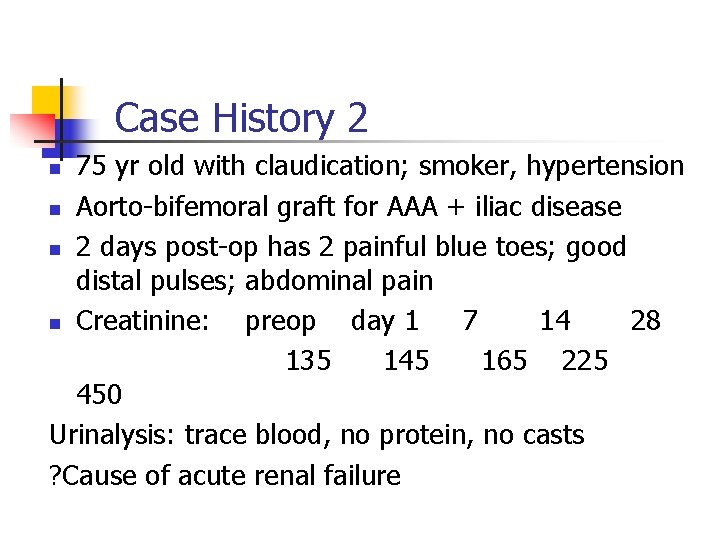
Case History 2 75 yr old with claudication; smoker, hypertension n Aorto-bifemoral graft for AAA + iliac disease n 2 days post-op has 2 painful blue toes; good distal pulses; abdominal pain n Creatinine: preop day 1 7 14 28 135 145 165 225 450 Urinalysis: trace blood, no protein, no casts ? Cause of acute renal failure n
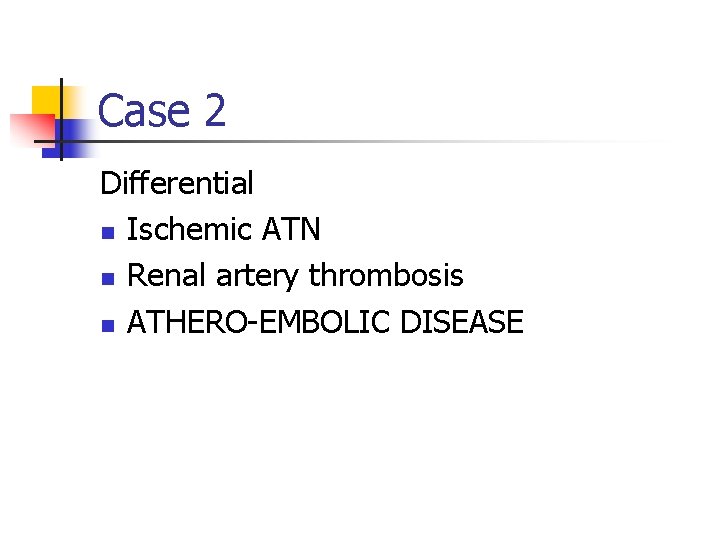
Case 2 Differential n Ischemic ATN n Renal artery thrombosis n ATHERO-EMBOLIC DISEASE
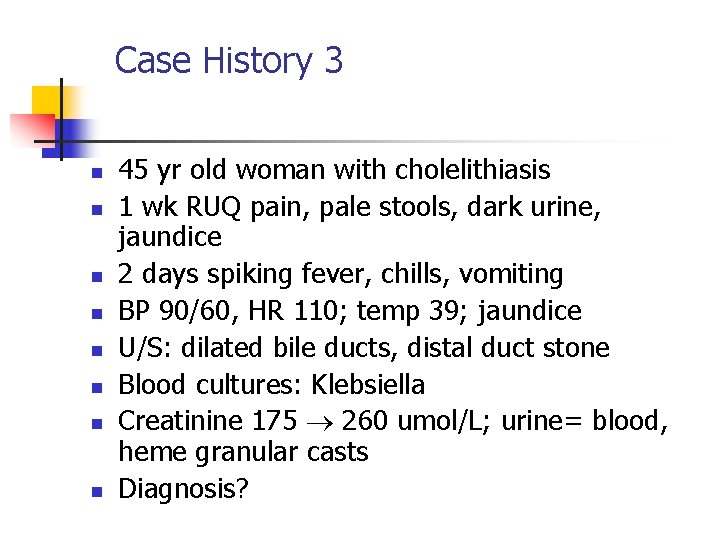
Case History 3 n n n n 45 yr old woman with cholelithiasis 1 wk RUQ pain, pale stools, dark urine, jaundice 2 days spiking fever, chills, vomiting BP 90/60, HR 110; temp 39; jaundice U/S: dilated bile ducts, distal duct stone Blood cultures: Klebsiella Creatinine 175 260 umol/L; urine= blood, heme granular casts Diagnosis?
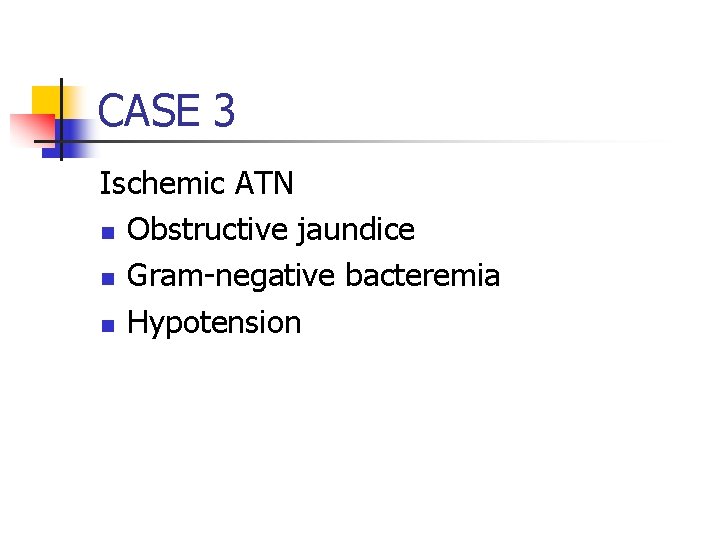
CASE 3 Ischemic ATN n Obstructive jaundice n Gram-negative bacteremia n Hypotension
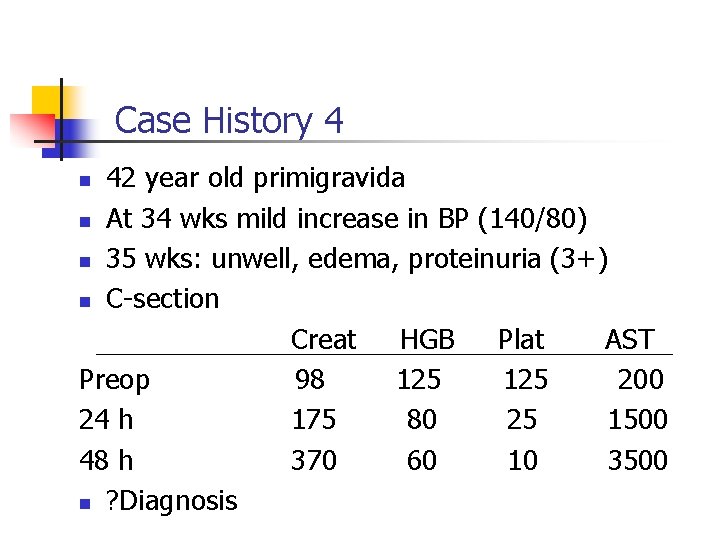
Case History 4 42 year old primigravida n At 34 wks mild increase in BP (140/80) n 35 wks: unwell, edema, proteinuria (3+) n C-section Creat HGB Plat AST Preop 98 125 200 24 h 175 80 25 1500 48 h 370 60 10 3500 n ? Diagnosis n
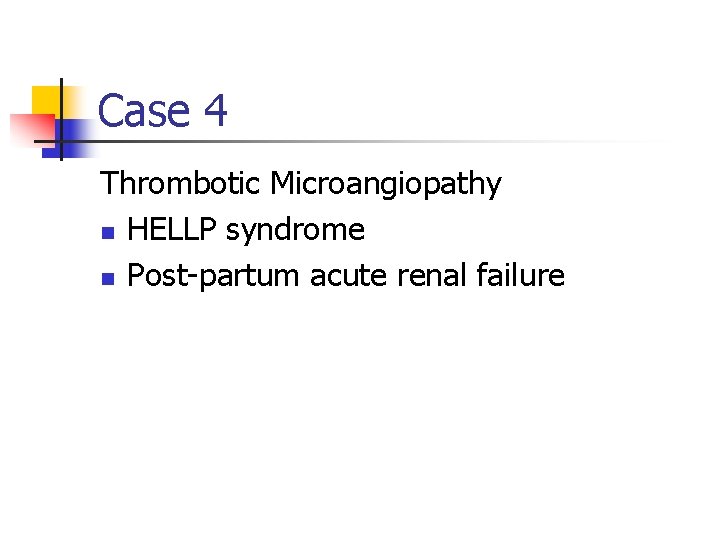
Case 4 Thrombotic Microangiopathy n HELLP syndrome n Post-partum acute renal failure
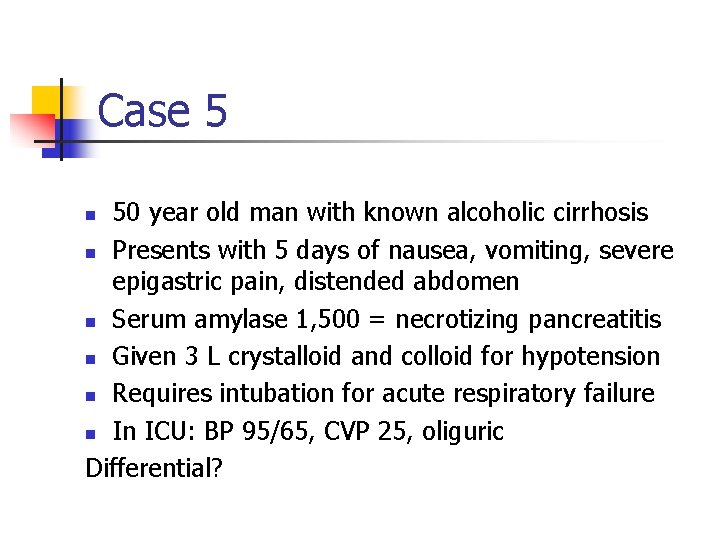
Case 5 50 year old man with known alcoholic cirrhosis n Presents with 5 days of nausea, vomiting, severe epigastric pain, distended abdomen n Serum amylase 1, 500 = necrotizing pancreatitis n Given 3 L crystalloid and colloid for hypotension n Requires intubation for acute respiratory failure n In ICU: BP 95/65, CVP 25, oliguric Differential? n
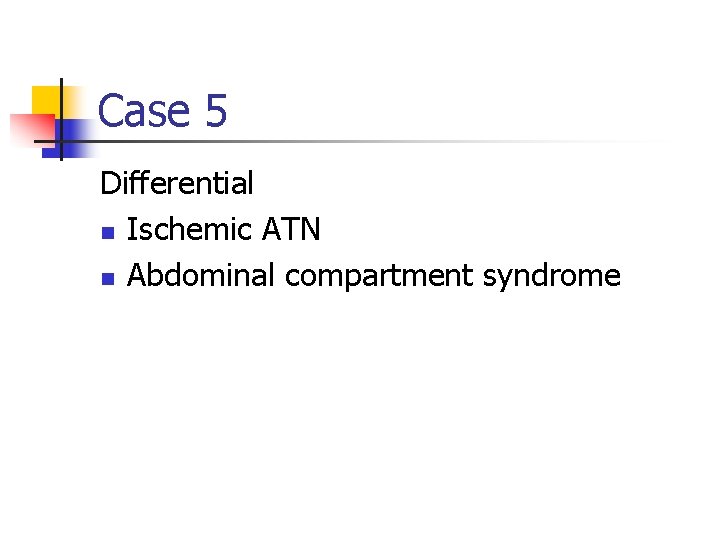
Case 5 Differential n Ischemic ATN n Abdominal compartment syndrome
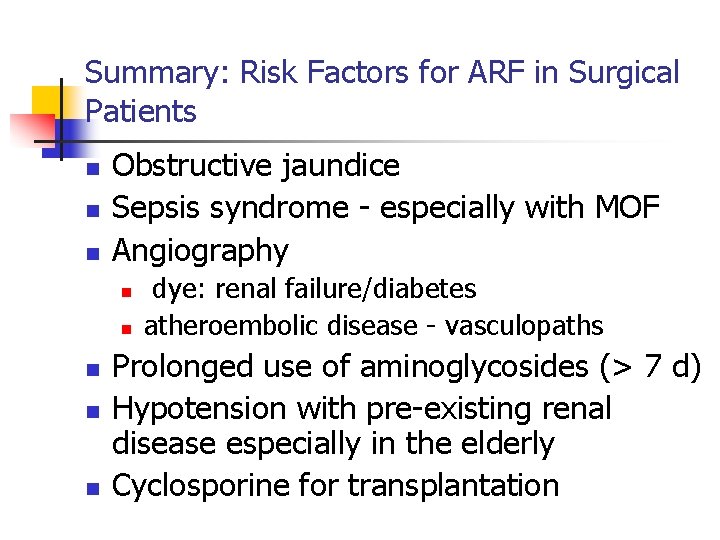
Summary: Risk Factors for ARF in Surgical Patients n n n Obstructive jaundice Sepsis syndrome - especially with MOF Angiography n n n dye: renal failure/diabetes atheroembolic disease - vasculopaths Prolonged use of aminoglycosides (> 7 d) Hypotension with pre-existing renal disease especially in the elderly Cyclosporine for transplantation
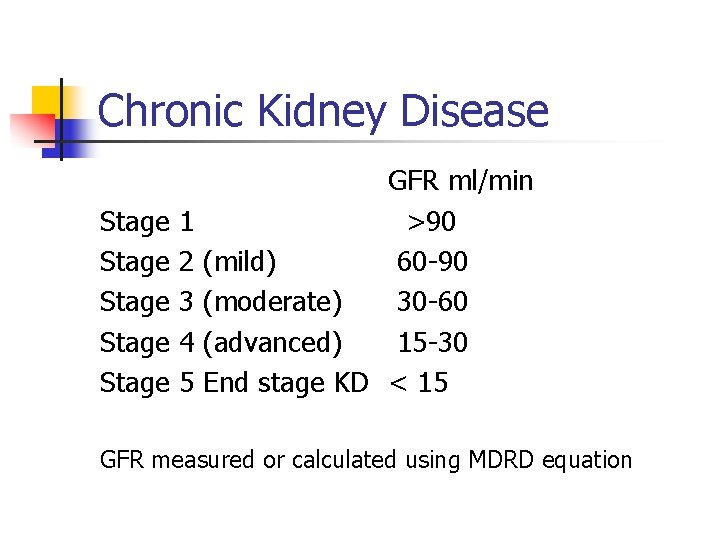
Chronic Kidney Disease Stage Stage 1 2 3 4 5 GFR ml/min >90 (mild) 60 -90 (moderate) 30 -60 (advanced) 15 -30 End stage KD < 15 GFR measured or calculated using MDRD equation
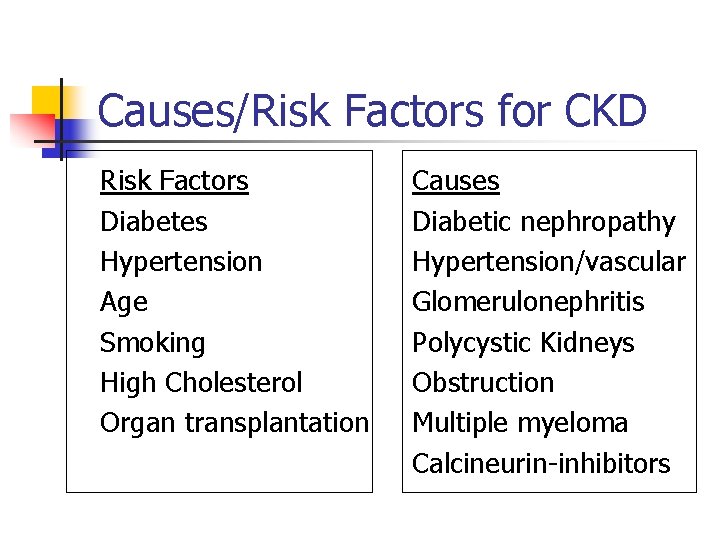
Causes/Risk Factors for CKD Risk Factors Diabetes Hypertension Age Smoking High Cholesterol Organ transplantation Causes Diabetic nephropathy Hypertension/vascular Glomerulonephritis Polycystic Kidneys Obstruction Multiple myeloma Calcineurin-inhibitors

Patients with Chronic Kidney Disease n n You are helping Dr. Robinette do a nephrectomy on a healthy living kidney transplant donor You ask yourself: what is going to happen to this patient’s kidney function and why?
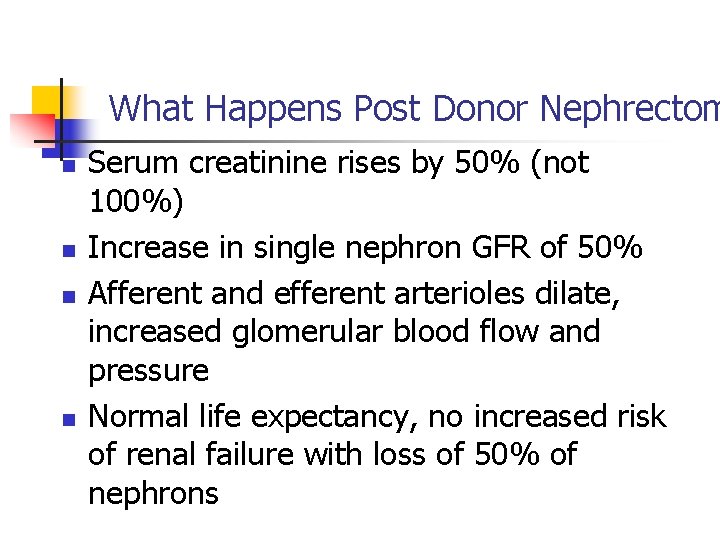
What Happens Post Donor Nephrectom n n Serum creatinine rises by 50% (not 100%) Increase in single nephron GFR of 50% Afferent and efferent arterioles dilate, increased glomerular blood flow and pressure Normal life expectancy, no increased risk of renal failure with loss of 50% of nephrons
What if More Nephrons are Lost? n n Increased single nephron GFR by afferent and efferent arteriolar dilatation If lose > 65% of nephrons, get structural changes in glomeruli and arterioles due to hyperfiltration and hypertension Proteinuria and progressive renal failure Predictors of progessive disease? n n n Higher serum creatinine Hypertension Amount of proteinuria: > 1 g/d is bad, >3 g worse
Impact of Chronic Kidney Disease on Surgical Outcomes (1) Patients with stage 3 -5 CKD are at risk: n Already maximally vasodilated n Cannot further autoregulate in response to hypotension: ATN n Limited ability to excrete extra sodium, water and potassium n Limited ability to retain sodium and water
Impact of Chronic Kidney Disease on Surgical Outcomes (2) Patients with stages 3 -5 CKD have increased risk of mortality with surgery n Higher death rates after CABG n Higher death rates after aortic surgery n Higher death rates after MI
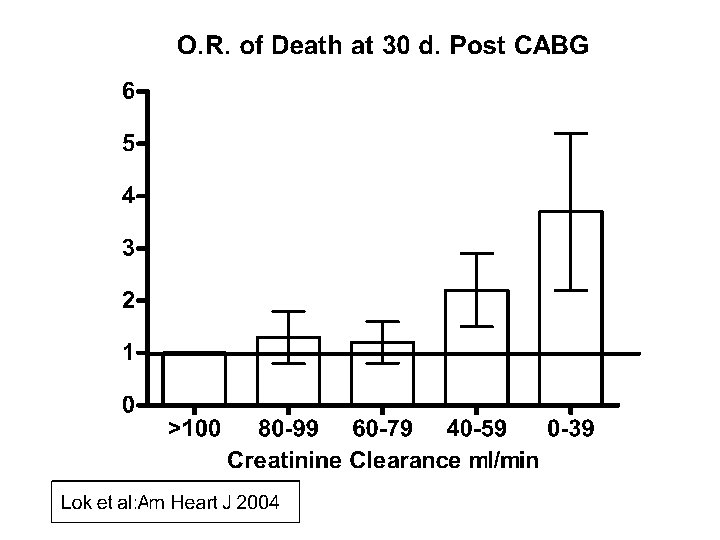
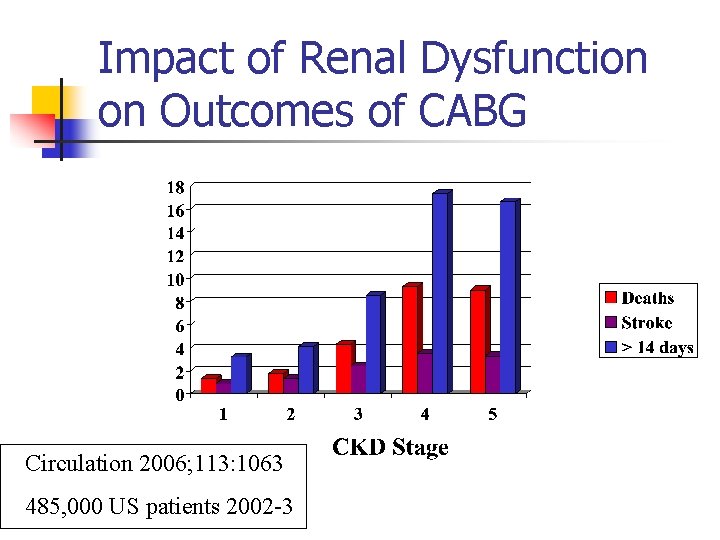
Impact of Renal Dysfunction on Outcomes of CABG Circulation 2006; 113: 1063 485, 000 US patients 2002 -3
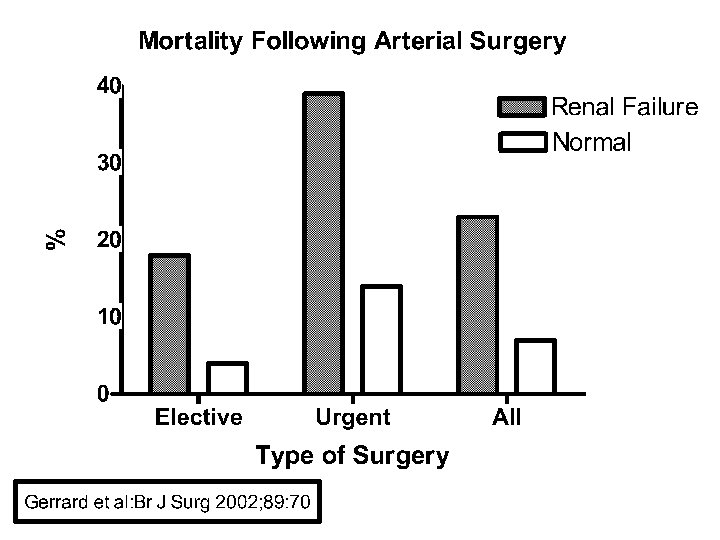
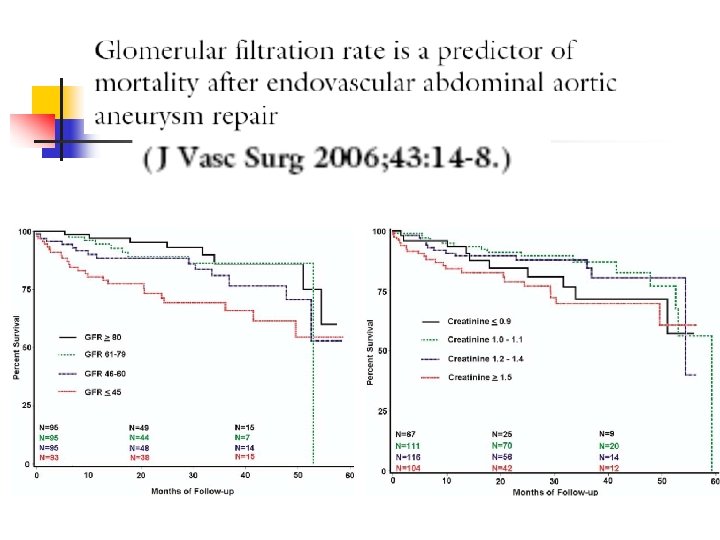
Why Increased Mortality in CKD? Increased incidence of vascular disease (atherosclerosis) n Risk factors for kidney disease are risk factors for atherosclerosis n Reduced GFR promotes vascular disease: n n Vascular calcification Chronic inflammation Increased SNS, increased vascular stiffness Increased homocysteine
Case History 6 n n n 65 yr old woman assessed in vascular surgery clinic for 5. 5 cm AAA Hypertension (160/90), type 2 DM Urine: negative blood, 1 g/L proteinuria Creatinine 275 umol/L (e. GFR 20 ml/min) What are concerns regarding her low GFR- what should you do?
Case History 6 Risks: n If aortogram: contrast-induced ATN or atheroembolic disease n If OR: hypotension, aortic cross-clamp inducing ischemic ATN n If surgery: markedly increased mortality risk Plan: (Nothing evidence-based!) n request nephrology; cardiac assessment n will renal disease progress anyway? -operate when on dialysis?
Case History 6 n n Surgery is planned after cardiac assessment Maintain as stable a BP as possible and avoid hypotension ( < 130 systolic in this patient) Accurate fluid replacement to avoid volume depletion or overload Monitor serum potassium (daily lytes)
Case History 7 n n n A 79 year old man with a solitary kidney develops gross hematuria CT = 2 cm mass in mid-zone of kidney consistent with renal cell Ca Operate or not? Q: What is mortality rate annually in 80 year old on dialysis? A: 20 -30%
Management of HD Patient n n n Preserve HD access: lower or upper arm AV fistula or PTFE graft No BP, IV or venesection in that arm Call nephrology to arrange dialysis No IV fluids unless patient is hypovolemic (ask nephrology) No IV potassium unless hypokalemic (ask nephrology)
Peri-Operative Intravenous Fluid n What is normal intake of water, Na+ and K +? n n Water: 1. 5 -2 L/d Sodium: 150 mmol/day Potassium: 50 mmol/day What is main risk of IV fluid post-op? n Hyponatremia from large volume hypotonic fluid
Prevention of Postoperative Hyponatremia · · · Avoid hypotonic fluid unless the patient is hypernatremic Limit volume of I. V. fluid given to meet patient’s needs Adjust volume to patient’s body weight
Peri-operative IV Fluid n n n Annals Surgery 2003; 238: 641 RCT of standard vs restricted IV fluid in patients undergoing colorectal resection Multicenter study from Denmark Powered to detect a 20% difference in complications with 80% power 86 patients per group
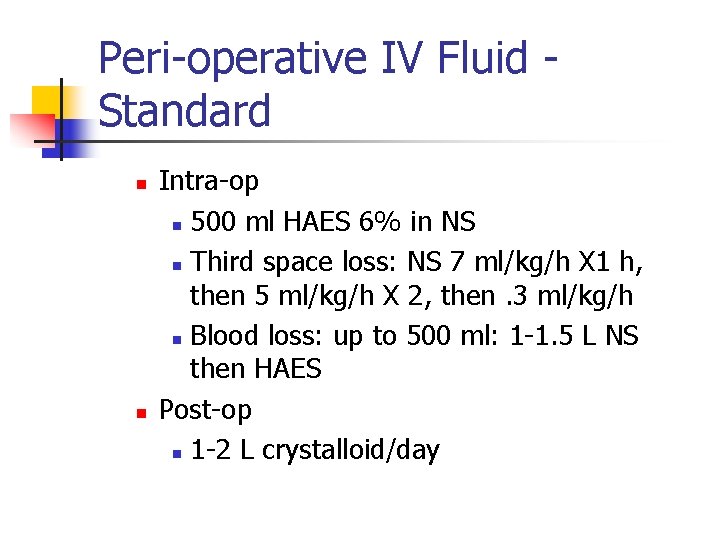
Peri-operative IV Fluid Standard n n Intra-op n 500 ml HAES 6% in NS n Third space loss: NS 7 ml/kg/h X 1 h, then 5 ml/kg/h X 2, then. 3 ml/kg/h n Blood loss: up to 500 ml: 1 -1. 5 L NS then HAES Post-op n 1 -2 L crystalloid/day
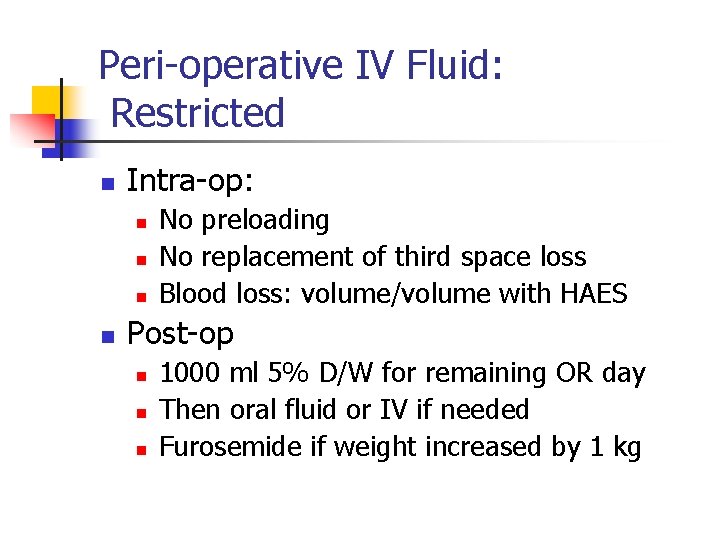
Peri-operative IV Fluid: Restricted n Intra-op: n n No preloading No replacement of third space loss Blood loss: volume/volume with HAES Post-op n n n 1000 ml 5% D/W for remaining OR day Then oral fluid or IV if needed Furosemide if weight increased by 1 kg
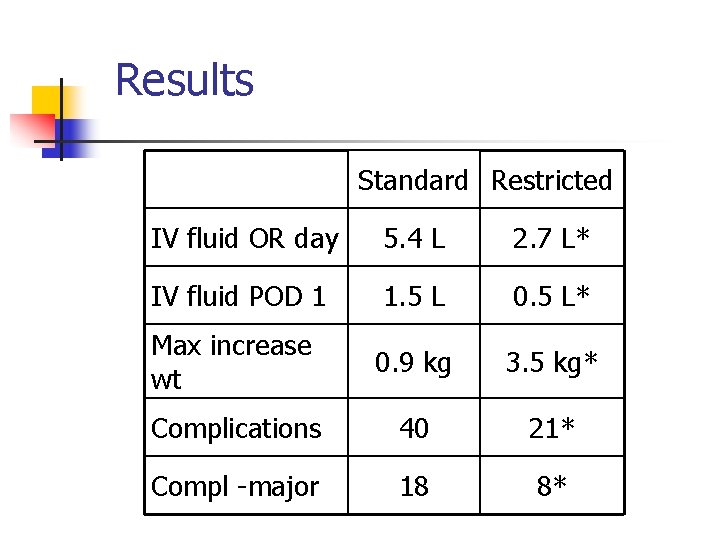
Results Standard Restricted IV fluid OR day 5. 4 L 2. 7 L* IV fluid POD 1 1. 5 L 0. 5 L* Max increase wt 0. 9 kg 3. 5 kg* Complications 40 21* Compl -major 18 8*
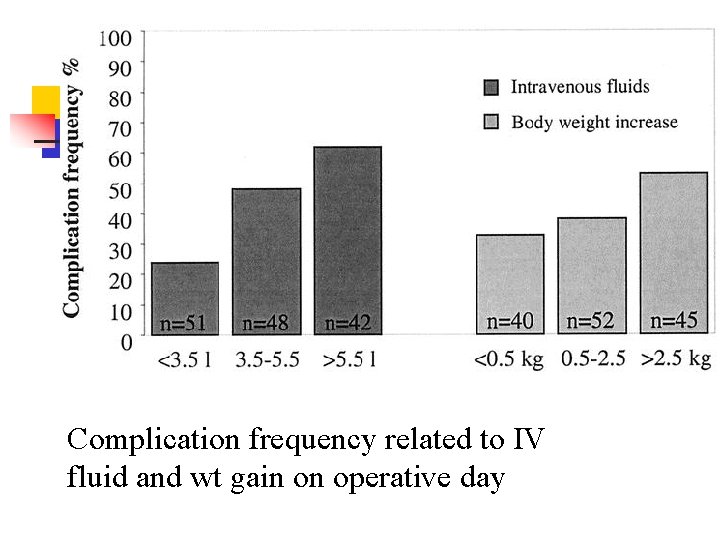
Complication frequency related to IV fluid and wt gain on operative day
A Comparison of Albumin and Saline for Fluid Resuscitation in the Intensive Care Unit n n n NEJM 2004; 350: 2247 Previous meta-analysis suggested albumin resuscitation increased mortality RCT in 7, 000 ICU patients 4% albumin vs crystalloid for fluid No difference in mortality
Summary n n n Be familiar with stages of CKD Interpretation of serum creatinine Risks factors for ARF in surgical patients Differentiation of prerenal failure from ATN Impact of CKD stage 3 -5 on surgical outcomes
- Slides: 75