
Renal Artery Brachytherapy for Sympathetic Renal Denervation for
Renal Artery Brachytherapy for Sympathetic Renal Denervation for the Treatment of Resistant Hypertension: Preclinical safety study Ron Waksman, Issi Barbash, Renu Virmani Med. Star Washington Hospital Center
Israel M. Barbash, MD I/we have no real or apparent conflicts of interest to report.
Background • Renal sympathetic efferent and afferent nerves lie immediately adjacent to the wall of the renal arteries • Historical experience of radical surgical approaches for sympathetic denervation were successful in lowering BP with the cost of high rates of morbidity and mortality • Renal sympathetic denervation was achieved more recently with a percutaneous catheter based approach utilizing radio frequency ablation
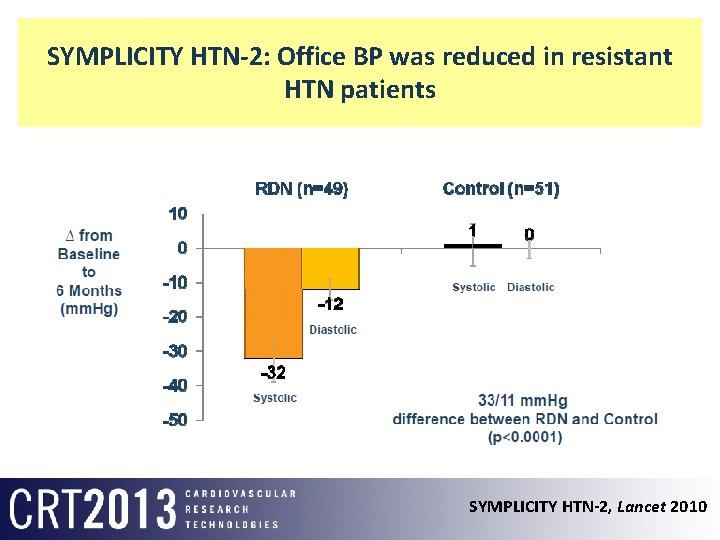
SYMPLICITY HTN-2: Office BP was reduced in resistant HTN patients SYMPLICITY HTN-2, Lancet 2010
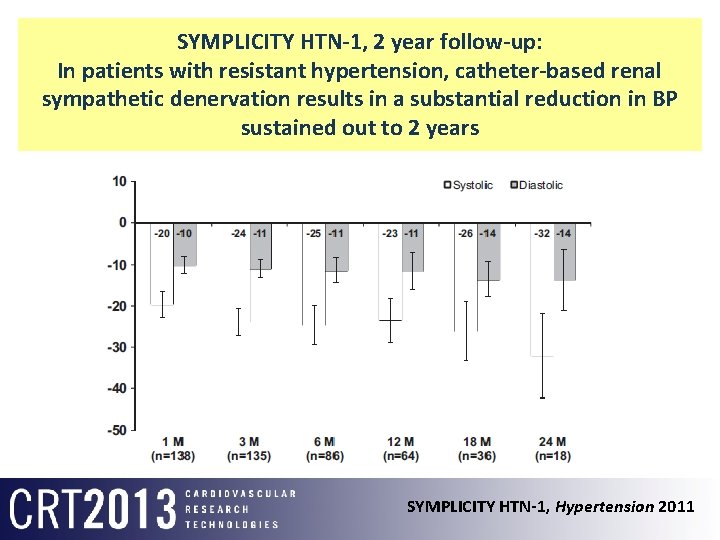
SYMPLICITY HTN-1, 2 year follow-up: In patients with resistant hypertension, catheter-based renal sympathetic denervation results in a substantial reduction in BP sustained out to 2 years SYMPLICITY HTN-1, Hypertension 2011
Limitations of RF-ablation mediatedrenal denervation • Potential damage to vascular endothelium with late vascular stenosis • Pain associated with the ablation • Need for multiple ablations resulting in long procedure time
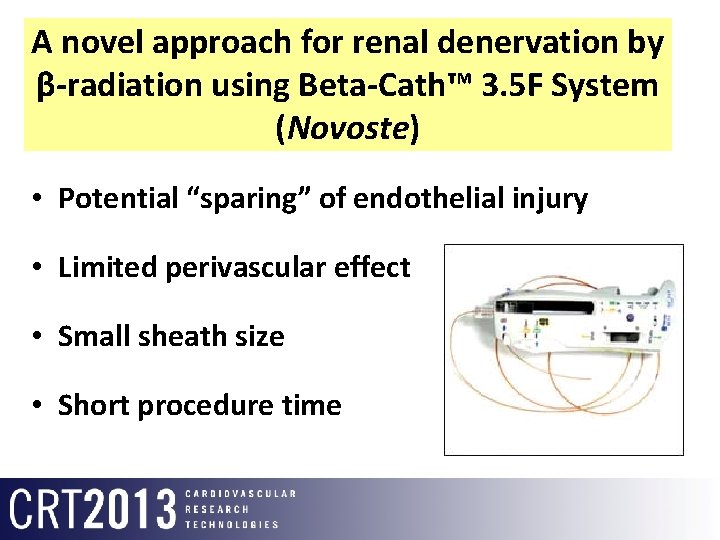
A novel approach for renal denervation by β-radiation using Beta-Cath™ 3. 5 F System (Novoste) • Potential “sparing” of endothelial injury • Limited perivascular effect • Small sheath size • Short procedure time
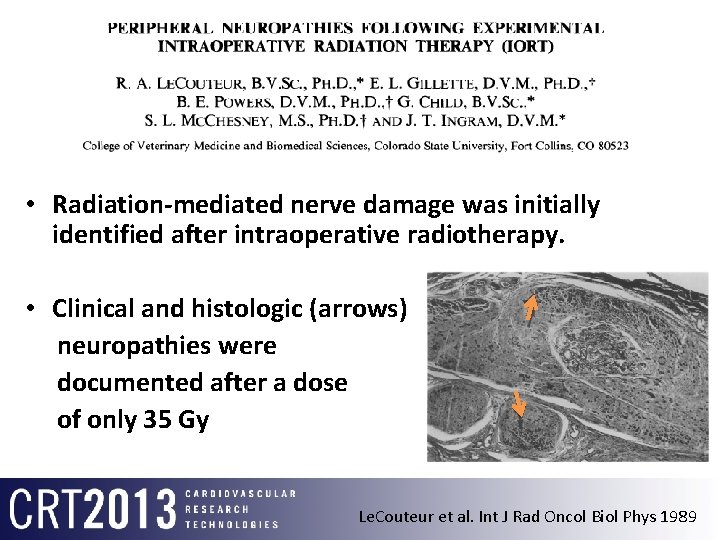
• Radiation-mediated nerve damage was initially identified after intraoperative radiotherapy. • Clinical and histologic (arrows) neuropathies were documented after a dose of only 35 Gy Le. Couteur et al. Int J Rad Oncol Biol Phys 1989
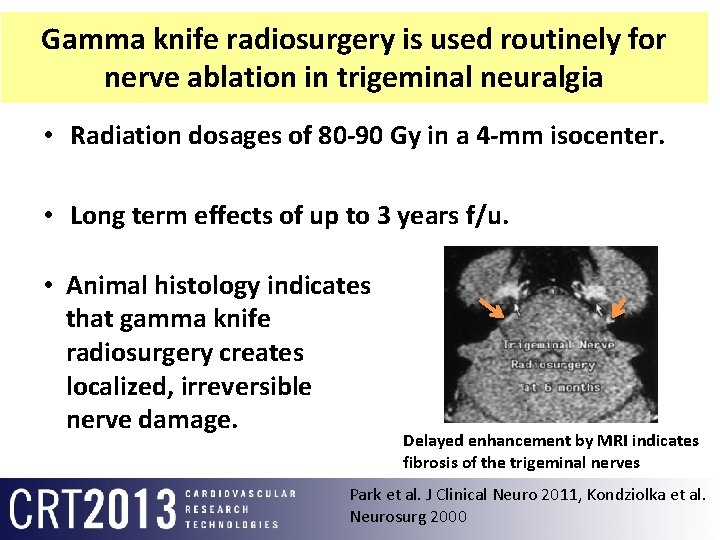
Gamma knife radiosurgery is used routinely for nerve ablation in trigeminal neuralgia • Radiation dosages of 80 -90 Gy in a 4 -mm isocenter. • Long term effects of up to 3 years f/u. • Animal histology indicates that gamma knife radiosurgery creates localized, irreversible nerve damage. Delayed enhancement by MRI indicates fibrosis of the trigeminal nerves Park et al. J Clinical Neuro 2011, Kondziolka et al. Neurosurg 2000
![β-radiation induces linear myocardial lesions • The isthmus was irradiated by Beta-Cath catheter ([Sr/Y]-90,](http://slidetodoc.com/presentation_image_h2/6812e16df66272fe4d429f2f41c97955/image-10.jpg "β-radiation induces linear myocardial lesions • The isthmus was irradiated by Beta-Cath catheter ([Sr/Y]-90,")
β-radiation induces linear myocardial lesions • The isthmus was irradiated by Beta-Cath catheter ([Sr/Y]-90, Novoste) in 8 dogs. High dose radiation created effective bidirectional block: n High dose radiation was safe: • Did not damage the endothelium • Created localized transmural lesion 25 Gy 50 Gy 2 6 None 1/2 6/6 Conduction block Immediate Late (>1 week) lesion Guerra & Bonan, Circulation 2004
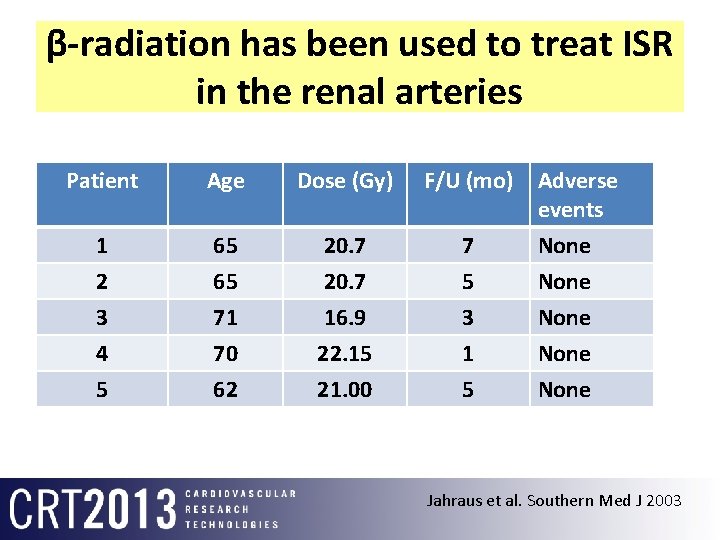
β-radiation has been used to treat ISR in the renal arteries Patient Age Dose (Gy) F/U (mo) 1 2 3 4 5 65 65 71 70 62 20. 7 16. 9 22. 15 21. 00 7 5 3 1 5 Adverse events None None Jahraus et al. Southern Med J 2003
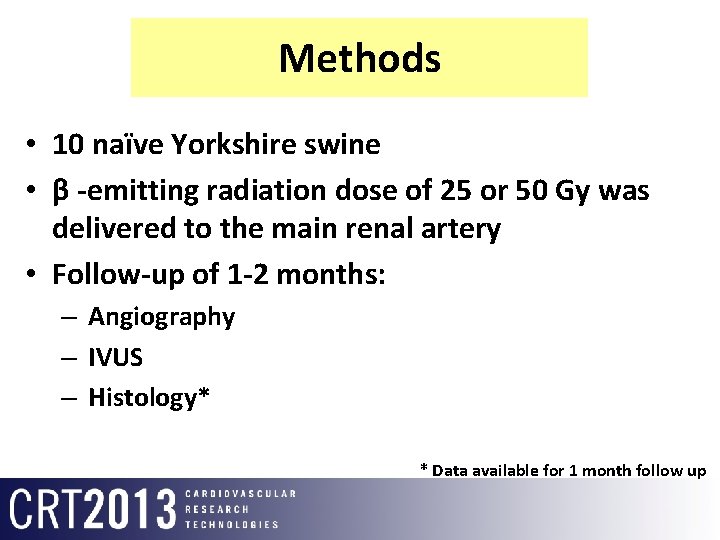
Methods • 10 naïve Yorkshire swine • β -emitting radiation dose of 25 or 50 Gy was delivered to the main renal artery • Follow-up of 1 -2 months: – Angiography – IVUS – Histology* * Data available for 1 month follow up
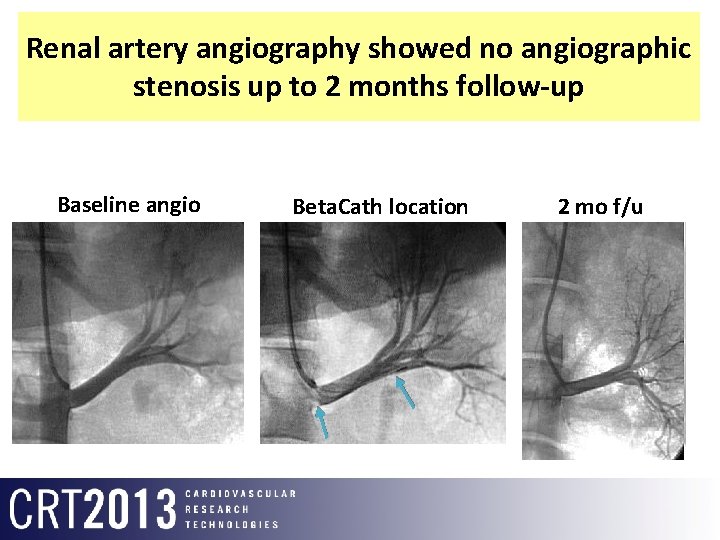
Renal artery angiography showed no angiographic stenosis up to 2 months follow-up Baseline angio Beta. Cath location 2 mo f/u
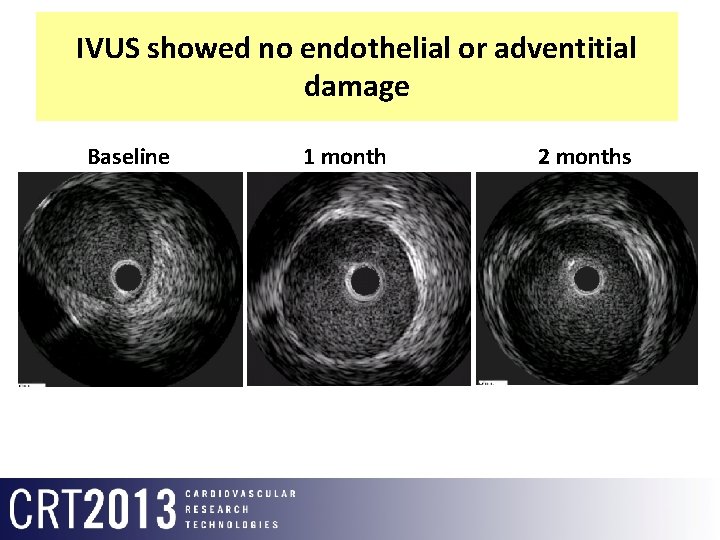
IVUS showed no endothelial or adventitial damage Baseline 1 month 2 months
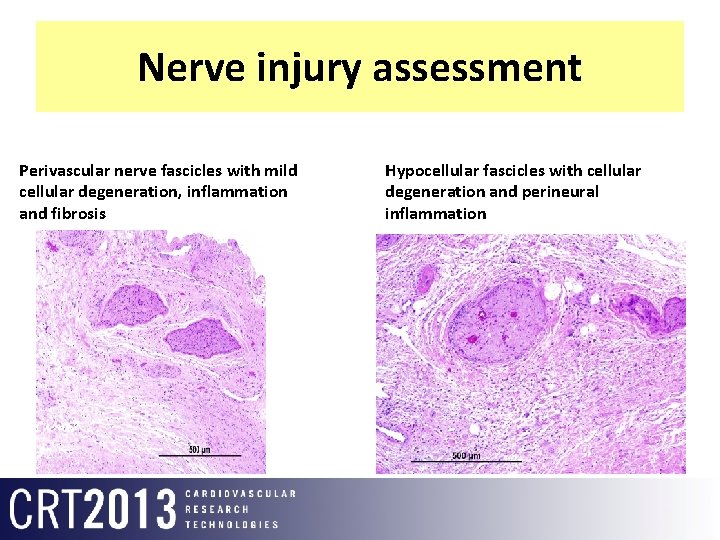
Nerve injury assessment Perivascular nerve fascicles with mild cellular degeneration, inflammation and fibrosis Hypocellular fascicles with cellular degeneration and perineural inflammation
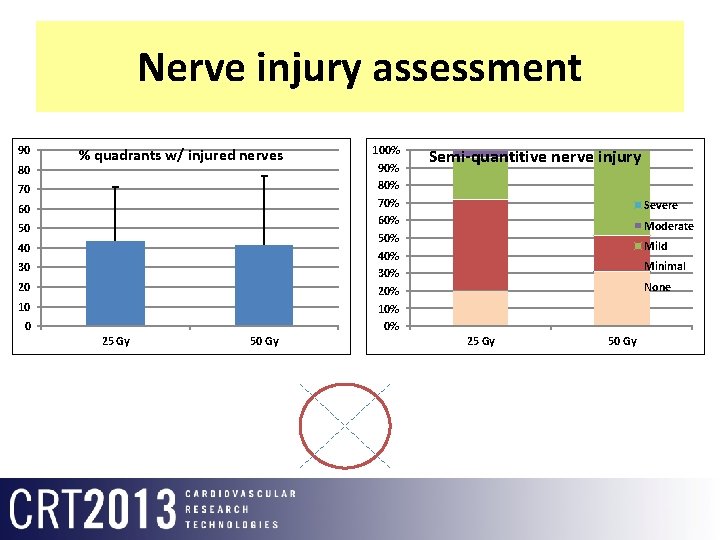
Nerve injury assessment 90 80 % quadrants w/ injured nerves 70 60 50 40 30 20 10 0 25 Gy 50 Gy 100% 90% 80% 70% 60% 50% 40% 30% 20% 10% 0% Semi-quantitive nerve injury Severe Moderate Mild Minimal None 25 Gy 50 Gy
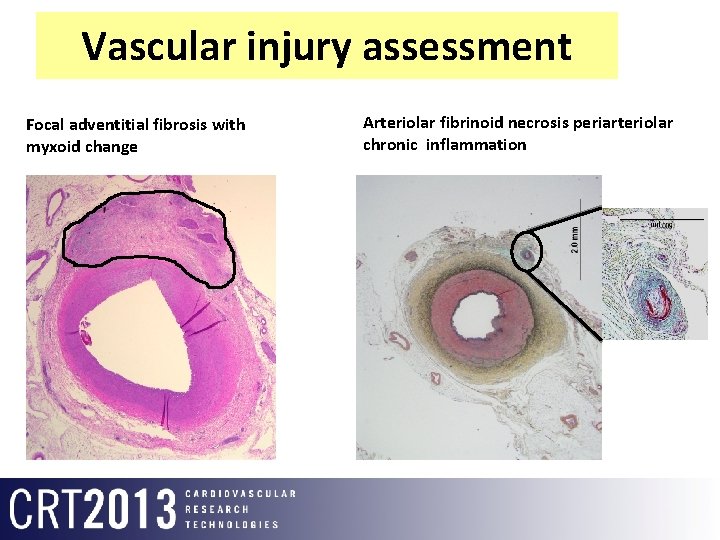
Vascular injury assessment Focal adventitial fibrosis with myxoid change Arteriolar fibrinoid necrosis periarteriolar chronic inflammation
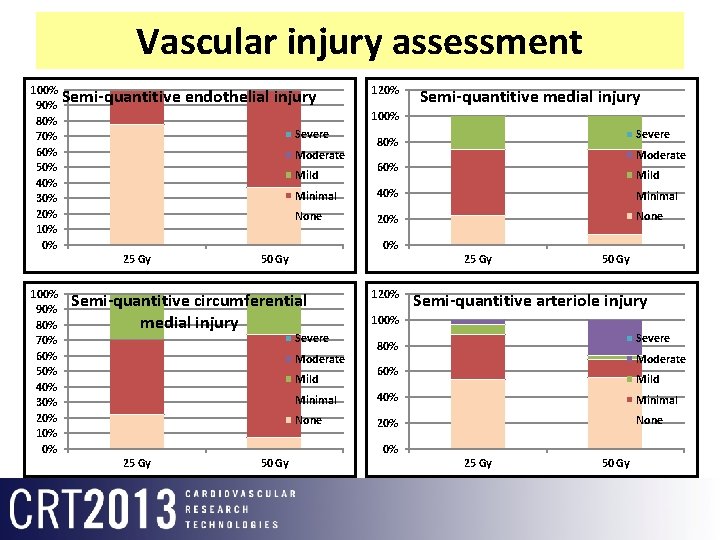
Vascular injury assessment 100% 90% 80% 70% 60% 50% 40% 30% 20% 10% 0% Semi-quantitive endothelial injury Semi-quantitive medial injury 100% Severe Moderate Mild Severe 80% Moderate 60% Mild Minimal 40% Minimal None 20% None 0% 25 Gy 100% 90% 80% 70% 60% 50% 40% 30% 20% 10% 0% 120% 50 Gy 25 Gy Semi-quantitive circumferential medial injury Severe Moderate Mild 120% 50 Gy Semi-quantitive arteriole injury 100% Severe 80% Moderate 60% Mild Minimal 40% Minimal None 20% None 0% 25 Gy 50 Gy
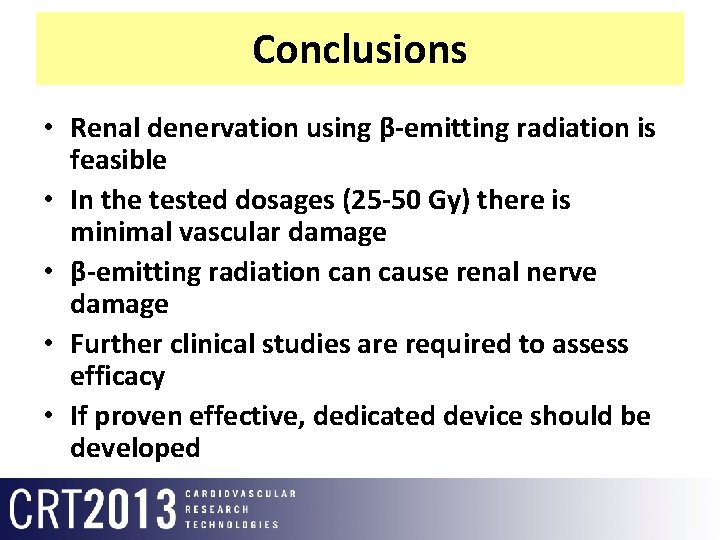
Conclusions • Renal denervation using β-emitting radiation is feasible • In the tested dosages (25 -50 Gy) there is minimal vascular damage • β-emitting radiation cause renal nerve damage • Further clinical studies are required to assess efficacy • If proven effective, dedicated device should be developed
- Slides: 19