
Renaissance Theater These theaters were a frame three
- Slides: 7
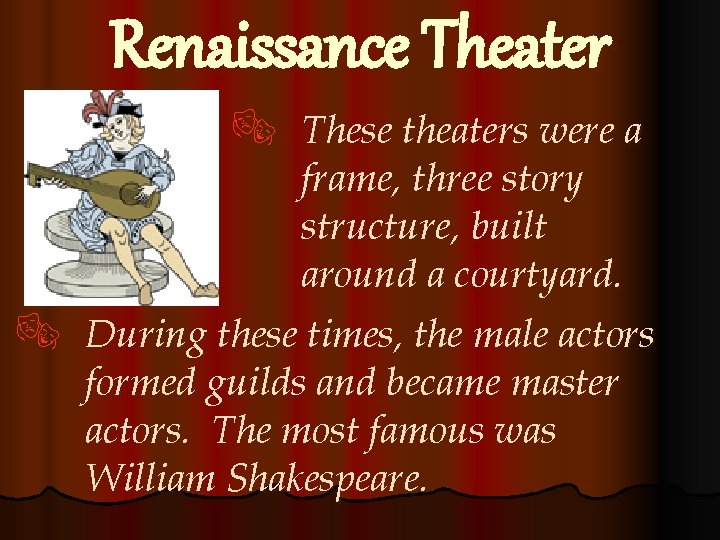
Renaissance Theater These theaters were a frame, three story structure, built around a courtyard. During these times, the male actors formed guilds and became master actors. The most famous was William Shakespeare. ® ®
Baroque and the 18 th Century Theater The 17 th century Italian theater had stages were separated from the audience and decorated with painted settings. ® In the 17 th century, the French and English added women to their troupes. ®
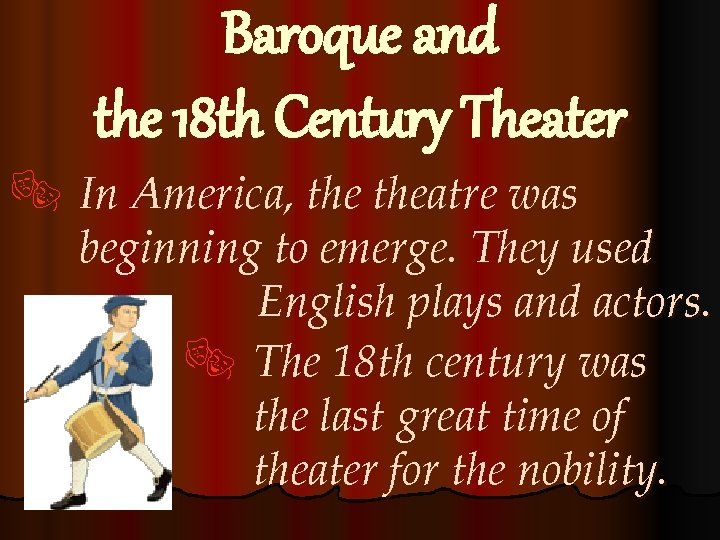
Baroque and the 18 th Century Theater ® In America, theatre was beginning to emerge. They used English plays and actors. ® The 18 th century was the last great time of theater for the nobility.
19 th Century Theater ® The Industrial Revolution and the move to cities caused new forms of theater for the working people such as: ® Vaudeville - song-and-dance ® Burlesque - make a subject appear ridiculous
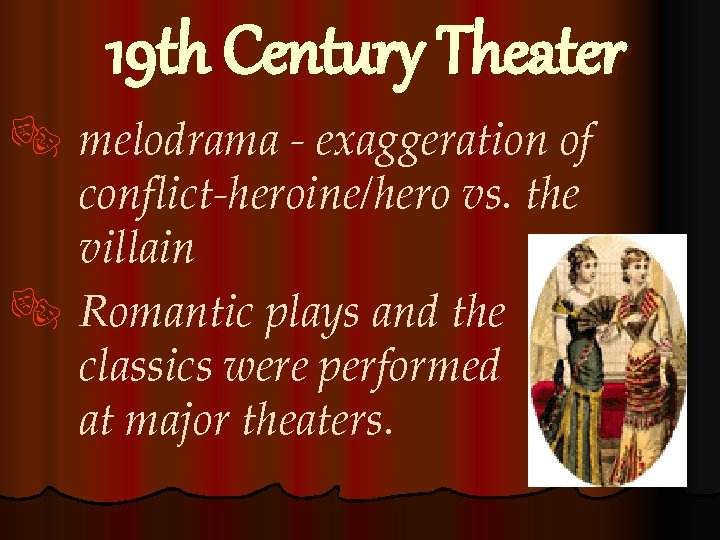
19 th Century Theater ® melodrama - exaggeration of conflict-heroine/hero vs. the villain ® Romantic plays and the classics were performed at major theaters.
20 th Century Theater ® Modern stages have newer technology and special effects. ® People not only come for drama, music, entertainment and education. ® Stage designs included the arena staging, or Theater in the Round.
20 th Century Theater ® Realistic and experimental styles of performances are found in the American theatre. Power. Point adapted from: http: //library. thinkquest. org/5291/history. html