
Renaissance shape European art thought and religion Do
- Slides: 31
Renaissance shape European art, thought and religion? Do Now: Medieval Art Analysis What aspects of Medieval art can you identify in the picture on the next slide?
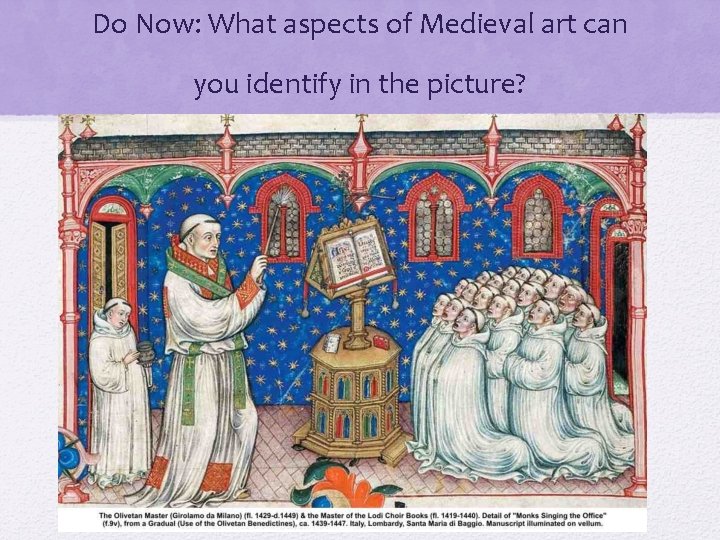
Do Now: What aspects of Medieval art can you identify in the picture?
What was the Renaissance? • Renaissance – “rebirth” • Time of creativity and great change in many areas – political, economic, social, and cultural. • Reawakened interest in classical learning • Explored richness and variety of human experience • Wide-ranging curiosity
Expressing Humanism • During the Renaissance, TWO forms of thought became popular. • Humanism – the belief that human ideas, actions and works are important. The importance and uniqueness of man. • Emphasized the humanities • Francesco Petrarch • Secularism – non-religious viewpoint. Secularists look to scientific thinking for answers as opposed to religion.
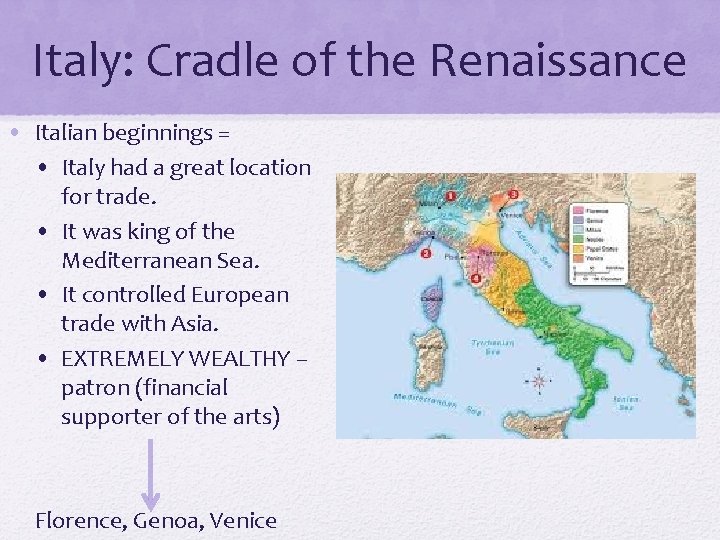
Italy: Cradle of the Renaissance • Italian beginnings = • Italy had a great location for trade. • It was king of the Mediterranean Sea. • It controlled European trade with Asia. • EXTREMELY WEALTHY – patron (financial supporter of the arts) Florence, Genoa, Venice
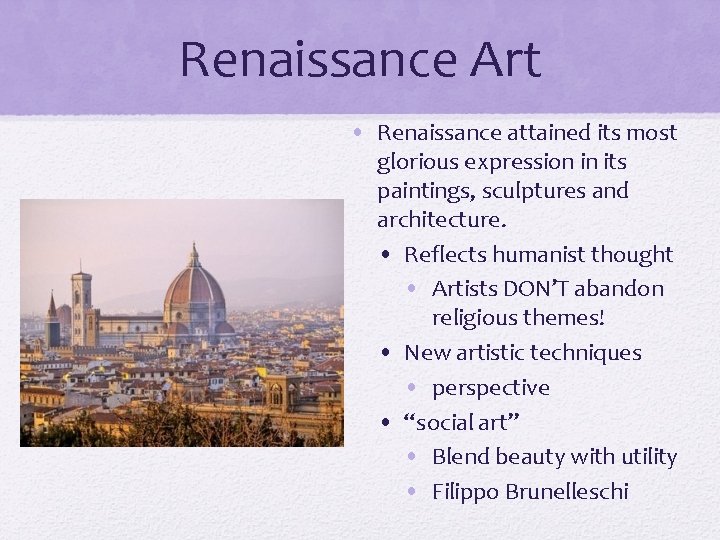
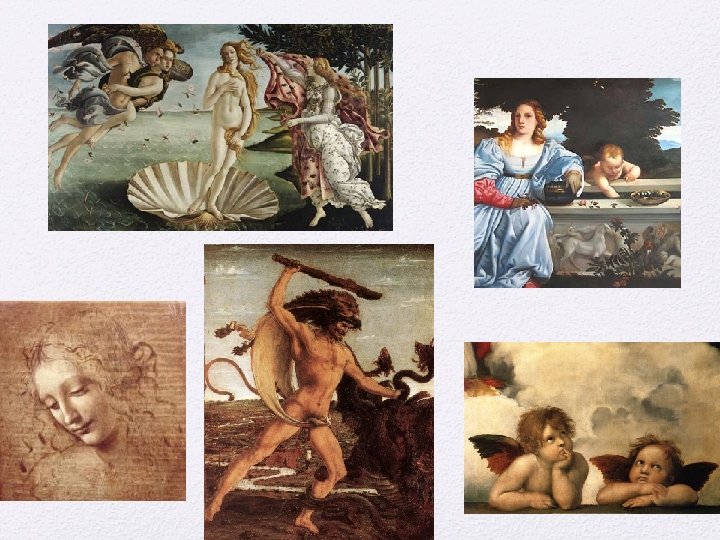
Renaissance Art • Renaissance attained its most glorious expression in its paintings, sculptures and architecture. • Reflects humanist thought • Artists DON’T abandon religious themes! • New artistic techniques • perspective • “social art” • Blend beauty with utility • Filippo Brunelleschi
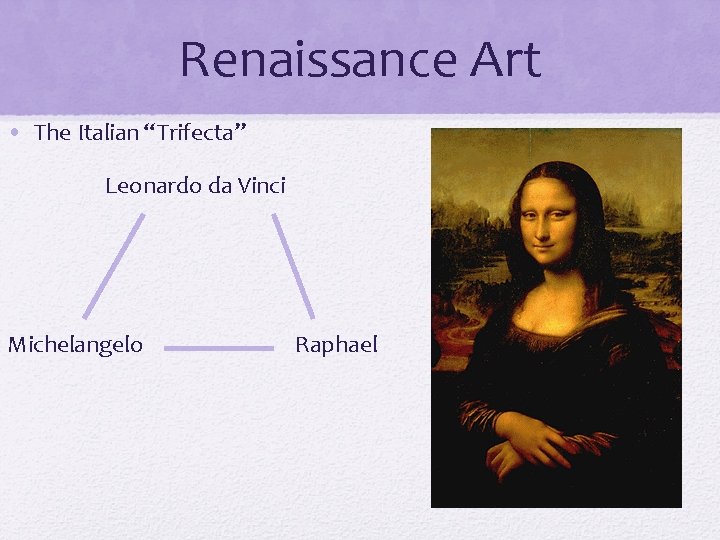
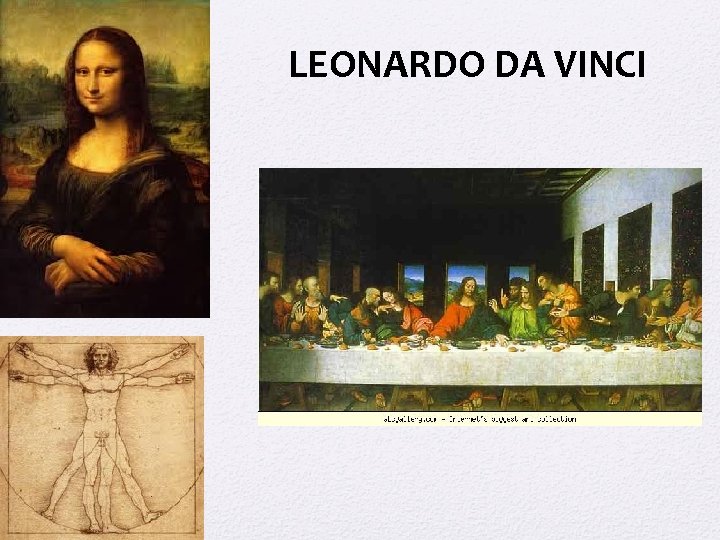
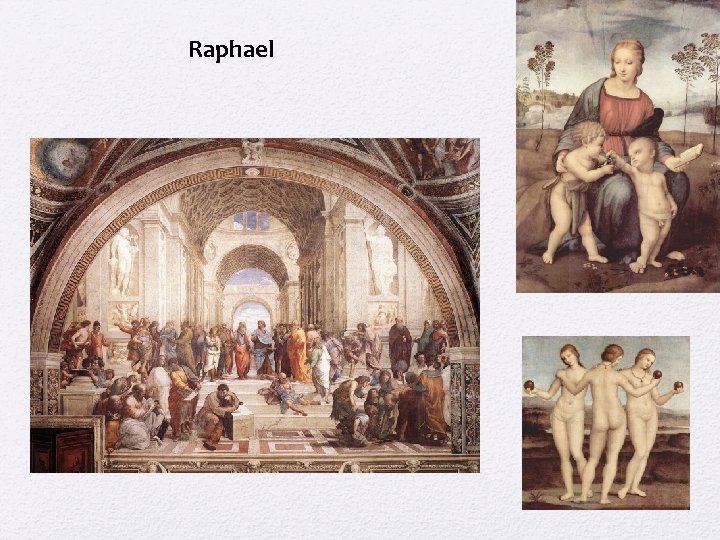
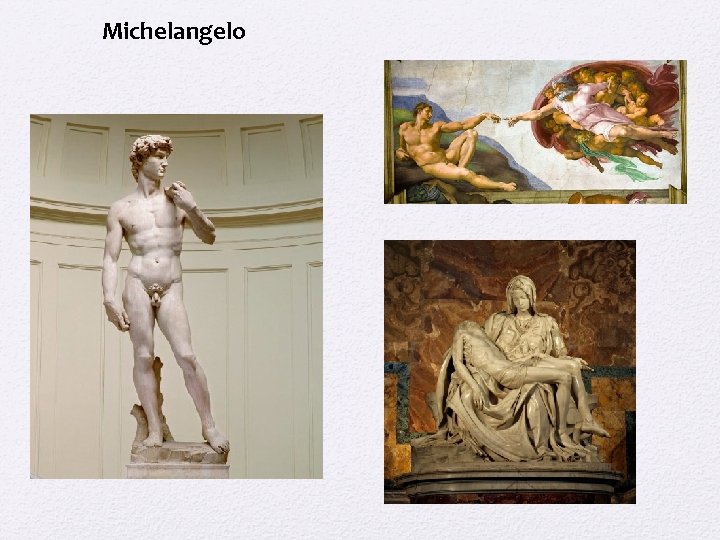
Renaissance Art • The Italian “Trifecta” Leonardo da Vinci Michelangelo Raphael
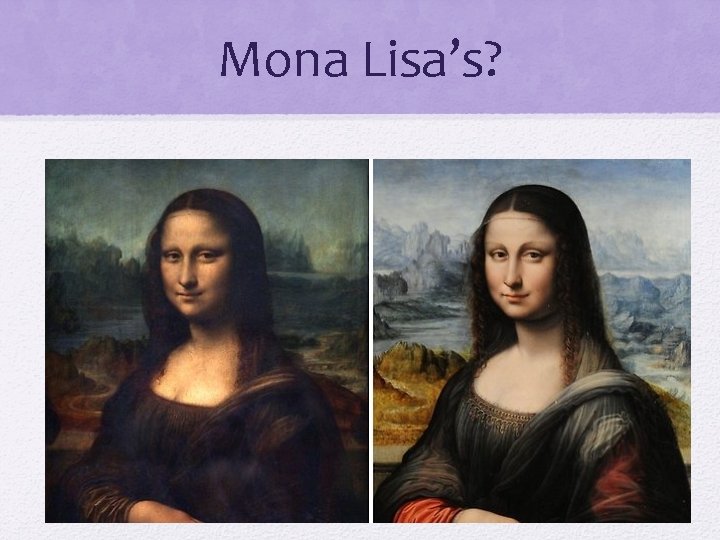
Mona Lisa’s?
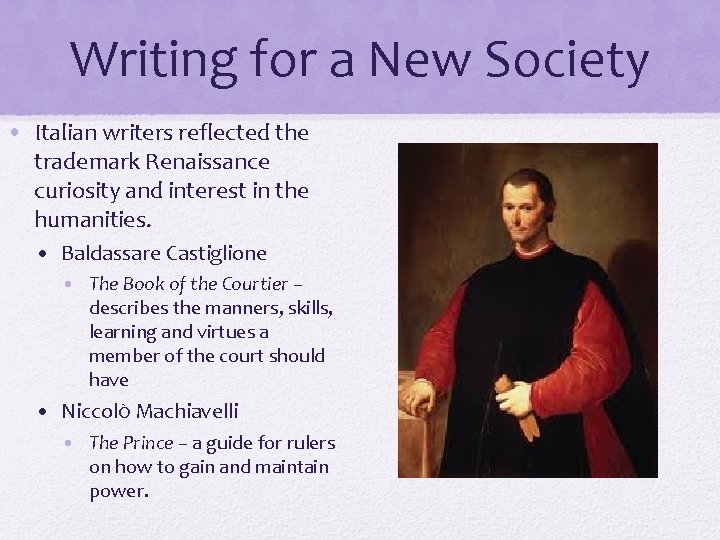
Writing for a New Society • Italian writers reflected the trademark Renaissance curiosity and interest in the humanities. • Baldassare Castiglione • The Book of the Courtier – describes the manners, skills, learning and virtues a member of the court should have • NiccolÒ Machiavelli • The Prince – a guide for rulers on how to gain and maintain power.
Group Work Italian Renaissance Analysis
LEONARDO DA VINCI
Raphael
Michelangelo
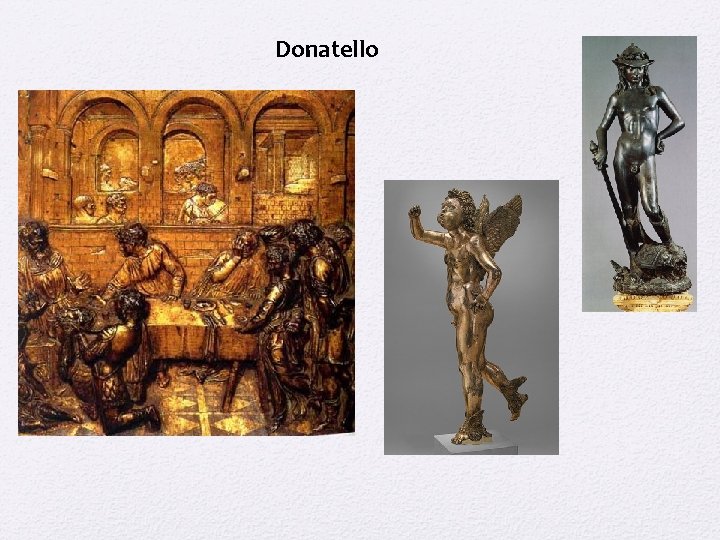
Donatello
Exit – What is so important about the Italian Renaissance?
AIM: How did the Renaissance develop in northern Europe? Do Now: Products and goods are easier to do (a la cultural diffusion), however, how do you spread ideas?
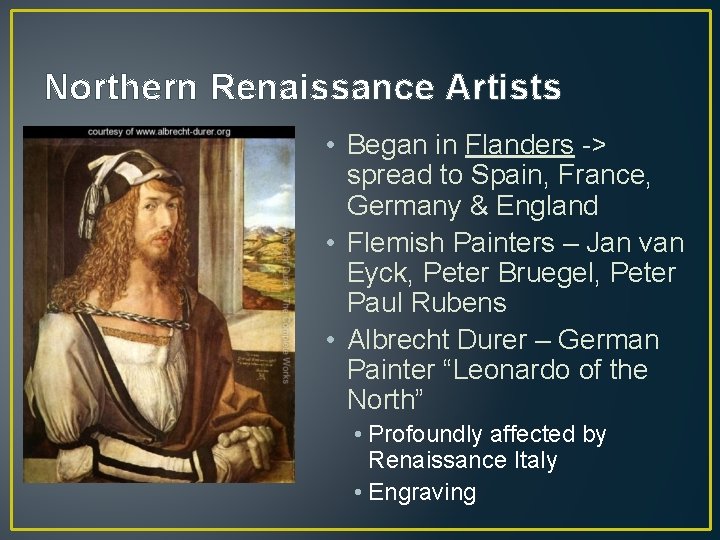
Northern Renaissance Artists • Began in Flanders -> spread to Spain, France, Germany & England • Flemish Painters – Jan van Eyck, Peter Bruegel, Peter Paul Rubens • Albrecht Durer – German Painter “Leonardo of the North” • Profoundly affected by Renaissance Italy • Engraving
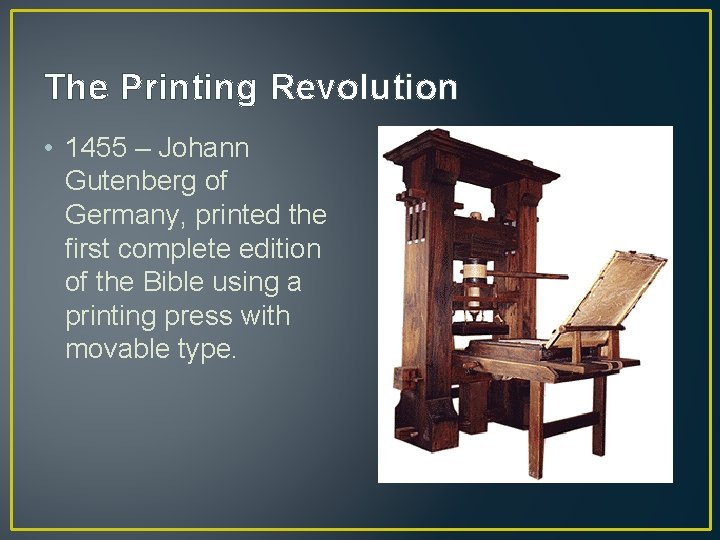
The Printing Revolution • 1455 – Johann Gutenberg of Germany, printed the first complete edition of the Bible using a printing press with movable type.
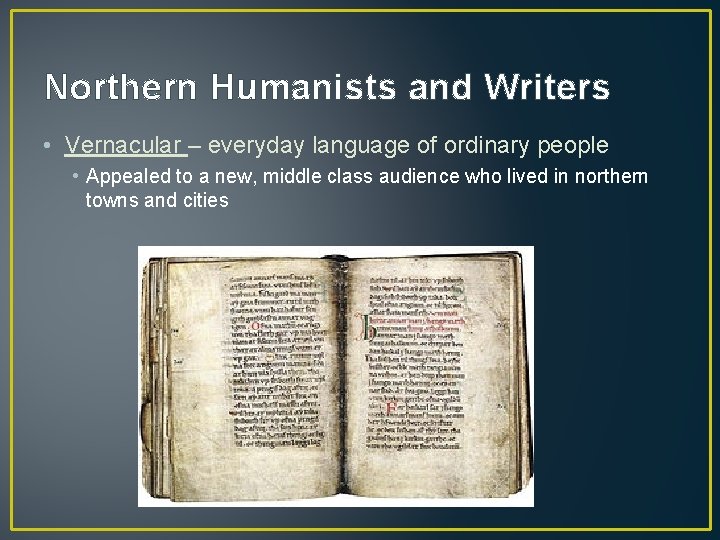
Northern Humanists and Writers • Vernacular – everyday language of ordinary people • Appealed to a new, middle class audience who lived in northern towns and cities
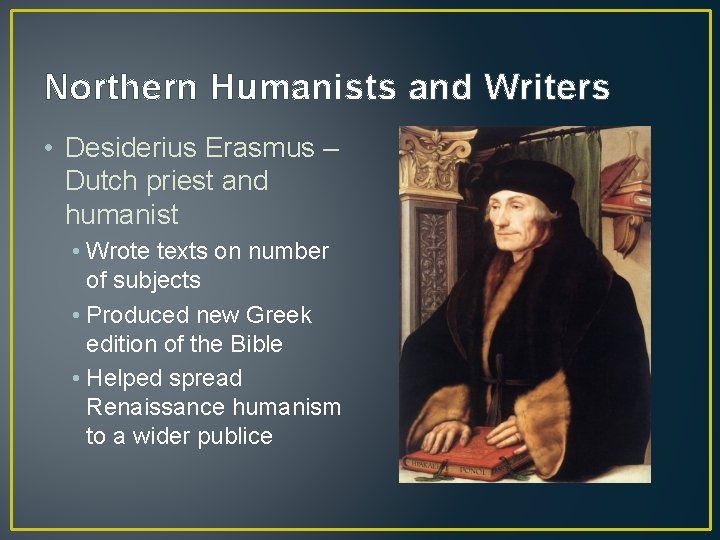
Northern Humanists and Writers • Desiderius Erasmus – Dutch priest and humanist • Wrote texts on number of subjects • Produced new Greek edition of the Bible • Helped spread Renaissance humanism to a wider publice
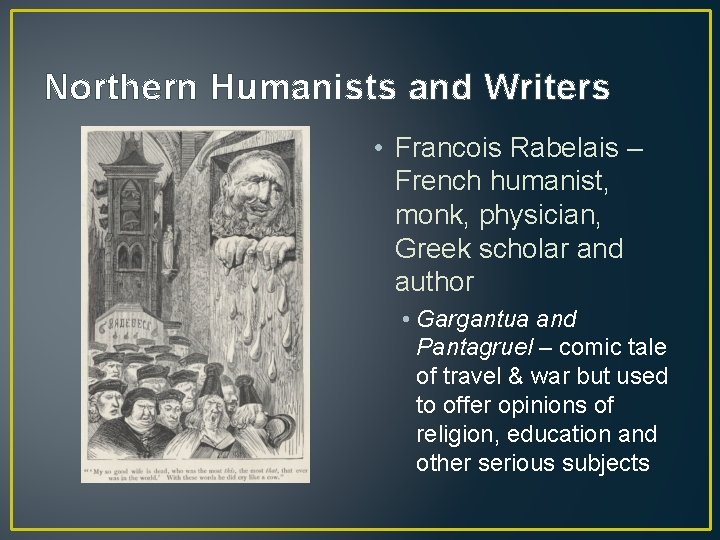
Northern Humanists and Writers • Francois Rabelais – French humanist, monk, physician, Greek scholar and author • Gargantua and Pantagruel – comic tale of travel & war but used to offer opinions of religion, education and other serious subjects
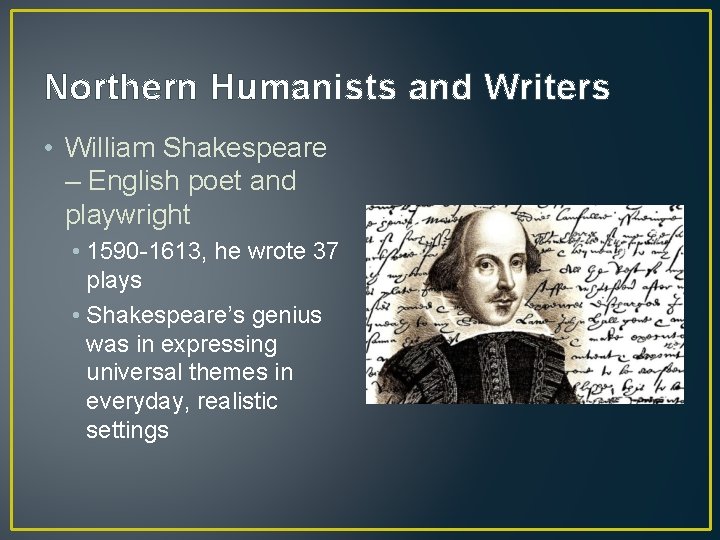
Northern Humanists and Writers • William Shakespeare – English poet and playwright • 1590 -1613, he wrote 37 plays • Shakespeare’s genius was in expressing universal themes in everyday, realistic settings
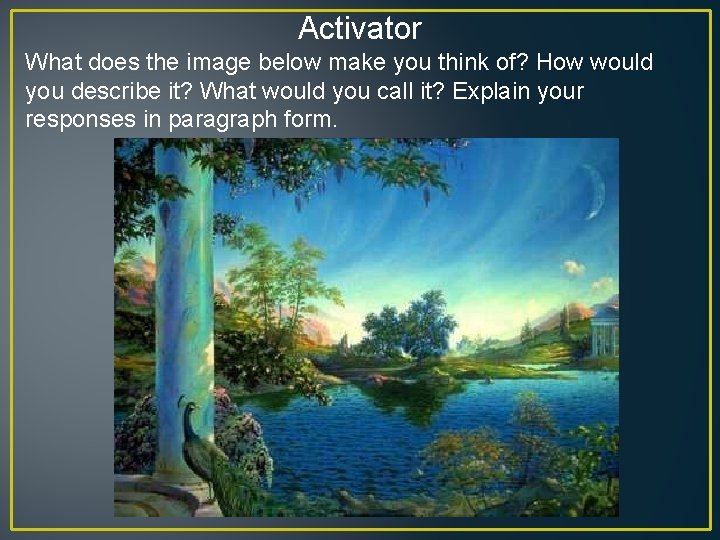
Activator What does the image below make you think of? How would you describe it? What would you call it? Explain your responses in paragraph form.
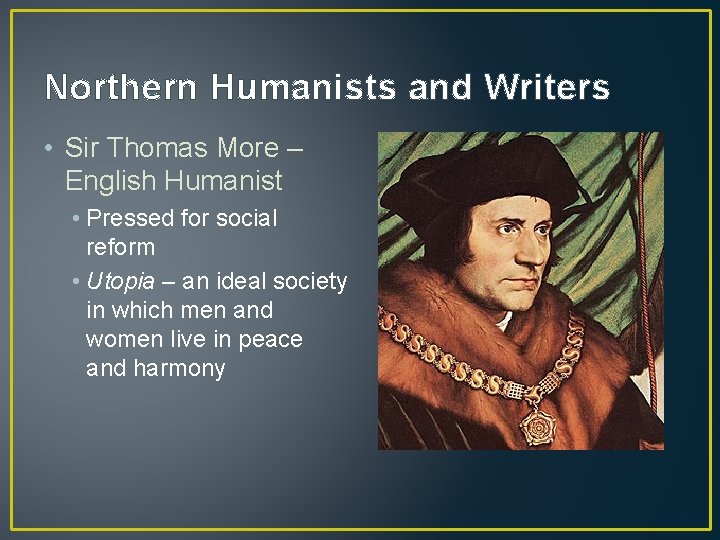
Northern Humanists and Writers • Sir Thomas More – English Humanist • Pressed for social reform • Utopia – an ideal society in which men and women live in peace and harmony
Utopia Definition, Concepts, and Varieties
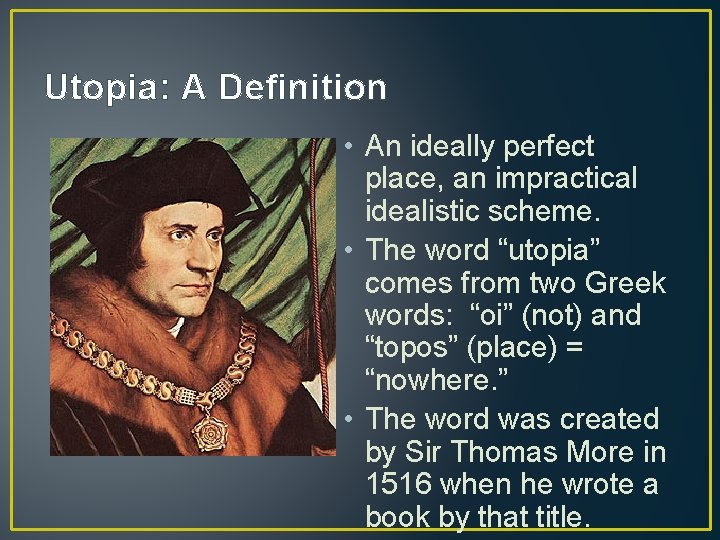
Utopia: A Definition • An ideally perfect place, an impractical idealistic scheme. • The word “utopia” comes from two Greek words: “oi” (not) and “topos” (place) = “nowhere. ” • The word was created by Sir Thomas More in 1516 when he wrote a book by that title.
Utopian Concepts • • Poverty and misery are removed. Very few laws are necessary. Money is unnecessary. The society is free of class systems, meaning the equality of all people. • View on the future is optimistic and upbeat.
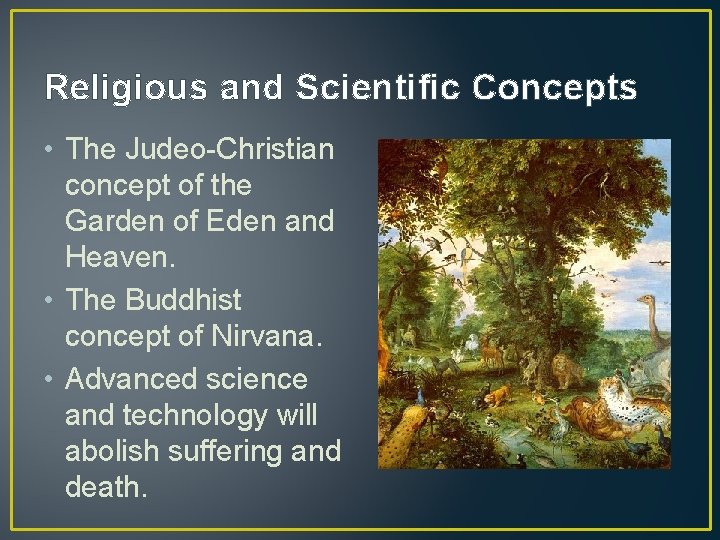
Religious and Scientific Concepts • The Judeo-Christian concept of the Garden of Eden and Heaven. • The Buddhist concept of Nirvana. • Advanced science and technology will abolish suffering and death.
Utopia Varieties • Ecological Utopia: a traditional way of life that is more in harmony with nature. • Economic Utopia: the total abolition of money; only working on what one enjoys and on what is for the common good. • Political Utopia: world peace—without war; everyone gets along regardless of race, culture, and political beliefs. • Religious Utopia: harmonious relationships and enlightenment. • Science and Technology Utopia: set in the future; absence of death and suffering.
Exit: Discussion: Overall, what is your opinion of the society depicted in More’s Utopia? What aspects do you find satisfactory, and which do you think should be revised or removed? Explain. Assignment: Write a diary entry or song detailing your own version of Utopia.