
Renaissance Global 9 Section 1 The Renaissance in
Renaissance Global 9
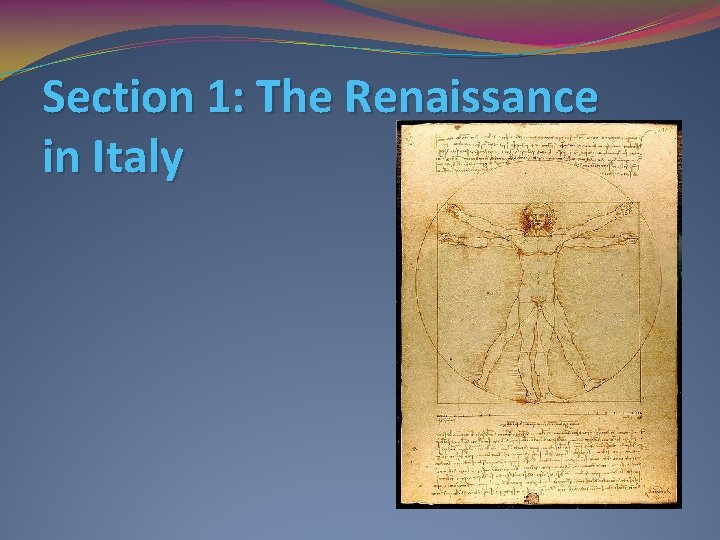
Section 1: The Renaissance in Italy
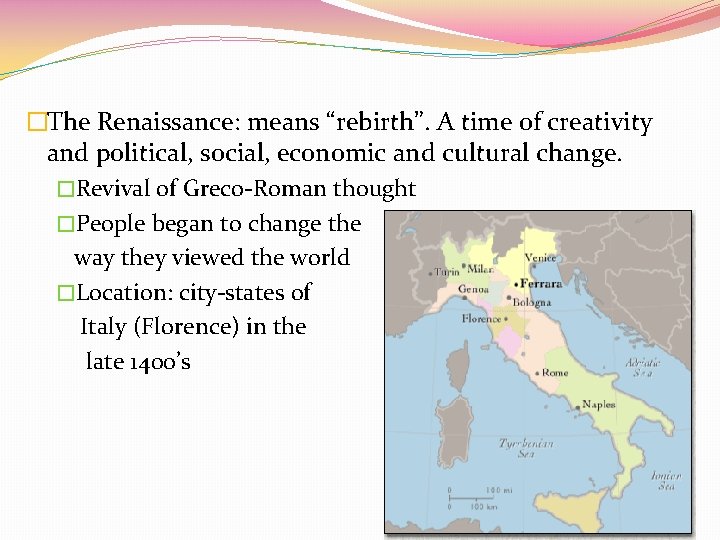
�The Renaissance: means “rebirth”. A time of creativity and political, social, economic and cultural change. �Revival of Greco-Roman thought �People began to change the way they viewed the world �Location: city-states of Italy (Florence) in the late 1400’s
Why Italy? �Location: Perfect geographic location on the Mediterranean Sea �Linked to trade with the Middle East (Cultural diffusion!) �Patrons: Wealthy supporters of the Arts �Most notable patrons were the Medici's. Wealthy family who donated money to revive art and learning in Italy
Rebirth of Culture �Humanism: Intellectual movement that focused on worldly ideas instead of religious ones (opposite of Medieval Ages �Focused on achievement �Returned to teaching humanities: (same subjects taught by Greeks and Romans) grammar, poetry and history �Education �People began to question ideas rather than just accept them �Studied Greek and Roman works (Aristotle, Plato)
�Art �Many artists used ‘perspective’- method of art that is more realistic and 3 -dimensional. (Used for landscapes and portraits) � Objects in the distance look smaller than objects in the front �Literature �Took on many Humanist ideas of achievement �“The Prince” by Niccolo Machiavelli: Guide on how to rise to power. “The ends justify the means” �“Don Quixote” by Miguel de Cervantes. Spanish novel that mocks chivalry
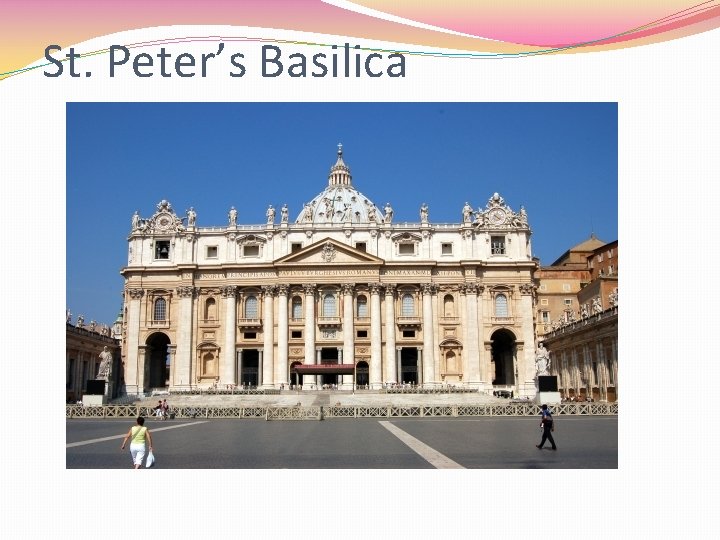
St. Peter’s Basilica
Examples of Renaissance Artwork
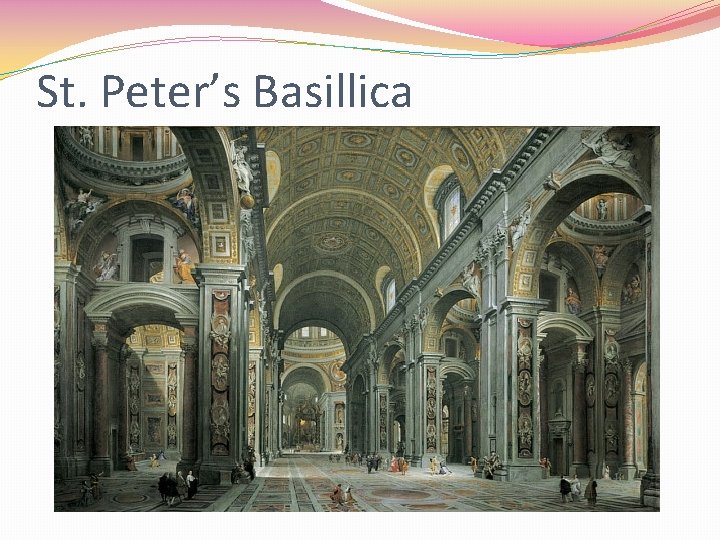
St. Peter’s Basillica
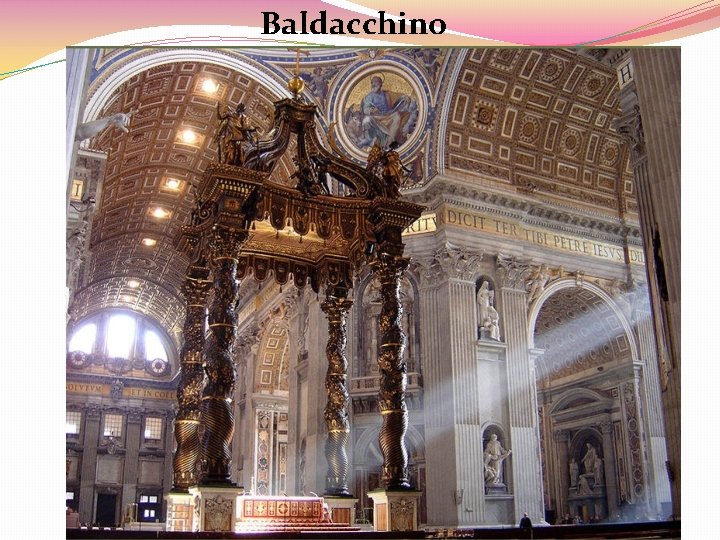
Baldacchino
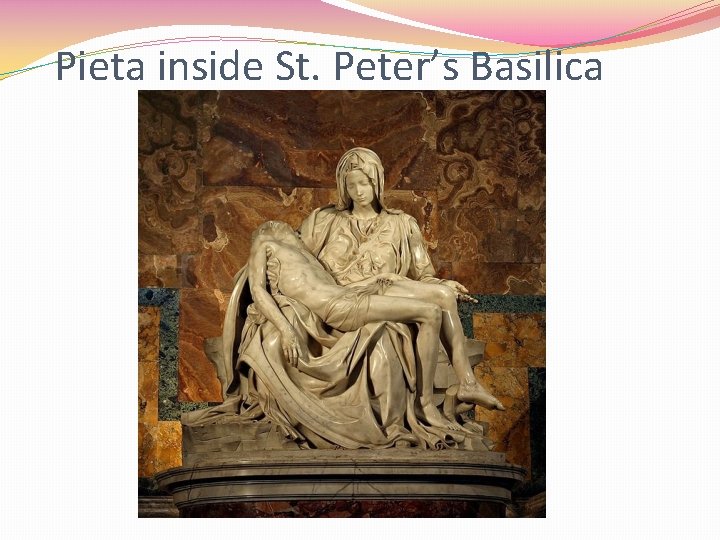
Pieta inside St. Peter’s Basilica
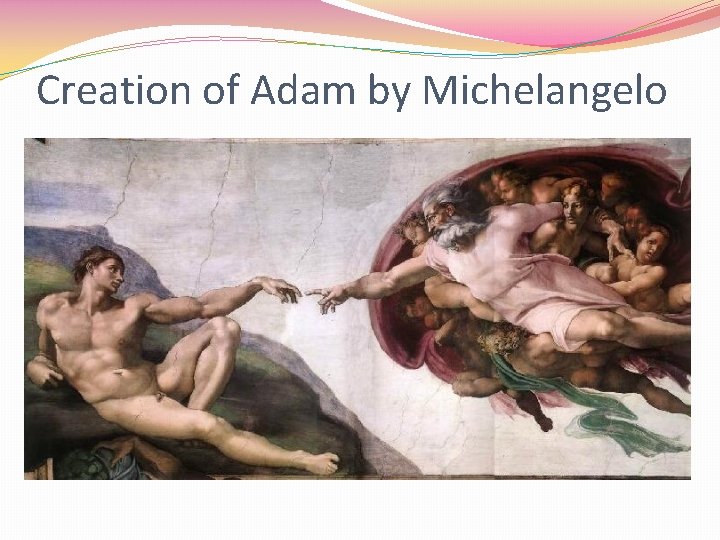
Creation of Adam by Michelangelo
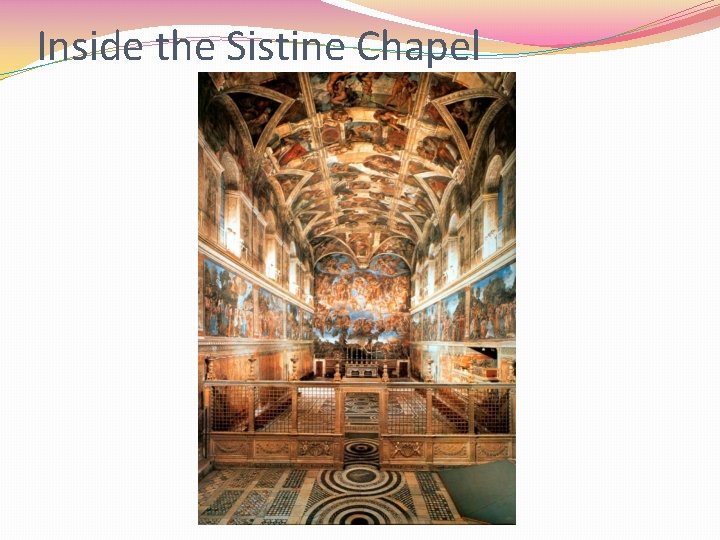
Inside the Sistine Chapel
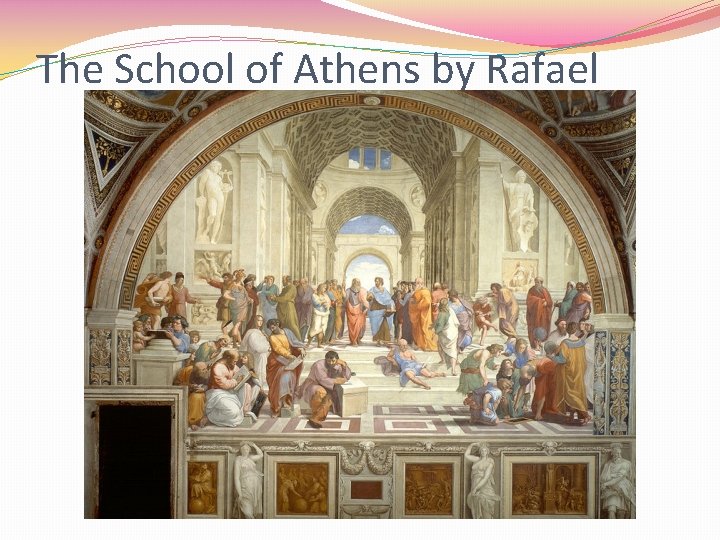
The School of Athens by Rafael
III. The Protestant Reformation
The Problem �Kings resent Papal interference in politics �Many people believe the church is too extravagant and corrupt (think of the churches we viewed) �Middle class against church taxes (tithe) �People begin to question the authority of the Church �What type of thinking is this?

Indulgences �Indulgences is the pardoning of sins to lessen the time spent in purgatory after death. �Indulgences soon exchanged for $
Johann Tetzel �Priest who sold indulgences to any Christian willing to give money to rebuild the Cathedral of St Peter in Rome �Assured entry into heaven for the buyers and their dead relatives

Johann Tetzel
Martin Luther �German monk who posted the 95 Theses on a church door in 1517 � 95 arguments against the Catholic Church � People can achieve salvation on faith alone � Sparked growth of new Christian churches � Printing press helped spread copies of Luther’s 95 Theses across Europe
Luther’s Teachings � 1. Salvation achieved through faith alone, not kind acts � 2. Bible is sole source of truth, not the Pope � 3. Rejected hierarchy of the Church (everyone is equal) � 4. Rejected 5 of 7 Sacraments because they are not in the Bible � 5. Ended elaborate mass rituals and focused on the sermon
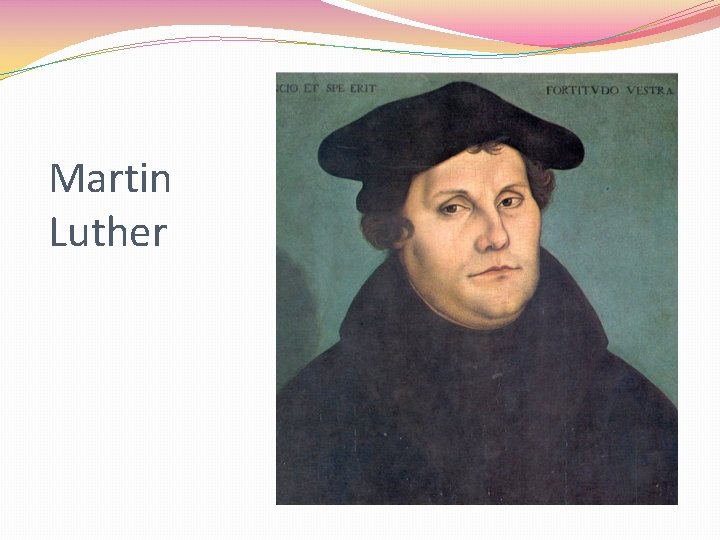
Martin Luther
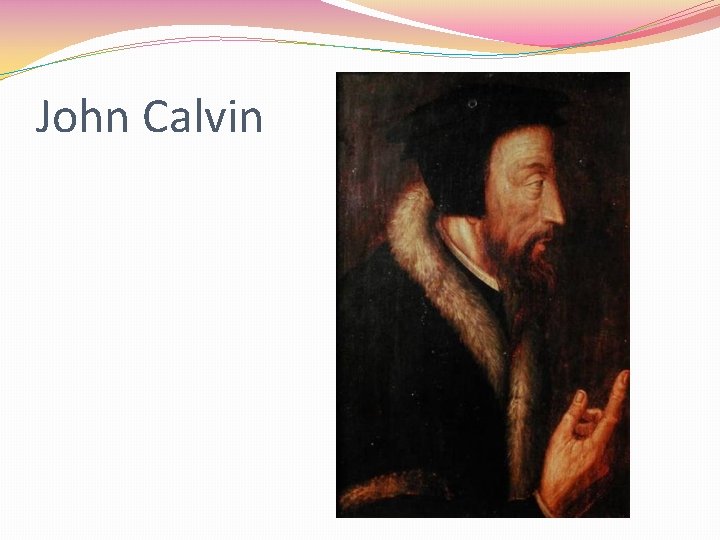
John Calvin �Took Luther’s ideas even further �Preached ‘predestination’- the idea that God already picked who was worthy of salvation �Set up a theocracy- strict government run by the church �Clashed with Catholics and Protestants across Europe
John Calvin
Bell Quiz �What was one cause of the Protestant Reformation?
IV. Reformation Ideas Spread
Reformation in England �King Henry VIII asked the Pope to annul (cancel) his marriage to Catherine or Aragon. Henry wanted to marry Anne Boleyn to have a son �Pope refused- did not want to offend Holy Roman Emperor Charles V (Catherine’s nephew) �Caused Henry VIII to break away from the Church � Act of Supremacy: made the King “the only supreme head on Earth of the Church of England”
�Thomas Cramer appointed Archbishop of Canterbury to annul the marriage between Henry VIII and Catherine
Mary Tudor �Inherited throne and tried to make England Catholic again �Burned hundreds of protestants at the stake

Elizabeth I �Created a compromise between the protestants and Catholics in England �Kept Catholic ceremonies, rituals and hierarchy �Kept monarch at the head of the Church and accepted Protestant rules and English language instead of Latin � This is the Anglican Church
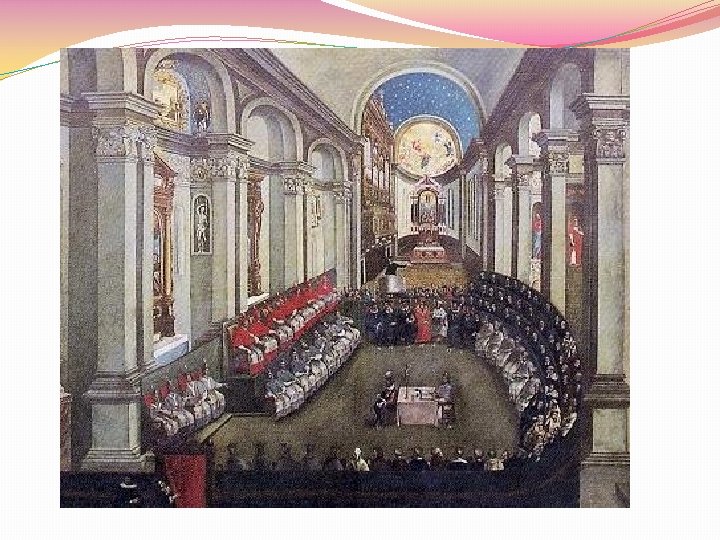
Catholic Reformation �Pope Paul III wanted to revive moral authority and end corruption in the Catholic Church �Council of Trent, 1545: Reaffirmed traditional Catholic views �Salvation comes through good works and faith �Bible is a good source, but not the only one �Created schools to educate people on the Church
Ignatius of Loyola �Former Spanish knight who fought in the Crusades �Leader of the new Catholic order called the Society of Jesuits. �Created to combat heresy and spread the Catholic ways �Set up schools to teach humanist and Catholic beliefs
Persecution �Witch Hunts in Germany, Switzerland France �Used as scapegoats to blame their problems on �Usually outcasts of society expected of heresies
�Jews �Many cities, especially in Italy, tried to make Jews convert �Thousands forced to separate parts of cities called ghettos �Luther had Jews expelled from Europe and had their books burned � Many fled to Poland, Lithuania and Netherlands
Quiz #19 � Take out p. 65 and p. 68 for the quiz!
V. The Scientific Revolution
Nicolas Copernicus �Copernicus disproved Ptolemy’s theory that the Earth was the center of the universe �He said the Earth was heliocentric- sun centered. � The Earth is just one of several planets to revolve around the sun �Johan Kepler continued these ideas and showed that planets move on an oval-shaped pattern called an ellipse
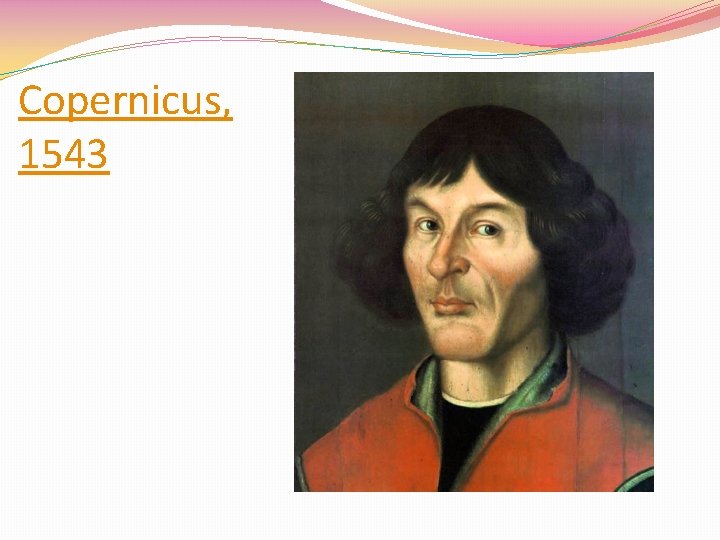
Copernicus, 1543
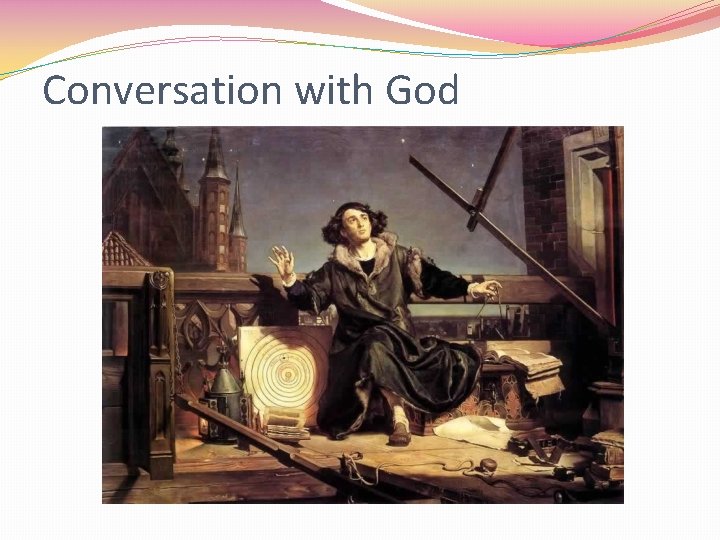
Conversation with God
Galileo Galilei �Discovered 4 moons around Jupiter �Proves the idea that the Earth is not the center of the Universe �Went against the Bible idea that the heavens were perfect and unmoving �Galileo was tried before the Inquisition and threatened with death for being a heretic unless he took his statements back
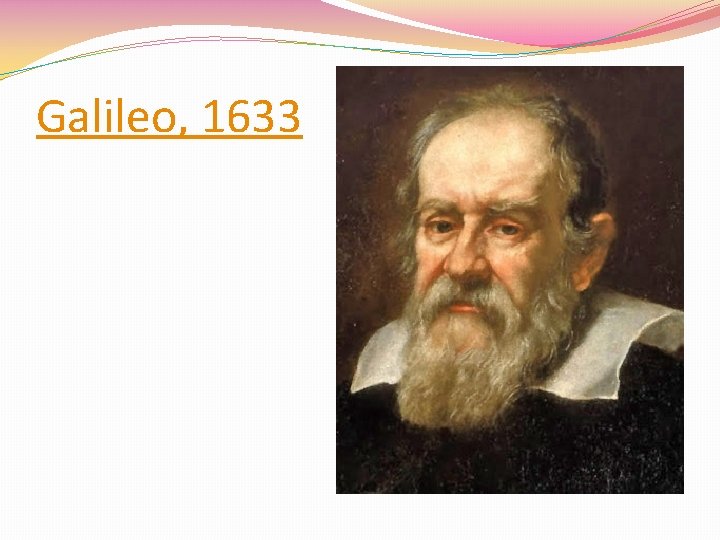
Galileo, 1633
Scientific Method �Scientific Method was a step-by step process of discovery that uses experimentation � 1. State the problem � 2. Gather information � 3. Form a hypothesis- a possible explanation or educated guess � 4. Test the hypothesis � 5. Record analyze data � 6. State a conclusion � 7. Repeat the steps
Sir Isaac Newton �Newton explained the laws of gravity that show a single force keeps the planets in their orbit around the sun �Stated that all objects in nature follow a uniform laws and can be measured and described mathematically
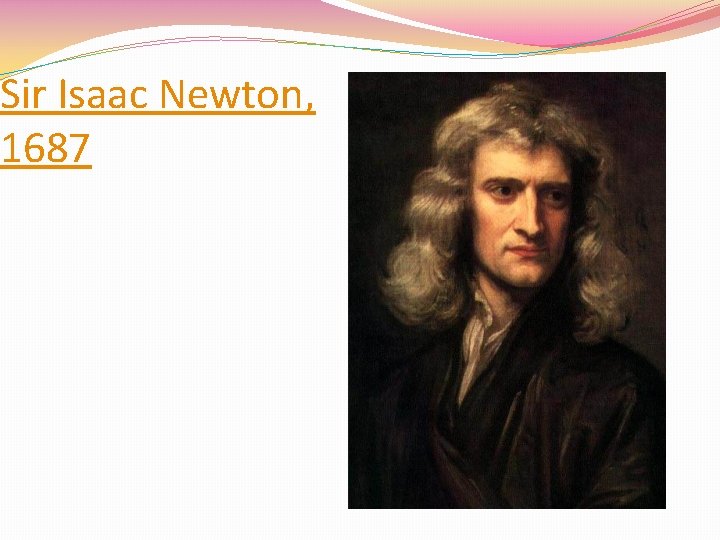
Sir Isaac Newton, 1687
- Slides: 45