
Renaissance Europe Origins of a Western Worldview Times



- Slides: 35
Renaissance Europe Origins of a Western Worldview
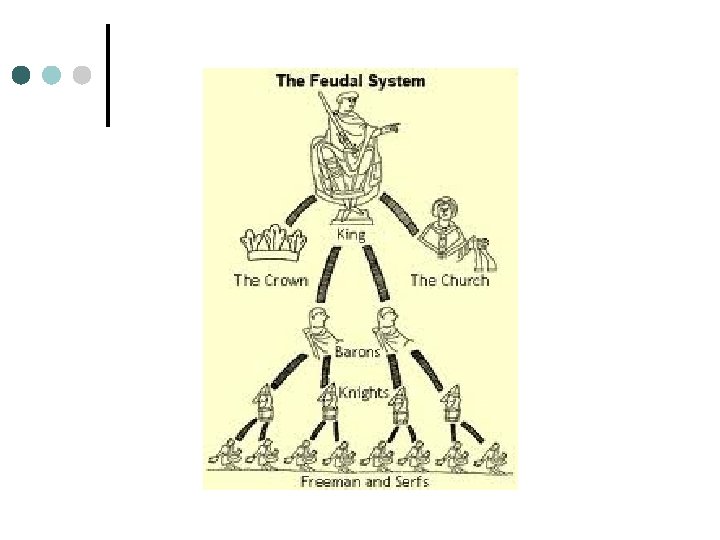
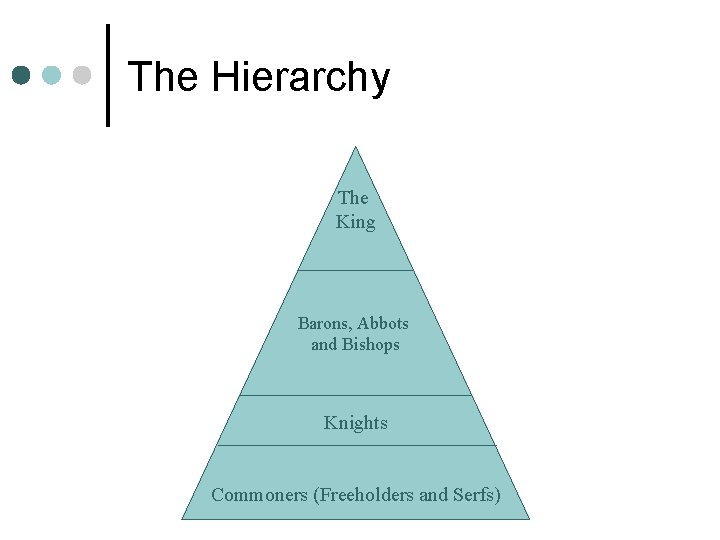
Times of Change ¢ Feudalism – a hierarchy People are ranked above one another according to their importance; there was no changing levels l Based on land, loyalty and duty l
Allegiance ¢ Knobles or knights swore oaths of allegiance to their king ¢ They promised this allegiance in order to have rights to pieces of land called manors or fiefs
The Hierarchy The King Barons, Abbots and Bishops Knights Commoners (Freeholders and Serfs)
Country Life Peasants made up the largest percentage of the population ¢ As a form of “rent” for using the land, peasants had to turn over a portion of what they produced ¢
Peasants Expected to build roads, clear forests and do what work the lord ordered ¢ Illiterate and uneducated ¢ Freemen – rented land from the lord or worked for pay ¢ Serfs – not allowed to leave the manor without permission ¢
A picture is worth a thousand words. . . Page 21 in your text – take a look at the painting ¢ Is there any bias evident in this representation of peasant life? ¢
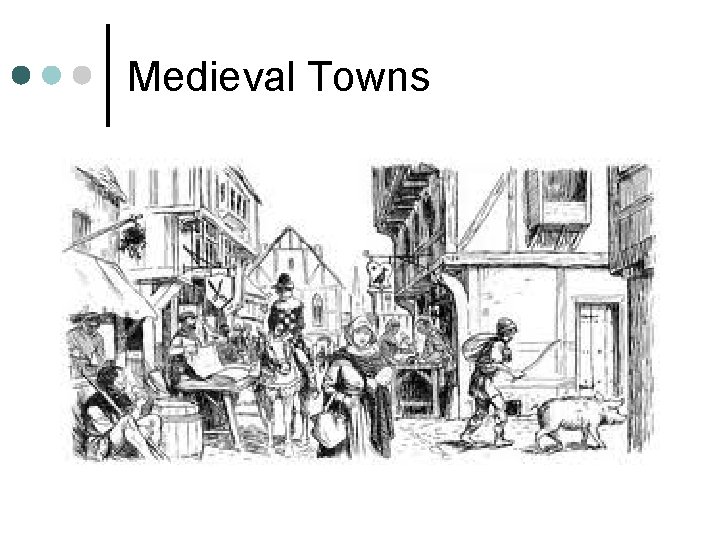
Medieval Towns
Town Life ¢ ¢ ¢ Stone walls protected citizens from rival cities or lords Crowded, dirty and rat infested Offered freedom and new opportunities Unskilled peasants could learn trades, others might open a workshop Guilds – controlled the prices of goods, set standards of quality and allowed apprentices
Town Life ¢ Young children would become apprentices, then they would become journeymen and be admitted to the guild, then eventually they could become masters
The Role of Women Child rearing, household duties, worked alongside their husband (in the field or in the guild) ¢ Permitted to inherit property and guild memberships when their husbands died ¢ More wealthy the family, more opportunities for women -- education ¢
The flipside of wealth. . . ¢ Wealthy women were not able to make insignificant choices (outfits, meals) or more important ones like choosing their husbands ¢ Women who joined religious orders (nunneries) often received some education
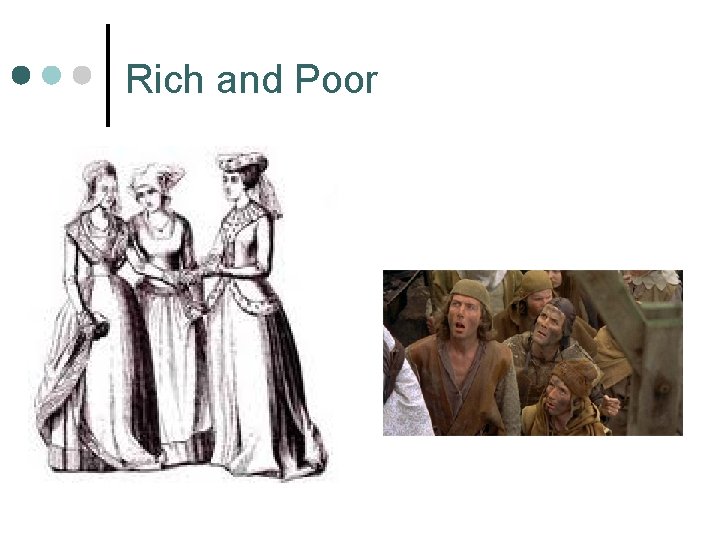
Rich and Poor
Reality Check ¢ Page 24 – read through the article entitled “Rural and Urban Populations” ¢ What do you think?
Challenges to the Feudal System ¢ The Peasants’ Revolts 1337 – war broke out between England France l The hundred years war l Revolt because of high rents and high taxes l “Jacques Bonhomme” or “Jacques” l
Worst Jobs in History ¢ http: //www. youtube. com/watch? v=8 Zr E 1 m. Vc. B 2 k
The Black Death Between 1346 -1350 millions of Europeans died because of the bubonic plague ¢ Severe labor shortages lead to bankrupt of feudal estates – lead to some serfs being released from their obligations to the lords ¢
The Plague Report ¢ http: //www. youtube. com/watch? v=KA 6 nij 1 kdj. E&feature=related
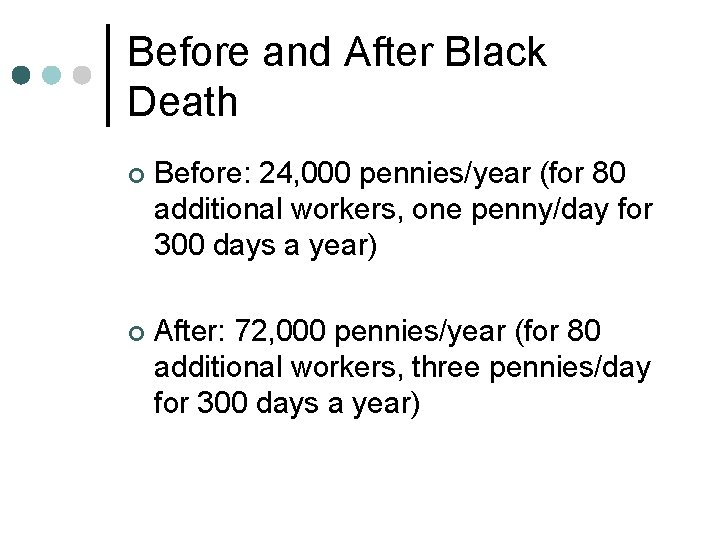
Before and After Black Death ¢ Before: 24, 000 pennies/year (for 80 additional workers, one penny/day for 300 days a year) ¢ After: 72, 000 pennies/year (for 80 additional workers, three pennies/day for 300 days a year)
Wealth in Society became less rigid with the increased popularity of towns ¢ Urban people could change their level in the hierarchy ¢ Power based on money rather than on land ¢ Wealth became material (clothing, possessions, meals, furniture, houses) ¢
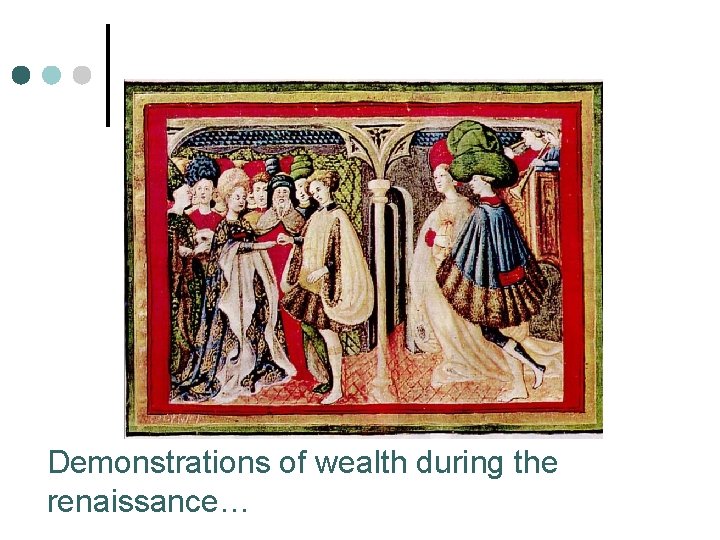
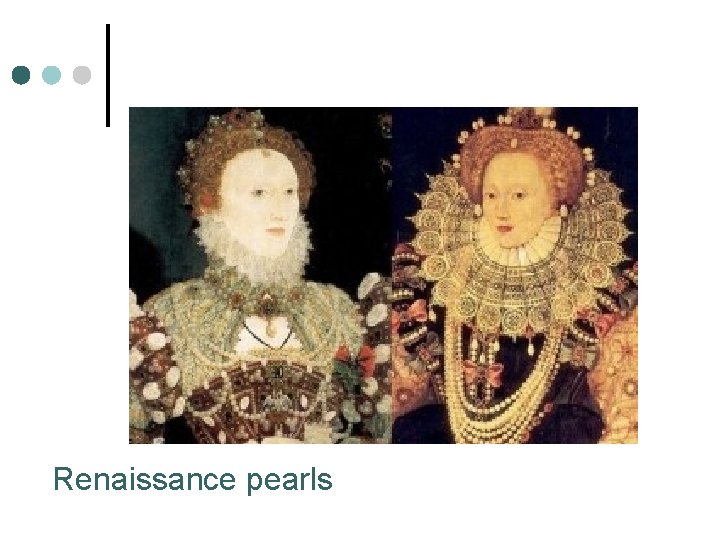
What were they thinking? ! ¢ “Men and women wore sumptuous clothes of silks, brocades, cut velvets and lace; precious stones and gold nets on their hair. Materials streamed with silver and gold were always vivid in colour. Warm, flesh-tinted cosmetics were applied freely. Servants, pages, lackeys and ushers were also clad gaudily, half red and half yellow or half green and half white” (pg. 27)
Demonstrations of wealth during the renaissance…
Renaissance pearls
Sumptuary laws Controlled consumption or how people spent their money ¢ Laws restricted the dress of people of different classes ¢
A Religious Society Nobody knew how to treat the Black Death effectively, millions died. ¢ Thought Black Death was sent by God as a punishment ¢ Religion was a central part of peoples’ lives ¢ Life was hard: sickness, famine and war – people prayed to reach Heaven after death ¢
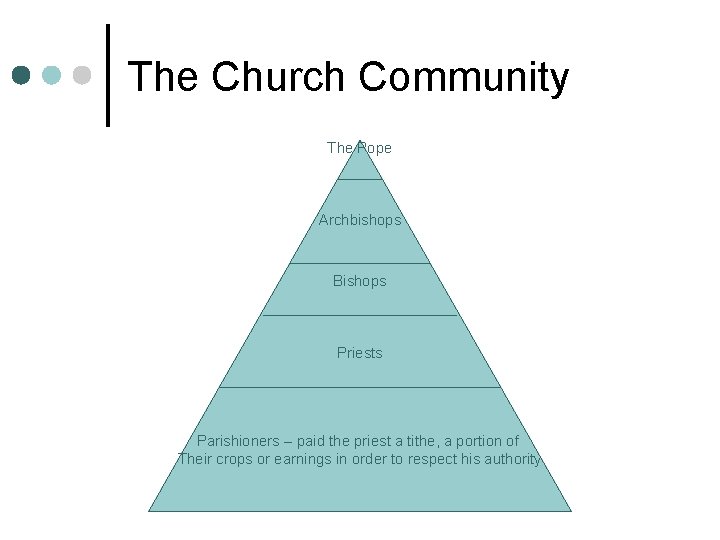
The Church Community The Pope Archbishops Bishops Priests Parishioners – paid the priest a tithe, a portion of Their crops or earnings in order to respect his authority
Religion Much pride placed in cathedrals and churches, competition to build the biggest and the most beautiful ¢ If you were deeply religious, you could choose to enter monasteries (men) and convents (women) ¢ Monks and nuns were well educated ¢ Universities were developed around religious schools ¢
St. Francis of Assisi One of the most beloved saints ¢ Gave up all of his possessions after hugging a leper; went out into the world to preach ¢ Was soon joined by others ¢
Changing Attitudes Black Death made people question their attitudes toward faith – felt like God had abandoned them ¢ People were critical of the church (very large source of wealth) ¢
Out of the Dark Ages. . . ¢ The Renaissance l l Re – meaning “again” Naissance – meaning “born” l The rebirth of classical knowledge and learning l Leonardo da Vinci, Francois 1 er, Nicolaus Copernicus, Martin Luther, Christine de Pisan, Vasco da Gama
The Renaissance ¢ http: //www. youtube. com/watch? v=vi. M evg. EXu. Bc
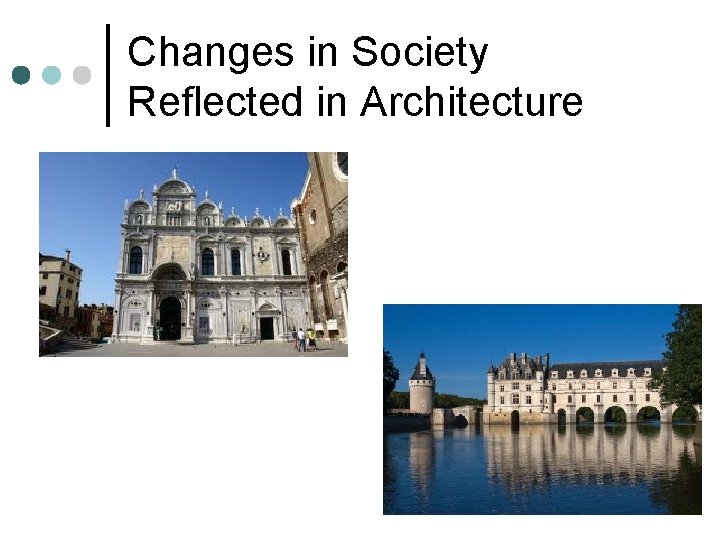
Changes in Society Reflected in Architecture
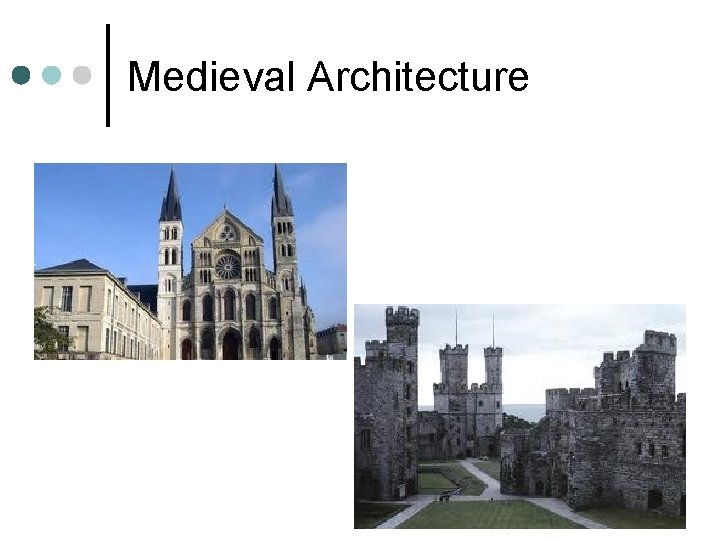
Medieval Architecture
Chapter Mini-Assignment ¢ Pick an important character from the Renaissance (Leonardo da Vinci, Francois 1 er, Nicolaus Copernicus, Martin Luther, Christine de Pisan, Vasco da Gama) and write a paragraph. Include one source and any interesting information. ¢ Do not copy and paste. ¢ Make sure to cite the website you use!