
RENAISSANCE 1400 1600 A rebirth of classical art
RENAISSANCE 1400 -1600 A “re-birth” of classical art in Europe

Overview • Italian/Early 1400 -1490 • Italian/High 1500 -1600 • Northern/Late 1500 -1600 • Italian/Early 1400 -1490 • Italian/Hi 1500 -1600 • Northern/Late 1500 -1600
Renaissance is a period, during the 14 th, 15 th, and 16 th Centuries, of revival in classical learning characterized by a sharp increase in secular values and increased interest in learning the classics. ◦ 1 st period to name itself and say nasty things about earlier times: “Gothic” & “Dark Ages” ◦ Term means “Rebirth” ◦ Looking back to Classical culture – Ancient Greece and Rome ◦ Names! Artists known by name – 1 st contemporary art historian (1550); Individuality celebrated in this era
Art and Patronage Italians were willing to spend a lot of money on art. ◦ Church is still the § Art communicated social, political, and spiritual values. § Italian banking & international trade interests had the money. Public art in Florence was organized and supported by guilds. Therefore, the consumption of art was used as a form of competition for social & political status! biggest power structure ◦ Beginning of banking ◦ Private fortunes & power ◦ Starts in Italy – specifically Florence
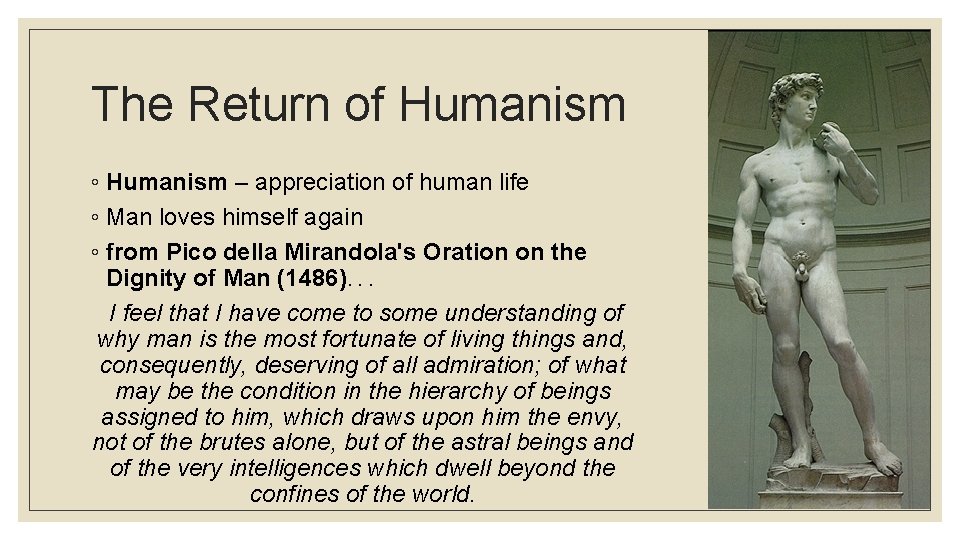
The Return of Humanism ◦ Humanism – appreciation of human life ◦ Man loves himself again ◦ from Pico della Mirandola's Oration on the Dignity of Man (1486). . . I feel that I have come to some understanding of why man is the most fortunate of living things and, consequently, deserving of all admiration; of what may be the condition in the hierarchy of beings assigned to him, which draws upon him the envy, not of the brutes alone, but of the astral beings and of the very intelligences which dwell beyond the confines of the world.
CHARACTERISTICS OF RENAISSANCE ART
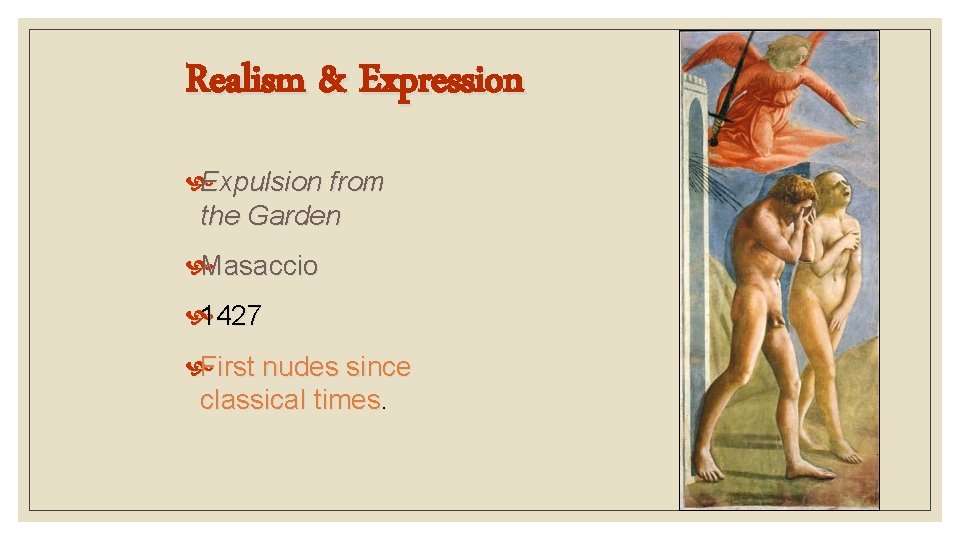
Realism & Expression Expulsion from the Garden Masaccio 1427 First nudes since classical times.
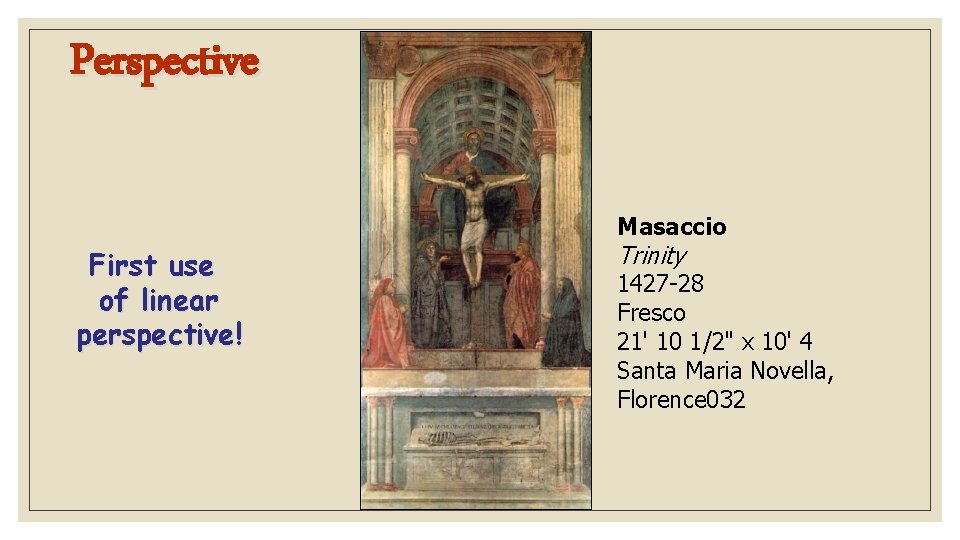
Perspective Masaccio First use of linear perspective! Trinity 1427 -28 Fresco 21' 10 1/2" x 10' 4 Santa Maria Novella, Florence 032
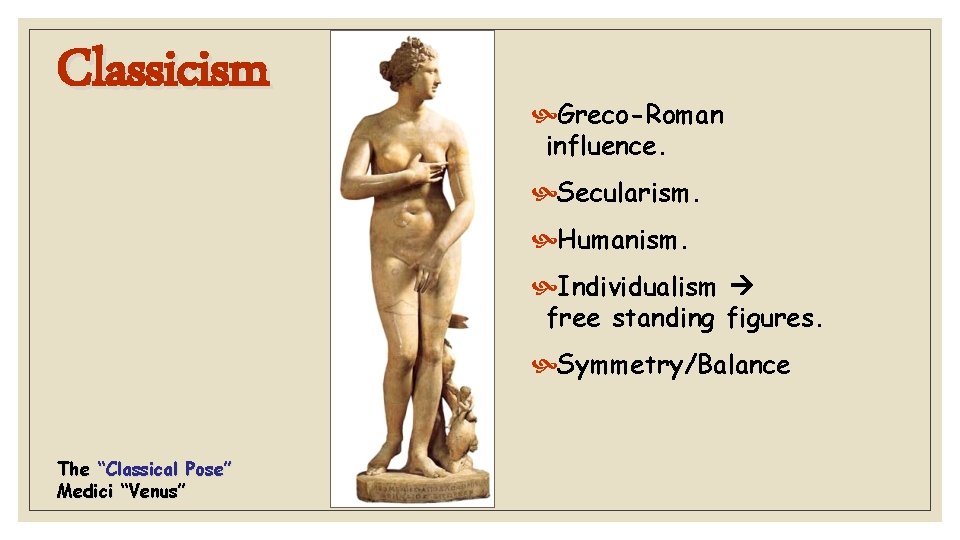
Classicism Greco-Roman influence. Secularism. Humanism. Individualism free standing figures. Symmetry/Balance The “Classical Pose” Medici “Venus”
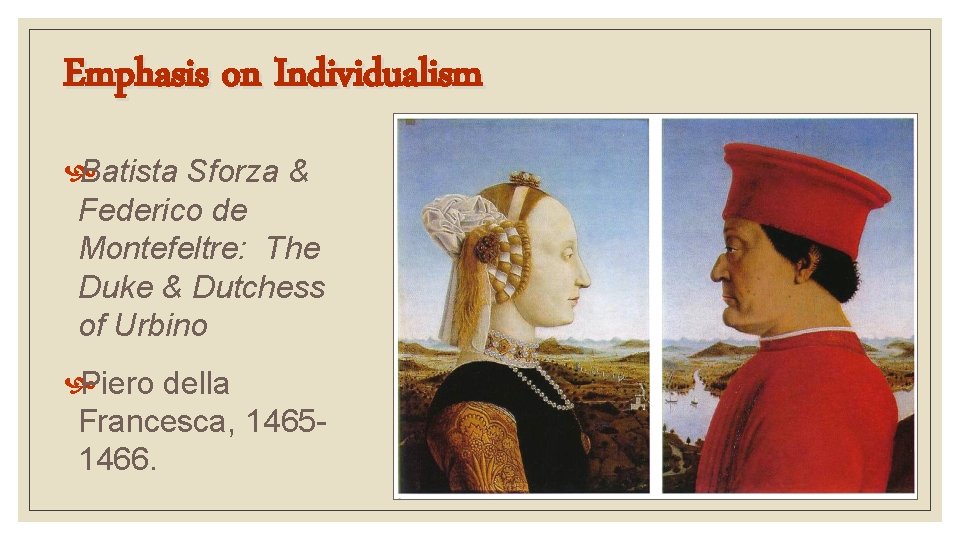
Emphasis on Individualism Batista Sforza & Federico de Montefeltre: The Duke & Dutchess of Urbino Piero della Francesca, 14651466.
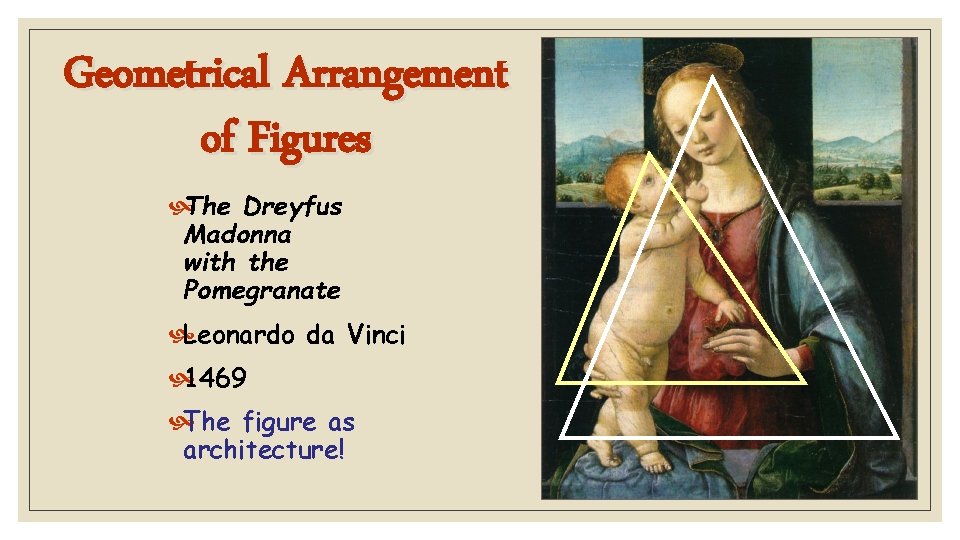
Geometrical Arrangement of Figures The Dreyfus Madonna with the Pomegranate Leonardo da Vinci 1469 The figure as architecture!
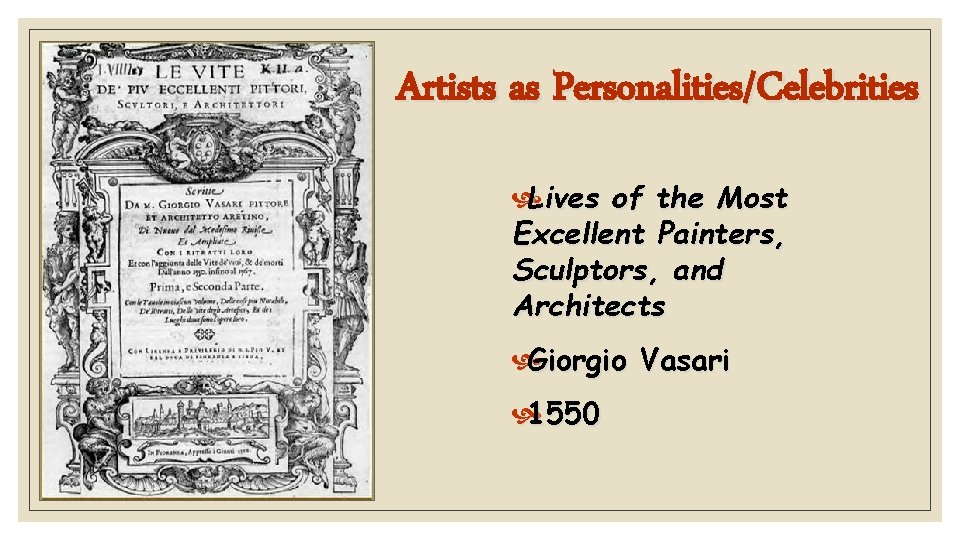
Artists as Personalities/Celebrities Lives of the Most Excellent Painters, Sculptors, and Architects Giorgio Vasari 1550
EARLY RENAISSANCE The First Three Hall-of-Famers
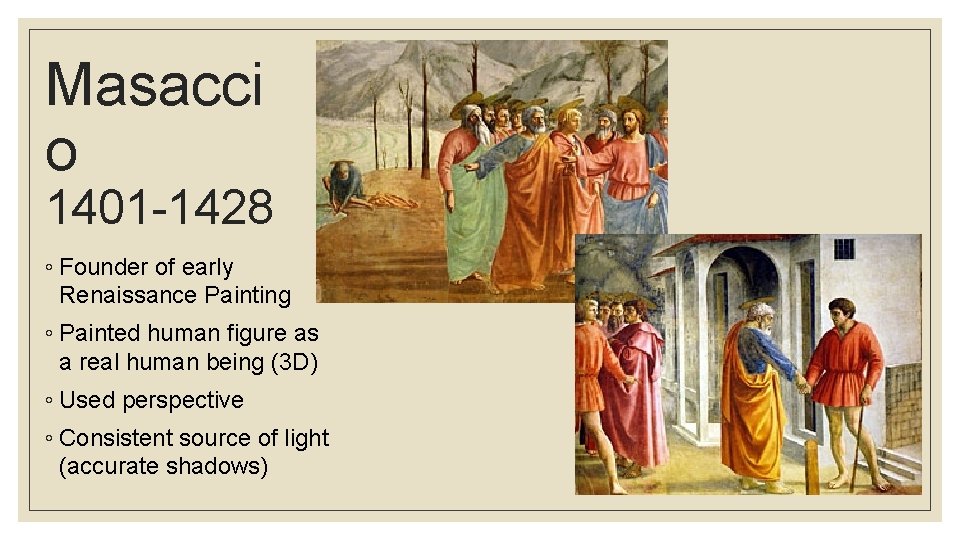
Masacci o 1401 -1428 ◦ Founder of early Renaissance Painting ◦ Painted human figure as a real human being (3 D) ◦ Used perspective ◦ Consistent source of light (accurate shadows)
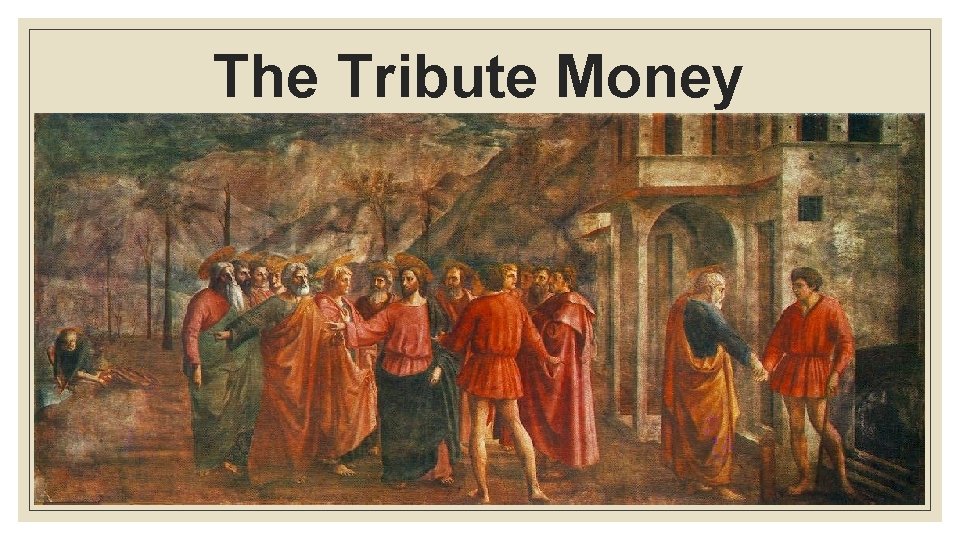
The Tribute Money
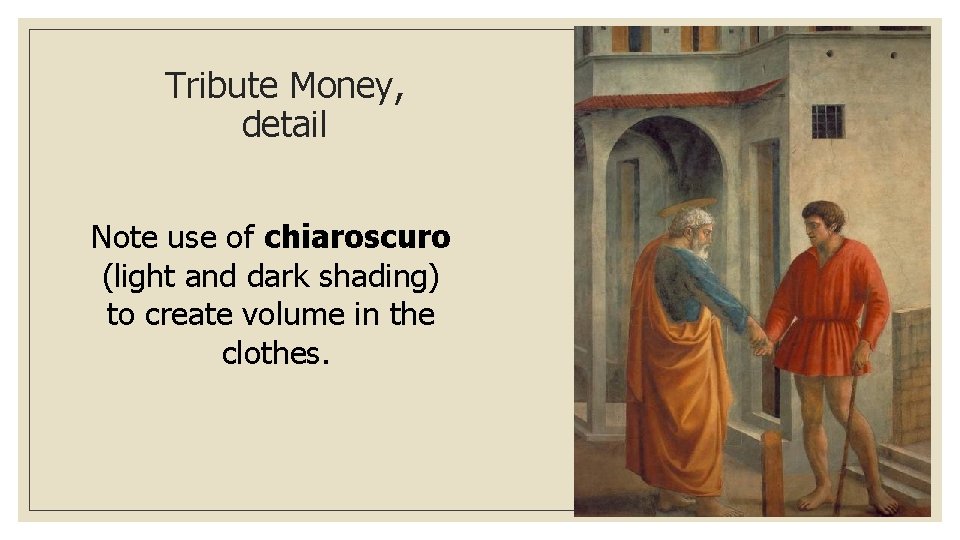
Tribute Money, detail Note use of chiaroscuro (light and dark shading) to create volume in the clothes.
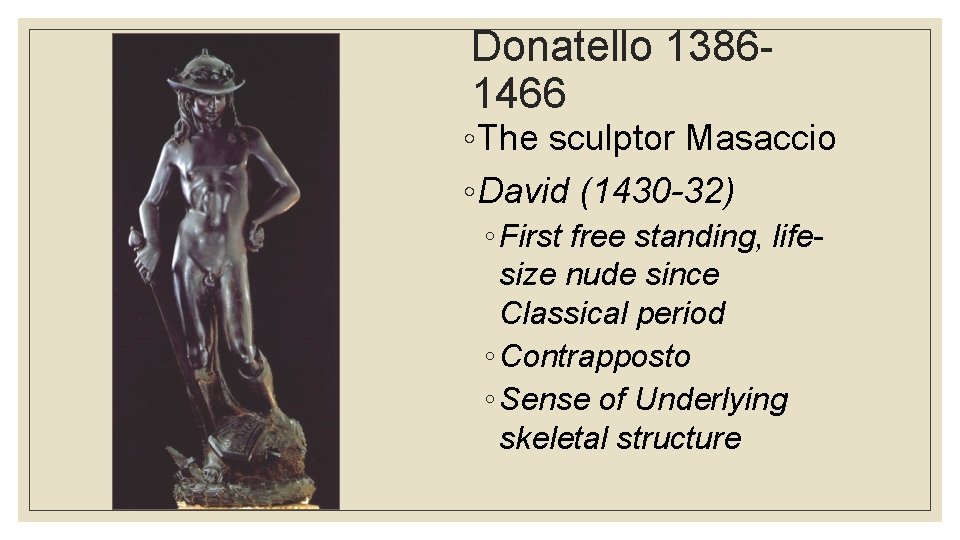
Donatello 13861466 ◦ The sculptor Masaccio ◦ David (1430 -32) ◦ First free standing, lifesize nude since Classical period ◦ Contrapposto ◦ Sense of Underlying skeletal structure
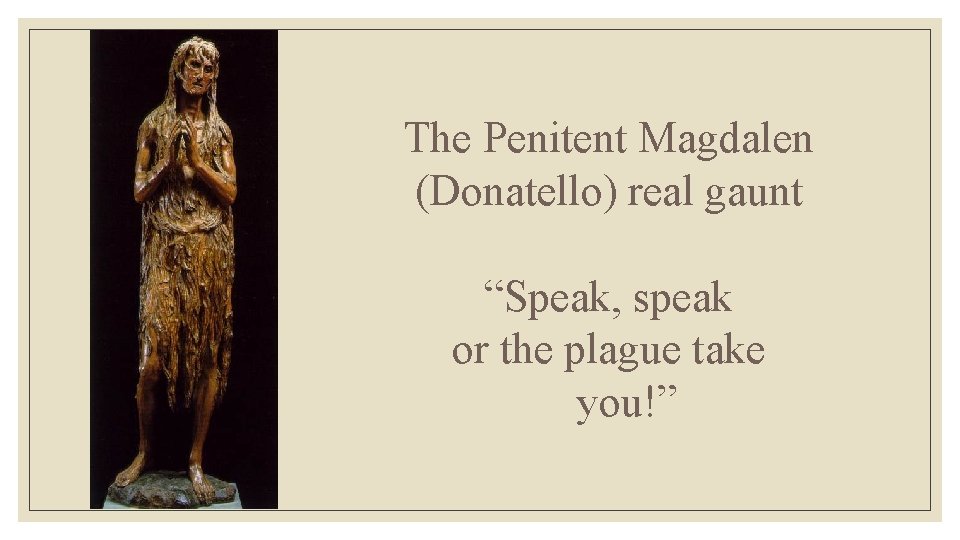
The Penitent Magdalen (Donatello) real gaunt “Speak, speak or the plague take you!”
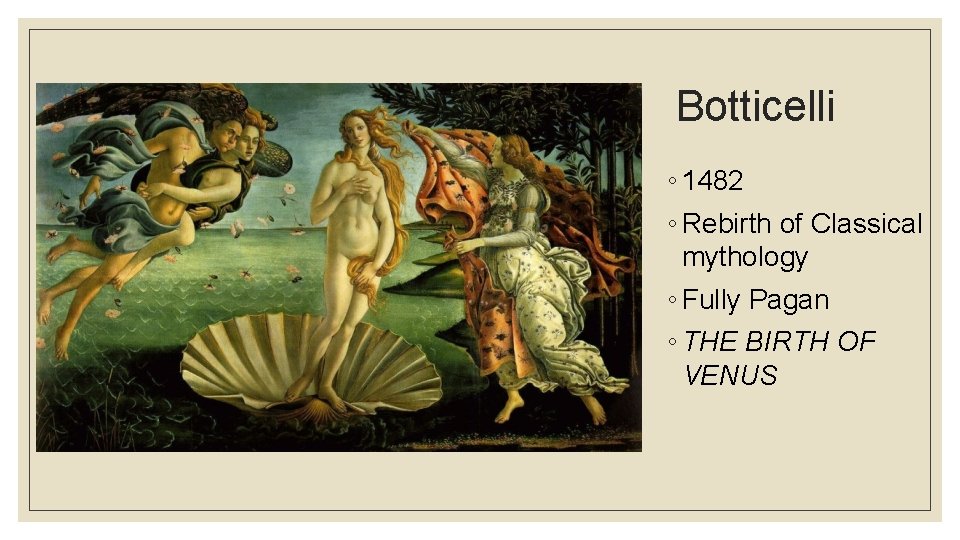
Botticelli ◦ 1482 ◦ Rebirth of Classical mythology ◦ Fully Pagan ◦ THE BIRTH OF VENUS
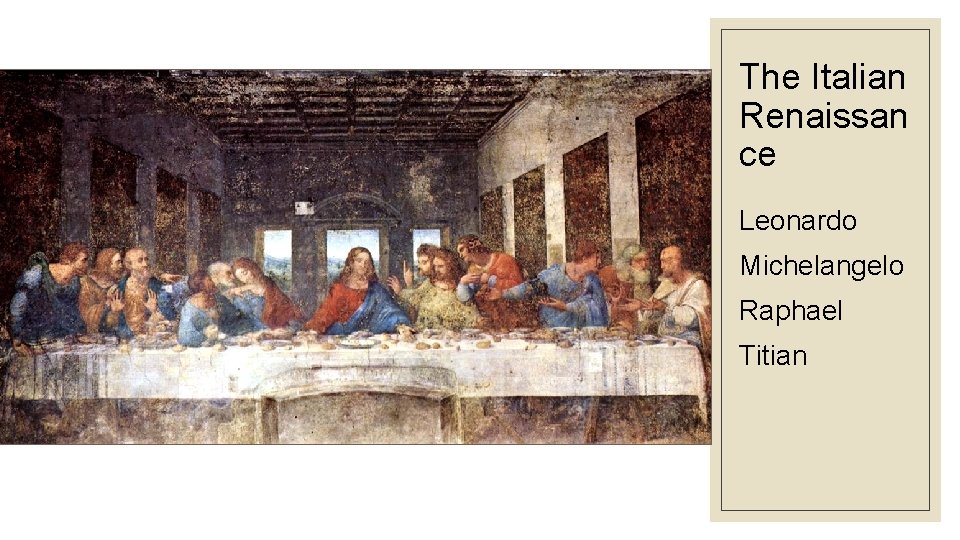
The Italian Renaissan ce Leonardo Michelangelo Raphael Titian
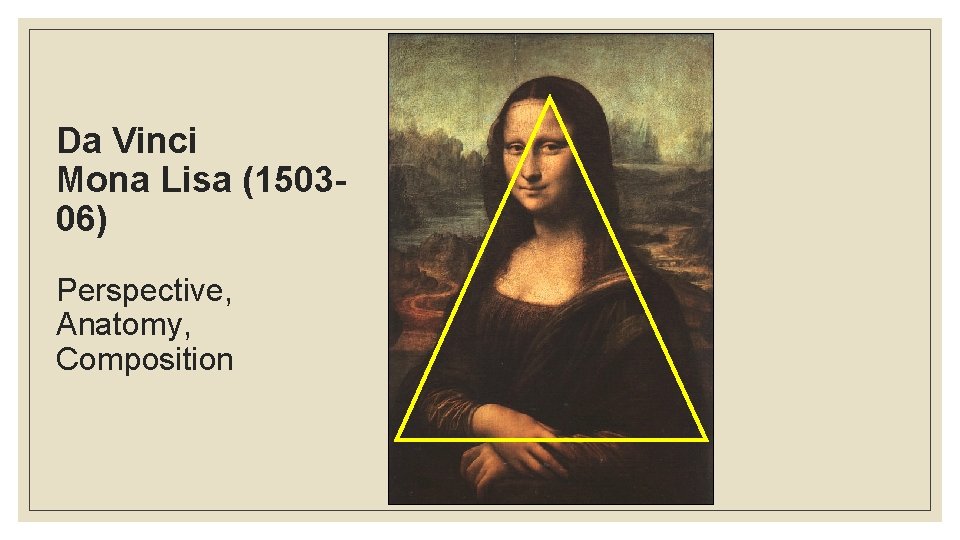
Da Vinci Mona Lisa (150306) Perspective, Anatomy, Composition
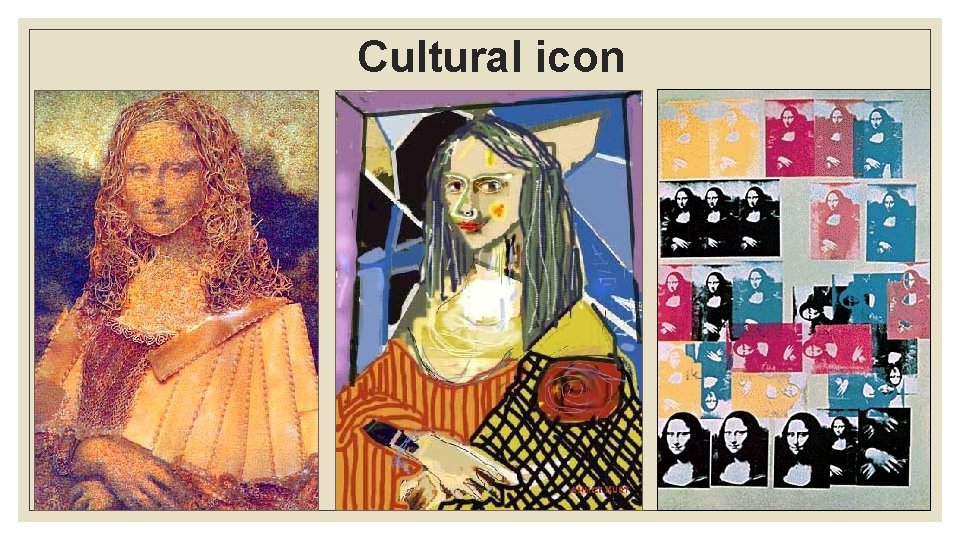
Cultural icon
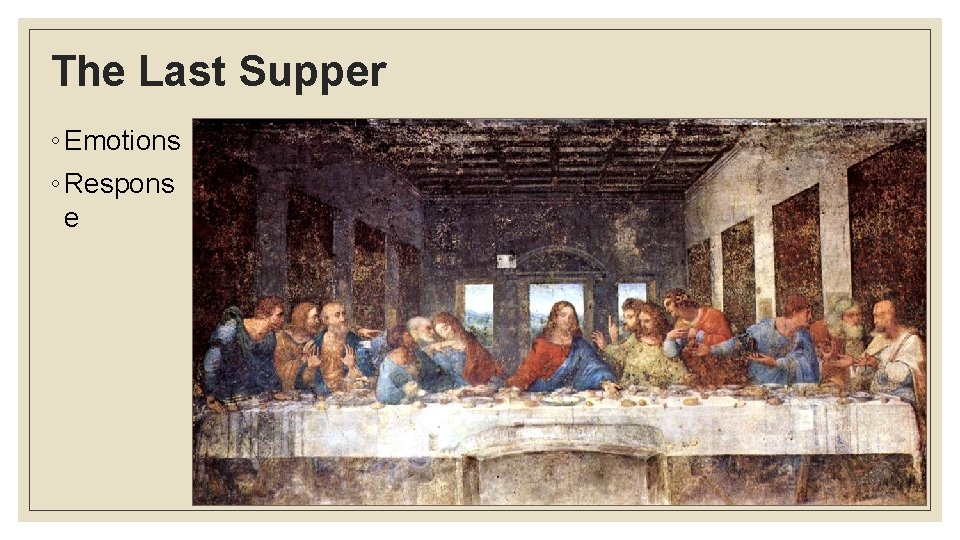
The Last Supper ◦ Emotions ◦ Respons e
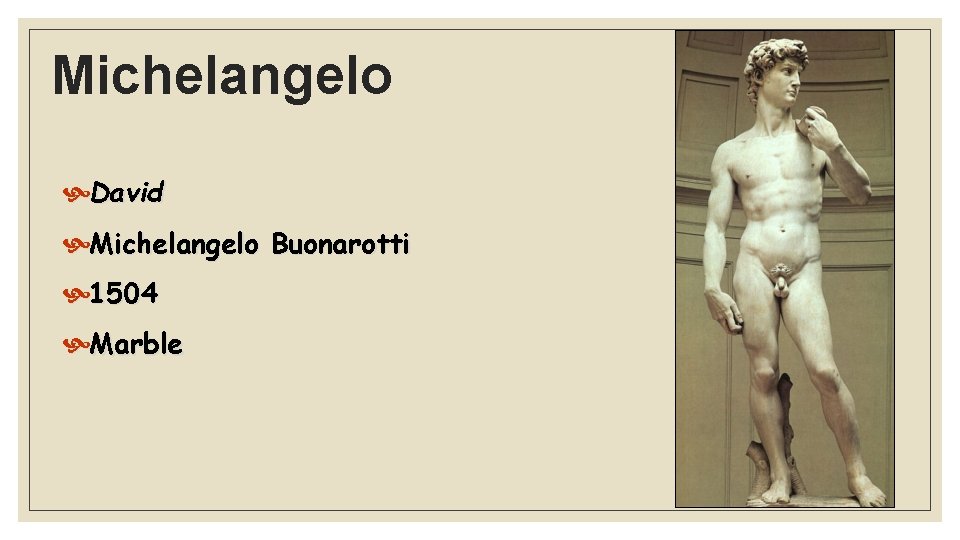
Michelangelo David Michelangelo Buonarotti 1504 Marble
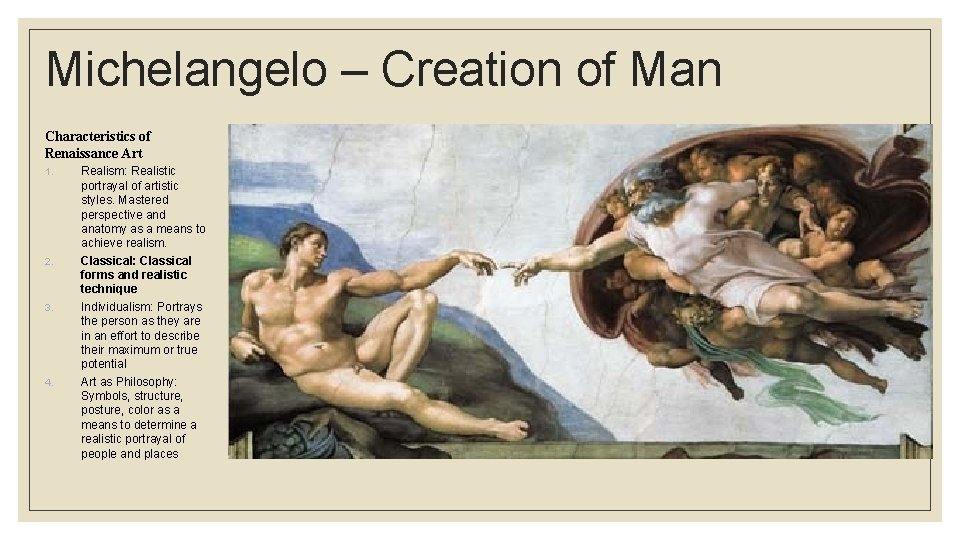
Michelangelo – Creation of Man Characteristics of Renaissance Art 1. 2. 3. 4. Realism: Realistic portrayal of artistic styles. Mastered perspective and anatomy as a means to achieve realism. Classical: Classical forms and realistic technique Individualism: Portrays the person as they are in an effort to describe their maximum or true potential Art as Philosophy: Symbols, structure, posture, color as a means to determine a realistic portrayal of people and places
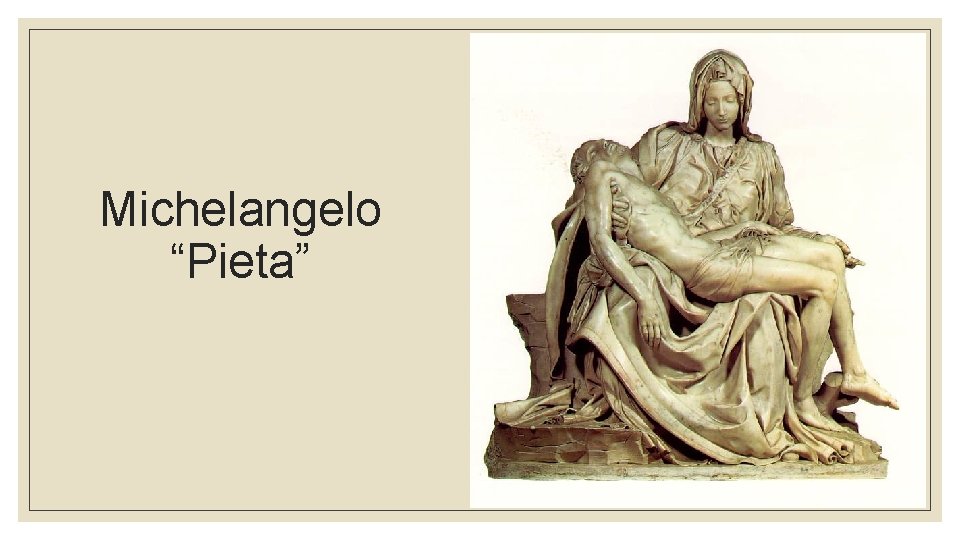
Michelangelo “Pieta”
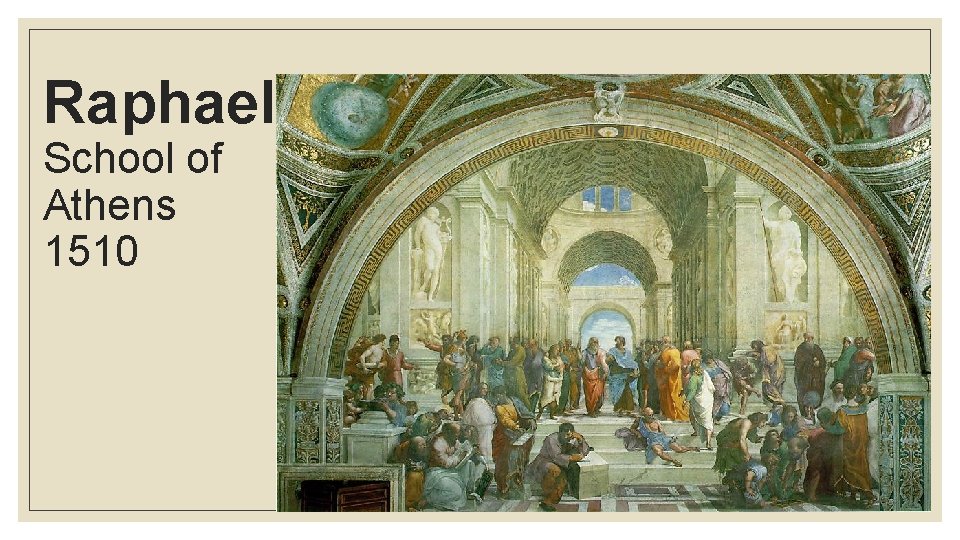
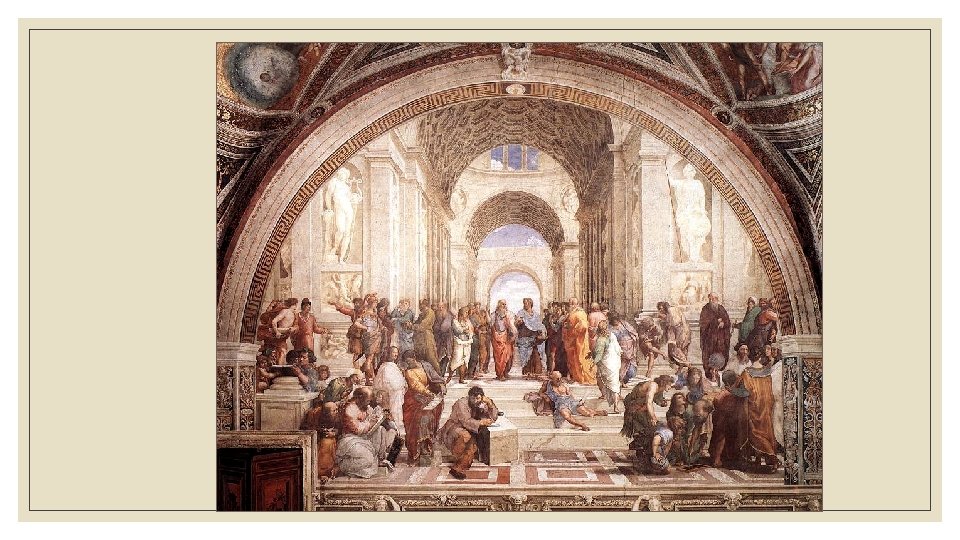
Raphael School of Athens 1510
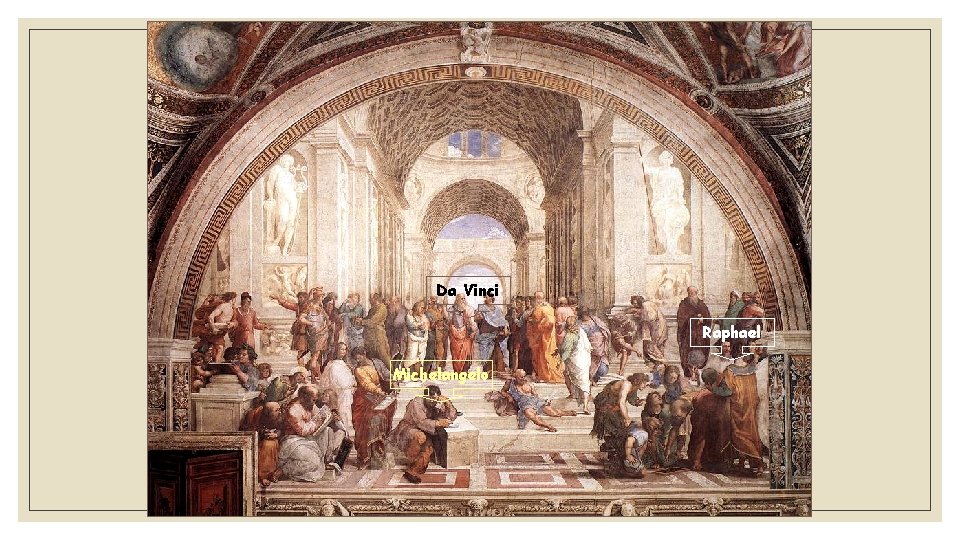
Da Vinci Raphael Michelangelo
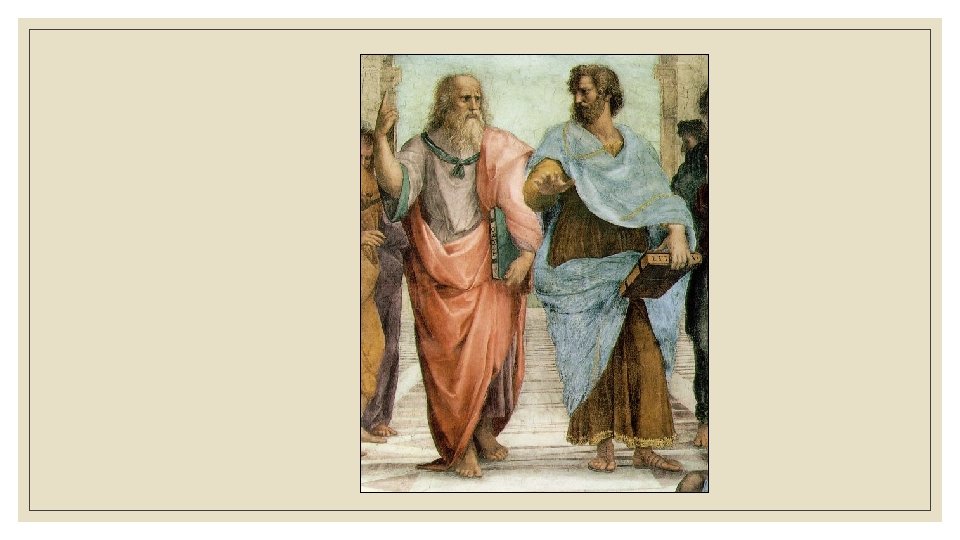
![Plato: looks to the heavens [or the IDEAL realm]. Aristotle: looks to this earth](http://slidetodoc.com/presentation_image_h2/a0f1343c9e4d6dcd6dff40c15774c4ab/image-29.jpg "Plato: looks to the heavens [or the IDEAL realm]. Aristotle: looks to this earth")
Plato: looks to the heavens [or the IDEAL realm]. Aristotle: looks to this earth [the here and now].
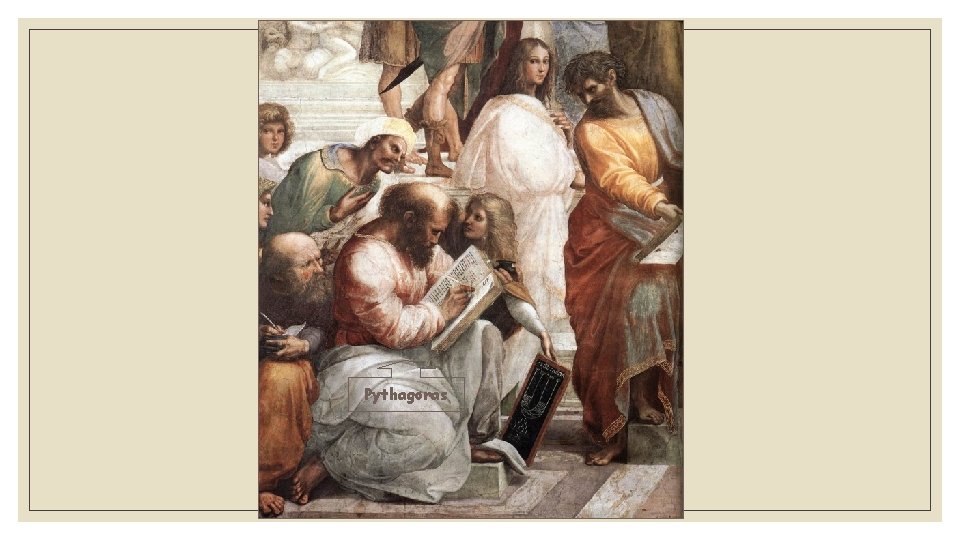
Pythagoras
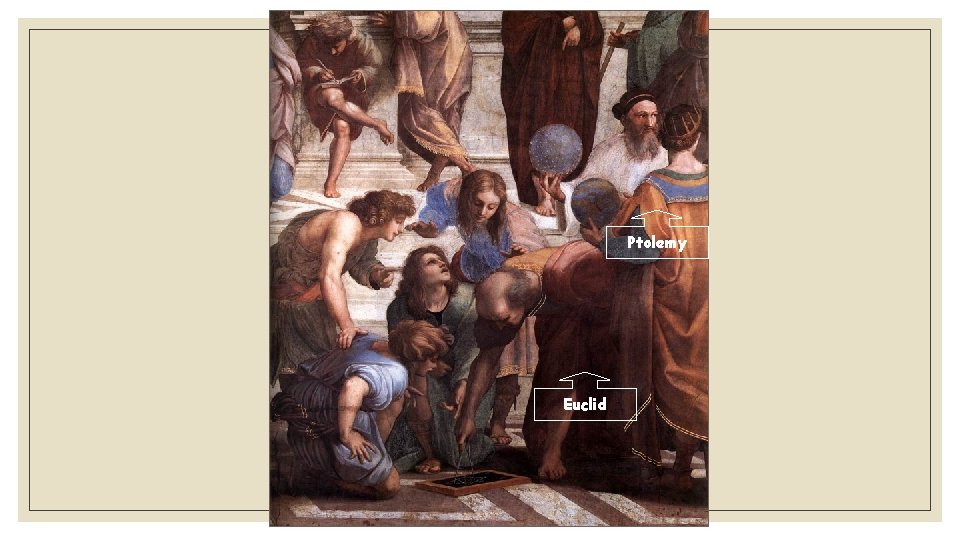
Ptolemy Euclid
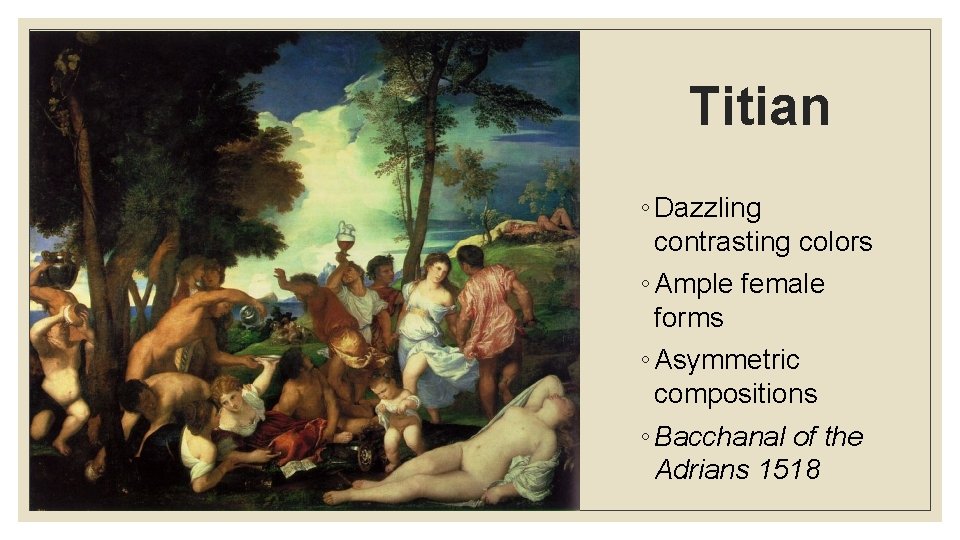
Titian ◦ Dazzling contrasting colors ◦ Ample female forms ◦ Asymmetric compositions ◦ Bacchanal of the Adrians 1518
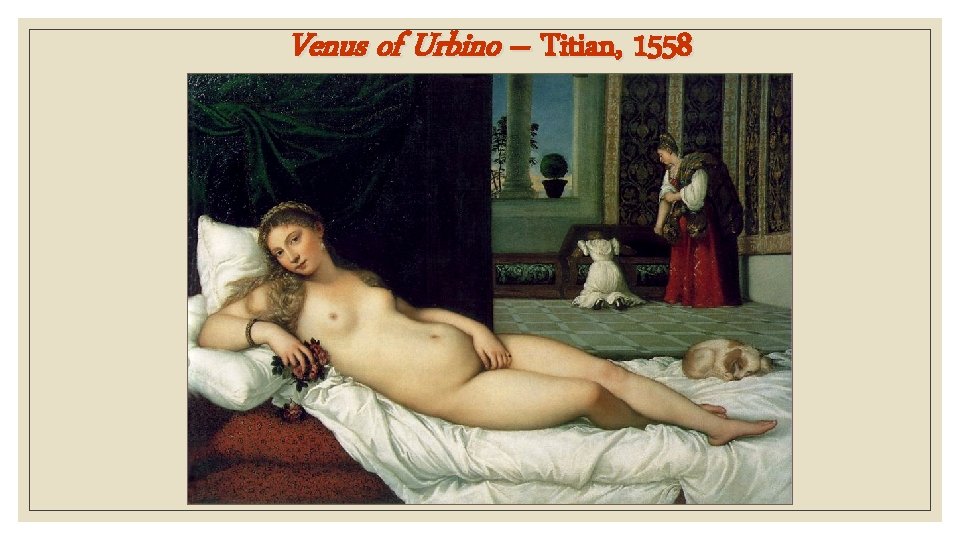
Venus of Urbino – Titian, 1558
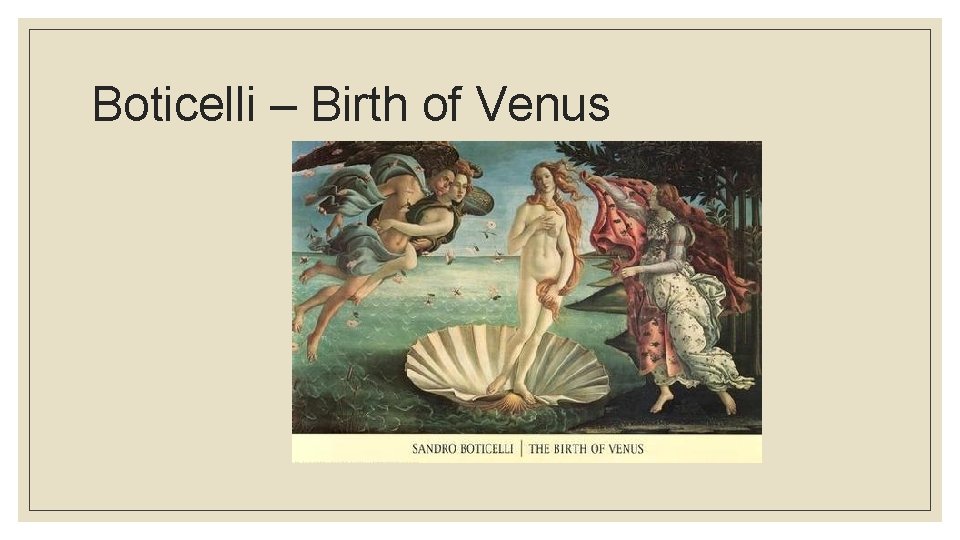
Boticelli – Birth of Venus
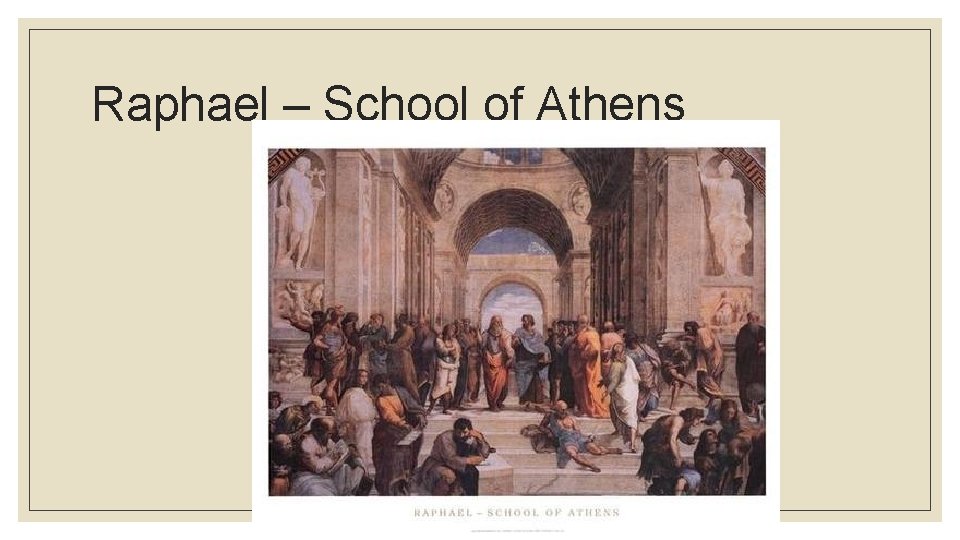
Raphael – School of Athens
Fine Arts – Northern Renaissance The Renaissance in Northern Europe – Refers to artistic happenings within Europe but outside of Italy. Mainly France, the Netherlands & Germany. Works to know!: -Albrecht Durer - ‘Self Portrait’ -Jan van Eyck - ‘Man in a Red Turban’ & ‘Bride of Arnolfini’ -Peter Bruegel – ‘ Netherlandish Proverbs’
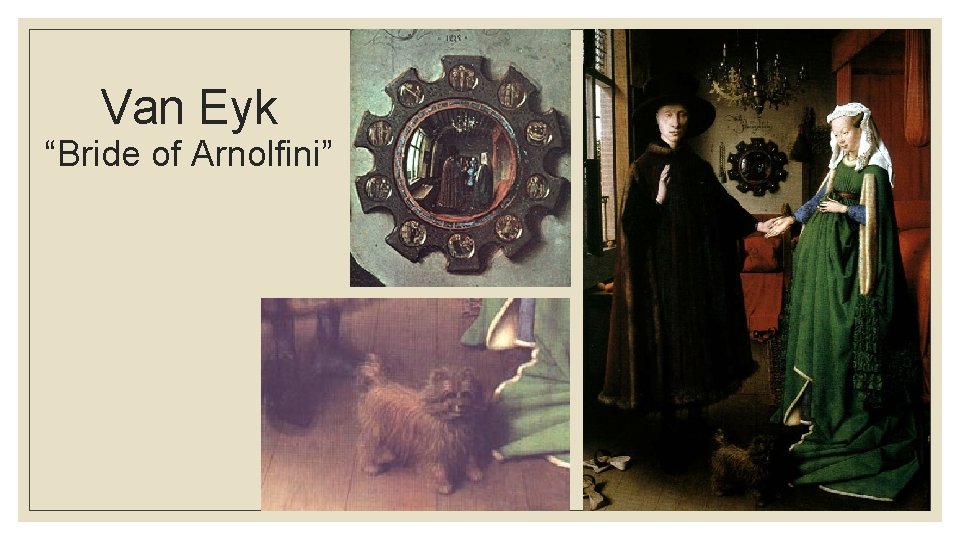
Van Eyk “Bride of Arnolfini”
- Slides: 39