
Removing barriers to Mobile Broadband Adoption in Latin
Removing barriers to Mobile Broadband Adoption in Latin America Alexis Arancibia Technology Policy Director GSMA Santiago, December 2016
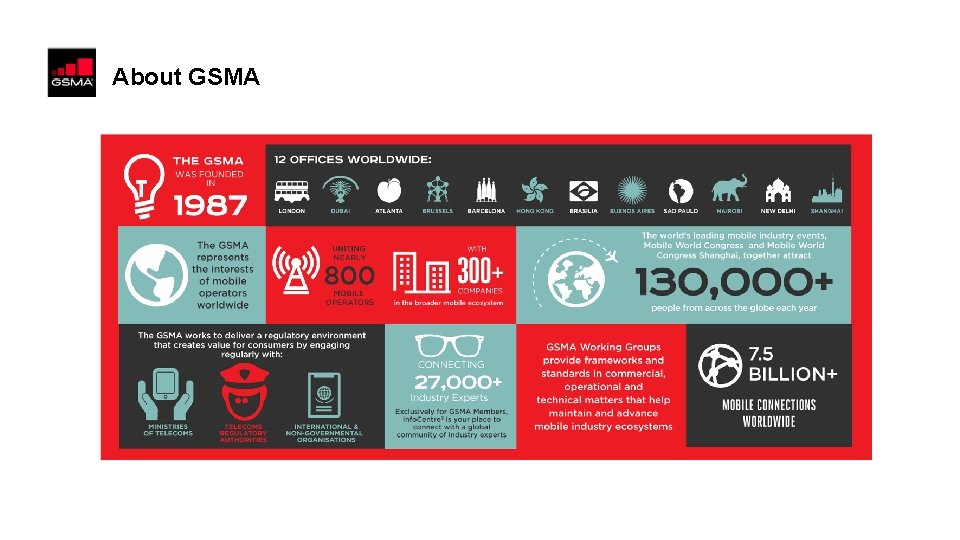
About GSMA
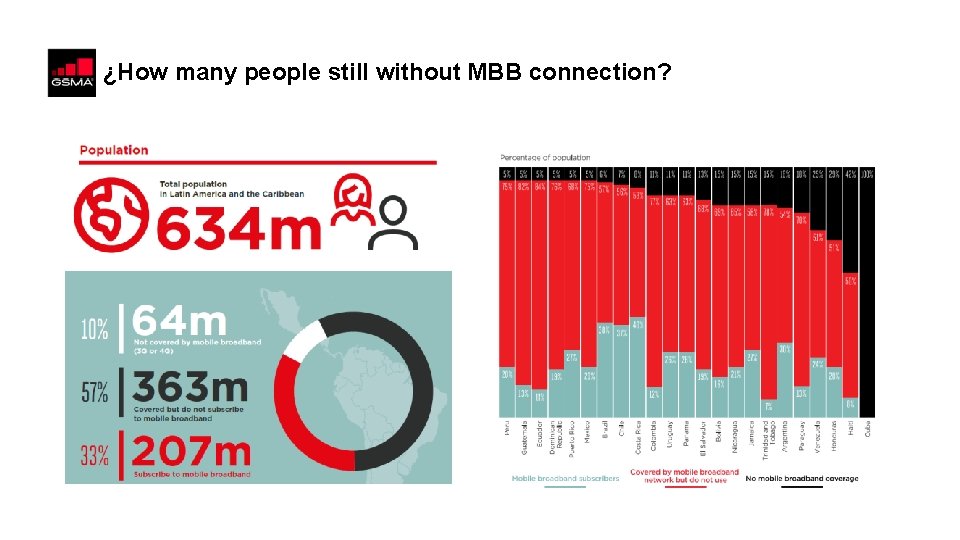
¿How many people still without MBB connection?
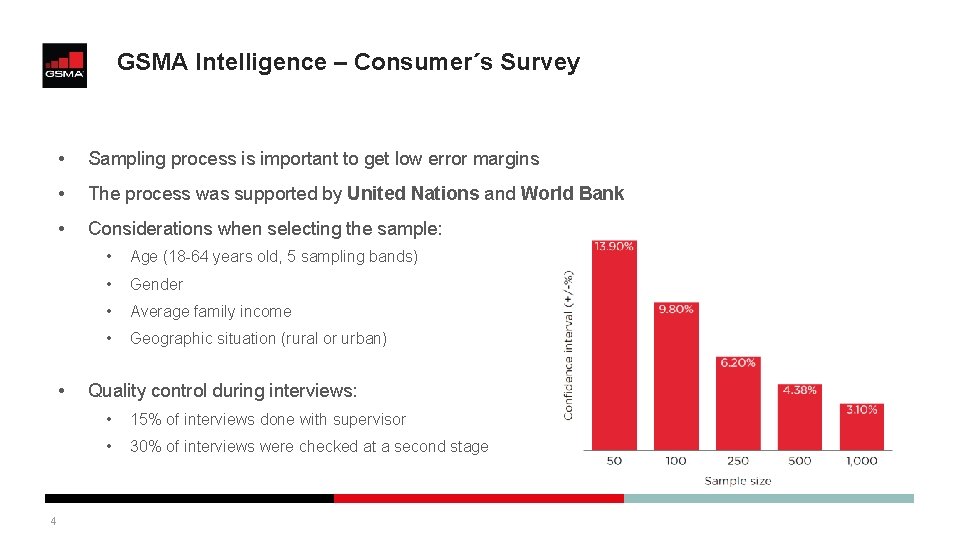
GSMA Intelligence – Consumer´s Survey • Sampling process is important to get low error margins • The process was supported by United Nations and World Bank • Considerations when selecting the sample: • 4 • Age (18 -64 years old, 5 sampling bands) • Gender • Average family income • Geographic situation (rural or urban) Quality control during interviews: • 15% of interviews done with supervisor • 30% of interviews were checked at a second stage
Which are the main barriers to close the digital gap? What can we do as industry to reduce the connectivity gap? Opportunities for Industry
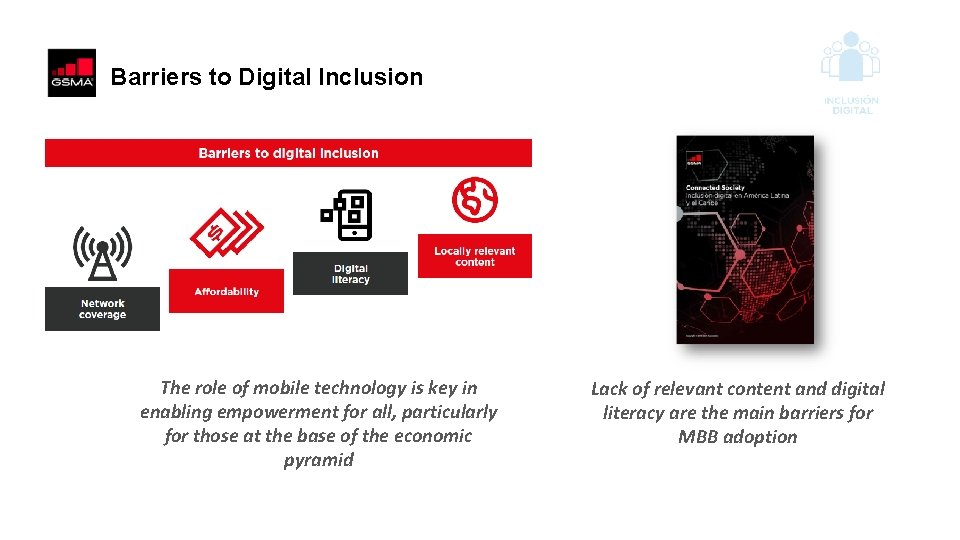
Barriers to Digital Inclusion The role of mobile technology is key in enabling empowerment for all, particularly for those at the base of the economic pyramid Lack of relevant content and digital literacy are the main barriers for MBB adoption
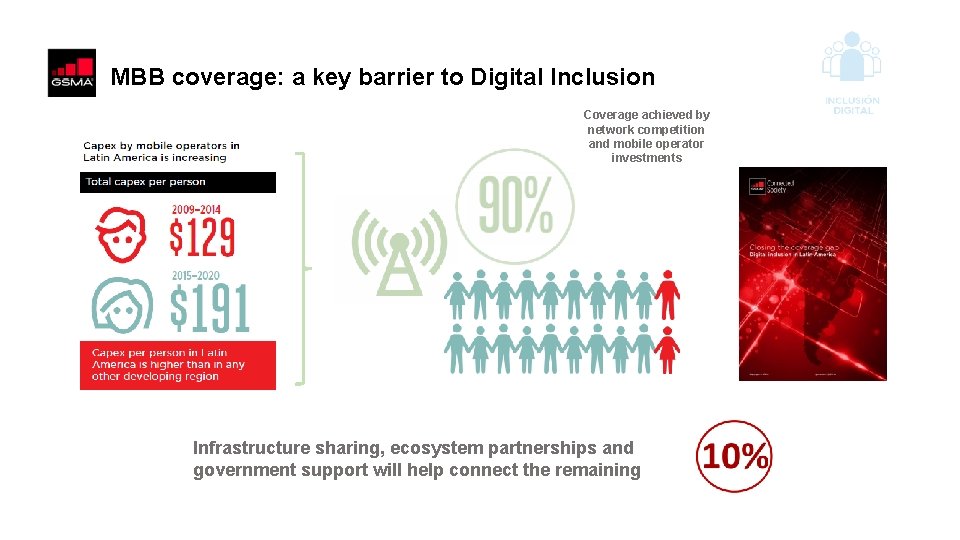
MBB coverage: a key barrier to Digital Inclusion Coverage achieved by network competition and mobile operator investments Infrastructure sharing, ecosystem partnerships and government support will help connect the remaining
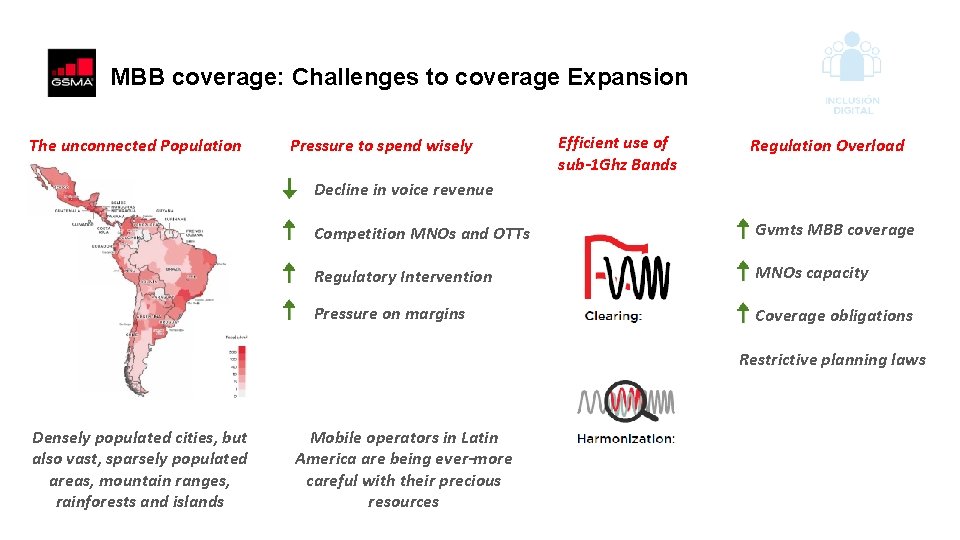
MBB coverage: Challenges to coverage Expansion The unconnected Population Pressure to spend wisely Efficient use of sub-1 Ghz Bands Regulation Overload Decline in voice revenue Competition MNOs and OTTs Gvmts MBB coverage Regulatory Intervention MNOs capacity Pressure on margins Coverage obligations Restrictive planning laws Densely populated cities, but also vast, sparsely populated areas, mountain ranges, rainforests and islands Mobile operators in Latin America are being ever-more careful with their precious resources
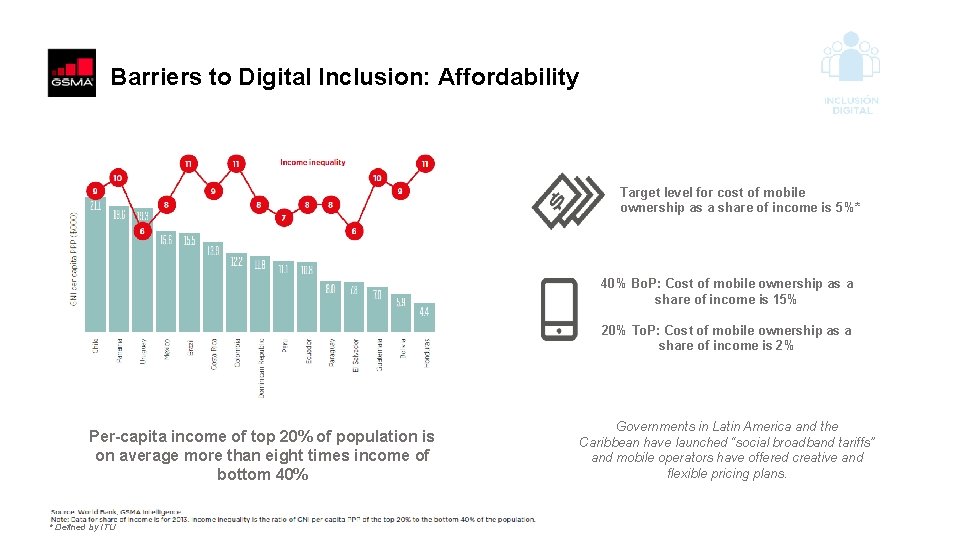
Barriers to Digital Inclusion: Affordability Target level for cost of mobile ownership as a share of income is 5%* 40% Bo. P: Cost of mobile ownership as a share of income is 15% 20% To. P: Cost of mobile ownership as a share of income is 2% Per-capita income of top 20% of population is on average more than eight times income of bottom 40% * Defined by ITU Governments in Latin America and the Caribbean have launched “social broadband tariffs” and mobile operators have offered creative and flexible pricing plans.
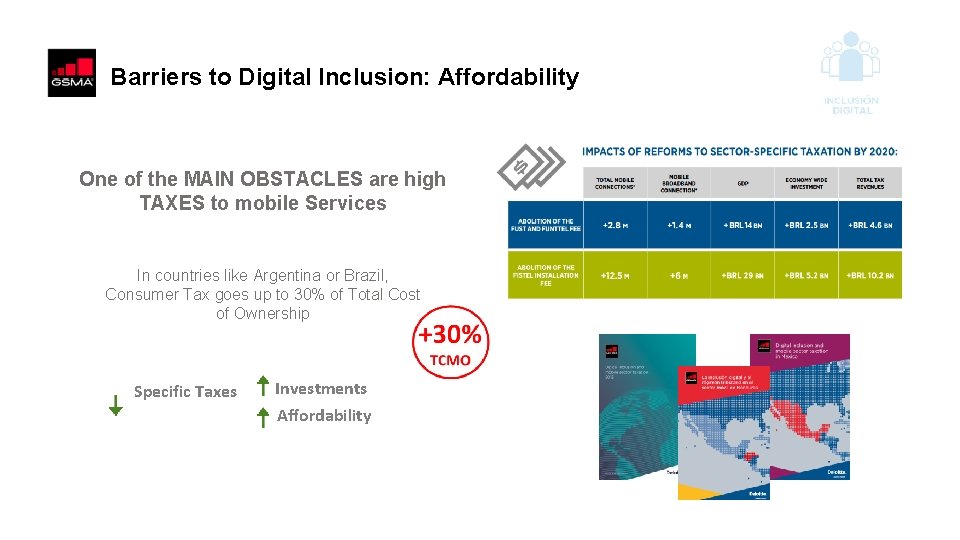
Barriers to Digital Inclusion: Affordability One of the MAIN OBSTACLES are high TAXES to mobile Services In countries like Argentina or Brazil, Consumer Tax goes up to 30% of Total Cost of Ownership Specific Taxes Investments Affordability
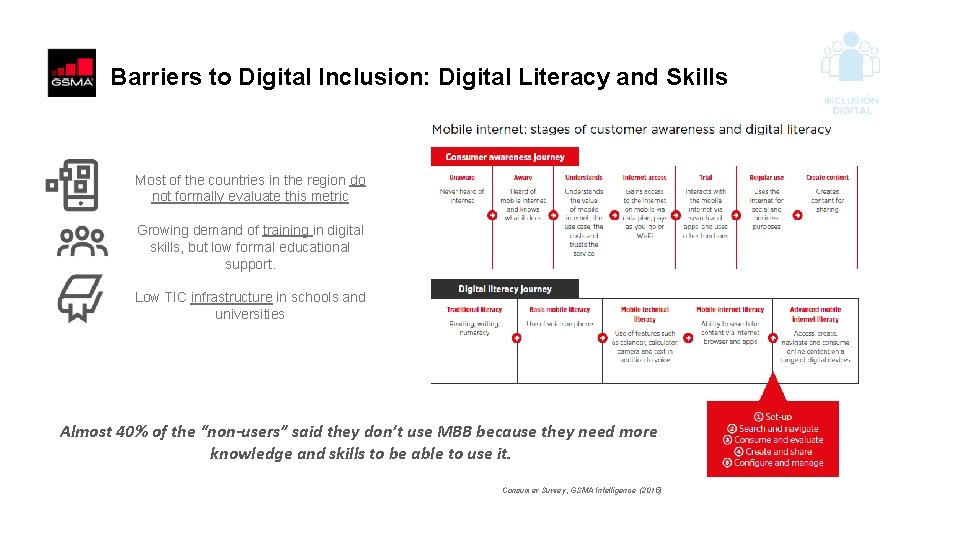
Barriers to Digital Inclusion: Digital Literacy and Skills Most of the countries in the region do not formally evaluate this metric Growing demand of training in digital skills, but low formal educational support. Low TIC infrastructure in schools and universities Almost 40% of the “non-users” said they don’t use MBB because they need more knowledge and skills to be able to use it. Consumer Survey, GSMA Intelligence (2015)
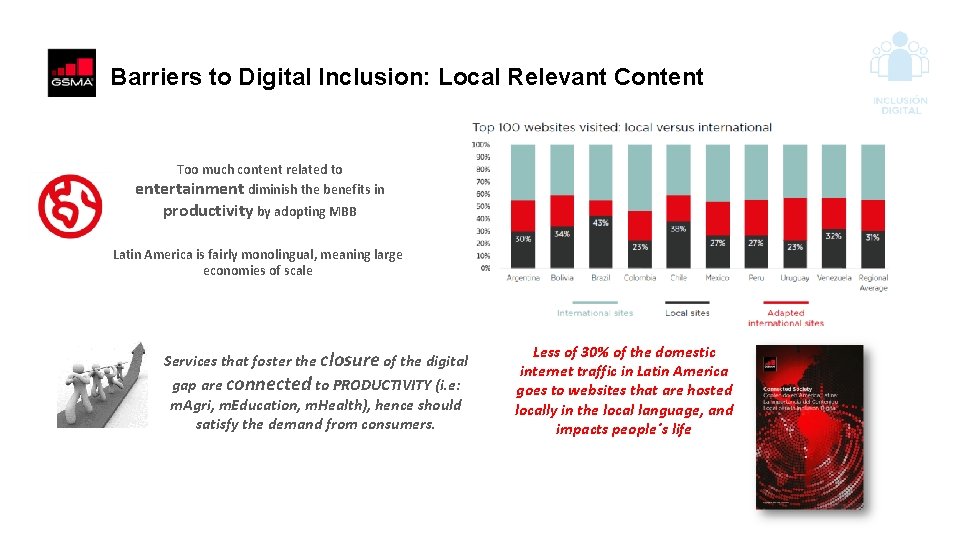
Barriers to Digital Inclusion: Local Relevant Content Too much content related to entertainment diminish the benefits in productivity by adopting MBB Latin America is fairly monolingual, meaning large economies of scale Services that foster the closure of the digital gap are connected to PRODUCTIVITY (i. e: m. Agri, m. Education, m. Health), hence should satisfy the demand from consumers. Less of 30% of the domestic internet traffic in Latin America goes to websites that are hosted locally in the local language, and impacts people´s life
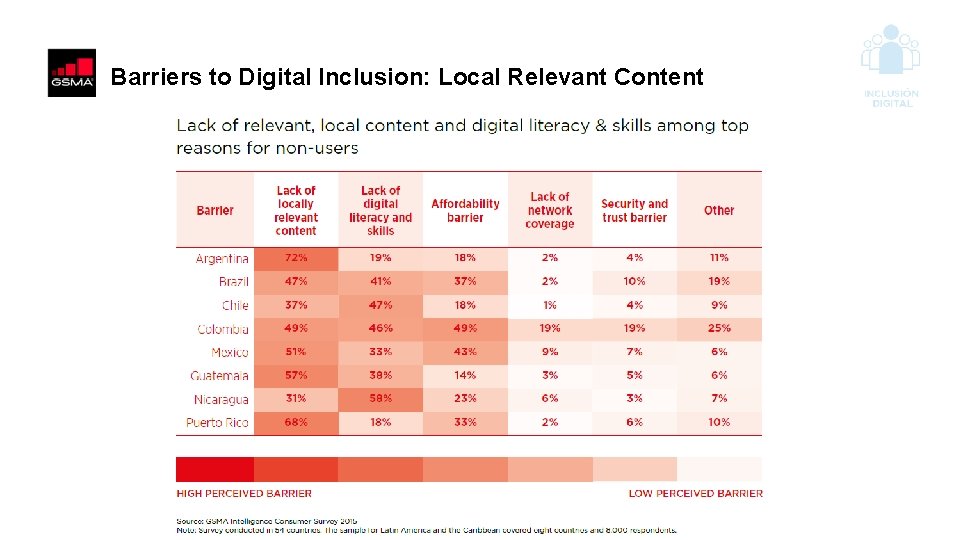
Barriers to Digital Inclusion: Local Relevant Content
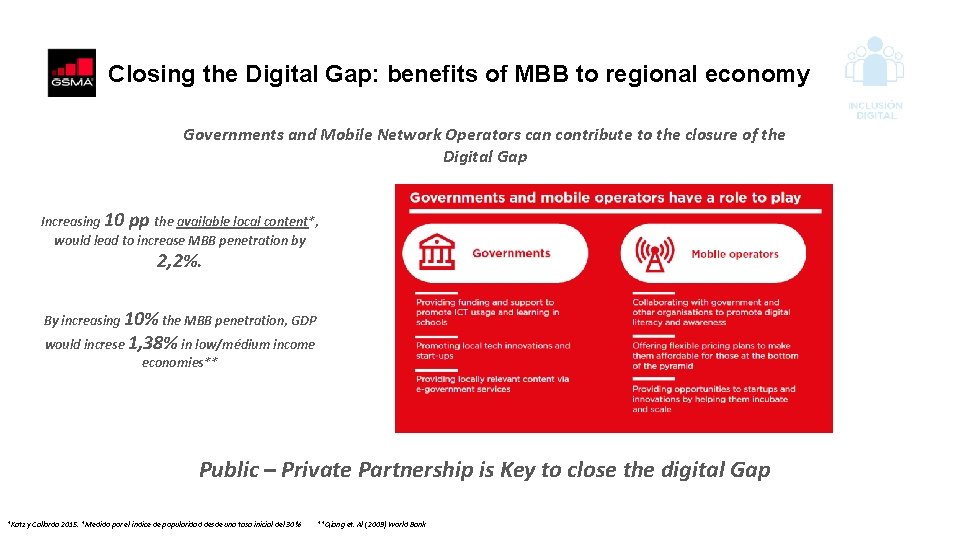
Closing the Digital Gap: benefits of MBB to regional economy Governments and Mobile Network Operators can contribute to the closure of the Digital Gap Increasing 10 pp the available local content*, would lead to increase MBB penetration by 2, 2%. By increasing 10% the MBB penetration, GDP would increse 1, 38% in low/médium income economies** Public – Private Partnership is Key to close the digital Gap *Katz y Callorda 2015. *Medido por el índice de popularidad desde una tasa inicial del 30% **Qiang et. Al (2009) World Bank
Muchas gracias Alexis Arancibia Technology Policy Director GSMA lgallitto@gsma. com
- Slides: 15