
Removable Partial Denture Framework Adjustment Rudd Kuebker 75
Removable Partial Denture Framework Adjustment • Rudd & Kuebker – 75% of frameworks don’t fit perfectly – Active - orthodontic movement – Adjust to make passive
Framework Adjustment • Adjust without denture base • Adjust soon after fabrication – Prevent tooth migration
Video: Framework Adjustment

Clinical Adjustment • Incomplete seating • Usually binding on abutments • Use an indicating medium Incomplete seating

Indicating Medium • Aerosol Sprays (Occlude) • Disclosing Wax • Silicone
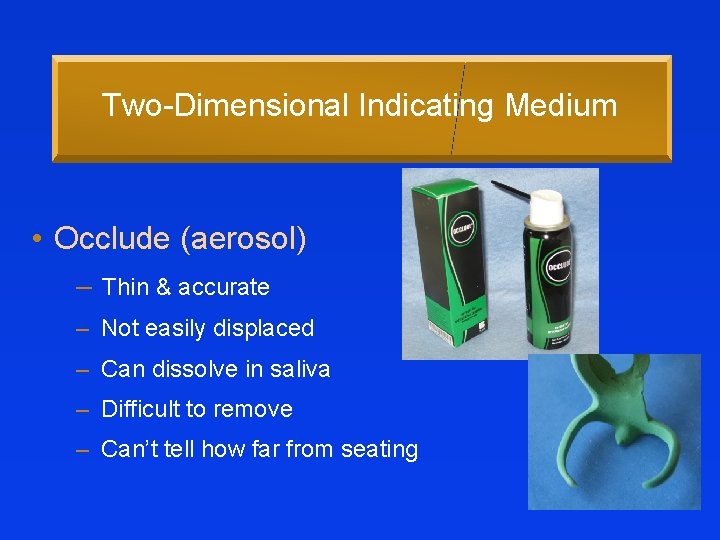
Two-Dimensional Indicating Medium • Occlude (aerosol) – Thin & accurate – Not easily displaced – Can dissolve in saliva – Difficult to remove – Can’t tell how far from seating

Three-Dimensional Indicating Medium • Disclosing Wax – Sets immediately – Inexpensive – Shows how far from seating – Can stick to teeth – Can be distorted
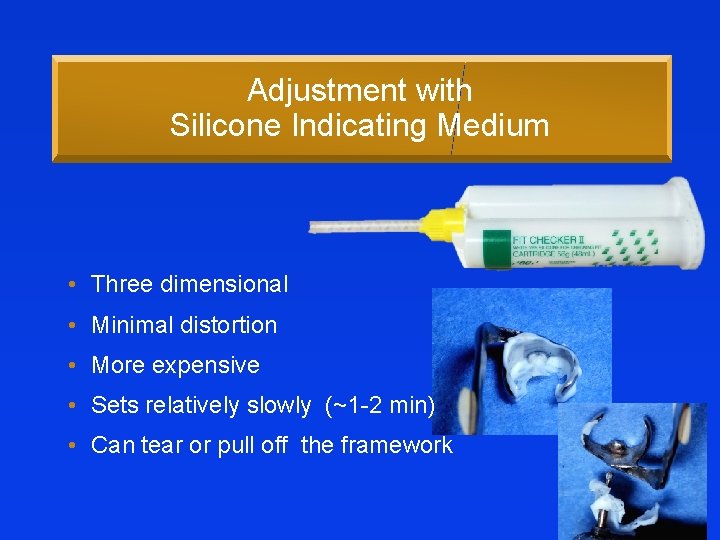
Adjustment with Silicone Indicating Medium • Three dimensional • Minimal distortion • More expensive • Sets relatively slowly (~1 -2 min) • Can tear or pull off the framework
Framework Adjustment • Initial Assessment • ‘How does the framework feel? ’ • No pulling or wedging – Active engagement of abutment teeth • Overall comfort of the framework
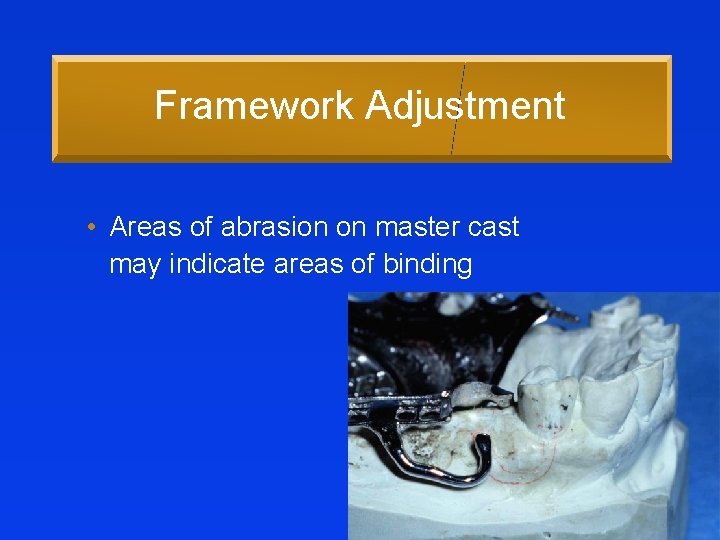
Framework Adjustment • Areas of abrasion on master cast may indicate areas of binding
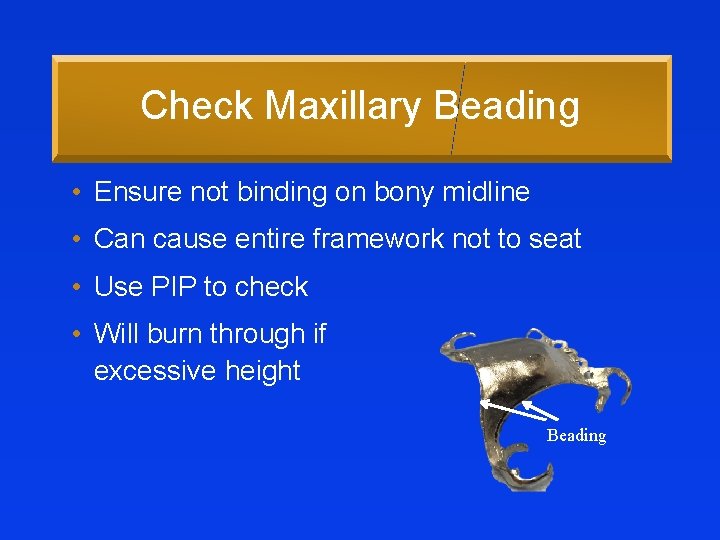
Check Maxillary Beading • Ensure not binding on bony midline • Can cause entire framework not to seat • Use PIP to check • Will burn through if excessive height Beading
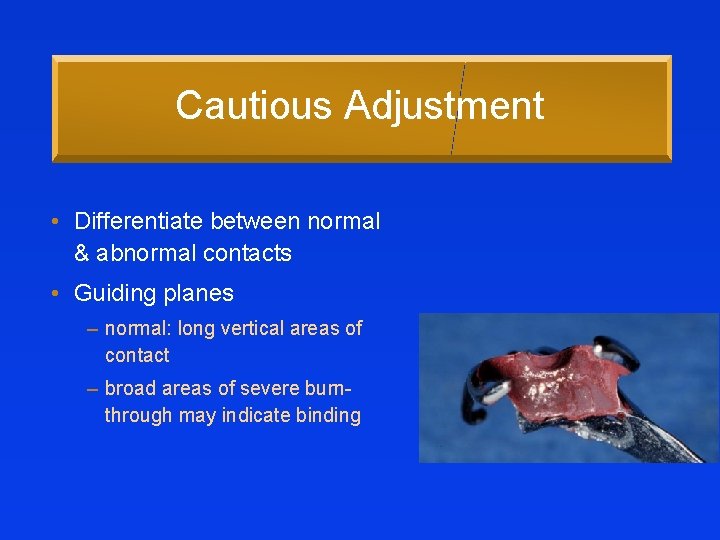
Cautious Adjustment • Differentiate between normal & abnormal contacts • Guiding planes – normal: long vertical areas of contact – broad areas of severe burnthrough may indicate binding
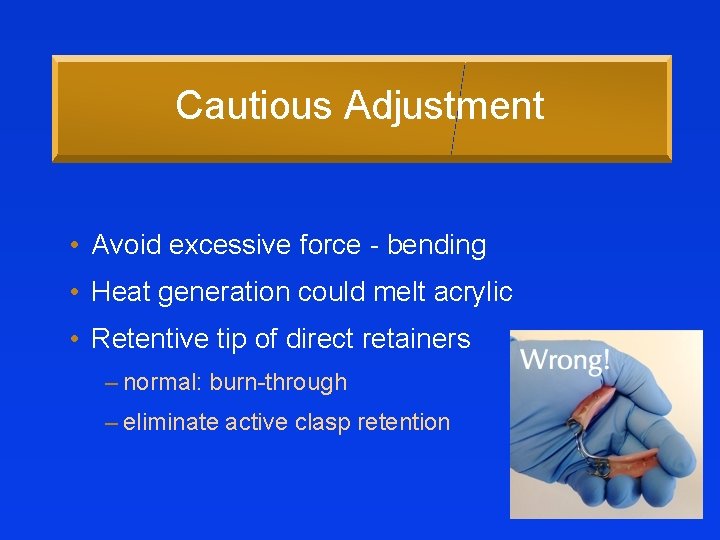
Cautious Adjustment • Avoid excessive force - bending • Heat generation could melt acrylic • Retentive tip of direct retainers – normal: burn-through – eliminate active clasp retention
Remake Poor Castings • Determine if casting fits similarly on the cast and intraorally • If not, final impression inaccurate • Make new impression
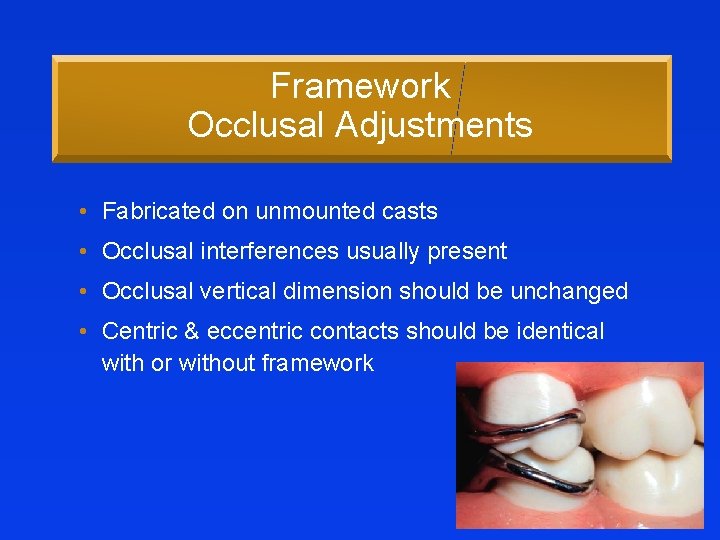
Framework Occlusal Adjustments • Fabricated on unmounted casts • Occlusal interferences usually present • Occlusal vertical dimension should be unchanged • Centric & eccentric contacts should be identical with or without framework
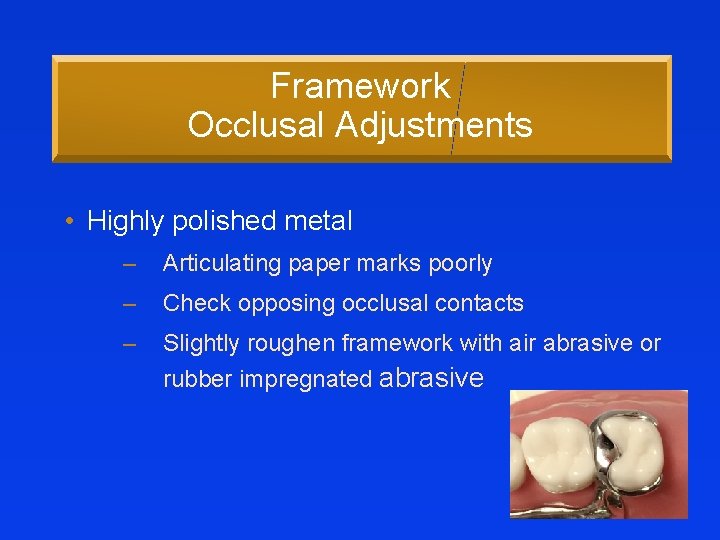
Framework Occlusal Adjustments • Highly polished metal – Articulating paper marks poorly – Check opposing occlusal contacts – Slightly roughen framework with air abrasive or rubber impregnated abrasive
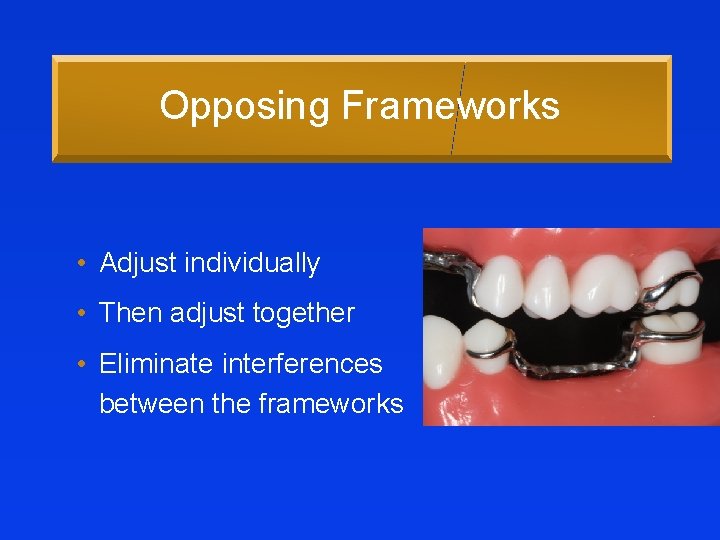
Opposing Frameworks • Adjust individually • Then adjust together • Eliminate interferences between the frameworks
Occlusal Rest Thickness • If ≤ 1. 5 mm after adjustment – Subject to fatigue – Possible fracture • May require additional tooth preparation & remake • Last resort - occlusal reduction of opposing teeth
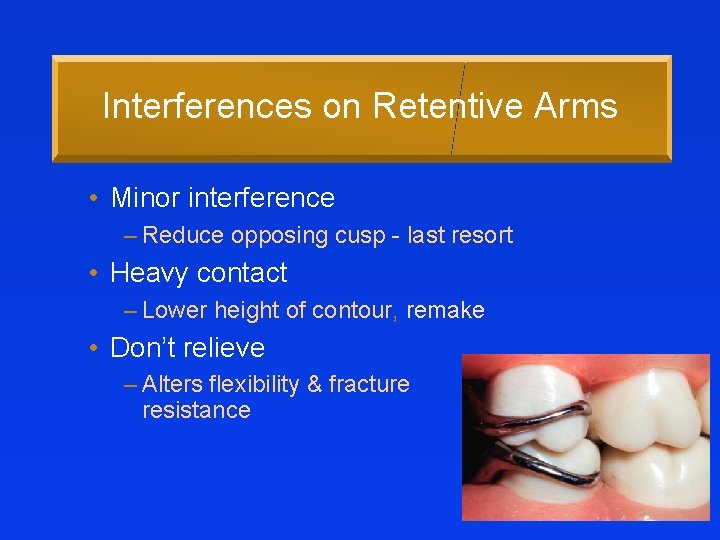
Interferences on Retentive Arms • Minor interference – Reduce opposing cusp - last resort • Heavy contact – Lower height of contour, remake • Don’t relieve – Alters flexibility & fracture resistance
Physiologic Relief • Used for Class I & II w. long g. p. • Normally shorter guiding planes – Triangular space below height of contour – Allow for release • Tipped teeth may only provide for long guiding planes (low h of c)
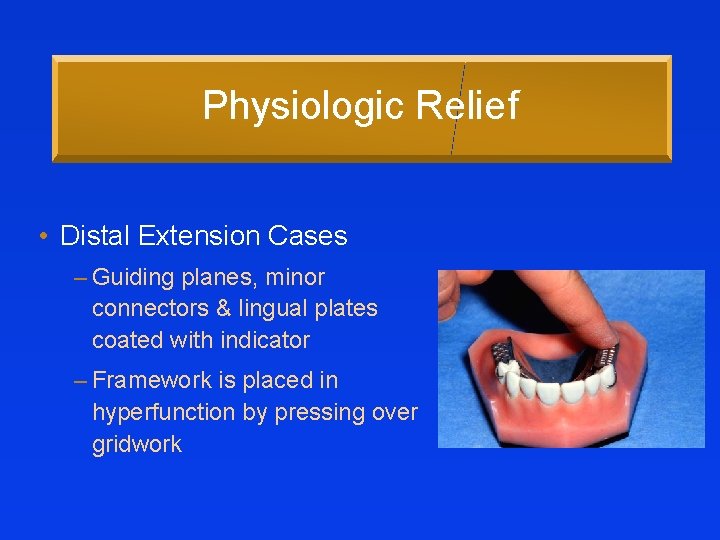
Physiologic Relief • Distal Extension Cases – Guiding planes, minor connectors & lingual plates coated with indicator – Framework is placed in hyperfunction by pressing over gridwork
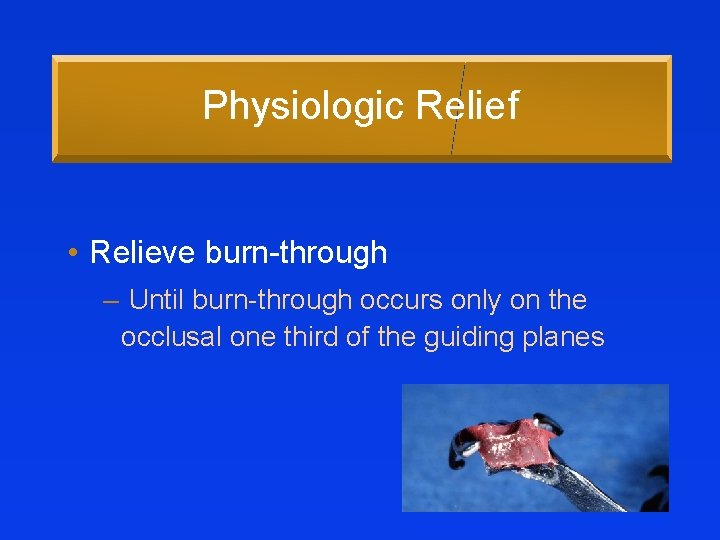
Physiologic Relief • Relieve burn-through – Until burn-through occurs only on the occlusal one third of the guiding planes
Physiologic Relief Alternative • Prescribe 1° relief OR • Use physiologic relief, not both
- Slides: 23