
Remote Sensing of Global Warming Affected Inland Water
Remote Sensing of Global Warming. Affected Inland Water Quality Lin Li (PI) Meghna Babbar-Sebens (Co-I) Kaishan Song (Postdoc) Lenore Tedesco (Collaborator) Graduate Students: Slawamira Bruder, Shuai Li, Shuangshuang Xie Tingting Zhang Department of Earth Sciences Indiana University Purdue University Indianapolis NASA Biodiversity and Ecological Forecasting Team Meeting May 17 -19, 2010
Outline 1. Cyanobacteria and Drinking Water Quality 2. Cyanobacteria and Global Warming 3. Pigments of Cyanobacteria 4. Study Sites 5. Questions to Be Addressed 6. Acknowledgement
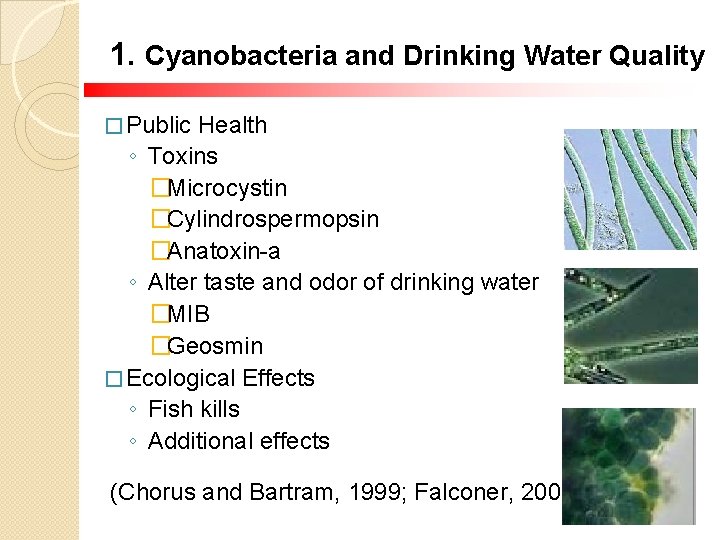
1. Cyanobacteria and Drinking Water Quality � Public Health ◦ Toxins �Microcystin �Cylindrospermopsin �Anatoxin-a ◦ Alter taste and odor of drinking water �MIB �Geosmin � Ecological Effects ◦ Fish kills ◦ Additional effects (Chorus and Bartram, 1999; Falconer, 2005)
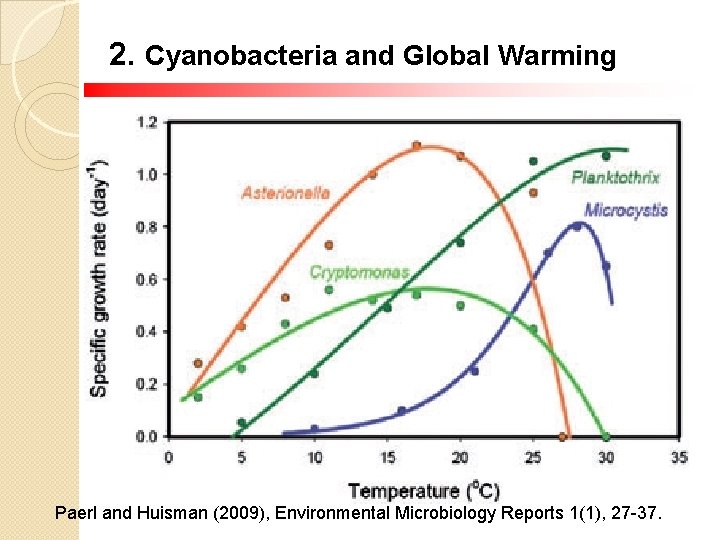
2. Cyanobacteria and Global Warming Paerl and Huisman (2009), Environmental Microbiology Reports 1(1), 27 -37.
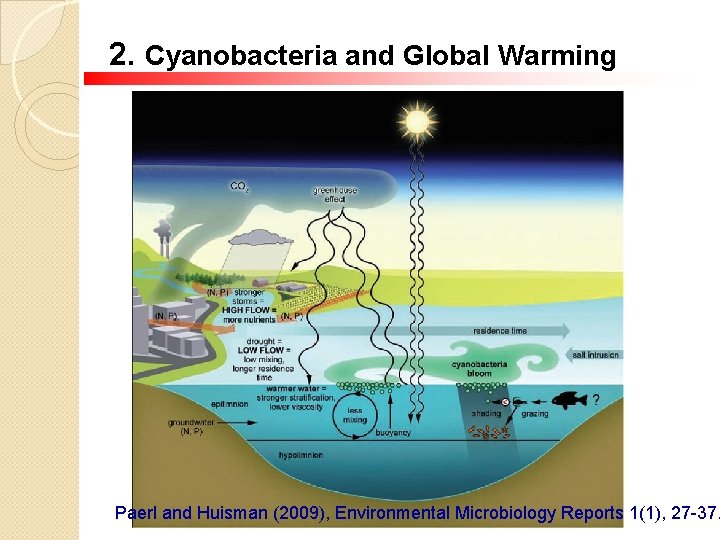
2. Cyanobacteria and Global Warming Paerl and Huisman (2009), Environmental Microbiology Reports 1(1), 27 -37.
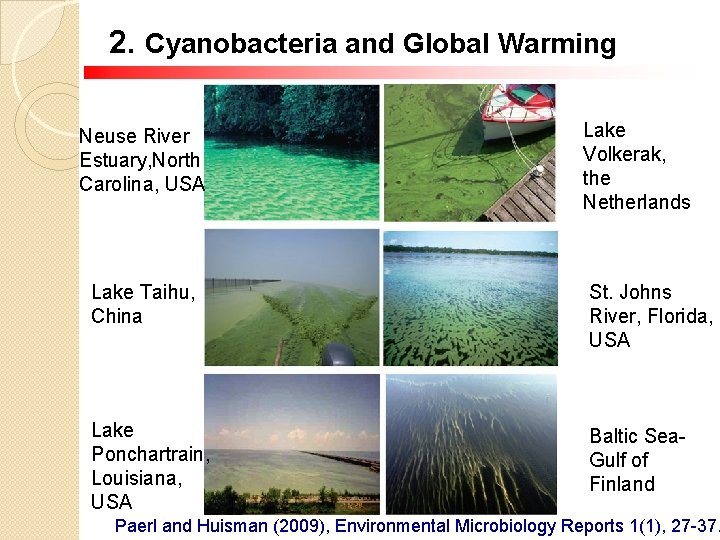
2. Cyanobacteria and Global Warming Neuse River Estuary, North Carolina, USA Lake Volkerak, the Netherlands Lake Taihu, China St. Johns River, Florida, USA Lake Ponchartrain, Louisiana, USA Baltic Sea. Gulf of Finland Paerl and Huisman (2009), Environmental Microbiology Reports 1(1), 27 -37.
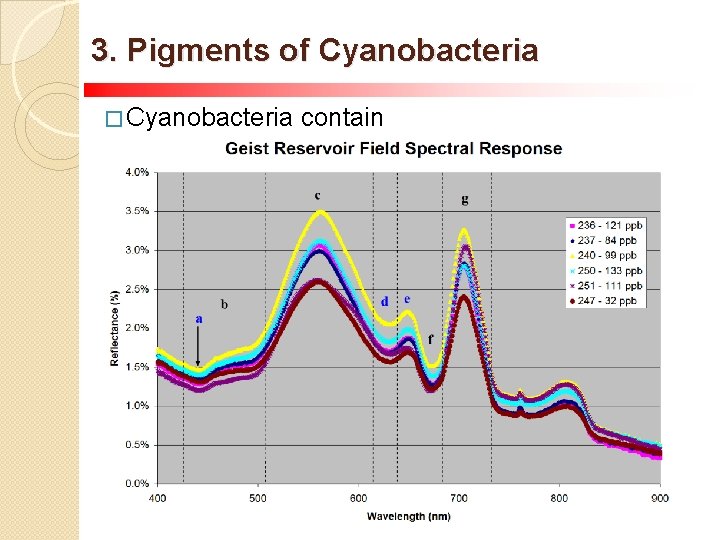
3. Pigments of Cyanobacteria � Cyanobacteria pigments contain ◦ Chlorophyll ◦ Phycocyanin ◦ Carotenoids/ Xanthophylls � Varies ◦ Species ◦ Light levels ◦ Other conditions � Optical properties ◦ Absorption ◦ Reflectance ◦ Cell Scattering
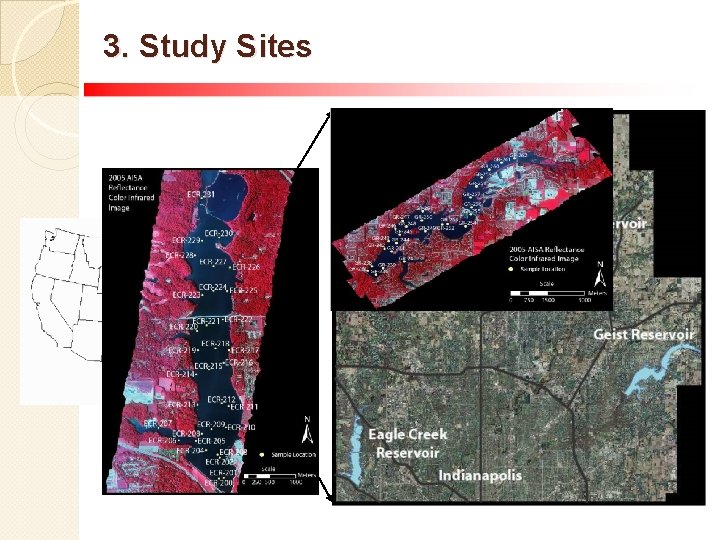
3. Study Sites
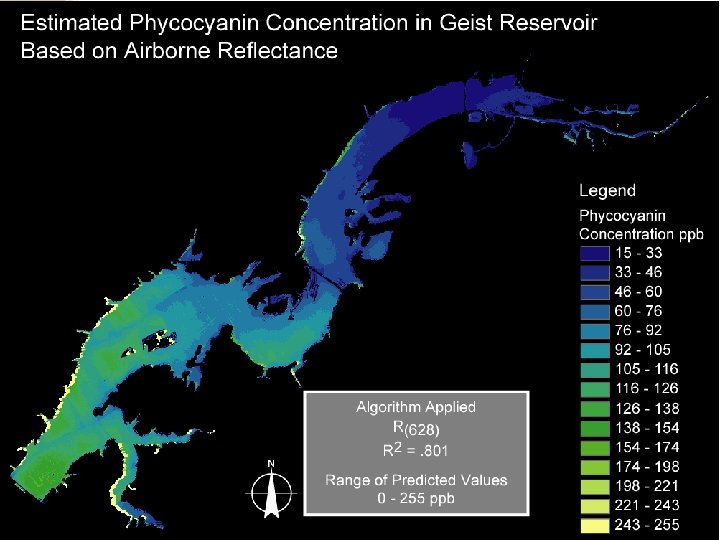
4. Questions to be Addressed I) For a given reservoir, what spectral parameters are more sensitive to Chl-a and PC concentration and what interfering parameters affect the performance of these spectral parameters.
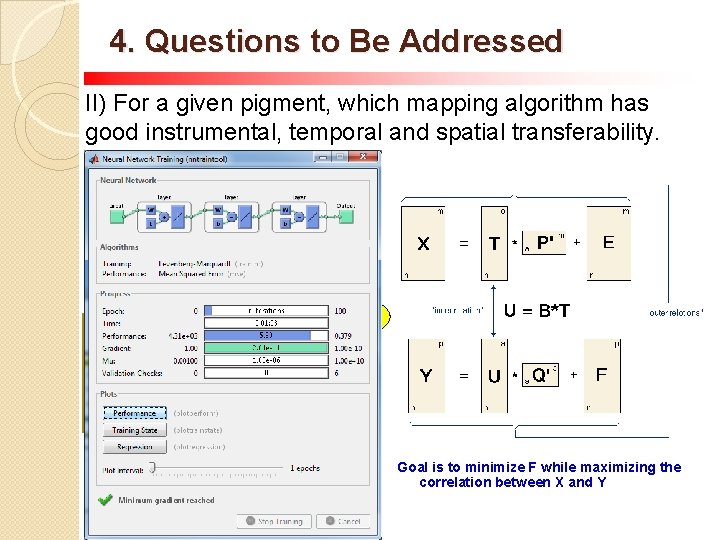
4. Questions to Be Addressed II) For a given pigment, which mapping algorithm has good instrumental, temporal and spatial transferability. Initialization Fitness function Evaluation Crossover Mutation Computer model to simulate biological evolution Goal is to minimize F while maximizing the correlation between X and Y
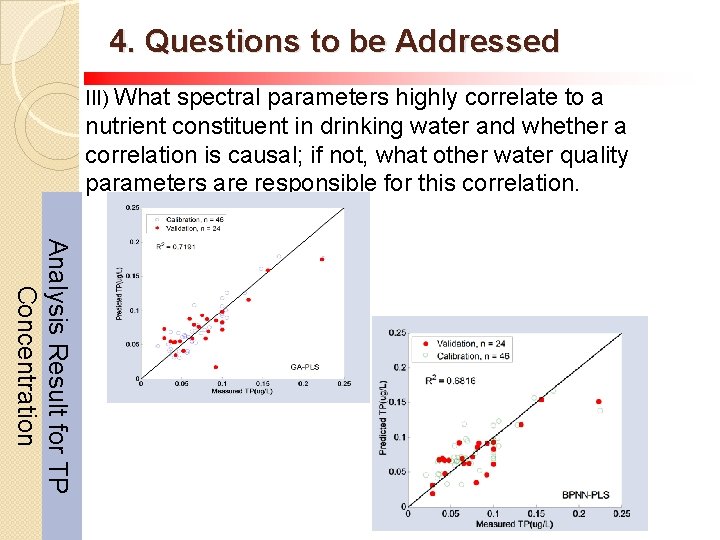
4. Questions to be Addressed III) What spectral parameters highly correlate to a nutrient constituent in drinking water and whether a correlation is causal; if not, what other water quality parameters are responsible for this correlation. Analysis Result for TP Concentration
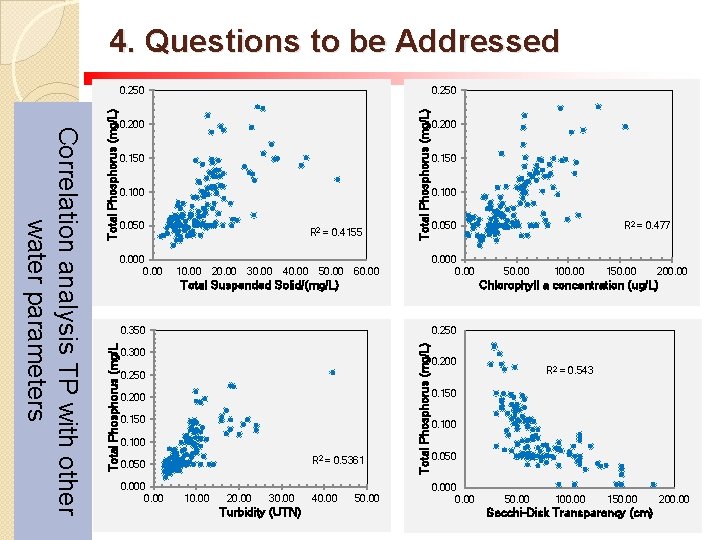
4. Questions to be Addressed 0. 150 0. 100 0. 050 0. 00 R 2 = 0. 4155 10. 00 20. 00 30. 00 40. 00 50. 00 Total Phosphorus (mg/L) 0. 250 0. 200 0. 150 0. 100 0. 00 60. 00 50. 00 100. 00 150. 00 200. 00 Chlorophyll a concentration (ug/L) 0. 250 0. 300 0. 250 0. 200 0. 150 0. 100 R 2 = 0. 5361 0. 050 10. 00 20. 00 30. 00 Turbidity (UTN) 40. 00 50. 00 Total Phosphorus (mg/L) 0. 350 0. 00 R 2 = 0. 477 0. 050 Total Suspended Solid/(mg/L) Total Phosphorus (mg/L Correlation analysis TP with other water parameters Total Phosphorus (mg/L) 0. 250 0. 200 R 2 = 0. 543 0. 150 0. 100 0. 050 0. 00 50. 00 100. 00 150. 00 Secchi-Disk Transparency (cm) 200. 00
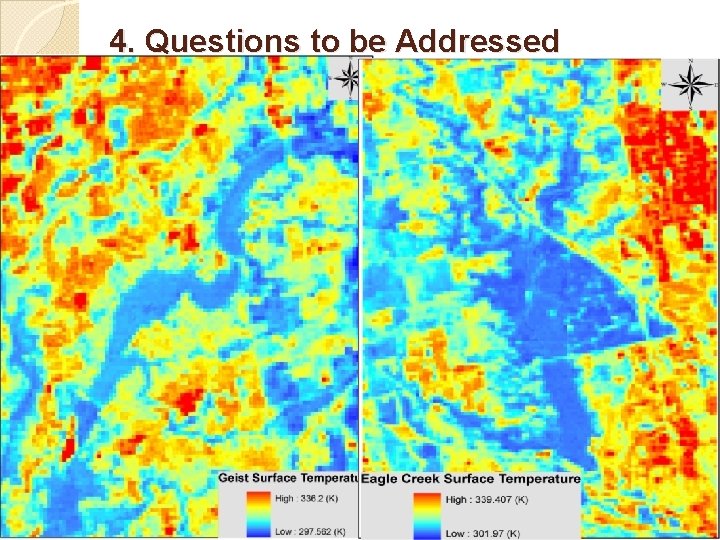
4. Questions to be Addressed IV) Given the fact that temperature and nutrients are important factors for the occurrence of CYBB, whether high correlations can be observed among the spatial patterns of Chl-a, PC, nutrient constituents and temperature in these reservoirs
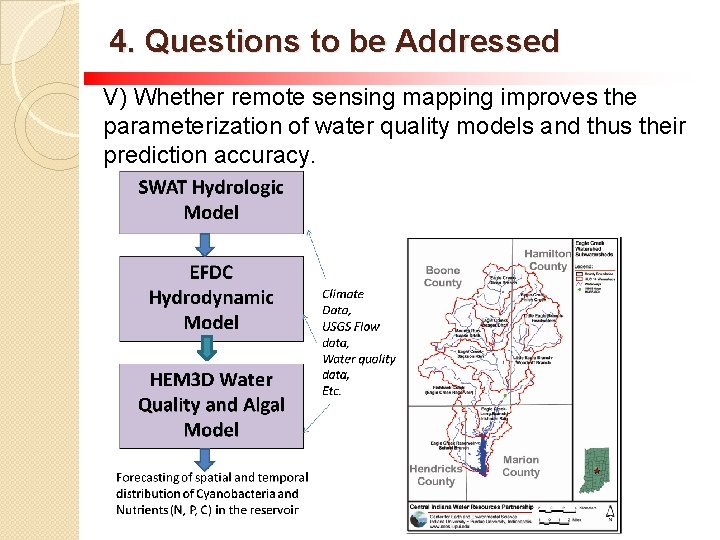
4. Questions to be Addressed V) Whether remote sensing mapping improves the parameterization of water quality models and thus their prediction accuracy.
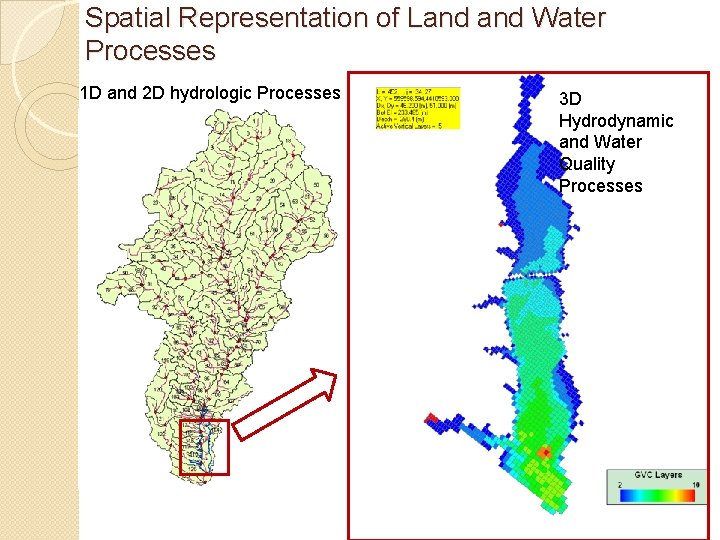
Spatial Representation of Land Water Processes 1 D and 2 D hydrologic Processes 3 D Hydrodynamic and Water Quality Processes
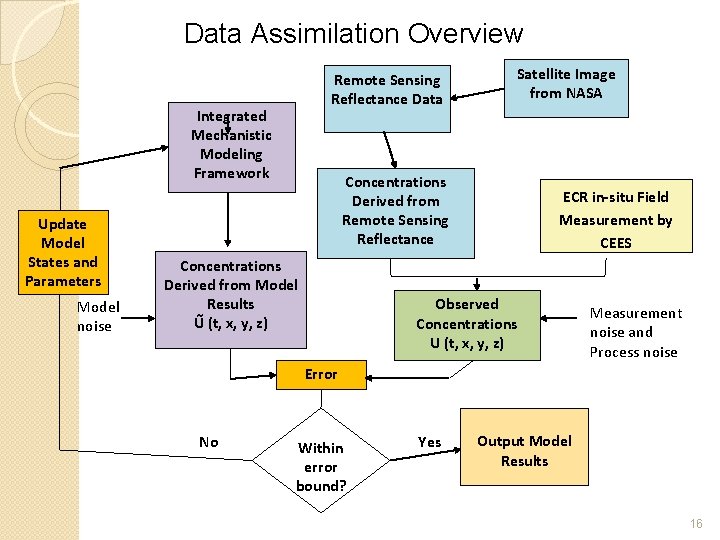
Data Assimilation Overview Remote Sensing Reflectance Data Integrated Mechanistic Modeling Framework Update Model States and Parameters Model noise Satellite Image from NASA Concentrations Derived from Remote Sensing Reflectance Concentrations Derived from Model Results Ũ (t, x, y, z) ECR in-situ Field Measurement by CEES Observed Concentrations U (t, x, y, z) Measurement noise and Process noise Error No Within error bound? Yes Output Model Results 16
6. Acknowledgement �This project is supported by the National Aeronautics Space Administration (NASA) Hysp. IRI preparatory activities using existing imagery (HPAUEI) program and partially by the NASA Energy and Water Cycle program.
- Slides: 17