
Remote Monitoring Pilot Improving service delivery through realtime


- Slides: 20
Remote Monitoring Pilot Improving service delivery through real-time remote monitoring of WASH services in humanitarian settings UNHCR Annual WASH Partner’s Meeting 10 – 11. 2020 Anne Hyvärinen, UNHCR Tanzania & Ben Harvey, UNHCR Geneva
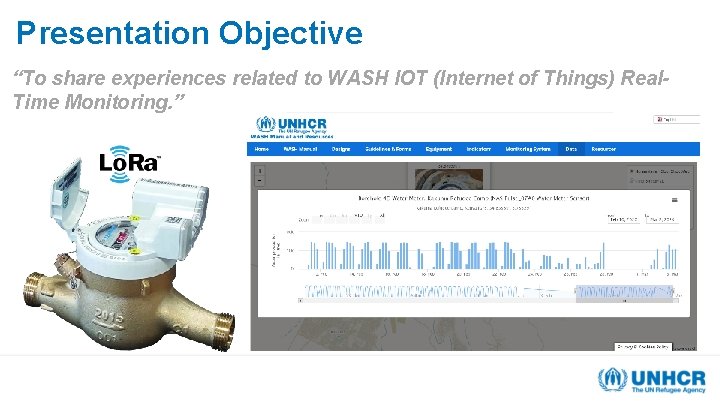
Presentation. Objective Presentation “To share experiences related to WASH IOT (Internet of Things) Real. Time Monitoring. ”
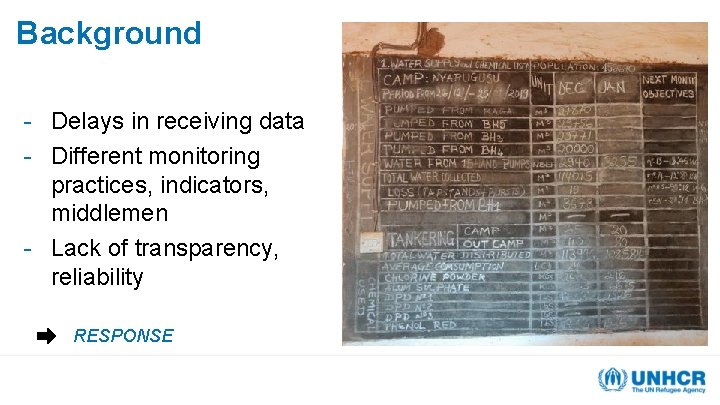
Background - Delays in receiving data - Different monitoring practices, indicators, middlemen - Lack of transparency, reliability RESPONSE
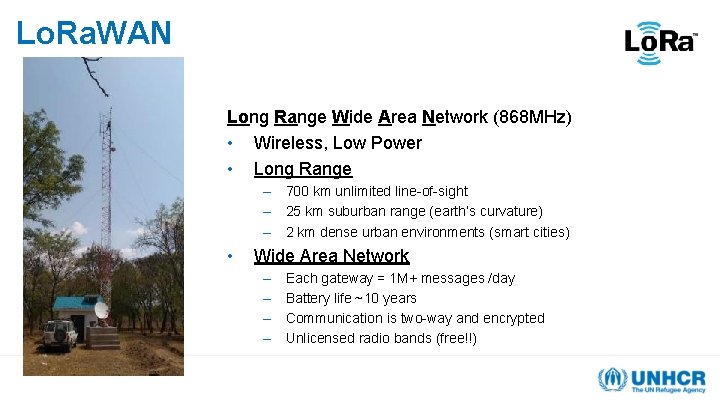
Lo. Ra. WAN Long Range Wide Area Network (868 MHz) • Wireless, Low Power • Long Range – 700 km unlimited line-of-sight – 25 km suburban range (earth’s curvature) – 2 km dense urban environments (smart cities) • Wide Area Network – – Each gateway = 1 M+ messages /day Battery life ~10 years Communication is two-way and encrypted Unlicensed radio bands (free!!)
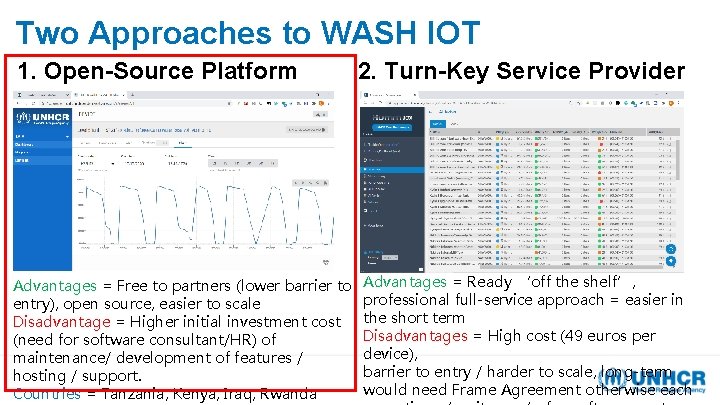
Two Approaches to WASH IOT 1. Open-Source Platform Advantages = Free to partners (lower barrier to entry), open source, easier to scale Disadvantage = Higher initial investment cost (need for software consultant/HR) of maintenance/ development of features / hosting / support. Countries = Tanzania, Kenya, Iraq, Rwanda 2. Turn-Key Service Provider Advantages = Ready ‘off the shelf’, professional full-service approach = easier in the short term Disadvantages = High cost (49 euros per device), barrier to entry / harder to scale, long-term would need Frame Agreement otherwise each
Pilot in Tanzania Nduta Camp – water supply network Kibondo Town – water trucking
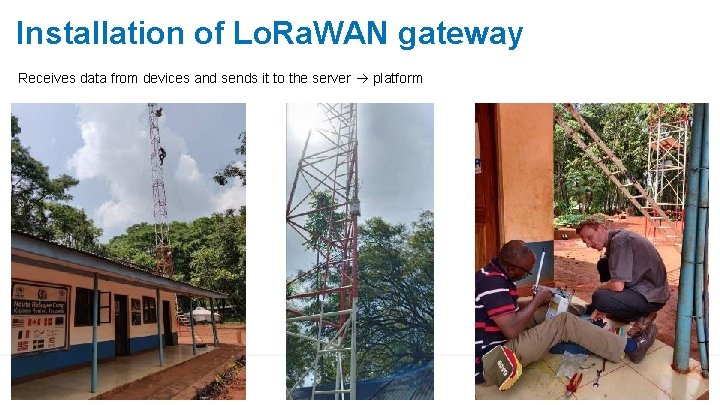
Installation of Lo. Ra. WAN gateway Receives data from devices and sends it to the server platform
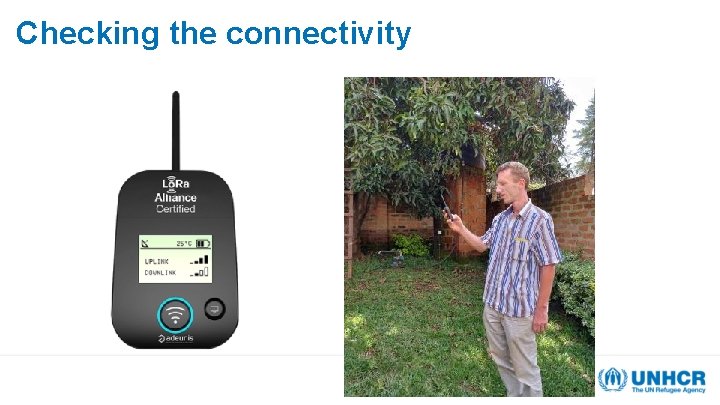
Checking the connectivity
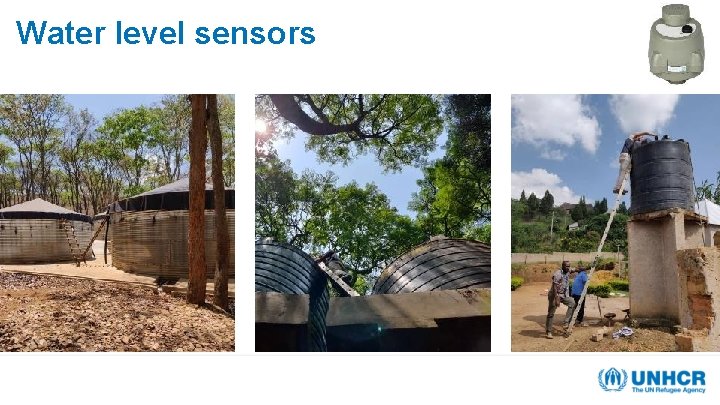
Water level sensors – ….
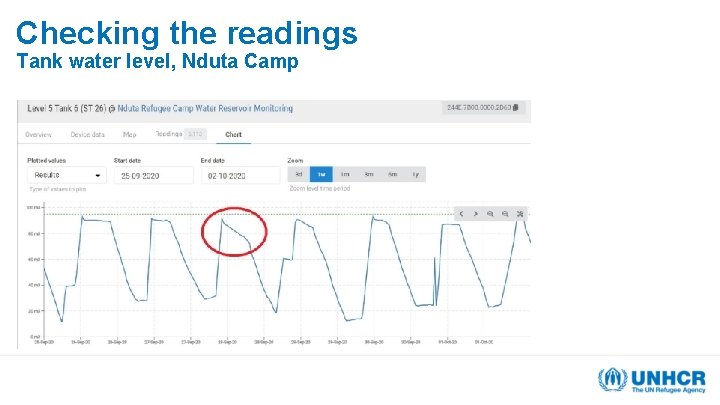
Checking the readings Tank water level, Nduta Camp
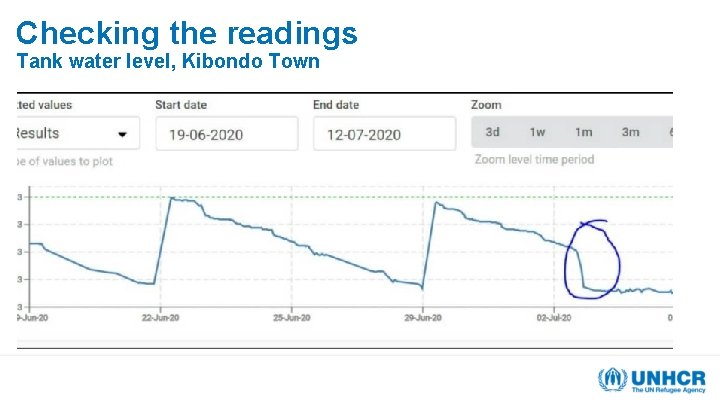
Checking the readings Tank water level, Kibondo Town • . .
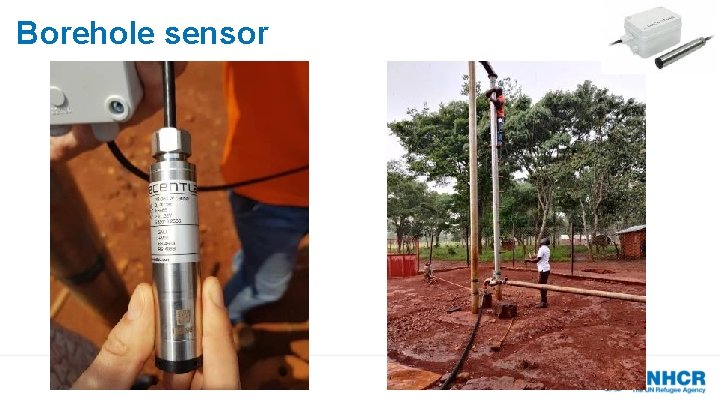
Borehole sensor
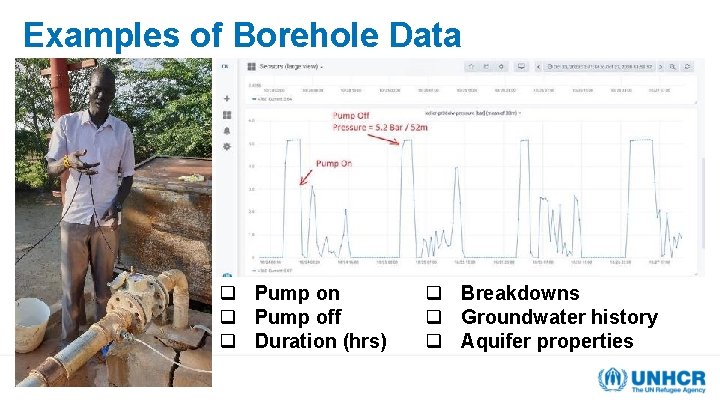
Examples of Borehole Data q Pump on q Pump off q Duration (hrs) q Breakdowns q Groundwater history q Aquifer properties
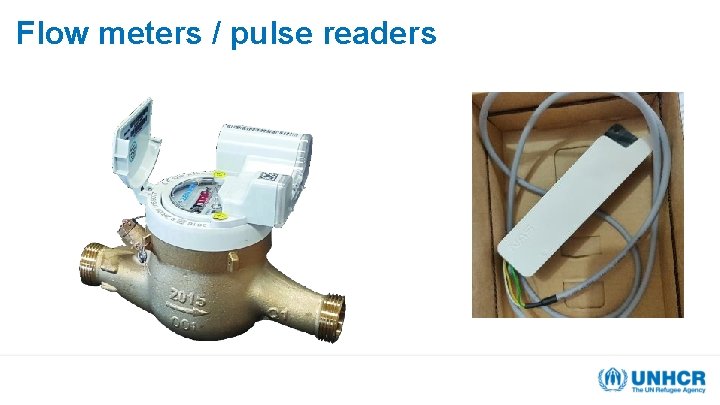
Flow meters / pulse readers
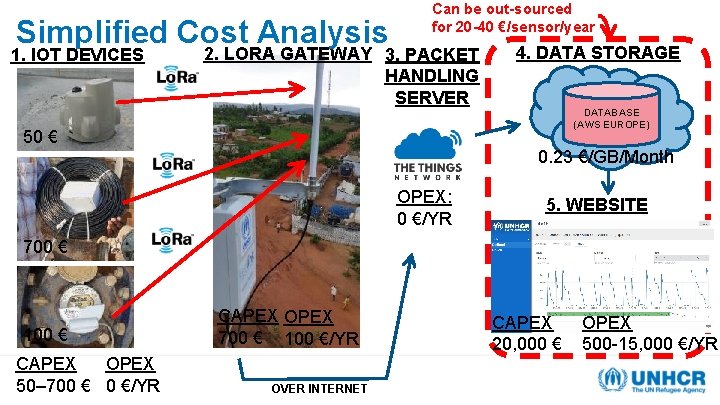
Simplified Cost Analysis 1. IOT DEVICES Can be out-sourced for 20 -40 €/sensor/year 2. LORA GATEWAY 3. PACKET HANDLING SERVER 4. DATA STORAGE DATABASE (AWS EUROPE) 50 € 0. 23 €/GB/Month OPEX: 0 €/YR 5. WEBSITE 700 € 100 € CAPEX OPEX 50– 700 € 0 €/YR CAPEX OPEX 700 € 100 €/YR OVER INTERNET CAPEX 20, 000 € OPEX 500 -15, 000 €/YR
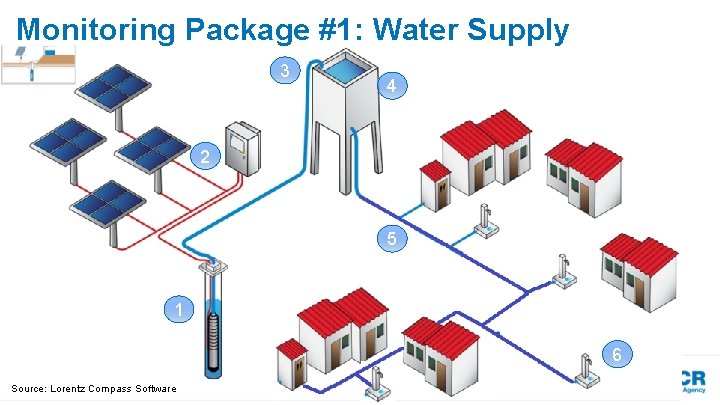
Monitoring Package #1: Water Supply 3 4 2 5 1 6 Source: Lorentz Compass Software
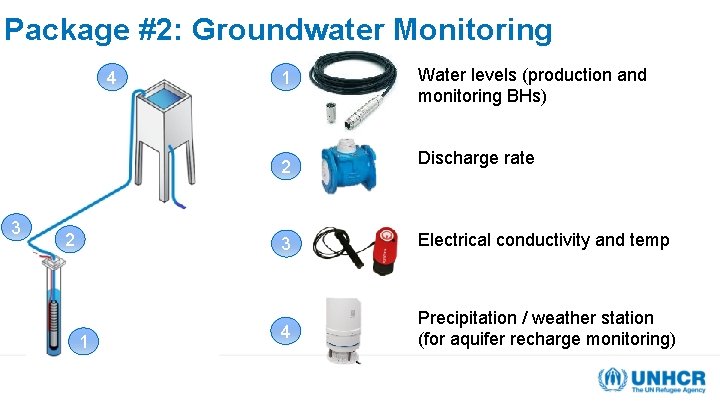
Package #2: Groundwater Monitoring 4 3 2 1 1 Water levels (production and monitoring BHs) 2 Discharge rate 3 Electrical conductivity and temp 4 Precipitation / weather station (for aquifer recharge monitoring)
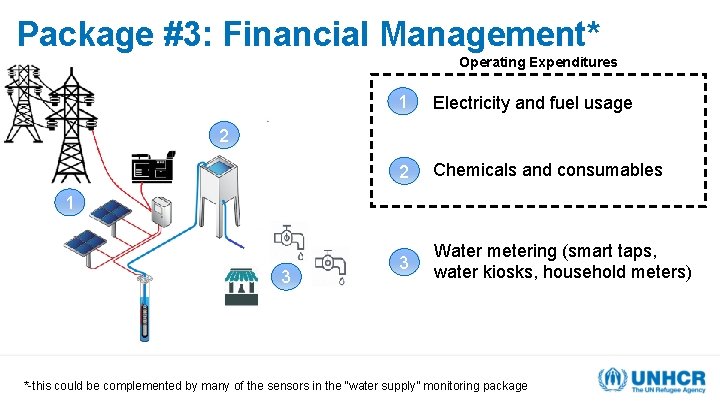
Package #3: Financial Management* Operating Expenditures 1 Electricity and fuel usage 2 Chemicals and consumables 2 1 Revenue 3 3 Water metering (smart taps, water kiosks, household meters) *-this could be complemented by many of the sensors in the “water supply” monitoring package
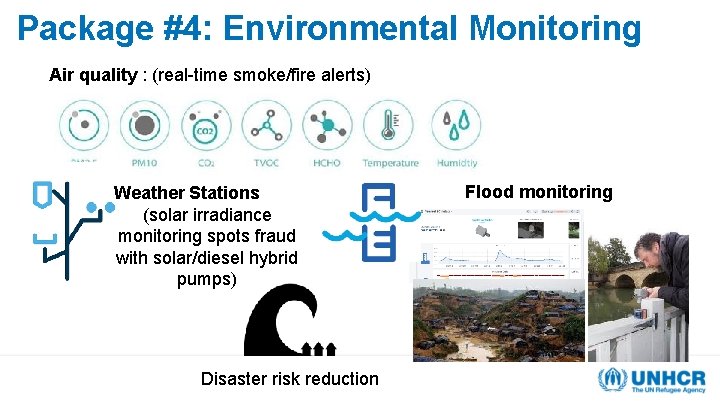
Package #4: Environmental Monitoring Air quality : (real-time smoke/fire alerts) Weather Stations (solar irradiance monitoring spots fraud with solar/diesel hybrid pumps) Disaster risk reduction Flood monitoring
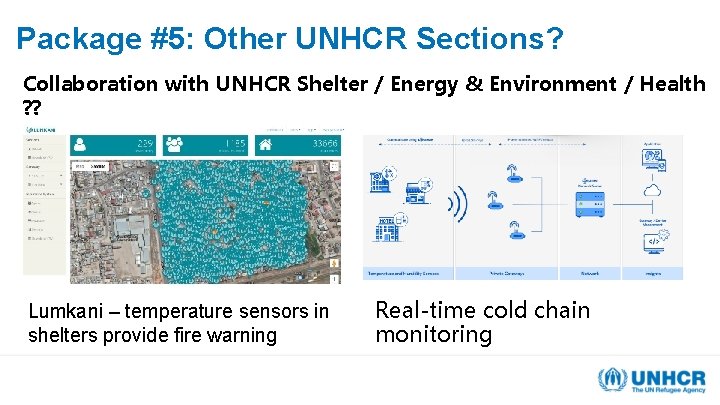
Package #5: Other UNHCR Sections? Collaboration with UNHCR Shelter / Energy & Environment / Health ? ? Lumkani – temperature sensors in shelters provide fire warning Real-time cold chain monitoring